
Reviewed · HISTORICAL TOURS
Arequipa: Walk through the Historic Center of the City
Arequipa reveals itself on foot. This $15 walking tour gives you a close look at the White City through the Cathedral, colonial cloisters, old tambos, cobbled lanes, and local legends. I especially like the small groups, limited to six, and the final lookout with views toward Misti, Chachani, and Pichu Pichu.
I also like that guides such as Joss and Joseph add practical advice about restaurants, bars, museums, and other things to do in Peru. The main drawback is that the tour may feel light on information during some walking stretches, and one review felt the price was high for a basic city walk.
In This Review
- Key points at a glance
- Starting at Campo Redondo in San Lázaro
- The Cathedral and Arequipa’s white stone
- Colonial cloisters with time to look up
- Tambos and the everyday side of the old city
- Cobblestone streets, legends, and local recommendations
- The final lookout and the volcano view
- What the $15 price really gives you
- English, Spanish, timing, and group size
- Who will enjoy this Arequipa walk
- Should you book this tour?
- FAQ
- How much does the Arequipa historic center walking tour cost?
- How long does the tour last?
- Where does the tour meet?
- What languages are available?
- How large is the group?
- Can I cancel or pay later?
Key points at a glance
- The tour begins at Campo Redondo in San Lázaro, a useful starting point for exploring Arequipa’s old center.
- You visit five historical sites, including the Cathedral, colonial cloisters, and ancient tambos.
- Groups are capped at six people, so you can ask questions without shouting across a crowd.
- Joss, Joseph, or Jose may guide the walk, with English and Spanish available.
- The final viewpoint brings the volcanoes into the story, including Misti, Chachani, and Pichu Pichu.
- The $15 price includes local tips and cultural exchange, but no food, drinks, or entrance fees are listed as included.
Starting at Campo Redondo in San Lázaro
The meeting point is Campo Redondo San Lazaro, at approximately -16.3934138, -71.5336117. The tour does not begin with a hotel pickup. You need to make your own way to this spot, so check the exact location before setting out.
Starting in San Lázaro gives the walk a more local feel than meeting beside a large tourist attraction. From here, you move toward Arequipa’s historic center and begin to see how the city’s older neighborhoods connect with its grand public buildings.
The tour is offered in the morning and afternoon. That flexibility matters in Arequipa, where you may already have a full day planned around museums, nearby viewpoints, or longer excursions. An afternoon departure can also set up a pleasant finish at the lookout, especially if the sky is clear.
The advertised duration is two hours, while the walking portion is described elsewhere as about an hour and a half. In practice, plan on roughly two hours from meeting to finish. Wear shoes that feel good on uneven cobblestones, and bring water, sun protection, and a light layer.
More City Tours in Arequipa
- Arequipa Walking Tour city center and drinks experience
★ 5.0 · 72 reviews - Arequipa, Historic and Colonial City and Santa Catalina Monastery
★ 4.5 · 42 reviews - Arequipa: City and Country Tour
★ 3.7 · 27 reviews
The Cathedral and Arequipa’s white stone
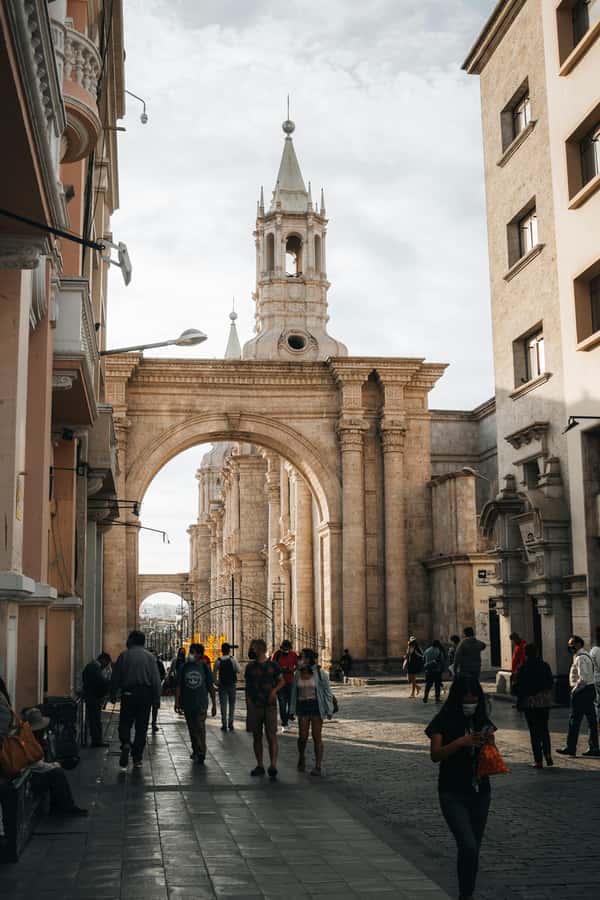
The first major stop is Arequipa’s Cathedral, one of the city’s best-known symbols. Its scale and position make it an easy landmark, but a guide helps you read it as more than a grand church in the main square.
The tour places the Cathedral within the story of Arequipa’s architecture and culture. You learn about the city’s historical influences while looking at the buildings themselves, rather than hearing a long talk in isolation.
Arequipa is often called the White City because many important buildings use pale volcanic sillar stone. The walk gives you a chance to notice how this material shapes the city’s appearance, from formal façades to carved details in quieter corners.
The Cathedral visit is one of five historical stops, but you should confirm at booking what access is included. The description says you visit the Cathedral, yet it does not list a separate guided interior tour as part of the price. One visitor arranged a Cathedral tour afterward on the guide’s recommendation, which suggests that the regular walk may focus on the building and its setting rather than covering every interior room.
That is not necessarily a problem. A city walk works best when it gives you the framework first, then lets you choose which places deserve a longer visit later.
Colonial cloisters with time to look up
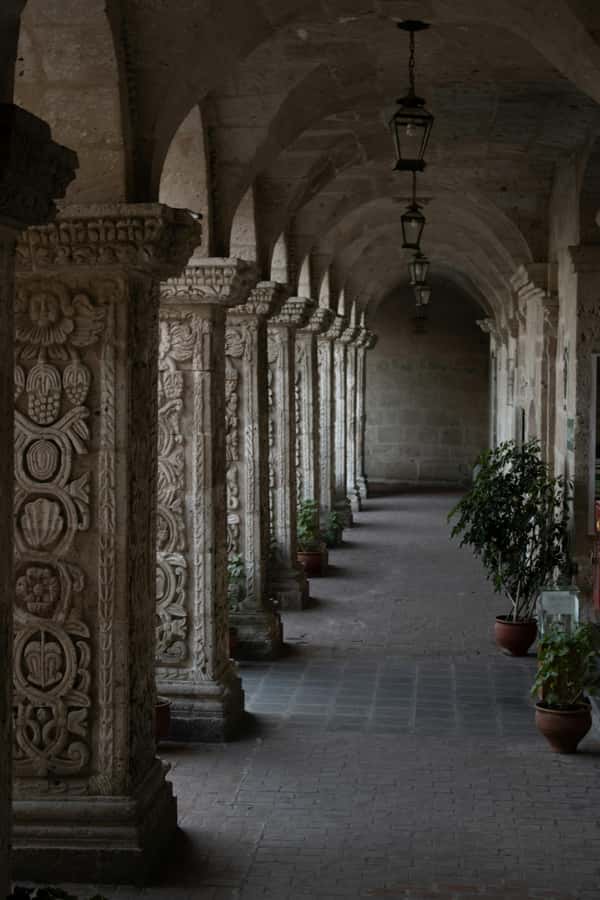
The next stage takes you into colonial cloisters. These enclosed courtyards are valuable stops because their design rewards slow observation. Arched passages, stonework, and interior spaces show a quieter side of Arequipa’s colonial building tradition.
Here, the guide explains the purpose and past of these places. You get more than a quick photograph, since the architecture is tied to the people and customs that shaped the city.
I would pay attention to how the cloisters change the pace of the walk. The main streets can feel active and open, while these courtyards offer shade, symmetry, and a pause from traffic. They are also good places to ask questions about religious institutions, colonial life, and the mix of cultural influences found in Arequipa.
The tour promises stories, legends, and curious facts along the way. That is useful in a city where a building’s appearance may tell only part of its story. A local guide can point out details you might otherwise pass without noticing.
Still, expect an informal walking tour rather than a full architectural seminar. The quality depends on how much detail your guide gives and how engaged the group is. The strongest feedback describes Joss and Joseph as warm, well prepared, and able to explain architecture, geography, and cultural influences with enthusiasm.
Tambos and the everyday side of the old city
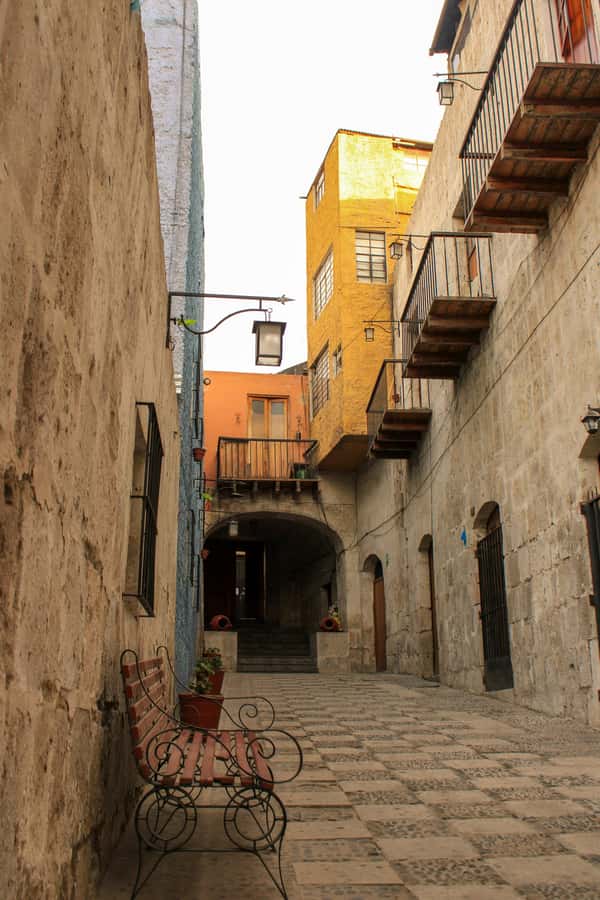
The tour also enters tambos, old lodgings that have played an important role in Arequipa for centuries. This is one of the more useful parts of the route because it shifts attention away from the city’s grandest monuments.
A tambo connects the historic center with ordinary movement, trade, and lodging. It helps you picture how people used the city over time, not just how officials or religious institutions represented it.
You walk through these older spaces while hearing about their place in local life. That makes the tour feel broader than a checklist of famous façades. I like this kind of stop because it gives the city a human scale.
The exact tambos visited are not named, so you should not book the tour expecting a specific complex unless the provider confirms it. What you can count on is the chance to see historic spaces that are less obvious than the Cathedral or main square.
This is also where a small group helps. With no more than six participants, you can stop to examine a passage or ask why a building was designed in a certain way. Several people who took the tour with only two or three participants received a more personal route, and in one case a pair was given what became a private tour after other bookings were canceled.
More history on the ground:
- Walking tour in the Historic Center of Arequipa
★ 4.4 · 180 reviews - Walking tour through the Historic Center of Arequipa
★ 4.0 · 3 reviews - Guided Tour of Historic and Monumental Trujillo
★ 5.0 · 930 reviews - Lima’s Vibrant Heritage: Exploring the City’s Landmarks Half-day
★ 4.5 · 581 reviews
Cobblestone streets, legends, and local recommendations
Between the formal sites, the walk follows picturesque cobbled streets and quieter corners of the center. This is not dead time. It is where you get a sense of the city’s texture, though the amount of commentary can vary.
The guide shares local traditions, legends, and stories passed down through generations. These details can make an old street easier to remember than a list of dates. They also give you conversation starters for the rest of your stay.
Joss has been praised for explaining Arequipa through several angles at once: architecture, geography, and cultural influence. That combination is especially helpful if you have just arrived and want to understand how the city fits together.
The practical advice is a real part of the tour’s value. Guides have pointed people toward restaurants, bars, cafes, museums, and further activities. Joss has also shared contact information and continued to help with suggestions after the walk. That kind of local orientation can save you from spending your limited time on places chosen only because they appear first in a search result.
You should keep one limitation in mind. One detailed assessment found stretches with a lot of walking and not enough explanation about the streets and buildings being passed. If you want nonstop commentary every minute, this may feel uneven. If you prefer room to look around and talk with the guide, the quieter sections may work well.
The final lookout and the volcano view
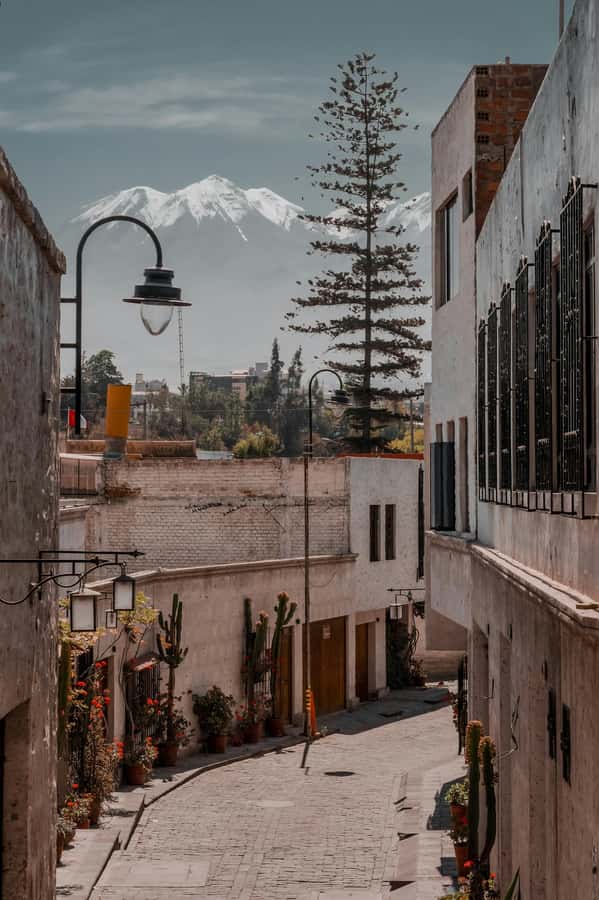
The tour ends at a viewpoint with a broad look over Arequipa and the surrounding volcanoes. Misti, Chachani, and Pichu Pichu are the key names to watch for.
This closing view gives the walk a useful sense of place. After seeing churches, cloisters, tambos, and city streets, you can look outward and understand that Arequipa is closely tied to the volcanic peaks around it.
The final stop is more than a photo opportunity. It links the city’s stone buildings to the natural forces that helped shape its setting and identity. If the weather is clear, this may be the most memorable part of the experience.
The exact viewpoint is not named in the tour details. Several people finished on a rooftop or terrace, with one person enjoying pisco sours during a sunset view. Drinks are not listed as included, so you should expect to pay for anything ordered at the final venue.
An afternoon departure may suit you if the lookout is open for sunset and conditions cooperate, but the tour does not promise a sunset or a particular drink. Morning departures may be better if you want clearer planning for the rest of your day.
What the $15 price really gives you
At $15 per person, this is priced as an affordable small-group introduction to Arequipa. You are paying for roughly two hours with a live guide, five historical sites, local stories, recommendations, and the chance to ask questions in English or Spanish.
The small group is important when judging value. A six-person limit allows the guide to adapt the walk, and a smaller booking may turn into a private-style experience without the cost of a fully private tour. Several bookings had only two or three people, while one guide continued with a pair after other participants canceled.
The price does not list meals, drinks, transport to the meeting point, or extra attraction tickets as included. The pisco sour mentioned by one person was an optional finish, not part of the stated package.
I would call the value strongest for a first day in Arequipa. The recommendations can help you plan the rest of your stay, and the guide can answer questions that a self-guided route may leave unresolved.
The value is less clear if you already know the historic center well or mainly want a fast parade of major monuments. In that case, the stretches with less commentary may feel like you are paying for a basic walk. The 4.9 rating from 87 ratings suggests very high satisfaction overall, but the single lower assessment is worth taking seriously because it identifies the main risk: the balance between walking and explanation.
English, Spanish, timing, and group size
Live guiding is available in English and Spanish. You should select or confirm your preferred language when booking, especially if language is central to your experience.
The maximum group size is six. This is a good fit if you want a social walk without a large crowd, or if you like being able to ask about food, customs, and places you pass.
The tour lasts two hours, with the actual hike described as approximately one and a half hours. Plan your schedule with the longer figure, particularly if you have a timed museum visit or restaurant reservation afterward.
The meeting point is in San Lázaro rather than a hotel. Since no transport is included, allow enough time to reach Campo Redondo. The activity offers free cancellation up to 24 hours before the start and allows you to reserve now and pay later, which helps if your Arequipa schedule is still shifting.
Some content may appear in its original language. That may be useful for local names and expressions, but ask the guide to explain anything you miss.
Who will enjoy this Arequipa walk
I would recommend this experience to first-time visitors who want context before exploring alone. It is also a good match for people who prefer a small group, enjoy local stories, and want restaurant and activity suggestions from someone based in the city.
It suits couples and solo visitors particularly well when the group is small. The walk can become almost private, and the guide has room to respond to your interests.
It may be less suitable if you want a museum-heavy tour with detailed commentary at every street corner. It also may not satisfy you if you dislike walking on cobblestones or want transportation between stops. The provided information does not describe accessibility arrangements, so ask the provider directly if you have mobility concerns.
For the best use of your time, I would schedule it early in your stay. You can use the recommendations afterward, return to sites that deserve more time, and avoid filling the rest of your visit with guesswork.
Should you book this tour?
Book it if you want a friendly introduction to Arequipa that mixes major architecture with tambos, local traditions, less obvious corners, and a volcano view. The strongest reasons are the small groups, the guides’ local advice, and the chance to finish above the city with Misti, Chachani, and Pichu Pichu in view.
Think twice if you expect a tightly scripted tour with constant commentary and extensive interior visits. At $15, the price is fair for a small-group orientation, but the experience depends on your guide and may include quieter walking stretches.
For most first visits, I would choose it near the beginning of a stay. It gives you the basic map, several useful leads, and a human introduction to the White City before you set off on your own.
FAQ
How much does the Arequipa historic center walking tour cost?
The price is $15 per person.
How long does the tour last?
The stated duration is two hours. The walking portion is described as approximately one and a half hours.
Where does the tour meet?
The meeting point is Campo Redondo San Lazaro in Arequipa, at approximately -16.3934138, -71.5336117.
What languages are available?
The live guide is available in English and Spanish. Some content may be shown in its original language.
How large is the group?
The tour is limited to six participants. Some bookings may have fewer people, and a pair may receive a private-style experience if others cancel.
Can I cancel or pay later?
You can cancel up to 24 hours in advance for a full refund. The reserve-now, pay-later option lets you hold a place without paying immediately.
More Walking Tours
- Arequipa: Walking Tour and Santa Catalina Monastery
★ 4.4 · 7 reviews - Arequipa Walking Tour and Santa Catalina Monastery
★ 5.0 · 4 reviews - Lima: Miraflores Trending Flavors Half-Day Walking Tour
★ 4.9 · 98 reviews - Cusco: Historic Walking Tour with Pisco Sour and Music Show
★ 4.6 · 65 reviews
Just added around Arequipa
- From Arequipa: Colca Canyon and Condor Watching Day Trip★ 3.7 · 3 reviews
- Arequipa : Colca Canyon 2-Day Adventure★ 5.0 · 3 reviews
- Cooking Class Typical Food in Arequipa★ 3.9 · 3 reviews
- 3-day trek to the Colca Canyon from Arequipa ending in Puno★ 4.2 · 3 reviews
- Colca Canyon Day Trip: From Arequipa to Puno★ 3.5 · 3 reviews
- 2 day 1 night trek / Colca Canyon★ 3.0 · 3 reviews
- From Arequipa: Full Day Colca Canyon Tour★ 4.5 · 3 reviews
- Arequipa: Catarata de Pillones and Bosque de Piedras Tour★ 4.3 · 3 reviews
Historical Tours, compared.
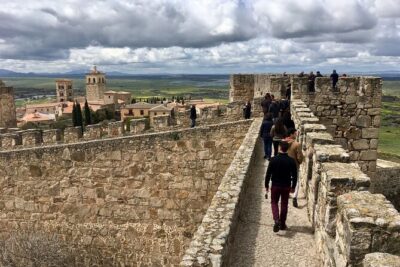
Guided Tour of Historic and Monumental Trujillo
Read our review →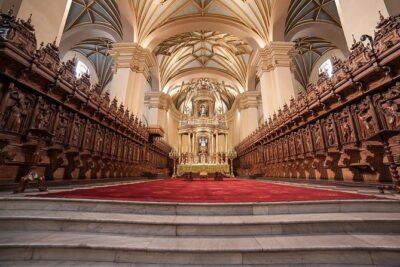
Lima’s Vibrant Heritage: Exploring the City’s Landmarks Half-day
Read our review →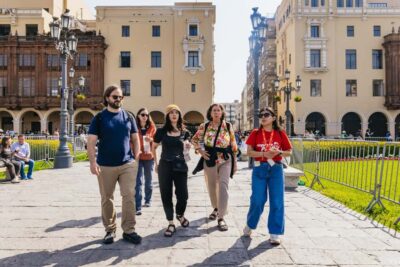
Historic Center Street Food, Market, and Eateries Tour
Read our review →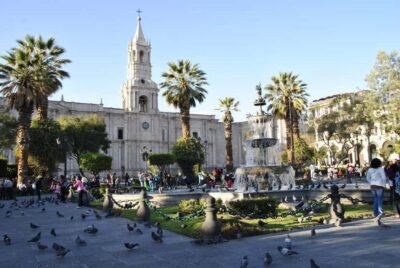
Walking tour in the Historic Center of Arequipa
Read our review →
Historic Downtown, Miraflores & Catacombs Private Tour
Read our review →
Machu Picchu Private Archaeological and Historical Guided Tour
Read our review →
Browse the lists this tour appears in