
Reviewed · HISTORICAL TOURS
Walking tour through the Historic Center of Arequipa
Arequipa rewards curious walkers. This three-hour tour links the city’s grand central square, the Company cloisters, camelid fibers, the Chili River, and San Lázaro in one compact route. I like the mix of major sights and local texture, especially the chance to see alpacas and vicuñas at Mundo Alpaca rather than simply admiring church facades.
I also like the ending near the Monastery of Santa Catalina or the Juanita Mummy Museum, two useful places to continue exploring. The main drawback is that admission tickets and food cost extra, and the full route is on foot, so comfortable shoes matter. At $25 per person, the price is fair if you want a guide to connect the sights, but it is less of a bargain if you plan to enter several attractions afterward.
In This Review
- Key points to know before you book
- Starting at Arequipa’s main square
- The Company cloisters and Arequipa’s stonework
- Bridge views toward Misti and the Chili River
- Mundo Alpaca and the fibers behind Andean textiles
- San Lázaro, the first settlement of the White City
- Finishing near Santa Catalina or the Juanita Museum
- What the $25 price really covers
- Who should choose this Arequipa walk?
- Should you book this tour?
- FAQ
- Where does the walking tour begin?
- How long does the experience last?
- What is included in the price?
- Are entrance tickets included?
- Is food included?
- Which languages are available?
- Does the tour include hotel pickup?
- Which places are visited during the walk?
- Can I cancel for a refund?
Key points to know before you book
- Three hours on foot: The tour covers the central square, Company cloisters, a bridge, Mundo Alpaca, and San Lázaro without private transport between stops.
- A strong introduction to Arequipa: You get architecture, city history, river views, volcano scenery, and traditional camelid textiles in one outing.
- Plaza de Armas begins the story: The tour starts in Arequipa’s main square, with its arches and portals setting the tone for the rest of the walk.
- Mundo Alpaca adds a practical local angle: You can see llamas, alpacas, suris, and vicuñas, then browse fabrics made from their fibers.
- Bridge details need checking: The highlights refer to Grau Bridge, while the route description names Bolognesi Bridge. Confirm the exact bridge stop when booking.
- Hotel pickup has a narrow limit: Pickup is included only from hotels inside Arequipa’s historical center.
Starting at Arequipa’s main square
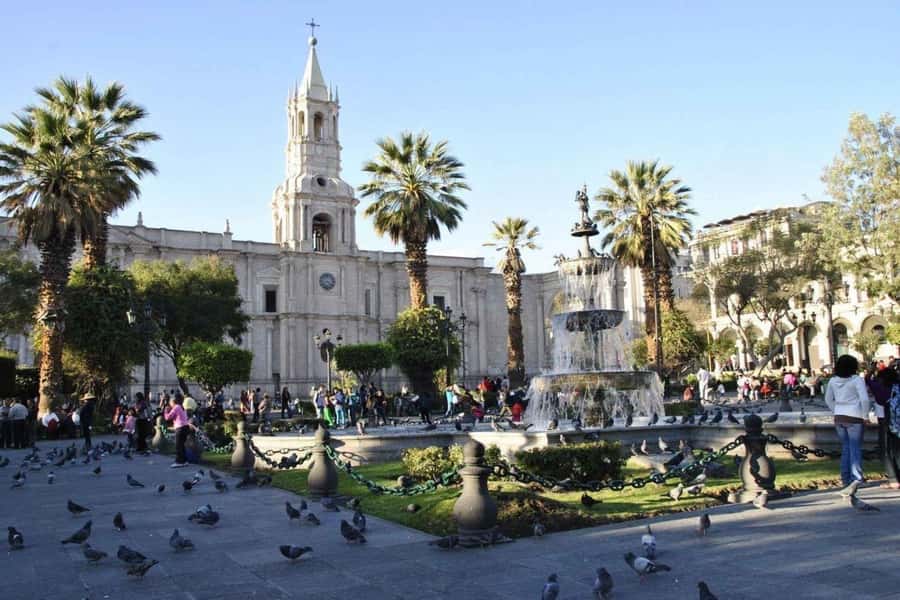
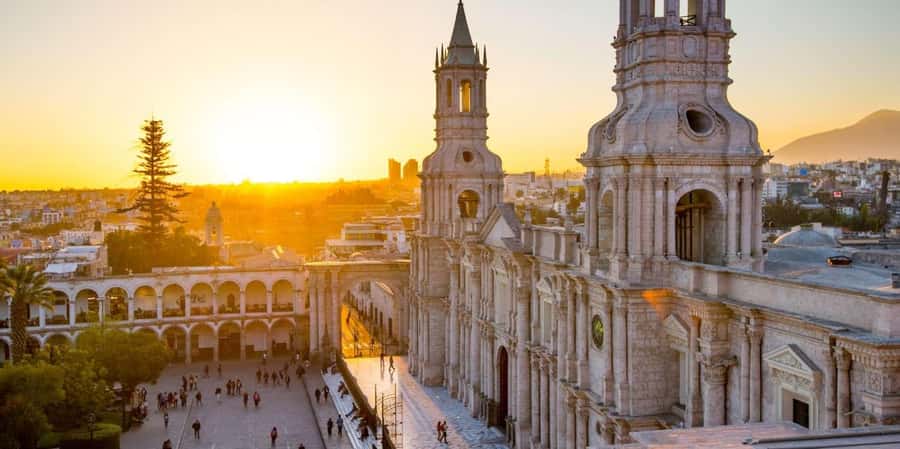
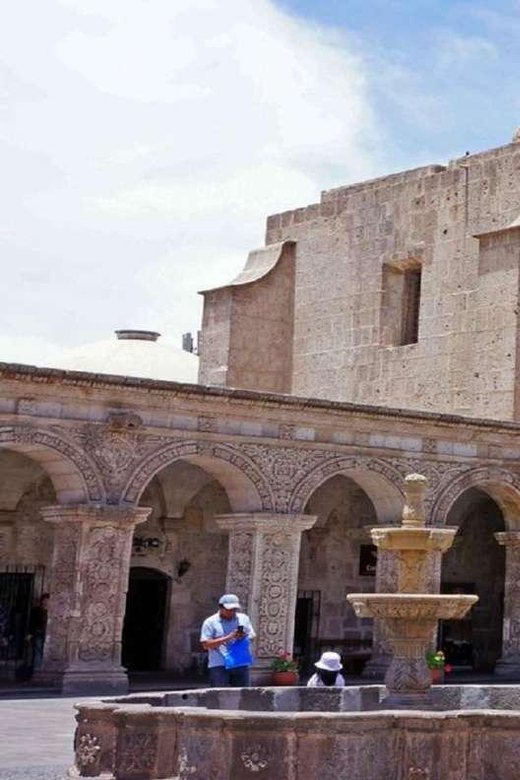
The tour begins in the main square, the right place to get your bearings. Arequipa’s central plaza is framed by arches and portals, giving you an immediate sense of the city’s polished volcanic-stone architecture.
Your guide explains the square’s history while you walk around it. That matters because the plaza is not just a photo stop. It is the city’s visual and civic center, and the surrounding buildings help explain why Arequipa is often called the White City.
I would take a few minutes before the guide begins to look closely at the arches, upper balconies, and the way the square is arranged. A walking tour works best here because you can pause, look upward, and notice details that are easy to miss from a vehicle.
The starting point also makes the tour easy to pair with other plans. If you arrive early, you can meet in the plaza without needing a long transfer from another part of the city. Hotel pickup is available only for accommodations in the historical center, so you should confirm that detail if you are staying farther out.
More history on the ground:
- Walking tour in the Historic Center of Arequipa
★ 4.4 · 180 reviews - Arequipa: Walk through the Historic Center of the City
★ 4.9 · 87 reviews - Arequipa, Historic and Colonial City and Santa Catalina Monastery
★ 4.5 · 42 reviews
The Company cloisters and Arequipa’s stonework
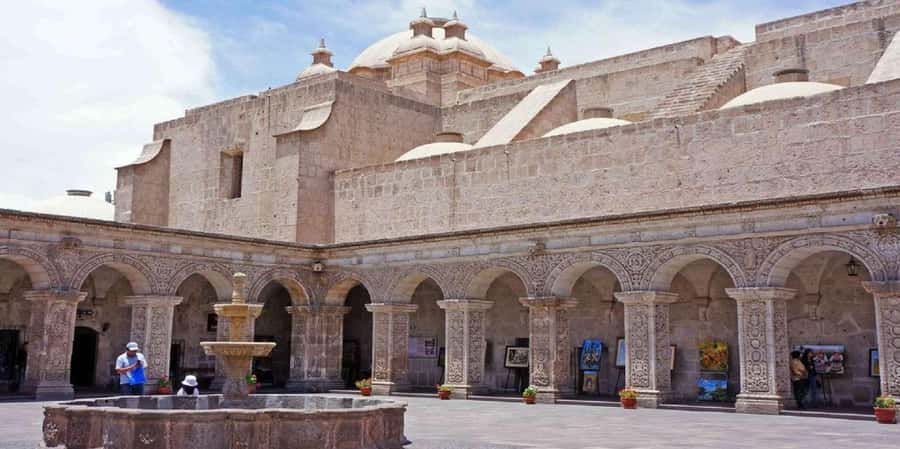
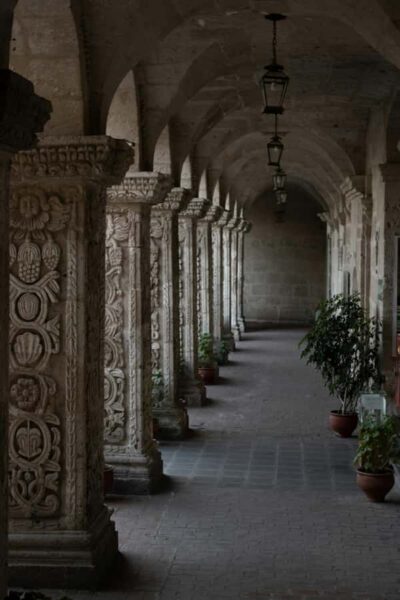
The next major stop is the Company’s cloisters, one of the architectural highlights of the walk. These cloisters are known for their impressive design, and they offer a different experience from the open space of the main square.
Cloisters reward slow looking. You can expect carved details, enclosed courtyards, and a quieter rhythm than the plaza outside. Your guide gives the architecture a human scale by explaining what you are seeing instead of leaving you to guess at every column and decorative surface.
I like this part of the tour because it focuses on one important building rather than rushing past a long list of churches. The visit also gives you a better sense of how Arequipa’s stone architecture works in an intimate setting.
Admission tickets are not included. The tour price covers the guide and walking route, but you should budget separately for any paid entrance during the day. The available information does not specify the ticket price for the cloisters, so ask before the visit if your budget is tight.
Bridge views toward Misti and the Chili River
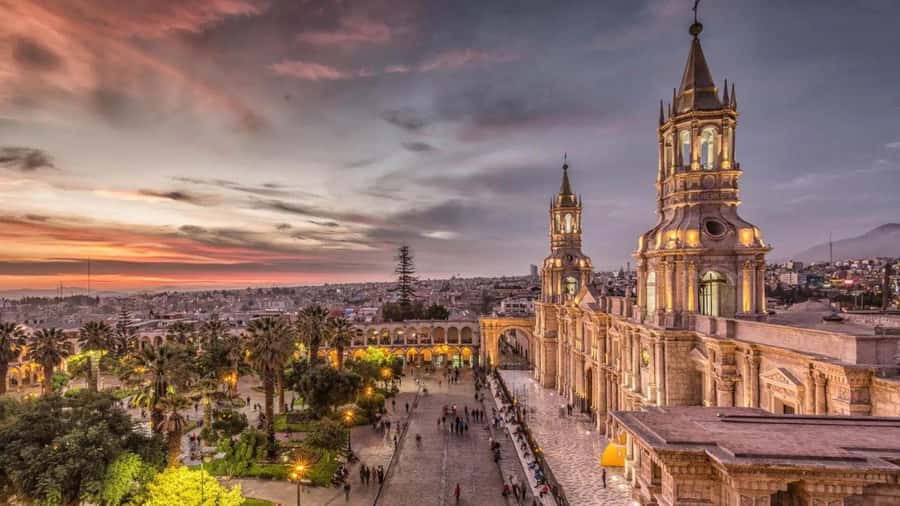
The walk continues toward a bridge where you can look across the Chili River and toward volcanoes such as Misti. The highlights identify Grau Bridge, while the route details name Bolognesi Bridge. Since those are different names, I would confirm the exact stop with Exploor Trip E.R.L. before setting out.
Either way, this portion gives the tour a welcome change of pace. The plaza and cloisters are about buildings and civic life. At the bridge, the view opens outward to the river and the volcanic setting that gives Arequipa much of its character.
Misti is the key visual prize when conditions allow. You are not promised a clear view, so keep expectations sensible. The value is in seeing the city in relation to its natural surroundings, not in treating the bridge as a guaranteed volcano photo stop.
The bridge segment is also a good reason to choose a walking tour instead of an indoor-only city visit. You get time outside and a wider view of Arequipa’s setting. Still, the tour description does not say how long the group stays at the bridge, so serious photographers may want to ask whether there is enough time for careful pictures.
Mundo Alpaca and the fibers behind Andean textiles
Mundo Alpaca brings a useful working element to the route. The site includes an old breeding farm for camelids such as llamas, alpacas, suris, and vicuñas. You can see the animals and learn about the fibers connected with Andean clothing and textiles.
This stop broadens the tour beyond colonial architecture. You get a look at animals that are important to Peru’s textile traditions, then have the option to buy fabrics made from their fibers. That shopping option is not required, which is helpful if you want to browse without feeling committed to a purchase.
I would treat Mundo Alpaca as a chance to understand materials, not just a retail stop. If you are interested in clothing, weaving, or practical souvenirs, the visit may be one of the most useful sections of the tour. You can connect what you see at the breeding farm with the finished fabrics available for purchase.
Keep in mind that purchases are not part of the $25 price. Food is not included either, and no meal or snack is listed during the three-hour walk. Eat beforehand or plan food after the tour rather than expecting a break built into the route.
More walking tours on foot:
- Arequipa Walking Tour city center and drinks experience
★ 5.0 · 72 reviews - Arequipa: Walking Tour and Santa Catalina Monastery
★ 4.4 · 7 reviews - Arequipa Walking Tour and Santa Catalina Monastery
★ 5.0 · 4 reviews - Lima: Miraflores Trending Flavors Half-Day Walking Tour
★ 4.9 · 98 reviews
San Lázaro, the first settlement of the White City
After Mundo Alpaca, the route heads to San Lázaro. This neighborhood is described as the first town where the White City was founded, giving the walk a more local and older residential feel than the formal center.
San Lázaro is important because it helps place Arequipa’s growth in a real neighborhood rather than only in monuments. The central square shows the city at its grandest. San Lázaro gives you a chance to see the earlier settlement connected with the city’s beginnings.
The route remains entirely on foot, so this is where pacing becomes important. Three hours is enough for the listed stops, but it is not a leisurely full-day wander with long café breaks. Wear shoes that can handle steady walking, and bring water since food and drinks are not included.
The experience should suit you if you like city tours that mix famous sights with a neighborhood stop. If you prefer a short visit focused only on the Plaza de Armas and major interiors, this route may feel more active than necessary.
Finishing near Santa Catalina or the Juanita Museum
The tour ends in the city center, close to the Monastery of Santa Catalina or the Juanita Mummy Museum. This is a useful finish because both are major places to visit independently, though neither admission ticket is included in the walking tour.
You can use the tour as an orientation session and then decide what deserves more of your time. The guide introduces the central area, so you finish with a better sense of where to return for a longer visit.
The ending point also keeps your afternoon flexible. You can stop for food, visit one of the nearby attractions, or continue exploring the center on your own. Since the exact endpoint may be near either Santa Catalina or the Juanita Museum, confirm where the group will finish if you have a timed entry afterward.
What the $25 price really covers
At $25 per person, the tour includes a professional guide, the walking route, and hotel pickup when your hotel is inside the historical center. It does not include food or entrance tickets.
That makes the price reasonable for a first look at Arequipa, especially if you want explanations as you move between sights. You are paying for structure and local context, not for a package with admissions or meals bundled in.
The value depends on your plans. If you would otherwise walk these streets alone and skip paid interiors, $25 may feel like an added cost. If you want the Company cloisters explained, the square placed in context, and the route organized around the river, camelids, and San Lázaro, the fee is easier to justify.
The tour is offered in Spanish and English with a live guide. That choice matters because the experience relies on explanation rather than transport or special equipment. Ask for the language you need when reserving.
Who should choose this Arequipa walk?
I would recommend it to first-time visitors who want a quick but broad introduction to the city. It suits you especially well if you enjoy architecture but also want volcano views, a neighborhood visit, and a stop connected with alpaca and vicuña fibers.
It is also a practical choice for a short stay. In three hours, you cover several parts of central Arequipa and finish near two major attractions. You can then spend the rest of the day on the places that interested you most.
You may want a different plan if you dislike walking, need frequent food breaks, or want every admission included in the price. The whole journey is on foot, and the tour does not include meals, drinks, or tickets.
The cancellation policy offers some useful flexibility. You can cancel up to 24 hours before the activity for a full refund, and the reserve-now, pay-later option lets you hold a place without paying immediately. Starting times depend on availability, so check the schedule before building the rest of your day around it.
Should you book this tour?
Book it if you want Arequipa explained through several connected experiences rather than a quick loop around the main square. The best reasons are the Company cloisters, the bridge views toward Misti and the Chili River, Mundo Alpaca, and San Lázaro’s connection with the city’s beginnings.
Skip it if you already know the historic center well or prefer to choose your own pace. Before booking, confirm whether the bridge stop is Grau Bridge or Bolognesi Bridge, check the starting time, and allow extra money for tickets and food.
For most first visits, this is a sensible three-hour introduction. It gives you a clear route, a live guide in English or Spanish, and enough variety to show why Arequipa is more than a pretty central plaza.
FAQ
Where does the walking tour begin?
The tour begins in the main square of Arequipa.
How long does the experience last?
The walking tour lasts three hours.
What is included in the price?
The $25 price includes a professional guide, the walking tour, and hotel pickup from hotels located in the historical center.
Are entrance tickets included?
No. Tickets are not included in the tour price.
Is food included?
No. Food is not included.
Which languages are available?
The live guide is available in Spanish and English.
Does the tour include hotel pickup?
Yes, but pickup is only available from hotels in Arequipa’s historical center.
Which places are visited during the walk?
The route includes the main square, the Company’s cloisters, a bridge with views toward the volcanoes and Chili River, Mundo Alpaca, and the San Lázaro neighborhood.
Can I cancel for a refund?
Yes. You can cancel up to 24 hours in advance for a full refund. You can also reserve now and pay later.
Just added around Arequipa
- From Arequipa: Colca Canyon and Condor Watching Day Trip★ 3.7 · 3 reviews
- Arequipa : Colca Canyon 2-Day Adventure★ 5.0 · 3 reviews
- Cooking Class Typical Food in Arequipa★ 3.9 · 3 reviews
- 3-day trek to the Colca Canyon from Arequipa ending in Puno★ 4.2 · 3 reviews
- Colca Canyon Day Trip: From Arequipa to Puno★ 3.5 · 3 reviews
- 2 day 1 night trek / Colca Canyon★ 3.0 · 3 reviews
- From Arequipa: Full Day Colca Canyon Tour★ 4.5 · 3 reviews
- Excursion Salinas Lagoon and National★ 5.0 · 3 reviews
Historical Tours, compared.
Guided Tour of Historic and Monumental Trujillo
Read our review →
Lima’s Vibrant Heritage: Exploring the City’s Landmarks Half-day
Read our review →
Historic Center Street Food, Market, and Eateries Tour
Read our review →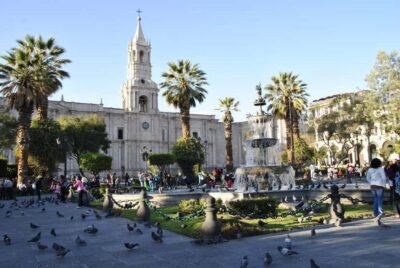
Walking tour in the Historic Center of Arequipa
Read our review →
Historic Downtown, Miraflores & Catacombs Private Tour
Read our review →
Machu Picchu Private Archaeological and Historical Guided Tour
Read our review →Browse the lists this tour appears in