
Reviewed · HISTORICAL TOURS
Walking tour in the Historic Center of Arequipa
Arequipa is best understood on foot. This two-hour walk starts one block from the Plaza de Armas and links the city’s grand colonial center with quiet streets, volcano views, alpacas, and the old San Lazaro neighborhood. I like the mix of major landmarks and small local details, especially the Cloisters of the Company and the visit to Mundo Alpaca. I also like that guides such as Edgar, Johan, Jorge Echeandia, Beatriz, and Francisco bring humor and local stories to the route.
The main caution is the payment structure. The advertised price is $10, but you are also asked for a voluntary tip at the end, often discussed as roughly 30 to 50 soles per person. The tour can be excellent value, but you should know the real cost before you book.
In This Review
- Key points about the Arequipa walking tour
- Starting beside Arequipa’s main square
- Reading the Plaza de Armas through its arches
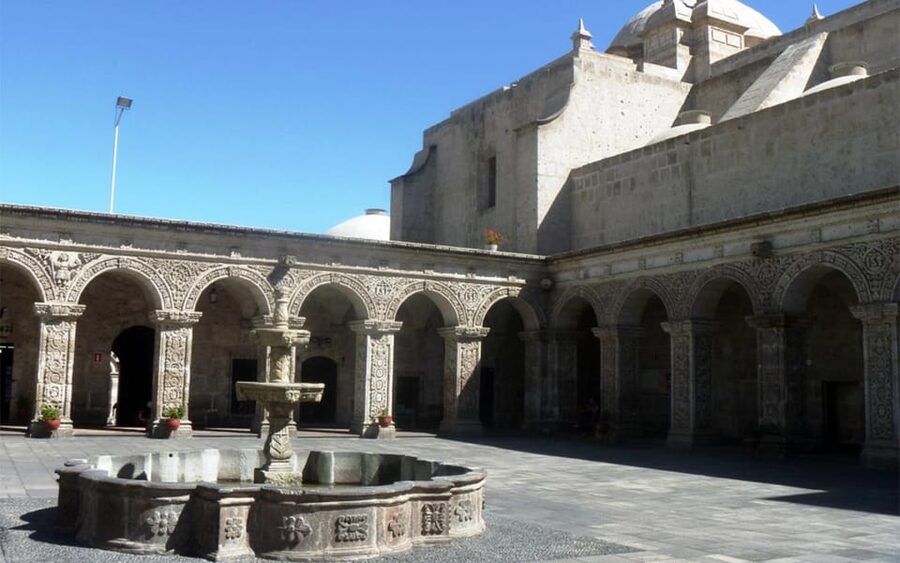
- The Cloisters of the Company and Arequipa’s courtyards
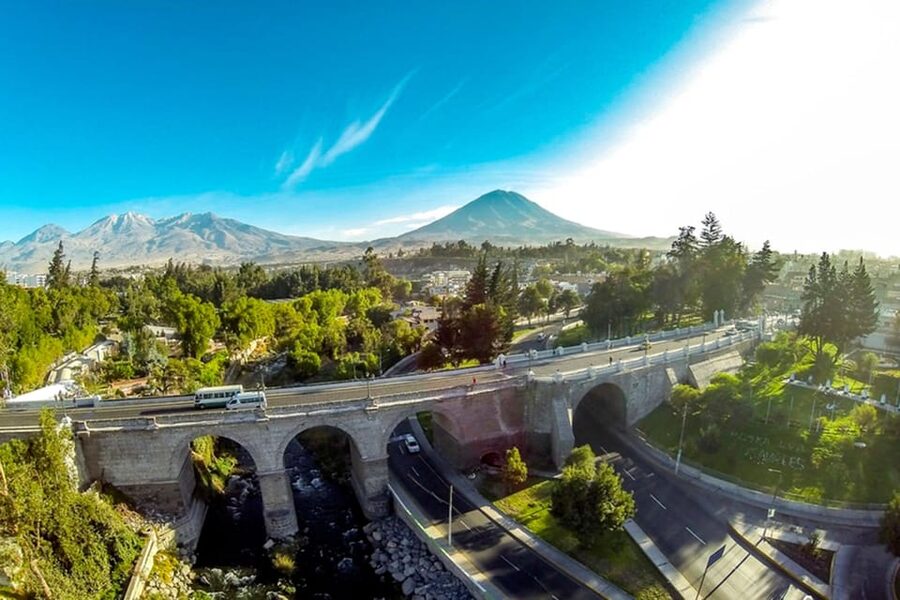
- A high viewpoint for Misti, Chachani, and Pichu Pichu
- Meeting llamas and alpacas at Mundo Alpaca
- San Lazaro, the first settlement of the White City
- What the guides add to the walk
- The real price and what you receive
- Who should book this Arequipa walk?
- Practical advice before you go
- Should you book the Arequipa Historic Center Walking Tour?
- FAQ
- Where does the Arequipa walking tour begin?
- How long does the walking tour last?
- Which languages are available?
- Does the tour include Santa Catalina Convent or the Juanita mummy museum?
- Is the $10 price the only payment required?
- Can I cancel the booking?
Key points about the Arequipa walking tour
- Starts beside the Plaza de Armas: Meet at Santa Catalina Street 204, one block from the main square, where the guide carries an umbrella.
- Covers more than colonial buildings: The route includes plazas, courtyards, old mansions, city gardens, volcano viewpoints, camelids, and San Lazaro.
- Mundo Alpaca adds a memorable local stop: You can see llamas, alpacas, suri alpacas, and vicuñas, with fabrics available for purchase.
- Guides are the biggest strength: Edgar, Johan, Jorge Echeandia, Beatriz, and Francisco are praised for clear explanations, humor, and helpful food advice.
- The $10 price is not the full expected payment: A tip is requested at the end, while optional entry to Santa Catalina Convent or museums costs extra.
- Good for your first day in Arequipa: The walk gives you a working map of the center and helps you choose where to return later.
Starting beside Arequipa’s main square
The meeting point is Santa Catalina Street 204, only one block from the Plaza de Armas. That is a useful location for a first-day tour because you do not need a taxi across town or a long search through unfamiliar streets. Look for the guide holding an umbrella, the identifying sign provided for the meeting point.
The exact coordinates are approximately -16.3967191, -71.5366788. You probably will not need them if you are already near the square, but they are handy if your phone map sends you toward the wrong stretch of Santa Catalina Street.
The tour is offered in English or Spanish, and it is led by a live guide rather than an audio recording. That matters here. Arequipa’s colonial buildings are attractive at a glance, but the useful part is learning why their stonework, religious art, courtyards, and portals look the way they do.
The route lasts about two hours, though one outing lasted around two and a half hours. Allow some flexibility, especially if the guide is answering many questions or adding a viewpoint. The walk ends near the Plaza de Armas, close to where you started.
More history on the ground:
- Arequipa: Walk through the Historic Center of the City
★ 4.9 · 87 reviews - Arequipa, Historic and Colonial City and Santa Catalina Monastery
★ 4.5 · 42 reviews - Walking tour through the Historic Center of Arequipa
★ 4.0 · 3 reviews
Reading the Plaza de Armas through its arches
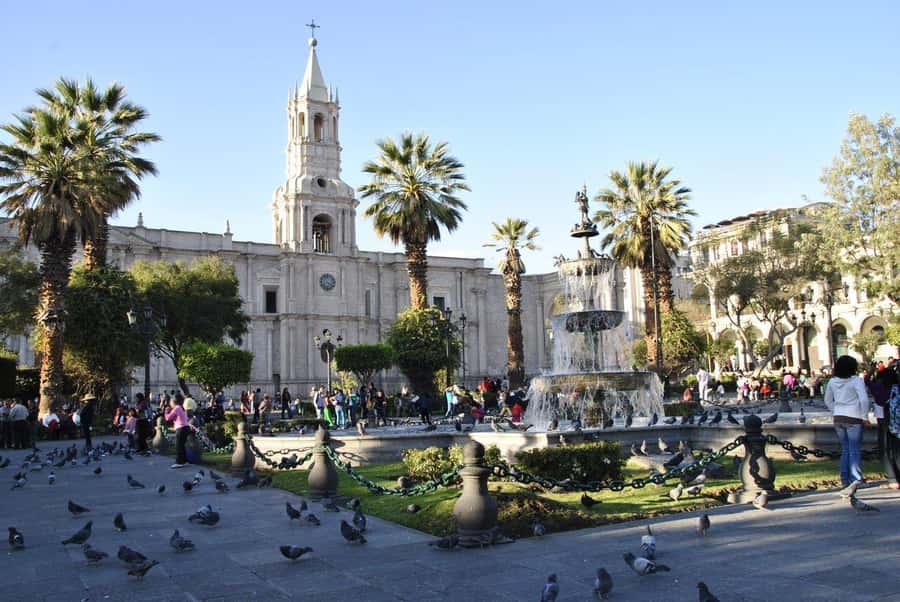
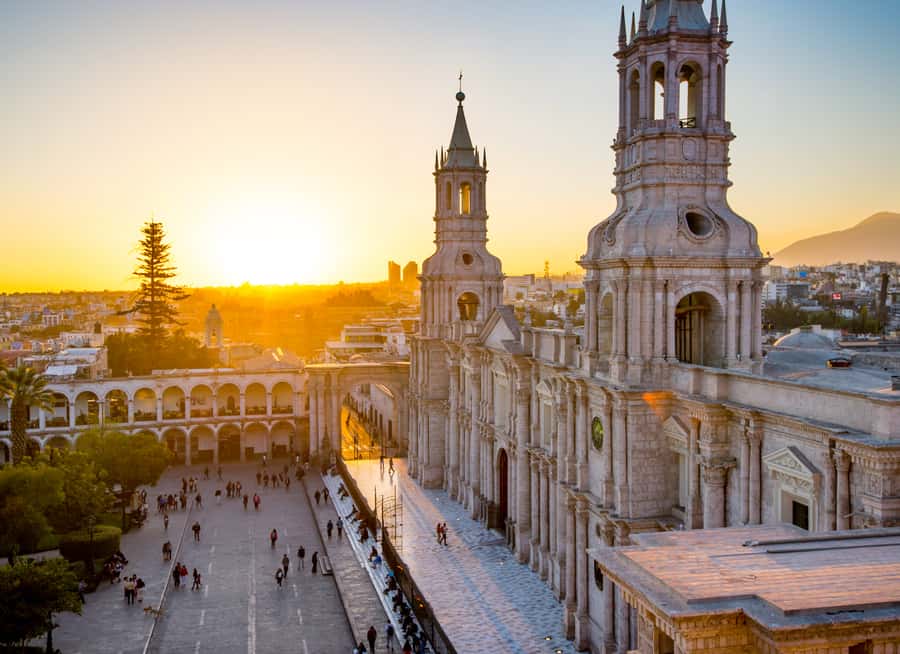
The Plaza de Armas is the natural opening chapter. You will look at the traditional arches and the portals that frame the square, while the guide explains the role of the plaza in Arequipa’s story.
This is more useful than simply taking a few pictures and moving on. The square is the city’s reference point, so understanding its layout helps you find Santa Catalina Street, the surrounding churches, restaurants, museums, and nearby streets during the rest of your stay.
The guide also places the architecture in a wider local setting. Arequipa is known as the White City, and the pale volcanic stone gives the historic center a unified look. A good guide helps you notice the difference between a handsome façade and the details that reveal its religious, civic, or residential purpose.
The pace can be brisk. One participant felt there was too little time for photographs, so I would not treat this as a relaxed photography walk. Take a few quick shots, then keep listening. You can return to the square later when you have more time.
The Cloisters of the Company and Arequipa’s courtyards
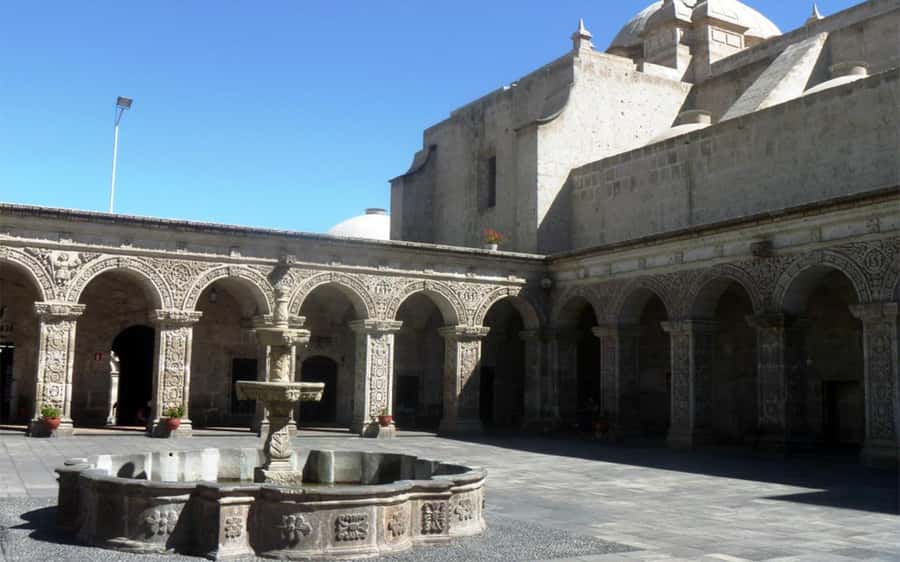
The Cloisters of the Company are one of the strongest architectural stops. Their carved stone, enclosed courtyards, and carefully framed passages show how much visual drama can be packed into a relatively small space.
This part of the walk is especially valuable if you want more than a list of dates. Religious architecture in Arequipa carries layers of meaning, and Beatriz was praised for explaining the ideas behind the religious art and building design in clear terms. You can ask questions as you go, which helps if you are unsure what you are looking at.
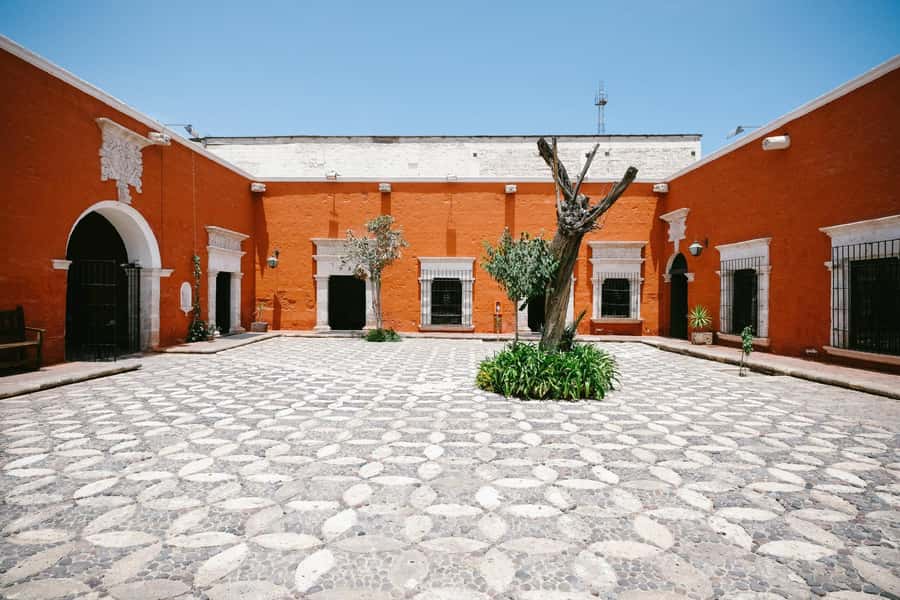
After the cloisters, the route moves through charming streets near the center. You might see old mansions, traditional courtyards, and older city gardens that are easy to miss when you walk alone. These quieter details give the tour balance. The Plaza de Armas supplies the grand public view, while the side streets show how the city’s older private spaces were arranged.
Some stops may be brief, depending on the group and the guide. If you have a particular interest in architecture, say so early. Guides have shown a willingness to answer questions, and the experience is better when you treat it as a conversation rather than a moving lecture.
A high viewpoint for Misti, Chachani, and Pichu Pichu
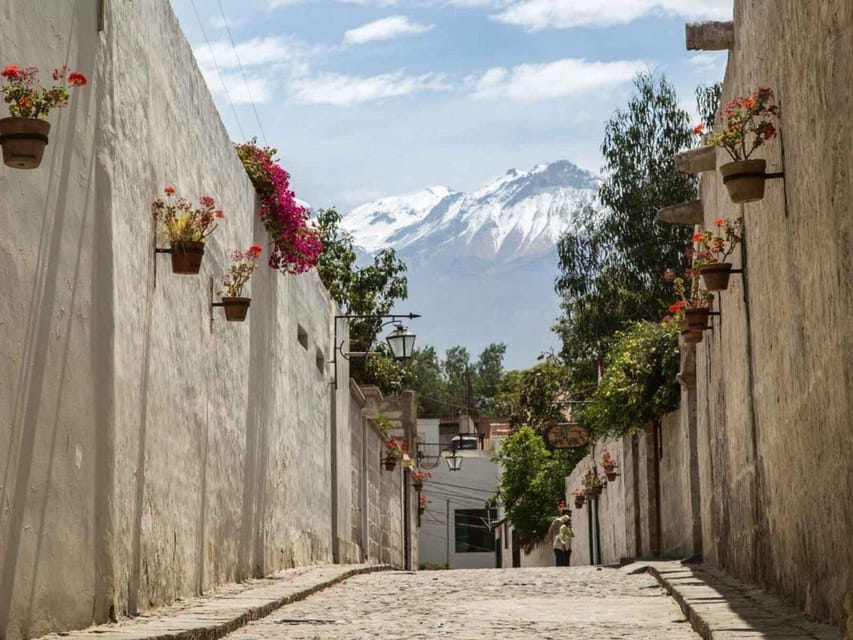
The route includes a strategic point for views toward the volcanoes, including Misti, Chachani, and Pichu Pichu. Several people singled out the volcano views as a highlight, and it is easy to see why. The mountains give Arequipa its dramatic setting, and a city walk feels more complete once you understand what rises beyond the buildings.
One guide also took the group to the top of a hotel for a wide view above the city. The exact viewpoint may depend on the day’s route and prior arrangements, so do not assume every group will see the same rooftop or terrace. Still, the tour clearly makes an effort to reach useful outlooks rather than keeping you at street level.
Bring your phone or camera ready, but remember the timing issue. This is a walking tour with several stops, not a long photo session. If the sky is clear, you will want extra time. The guide may need to keep the group moving, particularly if the group is large.
The volcano stop also gives the history a physical anchor. Instead of hearing only about Arequipa in the abstract, you see the surrounding peaks that shape the city’s identity and views.
More walking tours on foot:
- Arequipa Walking Tour city center and drinks experience
★ 5.0 · 72 reviews - Arequipa: Walking Tour and Santa Catalina Monastery
★ 4.4 · 7 reviews - Arequipa Walking Tour and Santa Catalina Monastery
★ 5.0 · 4 reviews - Lima: Miraflores Trending Flavors Half-Day Walking Tour
★ 4.9 · 98 reviews
Meeting llamas and alpacas at Mundo Alpaca
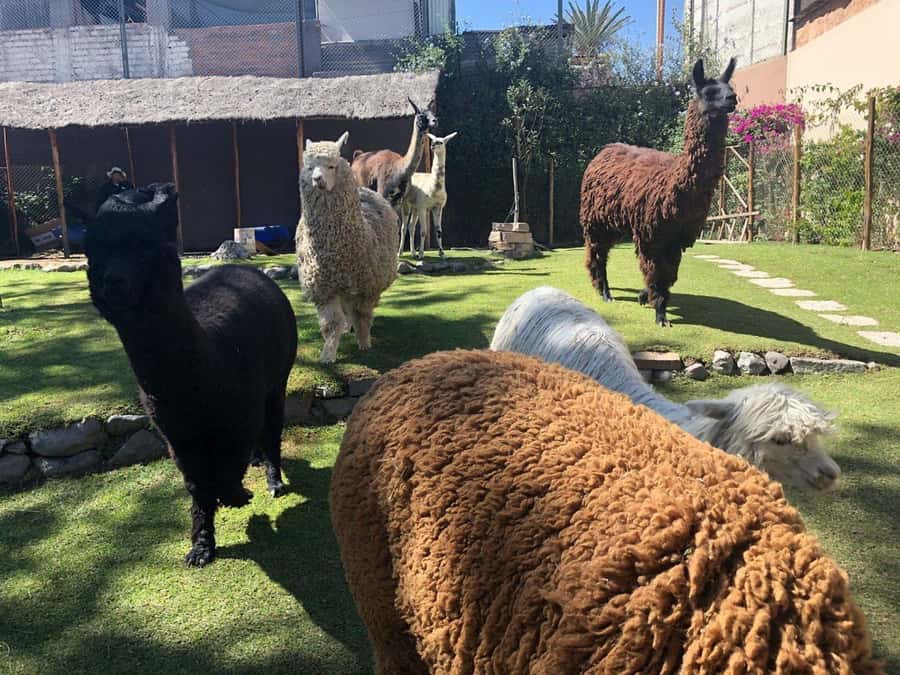
Mundo Alpaca is the route’s most unexpected change of pace. Here you can see camelids such as llamas, alpacas, suri alpacas, and vicuñas at an older breeding farm close to the city center.
The stop works well because it connects local textiles with living animals. You are not only looking at a finished scarf or sweater in a shop. You can see the animals associated with the fibers and learn why alpaca products are such a familiar part of Peruvian shopping.
A baby llama or alpaca was a particular highlight for one group, and feeding the animals can be part of the experience. I would treat this as a short cultural and animal encounter, not as a full zoo visit. The description calls it a small zoo of camelids, so expectations should stay modest.
You can optionally buy cloth made from the same fibers. This is convenient, but do not feel pressured to purchase. The tour remains worthwhile if you only want to see the animals and understand the textile connection.
Mundo Alpaca also helps break up the architecture. Two hours of churches and stone façades can feel repetitive, especially for children or anyone with limited interest in buildings. The camelids give the walk a simple, memorable surprise.
San Lazaro, the first settlement of the White City
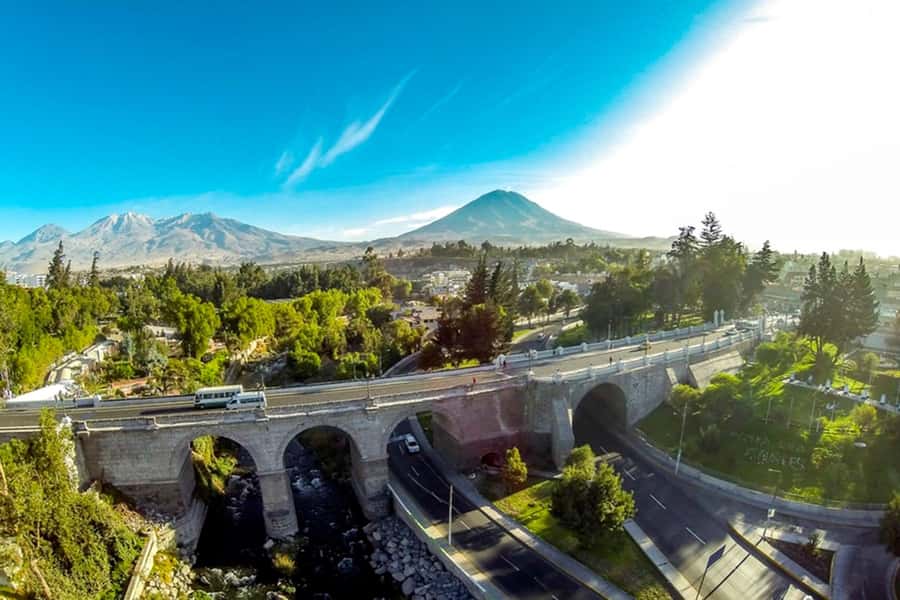
The final major neighborhood stop is San Lazaro, described as the first town where the White City was founded. Its smaller streets offer a different mood from the formal Plaza de Armas.
This is where I would pay attention to the guide’s storytelling. San Lazaro is not included just to add another location to the list. It helps you understand how Arequipa developed beyond its central square, with older lanes and a more intimate scale.
The neighborhood is a good place to compare public and private Arequipa. In the center, you see monumental portals and formal religious buildings. In San Lazaro, the experience is more about the feel of an older residential quarter and the early shape of the city.
The route then returns toward the center, finishing near the Plaza de Armas. That ending is practical. You can continue directly to lunch, return to your hotel, or use the guide’s recommendations to plan the rest of the day. Francisco, Edgar, Beatriz, and other guides have helped people choose places to eat and get oriented around town.
What the guides add to the walk
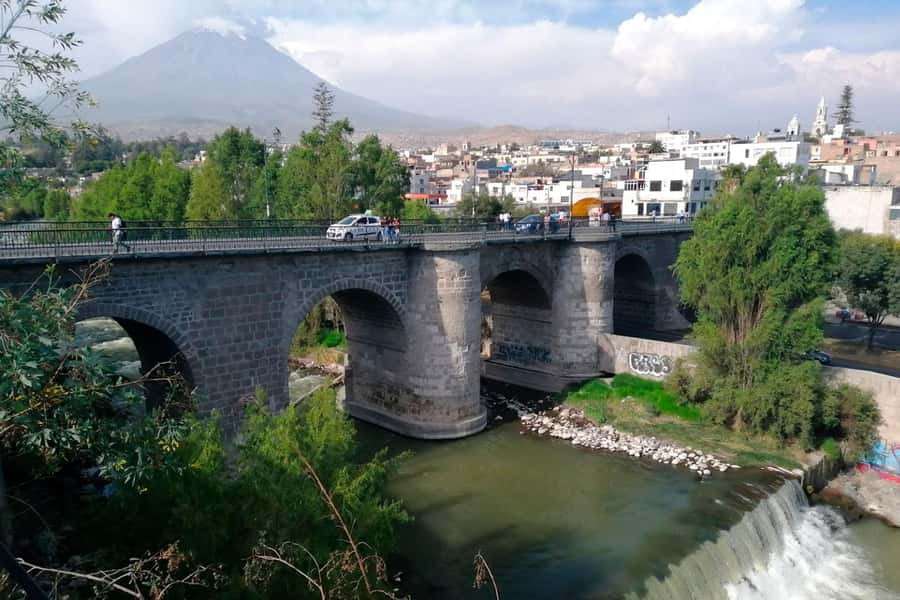
The most consistently praised feature is the guide. People have described the best guides as funny, engaging, generous with information, and happy to answer questions. Edgar, in particular, was praised for combining strong local knowledge with humor and for explaining both historical subjects and ordinary modern life in Arequipa.
One guide pointed out a long line of people renewing national identity cards. That sort of detail may seem unrelated to colonial architecture, but it gives you a glimpse of the city as a living place rather than an outdoor museum.
The strongest guides also connect food, history, religion, and daily routines. Beatriz spent time explaining Peruvian food and Arequipa’s past, while another guide offered restaurant advice after the walk. A cocktail tasting and cheese helada were also included in one particularly full outing, though I would not assume those extras appear on every departure.
Guide quality can vary. One group had a poor start because the guide was not at the meeting point and the organizer did not answer the first phone call. The issue was eventually resolved, and Beatrice gave a very good tour, but this is a reminder to arrive at the stated location and keep your booking details available.
The real price and what you receive
The reservation price is $10 per person. That is low for a two-hour guided introduction, especially when the route covers the central square, the Cloisters of the Company, city streets, a volcano viewpoint, Mundo Alpaca, and San Lazaro.
But this is not simply a $10 all-in experience. The operator explains that the low reservation price covers the booking, then asks for a voluntary tip to help pay the guide and operating costs. One account put the expected tip at around 30 to 50 soles per person. Since the wording is voluntary, confirm the current expectation before you start if you need a firm budget.
Optional entry to Santa Catalina Convent or museums such as the Juanita mummy is separate. You may also need to pay for an internal guide at those places. The walking route itself is designed to show you a lot without requiring those extra tickets.
At its best, the total remains a good deal because you receive orientation, local explanation, and a route that would take effort to assemble alone. At the same time, the price should be judged as $10 plus a customary gratuity, not as a completely free walk. Clear expectations make for a better experience.
Who should book this Arequipa walk?
I would choose this tour if you have just arrived in Arequipa and want a useful first look at the center. It gives you enough history to make later visits to Santa Catalina Convent, the Juanita museum, and the city’s churches more meaningful.
It also suits you if you like variety. The route moves from grand public architecture to cloisters, old homes, volcano views, camelids, and a historic neighborhood. That variety is the main reason the walk feels fuller than a basic plaza tour.
Families may appreciate Mundo Alpaca, while food-focused visitors may enjoy guides who discuss local dishes and recommend restaurants. People interested in photography should know that the pace may leave little time for careful composition.
I would think twice if you want a slow, highly detailed architectural tour with long periods inside each building. I would also ask about the gratuity before booking if your budget is tight. The route covers a lot, so its strength is breadth and storytelling rather than deep time at each stop.
Practical advice before you go
Wear comfortable shoes. The entire experience is on foot, and the route lasts about two hours, with the possibility of running longer.
Arrive at Santa Catalina Street 204 with enough time to find the exact spot. The umbrella is the key sign, and the meeting point is only one block from the Plaza de Armas.
Keep water and sun protection handy. The provided information does not specify shade or rest breaks, so you should be ready for ordinary city walking conditions.
Ask early about optional entries. If you want Santa Catalina Convent or the Juanita mummy museum included, arrange it in advance and expect separate admission and internal guide costs.
The tour offers free cancellation up to 24 hours before the start, and you can reserve now and pay later. Starting times vary, so check availability for your date.
Should you book the Arequipa Historic Center Walking Tour?
Yes, if you want an affordable first orientation with more range than a standard plaza walk. The combination of the Cloisters of the Company, volcano views, Mundo Alpaca, and San Lazaro gives you a useful snapshot of Arequipa’s architecture, setting, animals, and daily life.
Book it with two conditions in mind: confirm the expected tip, and do not expect long photography stops or guaranteed access to paid museums. If you accept the brisk pace and the extra gratuity, this is a strong value introduction to the White City, especially on your first day.
FAQ
Where does the Arequipa walking tour begin?
It begins at Santa Catalina Street 204, about one block from the Plaza de Armas. The guide will be holding an umbrella.
How long does the walking tour last?
The stated duration is about two hours. One outing lasted around two and a half hours, so allow a little extra time.
Which languages are available?
The live tour guide can conduct the experience in English or Spanish.
Does the tour include Santa Catalina Convent or the Juanita mummy museum?
Those visits can be arranged with prior coordination, but they require separate entrance costs and internal guides.
Is the $10 price the only payment required?
No. The low reservation price is followed by a requested voluntary tip for the guide and operating costs. One stated expectation was about 30 to 50 soles per person, so confirm the current amount before the walk.
Can I cancel the booking?
Yes. The activity allows cancellation up to 24 hours in advance for a full refund. You can also reserve now and pay later.
Just added around Arequipa
- From Arequipa: Colca Canyon and Condor Watching Day Trip★ 3.7 · 3 reviews
- Arequipa : Colca Canyon 2-Day Adventure★ 5.0 · 3 reviews
- Cooking Class Typical Food in Arequipa★ 3.9 · 3 reviews
- 3-day trek to the Colca Canyon from Arequipa ending in Puno★ 4.2 · 3 reviews
- Colca Canyon Day Trip: From Arequipa to Puno★ 3.5 · 3 reviews
- 2 day 1 night trek / Colca Canyon★ 3.0 · 3 reviews
- From Arequipa: Full Day Colca Canyon Tour★ 4.5 · 3 reviews
- Excursion Salinas Lagoon and National★ 5.0 · 3 reviews
Historical Tours, compared.
Guided Tour of Historic and Monumental Trujillo
Read our review →
Lima’s Vibrant Heritage: Exploring the City’s Landmarks Half-day
Read our review →
Historic Center Street Food, Market, and Eateries Tour
Read our review →
Historic Downtown, Miraflores & Catacombs Private Tour
Read our review →
Machu Picchu Private Archaeological and Historical Guided Tour
Read our review →
Browse the lists this tour appears in