
Reviewed · FOOD & DRINK
Lima: Historic Center Street Food, Market, and Eateries Tour
Lima tastes best one small bite at a time. This four-hour walk through the Historic Center ties food to daily life, old buildings, local markets, and the stories behind Peru’s favorite snacks. I especially like the mix of street carts and classic eateries, plus the chance to visit Mercado Central rather than simply pass it on a sightseeing bus. The main consideration is the menu: it is built around meat, seafood, and traditional sweets, with no vegetarian, vegan, or pescatarian alternatives.
I also like that the tour includes stops at places you might easily miss on your own, from Barrio Chino food counters to an old casona for chilcanos. Guides such as Marcos, Aura, Valeria, Sheyla, David, and Manuel have earned praise for explaining both the food and Lima’s architecture in clear, friendly English. At $69, the price is fair if you value a guided introduction and several tastings, though it is more expensive than simply buying snacks yourself.
In This Review
- What makes this Lima food tour worth your time
- Starting at Plaza San Martín with Lima in view
- First tastings: drinks, local eateries, and comida al paso
- Iglesia de La Merced and the layered center
- Plaza Mayor, the Cathedral, and the Government Palace
- Mercado Central: the tour’s most revealing food stop
- Barrio Chino and the Peruvian-Chinese table
- Anticuchos, churros, picarones, and the sweet side of Lima
- Chilcanos in an old Lima casona
- A final walk through Lima’s historic core
- Is $69 a fair price for four hours?
- Who should book this Lima street-food walk?
- Final verdict: a tasty first look at Lima
- FAQ
- Where does the Lima food tour start?
- Where does the tour finish?
- How long does the experience last?
- Is hotel pickup and drop-off included?
- What language is the shared tour conducted in?
- Can vegetarians, vegans, or pescatarians join?
- Are food and drinks included?
What makes this Lima food tour worth your time
- Eight or more food and drink tastings: Expect a steady spread of Peruvian snacks, desserts, fruit, spirits, and street food rather than one sit-down meal.
- Mercado Central and Barrio Chino: You see two important food worlds in central Lima, including the Peruvian-Chinese cooking known as chifa.
- Historic landmarks along the way: The route passes Plaza San Martín, Iglesia de La Merced, Plaza Mayor, San Francisco Basilica, and Lima Cathedral.
- Chilcanos in an old casona: A drink stop in one of Lima’s older colonial-era houses gives the tour a setting beyond ordinary food stalls.
- A filling menu: Several people finished the tour full enough to skip dinner, so pace yourself at the early stops.
- English only: The shared tour is conducted in English. A private tour is required for another language.
Starting at Plaza San Martín with Lima in view
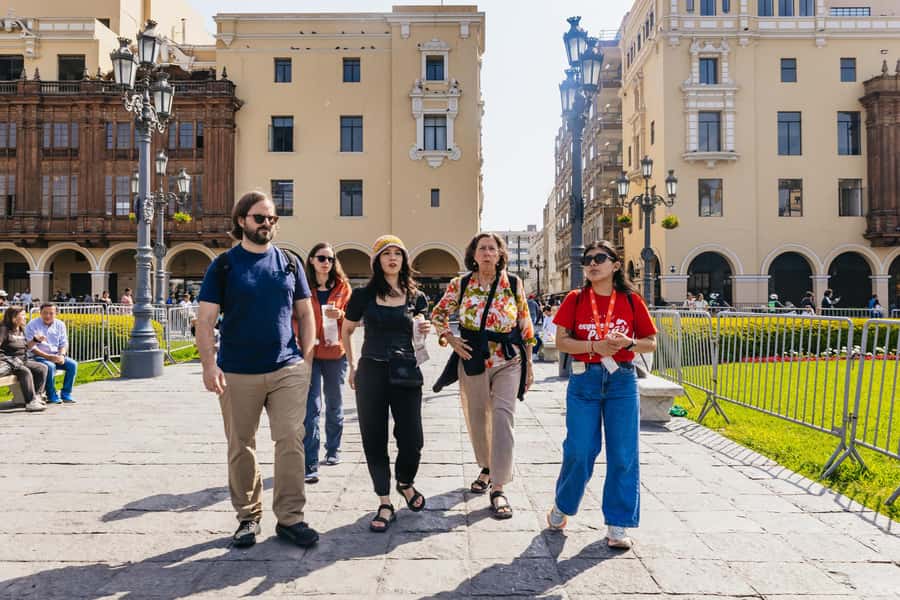
The meeting point is the main door of the Gran Hotel Bolivar at Jirón de la Unión 958, beside Plaza San Martín. This is a sensible starting place because the square gives you an immediate introduction to central Lima: formal architecture, a broad public plaza, and one of the city’s best-known hotels.
The first sightseeing stop lasts only about five minutes, so do not expect a long architectural lecture here. Instead, it gets you oriented before the food begins. The tour then moves on foot through the center, with several short walks and sitting stops along the way.
That balance matters. Four hours of eating sounds easy, but four hours of walking between food stops can feel long. One participant who joined shortly after landing in Lima appreciated that the group rested several times. You should still wear comfortable shoes and avoid bringing luggage or a large bag, which is specifically not allowed.
More Food & Drink in Lima
- Lima: Ultimate Peruvian Food Tour
★ 4.9 · 700 reviews - Lima Street Food Tour Beyond Netflix
★ 5.0 · 117 reviews - The 10 Tastings of Lima With Locals: Private Street Food Tour
★ 5.0 · 92 reviews
First tastings: drinks, local eateries, and comida al paso
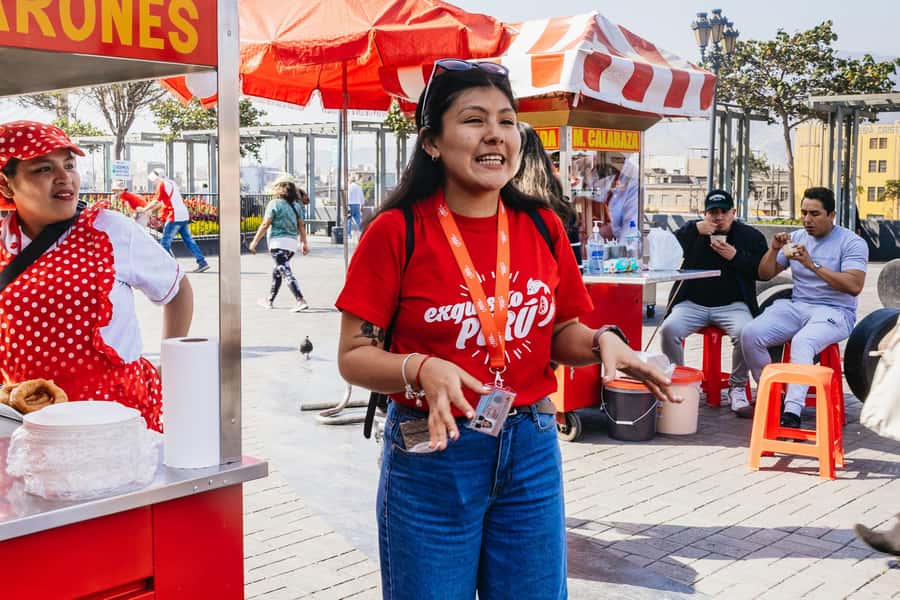
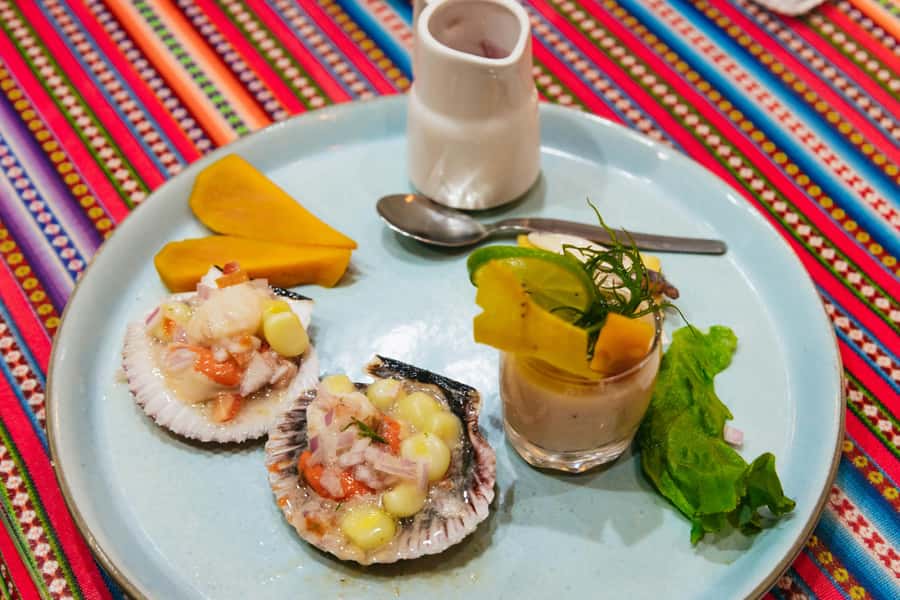
The food portion begins at a local restaurant, where you receive a regional tasting and a spirit. The exact serving can vary, but the tour’s food identity is clear: comida al paso, or quick food eaten by locals during the day. This is not a polished restaurant crawl built around elaborate plates. It is a look at the everyday side of Peruvian cooking.
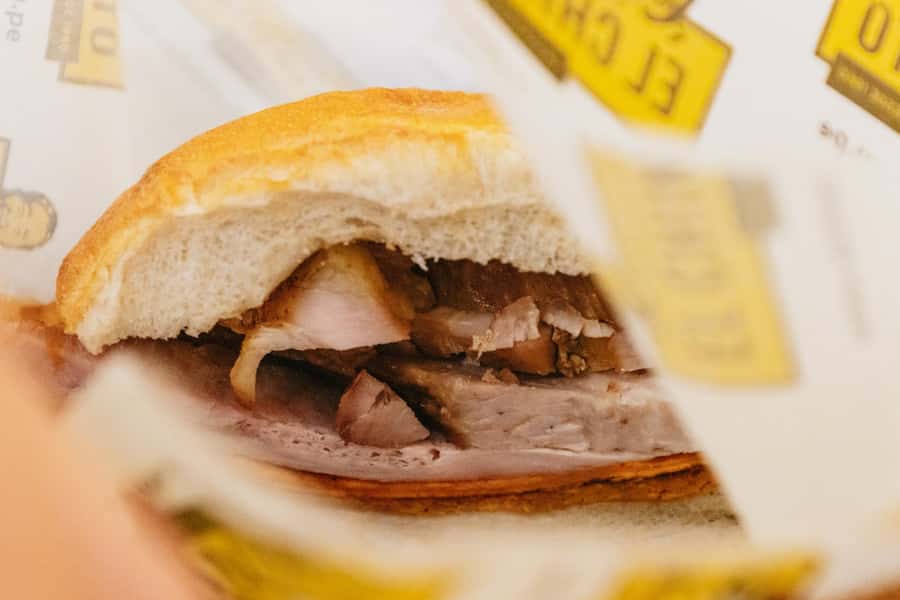
You might encounter items such as tamal, anticuchos, or a chicharrón sandwich. The anticuchos receive especially strong praise from the people who tried them, with their smoky, savory flavor making them one of the more memorable stops. A popular sandwich from El Chinito has also been singled out as a favorite.
The portions are generally designed as tastings, but do not mistake that for a light outing. The route can include around eight food tastings, drinks, fruit, and desserts. Some portions are small, while others are generous enough to change your dinner plans.
After the first restaurant, the route continues through central Lima for another short walk and photo stop. Your guide talks about the city’s economy, food habits, and the role of street vendors. This is one of the tour’s strongest features: you are not only told what a dish is, but also given a sense of where it fits in local life.
Iglesia de La Merced and the layered center
The stop at Iglesia de La Merced is mainly for photos and sightseeing. It lasts about five minutes, but it helps break up the food stops and gives the route a clear historical thread.
Lima’s center can feel visually crowded, with churches, government buildings, shops, traffic, and pedestrians sharing tight streets. A guide helps you connect those pieces. You can ask about the buildings as you walk, and guides have been praised for making the history understandable without turning the tour into a long classroom talk.
A second local restaurant stop lasts about 20 minutes and includes another regional tasting. This is useful for comparing food served in a small eatery with food bought from a cart or market stall. It also gives you a chance to sit down, drink water, and let the first courses settle.
If you are mainly looking for a restaurant meal, this stop may feel brief. If you want variety, it works well. The tour keeps moving, and no single restaurant dominates the afternoon or evening.
Plaza Mayor, the Cathedral, and the Government Palace
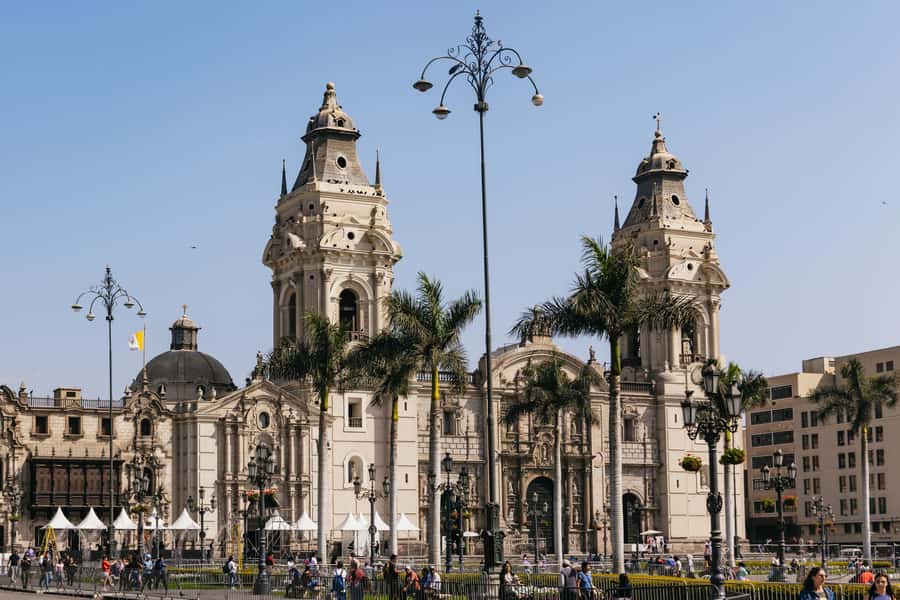
The route reaches Plaza Mayor de Lima, also called Plaza de Armas, the ceremonial center of the Historic Center. This is one of the most important sightseeing moments, but the stop is short, around five minutes for photos.
From the square, you can admire the Cathedral of Lima and the Government Palace from outside. The tour does not include interior visits to these buildings, so set your expectations accordingly. You get context, views, and time for photographs, not a guided church or palace tour.
That limitation is also part of the tour’s design. The focus is food with historic scenery woven around it. If you want a detailed architectural tour, you will need more time elsewhere. For a first look at central Lima, though, the short stops keep the day from becoming heavy.
Your guide continues walking with you through the center, sharing information about Peru’s past and present. Several participants particularly valued guides who could shift between architecture, food preparation, and local customs. Marcos was repeatedly praised for his humor and broad understanding of Peruvian culture, while Aura and Valeria were noted for their warmth, organization, and attention to the group.
More Historical Tours in Lima
- Lima’s Vibrant Heritage: Exploring the City’s Landmarks Half-day
★ 4.5 · 581 reviews - Historic Downtown, Miraflores & Catacombs Private Tour
★ 5.0 · 100 reviews - Lima Peru Sea Lions, History and Palomino Callao Islands
★ 5.0 · 56 reviews - Lima´s Vibrant Heritage & Larco Museum of Cultures Half Day Tour
★ 5.0 · 48 reviews
Mercado Central: the tour’s most revealing food stop
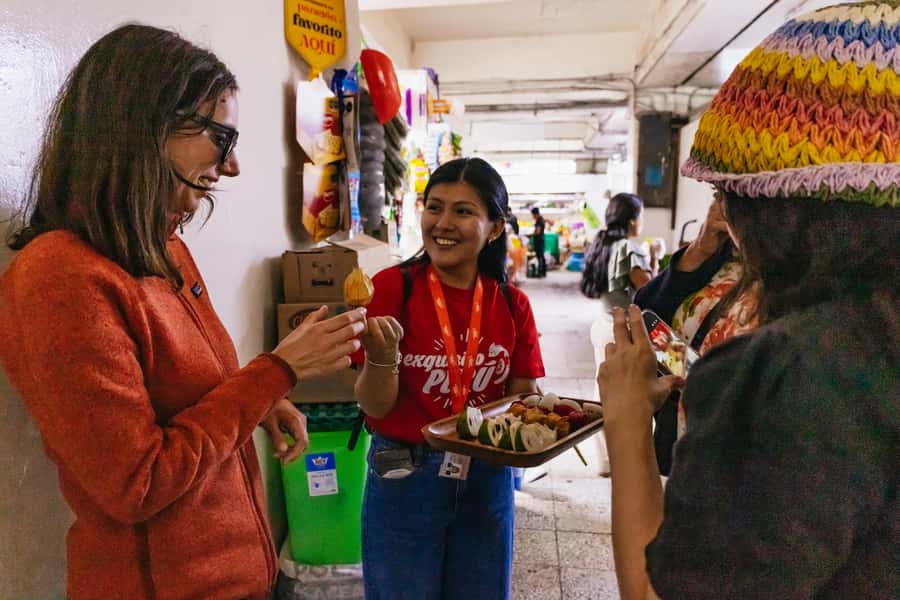
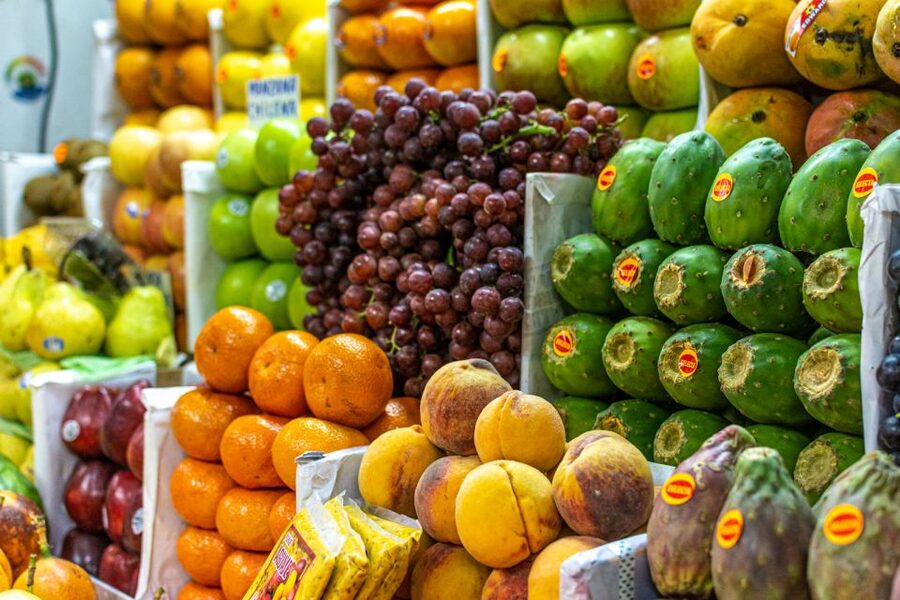
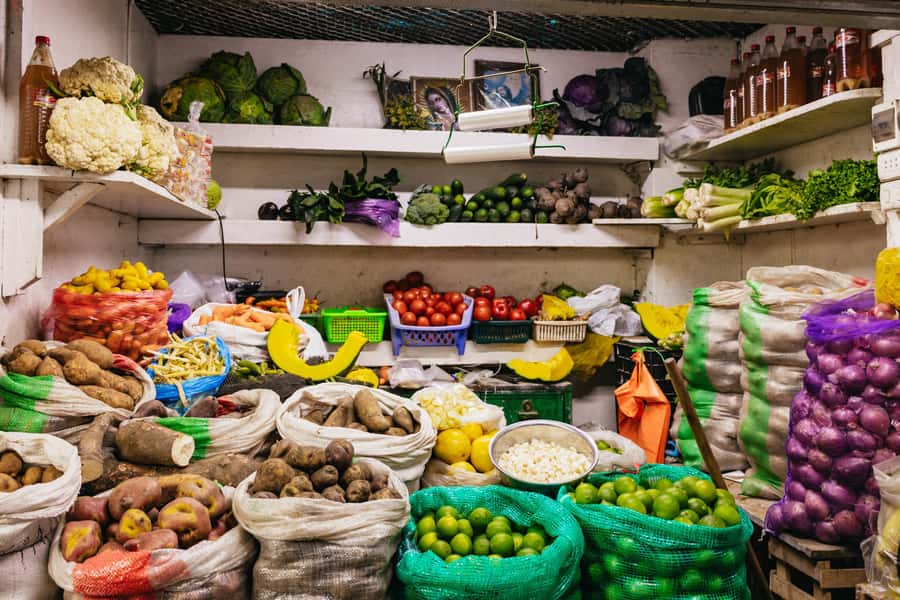
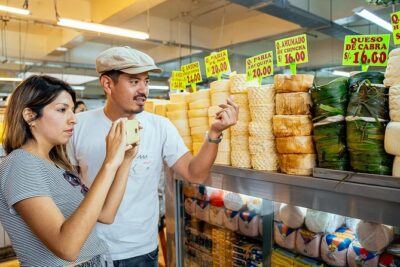
The 25-minute visit to Mercado Central is where the experience feels most connected to ordinary city life. Lima’s largest market brings together fresh produce, spices, fruit, and local specialties in one concentrated setting.
You are not simply looking at a market from the doorway. The itinerary includes food tasting here, and one account specifically praised the chance to try fruit from the market. This is a good place to ask questions about ingredients you have seen on menus but do not recognize.
The market stop also helps explain why a food tour is more useful than a list of restaurant recommendations. You see raw ingredients, prepared foods, and shopping habits in the same place. The setting can be busy and visually intense, so keep your belongings close and follow the guide’s lead.
Twenty-five minutes is enough for an introduction, but not enough to explore every aisle. Think of this as a guided sample of Mercado Central rather than a full market visit. If the market interests you, return later with time to spare.
Barrio Chino and the Peruvian-Chinese table
The route then enters Lima’s Chinatown, where the tour explores chifa, the Peruvian style of Chinese cooking. This is one of the more distinctive parts of the experience because it shows how migration and local ingredients shaped the city’s food.
The Chinatown segment lasts about 15 minutes and combines walking, sightseeing, and street food. You should expect a quick tasting rather than a long restaurant meal. The value is in seeing how Peruvian and Chinese flavors meet in a neighborhood that has become part of Lima’s everyday food culture.
This also gives the tour needed variety. You move from traditional Peruvian snacks to a food tradition that is distinctly Peruvian-Chinese. For someone new to Lima, that contrast says more about the city than a single famous dish could.
The route includes another short tasting stop afterward. Together, these stops show the casual side of Lima’s food scene: food served quickly, eaten while moving, and bought in places that may not look designed for international tourism.
Anticuchos, churros, picarones, and the sweet side of Lima
Dessert is a major part of the route, and this deserves a clear warning. You may receive creole churros and a full picarón, a Peruvian doughnut-style dessert, along with other sweet servings. Several people loved the churros, with one calling them the best they had ever eaten. Others found the tour heavier on sweets than expected.
That is the main menu criticism to consider. Savory portions may be tasting-sized, while a churro or picarón can feel like a complete dessert. If you prefer savory food, you might wish the balance were different. If you have a serious sweet tooth, you will probably consider this a benefit.
The route also includes a separate dessert and street-food stop lasting about 15 minutes. The food arrives in stages, so you have time to enjoy the earlier savory items before the final sweets. Still, you should arrive hungry and avoid scheduling a large dinner immediately afterward.
The final food stop ends near Alameda Chabuca Granda, where the tour finishes. That location is useful because it places you near another public space in central Lima rather than returning you to the starting hotel.
Chilcanos in an old Lima casona
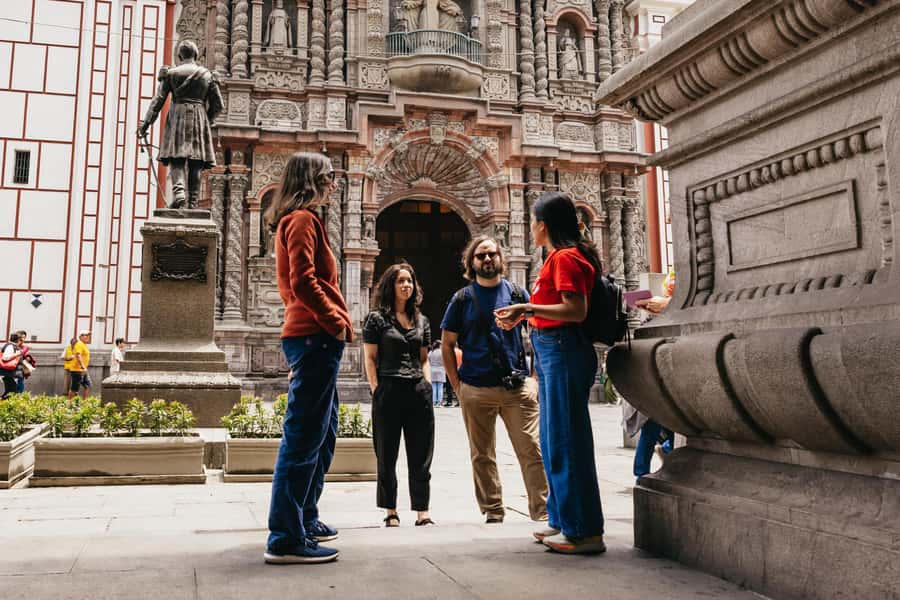
One of the most memorable settings is a local bar in an old casona, where the tour includes spirits for around 30 minutes. The featured drink is the chilcano, a Peruvian cocktail traditionally made with pisco, ginger ale, lime, and bitters, though the exact preparation can vary.
The important point here is not only the drink. It is the chance to sit inside an older Lima house and connect a familiar local cocktail with the city’s architecture. The stop gives the tour a slower pause after the market and street-food sections.
Cocktails are included, but drinkers should still pace themselves. This is a food tour with alcohol, not an evening centered on drinking. The earlier restaurant also includes a spirit, so the drinks are spread across the four-hour route.
A five-minute photo stop at the Basilica and Convent of San Francisco follows. The building is known for its colonial architecture and long place in Lima’s story. Again, the visit is exterior only. You will not be touring the convent or catacombs as part of this experience.
A final walk through Lima’s historic core
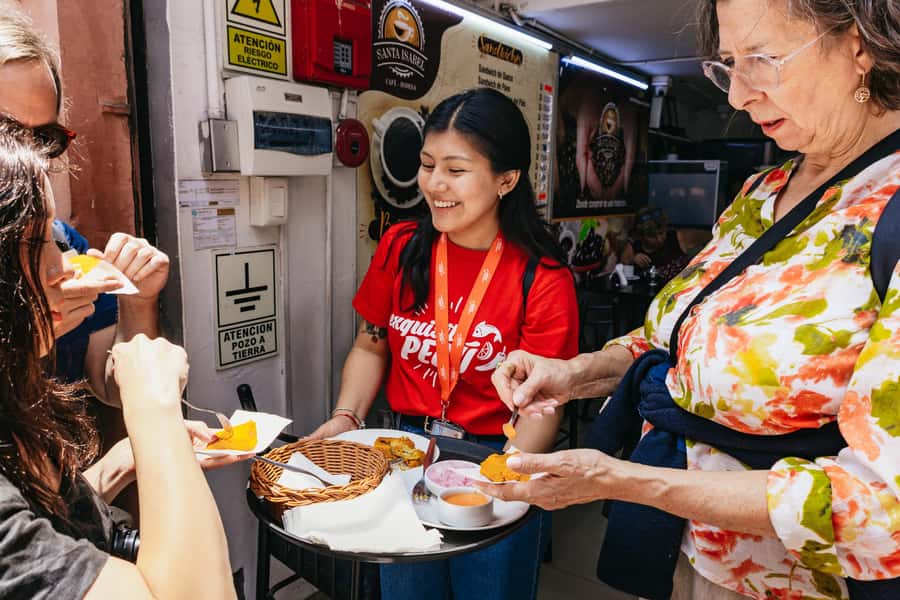
The route returns to the Cathedral area for another brief photo stop before a final 10-minute walk. This last stretch helps connect the landmarks you have seen: Plaza San Martín, La Merced, Plaza Mayor, San Francisco, and the Cathedral.
The sightseeing is intentionally selective. You receive a guided introduction to the center, but the food remains the main event. I would treat the tour as a strong first afternoon or evening in Lima, then use another half-day for museums and longer interior visits.
Several people chose this as their first activity in Peru and felt it gave them useful food and cultural bearings for the rest of their trip. That makes sense. After the tour, you will have a better idea of dishes to order, ingredients to recognize, and neighborhoods worth revisiting.
Is $69 a fair price for four hours?
At $69 per person, the tour is not the cheapest way to eat in Lima. You could buy individual snacks at markets and food stands for much less. The price pays for more than the food, though: an English-speaking guide, route planning, several tastings, drinks, market access, historical explanations, and the convenience of moving between stops without guessing where to go.
The value improves if you are new to Lima’s Historic Center or feel unsure about ordering from street vendors. Several food stops are places you might not find on your own. You also avoid spending your first day trying to interpret menus, locate the right stalls, and work out how much food to order.
The value is weaker if you already know central Lima well, speak Spanish comfortably, or mainly want a single substantial meal. You may also feel the price is high if your interests are strictly architectural, since the landmark visits are short and outside only.
The high 4.9 rating from 216 ratings reflects a very consistent experience, especially around the guides and the amount of food. Names that appear often in the praise include Marcos, Aura, Valeria, and Sheyla. Guide quality can shape a walking tour, and the strong feedback on pacing, humor, explanations, and care is important here.
Who should book this Lima street-food walk?
I would recommend it to first-time visitors who want a quick, friendly introduction to central Lima. It suits people who like to learn the story behind a dish, taste several small portions, and walk between historic sights rather than sit in one restaurant.
It is also a good fit if you are traveling alone. The route has enough structure to make the city feel easier to read, and smaller groups can receive direct attention from the guide. One person had only one other participant on the tour and appreciated the individual attention.
You should think twice if you are vegetarian, vegan, or pescatarian. The operator states that alternatives cannot be provided for these diets. People with severe gluten or nut allergies should not book, since some foods may contain traces.
You should also tell the operator about dietary restrictions at least 24 hours before the start. Even then, adaptations are not assured. The tour is conducted only in English, so book a private experience if you need another language.
For comfort, bring only what you need. Large bags and luggage are not allowed, and the route includes walking, market visits, food stalls, and several short sightseeing stops.
Final verdict: a tasty first look at Lima
Book this tour if you want your first taste of Lima to include local food, old streets, markets, and a few cocktails. The best parts are the range of stops, the visit to Mercado Central, the Chinatown connection, and the guides who explain the city with warmth and humor.
Skip it if you need vegetarian food, have a severe allergy, dislike sweets, or want long interior visits at Lima’s churches and palaces. For everyone else, $69 buys a well-planned four-hour introduction, and the amount of food is likely to cover more than your appetite expects.
FAQ
Where does the Lima food tour start?
It starts at the main door of the Gran Hotel Bolivar, at Jirón de la Unión 958 in Cercado de Lima, beside Plaza San Martín.
Where does the tour finish?
The tour finishes at Alameda Chabuca Granda.
How long does the experience last?
The tour lasts four hours.
Is hotel pickup and drop-off included?
No. Hotel pickup and drop-off are not included.
What language is the shared tour conducted in?
The shared tour is conducted in English only. For other languages, you need to book a private tour.
Can vegetarians, vegans, or pescatarians join?
No. The operator states that vegetarian, vegan, and pescatarian alternatives cannot be provided.
Are food and drinks included?
Food tastings, drinks, and a local guide are included. The route includes Peruvian street food, market tastings, desserts, and chilcanos.
More Food and Drink Outings
- Trending Flavors: Miraflores Walking Tour Including Food and Drinks Tasting
★ 5.0 · 63 reviews - 5 iconic restaurants of Lima a 3-hour guided food tour in Barranco
★ 4.5 · 48 reviews - Lima Street Food: A gastronomic adventure through the city.
★ 4.5 · 42 reviews - Lima: Flavors and Tradition Walking Tour with Food Tasting
★ 4.6 · 40 reviews
More Markets in Lima
- Market Tour, Tasting of 35 Fruits, and 4-Course Peruvian Cooking Class in Lima
★ 5.0 · 86 reviews - #1 Rated Cooking Classes with Local Market Tour & Pickup
★ 5.0 · 69 reviews - Private Cooking + Market with Maido’s Former Creative Chef (+trasportation)
★ 5.0 · 49 reviews - Lima: Food Tour on Local Market
★ 5.0 · 8 reviews
Just added around Lima
- Enjoy Lima Walking Historic Center, Plaza San Martin and Plaza de Armas★ 5.0 · 3 reviews
- Full Day Lima: Local Market+ CityTour+ Barranco & Miraflores★ 5.0 · 3 reviews
- City Tour 1 day Lima★ 5.0 · 3 reviews
- Lima: Lunuhuaná Extreme All In + Cerro Azul + Rafting + ATV + Canopy★ 4.4 · 3 reviews
- Lima: Street Food Tasting Tour with Pisco Sour Class★ 5.0 · 3 reviews
- Lima: Villa El Salvador Shanty Town Tour★ 5.0 · 3 reviews
- Tour Panorámico en Miraflores en Scooter Eléctrico★ 4.6 · 3 reviews
- Private Tour Casa Aliaga,San Francisco Convent, Larco Museum★ 4.8 · 3 reviews
Food & Drink, compared.
Food and Culture Full day Tour in the Sacred Valley
Read our review →
The 10 Tastings of Lima With Locals: Private Street Food Tour
Read our review →
Market Tour, Tasting of 35 Fruits, and 4-Course Peruvian Cooking Class in Lima
Read our review →
Pisco and Wine Route with tasting in 03 Wineries
Read our review →
The 10 Tastings of Cusco With Locals: Private Food Tour
Read our review →Browse the lists this tour appears in