
Reviewed · FOOD & DRINK
Arequipa Tasting Tour
Arequipa tastes better on foot. This small-group walking tour connects the city’s grand plazas and churches with San Camilo Market, local fruit, queso helado, and a pisco tasting. I like the way it combines city history with everyday food, and I especially like the group size, capped at eight people. The $13 price is also hard to beat.
The main catch is the name. The tasting comes near the end, while much of the three-and-a-half-hour experience focuses on architecture, earthquakes, religion, and the development of Arequipa. If you expect food samples throughout the whole walk, you may find the tour more historical than culinary.
In This Review
- Key points to know before booking
- Why this walking tour works in Arequipa
- Plaza Campo Redondo: where the city story begins
- San Francisco Plaza and the city’s religious architecture
- Plaza de Armas: Arequipa in one square
- Iglesia de la Compañía de Jesús and its gold-covered altars
- San Camilo Market: the best part for food lovers
- The Jesuit cloisters and a quieter finish
- Queso helado, fruit, and pisco at the end
- Is $13 a good value?
- How long and how demanding is the walk?
- Who should book this Arequipa experience?
- Should you book the Arequipa Tasting Tour?
- FAQ
- Where does the Arequipa Tasting Tour begin?
- Where does the tour end?
- How long does the tour last?
- What food and drink are included?
- Is lunch included?
- Are bottled water and soda included?
- What places does the tour visit?
- How many people can join the tour?
- Is the tour physically demanding?
- Can I cancel for a full refund?
Key points to know before booking
- San Camilo Market is the food highlight: You’ll see regional fruits, tubers, meats, and other foods, with opportunities to sample local products.
- The tour is mostly on foot: Expect about three and a half hours moving through central Arequipa, so moderate physical fitness is advised.
- Pisco and queso helado finish the experience: The final tasting takes place at Centro Artesanal Fundo el Fierro.
- The group is limited to eight people: That gives you a better chance to ask questions and keep the walk personal.
- The price is excellent for the coverage: At $13, you receive guiding, pisco, a traditional dessert, and local fruit, but not lunch, bottled water, soda, or paid entry tickets.
- Afternoon guests should eat first: The tour does not include lunch, and the tasting is not a meal.
Why this walking tour works in Arequipa
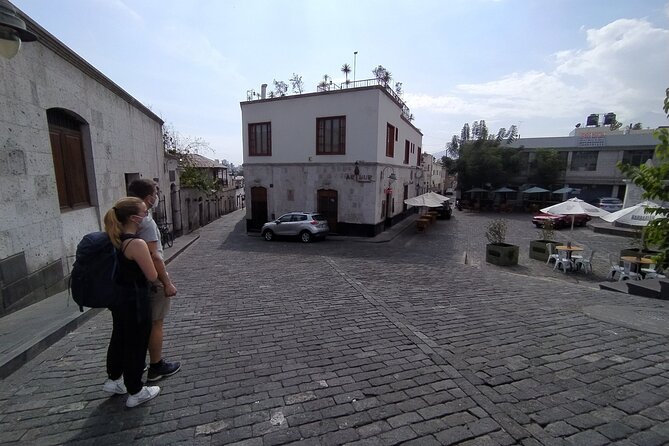
Arequipa’s historic center rewards a slow walk. White volcanic stone gives many buildings a clean, pale look, while churches, courtyards, markets, and small streets reveal different sides of the city. This experience gives you a useful first look before you return to the places that catch your eye.
The route begins at Plaza de Armas, but it first visits several nearby sites. That order gives you a little context before the main city explanation begins. You move through old neighborhoods, religious buildings, a public market, and former Jesuit spaces, then finish with food and drink.
I would treat this as a city orientation with a tasting finale, rather than a food tour in the usual sense. That distinction matters. You’ll learn about local dishes and products, but the largest portion of the walk is devoted to Arequipa’s past and buildings.
Guides named José, Daniel, and Jorge have led this experience. The strongest guide experiences have included patient answers, plenty of local explanation, and flexibility when questions arise. José, in particular, has been praised for taking time with every question and helping people notice places they had previously walked past without understanding.
More food and drink outings:
- Arequipa Food Tour: Ancestral Cuisine & City Tour
★ 5.0 · 11 reviews - Cooking Class Typical Food in Arequipa
★ 3.9 · 3 reviews - Arequipa: Colca Canyon Trekking 2 days and 1 night + food
★ 4.8 · 3 reviews
Plaza Campo Redondo: where the city story begins
The first stop is Plaza Campo Redondo, a traditional Arequipa neighborhood. It is described as the first place where the Spanish conquerors settled after arriving in the area.
You spend only about 10 minutes here, so this is a brief introduction rather than a long visit. Its value is mainly historical. The guide uses the neighborhood to explain how the early settlement took shape and how Arequipa grew from those first colonial roots.
I like this opening because it starts away from the grandest square. You get a sense that Arequipa is more than its polished central monuments. The stop is short, though, so do not expect an extensive neighborhood walk or a major food sample here.
San Francisco Plaza and the city’s religious architecture
The walk continues toward San Francisco Plaza, passing the Santa Catalina Convent and Santa Catalina Street. These are important landmarks in central Arequipa, and the route lets you see how closely the city’s churches, convents, streets, and artisan spaces fit together.
At San Francisco Plaza, you’ll see the Church of San Francisco and the nearby Fundo el Fierro artisan center. The church gives the guide another chance to discuss religious architecture and the role of Catholic institutions in the city.
The stop lasts about 20 minutes. That is enough for an explanation and a look around, but not necessarily enough for a full interior visit to every building. No entrance tickets are included, and the provided schedule lists free admission for these stops. If you want a longer visit inside Santa Catalina Convent or another attraction, plan that separately.
Fundo el Fierro is especially useful because the tour ends there later for the pisco tasting. Seeing it first helps you understand the setting before returning for the final part of the experience.
Plaza de Armas: Arequipa in one square
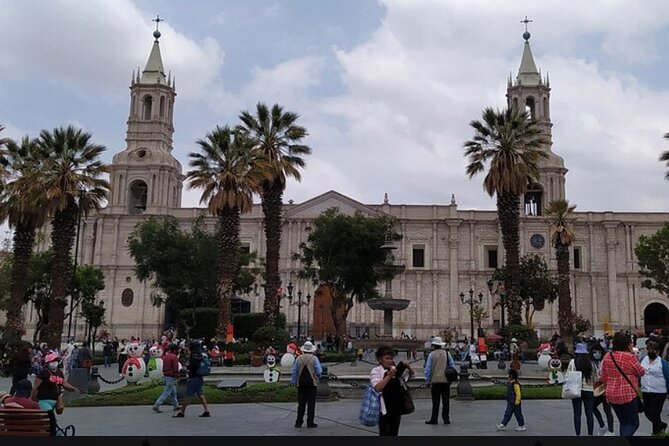
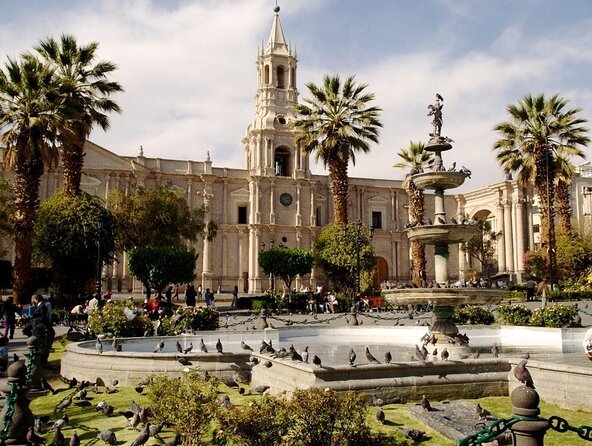
The main meeting point is Plaza de Armas, Arequipa’s central square. The tour spends about 25 minutes here discussing the founding of the city, changes caused by earthquakes, the Cathedral, and other details connected with the square.
This is the place where the various parts of the walk begin to make sense. Arequipa’s appearance has changed over time, and earthquakes are an important part of that story. The guide also explains the Cathedral and the role of the square as the city’s central gathering place.
If you are staying in Arequipa, this stop is practical as well as interesting. You’ll hear details that can make a later visit to the Cathedral, surrounding arcades, or nearby streets more meaningful. The tour does not replace a full museum or monument visit, but it gives you a framework for exploring on your own.
Because the meeting point is here, you need to arrive ready to begin at Plaza de Armas. The end point is different: Centro Artesanal Fundo el Fierro on C. Zela 202, where the pisco tasting takes place.
A few more Peru trips worth weighing up
- From Arequipa: Colca Canyon Full-Day Guided Tour with Meals
★ 4.5 · 982 reviews - Tour to the Salinas Lagoon and National Reserve in Arequipa
★ 4.5 · 548 reviews - From Arequipa: Sillar Route Trek
★ 4.2 · 461 reviews - Arequipa: Chili River White Water Rafting with Hotel Pickup
★ 4.8 · 329 reviews
Iglesia de la Compañía de Jesús and its gold-covered altars
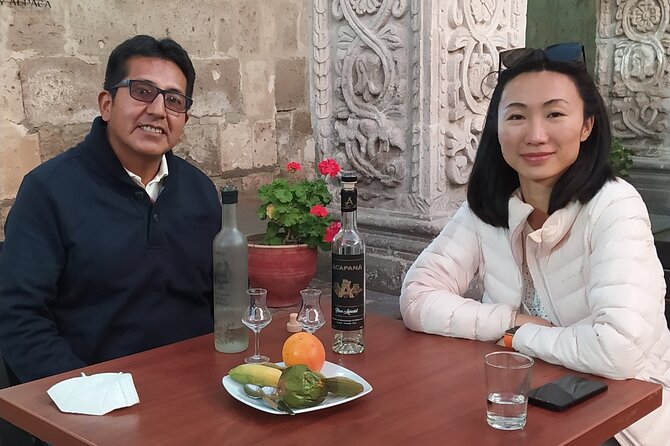
On one side of Plaza de Armas is the old complex of the Company of Jesus. The Church of the Company of Jesus has a baroque facade, a more restrained interior, and altars covered in gold leaf.
The visit here is scheduled for about 10 minutes. That is a short stop, but the church is a useful example of the religious architecture that shaped central Arequipa. The contrast between the decorative exterior and sober interior gives the guide something specific to point out rather than offering only a general history lecture.
For me, this stop works best when you pay attention to details. Look at the facade, the interior arrangement, and the gold work. The guide can explain what you are seeing, which is helpful if you are not familiar with colonial church design.
Again, the tour is not built around extended interior visits. If you want time for quiet viewing or photography, you may need to return later.
San Camilo Market: the best part for food lovers
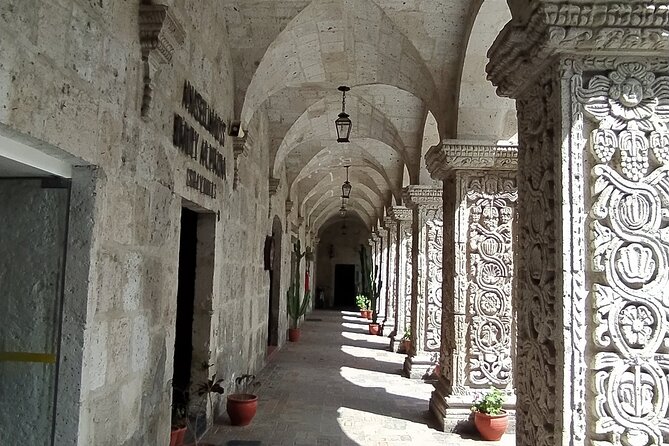
San Camilo Market is the strongest food stop on the route. You spend about 30 minutes among stalls offering regional tubers, meats, fruits, and other products used in local cooking.
This is where the tour feels most connected to daily life. Grand churches tell you how the city was built, but a market shows what people eat and sell now. The guide can help you identify products and direct you toward samples you might otherwise overlook.
The market has been especially appreciated for its range of foods. You may try local fruit and other small samples as you move through the stalls. The exact selection can vary, so do not expect a fixed tasting menu. That is part of the appeal, but it also means the food portion is less predictable than at a restaurant-based tasting.
You should also keep your expectations in check about the timing. Thirty minutes goes quickly in a market, especially if you stop to look, ask questions, and taste a few items. I would not count on this visit as lunch. The tour specifically recommends eating beforehand if you choose an afternoon departure.
For anyone interested in Peruvian food, San Camilo is a real reason to book. The market adds something that a standard monument walk often misses. You are not simply hearing about local ingredients. You are seeing them in the place where they are sold.
The Jesuit cloisters and a quieter finish
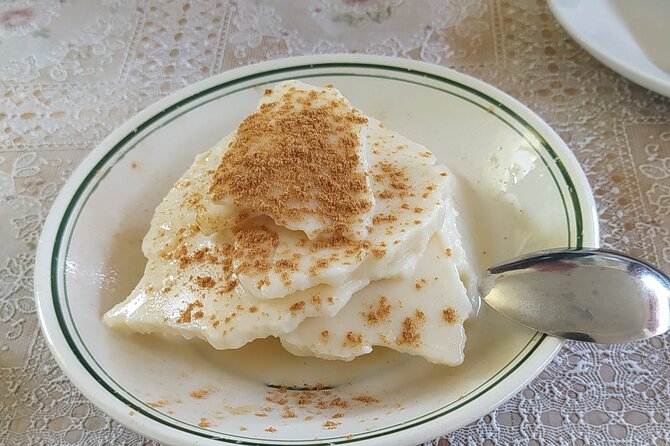
The tour then visits the cloisters of the Company, former spaces connected with a Jesuit school and convent. The scheduled visit lasts about 40 minutes, making it one of the longest stops.
These cloisters are presented as one of the best examples of religious viceregal architecture in Arequipa. Their value comes from the layout and atmosphere of the courtyards, along with the carved stonework and the way the former religious complex fits into the modern city.
After the market, the cloisters provide a change of pace. The market is full of products and movement, while the cloisters offer a quieter setting for architecture and explanation. If you enjoy old buildings, this may be one of the most rewarding parts of the walk.
The schedule places this visit near the end, but the final destination is Centro Artesanal Fundo el Fierro for the pisco tasting. The exact flow may depend on local opening arrangements and the guide’s handling of the route. One useful example comes from a day when the planned pisco venue was closed. The guide arranged the tasting for the next day instead, showing some practical flexibility when plans change.
Queso helado, fruit, and pisco at the end
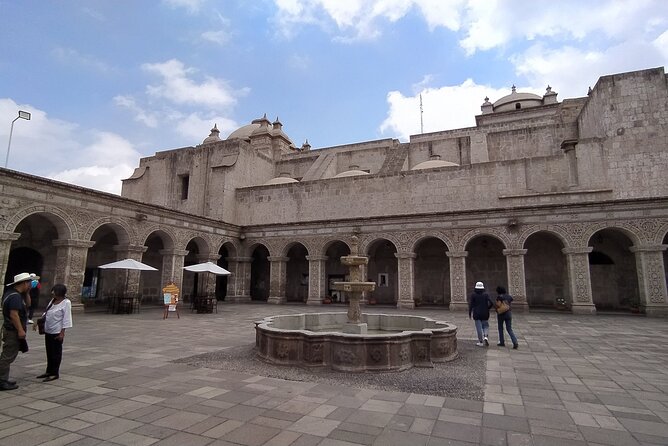
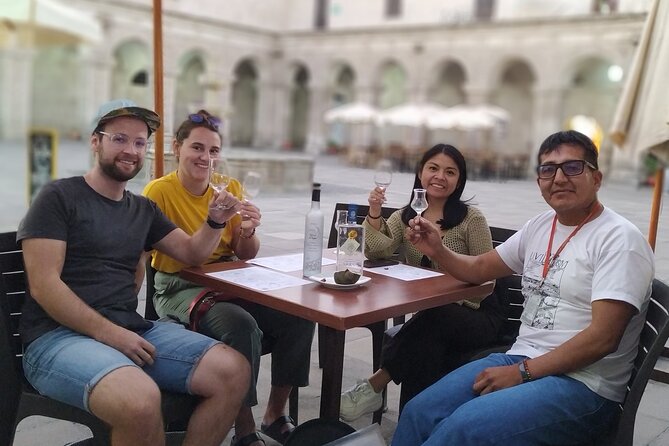
The included food and drink are local fruit, a traditional dessert, and pisco. The dessert is queso helado, Arequipa’s famous milk-based frozen treat. Despite its name, it is not a cheese dish. It is a sweet local specialty and a favorite part of the tasting.
The pisco tasting takes place at Centro Artesanal Fundo el Fierro. This is where the food focus becomes clearest. You’ll learn about pisco and how it is made, then taste the spirit in a setting connected with local crafts.
Some versions of the experience have included a pisco sour as well. The supplied details confirm pisco tasting, but you should not assume that every departure includes the same cocktail or the same number of samples. The included offering is pisco, local fruit, and queso helado.
The setting can be more relaxed than the earlier street stops. One description places the tasting in a quiet upstairs area, which gives you a chance to sit, ask questions, and finish the walk without rushing.
Do not plan to drink on an empty stomach. The tour does not include lunch, bottled water, or soda. Eat beforehand, especially if you book the afternoon departure, and consider carrying water with you.
Is $13 a good value?
At $13 per person, this is a strong value if you want a guided introduction to Arequipa. You receive about three and a half hours of guiding, a small group capped at eight, a market visit, local fruit, queso helado, and pisco.
The price is even better for solo visitors, since a private guide can sometimes cost much more. When only a few people book, the guide can spend more time answering questions and adjusting the pace. That said, you should not judge the tour as a full meal or a ticketed attraction package.
The main extra costs are simple:
- Lunch is not included.
- Bottled water and soda are not included.
- Entrance tickets are not included.
- Any purchases at the market or artisan center are your responsibility.
The route includes many sites with free admission, but the tour does not promise paid entry to every building mentioned. If you want to explore a convent or church in greater detail, budget for separate admission where required.
How long and how demanding is the walk?
The experience lasts about three hours and 30 minutes. The scheduled stops add up to about two hours and 15 minutes, leaving time for walking between locations, explanations along the way, and the tasting.
You should be comfortable walking through the central city for several hours. A moderate level of physical fitness is advised. Wear comfortable shoes, and bring water since it is not supplied.
The tour is not designed for someone seeking a short, easy introduction. One person found it longer than expected and wished the guide had shortened it. That is a fair warning. The length is a benefit if you want detail, but it may feel slow if you prefer quick photo stops and extended free time.
The maximum of eight people helps. A small group makes market movement easier and allows more direct conversation. Service animals are allowed, and the meeting area is near public transportation.
Who should book this Arequipa experience?
I would recommend it most strongly to:
- First-time visitors who want a clear introduction to central Arequipa.
- Solo visitors who enjoy asking questions.
- Couples and families seeking an inexpensive guided walk.
- People interested in architecture, religion, markets, and local food together.
- Anyone who wants help finding places to revisit independently.
- Visitors who like small groups rather than large coach tours.
It is less suitable if you want a food tour with frequent tastings from beginning to end. The market and final tasting are worthwhile, but the walk is mainly a history and architecture experience.
It may also disappoint people who want to spend long periods inside each church or convent. The tour gives you context and a first look. It does not replace a full visit to Arequipa’s major attractions.
The tour is usually booked about 13 days ahead. That suggests you should reserve early if your schedule is fixed, especially because the group is small. Confirmation arrives at booking, and free cancellation is available up to 24 hours before the start time. Poor weather can lead to a new date or a full refund.
Should you book the Arequipa Tasting Tour?
Book it if you want a low-cost, small-group introduction to Arequipa with a genuine market visit and a pleasant pisco finale. José, Daniel, and Jorge have each been praised for friendly explanations, patience, and the ability to answer a steady stream of questions. That personal guiding is the tour’s greatest strength.
Skip it if your priority is an intensive culinary experience or a short route. You will spend much of the time learning about city history, churches, earthquakes, and architecture, and the principal tasting comes at the end.
My practical advice is simple: eat lunch first, carry water, wear good walking shoes, and reserve enough time afterward for a return visit to the site you liked best. At $13, this is an unusually inexpensive way to get oriented, taste a few local specialties, and see why Arequipa’s center deserves more than a quick photo stop.
FAQ
Where does the Arequipa Tasting Tour begin?
The tour begins at Plaza de Armas in Arequipa, Peru. The listed address is Arequipa 04001, Peru.
Where does the tour end?
The tour ends at Centro Artesanal Fundo el Fierro on C. Zela 202, Arequipa 04001. The pisco tasting takes place there.
How long does the tour last?
The experience lasts approximately three hours and 30 minutes.
What food and drink are included?
The tour includes a pisco tasting, a traditional dessert, and local fruits. The dessert is identified in the experience details and comments as queso helado.
Is lunch included?
No. Lunch is not included, and people taking the tour in the afternoon are advised to eat beforehand.
Are bottled water and soda included?
No. Bottled water and soda are not included.
What places does the tour visit?
The route includes Plaza Campo Redondo, San Francisco Plaza, the Church and Monastery of San Francisco, Santa Catalina Street, Plaza de Armas, Iglesia de la Compañía de Jesús, San Camilo Market, the cloisters of the Company, and Centro Artesanal Fundo el Fierro.
How many people can join the tour?
The tour has a maximum of eight participants.
Is the tour physically demanding?
A moderate level of physical fitness is recommended. The experience is a walking tour lasting about three and a half hours.
Can I cancel for a full refund?
Yes. You can cancel at least 24 hours before the experience start time for a full refund. Changes or cancellations made less than 24 hours before the start time are not accepted for a refund. If poor weather causes the tour to be canceled, you’ll be offered another date or a full refund.
Just added around Arequipa
- From Arequipa: Colca Canyon and Condor Watching Day Trip★ 3.7 · 3 reviews
- Arequipa : Colca Canyon 2-Day Adventure★ 5.0 · 3 reviews
- Cooking Class Typical Food in Arequipa★ 3.9 · 3 reviews
- 3-day trek to the Colca Canyon from Arequipa ending in Puno★ 4.2 · 3 reviews
- Colca Canyon Day Trip: From Arequipa to Puno★ 3.5 · 3 reviews
- 2 day 1 night trek / Colca Canyon★ 3.0 · 3 reviews
- From Arequipa: Full Day Colca Canyon Tour★ 4.5 · 3 reviews
- Arequipa: Catarata de Pillones and Bosque de Piedras Tour★ 4.3 · 3 reviews
Food & Drink, compared.
Historic Center Street Food, Market, and Eateries Tour
Read our review →
Food and Culture Full day Tour in the Sacred Valley
Read our review →
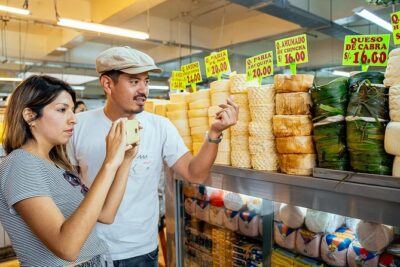
The 10 Tastings of Lima With Locals: Private Street Food Tour
Read our review →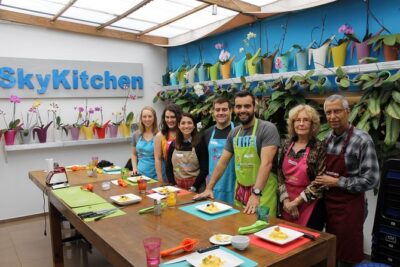
Market Tour, Tasting of 35 Fruits, and 4-Course Peruvian Cooking Class in Lima
Read our review →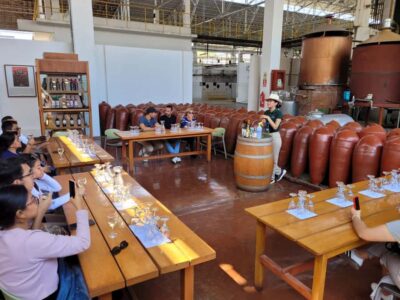
Pisco and Wine Route with tasting in 03 Wineries
Read our review →
The 10 Tastings of Cusco With Locals: Private Food Tour
Read our review →Browse the lists this tour appears in