
Reviewed · SILLAR ROUTE TOURS
From Arequipa: Sillar Route Trek
White stone tells Arequipa’s story. This four-hour outing pairs the working Añashuayco Quarry with the narrow walls of Culebrillas Canyon, giving you both local craft and desert scenery. I like the chance to see stonemasons shaping sillar and the easy walk past ancient Wari petroglyphs. The low price, $12 plus 18 soles in entrance fees, is another strong point.
The main drawback is that the quarry can feel more like a photo stop than a full cultural visit, especially when several groups arrive together. You may also want more time at the Sillar Route, while the canyon walk is uneven enough to trouble anyone with walking problems.
In This Review
- Key points to know before you go
- Why the Sillar Route matters in Arequipa
- Starting near C. Álvarez Thomas 115
- First views of volcanoes and the Chilina Valley
- Añashuayco Quarry and the work behind the white stone
- The short walk through Quebrada de Culebrillas
- Apachetas and the final look at the rocks
- Morning or afternoon departure?
- What the $12 price really gets you
- The guides and the pace
- What to pack for the four hours
- Who should book this experience?
- Should you book the Sillar Route Trek?
- FAQ
- How long does the Sillar Route Trek last?
- Where does the tour start?
- What languages are available?
- What is included in the price?
- How much are the entrance fees?
- Is the canyon walk difficult?
- Should I bring cash?
- Can I cancel the booking?
Key points to know before you go
- Sillar is still worked by hand: At Añashuayco, stonemasons can explain their daily work and may let you try cutting a block.
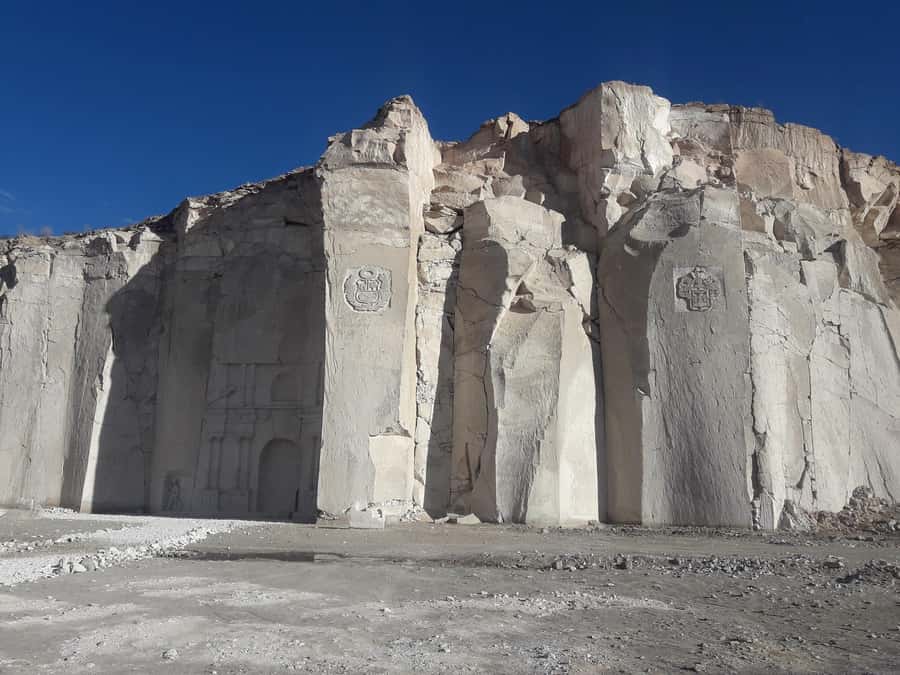
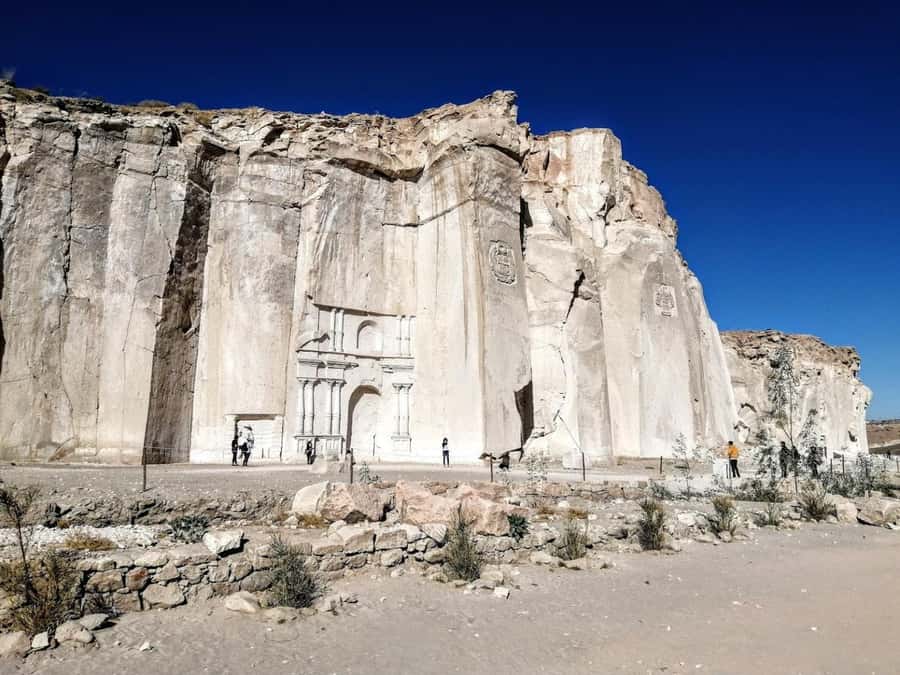
- The mega carving is the quarry’s signature photo stop: Look for the large stone version of the Church of the Company of Jesus.
- Culebrillas Canyon is the most natural-feeling stop: Its walls rise from roughly 15 to 20 meters, and the walk takes about 20 to 25 minutes.
- Wari petroglyphs add real age to the outing: The markings are said to be more than 1,000 years old.
- The afternoon departure can bring warmer light: The 2:00 PM trip may catch sunset colors on the rocks, though city traffic can slow the return.
- Bring cash in soles: The 18-sol entrance charge is separate, and there is no cash machine along the route.
Why the Sillar Route matters in Arequipa
Arequipa is famous for its pale buildings, and sillar is a big reason why the city looks the way it does. This light-colored volcanic stone came from the region’s volcanic activity and has long been cut into blocks for construction and decoration.
The tour gives you a useful change of scale. In the city, you see polished stone in churches and courtyards. At Añashuayco, you see the rough source, the high quarry walls, the dust, and the work behind those neat blocks.
That connection is the best reason to book this trip. You are not simply driven to a scenic viewpoint. You get a short introduction to a living trade that remains part of Arequipa’s culture.
The experience is not a demanding trek in the usual sense. Most of the day is spent riding in a van or bus, with short stops and one modest canyon walk. If you want a serious hike, this will feel too gentle. If you want to see places beyond Arequipa’s center without giving up half a day, the scale is about right.
More Hiking & Trekking in Arequipa
- From Arequipa: 2-Day Colca Canyon Trekking Tour
★ 4.8 · 243 reviews - 2 Day 1 Night Trek / Colca Canyon
★ 4.5 · 92 reviews - 4 hours Tour: Route of Sillar with Trek in Culebrillas
★ 4.2 · 69 reviews
Starting near C. Álvarez Thomas 115
The meeting point is the operator’s main office at C. Álvarez Thomas 115, on the same corner. Your name is checked against a list before the group receives basic instructions and boards the vehicle.
The morning departure is scheduled around 9:15 AM, with a return near central Arequipa around 1:30 PM. A 2:00 PM departure is also available. The exact order of the stops can change with the season, traffic, or crowd levels, so do not be surprised if the volcano viewpoint comes at a different point than expected.
Driving time takes up a fair share of the four-hour outing. The route includes about an hour to the first main stop, around 20 minutes between the quarry and canyon, and further drives back toward Arequipa. That means the tour works best when you see it as transport, guiding, and three short visits rather than four hours of walking.
Vehicles have been described as comfortable and clean, though one bus was not air conditioned. Another departure used an open-top bus, so the vehicle type may vary. Bring sun protection either way.
First views of volcanoes and the Chilina Valley
The opening viewpoint gives you a broad look toward Arequipa’s volcanoes and the Chilina Valley. Depending on the season, the operator may use another traditional viewpoint instead.
This is a brief photo stop, not a long viewing session. The value is orientation. Before you enter the quarry and canyon, you get a sense of the volcanic setting that shaped the stone and the city.
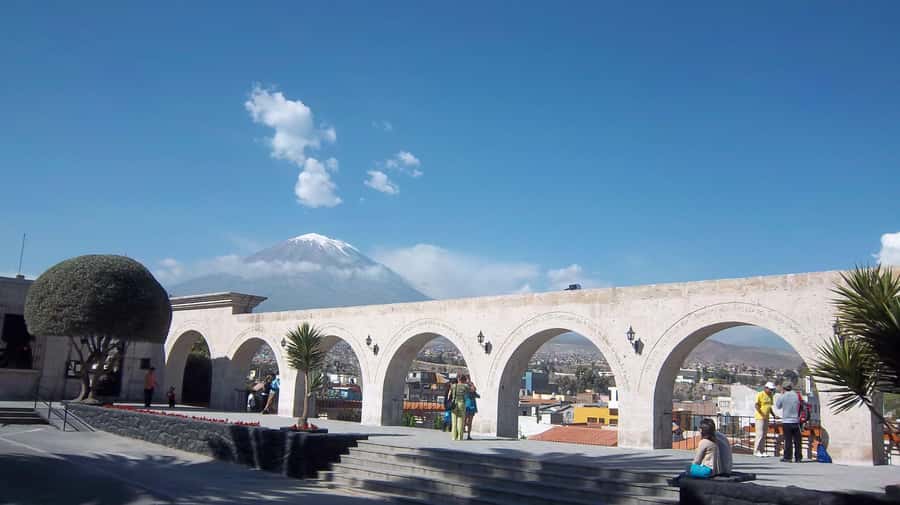
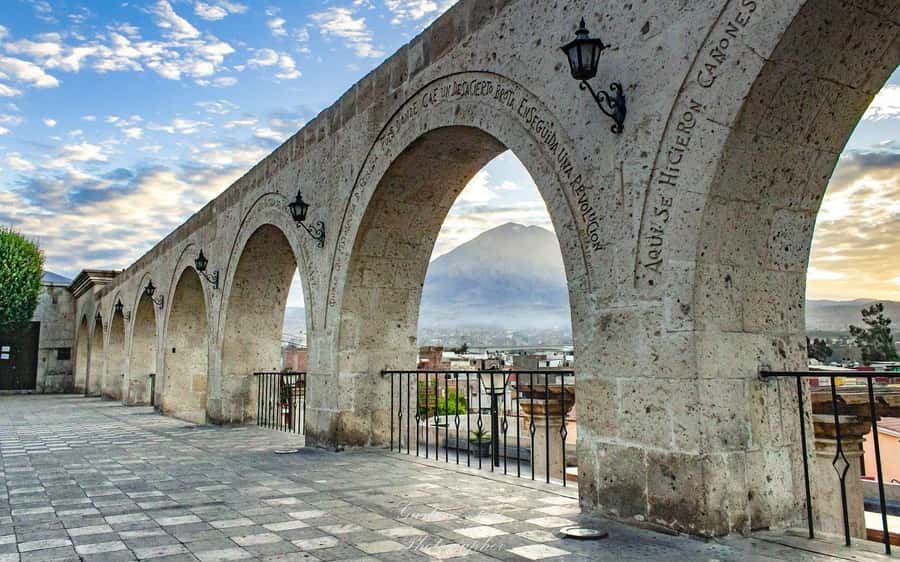
The volcano stop is also the least essential part for many people. If you have already visited Arequipa’s Yanahuara viewpoint, you may find this familiar. One useful difference is that guides sometimes explain the origins of the volcanoes’ names and connect the view to local geography.
Do not expect a full mountain excursion. You are looking at the volcanoes from a roadside viewpoint, with time for photographs and a short explanation. It is a pleasant beginning, but the quarry and canyon carry the stronger experiences.
Añashuayco Quarry and the work behind the white stone
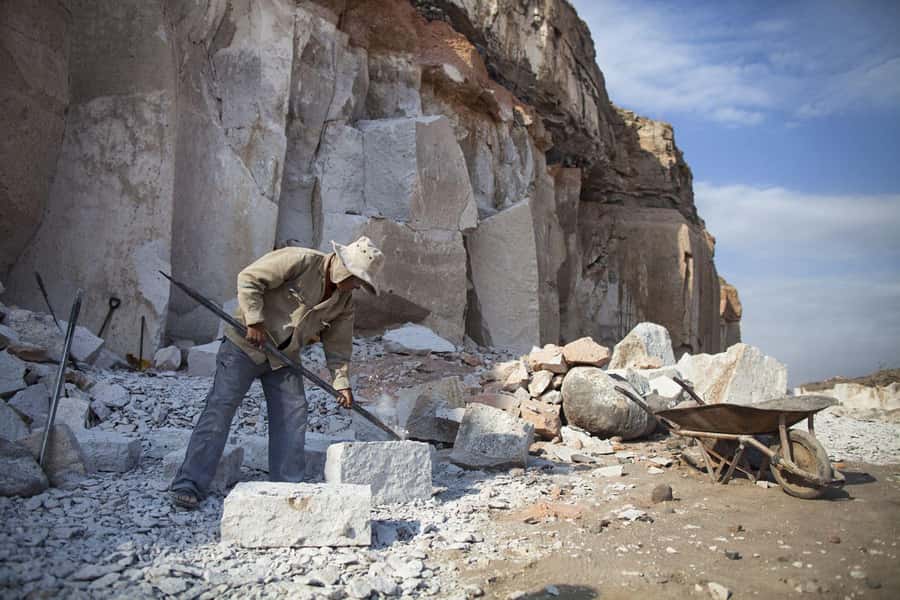
After roughly 45 minutes of driving, you reach Añashuayco Quarry, an active area where sillar is extracted. The quarry walls are made of ignimbrite, a volcanic rock, and the cuts form a large canyon-like space with cliffs several meters high.
This is where the tour earns its price. Your guide explains how sillar is produced, how it has been used, and why it matters to Arequipa. The subject becomes much easier to understand when you can see the material in its original setting rather than only hearing about it inside the city.
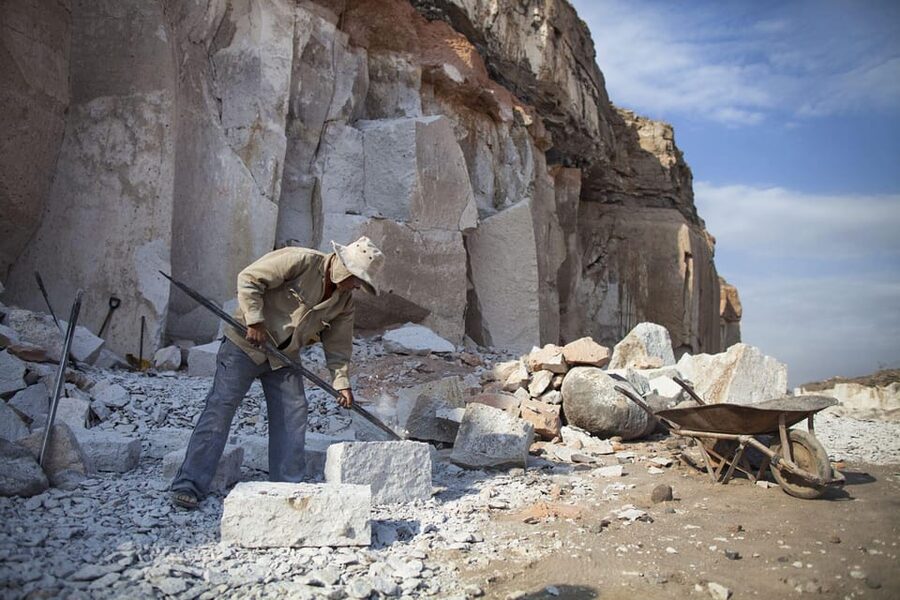
The stonemasons work early, so the amount of activity you see can depend on your arrival time. You may meet one of the workers and hear about the job directly. In some cases, you can try cutting a stone block yourself. Expect a small demonstration, not a full workshop, but it gives you a better feel for the physical work.
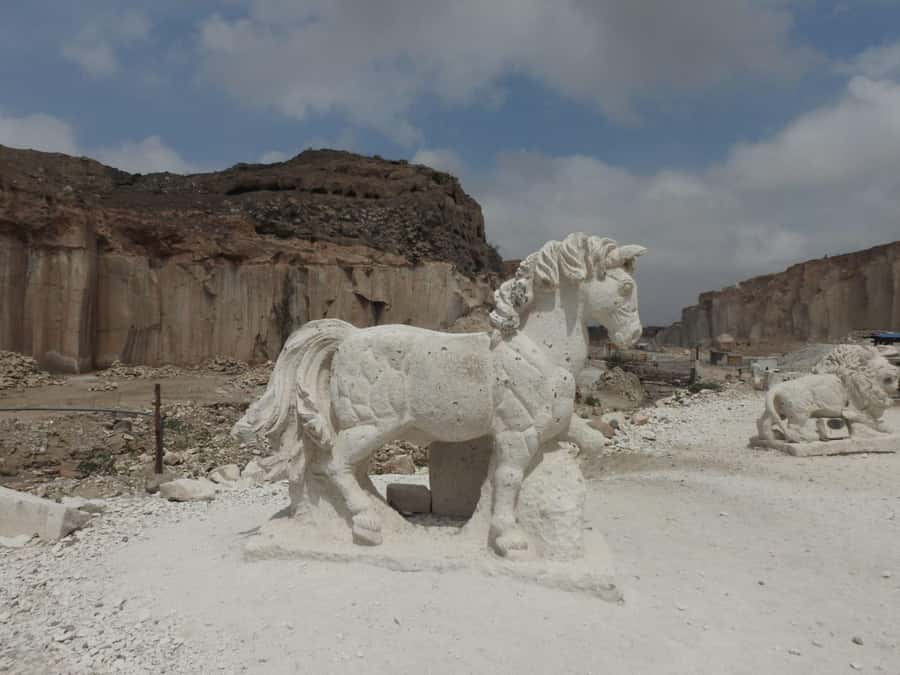
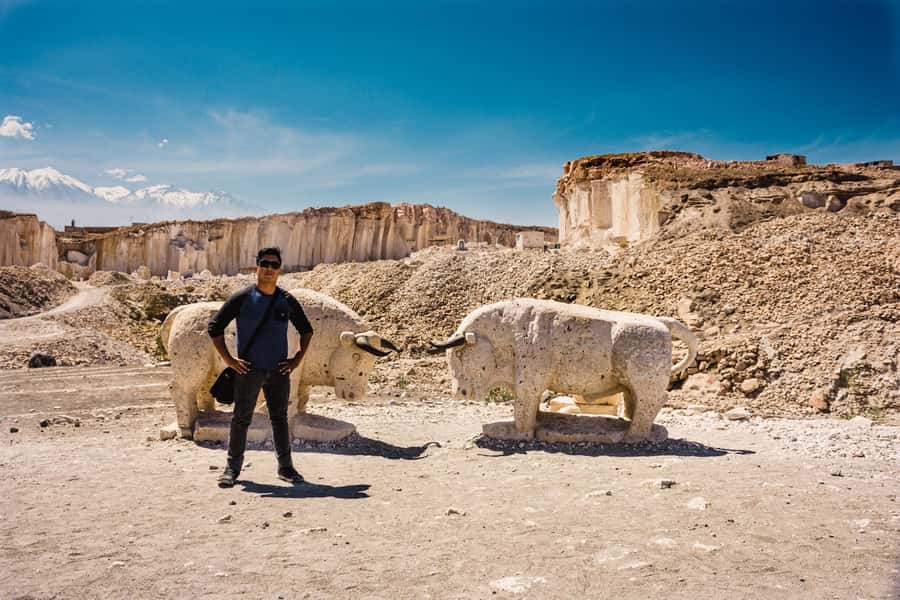
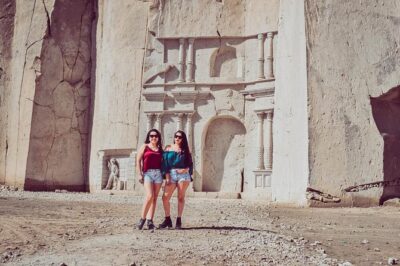
The large carving of the Church of the Company of Jesus is the quarry’s main constructed attraction. It is made from the same kind of stone and provides a clear link between the raw quarry and Arequipa’s grand religious buildings.
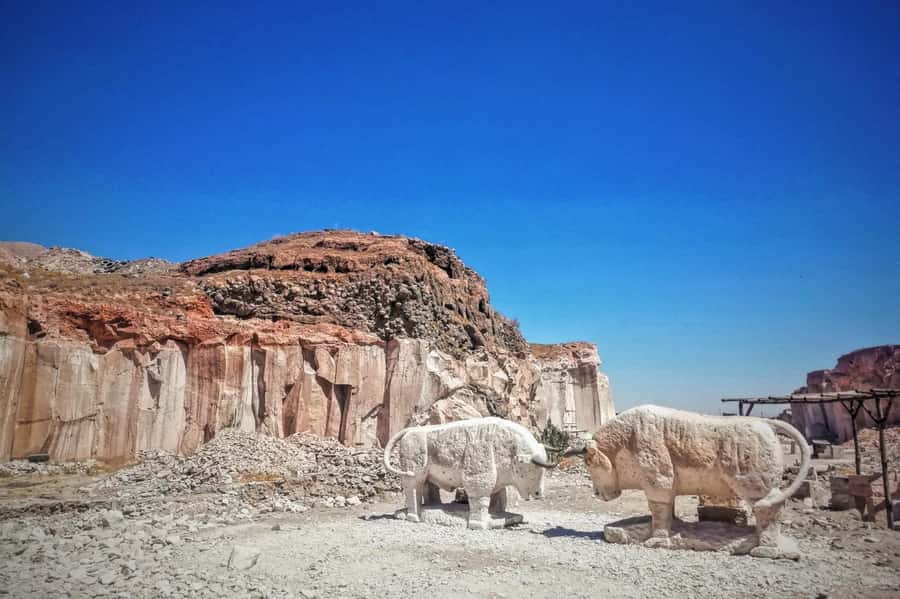
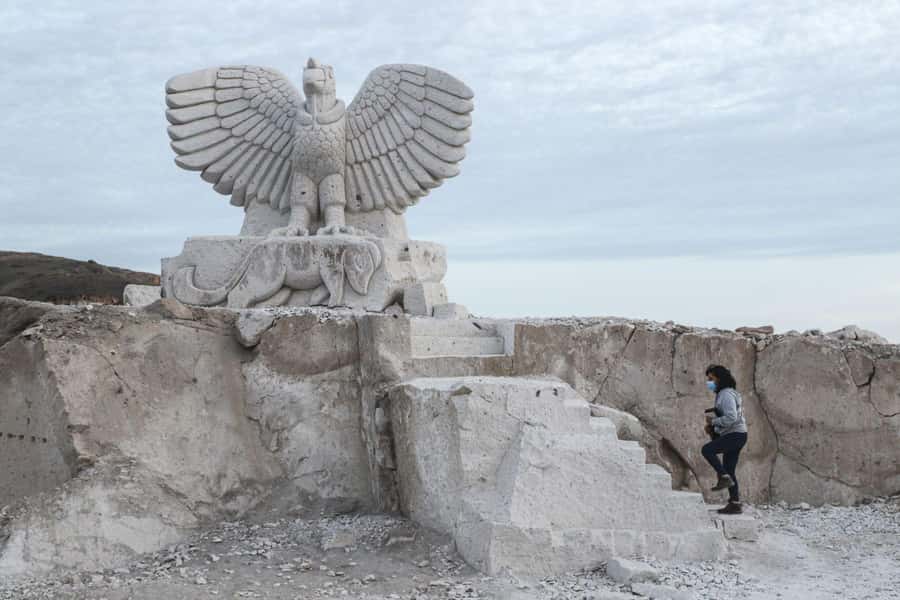
Here is where expectations matter. Some people find the modern carvings and stone animals a little too staged or designed for photographs. I would treat them as an added display, not the central reason to come. The quarry itself, the explanation of the stone, and the chance to meet a mason are more worthwhile.
You have roughly 45 minutes at this stop, though the usable time can shrink when groups queue for photographs. If you want detailed pictures of every sculpture, you may feel hurried. If you focus on the quarry walls and the stone-cutting demonstration, the time is usually enough.
More Sillar Route Tours in Arequipa
- Sillar Route and Culebrillas Petroglyphs
★ 4.5 · 89 reviews - Sillar Route in Arequipa and viewpoint of the Volcanoes
★ 4.0 · 71 reviews - Route of the Sillar | Quarries of Añashuaycos | Half day
★ 4.2 · 35 reviews - Sillar Stone Tour from Arequipa
★ 4.0 · 22 reviews
The short walk through Quebrada de Culebrillas
About 20 to 30 minutes after leaving Añashuayco, the vehicle reaches Quebrada de Culebrillas. This is the part I would most want to protect time for.
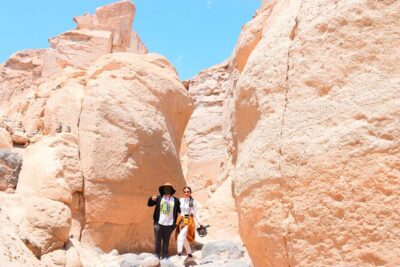
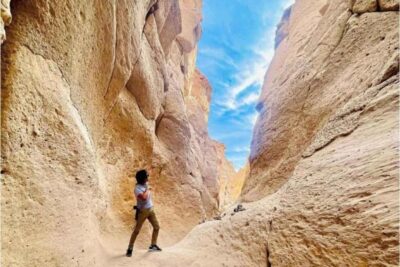
The canyon was formed by running water. Its walls measure roughly 15 to 20 meters and grow taller as you walk farther inside. The route is short, about 20 to 25 minutes, but the narrowing rock corridor gives it a stronger sense of discovery than the open quarry.
You will walk on an uneven surface, so close shoes are a good idea. Anyone with walking difficulties may find the canyon awkward. The tour does not require a long mountain hike, but it is not a flat paved stroll either.
At the end of the walk, you can see petroglyphs associated with the Wari culture and dated to more than 1,000 years ago. They are an important counterpoint to the modern quarry carvings. One stop shows present-day stone work, while the other points to much older human activity in the area.
The canyon can become crowded when several groups arrive at once. A guide may adjust the order and begin here first to avoid the largest groups. That can make a major difference, since the narrow walls feel much better when you are not waiting behind a long line of people taking pictures.
The canyon is also where your footwear and sun protection matter most. Insect repellent is worth carrying too, especially since several people found it useful. Bring water, although the supplied information does not specify that refreshments are provided.
Apachetas and the final look at the rocks
Near the end of the canyon visit, you see apachetas, small piles of stones placed one on top of another. They are described as symbols of gratitude toward nature and as signs of good luck.
The piles are simple, but the guide’s explanation gives them meaning. They are not just random rocks arranged for a photograph. They reflect a local spiritual idea that fits the quiet, stripped-back setting of the canyon.
This is a short stop, so do not expect a long ceremony or a separate hike. Think of it as a cultural detail that helps the route feel connected to local tradition.
After the canyon and viewpoint stops, the vehicle returns to Arequipa. The standard morning schedule brings you back near the city center, with the drop-off listed around Av. La Marina. The tour may also leave you near the main square or another central point, depending on the arrangement that day.
Morning or afternoon departure?
The morning trip is the safer choice if you want a predictable return and a cooler start. The stated schedule begins around 9:15 AM and reaches the city again early in the afternoon.
The 2:00 PM departure has a different appeal. Afternoon light can soften the quarry walls and make the rocks look warmer. One especially good departure ended with sunset colors on the stone, and the canyon can look striking in that light.
The tradeoff is the return drive. Traffic into Arequipa can be heavy later in the day, so the afternoon option may run less smoothly than the morning schedule. If you have an evening bus, flight, or fixed dinner reservation, leave plenty of room.
I would choose the afternoon tour if photography matters and your evening is open. Choose morning if you value a simple schedule or want to avoid arriving back in the city late.
What the $12 price really gets you
At $12 per person, this is one of the more affordable ways to reach the quarries and canyon from Arequipa. Transportation and a live guide in English or Spanish are included.
You must pay 18 soles in total for entrance tickets. That extra charge is easy to overlook, so carry small bills or coins in Peruvian soles. There is no cash withdrawal machine during the outing, and buying anything along the way also requires cash.
The value is strongest if you would otherwise need to arrange separate transport to three outlying stops. The guide adds useful context about sillar, the volcanoes, local food, and the meaning of stacked stones. Several guides have also helped with practical matters, such as changing large bills or offering restaurant suggestions.
The cost does not buy a private visit or a long, slow exploration. Groups can be fairly large, with one bus carrying about 25 people. Explanations may switch between Spanish and English, and English speakers may need to stay close or ask the guide to repeat a point.
Still, the combination of transport, guiding, quarry access, canyon walk, and viewpoints makes the total a good deal. Just keep your expectations focused on an efficient half-day outing.
The guides and the pace
Guiding is one of the strongest parts of this experience. Names specifically praised include Jose, Mike, Alexandra, Julia, Alexa, and Roni. The most useful quality is not a particular personality, but the effort to explain the same place in both Spanish and English.
English ability can vary by guide, though several guides have spoken very well and made sure English speakers were included. If the guide begins in Spanish, ask politely for the English explanation rather than assuming you have missed your chance.
The schedule is generally punctual. You get guided explanations, then some free time for photographs and independent wandering. At the quarry, that free time can feel a little loose, while at the canyon it can feel short if the path is busy.
A strong guide can improve the day by changing the order of the stops. Starting at Culebrillas before the large groups arrive is a smart adjustment. The tour is more enjoyable when the guide treats the timing as flexible rather than simply marching through a fixed sequence.
What to pack for the four hours
Bring the following:
- Closed, comfortable shoes for the canyon
- Sunscreen and a hat
- Insect repellent
- Water
- Small cash in Peruvian soles for the 18-sol entrance fee
- A light layer for the vehicle and changing conditions
- A phone or camera with enough battery for the stone carvings and views
The sunlight can be strong around the pale rock. The quarry reflects brightness, and there is not much shade mentioned along the route. If you take the afternoon departure, add a little extra time for the cooler return.
Who should book this experience?
I would recommend it to you if you want a low-cost way to see a working quarry, learn how Arequipa’s pale stone is made, and walk through a small canyon without committing to a full-day trek.
It suits first-time visitors who want context for Arequipa’s churches and buildings. It is also a good choice when you have only half a day free, since the main stops are close enough to the city for a manageable outing.
You may want to skip it if you dislike organized transport, staged photo sculptures, or short timed visits. The quarry is not a quiet wilderness area, and the canyon may be crowded. People with walking problems should also think carefully about the uneven 20 to 25-minute walk.
Free cancellation up to 24 hours before departure and the option to reserve without paying immediately make the booking flexible. The tour is offered in English and Spanish, but confirm the language arrangement if clear English guiding is essential.
Should you book the Sillar Route Trek?
Yes, if you want good value and a quick connection between Arequipa’s architecture, volcanic stone, and local craft. I would give the quarry your attention, save your best expectations for Culebrillas Canyon, and carry cash, sun protection, repellent, and proper shoes.
Choose the morning for a steadier schedule. Choose the 2:00 PM departure for warmer photographs and a chance of sunset light. At $12 plus the 18-sol entrance fee, this is an easy half-day addition to an Arequipa stay, as long as you accept group transport and keep your expectations realistic.
FAQ
How long does the Sillar Route Trek last?
The experience lasts about four hours. The morning schedule begins around 9:15 AM and returns to Arequipa around 1:30 PM. A 2:00 PM departure is also available.
Where does the tour start?
The meeting point is the main office at C. Álvarez Thomas 115 in Arequipa. It is located on the same corner, where your name is checked before departure.
What languages are available?
The live guide service is available in English and Spanish. The guide may explain parts of the outing in both languages.
What is included in the price?
Transportation and a live guide are included.
How much are the entrance fees?
The entrance fees cost 18 soles in total and are paid separately from the $12 tour price.
Is the canyon walk difficult?
The walk inside Quebrada de Culebrillas takes about 20 to 25 minutes and follows uneven ground. Close shoes are recommended, and people with walking problems may find it difficult.
Should I bring cash?
Yes. Bring 18 soles for the entrance fees, preferably in smaller bills. There is no cash withdrawal machine during the tour, and purchases along the route require cash.
Can I cancel the booking?
You can cancel up to 24 hours in advance for a full refund. You can also reserve now and pay later.
More Treks and Day Hikes
- Private 3 Day Colca Canyon Trekking tour (superior Service)
★ 5.0 · 58 reviews - Trekking, Waterfalls and Thermal Baths
★ 4.5 · 47 reviews - 3-Day Colca Canyon trek with Professional Guide
★ 5.0 · 40 reviews - 2 Day Trek Including Transfer to Puno / Colca Canyon
★ 4.5 · 38 reviews
More Sillar Route Trips
- 4-hour excursion: Sillar Route with Hiking in Culebrillas
★ 4.0 · 21 reviews - Trek to the Route of the Sillar and Culebrillas in Arequipa
★ 4.0 · 9 reviews - Arequipa | Tour of the Sillar Route + Culebrillas Canyon
★ 3.5 · 7 reviews - 4-hour excursion: Ruta del Sillar with Hiking in Culebrillas
★ 3.5 · 6 reviews
Just added around Arequipa
- From Arequipa: Colca Canyon and Condor Watching Day Trip★ 3.7 · 3 reviews
- Arequipa : Colca Canyon 2-Day Adventure★ 5.0 · 3 reviews
- Cooking Class Typical Food in Arequipa★ 3.9 · 3 reviews
- 3-day trek to the Colca Canyon from Arequipa ending in Puno★ 4.2 · 3 reviews
- Colca Canyon Day Trip: From Arequipa to Puno★ 3.5 · 3 reviews
- 2 day 1 night trek / Colca Canyon★ 3.0 · 3 reviews
- From Arequipa: Full Day Colca Canyon Tour★ 4.5 · 3 reviews
- Excursion Salinas Lagoon and National★ 5.0 · 3 reviews
Sillar Route Tours, compared.
Sillar Route in Arequipa and viewpoint of the Volcanoes
Read our review →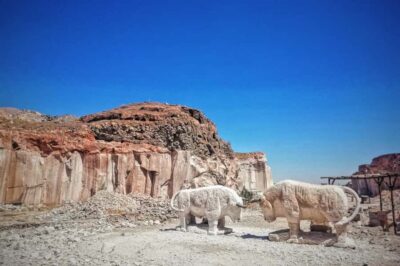
4 hours Tour: Route of Sillar with Trek in Culebrillas
Read our review →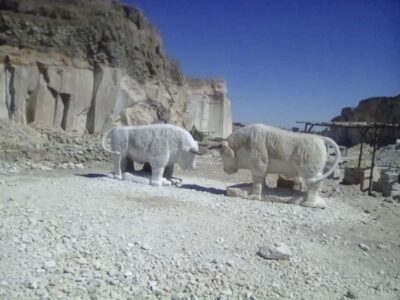
Route of the Sillar | Quarries of Añashuaycos | Half day
Read our review →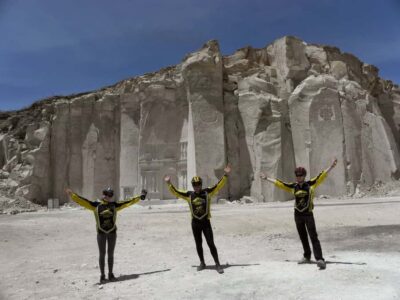
4-hour excursion: Sillar Route with Hiking in Culebrillas
Read our review →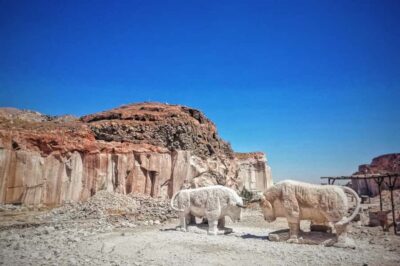
Trek to the Route of the Sillar and Culebrillas in Arequipa
Read our review →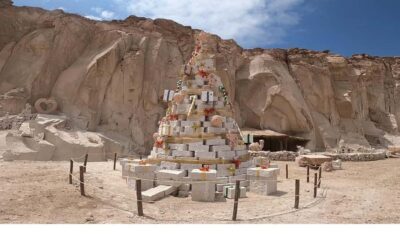
Arequipa | Tour of the Sillar Route + Culebrillas Canyon
Read our review →Browse the lists this tour appears in