
Reviewed · SILLAR ROUTE TOURS
Sillar Route in Arequipa and viewpoint of the Volcanoes
Arequipa’s stone tells a volcanic story. This short outing takes you beyond the city to the quarries where pale sillar, the volcanic stone used in much of Arequipa’s historic center, is still cut by hand. I like the small groups of up to 15 people and the way the tour fits neatly into a half-day. I also like the low price, around $11 per person, which makes it an easy addition to an Arequipa itinerary.
The best moments are the carved stone walls, the statues, and the walk through the narrow Culebrillas canyon, where petroglyphs add a surprise archaeological touch. The main drawback is uneven tour quality. Pickup can be poorly organized, and an English booking may become a mostly Spanish experience if the group is multilingual.
In This Review
- Key points to know before booking
- Why Arequipa’s white stone matters
- Stop one: Añashuayco quarry and hand-cut sillar
- Stop two: the protected sillar quarries
- Stop three: the Ruta del Sillar and Culebrillas canyon
- The volcano views and the ride back to Arequipa
- What the $11 price really buys you
- Transport, pickup, and group size
- Language and guiding quality
- Who will enjoy this half-day outing
- What to pack for the Sillar Route
- Booking, cancellation, and weather
- Should you book it?
- FAQ
- How long does the Sillar Route tour last?
- How much does the tour cost?
- What is included in the tour?
- Where does the tour begin?
- Where does the tour end?
- Are morning and afternoon departures available?
- Can I cancel for a full refund?
Key points to know before booking
- The Culebrillas canyon is the highlight: Expect a relatively easy walk through dry volcanic stone, with petroglyphs and a small pink sillar canyon.
- Sillar is Arequipa’s signature building stone: You see how blocks are cut and understand the pale stone used in the city’s historic buildings.
- The tour lasts about three to four hours: Morning and afternoon departures let you fit it around other plans.
- Carry extra cash: The advertised entrance charge is $3, but one entrance fee has reportedly cost more.
- Protect yourself from dust and insects: Sunscreen, insect repellent, sturdy shoes, and a mask are smart choices.
- Language matters: Ask in advance if the guide will provide full commentary in English rather than a short translation after a longer Spanish explanation.
Why Arequipa’s white stone matters
Arequipa is famous for its pale buildings, but it is easy to admire the city center without asking where the material came from. Sillar Route gives you that missing piece. The stone is volcanic, light in color, and closely tied to the city’s churches, mansions, and arcades.
The quarries are not polished museum spaces. They are working extraction areas, with dust, rough ground, and evidence of hard manual labor. That raw quality is part of the point. You are seeing the source of a building tradition rather than only its finished form.
The outing also helps you connect the city to the volcanoes around it. During the drive and from the open quarry areas, the guide discusses the nearby volcanic peaks and the material created by volcanic activity. The exact view depends on weather and visibility, so treat the volcano scenery as an important bonus rather than the only reason to book.
More Sillar Route Tours in Arequipa
- From Arequipa: Sillar Route Trek
★ 4.2 · 461 reviews - Sillar Route and Culebrillas Petroglyphs
★ 4.5 · 89 reviews - 4 hours Tour: Route of Sillar with Trek in Culebrillas
★ 4.2 · 69 reviews
Stop one: Añashuayco quarry and hand-cut sillar
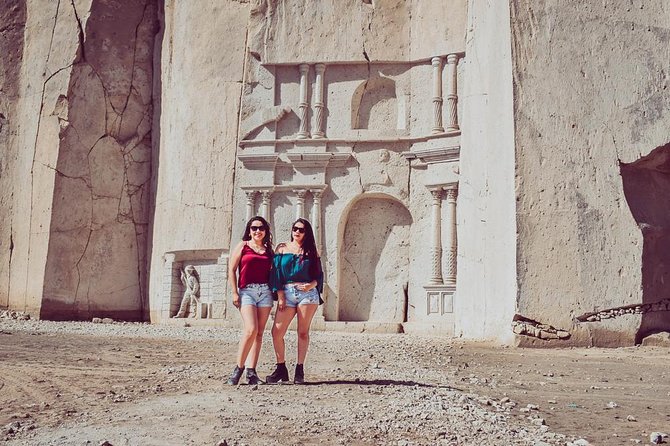
The first stop is Canteras de Sillar Añashuayco, with about 50 minutes allocated to the visit. Here you see the stone being carved in an artisanal way and learn about the routine of the workers.
This is the most useful stop for understanding the labor behind Arequipa’s old buildings. A block of sillar may look smooth and elegant once it is part of a church wall, but at the quarry you see the rougher process that comes first. The contrast gives the stone a human scale.
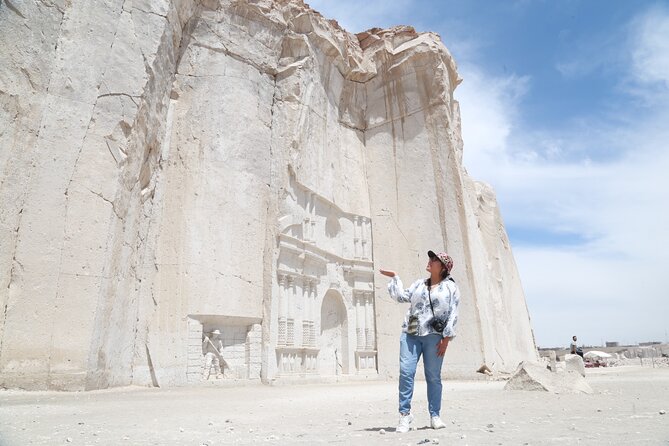
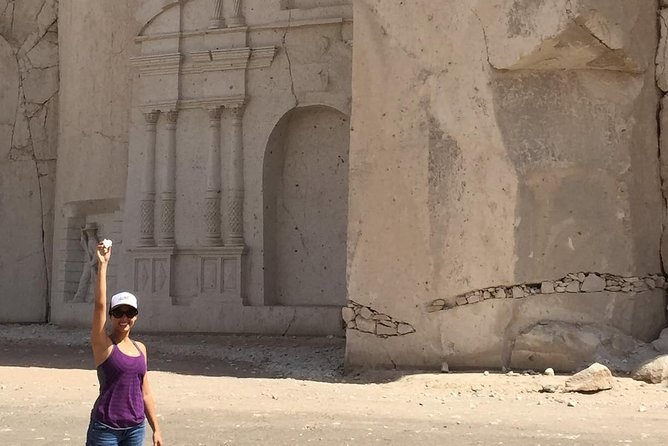
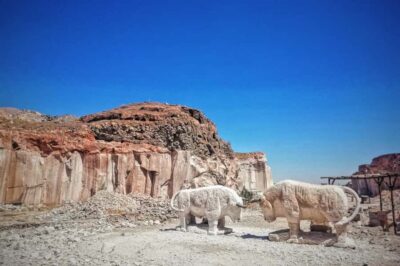
The area also includes murals and stone carvings. These make the stop more visual than a simple quarry visit, especially if you enjoy photography. The carved surfaces create strong patterns, and the pale stone works well in bright Andean light.
One unusual feature is the small pink sillar cannon, formed naturally. It is a minor sight, but it gives the guide something distinctive to point out among the larger quarry walls.
You may need to pay an entrance fee here or at one of the quarry areas. The stated price is $3, and it is not included in the tour cost. Since at least one entrance has reportedly cost more than expected, I would carry a little extra cash rather than arrive with only the exact amount.
Dust is part of this stop. If you have sensitive lungs, bring a mask or buff. The quarry is also exposed, so sunscreen and a hat are sensible even on a short visit.
Stop two: the protected sillar quarries
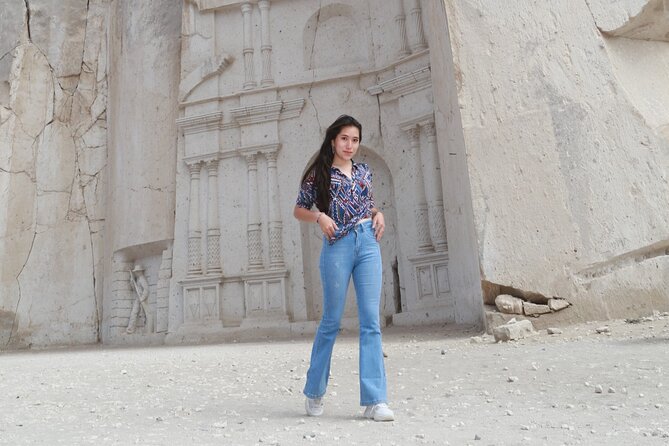
The second quarry stop lasts about 40 minutes and focuses on the protected natural area where the stone originates. This is less about seeing a finished monument and more about understanding the scale and setting of the quarry itself.
The protected status matters. The area is presented as a place where the volcanic stone and its surroundings should remain intact, with restrictions on altering the site. That gives the visit a conservation angle, although you should not expect a formal interpretation center or a highly staged attraction.
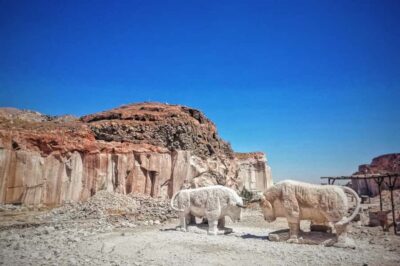
Some parts may feel industrial rather than scenic. One section has been described as mainly a mine area with a few sculptures, and the amount of activity can vary. If you come expecting a grand natural park, you may find this stop modest.
Still, I think it earns its place in the outing because it shows the source material in context. You can better appreciate the city’s sillar buildings after seeing the rough stone cut from the surrounding rock.
Stop three: the Ruta del Sillar and Culebrillas canyon
The final part is generally the most memorable. The route leads through carved stone formations and a dry canyon area, often associated with Culebrillas. The walk is about 40 minutes, although the total time on foot can feel longer or shorter depending on the group and stops for photos.
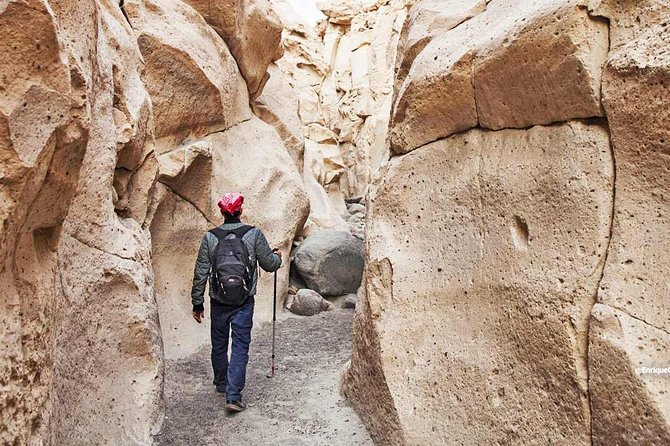
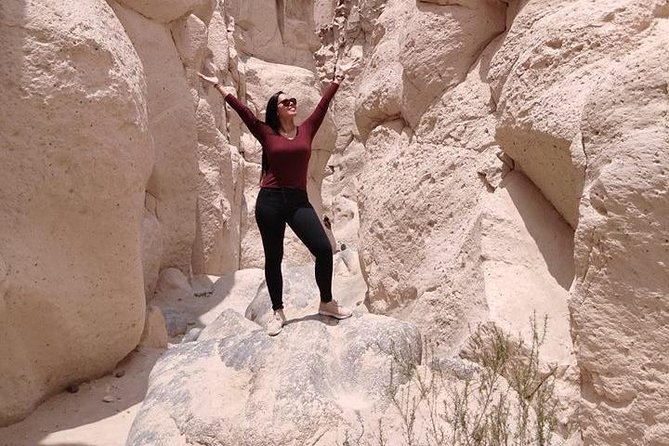
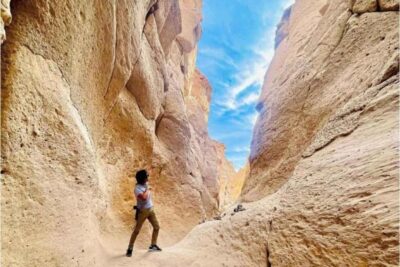
The canyon is narrow, pale, and striking. It has the spare look of a desert, with high sillar walls and sculpted shapes formed by nature and human work. Petroglyphs near the end of the walk add a layer of interest that many people do not expect from a quarry excursion.
This is where sturdy footwear matters most. The path has uneven and rough sections, so sandals or smooth-soled shoes are a poor choice. You do not need advanced hiking gear, but comfortable walking shoes are a good idea.
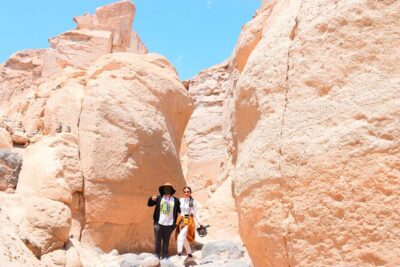
The small pink sillar canyon and the stone carvings provide the strongest photo opportunities. The area is described as protected and largely untouched, so you should not expect paved paths, extensive facilities, or a tidy visitor center.
Insect repellent is particularly useful here. Several accounts warn about flies or insects in the canyon area, and flies can enter the van when doors and windows remain open. Apply repellent before leaving the vehicle and keep your own supply handy.
More Sillar Route quarry and petroglyph trips:
- Route of the Sillar | Quarries of Añashuaycos | Half day
★ 4.2 · 35 reviews - Sillar Stone Tour from Arequipa
★ 4.0 · 22 reviews - 4-hour excursion: Sillar Route with Hiking in Culebrillas
★ 4.0 · 21 reviews - Trek to the Route of the Sillar and Culebrillas in Arequipa
★ 4.0 · 9 reviews
The volcano views and the ride back to Arequipa
The experience is not only about quarry walls. The drive gives the guide a chance to explain the volcanoes around Arequipa, and the higher, open areas can provide broad views when the weather cooperates.
Cloud, wind, and changing temperatures can affect what you see. One practical tip is to dress in layers. You might feel warm in the sun, then find the air cool and windy a short time later.
The return to the city provides a useful visual comparison. After seeing where sillar comes from, you can look again at Arequipa’s historic center and recognize the same pale volcanic stone in its older buildings. The tour ends near the Temple of San Agustín, two or three blocks from the Plaza de Armas, because vehicles do not enter the main square.
That ending is convenient if you are planning to continue walking through central Arequipa. It is not a hotel drop-off at the end, so arrange your plans with the short walk from San Agustín in mind.
What the $11 price really buys you
At about $11 per person, this is one of the easier Arequipa excursions to recommend on value alone. The price includes tourist transportation and a professional guide, and the outing lasts roughly three to four hours. That gives you a quarry visit, a canyon walk, and volcanic context without committing an entire day.
The low price also explains some of the compromises. This is not the place to expect a private guide, carefully tailored pacing, or a guaranteed language-specific group. The vehicle may carry Spanish-speaking and English-speaking customers together, and commentary can be longer in Spanish with shorter English explanations.
That does not make the tour poor by itself. Several guides have been praised for friendly service and good explanations. Names that have received especially positive attention include Betsey, Alonso, Jose Jose, and Christina. Alonso, in particular, was appreciated for explaining the city and nearby volcanoes in both English and Spanish.
The real question is how much interpretation you need. If you mainly want transport to the stone sites and a general explanation, the price is excellent. If you want detailed commentary in polished English, you may prefer to confirm the language arrangement before paying, or consider spending more with a provider that guarantees a dedicated English tour.
Transport, pickup, and group size
Round-trip transportation is included, and the maximum group size is 15 people. That is small enough to keep the outing reasonably personal without the cost of a private vehicle.
The vehicle quality can vary, but one particularly positive account described a spacious van with air conditioning. Other experiences have involved heat, open doors, or limited cooling. The short duration keeps this from becoming a major problem for most people, but it is worth knowing if you dislike warm, crowded rides.
Pickup is the weak point. Some departures have gone smoothly, while others have involved long waits, late confirmation, or confusion about where to meet. A few people were left waiting without a pickup, which is a serious service failure.
The listed meeting point is C. San Agustín 102 in Arequipa. Confirmation is supposed to arrive at booking, but I would still check the pickup details the day before and keep the operator’s contact information available. If nobody has clarified the meeting arrangement by the evening before, contact the provider rather than assuming the vehicle will find you.
Morning and afternoon start times are offered. A morning departure may be better if you want cooler conditions and the rest of the day free. An afternoon option can work well if you arrive in Arequipa late in the morning or want to visit the city center first.
Language and guiding quality
The guide can make this simple outing feel worthwhile. The best guiding connects three things: volcanic geology, the work of cutting sillar, and the architecture you see back in Arequipa.
The strongest accounts describe guides who shared stories, explained the stone clearly, and kept the mood friendly. Good guiding is especially helpful in the quarry, where the walls and tools may otherwise look like a series of similar pale surfaces.
Language is the more serious concern. The tour may be multilingual, even if you select English. If you are the only English speaker, the guide might give a full Spanish explanation followed by a shorter English version. That can turn an interesting visit into a long ride with only fragments of information.
I would ask one direct question before booking: Will the entire tour be guided in English, or will it be multilingual? The answer may determine if this is a bargain or a frustrating compromise.
Who will enjoy this half-day outing
I think this tour suits you if you want a short excursion beyond central Arequipa, enjoy unusual geology, or want to understand the material used in the city’s historic buildings. It also works well for families because the route is short and the walks are manageable for most people.
It is a good fit for photographers. The pale stone, carved statues, canyon walls, murals, and volcanic views offer plenty of visual variety. The best photos often come from moving beyond the first quarry stop and reaching the canyon.
You should be comfortable with dust, rough ground, insects, and a quarry that remains a working or formerly active extraction area. This is not a refined attraction. You may find hawkers at the sites, and some sections can feel sparse or underdeveloped.
I would skip it if you have only one short day in Arequipa and are choosing between this and the city’s major sights. The route is interesting, but it is not essential for every visitor. If you have an extra half-day, however, it adds useful context and gets you away from the central streets.
What to pack for the Sillar Route
Bring:
- Sturdy walking shoes for the uneven canyon path
- Sunscreen and a hat
- Insect repellent, especially for Culebrillas
- A mask or face covering for quarry dust
- Several light clothing layers
- Extra cash beyond the stated $3 entrance fee
- Water for the walk
You should also keep your camera ready. The statues, stone cuts, murals, and canyon walls are the strongest visual parts of the route.
Booking, cancellation, and weather
The tour can be canceled free of charge up to 24 hours before the start time for a full refund. Changes or cancellations made within 24 hours are not accepted for a refund.
Good weather is required. If the operator cancels because of poor conditions, you should be offered another date or a full refund. This matters for the views, but also for the exposed walks through the quarry and canyon.
Most people can participate, and the group is limited to 15. The information provided does not promise wheelchair access or describe special accommodations, so ask the operator directly if you have mobility needs.
Should you book it?
Book the Sillar Route if you want an inexpensive, short look at the volcanic stone behind Arequipa’s architecture. The Culebrillas canyon, petroglyphs, stone carvings, and volcano explanations give the outing more substance than a simple quarry stop.
Go in with realistic expectations. The scenery is dry and stark, some quarry areas are modest, and the service can be uneven. Confirm the pickup and guiding language, bring protection from dust and insects, and carry extra cash for admission.
For around $11, I consider it a worthwhile half-day add-on, especially if you have already seen the Plaza de Armas and want a different side of Arequipa. I would not make it the centerpiece of a short visit, but with a free morning or afternoon, it offers good value and a memorable look at the stone beneath the white city.
FAQ
How long does the Sillar Route tour last?
The tour lasts approximately three to four hours, including transportation and visits to the quarry and canyon areas.
How much does the tour cost?
The listed price is $11 per person. An entrance fee of $3 is not included, and carrying extra cash is sensible in case the fee is higher at the site.
What is included in the tour?
Tourist transportation and a professional guide are included.
Where does the tour begin?
The listed starting point is C. San Agustín 102 in Arequipa, Peru.
Where does the tour end?
The tour ends near the Temple of San Agustín on C. Sucre, about two or three blocks from the Plaza de Armas. Vehicles do not enter the main square.
Are morning and afternoon departures available?
Yes. You can choose between a morning or afternoon start time.
Can I cancel for a full refund?
Yes, if you cancel at least 24 hours before the local start time. Cancellations within 24 hours are not refunded. If poor weather causes the operator to cancel, you should be offered a different date or a full refund.
Just added around Arequipa
- From Arequipa: Colca Canyon and Condor Watching Day Trip★ 3.7 · 3 reviews
- Arequipa : Colca Canyon 2-Day Adventure★ 5.0 · 3 reviews
- Cooking Class Typical Food in Arequipa★ 3.9 · 3 reviews
- 3-day trek to the Colca Canyon from Arequipa ending in Puno★ 4.2 · 3 reviews
- Colca Canyon Day Trip: From Arequipa to Puno★ 3.5 · 3 reviews
- 2 day 1 night trek / Colca Canyon★ 3.0 · 3 reviews
- From Arequipa: Full Day Colca Canyon Tour★ 4.5 · 3 reviews
- Excursion Salinas Lagoon and National★ 5.0 · 3 reviews
Sillar Route Tours, compared.
4 hours Tour: Route of Sillar with Trek in Culebrillas
Read our review →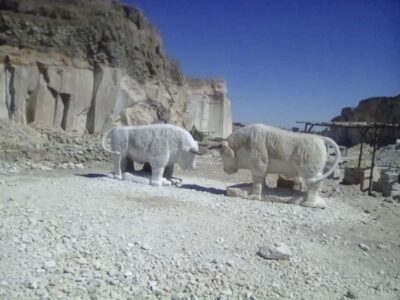
Route of the Sillar | Quarries of Añashuaycos | Half day
Read our review →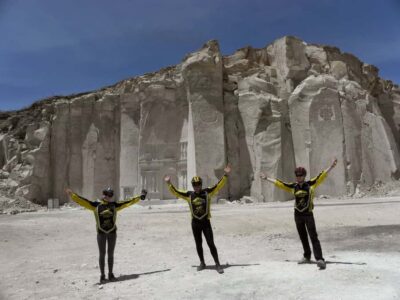
4-hour excursion: Sillar Route with Hiking in Culebrillas
Read our review →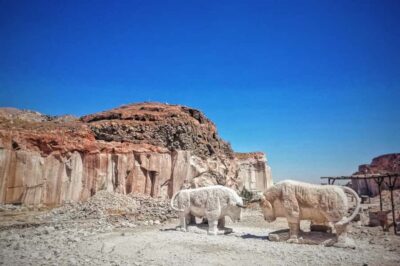
Trek to the Route of the Sillar and Culebrillas in Arequipa
Read our review →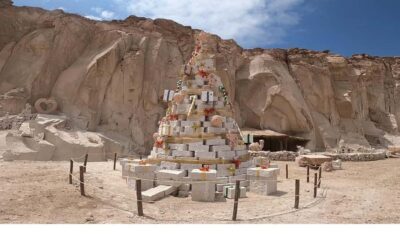
Arequipa | Tour of the Sillar Route + Culebrillas Canyon
Read our review →Browse the lists this tour appears in