
Reviewed · INCA RUINS & ARCHAEOLOGY
Sillar Route and Culebrillas Petroglyphs
White stone tells Arequipa’s story. This four-hour outing takes you from Yanahuara’s volcano views to the quarries that supplied the city’s famous white volcanic stone, then into the narrow Culebrillas canyon to see ancient petroglyphs. I especially like the mix of city views and working stone craft, plus the small-group format of up to 18 people.
The Culebrillas walk is the highlight for me: short, atmospheric, and more memorable than a simple roadside photo stop. The $19 price also gives you a useful half-day outside central Arequipa. The main caution is dust, heat, and uneven ground, along with occasional complaints about rushed stops, unclear English explanations, or uncomfortable transport.
In This Review
- Key points to know before you book
- Why sillar matters in Arequipa
- Yanahuara gives you Arequipa’s best quick view
- Añashuayco quarry: stone, dust, and local craft
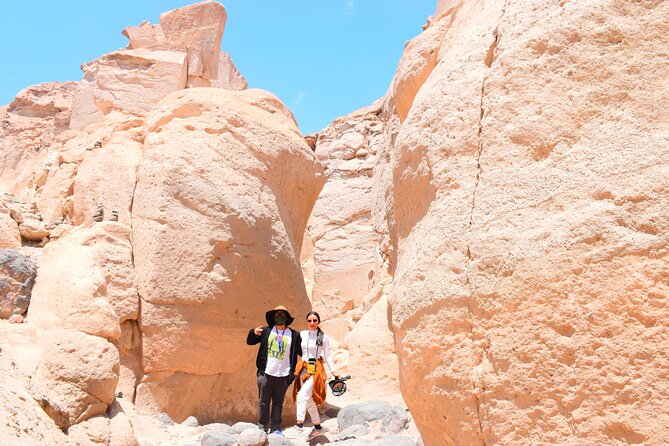
- Culebrillas canyon is the best part of the outing
- Transport, timing, and the small-group tradeoff
- Guide quality can shape the whole visit
- What to bring for a better half-day
- Is $19 good value?
- Who should book this experience?
- Should you book the Sillar Route and Culebrillas?
- FAQ
- How long does the Sillar Route and Culebrillas tour last?
- What is included in the price?
- Is the tour suitable for older adults?
- Do I need special shoes?
- Should I bring protection from dust or insects?
- How many people can join the tour?
Key points to know before you book
- Arequipa’s white stone comes alive at Añashuayco: You see sillar being shaped and learn how it became the city’s signature building material.
- Yanahuara offers three volcanoes in one view: Misti, Chachani, and Pichu Picchu may all be visible from the ashlar arches.
- Culebrillas requires a short but rugged walk: Allow about 20 minutes in the canyon, plus a five-minute climb up a slope.
- The petroglyphs are subtle: Bright midday light and dark volcanic rock can make the animal shapes hard to recognize.
- Dust protection matters: Bring water, sturdy shoes, and a face mask if dust bothers you. Sand flies have also been reported.
- The experience is a strong budget choice: It costs $19 per person, but time management and guide communication can vary.
Why sillar matters in Arequipa
Arequipa is often called the White City because so many historic buildings use sillar, a pale volcanic stone formed from eruptions in the surrounding region. The stone gives churches, mansions, arches, and courtyards a clean, bright appearance, but it is not just a decorative feature. Sillar shaped the look and identity of the city.
This tour takes you to the source. Near Arequipa, workers cut and shape the stone by hand using traditional methods. You can watch demonstrations, see how rough volcanic material becomes a building block, and view sculptures made from the same stone.
That connection is what makes the excursion worthwhile. You are not only looking at an attractive quarry. You are seeing the material that helped build Arequipa and continues to support local craft. Guides such as Mike, Tony, Alexandra, Christina, and Sandra have received praise for explaining the stone, the city, and the surrounding sites in both English and Spanish.
The quality of the explanation matters here. Without context, the quarry can feel like a dusty area with statues and photo opportunities. With a good guide, it becomes a practical lesson in Arequipa’s architecture and local work.
More Sillar Route Tours in Arequipa
- From Arequipa: Sillar Route Trek
★ 4.2 · 461 reviews - Sillar Route in Arequipa and viewpoint of the Volcanoes
★ 4.0 · 71 reviews - 4 hours Tour: Route of Sillar with Trek in Culebrillas
★ 4.2 · 69 reviews
Yanahuara gives you Arequipa’s best quick view
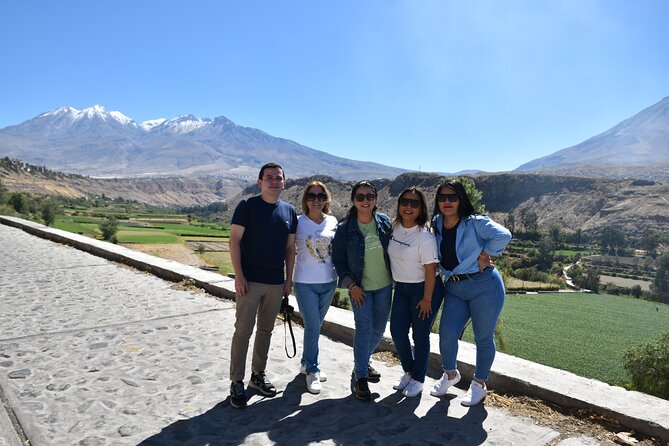
The first stop is Yanahuara, a traditional district known for its row of white sillar arches. From the viewpoint, you look across Arequipa toward the three well-known snow-capped peaks of Misti, Chachani, and Pichu Picchu.
The stop is scheduled for about 20 minutes. That is enough time for photographs and a quick orientation to the city, though some groups have spent less time here when pickup delays affected the schedule. One reported delay lasted 45 minutes because of a city event, and the time at Yanahuara was reduced to about 10 minutes.
I would not treat this as a full neighborhood visit. It is a compact viewpoint stop, useful at the beginning of the outing because it shows you what the quarry stone looks like in finished colonial architecture. The arches frame the volcanoes, creating a neat link between Arequipa’s built setting and its volcanic surroundings.
Visibility is never guaranteed. Mountain views can be softened by haze, and a late return can make the volcanoes harder to see. If this panorama matters to you, ask the guide at the start how the schedule is running and try to protect the early stop.
Añashuayco quarry: stone, dust, and local craft
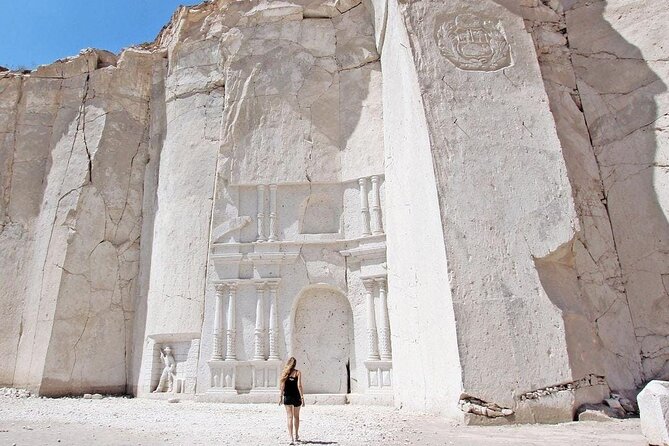
The main quarry visit lasts about one hour and includes admission. The entrance fees listed for the outing are S/5 for Añashuayco and S/5 for Culebrillas, included in the advertised price.
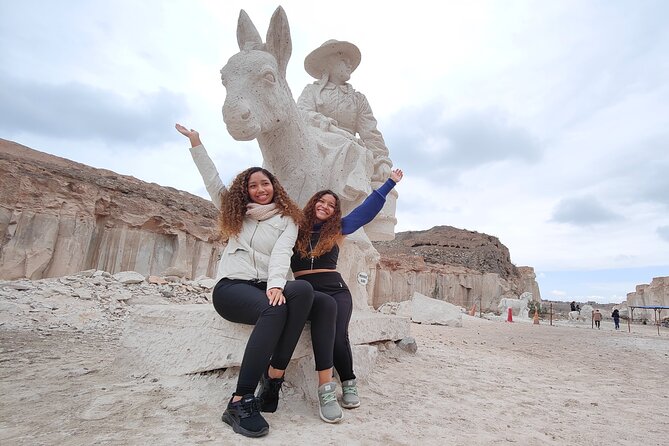
At Añashuayco, you walk among cut faces of pale volcanic stone and watch artisans work. The scale is impressive, but this is not a polished museum. Expect dust, sun, rough ground, and an active craft setting rather than air-conditioned displays.
That roughness is part of the appeal. I prefer seeing the stone being worked where it is extracted instead of only seeing it in a church or plaza. You can better understand the labor behind Arequipa’s bright façades, and the sculptures offer a chance to see how local artists use the material in more playful ways.
Still, this stop can feel uneven. Some guides give a clear explanation and point out the important sculptures. Other groups have been left with a long period of free time and little background. The site also appears to include areas that may require a separate small payment, depending on which sculptures or sections you want to see. Since the listed entrance covers S/5, ask what that admission includes before paying for any additional area.
The quarry is also where you will notice the dust most. A face mask is a sensible item, especially if you have a dust allergy or sensitive lungs. One person reported that several people were coughing without masks. Wear shoes with a firm sole, and carry water. The sun can feel strong even during a short visit.
Culebrillas canyon is the best part of the outing
After Añashuayco, the vehicle travels about 15 minutes to Culebrillas. Here, the setting changes from an open quarry to a narrow, curving ravine shaped by an ancient river.
The walk takes about 20 minutes, though you should allow extra time for stopping, photographs, and the guide’s explanations. The ground is bumpy, and the route includes a slope that takes about five minutes to climb. This is not a demanding mountain trek, but it is not a flat stroll either.
I like Culebrillas because the experience feels more active and less arranged for display. The winding rock walls create changing views as you walk, and the canyon is quiet enough to make the short route feel like a real break from city traffic.
The petroglyphs are carved into the canyon walls. Some shapes are difficult to read, especially in strong midday sunlight against dark volcanic rock. You may need the guide to point out the animals and symbols, and even then, a little imagination helps. Do not expect large, sharply defined carvings that are instantly obvious from a distance.
The canyon can become crowded in its narrow sections. One account described difficulty taking photographs because people were moving through the passage in both directions. If you want clean pictures, listen for a pause in the flow and take your time, while still keeping the group’s meeting instructions clear.
At the end, you see apachetas, small stone mounds connected with local spiritual tradition. They are simple objects, but they add cultural meaning to the walk. Treat them respectfully and avoid moving or adding stones unless your guide specifically invites you to do so.
Sand flies have also been reported at the quarry and canyon. The pre-trip advice may mention mosquito repellent, but the insects described in one account were sand flies rather than mosquitoes. If you are sensitive to bites, ask what protection is best and bring suitable repellent or covering clothing.
More Inca sites and ruins to walk around:
- Cusco: Half-Day City Tour with Sacsayhuaman and Q’enco
★ 4.6 · 1,129 reviews - City Tour Cusco Qoricancha Sacsayhuaman y Tambomachay
★ 4.7 · 617 reviews - Lima: The Charm of Barranco & Pre Inca Pyramid in Miraflores
★ 4.9 · 322 reviews - Lima: Pachacamac Ruins & Barranco Half-Day Guided Tour
★ 4.6 · 296 reviews
Transport, timing, and the small-group tradeoff
The outing lasts about four hours, including the drive back toward central Arequipa. The return from Culebrillas is listed at about 40 minutes. It is a useful length if you have only a free morning or afternoon and do not want to spend an entire day away from the city.
The maximum group size is 18. In practice, some departures have had around 12 people, which makes a minibus outing feel reasonably personal. A smaller group also helps at Culebrillas, where the route is narrow and meeting up can be awkward.
Pickup is offered at your hotel, but the return arrangement needs attention. The information provided says the return ends at a central tourist stop rather than necessarily at each hotel. Several people expected hotel drop-off and were disappointed. Confirm the exact return point before setting off, especially if you have another booking afterward.
Pickup has generally been punctual, but collecting several people can take time. One account describes a 30-minute collection process, and another describes a mistaken pickup that caused a 40-minute wait. Contact by WhatsApp is used for pickup details and recommendations the day before, so keep your phone available and make sure the operator has the correct accommodation information.
Transport feedback is mixed. Some passengers praised a comfortable, air-conditioned van and careful safety practices, including seatbelts and break-glass hammers. Others reported a full van, poor air conditioning, dusty roads, or a front middle seat without a seatbelt. Those are serious differences in comfort and safety.
At the start, check your seatbelt and speak up if your seat does not have one. You should not accept a seat without proper restraint. Road conditions outside the city can be rough, so a careful driver and a comfortable vehicle make a real difference.
Guide quality can shape the whole visit
A bilingual tour requires patience and clear organization. Several guides have been praised warmly. Mike was described as kind and fluent in English and Spanish, while Alexandra, Christina, and Sandra were praised for giving equal attention to English-speaking passengers. Tony received both strong praise for his humor and explanations and criticism for speaking too quickly and being difficult to understand.
That contrast tells you what to watch for. If Spanish is the main language of the group, English explanations may come later and may be shorter. Some people felt like an afterthought when longer explanations were given first in Spanish, followed by brief English comments.
You can improve your experience by standing close to the guide during explanations and asking for a slower repeat when needed. At the quarry, ask which sculptures and sections are included. At Culebrillas, ask where the petroglyphs are located and how much time you have for photographs. Clear meeting instructions are especially important in a narrow canyon.
The best guides add meaning to ordinary-looking details: why sillar became central to Arequipa, how the stone is shaped, what the apachetas represent, and how to read the petroglyphs. Without that layer, the tour becomes mostly transport and free time.
What to bring for a better half-day
Keep your packing simple, but do not arrive unprepared:
- Water
- Closed shoes with good grip
- Sun protection
- A face mask or bandana for quarry dust
- Suitable insect protection if you are sensitive to sand flies
- A phone or camera with enough battery
- A light layer for changing conditions
The walk is only about 20 minutes, but the uneven canyon floor makes sandals or smooth-soled shoes a poor choice. Older adults and anyone with balance problems should think carefully before booking. The activity information specifically says it is not recommended for older adults because of the rugged walk at Culebrillas.
The tour is also not recommended for people with a dust allergy. That warning is worth taking seriously. The quarry is an exposed working site, not a clean indoor attraction.
Is $19 good value?
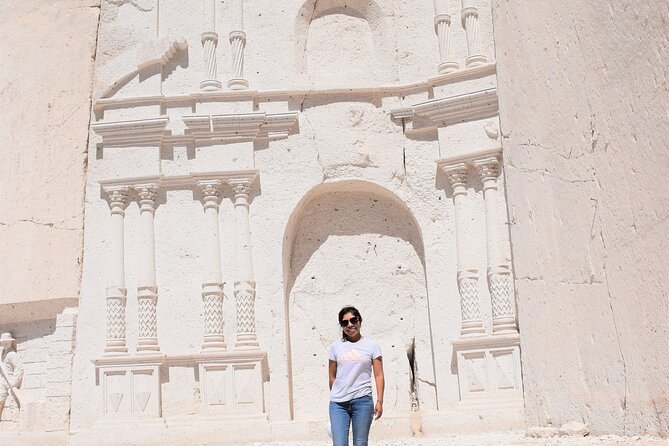
At $19 per person, this is one of the less expensive ways to reach the sillar quarries and Culebrillas in one half-day. Your fee includes a certified guide, group transport, and the two stated entrance fees of S/5 each. For an independent visitor, arranging transport to both sites may be less convenient, even if the outing itself is short.
The value is strongest if you want a quick introduction to Arequipa’s stone tradition and a canyon walk without committing a full day. You also get the Yanahuara viewpoint, which adds a city and volcano angle to the trip.
The price does not guarantee a polished experience. You may have limited time, a bilingual explanation that feels brief, or a van that is full. Some people felt the quarry was too tourist-focused, while others called the excursion excellent value and one of their best-priced activities in Peru.
At this price, I would book it for the access and variety, not for luxury. If you want long photo stops, a private guide, or detailed archaeology, a private outing may suit you better. If your goal is to see the main sites efficiently, $19 is fair, provided the schedule runs properly.
Who should book this experience?
I would recommend it to first-time visitors with a spare half-day in Arequipa, especially if you enjoy unusual geological sites, local craftsmanship, and short walks. It suits couples, solo visitors, and families who can manage uneven ground and outdoor conditions.
It is also a good choice if you want something beyond churches and plazas. The quarry explains how the city was built, while Culebrillas gives you a more natural setting and a chance to see modest but intriguing rock art.
I would hesitate if you have a dust allergy, need a fully accessible route, dislike crowded group transport, or want every minute devoted to photography. Older adults and anyone unsteady on rough ground should choose a gentler activity.
Should you book the Sillar Route and Culebrillas?
Book it if you value variety and low cost. The strongest parts are the view from Yanahuara, the chance to see sillar being shaped, and the twisting walk through Culebrillas. The canyon is the most distinctive part, while the quarry gives the whole outing its local purpose.
Before paying, confirm the pickup time, return point, language arrangement, vehicle seating, and exactly what the quarry admission covers. Bring a mask, water, and proper shoes. If the operator keeps the group moving, provides clear bilingual explanations, and protects time at both sites, this is a practical and memorable half-day outside Arequipa.
Free cancellation is available if you cancel at least 24 hours before the start time. Changes or cancellations made later are not accepted for a refund.
FAQ
How long does the Sillar Route and Culebrillas tour last?
The experience lasts approximately four hours, including transportation between Arequipa, the quarry, Culebrillas, and the city center.
What is included in the price?
The $19 price includes a certified guide, group transportation, the S/5 entrance fee to Añashuayco, and the S/5 admission fee to Culebrillas.
Is the tour suitable for older adults?
It is not recommended for older adults because the Culebrillas section includes an uneven walk and a short climb up a slope.
Do I need special shoes?
You should wear appropriate shoes with good grip because the Culebrillas canyon walk is bumpy and includes a slope.
Should I bring protection from dust or insects?
Yes. The quarry can be dusty, so a face mask is useful, especially if you have a dust allergy. Sand flies have also been reported, so suitable insect protection may help.
How many people can join the tour?
The group can include a maximum of 18 people. Some departures have operated with around 12 passengers.
More Sillar Route Trips
- Route of the Sillar | Quarries of Añashuaycos | Half day
★ 4.2 · 35 reviews - Sillar Stone Tour from Arequipa
★ 4.0 · 22 reviews - 4-hour excursion: Sillar Route with Hiking in Culebrillas
★ 4.0 · 21 reviews - Trek to the Route of the Sillar and Culebrillas in Arequipa
★ 4.0 · 9 reviews
Just added around Arequipa
- From Arequipa: Colca Canyon and Condor Watching Day Trip★ 3.7 · 3 reviews
- Arequipa : Colca Canyon 2-Day Adventure★ 5.0 · 3 reviews
- Cooking Class Typical Food in Arequipa★ 3.9 · 3 reviews
- 3-day trek to the Colca Canyon from Arequipa ending in Puno★ 4.2 · 3 reviews
- Colca Canyon Day Trip: From Arequipa to Puno★ 3.5 · 3 reviews
- 2 day 1 night trek / Colca Canyon★ 3.0 · 3 reviews
- From Arequipa: Full Day Colca Canyon Tour★ 4.5 · 3 reviews
- Excursion Salinas Lagoon and National★ 5.0 · 3 reviews
Inca Ruins & Archaeology, compared.

Half-Day City Tour with Sacsayhuaman and Q’enco
Read our review →
City Tour Cusco Qoricancha Sacsayhuaman y Tambomachay
Read our review →
The Charm of Barranco & Pre Inca Pyramid in Miraflores
Read our review →
Pachacamac Ruins & Barranco Half-Day Guided Tour
Read our review →
Pre Inca Temple of Pachacamac Half-Day Tour from Lima
Read our review →

Cusco City Sightseeing, San Pedro Market, Cathedral and Qorikancha Temple
Read our review →
3-Hour Horse Riding Tour to the Temple of the Moon
Read our review →Browse the lists this tour appears in