
Reviewed · COLCA CANYON TOURS
2 Day Trek Including Transfer to Puno / Colca Canyon
Wake before dawn for Peru’s great canyon walk. This two-day Colca Canyon trek combines a demanding descent, a warm pool in Sangalle, Andean condors, and a useful one-way transfer to Puno. I like the way it turns a difficult transport problem into part of the trip, and I like the small maximum group of 12, which gives you more access to your guide.
The scenery is the clear star, especially around Condor’s Cross and the canyon villages. The main drawback is the physical effort: day two begins with about three hours of uphill walking, under torchlight, after a basic night in a bungalow. At $179 per person, the package can be good value for convenience, but you should compare local prices in Arequipa before paying online.
In This Review
- The five details that matter most
- Why this route works well for a Peru itinerary
- A brutal but rewarding 3:00 am start
- The three-hour descent into Colca Canyon
- Sangalle’s warm pool and basic overnight stay
- The 5:00 am climb back to Cabanaconde
- Chacapi hot springs: optional, but worth considering
- The road to Puno through Pampa Cañahuas
- Food, lodging, and group size
- Fitness, packing, and the real level of difficulty
- Is $179 good value?
- Should you book this Colca Canyon trek?
- FAQ
- How long does the experience last?
- Where does the tour begin?
- What time does pickup begin?
- How large is the group?
- How difficult is the trek?
- Where do you sleep?
- Are meals included?
- Is the Colca Canyon entrance included?
- Are the Chacapi hot springs included?
- Does the tour end in Puno?
The five details that matter most
- The walk drops from about 3,300 to 2,100 meters: Day one is a long downhill route into the canyon, followed by smaller climbs and village paths.
- The uphill return starts at 5:00 am: You climb for roughly three hours to Cabanaconde, often with a torch as the sun comes up.
- Sangalle has warm pools: This oasis at about 1,900 meters gives you a welcome place to rest after the descent.
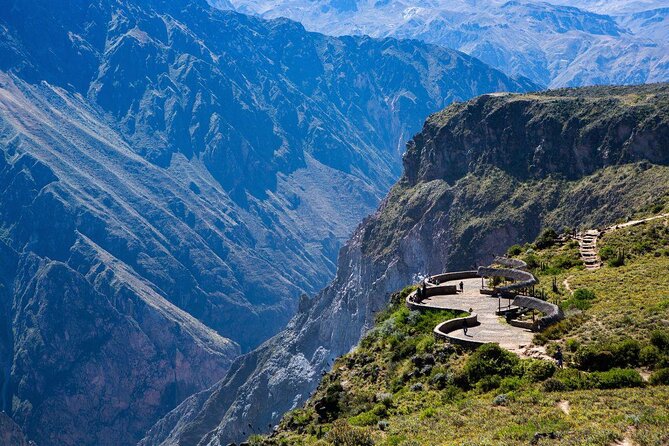
- Condor’s Cross is a major highlight: The viewpoint is known for sightings of Andean condors with wingspans of more than three meters.
- Your trip ends in Puno: The transfer leaves Chivay in the afternoon and arrives in central Puno around 6:30 pm.
- Extra costs add up: Budget for the PEN70 Colca Canyon entrance, PEN15 hot springs fee, and about PEN30 for the final lunch.
Why this route works well for a Peru itinerary
This experience is not just a canyon walk. It is also a practical connection between Arequipa and Puno, two popular stops that otherwise require separate planning. After reaching Chivay, you trek into Colca Canyon, sleep in Sangalle, climb back to Cabanaconde, and then continue through the highlands toward Puno.
I like that arrangement because the transfer is useful rather than an afterthought. You do not have to return to Arequipa after the trek and then arrange another bus. The route carries you onward, with hotel or hostel drop-off in central Puno around 6:30 pm.
The cost is listed at $179 per person and includes dinner, lunch, two breakfasts, accommodation, and the Chivay to Puno transfer. That is a fair package if you value a small group and having the transport organized. Still, price-checking matters. One booking experience found that people who arranged the same type of trip at a local Arequipa office paid less than half the online price. Local rates can change, so I would ask around before booking and compare exactly what each price includes.
The tour is often booked well ahead, with an average lead time of 42 days. That suggests you should not leave it until the last minute if the dates matter to you.
More Colca Canyon Tours in Arequipa
- From Arequipa: Colca Canyon Full-Day Guided Tour with Meals
★ 4.5 · 982 reviews - 2-Day Tour Colca Canyon in Arequipa with end in Puno
★ 4.6 · 248 reviews - From Arequipa: 2-Day Colca Canyon Trekking Tour
★ 4.8 · 243 reviews
A brutal but rewarding 3:00 am start
The day begins between 3:00 and 3:30 am with pickup at your Arequipa hotel or hostel. The drive to Cabanaconde takes about six hours, so this is not a gentle morning transfer. Bring a small pillow or something soft for the bus, and keep water and a snack close.
The first planned stop is Chivay, reached at about 7:30 am. You have breakfast in or near the Plaza de Armas, a useful pause after the early departure. Chivay is known for traditional houses and colorful surroundings, and the half-hour stop gives you time to stretch before continuing.
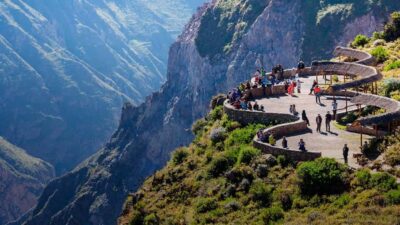
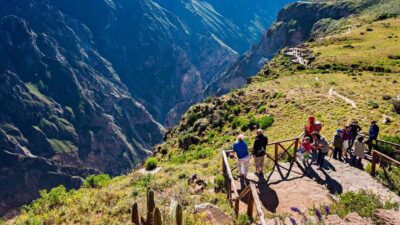
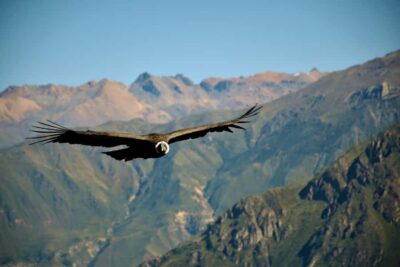
From there, the bus goes to Condor’s Cross. The viewpoint is famous for Andean condor sightings, and the birds can weigh up to 12 kilograms with wingspans over three meters. Your sighting is never guaranteed, but this is the right place to watch for them. The canyon views are also impressive even if the birds stay out of sight.
You have about 30 minutes at the viewpoint. That is enough for a focused stop, but not a long photography session if the condors appear slowly. Keep your jacket handy because the morning can feel cold at altitude, even though temperatures later in Sangalle are warmer.
After Condor’s Cross, the bus continues for about 20 minutes to the trek’s starting point. The walking begins high, at roughly 3,300 meters, and heads down toward the canyon floor.
The three-hour descent into Colca Canyon
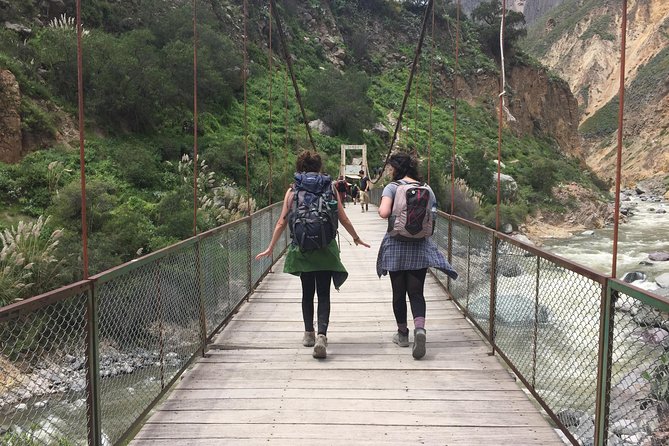
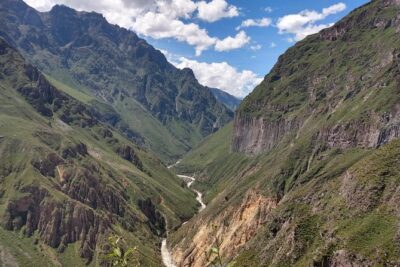
The first section is a downhill walk of about three hours, dropping to around 2,100 meters. Downhill sounds easy until you remember that every step puts pressure on your knees and feet. Trekking poles would be useful, although they are not listed as included, so bring your own if you normally use them.
You reach San Juan de Chuccho for lunch and a rest. This village has vegetation and fruit trees, which makes it feel very different from the dry high slopes above. The food is included, and one meal is described as a home-cooked lunch in a local family house, with fresh natural juices. That kind of stop gives the route a more personal feel than eating beside a highway.
After lunch, the path continues through Cosñirhua and Malata. These small communities break up the walk and show how people live within the canyon rather than simply looking at it from a viewpoint. The route is not a quick photo stop. You spend much of the day walking between settlements, with the canyon itself providing the main setting.
The final section heads farther down toward Sangalle, the lowest point of the trek. You arrive at about 5:00 pm after roughly 11 hours of transport, stops, and walking. By then, the warm pool is more than a pleasant extra.
Sangalle’s warm pool and basic overnight stay
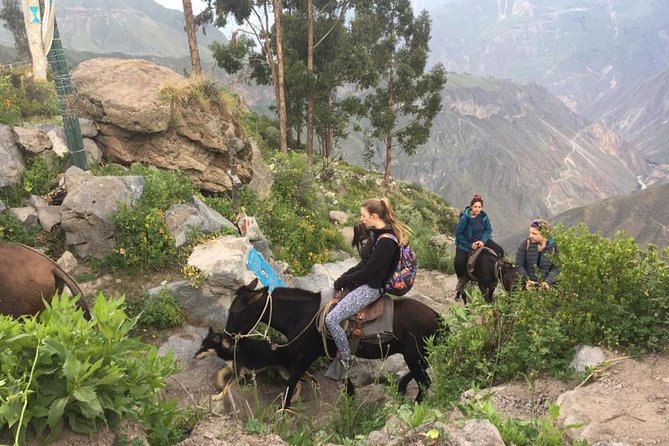
Sangalle sits at about 1,900 meters and is often called an oasis because of its warmer setting and vegetation. The pool is the main reward at the end of day one. You can soak your tired legs, rest, eat dinner, and settle into a bungalow.
Keep your expectations practical. The accommodation is basic, and some rooms may have no hot water. A past stay found the oasis comfortable and attractive but described the lodging as somewhat shabby. That is not a deal breaker for one night, but you should not expect hotel comfort.
The included dinner helps keep the evening simple. You sleep in Cielo Azul Lodge or a similar stated bungalow accommodation, depending on the arrangement. Pack only what you need for the trek if luggage transport is provided for the main bags. One useful feature of the trip is that luggage can be transported, so you do not have to carry everything down and back up the canyon.
I would still keep a daypack light. Carry water, sun protection, a change of clothes, basic toiletries, a warm layer, and any medicine you need. The hardest part of the route is not improved by hauling a large pack.
More Hiking & Trekking in Arequipa
- From Arequipa: Sillar Route Trek
★ 4.2 · 461 reviews - 2 Day 1 Night Trek / Colca Canyon
★ 4.5 · 92 reviews - 4 hours Tour: Route of Sillar with Trek in Culebrillas
★ 4.2 · 69 reviews - Private 3 Day Colca Canyon Trekking tour (superior Service)
★ 5.0 · 58 reviews
The 5:00 am climb back to Cabanaconde
Day two starts at about 5:00 am. You walk uphill for roughly three hours to Cabanaconde, using torch lights at first. This is the section that should determine your booking decision.
The climb gains about 950 to 1,200 meters, depending on how the route is measured. One description calls it a 1,200-meter ascent, while the walking notes refer to about 950 meters. Either way, it is a serious uphill effort. The steep grade, early hour, and previous day’s descent make this a demanding morning.
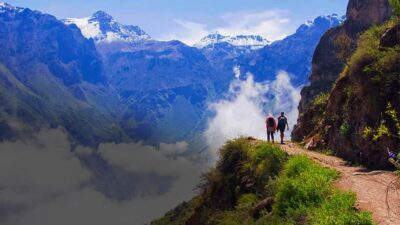
There is a reward for starting early. As the sun rises, the canyon can open around you with wide views across the terraces and slopes. You may find the first hour slow, but the changing light gives the climb a strong sense of place. Take steady steps, drink regularly, and do not fill your pack with unnecessary items.
Breakfast is served in Cabanaconde after the climb. This is an important break before the road journey to Chivay. You will likely appreciate a proper seat and a slower pace more than another scenic stop at this point.
The route toward Chivay includes views of pre-Inca terraces, archaeological ruins, and colonial towns. These details add context to the canyon. You are not only walking through dramatic terrain, you are also passing through places shaped by farming, older settlement, and colonial influence.
Chacapi hot springs: optional, but worth considering
Around noon, the route reaches Chivay and the Chacapi hot springs. Entry costs PEN15 and is not included. The pools range from about 30°C to 60°C, so you can choose a temperature that suits you.
I would treat this as a useful recovery stop, not a required part of the trip. After the early climb, warm water can feel excellent. If you are tired, short on time, or prefer to keep your clothes dry before the bus ride, you can skip it.
Lunch in Chivay is also extra. The typical local buffet costs about PEN30 per person. Since the final lunch is not included, carry some Peruvian soles for this stop along with the canyon entrance and hot springs fees.
The road to Puno through Pampa Cañahuas
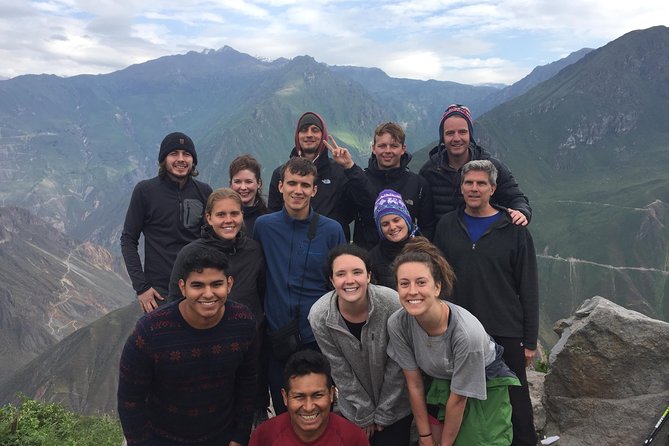
In the afternoon, the group leaves Chivay for Puno. The route crosses a high pass at about 4,830 meters before descending toward Puno at around 2,325 meters. That change in altitude is significant, so move slowly during stops and keep warm at the higher points.
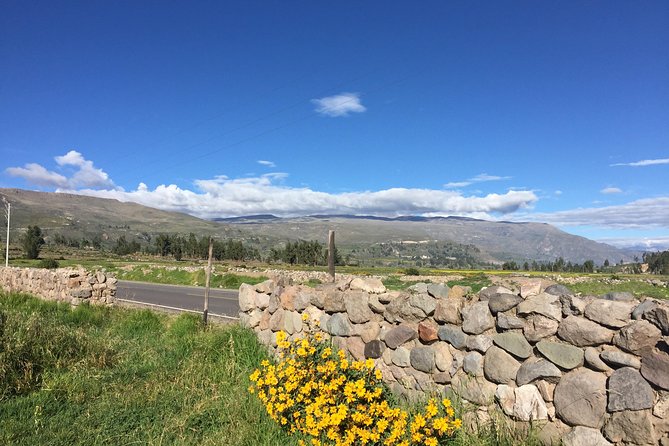
The bus passes through the Salinas y Aguada Blanca National Reserve, stopping at Pampa Cañahuas. The formal stop is about 10 to 15 minutes, but you may continue seeing volcanoes and camelids for more than an hour along the road. Look for llamas, alpacas, vicuñas, and guanacos, the four South American camelid species named for this area.
This section is not a guided nature excursion with a long walk. It is a scenic transfer with brief viewing stops. That distinction matters. You get a memorable ride through highland country, but most of your time is spent from the bus window.
Arrival in Puno is scheduled for about 6:30 pm, with drop-off at a hotel or hostel in the city center. There may be a bus change during the transfer, so keep your important items with you and confirm where your main luggage is at each stage.
Food, lodging, and group size
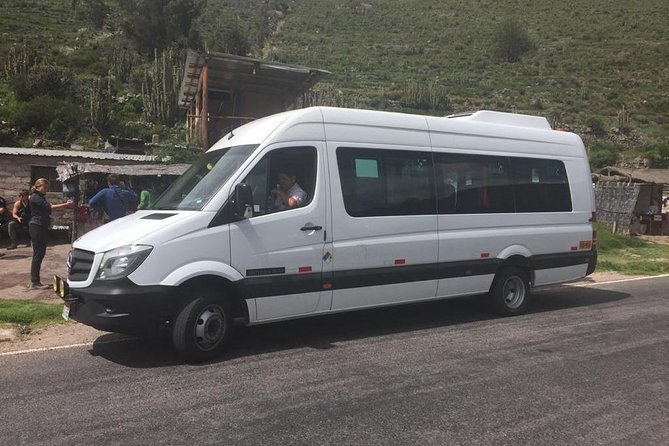
The package includes dinner, lunch, and two breakfasts. The food is functional rather than a reason to book the tour. Included meals have been described as acceptable but not outstanding, while a local family lunch with fresh juice received more favorable praise.
Bring small snacks for the long first day and the early climb. The schedule is strenuous, and meal times depend on reaching each village or town. Fruit, crackers, chocolate, or another compact snack can make the bus and walking portions easier.
Accommodation is basic. The Sangalle bungalow gives you shelter and access to the warm pool, but reports of limited hot water and shabby areas mean you should pack with simple conditions in mind. A quick-dry towel, sandals, and a headlamp are sensible additions.
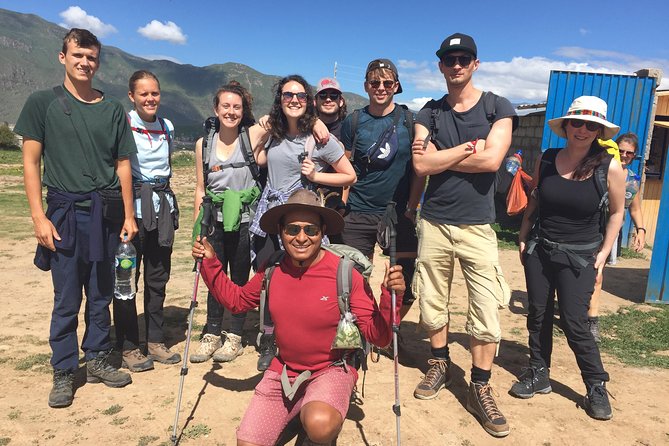
The group is limited to a maximum of 12 people. That is a useful size for a narrow trail and makes it easier to ask questions or stay connected to the guide. It also reduces the chance of feeling lost in a large procession, although the pace still has to suit a mixed group.
Fitness, packing, and the real level of difficulty
The experience requires a moderate level of physical fitness, but I would describe the route as demanding rather than moderate for many people. You walk downhill for about three hours on day one, continue through canyon villages, and then climb for about three hours before breakfast on day two.
The heat can make the trek feel harder, especially on exposed sections. Sun protection is essential. Bring a hat, sunscreen, sunglasses, and enough water for the walking portions.
Your daypack should stay small. The most useful items are:
- Water and compact snacks
- A headlamp or torch for the 5:00 am climb
- Sun protection and a warm layer
- Comfortable walking shoes with good grip
- A swimsuit and small towel for Sangalle and Chacapi
- Extra cash in Peruvian soles for entrance fees and lunch
- A light change of clothing
Service animals are allowed. The experience requires good weather, and if poor weather causes cancellation, you are offered another date or a full refund. Otherwise, the booking is non-refundable and cannot be changed, so check your plans carefully before paying.
Is $179 good value?
The answer depends on what you would otherwise arrange yourself. The $179 price covers the main transport, overnight stay, three listed included meals, the canyon trek, and the onward connection to Puno. For you, the biggest value may be the luggage handling and the fact that the trip does not send you back to Arequipa.
The price is less attractive if you are comfortable arranging local buses, finding a cheaper canyon guide, and booking a basic room independently. The warning about local office prices is important. Ask agencies in Arequipa for the full two-day route, then compare inclusions rather than looking only at the headline price.
Add at least PEN115 for the stated canyon entrance, Chacapi hot springs, and final lunch. The exchange rate will affect the dollar total, and the Colca Canyon fee is the largest extra charge.
Should you book this Colca Canyon trek?
Book it if you want a challenging canyon walk, prefer a small group, and need to reach Puno without returning to Arequipa. You will get the best value from the tour if the organized transfer and luggage transport save you time and stress.
Skip it if you dislike early starts, steep climbs, basic accommodation, or uncertain meal quality. The second day is not a gentle sightseeing morning. It is a hard uphill walk before breakfast.
My practical advice is to compare the $179 online price with local Arequipa offices, carry very little, and prepare seriously for the uphill return. If you can handle that climb, the route gives you condors, canyon villages, a warm Sangalle pool, highland camelids, and a useful arrival in Puno all in one compact trip.
FAQ
How long does the experience last?
The experience lasts approximately two days.
Where does the tour begin?
Pickup is provided at your hotel or hostel in Arequipa.
What time does pickup begin?
The start time is listed as 3:00 am, with departure described as between 3:00 and 3:30 am.
How large is the group?
The maximum group size is 12 people.
How difficult is the trek?
You need a moderate level of physical fitness. The route includes about three hours of downhill walking on day one and about three hours of uphill walking to Cabanaconde on day two.
Where do you sleep?
The overnight stay is in bungalows in Sangalle, with Cielo Azul Lodge named in the route details.
Are meals included?
Dinner, lunch, and two breakfasts are included. The final lunch in Chivay is not included and costs about PEN30 for the stated buffet.
Is the Colca Canyon entrance included?
No. The Colca Canyon entrance costs PEN70 per person and is not included.
Are the Chacapi hot springs included?
No. Entry to the Chacapi hot springs costs PEN15 per person. Visiting the pools is optional.
Does the tour end in Puno?
Yes. The transfer from Chivay to Puno is included, and arrival is scheduled for about 6:30 pm, with drop-off at a central Puno hotel or hostel.
More Treks and Day Hikes
- Trekking, Waterfalls and Thermal Baths
★ 4.5 · 47 reviews - 3-Day Colca Canyon trek with Professional Guide
★ 5.0 · 40 reviews - From Arequipa Trek : 2-Days of Hiking in the Colca Canyon
★ 4.5 · 35 reviews - 4-hour excursion: Sillar Route with Hiking in Culebrillas
★ 4.0 · 21 reviews
More Colca Canyon Trips
- Colca Canyon Plus
★ 5.0 · 198 reviews - From Arequipa: Full Day Tour of Colca Canyon with Meals
★ 4.4 · 146 reviews - Full-Day Colca Canyon Tour from Arequipa
★ 4.3 · 112 reviews - From Arequipa: Colca Canyon Day Trip with Transfer to Puno
★ 4.6 · 90 reviews
Just added around Arequipa
- From Arequipa: Colca Canyon and Condor Watching Day Trip★ 3.7 · 3 reviews
- Arequipa : Colca Canyon 2-Day Adventure★ 5.0 · 3 reviews
- Cooking Class Typical Food in Arequipa★ 3.9 · 3 reviews
- 3-day trek to the Colca Canyon from Arequipa ending in Puno★ 4.2 · 3 reviews
- Colca Canyon Day Trip: From Arequipa to Puno★ 3.5 · 3 reviews
- 2 day 1 night trek / Colca Canyon★ 3.0 · 3 reviews
- From Arequipa: Full Day Colca Canyon Tour★ 4.5 · 3 reviews
- Excursion Salinas Lagoon and National★ 5.0 · 3 reviews
Colca Canyon Tours, compared.
2-Day Tour Colca Canyon in Arequipa with end in Puno
Read our review →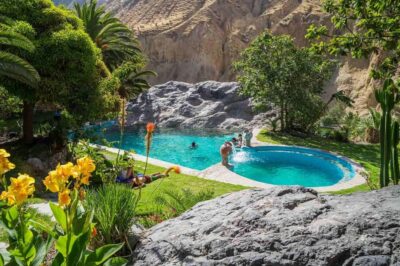
Browse the lists this tour appears in