
Reviewed · COLCA CANYON TOURS
From Arequipa Trek : 2-Days of Hiking in the Colca Canyon
This trek trades comfort for canyon drama. I like the way this two-day trip combines the Cruz del Cóndor viewpoint, a real descent into the Colca Canyon, and an overnight stay at Sangalle Oasis. I also like the local touch of lunch at a family home in San Juan de Chuccho, rather than keeping the whole experience inside a tour vehicle.
The main caution is simple: this is a hard hike, especially the steep climb out on the second morning. The low price is attractive, but the advertised $21 does not cover everything. You must also bring $90 or 320 soles in cash for food, lodging, and the entrance ticket, plus about $5 or 15 soles if you want the hot springs.
In This Review
- Key points to know before booking
- The 3 a.m. start from Arequipa
- Cruz del Cóndor and the first canyon views
- Descending from San Miguel to San Juan de Chuccho
- The final walk to Sangalle Oasis
- The sunrise climb out of the canyon
- Breakfast in Cabanaconde and the Antahuilque terraces
- Hot springs, Chivay, and the long return
- What the $21 price really means
- Guide quality and group communication
- What to pack for heat, darkness, and basic lodging
- Who should book this two-day trek?
- Should you book it?
- FAQ
- How long does the Colca Canyon trek last?
- How far do you walk on the first day?
- How difficult is the trek?
- Is the entrance ticket included in the $21 price?
- Is the hot springs entrance included?
- What languages does the guide speak?
- Is transport included?
- What should you bring?
Key points to know before booking
- 15 kilometers on day one: You descend from San Miguel through the canyon for about three hours, eat lunch in San Juan de Chuccho, then walk another three hours to Sangalle.
- The second morning is the real test: You begin in darkness and climb for three to four hours toward Cabanaconde, with sunrise arriving during the ascent.
- Condors come before the hike: The tour visits Cruz del Cóndor at about 3,600 meters, usually allowing around 40 to 50 minutes for viewing and photographs.
- Sangalle is a welcome rest stop: The oasis offers pools, dinner, and an overnight stay, but the lodging is basic, with limited facilities and no bathroom or electrical outlets in some rooms.
- The total price is higher than $21: Plan for the required cash payment for meals, accommodation, and park entry, plus the optional hot spring fee.
- You need solid walking shoes and altitude preparation: The paths are steep and uneven, and the heat in the canyon can make the climb much harder than the distance suggests.
The 3 a.m. start from Arequipa
The trip begins around 3 a.m. with hotel pickup in Arequipa. That early departure is not a minor detail. It allows the group to reach the Colca region in time for breakfast, condor viewing, and the full descent into the canyon.
The first drive takes about three and a half hours, with a breakfast stop in Chivay lasting roughly 50 minutes. I see this as a practical pause rather than a sightseeing stop. You can eat, use the facilities, and prepare for a long day before continuing toward the canyon.
The van ride is a big part of the first day. After breakfast, you drive about 50 minutes to Cruz del Cóndor, then continue to the trailhead. If you have trouble sleeping in vehicles, the departure time and long road journey may feel tiring before you even start walking.
The tour uses a small group format, limited to 18 people. That is better than a large coach excursion, but 18 hikers is still enough for different walking speeds and fitness levels. Good communication matters here, especially on narrow or steep sections.
More Colca Canyon Tours in Arequipa
- 2-Day Tour Colca Canyon in Arequipa with end in Puno
★ 4.6 · 248 reviews - From Puno to Arequipa: 2 Days/1 Night Colca Canyon Tour
★ 3.6 · 83 reviews - Turist Bus Colca Canyon (Chivay) To Puno
★ 5.0 · 83 reviews
Cruz del Cóndor and the first canyon views
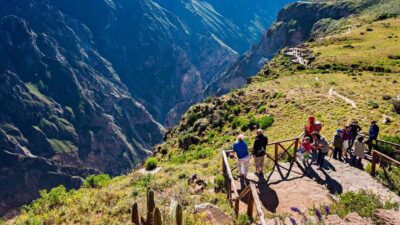
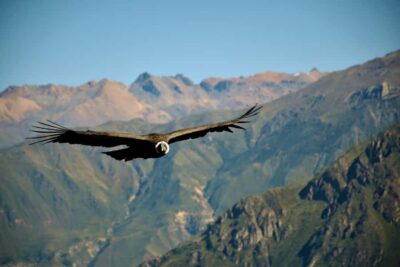
Cruz del Cóndor is one of the trip’s strongest moments, and it arrives before your legs are tired. At approximately 3,600 meters, you stop for about 40 to 50 minutes to watch for Andean condors and look into the Colca Canyon.
The condors are the star, but the setting matters just as much. You get a wide view across the canyon before entering it on foot. If the birds appear, their size and slow, powerful flight make this more than a routine photo stop.
I like the order of the day here. You first see the canyon from above, then experience its scale by walking down into it. The drawback is that viewing wildlife is never guaranteed, so you should treat the condor stop as a strong opportunity rather than a promise of constant activity.
From Cruz del Cóndor, the van continues for about 30 minutes to the trail area near San Miguel, at roughly 3,200 meters. You get around 20 minutes to organize your backpack before starting. Pack carefully at this point because you will carry what you need down and across the canyon.
Descending from San Miguel to San Juan de Chuccho
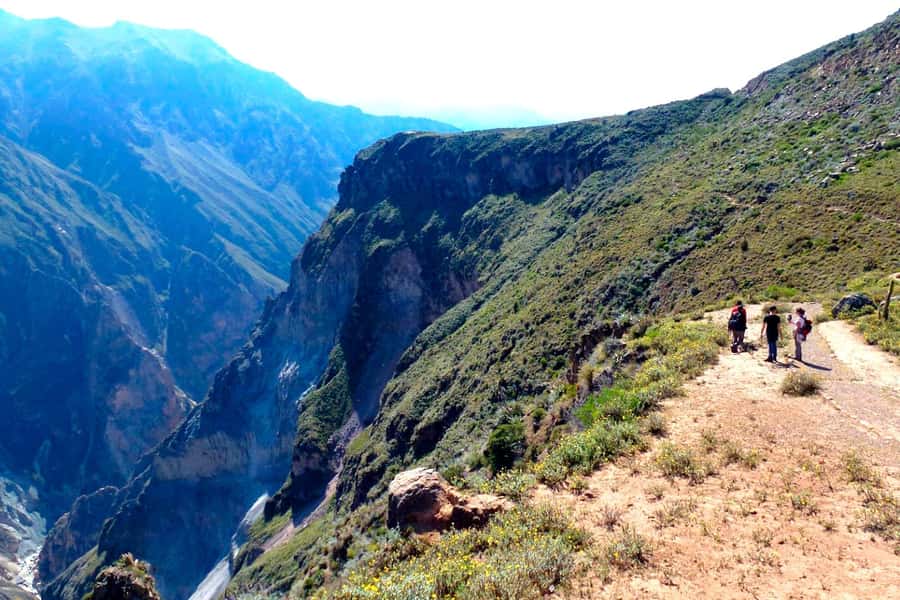
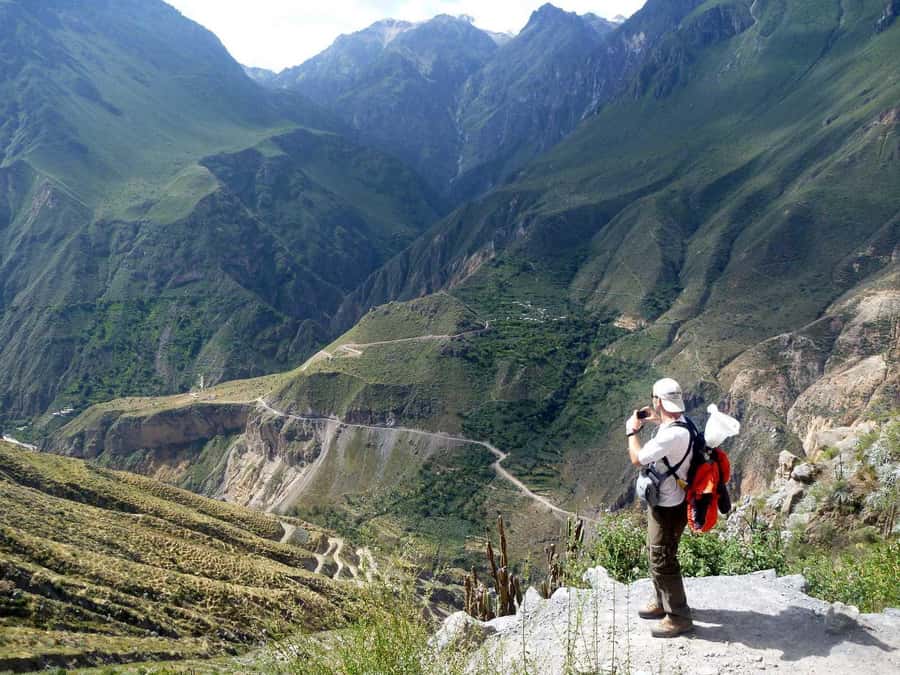
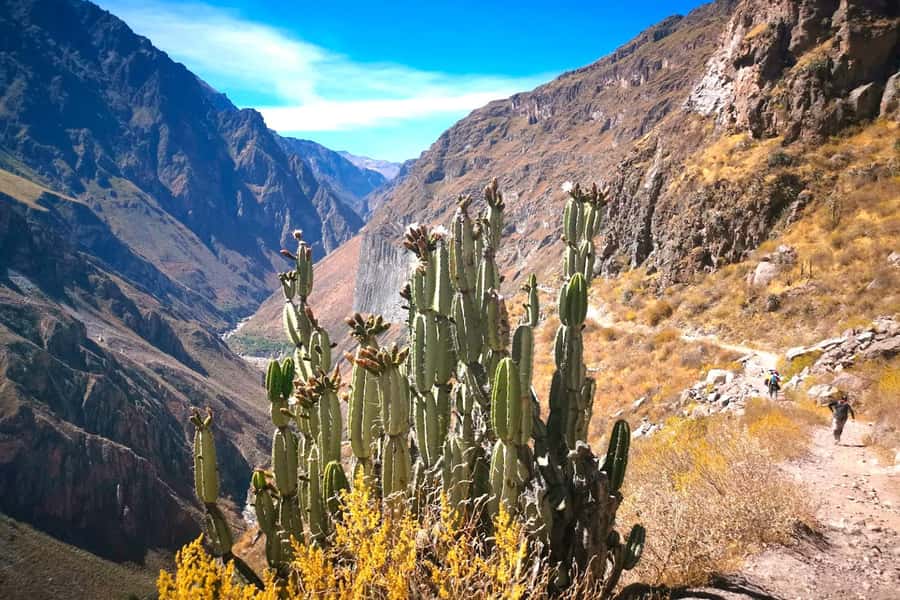
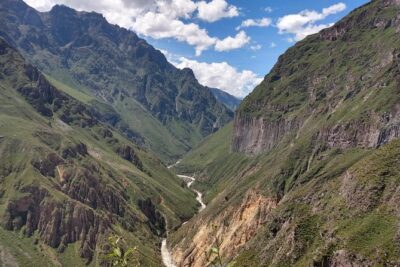
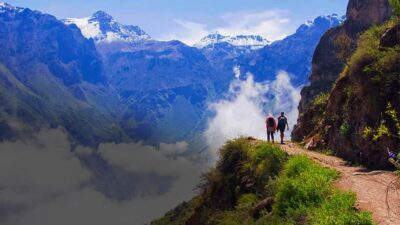
The first walking section takes about three hours. From San Miguel, the path drops toward the canyon floor, with views of the canyon’s depth and local plants and wildlife along the way.
This is a serious descent, not a gentle scenic walk. Steep and uneven ground puts pressure on your knees, and loose or awkward footing can slow the group. I would use trekking shoes with good grip and keep both hands free when possible.
The elevation changes quickly. You start around 3,200 meters and descend toward San Juan de Chuccho at approximately 2,230 meters. That lower altitude can make breathing easier, but the heat tends to become a bigger concern as the day advances.
After about three hours, you cross a bridge and reach San Juan de Chuccho. Lunch takes place at the home of a local family and lasts around 50 minutes. This is one of the most appealing parts of the trip because it gives the route a human connection. You are not simply moving between viewpoints and buses. You are stopping in a canyon community for a meal and a rest.
Still, do not assume lunch will carry you through the afternoon. Bring snacks. The next walk lasts another three hours, and the combination of heat, descent fatigue, and limited personal food can catch up with you.
The final walk to Sangalle Oasis
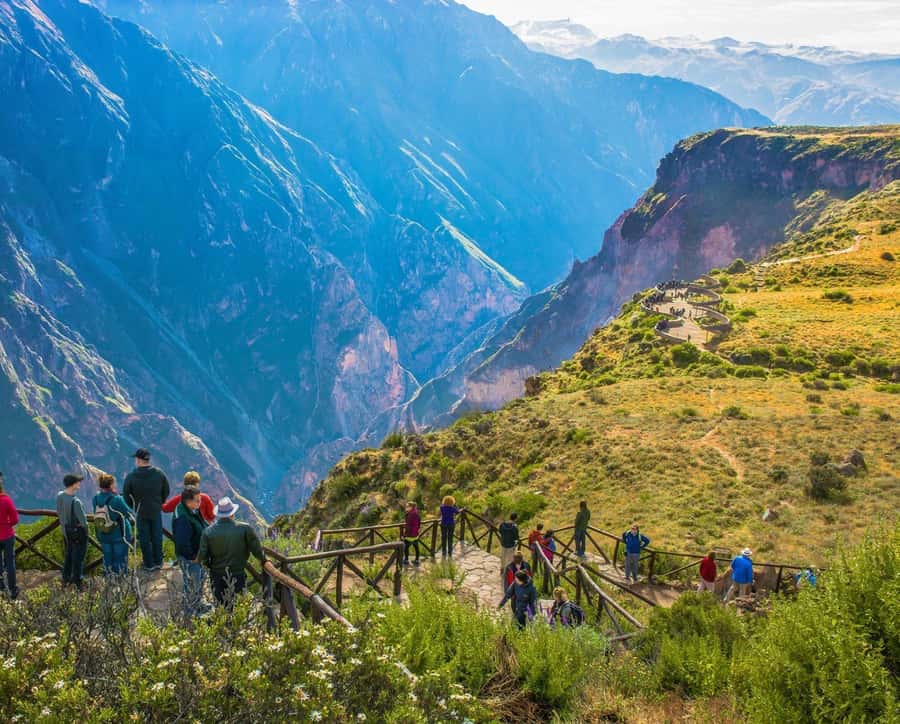
After lunch, the path continues toward Sangalle, also called the Oasis. The final three-hour section is less about one famous viewpoint and more about seeing how people live in the canyon, with cultivated areas and changing vegetation as you move lower.
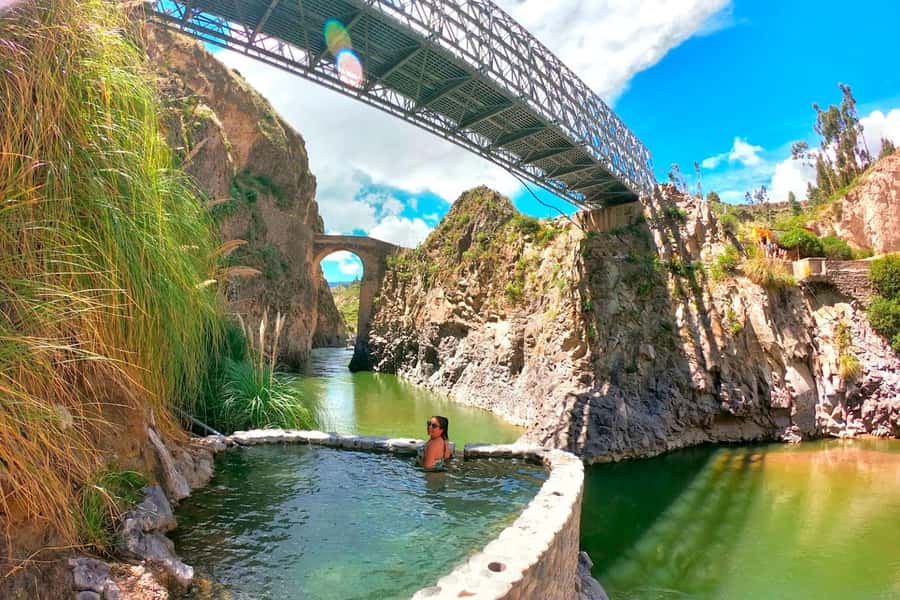
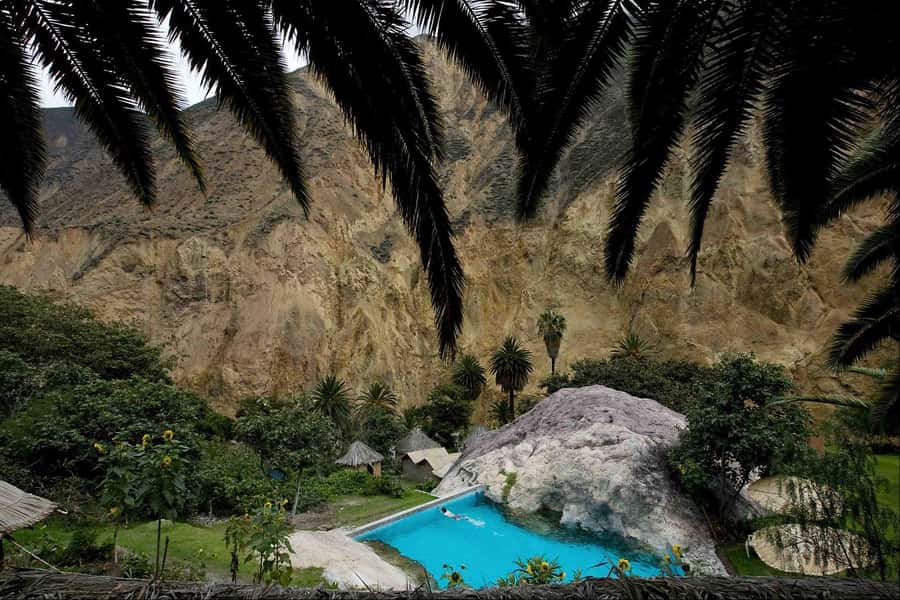
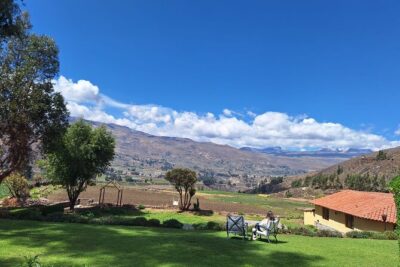
Sangalle sits at around 1,900 meters. Compared with the high starting points, the air is warmer and the setting feels almost unexpected. The oasis has pools where you can swim or cool off, and that water is a major reason this overnight stop works so well.
After six hours of walking, the pool is not a luxury you merely notice. It is a practical reward. You can rest, enjoy the surroundings, and let your legs recover before dinner.
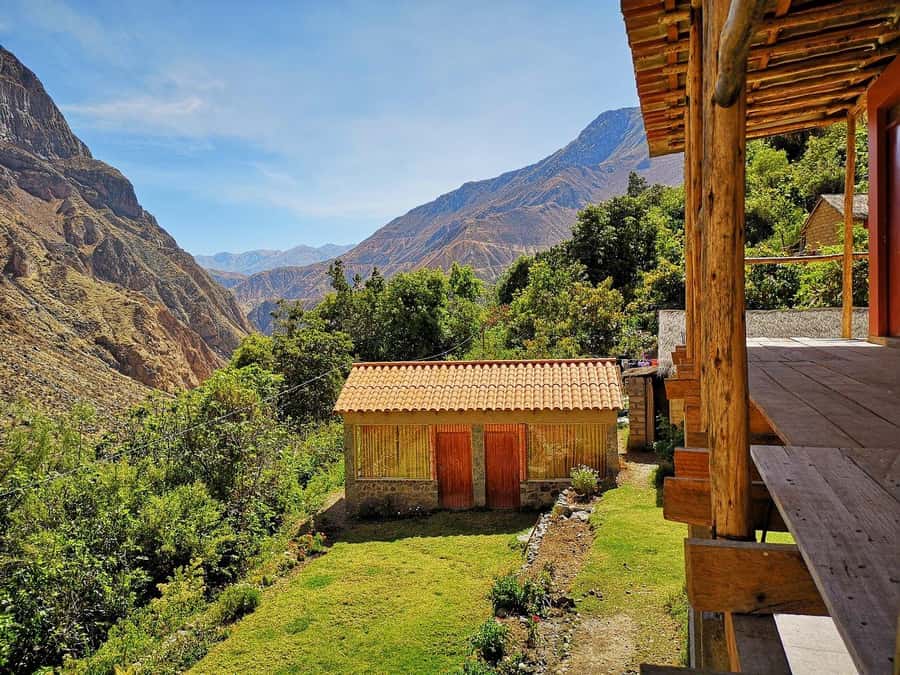
The overnight facilities are basic. You should expect simple accommodation rather than a comfortable hotel, and some rooms may have no bathroom, shower, or electrical outlet. That limitation drew criticism, so pack a small flashlight or headlamp and do not count on charging your phone overnight.
Dinner is scheduled at Sangalle, followed by about ten hours of overnight rest. In practice, the early start on day two means you will not enjoy all ten hours as leisurely sleep. Keep your belongings organized and prepare your clothes, water, and snacks before turning in.
More Hiking & Trekking in Arequipa
- Arequipa: 2-day Colca Canyon Trekking, Ending in Puno
★ 4.8 · 8 reviews - 3-day trek to the Colca Canyon from Arequipa ending in Puno
★ 4.2 · 3 reviews - 2 day 1 night trek / Colca Canyon
★ 3.0 · 3 reviews - From Arequipa: Sillar Route Trek
★ 4.2 · 461 reviews
The sunrise climb out of the canyon
Day two begins very early, in darkness, with a climb toward the canyon rim. The stated walking time is three to four hours for about seven kilometers, though the itinerary also lists roughly three and a half hours on foot.
This is the hardest part of the experience. The trail climbs steeply from Sangalle toward the high section near Cabanaconde, rising from about 1,900 meters to approximately 3,300 meters. The distance does not look extreme on paper, but the grade, heat, altitude change, and tired legs make it demanding.
The timing gives you one beautiful advantage. As you climb, the first light begins to reach the canyon walls. The sunrise gradually reveals the scale of the route you have just completed. I think this is the emotional center of the trek: you look back at the descent and realize that every switchback represents work already done.
You should carry water and snacks during this ascent. Breakfast comes only after you reach Cabanaconde, so you cannot rely on the morning meal to fuel the climb. A headlamp is also a smart item, since the walk starts at night.
Some hikers may find this section too difficult. The route is not suitable for people with low fitness, mobility limitations, back problems, or vertigo. One account found the option of using a mule for the return helpful, but that possibility is not presented as a standard included service, so you should not book assuming it is guaranteed.
Breakfast in Cabanaconde and the Antahuilque terraces
After the climb, you walk a little farther to Cabanaconde, at around 3,300 meters, for breakfast. Reaching town is a satisfying finish to the physical part of the trek, but do not mistake it for the end of the day.
From Cabanaconde, the group returns to the van and visits viewpoints including Antahuilque. Here you see the agricultural terraces built by the Collaguas, the people associated with this part of the Colca region.
The terraces are valuable because they show the canyon as a lived-in place, not just a dramatic natural feature. Farming on steep Andean slopes required careful construction and long-term knowledge of water, soil, and altitude. After walking below the canyon rim, seeing these terraces from above helps you understand how communities have used the area for generations.
The viewpoint visit lasts around 50 minutes. It gives you time to look, take photos, and recover from the morning climb without asking you to walk another long section immediately.
Hot springs, Chivay, and the long return
The hot springs stop comes after the terraces. You get about an hour to relax, but entry is optional and costs about $5 or 15 soles. After the toughest morning of the trip, a warm soak can be worthwhile, though you may prefer simply to sit, cool down, and save your energy for the ride.
The group then continues to Chivay for lunch, with about an hour scheduled there. This is another useful break before the return drive to Arequipa.
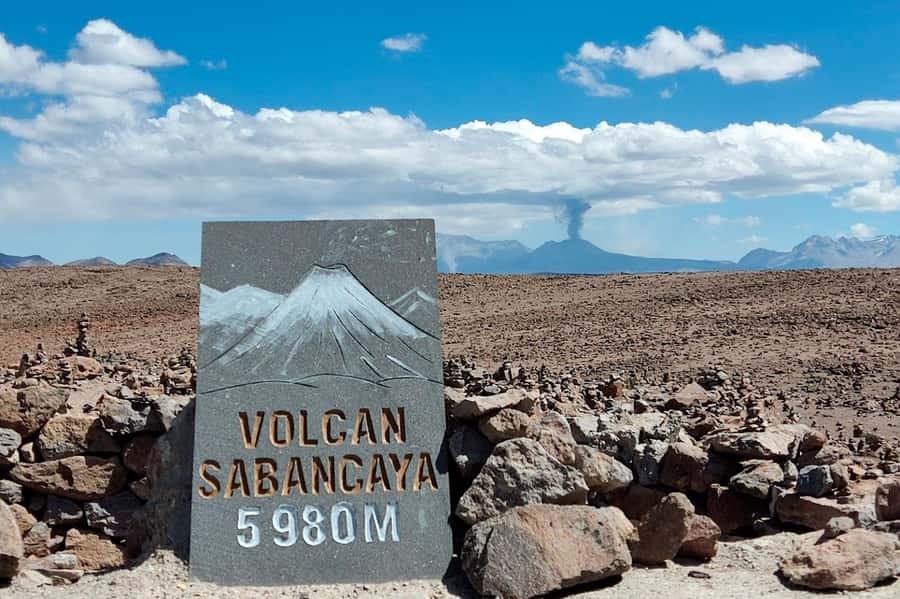
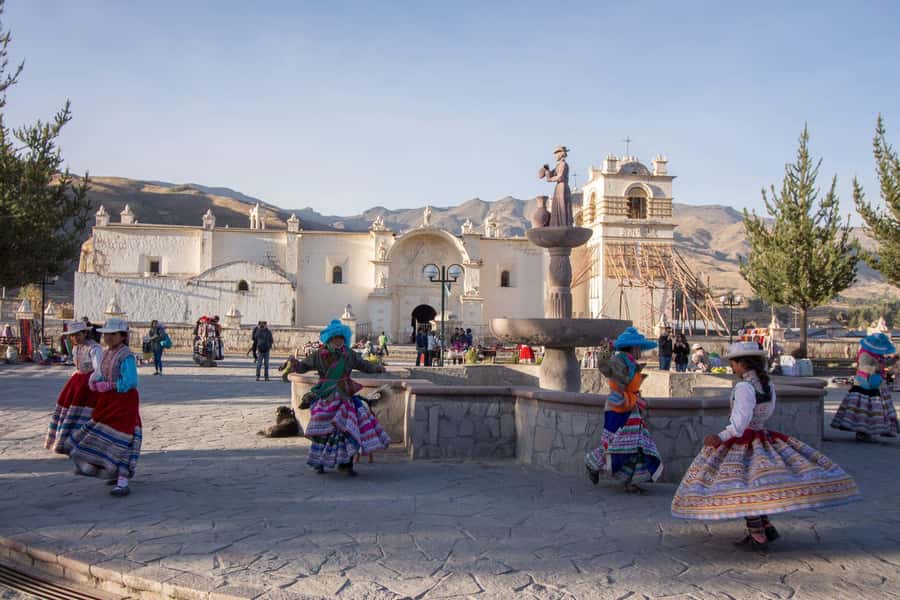
On the way back, the route includes a volcano viewpoint at approximately 4,190 meters. That stop adds a high-altitude perspective after your time inside the canyon. The itinerary also includes a short stop in a traditional village, lasting about 20 minutes, before the final drive.
The tour finishes in central Arequipa around 5:30 p.m. The return time makes this a full two-day commitment with a long final day. If you have an evening bus, flight, or fixed dinner reservation, leave plenty of room for delays rather than planning a tight connection.
What the $21 price really means
At first glance, $21 per person looks remarkably cheap for two days of transport, a guide, meals, accommodation, park entry, and several stops. It is not the complete cost.
At the beginning, you must pay an additional $90 or 320 soles in cash for food, lodging, and the entrance ticket. Add the optional hot spring entrance of about $5 or 15 soles if you plan to soak. In practical terms, you should budget the full required payment, not just the online price.
That still may offer reasonable value because the package includes round-trip tourist transport between Arequipa and the Colca region, an English or Spanish guide, meals listed in the schedule, one night at Sangalle, and access to a route that would be difficult to arrange as efficiently on your own.
The main value is convenience. You do not need to coordinate separate transport from Arequipa, a canyon guide, lunch stops, overnight accommodation, and the return route. The tradeoff is that the lodging is simple and the group may include people with very different abilities.
Guide quality and group communication
The guide leads the route in English or Spanish, and the strongest feedback points to good guiding and a friendly group atmosphere. That matters on a trek where you need clear instructions about water, pace, steep sections, and meeting points.
Guide performance can vary. One account praised the guide and overall organization, while another described Fernando as slow to introduce himself and not attentive enough to different fitness levels. Another account described communication as imperfect when a group member needed help.
I would treat this as a reason to speak up early. Tell the guide about your pace, ask where the group will regroup, and confirm what support is available if you struggle. Do not assume the guide can see every hiker at every moment, especially on a long descent or a steep climb.
The small group helps, but it does not remove personal responsibility. Stay with the group, carry your own basic supplies, and tell the guide immediately if you feel unwell, dizzy, or unable to continue.
What to pack for heat, darkness, and basic lodging
The official advice covers comfortable shoes, a hat, sunscreen, water, snacks, and a camera. I would add a headlamp, toilet paper, a light change of clothes, and a small bag for keeping essentials together overnight.
Water deserves special attention. The canyon can feel hot, and the climb out is strenuous. Bring enough for the walking sections, then follow the guide’s instructions about replenishing it.
Your footwear matters more than your camera. Several difficulties reported on the route came from underestimating the effort or wearing poor shoes. Sandals and casual sneakers are poor choices for steep, uneven trails.
Pack as lightly as possible, but do not cut the useful basics:
- Grippy trekking shoes
- Hat and sunscreen
- Water and high-energy snacks
- Headlamp or flashlight
- Toilet paper and personal toiletries
- Camera and phone
- Light clothing for Sangalle
- A warmer layer for the high viewpoints
Altitude acclimatization is recommended. The tour reaches about 4,190 meters at the volcano viewpoint and starts with stops near 3,600 meters, so you should not treat this as a casual walk immediately after arriving in the Andes.
Who should book this two-day trek?
I would recommend it to hikers who want a demanding route with strong scenery and who accept basic accommodation. You get condors, terraces, canyon-floor walking, a family lunch stop, a pool at Sangalle, sunrise on the climb, hot springs, and high viewpoints in one compact trip.
I would not recommend it to a first-time hiker who dislikes steep trails or has a low fitness level. The route can be difficult even if you are generally healthy, especially during the second morning.
The experience suits people who care more about reaching the canyon floor than about comfort. If you want a relaxed Colca sightseeing trip, choose a vehicle-based visit instead. If you want a physical challenge and can prepare properly, this route gives you far more contact with the canyon.
Should you book it?
Book this trek if you are fit, acclimatized, and ready for six hours of walking on day one followed by a steep three to four-hour climb before breakfast on day two. The scenery is excellent, the condor stop is memorable, and Sangalle’s pool gives the route a welcome change of pace.
Think twice if you need polished lodging, close supervision, or an easy walking schedule. Bring the full cash payment, proper shoes, a headlamp, water, and snacks. With those expectations in place, the tour offers a strong way to experience the Colca Canyon without arranging every part yourself.
FAQ
How long does the Colca Canyon trek last?
The experience lasts two days. It starts around 3 a.m. on day one and finishes in central Arequipa at approximately 5:30 p.m. on day two.
How far do you walk on the first day?
The first day covers about 15 kilometers and takes roughly seven hours of walking. You walk for three hours from San Miguel to San Juan de Chuccho, then another three hours to Sangalle, with breaks included in the schedule.
How difficult is the trek?
The trek includes steep and uneven paths and requires a demanding climb out of the canyon on the second morning. It is not suitable for people with low fitness, mobility impairments, back problems, or vertigo.
Is the entrance ticket included in the $21 price?
No. You must pay an additional $90 or 320 soles in cash at the start of the tour for food, lodging, and the entrance ticket.
Is the hot springs entrance included?
No. Entry to the hot springs is optional and costs about $5 or 15 soles.
What languages does the guide speak?
Guiding is available in English and Spanish.
Is transport included?
Yes. Tourist transport between Arequipa and the Colca region is included, with return transport to central Arequipa.
What should you bring?
Bring comfortable trekking shoes, a hat, sunscreen, water, snacks, and a camera. A headlamp and toilet paper are also useful for the early climb and basic overnight facilities.
More Treks and Day Hikes
- From Cusco: 7 Lakes Ausangate Trek with Breakfast and Lunch
★ 4.8 · 360 reviews - From Arequipa: 2-Day Colca Canyon Trekking Tour
★ 4.8 · 243 reviews - Cusco: Rainbow Mountain Tour and Red Valley Hike (Optional)
★ 4.7 · 149 reviews - From Huaraz: Hike to the Lagoon 69
★ 4.4 · 121 reviews
More Colca Canyon Trips
- Tour Fullday Colca Canyon with Breakfast and Typical Lunch
★ 4.3 · 35 reviews - From Arequipa: Fullday Tour Colca Canyon + Transfer To Puno
★ 4.4 · 17 reviews - From Arequipa: One Day Trip to Colca Canyon Ending in Puno
★ 4.0 · 14 reviews - From Arequipa: Tour Colca Canyon 2 Days with End in Puno
★ 4.2 · 12 reviews
Just added around Chivay
- From Arequipa: Colca Canyon and Condor Watching Day Trip★ 3.7 · 3 reviews
- Arequipa : Colca Canyon 2-Day Adventure★ 5.0 · 3 reviews
- 3-day trek to the Colca Canyon from Arequipa ending in Puno★ 4.2 · 3 reviews
- Colca Canyon Day Trip: From Arequipa to Puno★ 3.5 · 3 reviews
- 2 day 1 night trek / Colca Canyon★ 3.0 · 3 reviews
- From Arequipa: 1 Day Tour to the Colca Canyon + Buffet lunch★ 4.2 · 3 reviews
- 2-Day Colca Canyon Tour to Puno with accommodation★ 3.9 · 3 reviews
- From Puno: 2-Day Tour to Colca Canyon ending in Arequipa★ 4.1 · 4 reviews
Colca Canyon Tours, compared.
2-Day Tour Colca Canyon in Arequipa with end in Puno
Read our review →
Browse the lists this tour appears in