
Reviewed · COLCA CANYON TOURS
From Arequipa: One Day Trip to Colca Canyon Ending in Puno
Set your alarm early for Peru’s great canyon. This 16-hour journey links Arequipa and Puno while taking you to Colca Canyon viewpoints, hot springs, high-altitude wetlands, and vicuña country. I like the clever route design: you see a major sight and also make useful progress toward Lake Titicaca.
I also like the Cruz del Cóndor stop and the chance to bathe in natural hot springs before the long ride to Puno. The main catch is simple: this is a very long day, with an early departure, rough roads, a bus change in Chivay, and little time for lunch.
The tour costs $56 per person, before entrance fees and lunch. At that price, it can be a practical way to combine two destinations, but it is not a relaxed Colca Canyon visit.
In This Review
- Key points to know before booking
- Why this route makes sense
- The pre-dawn departure from Arequipa
- Cruz del Cóndor and the scale of Colca Canyon
- Colonial villages, terraces, and small cultural stops
- Chacapi hot springs at 11:30 a.m.
- Chivay lunch and the rushed vehicle change
- The volcano viewpoint at 4,910 meters
- Tocrapampa wetlands and Pampa Cañahuas
- Is the $56 price good value?
- Who will like this 16-hour day?
- My booking verdict
- FAQ
- How long does the tour last?
- What time does the tour leave Arequipa?
- Is breakfast included?
- Is lunch included?
- How much is the Colca Canyon entrance fee?
- How much do the hot springs cost?
- Does the tour finish in Puno?
- Is the tour available in English?
Key points to know before booking
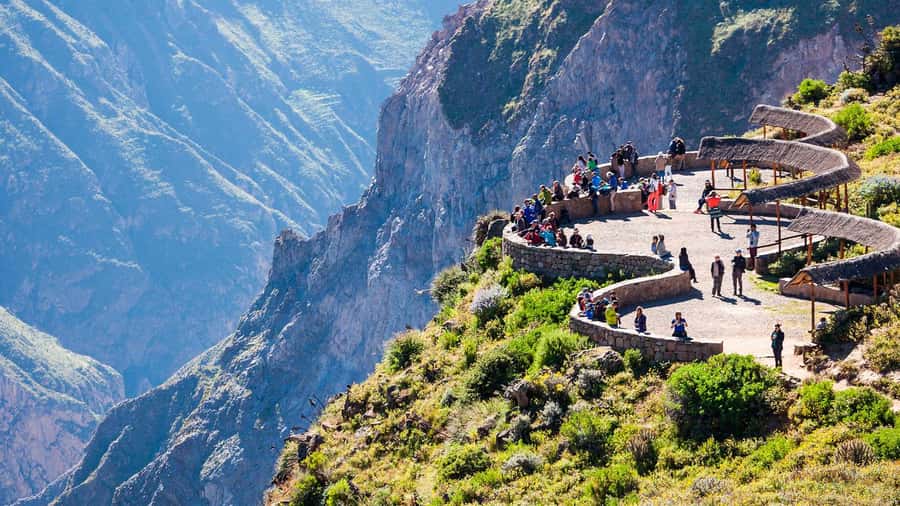
- Cruz del Cóndor at about 8:30 a.m.: The main highlight is the canyon viewpoint and condor sanctuary, though condor sightings depend on nature.
- A 2:30 to 3 a.m. hotel pickup: You leave Arequipa before sunrise and stop for breakfast on the way.
- Chacapi hot springs at 11:30 a.m.: Bring swimwear if you want to use the optional thermal pools, which cost S/15.
- A bus change in Chivay: After lunch, you transfer to another vehicle for the trip to Puno.
- High-altitude stops up to 4,910 meters: The route includes a volcano viewpoint, Tocrapampa wetlands, and Pampa Cañahuas.
- Useful but demanding transport: The tour ends in Puno at about 7 p.m., making it handy for onward plans but tiring for anyone sensitive to long bus rides.
Why this route makes sense
Colca Canyon is often treated as a side trip from Arequipa, while Puno is the usual base for visiting Lake Titicaca. This excursion connects the two places instead of sending you back to Arequipa or requiring a separate transfer.
That is the tour’s strongest practical feature. You spend the day sightseeing, then arrive in Puno around 7 p.m. The schedule is tight, but you avoid losing another travel day.
The tradeoff is comfort. From roughly 2:30 a.m. until 7 p.m., you are on the move. One vehicle takes you through the canyon portion, then you change to another tourist vehicle in Chivay. Some passengers have found the first minibus uncomfortable, especially in the rear where bumps and luggage movement are felt more sharply.
I would choose a front or middle seat if the operator allows it. You should also accept that the route includes rough sections, particularly on the long transfer toward Puno.
More Colca Canyon Tours in Arequipa
- 2-Day Tour Colca Canyon in Arequipa with end in Puno
★ 4.6 · 248 reviews - Turist Bus Colca Canyon (Chivay) To Puno
★ 5.0 · 83 reviews - From Puno to Arequipa: 2 Days/1 Night Colca Canyon Tour
★ 3.6 · 83 reviews
The pre-dawn departure from Arequipa
Pickup takes place between 2:30 and 3 a.m. at different hotels in Arequipa. This is not a gentle morning start. You will likely be collecting yourself in the dark, so prepare clothes, water, and anything you need before going to bed.
The vehicle travels through Yura and heads directly toward Cruz del Cóndor, with breakfast as the main stop before the canyon. The schedule is designed to reach the viewpoint at about 8:30 a.m., when the morning portion of the visit begins.
A guide speaks English or Spanish, and the service includes hotel pickup, tourist transport, breakfast, and an official tourism guide. The guides receive some of the warmest praise in the available feedback. David, in particular, is described as attentive, friendly, and entertaining, while other guides are credited with clear explanations and a good attitude.
That matters on a route this long. A guide cannot soften every pothole, but good commentary gives purpose to the stops and helps you understand what you are seeing.
Cruz del Cóndor and the scale of Colca Canyon
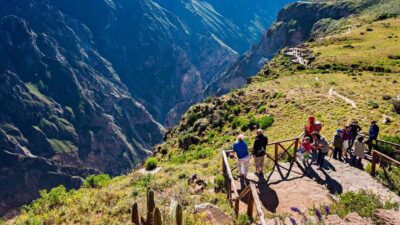
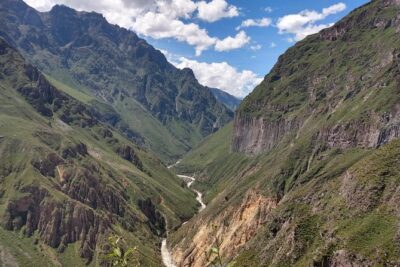
Cruz del Cóndor is the centerpiece of the day. From the viewpoint, you can look into one of the deepest canyons in the world and visit the area known as a condor sanctuary.
The word canopy does not quite prepare you for the setting. The canyon opens into an enormous Andean space, with steep walls, cultivated terraces, and a feeling of great distance. This is the point where the early alarm begins to seem worthwhile.
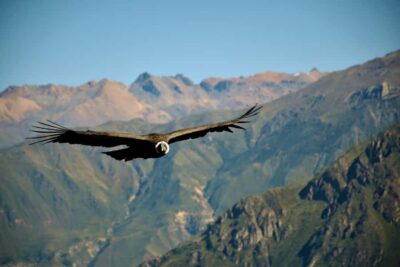
Still, the condors are wild animals, not scheduled performers. A sighting is possible, but it is not guaranteed. One person reached the viewpoint without seeing a condor, and that is an important expectation to set before you go.
The viewpoint can also feel crowded. If you want a quieter experience, this one-day departure may disappoint, since the main lookout is a popular stop. You are there for a defined period before the group continues, not for a slow morning of independent exploring.
Even so, the canyon itself is not dependent on a single bird sighting. The immense cliffs, high terraces, and changing light give the visit value on their own.
Colonial villages, terraces, and small cultural stops
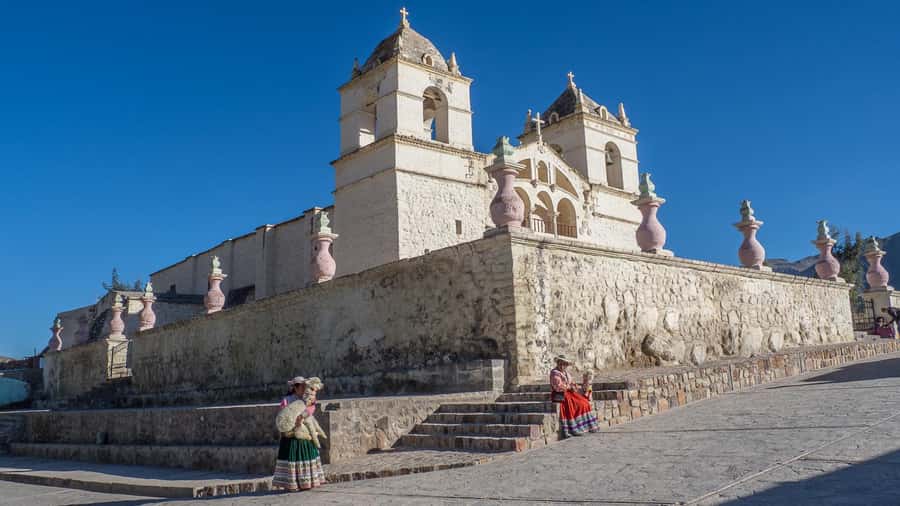
On the return route, the group stops in Pinchollo, Maca, and Yanque. These towns are known for colonial churches, and the stops add local detail to what could otherwise be a viewpoint-only excursion.
The Antahuilque and Choquetico viewpoints provide views of pre-Inca tombs, models, and the famous agricultural terraces of Colca. These terraces are not just pretty lines on a mountainside. They show how Andean communities shaped steep ground for farming over long periods.
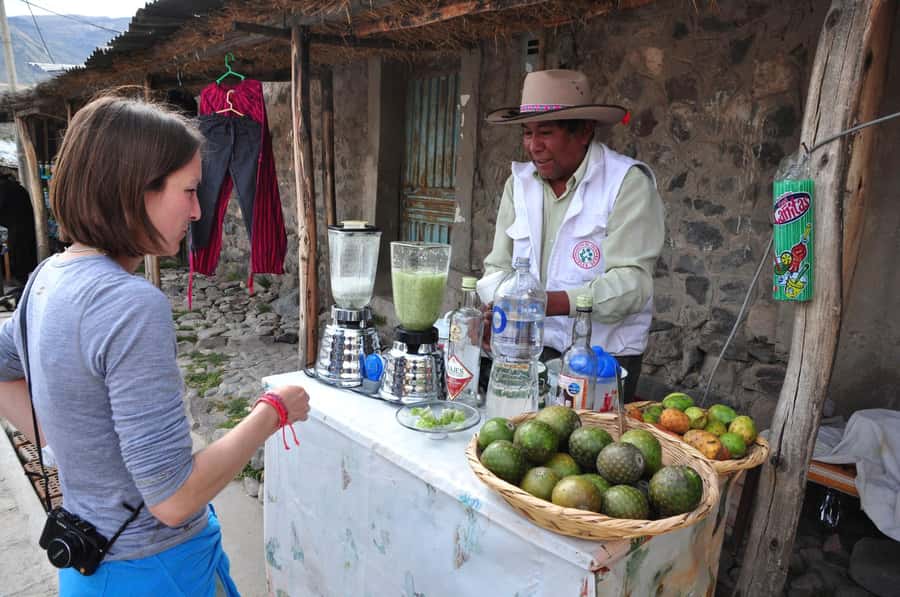
You will also see traditional clothing, South American camelids, trained birds, and local drinks. The Colca Sour, made with sancayo, is one of the more distinctive tasting opportunities listed in the route.
These stops are brief, so do not expect a full village tour or long time inside each church. They work best as short windows into the valley’s communities and farming traditions. The guide’s explanations are especially useful here because the physical details can be easy to miss from a bus.
More Colca Canyon and condor trips:
- Tour Fullday Colca Canyon with Breakfast and Typical Lunch
★ 4.3 · 35 reviews - From Arequipa Trek : 2-Days of Hiking in the Colca Canyon
★ 4.5 · 35 reviews - From Arequipa: Fullday Tour Colca Canyon + Transfer To Puno
★ 4.4 · 17 reviews - From Arequipa: Tour Colca Canyon 2 Days with End in Puno
★ 4.2 · 12 reviews
Chacapi hot springs at 11:30 a.m.
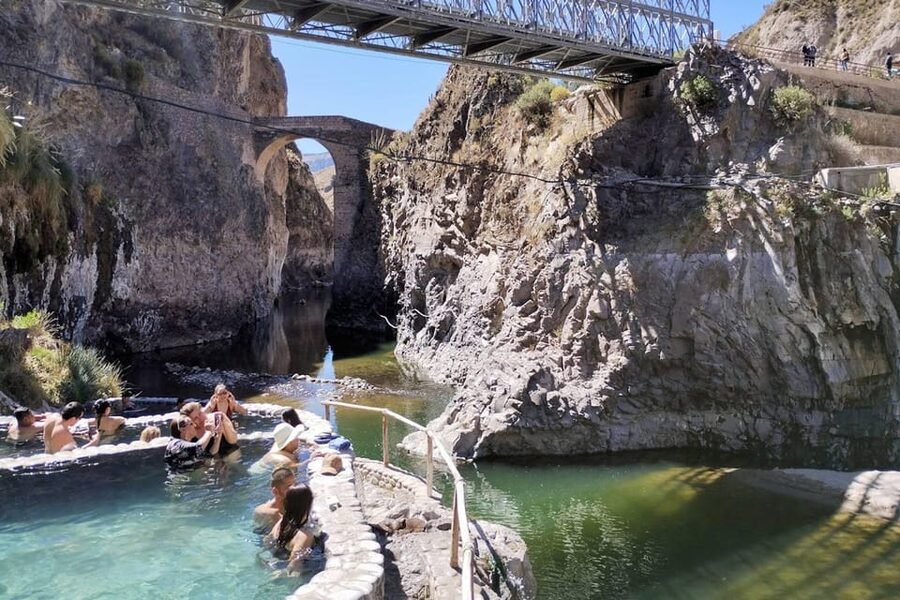
Around 11:30 a.m., the group heads to the Chacapi thermal baths. The pools have natural views, and the optional entrance costs S/15.
This is one of the smartest parts of the itinerary. After hours of sitting upright and rising before dawn, a warm soak gives you a chance to loosen up before lunch and the second half of the journey. One person specifically recommended adding the hot springs, along with the optional zipline activity.
The hot springs are not included in the $56 price, so carry extra Peruvian soles if you want to enter. Swimwear and a small towel would be sensible, although the provided details do not specify towel rental or changing facilities.
There is also a practical catch. If you skip the thermal baths and do not choose another activity, you may have spare time while other people in the group finish theirs. That can mean roughly an hour of waiting, depending on the day’s pace.
I would use the stop if you enjoy hot springs. It breaks up the bus ride and makes the schedule feel less like one continuous transfer.
Chivay lunch and the rushed vehicle change
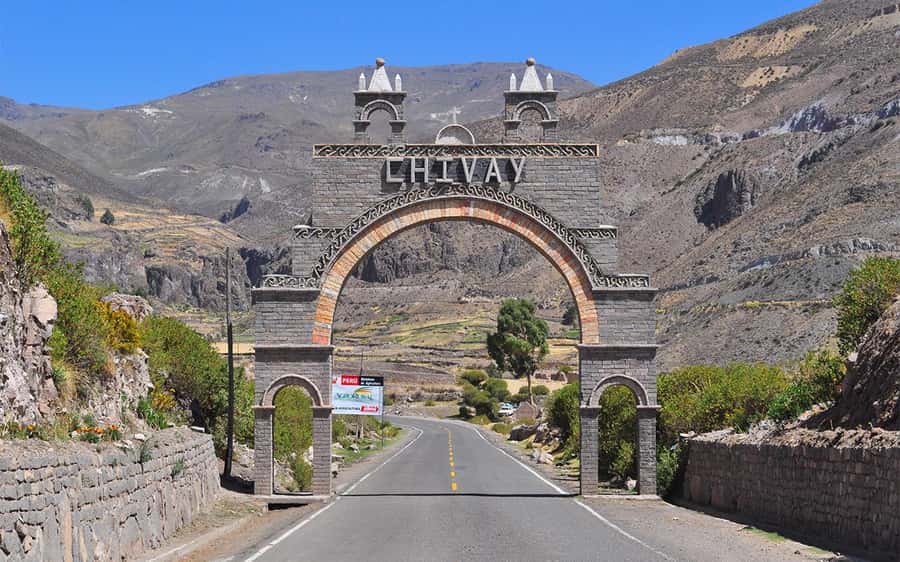
At about 12:30 p.m., the group reaches Chivay for one hour of lunch before boarding another vehicle to Puno. Lunch is not included, so you pay separately.
On paper, one hour sounds reasonable. In practice, the change to the Puno vehicle can make the meal feel rushed. Some passengers have had to leave soon after sitting down, with too little time to finish eating. If the connection is running tightly, you may find yourself choosing speed over a leisurely meal.
I would carry snacks from Arequipa or breakfast, even though breakfast is included. Pack food that can be eaten quickly, plus water. That small precaution can make the afternoon much easier.
The bus change is also worth understanding before you book. This is not one continuous vehicle from Arequipa to Puno. The first part serves the Colca excursion, and the second vehicle handles the onward transfer. The switch is efficient when everything runs on time, but it reduces flexibility.
One person also reported that the long road toward Puno had many large potholes. Combined with the early start and the long hours seated, that makes this trip a poor choice if you strongly dislike rough road travel.
The volcano viewpoint at 4,910 meters
After leaving Chivay, the route climbs toward a volcano viewpoint at approximately 4,910 meters above sea level. This is an impressive altitude, and you should treat the stop with respect.
At this height, even a short walk can feel harder than expected. Move slowly, avoid unnecessary exertion, and tell the guide if you feel unwell. The tour information does not promise any altitude support, so your best tool is a calm pace and sensible preparation.
The viewpoint adds a strong contrast to the canyon. Earlier, the scenery is cut by terraces and canyon walls. Here, the route feels more open, stark, and high.
Cold is another concern. One person found the bus very cold, and high-altitude stops can be chilly even when Arequipa or Puno feels mild. Pack layers, a hat, and a jacket rather than relying on the vehicle temperature.
Tocrapampa wetlands and Pampa Cañahuas
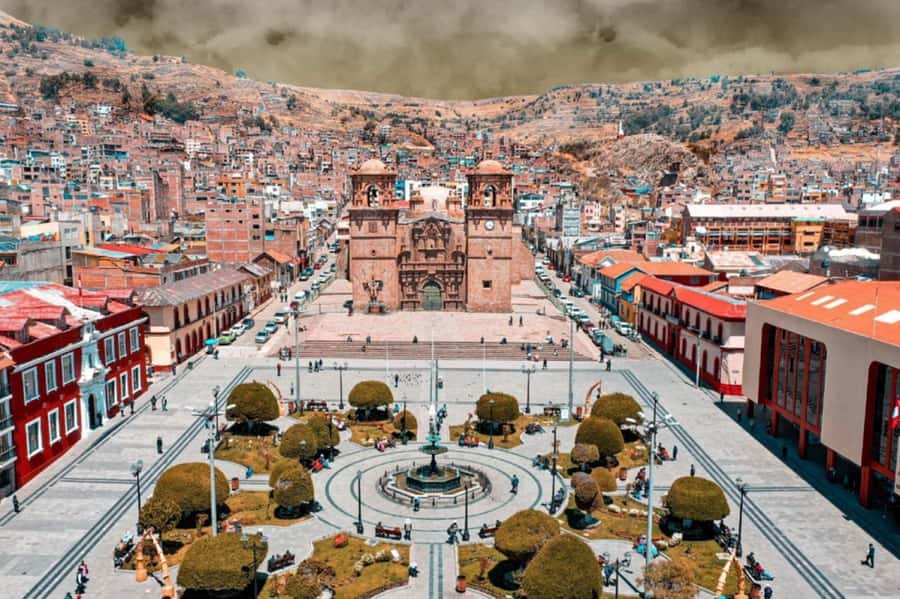
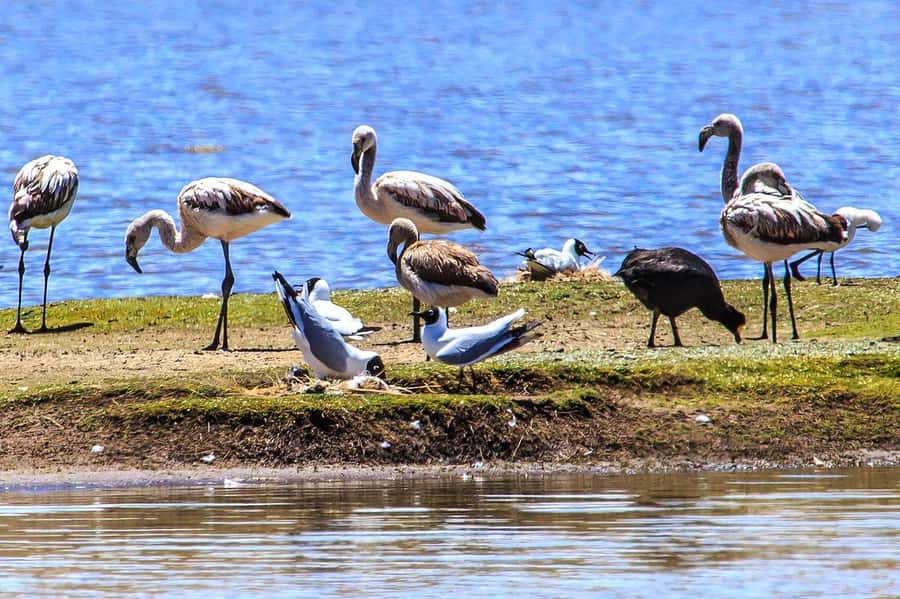
The route continues through the Tocrapampa wetlands, where you may see wild birds, alpacas, and llamas. This is a good stop for observing the quieter side of the high Andes, away from the main canyon viewpoint.
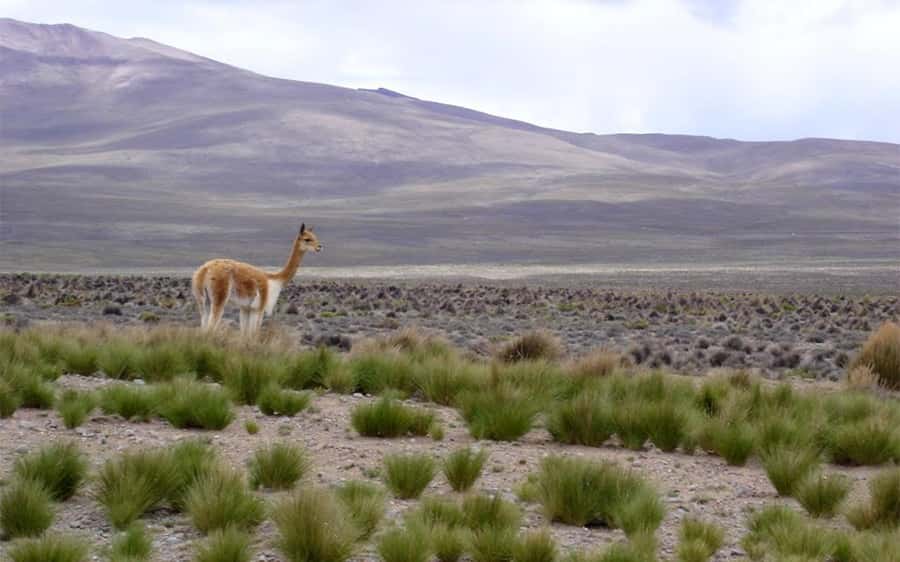
At Pampa Cañahuas, the focus shifts to vicuñas inside the Aguada Blanca and Salinas National Reserve. Vicuñas are wild South American camelids known for exceptionally fine fiber. Seeing them in open highland country gives the transfer a real sightseeing purpose instead of making it feel like dead time between destinations.
The route also passes high Andean lagoons near Puno. These stops are brief, but they help explain why the journey takes so long: you are not simply using the fastest road between cities. You are crossing a high-altitude region with wildlife and changing scenery along the way.
Bring a phone or camera with a charged battery. You may be photographing from the roadside, and the stops do not appear to be designed for long walks or extended independent visits.
Is the $56 price good value?
The base price of $56 includes a great deal of transport for one day. You get hotel pickup, a guide, breakfast, tourist mobility, the Colca Canyon excursion, and the transfer from Colca to Puno.
You still need to budget for the canyon entrance. The listed rates are S/70 for foreign visitors, S/20 for Peruvian nationals, and S/40 for Latin American visitors. The Chacapi thermal baths cost another S/15 if you choose to enter, and lunch is separate.
That means the final cost is higher than the headline figure. Even so, the price can be good value if you need to travel from Arequipa to Puno and want to see Colca Canyon on the same day. A separate canyon trip plus a separate transfer could take more time and require more planning.
The value drops if you want comfort, generous meal breaks, or a slow visit. The tour packs many stops into one demanding schedule. You are paying for efficiency and access, not leisure.
Who will like this 16-hour day?
I would recommend this trip to you if you have limited time in southern Peru, want to connect Arequipa with Puno, and prefer a guided route over arranging several buses yourself.
It suits people who are excited by major viewpoints, high-altitude scenery, Andean wildlife, and a full day of movement. The guide quality is a real advantage, especially when the schedule includes cultural sites, wildlife stops, and a region with complex geography.
I would think twice if you need a comfortable seat, dislike rough roads, or want a proper sit-down lunch. The journey is also a poor fit for anyone who finds pre-dawn departures and long bus rides exhausting.
Older children may manage the day well if they handle long transport periods, but the supplied information does not specify child policies or vehicle amenities. If comfort is your priority, ask the operator about seating before paying.
The tour offers free cancellation up to 24 hours before departure, and you can reserve now and pay later. Those terms give you some flexibility, but they do not change the basic fact that this is a demanding day.
My booking verdict
I would book this tour when time and transport efficiency matter more than comfort. The chance to see Cruz del Cóndor, soak at Chacapi, watch vicuñas at Pampa Cañahuas, and arrive in Puno the same evening is hard to match for $56 plus the required extras.
I would not book it as a restful Colca Canyon holiday. The early start, crowded viewpoints, possible waiting time, rough road sections, cold bus, and rushed lunch can wear you down.
Pack layers, snacks, water, and swimwear. Ask for a better seat if possible, and keep your expectations realistic about condors. If that sounds manageable, this is a useful, energetic link between two major southern Peru destinations.
FAQ
How long does the tour last?
The tour lasts about 16 hours, beginning with pickup in Arequipa between 2:30 and 3 a.m. and ending in Puno at approximately 7 p.m.
What time does the tour leave Arequipa?
Hotel pickup takes place between 2:30 and 3 a.m., depending on your hotel and the pickup schedule.
Is breakfast included?
Yes. Breakfast is included, with the main stop taking place during the early journey toward Colca Canyon.
Is lunch included?
No. Lunch in Chivay is not included in the tour price.
How much is the Colca Canyon entrance fee?
The listed entrance fees are S/70 for foreign visitors, S/20 for Peruvian nationals, and S/40 for Latin American visitors.
How much do the hot springs cost?
Entrance to the Chacapi thermal baths costs S/15 and is optional.
Does the tour finish in Puno?
Yes. The tour includes the transfer from Colca to Puno and usually arrives at about 7 p.m.
Is the tour available in English?
Yes. The live guide service is available in English and Spanish.
More 1-Day Tours
- Full Day Trip to Colca Canyon from Arequipa ending in Puno
★ 4.5 · 4 reviews - Offer Price: Colca Canyon One Day in Arequipa with Breakfast
★ 4.5 · 4 reviews - From Arequipa: Colca Canyon and Condor Watching Day Trip
★ 3.7 · 3 reviews - Colca Canyon Day Trip: From Arequipa to Puno
★ 3.5 · 3 reviews
Just added around Chivay
- From Arequipa: Colca Canyon and Condor Watching Day Trip★ 3.7 · 3 reviews
- Arequipa : Colca Canyon 2-Day Adventure★ 5.0 · 3 reviews
- 3-day trek to the Colca Canyon from Arequipa ending in Puno★ 4.2 · 3 reviews
- Colca Canyon Day Trip: From Arequipa to Puno★ 3.5 · 3 reviews
- 2 day 1 night trek / Colca Canyon★ 3.0 · 3 reviews
- From Arequipa: 1 Day Tour to the Colca Canyon + Buffet lunch★ 4.2 · 3 reviews
- 2-Day Colca Canyon Tour to Puno with accommodation★ 3.9 · 3 reviews
- From Puno: 2-Day Tour to Colca Canyon ending in Arequipa★ 4.1 · 4 reviews
Colca Canyon Tours, compared.
2-Day Tour Colca Canyon in Arequipa with end in Puno
Read our review →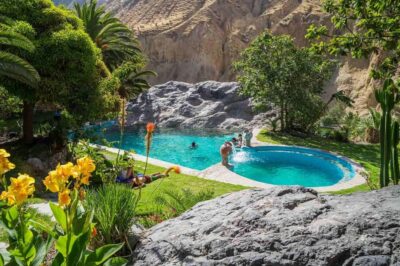
Browse the lists this tour appears in