
Reviewed · FOOD & DRINK
Arequipa Food Tour: Ancestral Cuisine & City Tour
Come hungry, leave happily stuffed. This four-hour walking tour gives you a fine first look at Arequipa through its food, from San Camilo Market to Yanahuara. I like the hands-on lesson using a traditional batán, and I like that the menu goes far beyond safe restaurant fare: you may taste guinea pig, alpaca, rocoto relleno, ocopa, local chichas, pisco and queso helado.
The small groups, limited to 10 people, also make the tour feel more personal. Guides such as Clara and Caro have been praised for mixing food with talk about local customs, politics, and history. The main drawback is the walking: several stops are spread across the city, and the tour is not suitable for people with low fitness, mobility impairments, gluten intolerance, or vegetarian and vegan diets.
In This Review
- Key points to know before booking
- Starting beside San Camilo Market
- From market flavors to the Cloisters of The Company
- First restaurant stop: trying Arequipa beyond familiar dishes
- Plaza de Armas and the white-stone center
- Second restaurant and the hands-on batán lesson
- Malecón Bolognesi and the Chili River views
- Third restaurant: a full menu of regional tastes
- Ending with queso helado in Yanahuara
- Is $79 a fair price?
- Who will enjoy this four-hour walk?
- Should you book the Arequipa food tour?
- FAQ
- How long does the Arequipa food tour last?
- Where does the tour begin?
- Where does the tour end?
- What foods and drinks are included?
- Is the tour offered in Spanish?
- How many people can join the tour?
- Is hotel transportation included?
Key points to know before booking
- Four hours of food and sightseeing: You walk between markets, restaurants, the Plaza de Armas, the Chili River area and Yanahuara.
- Unusual local dishes: Guinea pig, alpaca, rocoto relleno, ocopa, queso helado, chichas and pisco are part of the experience.
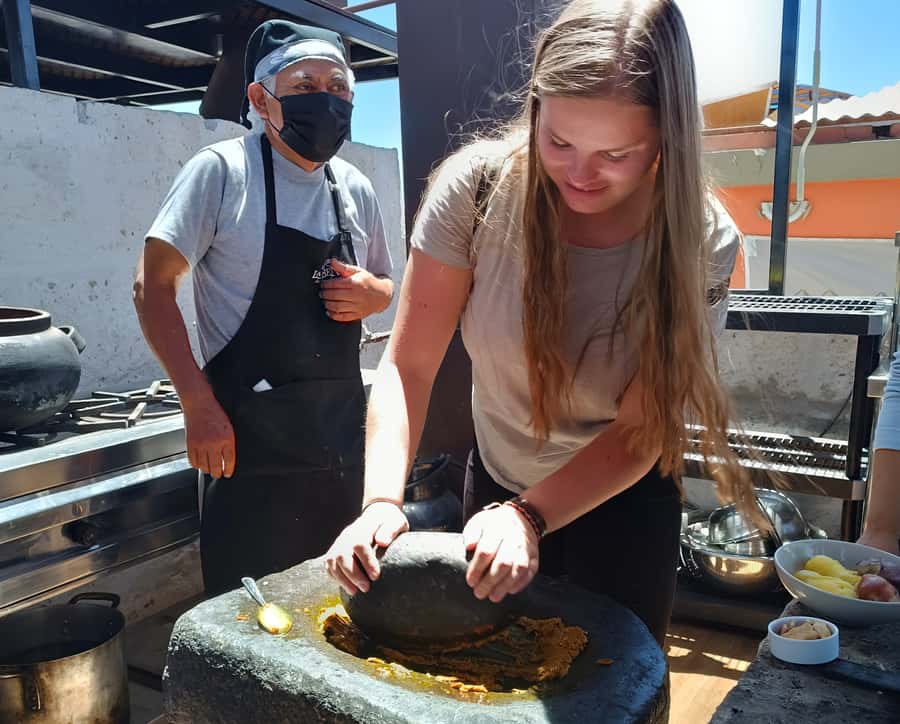
- A real cooking activity: You get to help prepare ocopa with a traditional batán, a heavy stone grinding tool.
- Small-group format: The group is limited to 10 participants, though it may be much smaller.
- A downhill-to-scenic finish: The tour begins near San Camilo Market and ends at the Yanahuara Scenic Overlook, with views toward Misti volcano.
- Bring sun protection: Arequipa’s sun can be strong, so a hat, sunscreen, comfortable shoes and water are wise.
Starting beside San Camilo Market
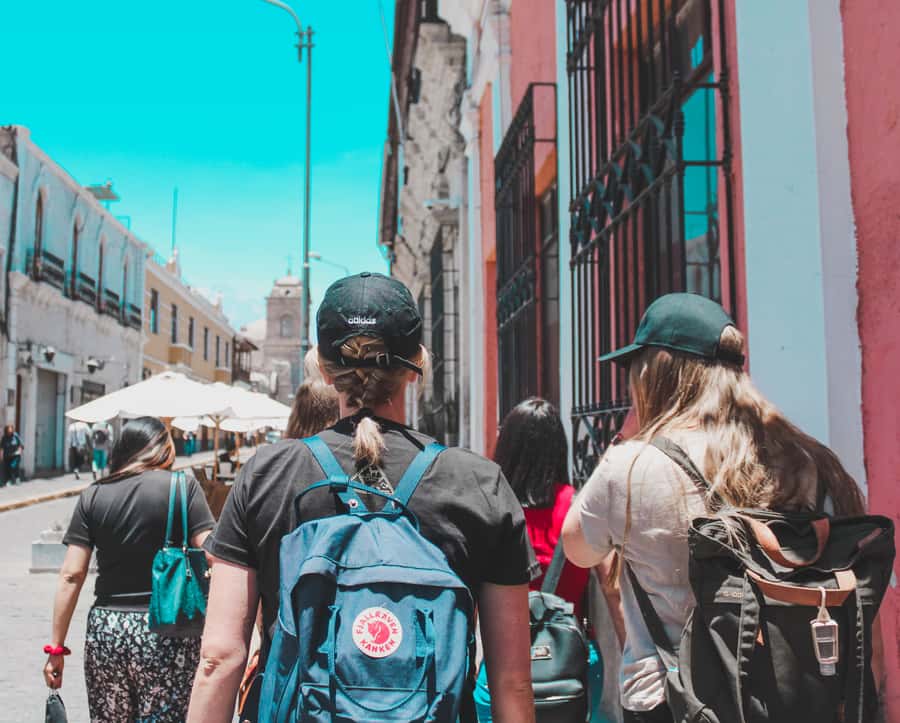
The meeting point is at Calle San Camilo 207, beside the front door of the Compartamos Financiera building. Look for the entrance facing the main entrance of San Camilo Market. That detail matters because the market has plenty of movement around it, and a clear landmark saves you from wandering around with an empty stomach.
The tour opens at San Camilo Market, one of the best places in Arequipa to see everyday food culture rather than only finished dishes in restaurants. You spend about 30 minutes here tasting food and walking through the market.
I like this opening because it sets up the rest of the day. Instead of treating Arequipa’s cuisine as a list of dishes, the guide can connect ingredients, drinks and cooking methods to the place where locals buy and use them. The market visit also gives you a useful orientation to the city center before the walking route begins.
The tour is conducted only in English. The guide will not provide a second explanation in Spanish or another language, so you should be comfortable following food descriptions and historical commentary in English.
More City Tours in Arequipa
- Arequipa: Walk through the Historic Center of the City
★ 4.9 · 87 reviews - Arequipa Walking Tour city center and drinks experience
★ 5.0 · 72 reviews - Arequipa, Historic and Colonial City and Santa Catalina Monastery
★ 4.5 · 42 reviews
From market flavors to the Cloisters of The Company
After the market, you walk for about 10 minutes through Arequipa. The next stop is the Cloisters of The Company, where you have a short photo stop and sightseeing pause lasting about five minutes.
This stop adds a visual change after the market. Arequipa is known as the Ciudad Blanca, or White City, because of its widespread use of pale volcanic sillar stone. The cloisters offer the kind of architectural detail that makes a walking food tour more than a string of restaurant visits.
The schedule here is brief, so think of it as a focused look rather than a long architectural visit. You get time for photos and a quick explanation, then continue through the city. That suits you if you want food to remain the main event, but it may feel too short if you hoped for a full church or convent tour.
The route then continues through Arequipa with another short sightseeing walk before reaching the first local restaurant.
First restaurant stop: trying Arequipa beyond familiar dishes
The first restaurant visit lasts about 40 minutes and focuses on regional food. This is where the tour begins to test your willingness to order something outside your usual comfort zone.
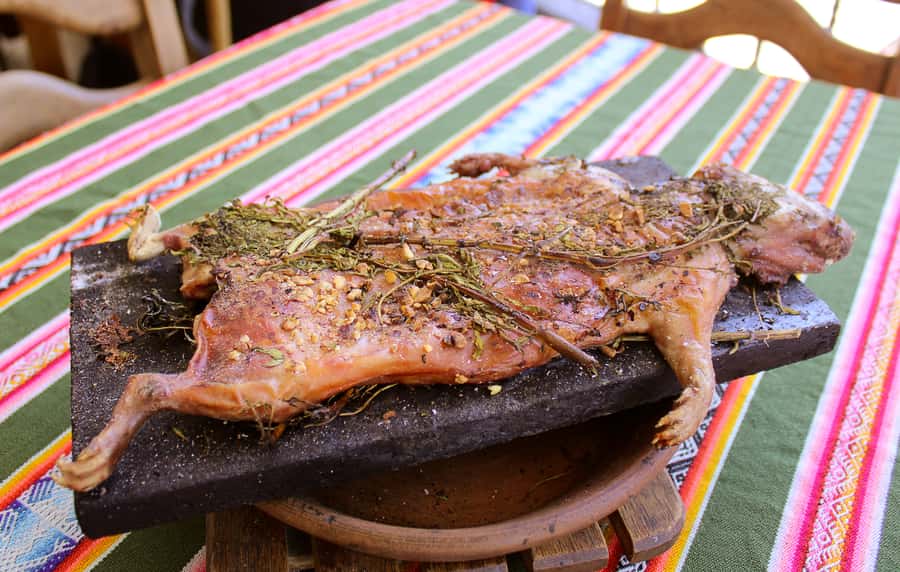
Guinea pig, known locally as cuy, is one of the foods associated with the Andean region. Alpaca is another local meat included in the tasting. These are not token mentions in the tour description. They are part of the reason to choose this experience instead of a standard city walk with a predictable lunch.
You do not need to build an entire meal around one unfamiliar dish. A guided tasting gives you a chance to try a portion, ask questions and decide what you think. Food preferences vary, of course, but the point is to understand what appears on Arequipa’s tables and why these ingredients matter.
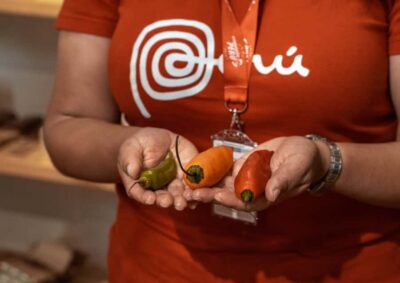
The tour also includes rocoto relleno, one of Arequipa’s best-known dishes. Rocoto is a hot pepper, and the stuffed version is a local specialty. If you are sensitive to spicy food, ask the guide about the heat before taking a large bite. The supplied information does not promise a mild version.
All food and drinks are included in the price. That is useful here because you can sample several items without having to keep adding small payments at each stop.
Plaza de Armas and the white-stone center
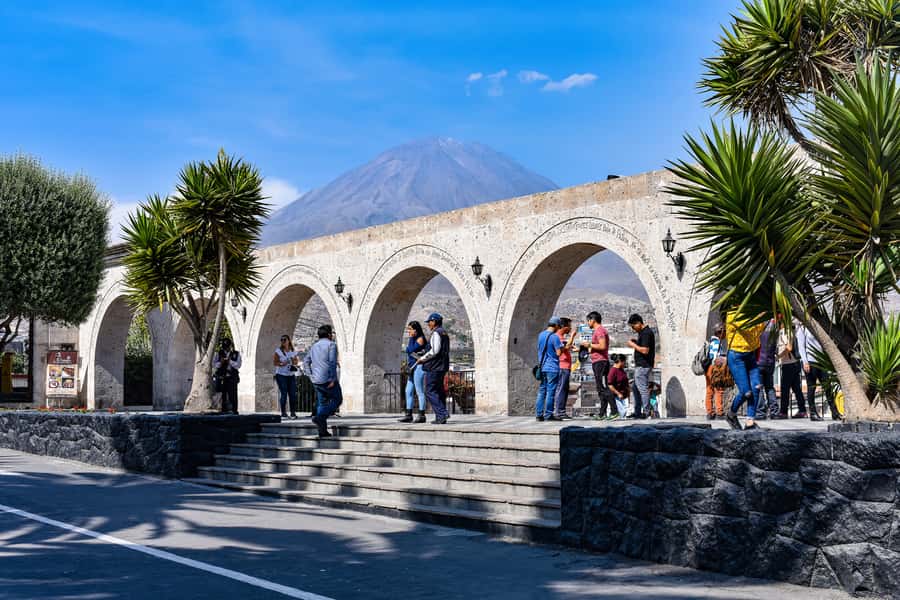
After the first restaurant, the route heads toward the Plaza de Armas. You have about 10 minutes for a photo stop, sightseeing and walking.
Arequipa’s main square is the natural center of the historic city. A short visit lets you see the grand scale of the plaza and place the earlier cloisters and city streets in context. Your guide can also tie the food to the city’s identity, which is a better use of the square than simply snapping a photo and rushing on.
The schedule includes another 15-minute walk through Arequipa before the next restaurant. This is one of the practical points to keep in mind: the tour is active. You are not being driven from tasting to tasting, and the food is spread across several parts of the city.
That walking creates a better sense of Arequipa, but it also affects who will enjoy the tour. Wear shoes made for walking on city streets, not shoes chosen only for photographs. You should also carry water, even though drinks are included during the tastings.
More food and drink outings:
- Arequipa Tasting Tour
★ 5.0 · 92 reviews - Cooking Class Typical Food in Arequipa
★ 3.9 · 3 reviews - Arequipa: Colca Canyon Trekking 2 days and 1 night + food
★ 4.8 · 3 reviews - Lima: Ultimate Peruvian Food Tour
★ 4.9 · 700 reviews
Second restaurant and the hands-on batán lesson
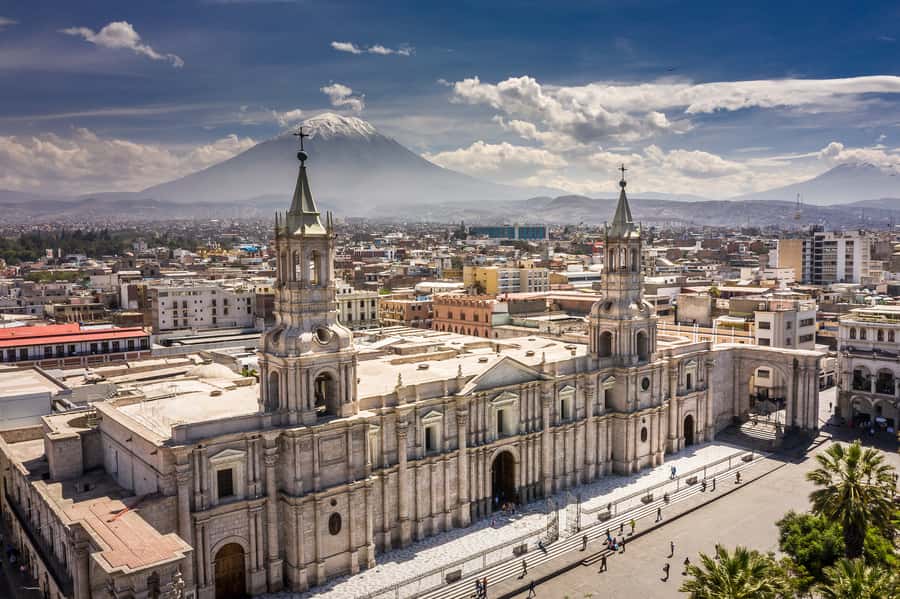
The second local restaurant stop lasts about 40 minutes. This part of the experience includes more regional food and the chance to work with a traditional batán.
A batán is a stone grinding tool used to crush and blend ingredients. The activity centers on preparing ocopa, a sauce linked with Arequipa and commonly made with ingredients such as herbs, peppers, cheese and nuts. The exact preparation details are not provided, so your guide’s explanation will shape how much you learn about the recipe.
This is my favorite feature of the tour on paper. Eating a dish tells you what it tastes like. Grinding ingredients yourself gives you a small sense of the work and tools behind it. It also provides a break from simply sitting down and being served.
The activity should not be confused with a full cooking class. The overall tour includes market visits, walking, sightseeing and several tastings, so the batán lesson is one part of a broader four-hour route. If you want a long, recipe-focused workshop, this is not that. If you want a practical moment that brings Arequipa’s food traditions to life, it fits well.
Malecón Bolognesi and the Chili River views
The route then reaches Malecón Bolognesi. This section lasts about 25 minutes and combines a photo stop, sightseeing, walking and scenic views along the way.
The malecón gives the tour a change of pace. After the market, cloisters, restaurants and plaza, you get an open route with views connected to the Chili River area. It is also a useful transition toward Yanahuara.
Do not expect the tour to become a dedicated photography outing. The stop is part of a moving food and city tour, and the time is shared between walking, views and the next tasting. Still, it gives you a chance to see more than the compact historic center.
This portion may be tiring in the afternoon sun. Arequipa sits at high altitude, and the tour information specifically warns that the sun can be strong. Wear a hat, apply sunscreen and bring water. Comfortable shoes matter even more because the walking is broken into several stages rather than one short stroll.
Third restaurant: a full menu of regional tastes
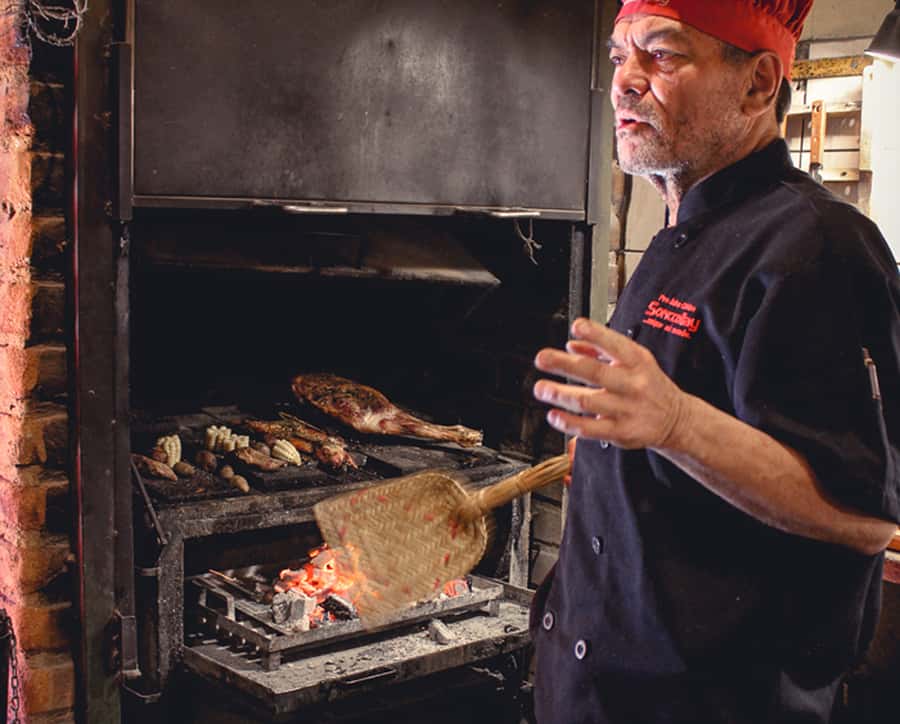
The third restaurant stop lasts about 45 minutes, making it the longest food stop of the day. By this point, you have already seen the market and tried regional dishes, so the meal works as a larger tasting rather than a first introduction.
The food list includes cuy, alpaca, rocoto relleno and ocopa, along with different types of chichas and pisco. Chicha is a traditional fermented or brewed drink found in several forms across Peru. Pisco is Peru’s best-known grape brandy. Sampling several drinks lets you compare local flavors, but it also means you should pace yourself.
The tour includes all drinks, though the information does not specify serving sizes or exactly how many varieties you will taste. If you do not drink alcohol, ask the guide what nonalcoholic options are available before booking. Alcohol and drugs are not allowed as personal items on the tour, and weapons, sharp objects and explosive substances are also prohibited.
A 45-minute restaurant stop is enough time for a substantial tasting, but not necessarily a leisurely restaurant lunch. You should think of the day as a progressive meal across several places. That is part of its value: you sample more of Arequipa than you would by ordering one dish at one restaurant.
Ending with queso helado in Yanahuara
The tour ends at the Yanahuara Scenic Overlook, with a dessert stop lasting about 15 minutes. The dessert is queso helado, a traditional Arequipa sweet whose name translates as frozen cheese, although it is a creamy frozen dessert rather than a slice of cheese.
This is a smart ending. You finish with something sweet after the heavier savory dishes, and Yanahuara provides one of the city’s best-known views toward Misti volcano. The overlook gives the tour a clear final point instead of dropping you beside an anonymous restaurant.
You should not book this expecting hotel drop-off. The guide leaves you at the Yanahuara Scenic Overlook, and transport back to your hotel is not included. Plan the rest of your afternoon from there.
The final view also makes this route useful early in an Arequipa visit. You get a basic map of the city, a look at the historic center, a market introduction and a scenic finish. Afterward, you may have a better idea of which foods and neighborhoods deserve more of your own time.
Is $79 a fair price?
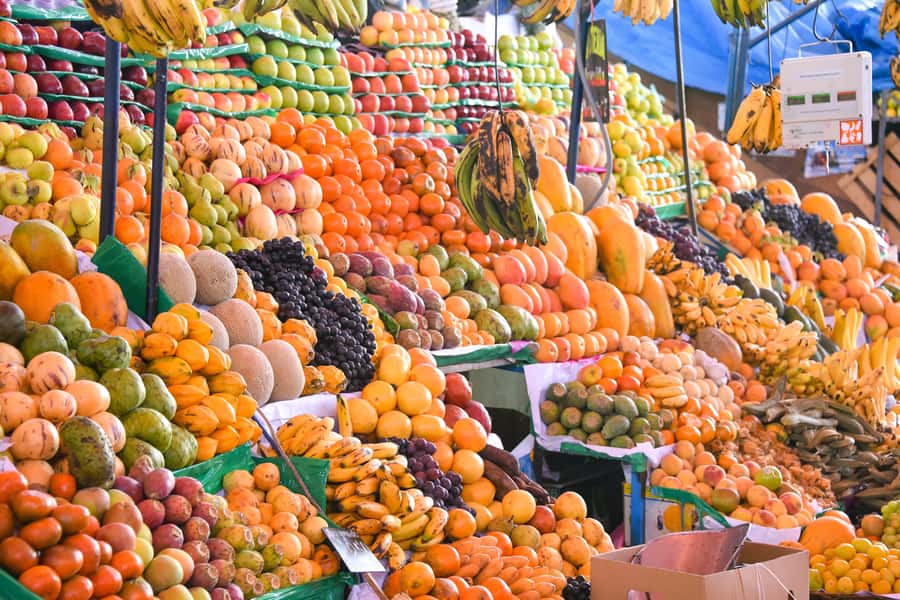
The price is $79 per person for four hours. At first glance, that may seem high for a walking tour, but the value depends on how you use the included food and drinks.
You are paying for a licensed English-speaking guide, three restaurant food stops, market tastings, dessert, several local drinks, the batán activity and city sightseeing. You also avoid the risk of ordering unfamiliar dishes blindly, since the guide explains what you are trying and helps connect each stop to Arequipa’s food culture.
The small-group limit of 10 improves the value. A group of two, as happened on one outing, can feel almost private and gives you more room to ask questions. A full group will be less personal, but it is still capped rather than open-ended.
The 18 percent sales tax is not included. It can be waived by sending each participant’s passport number, country of issue and date of entry into Peru. Check this point when booking because it changes the final cost.
For me, the price makes sense if you would otherwise pay separately for a meal, drinks and a guided city walk. It makes less sense if you want only a cheap lunch or prefer to explore food stalls alone.
Who will enjoy this four-hour walk?
I would choose this tour if you enjoy trying foods that carry a strong local identity. It is especially suited to first-time visitors who want a guided introduction to Arequipa rather than a museum-heavy morning.
The tour also suits you if you like conversation. Clara was praised for discussing local history, politics, customs and culture while walking and eating, and Caro was noted for introducing people to Arequipa’s food scene. Those details suggest that the guide’s personality is an important part of the experience.
You should skip it if you are vegan, vegetarian or gluten intolerant. The tour is also listed as unsuitable for people over 80, people with mobility impairments and people with a low level of fitness.
There is one point worth clarifying before you pay: the activity is marked wheelchair accessible, but it is also listed as not suitable for people with mobility impairments. Because the route includes market movement, repeated walks and several restaurant stops, contact Exquisito Peru directly if accessibility affects your decision.
Free cancellation is available up to 24 hours before the start, and you can reserve now and pay later. Those policies give you some flexibility, but they do not change the food restrictions or the walking demands.
Should you book the Arequipa food tour?
Book it if you want one active half-day that combines local dishes, city landmarks, market life and a Misti volcano view. The strongest reasons are the broad food range, the small groups and the hands-on ocopa preparation with a batán.
Skip it if you need a relaxed, seated meal, a bilingual guide, a vegetarian menu or a short route with little walking. For everyone else, the $79 cost is reasonable when you count the included tastings, drinks, dessert, guide and three restaurant visits.
I would place it near the start of an Arequipa stay. You will eat widely, learn what to look for, and finish in Yanahuara with a better feel for the city than you would get from a meal alone.
FAQ
How long does the Arequipa food tour last?
The tour lasts four hours.
Where does the tour begin?
It begins at Calle San Camilo 207. The guide waits beside the front door of the Compartamos Financiera building, facing the main entrance of San Camilo Market.
Where does the tour end?
It ends at the Yanahuara Scenic Overlook.
What foods and drinks are included?
Included tastings feature guinea pig, alpaca, rocoto relleno, ocopa, queso helado, different types of chichas and pisco. All food and drinks are included.
Is the tour offered in Spanish?
No. The tour is provided only in English, and guides do not guide in multiple languages.
How many people can join the tour?
It is a small-group tour limited to 10 participants.
Is hotel transportation included?
No. Hotel pickup and drop-off are not included.
More Food Outings
- Lima: Historic Center Street Food, Market, and Eateries Tour
★ 4.9 · 216 reviews - Food and Culture Full day Tour in the Sacred Valley
★ 5.0 · 144 reviews - Experience Lima: Taste 12 Snacks and Visit Top Monuments
★ 5.0 · 138 reviews - Lima Street Food Tour Beyond Netflix
★ 5.0 · 117 reviews
Just added around Arequipa
- From Arequipa: Colca Canyon and Condor Watching Day Trip★ 3.7 · 3 reviews
- Arequipa : Colca Canyon 2-Day Adventure★ 5.0 · 3 reviews
- Cooking Class Typical Food in Arequipa★ 3.9 · 3 reviews
- 3-day trek to the Colca Canyon from Arequipa ending in Puno★ 4.2 · 3 reviews
- Colca Canyon Day Trip: From Arequipa to Puno★ 3.5 · 3 reviews
- 2 day 1 night trek / Colca Canyon★ 3.0 · 3 reviews
- From Arequipa: Full Day Colca Canyon Tour★ 4.5 · 3 reviews
- Arequipa: Catarata de Pillones and Bosque de Piedras Tour★ 4.3 · 3 reviews
Food & Drink, compared.
Historic Center Street Food, Market, and Eateries Tour
Read our review →
Food and Culture Full day Tour in the Sacred Valley
Read our review →
The 10 Tastings of Lima With Locals: Private Street Food Tour
Read our review →
Market Tour, Tasting of 35 Fruits, and 4-Course Peruvian Cooking Class in Lima
Read our review →
Pisco and Wine Route with tasting in 03 Wineries
Read our review →Browse the lists this tour appears in