
Reviewed · FOOD & DRINK
Lima: Street Food Tasting Tour with Pisco Sour Class
Lima eats well from the street up. This six-hour private tour links a fishing pier, Surquillo Market, two featured eateries, the historic center, and a pisco sour lesson into one food-focused day. I especially like the private vehicle and hotel pickup, which save you from figuring out Lima’s traffic, and the mix of seafood, Andean ingredients, fruit, sweets, and drinks. The main consideration is pace: six hours with many stops can feel full, and tastings may not replace a sit-down meal for a very hungry eater.
I also like that the route reaches beyond the usual Miraflores and Barranco circuit. Guides Gorki and Saul have received particular praise for their command of Lima’s history, punctual hotel pickups, and safe driving around the city. Bring comfortable shoes and sunscreen, and remember that bad weather can alter or cancel the plan.
In This Review
- Key points to know before booking
- Why this food tour works well in Lima
- Starting at Chorrillos Artisanal Fishing Pier
- Surquillo Market and Peru’s edible map
- Causa limeña at La Huerta Chinen
- The marine trio at Alto K Fish
- Walking through Lima’s historic center
- Churros, pisco, and the sweet finish
- What the private vehicle changes
- Guides, city coverage, and the human element
- Who should book this Lima food experience?
- Practical value at $99 per person
- Should you book it?
- FAQ
- How long does the Lima street food tour last?
- Is hotel pickup and drop-off included?
- Is this a private tour?
- What language is the tour offered in?
- What food and drinks are included?
- Does the tour include entry to a museum?
- Can the tour be canceled because of weather?
Key points to know before booking
- Six hours in a private group: Hotel pickup and drop-off make a long, food-filled route easier to manage.
- Chorrillos fishing pier first: You begin with Lima’s coastal food culture and the trade in marine products.
- Surquillo Market’s regional pantry: Taste Amazonian fruit, purple-corn chicha morada, and see ingredients from the coast, Andes, and jungle.
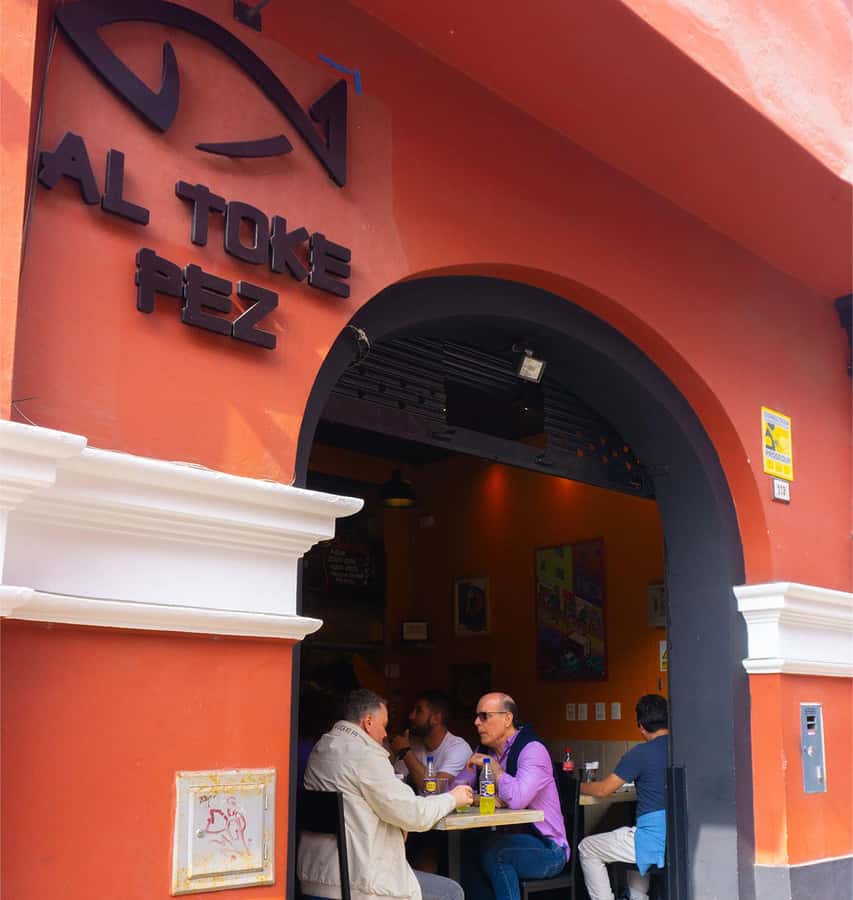
- Two food stops with distinct specialties: La Huerta Chinen serves causa limeña, while Alto K Fish presents a trio of seafood dishes.
- Historic Lima between bites: The route includes the main square, cathedral, Government Palace, San Francisco convent, and catacombs.
- A hands-on pisco sour lesson: You learn the basic mix of pisco, lime, syrup, egg white, and bitters before ending with picarones.
Why this food tour works well in Lima
Lima is not a city you understand from one neighborhood. Its food reflects the Pacific coast, the Andes, the Amazon, Spanish colonial influence, and modern Peruvian cooking. This tour gives you a practical way to sample that range without spending your day crossing the city on your own.
The $99 price is reasonable if you value private transport, a guide, museum admission, and a long list of included tastings. You are not paying only for snacks. You are also paying for the route, the local food context, and the time saved by having a vehicle move you between Chorrillos, Surquillo, downtown Lima, and Chabuca Granda Avenue.
Still, this is not a formal cooking course or a long restaurant lunch. It is a moving food tour with several tasting stops. I would choose it for variety and city coverage, not if your main goal is to sit down for hours over one elaborate meal.
More Food & Drink in Lima
- Lima: Ultimate Peruvian Food Tour
★ 4.9 · 700 reviews - Lima: Historic Center Street Food, Market, and Eateries Tour
★ 4.9 · 216 reviews - Lima Street Food Tour Beyond Netflix
★ 5.0 · 117 reviews
Starting at Chorrillos Artisanal Fishing Pier
The first stop is the Chorrillos Artisanal Fishing Pier, a working trade point for marine products. It gives the day a useful starting point: before you taste ceviche or seafood rice, you see the coastal source behind much of Lima’s cooking.
Your guide explains the history of the pier and its role in local commerce. The setting connects Lima’s food culture to the Pacific, rather than treating Peruvian cuisine as a collection of restaurant dishes with no background.
This stop should appeal to anyone curious about how a city’s location shapes its food. It may be less interesting if you want to start with immediate eating, since the pier is also an orientation stop. The route begins with context, then builds toward the tastings.
Surquillo Market and Peru’s edible map
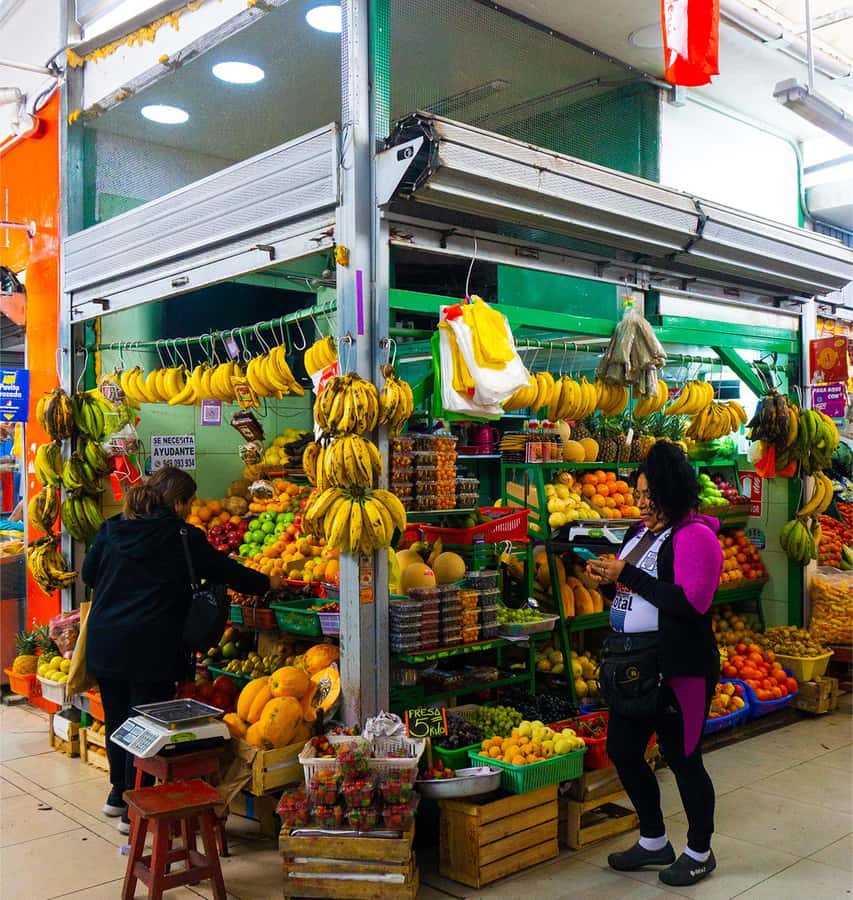
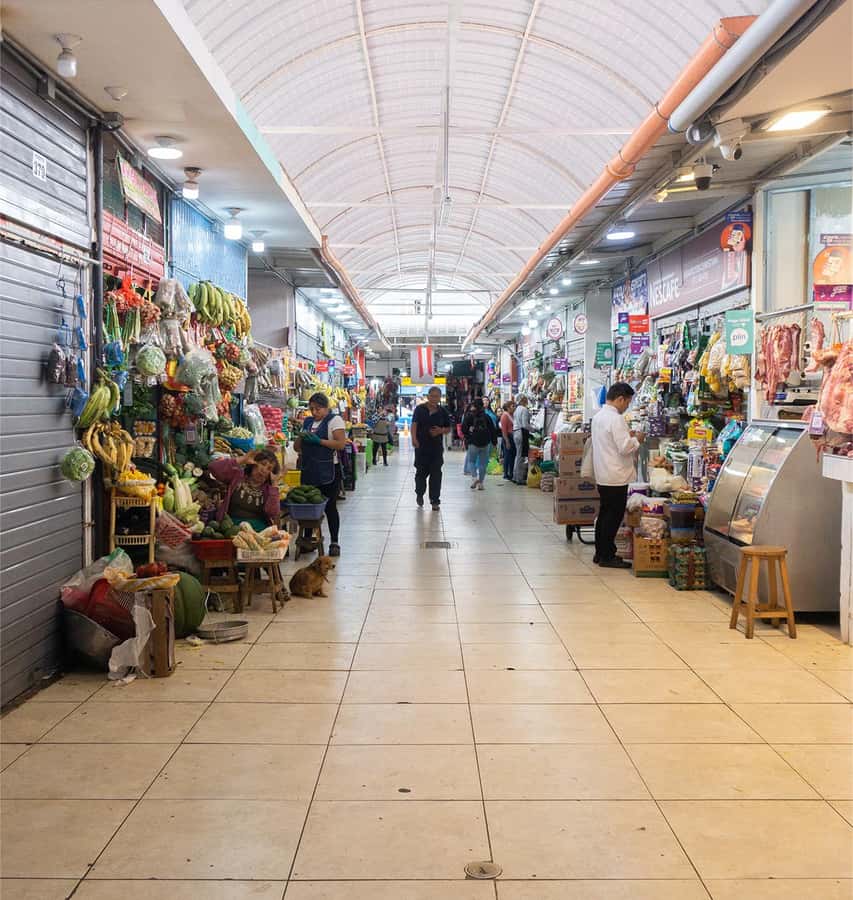
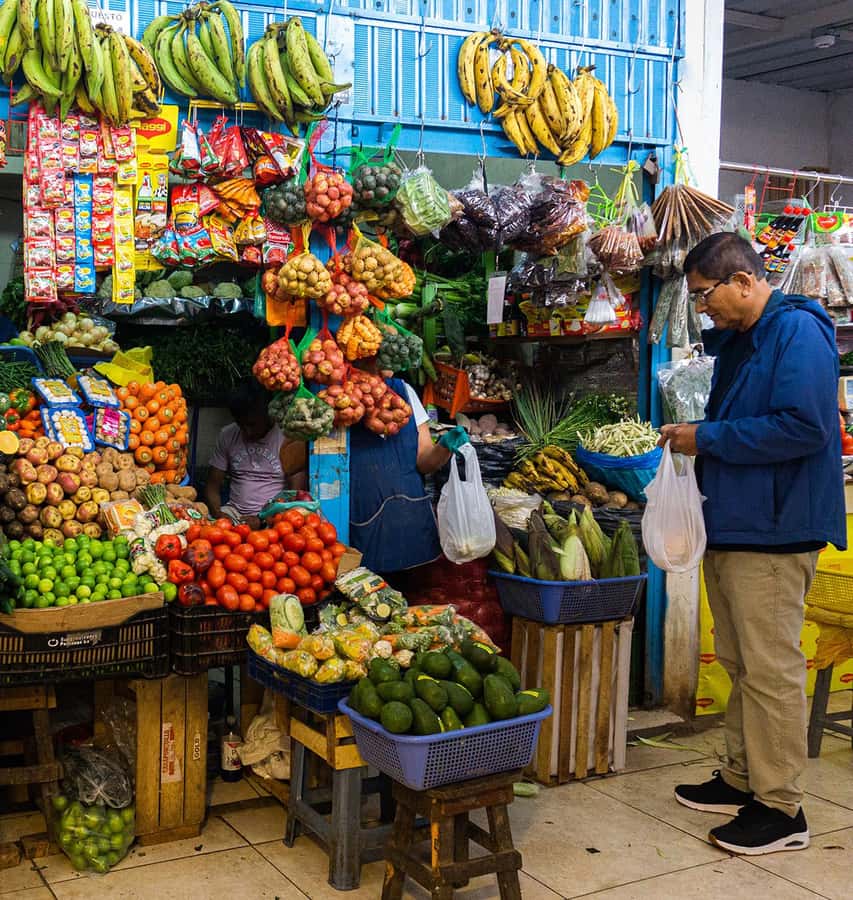
Surquillo Market is the heart of the produce portion of the tour. The market sells food and spices every day, with ingredients from several parts of Peru gathered under one roof.
You can expect to see:
- Exotic fruits from the Amazon Rainforest
- Potatoes and chili peppers from high Andean areas
- Fresh fish and seafood from the coast
- Various meats, including alpaca and guinea pig
The value here is not simply taking pictures of unfamiliar produce. Your guide can help explain how Peru’s geography reaches your plate. Potatoes and peppers point toward the Andes, seafood reflects Lima’s coastal position, and tropical fruit brings in the Amazon.
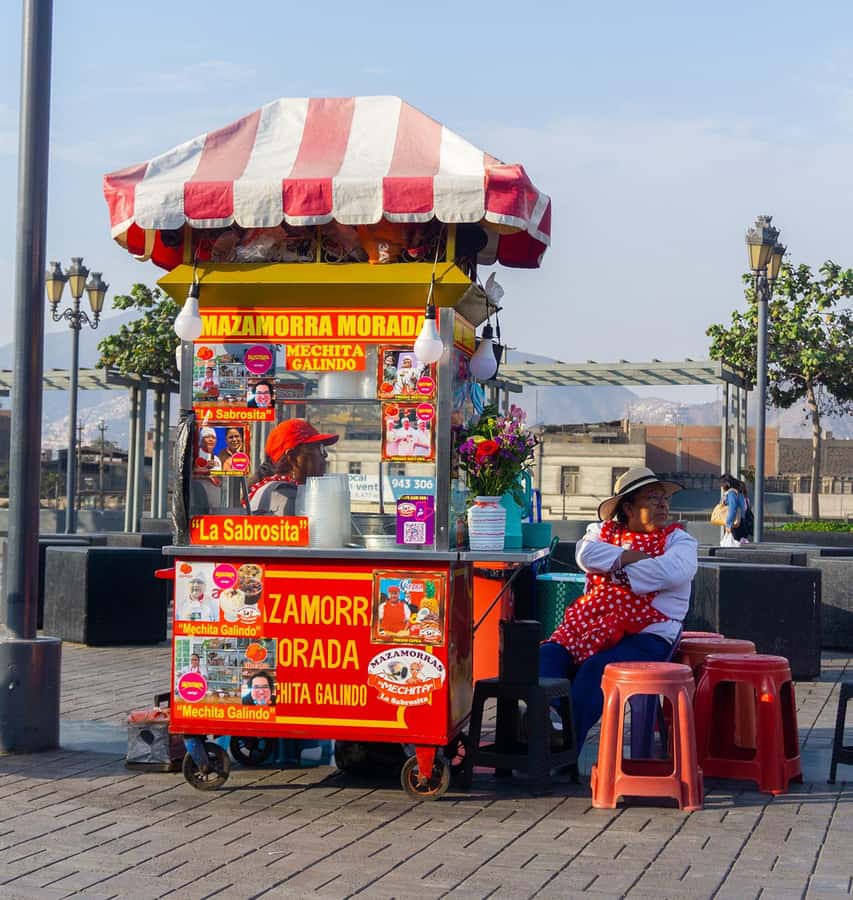
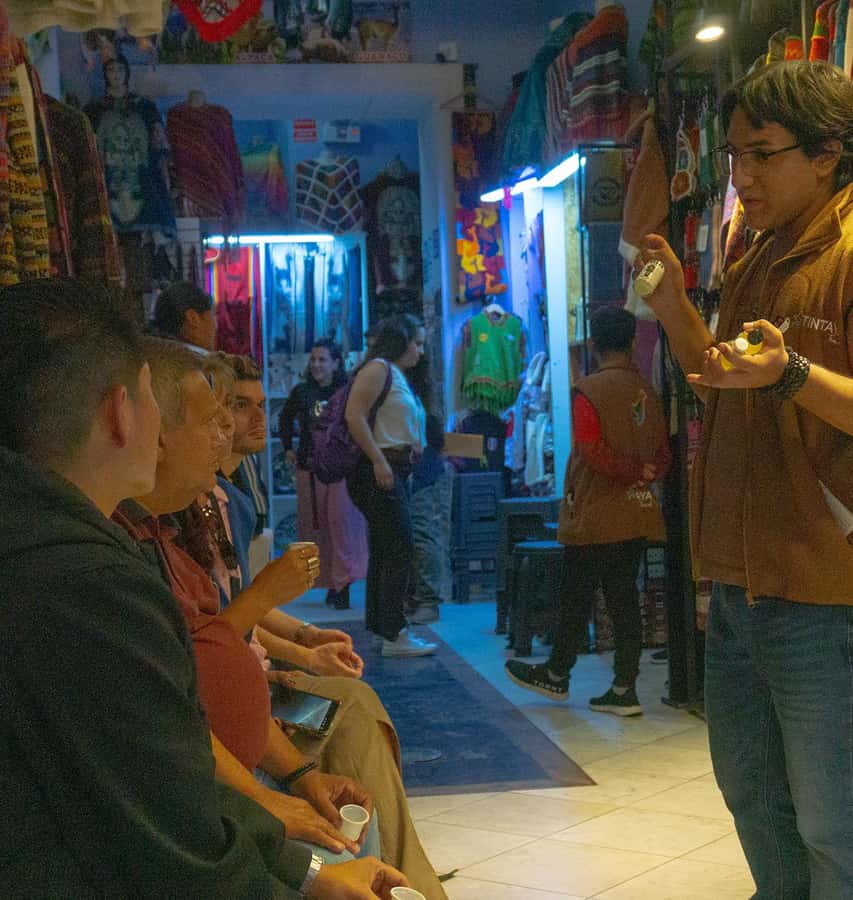
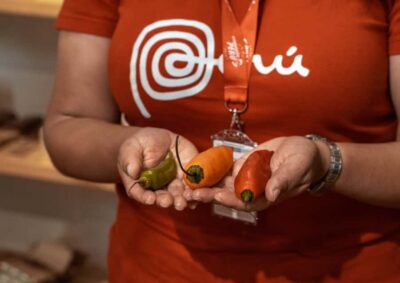
You taste cherimoya, granadilla, and tumbo. Each offers a different idea of Peruvian fruit, and tasting them in a market setting is more useful than seeing them listed on a menu. You also try chicha morada, a purple-corn drink that is sweet, darkly colored, and closely tied to Peruvian food culture.
The market can be a sensory-heavy stop, with many products and scents competing for your attention. If you prefer a quiet, polished food setting, this may feel rough around the edges. That is also the point. You are seeing a local food market, not a staged tasting room.
Causa limeña at La Huerta Chinen
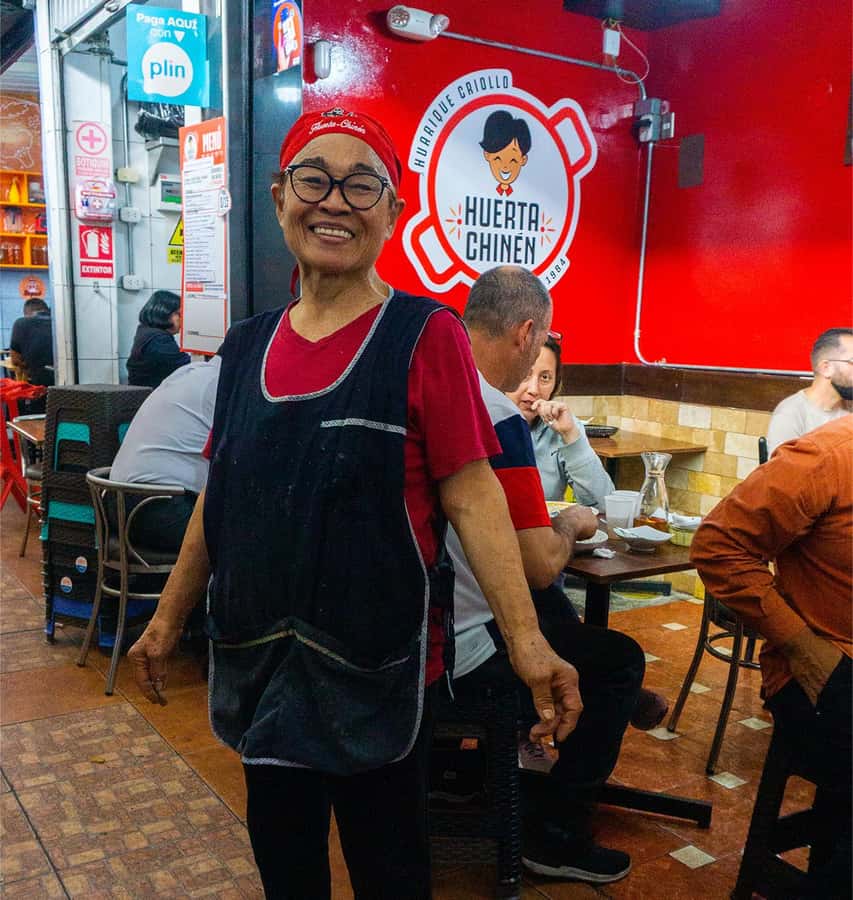
At La Huerta Chinen, the focus shifts to Creole cooking and one of Peru’s most recognizable potato dishes: causa limeña. The base is mashed yellow potato seasoned with lime and chili, then filled with chicken.
Causa is a good introduction to Peru because it shows how a familiar ingredient can become something more distinctive through seasoning and presentation. The lime gives brightness, while the chili adds warmth without making the dish all about heat.
This is a tasting stop, so you should think of it as one course in a long sequence rather than a full meal. That is helpful because you can keep room for seafood, sweets, and drinks later. It also means you may want a proper meal afterward if you normally eat large portions.
The food stops have received strong praise, and the appeal comes from their contrast. La Huerta Chinen gives you a land-based, potato-centered dish before the tour turns back to the sea.
More Pisco & Peruvian Food in Lima
- Cook an Authentic Ceviche And Peruvian Pisco Sour!
★ 5.0 · 107 reviews - Larco Museum, Pisco Old Tavern and Magic Water Circuit Evening Tour
★ 4.5 · 66 reviews - Miraflores: Amazing Peruvian Cooking Class Ceviche Seafood and Pisco Sour
★ 4.9 · 57 reviews - Flight Over the Nazca Lines from Pisco + Huacachina Oasis
★ 5.0 · 46 reviews
The marine trio at Alto K Fish
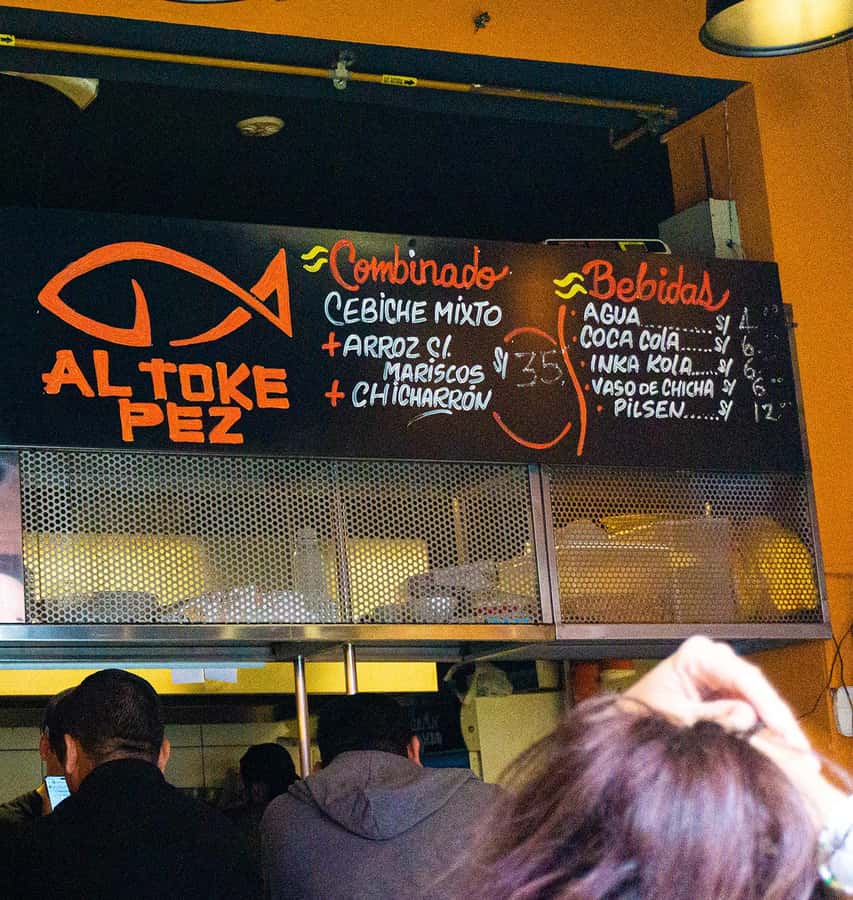
Alto K Fish handles the coastal side of the menu. Here you taste a marine trio made up of fish ceviche, rice with seafood, and squid pork rinds.
The three items show different treatments of seafood. Ceviche is fresh and citrusy, seafood rice is warmer and more filling, and the squid preparation adds crunch. Together, they give you more range than a single ceviche stop would.
This is one of the strongest parts of the route for anyone who wants to understand why Lima has such a powerful seafood identity. The city’s coastal location is not just a scenic detail. It shapes everyday cooking, restaurant menus, and the ingredients sold at the market earlier in the day.
Food preferences matter here. If you avoid seafood, this tour loses much of its appeal because the menu includes fish, seafood, and squid. The tour data does not specify substitutions, so you should ask the operator before booking if you have allergies or dietary restrictions.
Walking through Lima’s historic center
After the food stops, the route moves into central Lima. This change of pace helps the day feel like a city tour with food, rather than a string of restaurant visits.
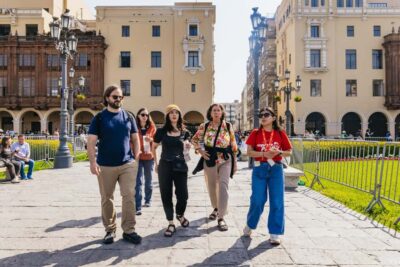
You walk along old streets and see colonial balconies, churches, and houses. The principal sights include Lima’s main square, the cathedral, the Government Palace, and the convent of San Francisco with its catacombs.
The San Francisco Museum entry is included. That matters because the catacombs and convent add an indoor historical stop to the walking portion, rather than leaving you to view the buildings only from outside.
I like this part of the route because it gives the food a setting. Lima’s cuisine developed within a city shaped by Indigenous, Spanish, African, Asian, and coastal influences, and the historic center helps explain why the capital has such a layered identity.
You should wear comfortable shoes. The day combines market walking, city streets, food stops, and sightseeing, so this is not the time for stiff footwear. Sunscreen and comfortable clothes are also sensible, especially since the tour may include outdoor walking between visits.
Churros, pisco, and the sweet finish
The tour adds Spanish-style churros after the historic center. These are filled with manjar blanco or pastry cream and finished with white sugar.
The churros provide a clear example of how Spanish influence appears in Peruvian eating. They are familiar enough for most people, but the fillings give the stop a local dessert angle. Since you have already tasted fruit and savory dishes, this keeps the menu moving through different textures and flavors.
Next comes the pisco sour class at a local bar. The drink is made with grape pisco, lime, syrup, egg white, and Angostura bitters. The lesson is hands-on, so you are not just handed Peru’s signature cocktail. You learn the basic construction and get to take part in making it.
This is a particularly good inclusion because the pisco sour is part of Peru’s national food identity, yet a quick restaurant order does not tell you much about how it is made. The class gives you a small skill you can use again at home.
The drink contains alcohol, of course, so keep that in mind when judging the full six-hour schedule. You also taste several sweet items, and the steady succession of food and drink can be a lot if you prefer a lighter day.
The final stop is Chabuca Granda Avenue, where you try picarones. These Peruvian donuts are made from sweet potato dough and served with honey. They are not the same as the churros, and the distinction is worth noting: picarones bring a softer, sweeter finish with a different base and texture.
Ending with picarones gives the route a proper dessert stop rather than treating sweets as an afterthought. By this point, you have sampled fruit, drinks, savory food, churros, a cocktail, and donuts.
What the private vehicle changes
The private group format is one of the clearest practical advantages. Lima’s neighborhoods are spread out, and the route covers Chorrillos, Surquillo, the historic center, and Chabuca Granda Avenue. Having pickup and drop-off at your accommodation removes the need to arrange separate taxis or work out public transport between each stop.
One direct experience praised the private vehicle for making it possible to move easily from place to place. Another specifically highlighted an on-time hotel pickup and a driver who handled Lima’s streets safely.
That does not make traffic disappear. It simply means you are not responsible for navigating it. The guide can use the travel time to explain the city, while you focus on the next stop instead of watching a map.
Pickup is included, and you should wait in your hotel lobby 10 minutes before the scheduled time. The tour is conducted in English and is for a private group, which gives you more control over the pace than a large shared excursion would normally allow.
Guides, city coverage, and the human element
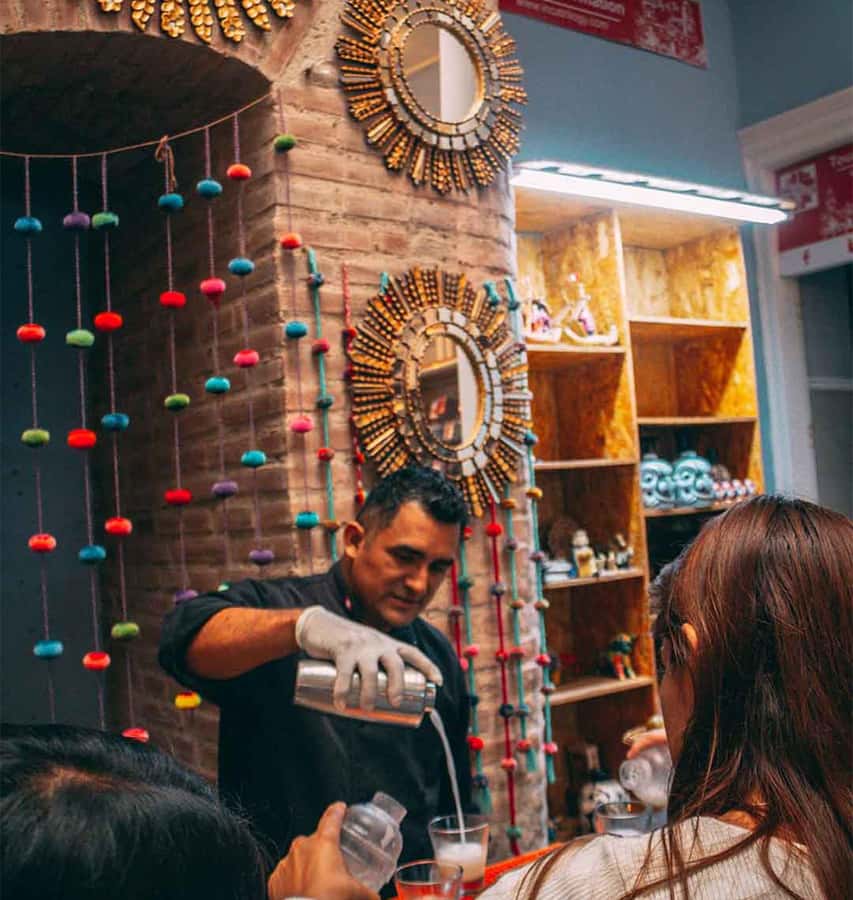
The guide can make or break a food tour. Here, Gorki has been praised for explaining the history of Lima and Peru, while Saul has been singled out for guiding the day from start to finish and helping the group see more than Miraflores and Barranco.
That wider coverage is important. Miraflores and Barranco are popular bases with plenty of restaurants, but they are only part of Lima. This itinerary takes you to a fishing pier, a major market, central colonial sights, and a local bar. You get a broader sense of the capital’s daily life and food traditions.
The route may also pick up an unexpected city moment. One outing encountered a cultural parade downtown. You should not book the tour expecting a parade, since that is not a scheduled feature, but it shows how a private route can leave room for the city to surprise you.
A good guide also helps you decide how to pace your appetite. Since the tour includes many tastes rather than one large meal, you can ask questions and pay attention to ingredients instead of rushing from one oversized plate to the next.
Who should book this Lima food experience?
I would recommend this tour to first-time visitors who want food and major city sights in one day. It suits couples, families, and small private groups who value hotel pickup and do not want to navigate Lima’s traffic alone.
It is also a strong choice if you want to move beyond the most familiar tourist neighborhoods. The combination of market produce, seafood, Creole food, colonial architecture, and Peruvian drinks gives you a useful introduction to Lima’s range.
You may want another option if you have strict dietary limits, dislike seafood, avoid alcohol, or prefer a slow restaurant-based food experience. The supplied information does not list dietary substitutions, and seafood appears at a central tasting stop.
The day is also less suitable for anyone who wants a focused history tour. You see important buildings and enter the San Francisco Museum, but the main purpose is food. The historic center supports the culinary story rather than taking over the itinerary.
Practical value at $99 per person
At $99 per person, the price makes the most sense when you use the full package: private transportation, English-speaking guide, hotel pickup and drop-off, museum admission, and the listed tastings.
Those tastings include exotic fruits, chicha morada, causa limeña, the marine trio, churros, pisco sour, and picarones. You also receive a guided visit to several very different parts of Lima.
I would compare this with the cost and effort of arranging separate taxis, a market visit, two food stops, a downtown walk, museum entry, a cocktail class, and dessert on your own. The private transport and planning do a lot of the work.
The value is weaker if you are mainly looking for a large lunch. This is a tasting route, and the six-hour schedule prioritizes variety. Eat a light breakfast, but do not arrive without any appetite.
Free cancellation is available up to 24 hours before the tour for a full refund, and you can reserve now and pay later. Bad weather may change or cancel the outing, so keep your plans flexible if conditions look poor.
Should you book it?
Book this tour if you want a broad, food-first introduction to Lima with private transport and a guide who can connect dishes to the city around you. The best reasons are the unusual range of stops, the seafood and market focus, the historic-center walk, and the pisco sour lesson.
Think twice if you need a quiet pace, a long formal meal, or guaranteed alternatives to seafood and alcohol. For most food-curious visitors, though, the route offers good coverage and strong practical value, especially when you want to see more of Lima than its best-known neighborhoods.
FAQ
How long does the Lima street food tour last?
The tour lasts six hours. Starting times vary, so you need to check availability for the date you want.
Is hotel pickup and drop-off included?
Yes. Pickup and drop-off at your accommodation are included. You should wait in the hotel lobby 10 minutes before the scheduled pickup time.
Is this a private tour?
Yes. The experience is conducted for a private group rather than a large shared group.
What language is the tour offered in?
The live guided tour is offered in English.
What food and drinks are included?
Included tastings are exotic fruits, chicha morada, causa limeña, the marine trio, churros, pisco sour, and picarones.
Does the tour include entry to a museum?
Yes. Entry to the San Francisco Museum is included, along with a visit to the convent of San Francisco and its catacombs.
Can the tour be canceled because of weather?
Yes. The route may be changed or canceled due to bad weather. You can cancel up to 24 hours in advance for a full refund, and the reserve-now, pay-later option lets you keep your plans flexible.
More Food and Drink Outings
- The 10 Tastings of Lima With Locals: Private Street Food Tour
★ 5.0 · 92 reviews - Market Tour, Tasting of 35 Fruits, and 4-Course Peruvian Cooking Class in Lima
★ 5.0 · 86 reviews - Trending Flavors: Miraflores Walking Tour Including Food and Drinks Tasting
★ 5.0 · 63 reviews - 5 iconic restaurants of Lima a 3-hour guided food tour in Barranco
★ 4.5 · 48 reviews
More Pisco and Peruvian Food
- Lima Street Food: A gastronomic adventure through the city.
★ 4.5 · 42 reviews - Peruvian Experience: Interactive, Cultural & Gastronomic Guided Tour
★ 5.0 · 42 reviews - Lima: Huacachina, Winery, & Nazca Lines from Pisco Airport
★ 4.7 · 31 reviews - City Tour With Demonstration & Tasting of Pisco Sour
★ 4.6 · 21 reviews
Just added around Lima
- Enjoy Lima Walking Historic Center, Plaza San Martin and Plaza de Armas★ 5.0 · 3 reviews
- Full Day Lima: Local Market+ CityTour+ Barranco & Miraflores★ 5.0 · 3 reviews
- City Tour 1 day Lima★ 5.0 · 3 reviews
- Lima: Lunuhuaná Extreme All In + Cerro Azul + Rafting + ATV + Canopy★ 4.4 · 3 reviews
- Lima: Villa El Salvador Shanty Town Tour★ 5.0 · 3 reviews
- Tour Panorámico en Miraflores en Scooter Eléctrico★ 4.6 · 3 reviews
- Private Tour Casa Aliaga,San Francisco Convent, Larco Museum★ 4.8 · 3 reviews
- LIMA: HALF-DAY SANDBOARDING TOUR★ 4.5 · 3 reviews
Food & Drink, compared.
Historic Center Street Food, Market, and Eateries Tour
Read our review →
Food and Culture Full day Tour in the Sacred Valley
Read our review →
The 10 Tastings of Lima With Locals: Private Street Food Tour
Read our review →
Market Tour, Tasting of 35 Fruits, and 4-Course Peruvian Cooking Class in Lima
Read our review →
Pisco and Wine Route with tasting in 03 Wineries
Read our review →Browse the lists this tour appears in