
Reviewed · WALKING TOURS
Arequipa: Walking Tour and Santa Catalina Monastery
Arequipa’s white-stone center rewards slow walking. This three-hour tour links the old San Lázaro quarter, colonial tambos, the Plaza de Armas, and Santa Catalina Monastery in one tidy outing. I especially like the mix of everyday neighborhoods and grand monuments, plus the chance to learn why volcanic sillar gives the city its bright, distinctive look.
I also like that the walk stays focused. You get a guide in English or Spanish, hotel pickup may be available in the historic center, and the monastery receives a full hour rather than a rushed glance. The main consideration is the price structure: the $35 rate may not include the monastery entrance, so check your selected option before booking.
Guide quality is a strong point. Gisela has been praised for clear, precise explanations, while Milei has earned warm comments for her kindness and careful answers. Sline is also noted for friendly, thorough guiding, which matters when the tour’s value depends on the stories behind the buildings.
In This Review
- Key points to know before you go
- Why this Arequipa walk works well
- Starting in San Lázaro, Arequipa’s old white-stone quarter
- Barrio del Solar and the old tambo system
- Tambo La Cabezona and Arequipa’s working past
- Plaza de Armas, the city’s grand public room
- Entering Santa Catalina’s 20,000-square-meter convent
- The Patio del Silencio and the convent’s quieter side
- What the $35 price really covers
- Walking comfort, timing, and practical details
- Who will get the most from this experience
- Should you book this Arequipa walking tour?
- FAQ
- How long does the Arequipa walking tour last?
- What languages are available?
- Is hotel pickup included?
- Is the Santa Catalina entrance fee included?
- What should I bring?
- Can wheelchair users join the tour?
Key points to know before you go
- San Lázaro comes first: Begin among narrow lanes, small squares, and white sillar homes only five blocks from Arequipa’s Plaza de Armas.
- Colonial tambos add local texture: Tambo El Matadero and Tambo La Cabezona show how old lodging and working spaces still form part of the city.
- Santa Catalina is the main event: Allow one hour for its streets, cloisters, patios, bell tower, church, and Patio del Silencio.
- The tour covers about three hours: Expect short van transfers mixed with roughly two hours of walking and sightseeing.
- The $35 price needs checking: Entrance, pickup, and drop-off depend on the option you choose.
- This is not a wheelchair-friendly outing: Uneven historic streets and walking stops make mobility an important consideration.
Why this Arequipa walk works well
Arequipa can look easy to understand at first. The Plaza de Armas is polished and photogenic, and the white buildings seem to tell one simple story. This tour gives you a fuller picture by starting away from the square, then moving through older residential and commercial quarters before finishing at the city’s best-known convent.
That order makes sense. You first see how people lived and worked, then arrive at the grand civic center, and finally spend serious time inside Santa Catalina. I prefer this approach to a tour that begins with only postcard views.
The experience lasts three hours. That is enough time to cover several important sites without turning the morning or afternoon into a full-day commitment. You should still expect a fair amount of walking, though. The program includes several sections on foot, with walks of 10 to 15 minutes between major stops.
The tour is offered in English and Spanish. A professional guide leads the route, and the quality of the explanations is central to the experience. Names connected with the guiding team include Gisela, Milei, and Sline. Gisela is associated with accurate, well-organized explanations, Milei with empathy and strong answers to questions, and Sline with a warm, friendly manner.
More walking tours on foot:
- Walking tour in the Historic Center of Arequipa
★ 4.4 · 180 reviews - Arequipa: Walk through the Historic Center of the City
★ 4.9 · 87 reviews - Arequipa Walking Tour city center and drinks experience
★ 5.0 · 72 reviews
Starting in San Lázaro, Arequipa’s old white-stone quarter
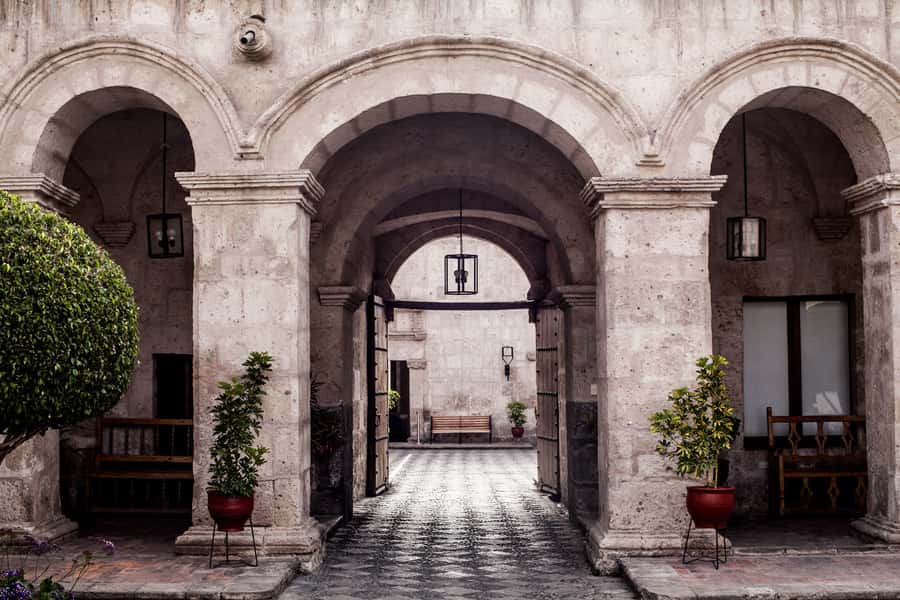
The tour begins with a short van ride of about 10 minutes, depending on your pickup arrangement. The first stop is Barrio de San Lázaro, just five blocks from the Plaza de Armas.
San Lázaro is a good place to begin because it feels more intimate than the main square. You walk along small streets, little squares, and walls built from sillar, the pale volcanic stone used throughout Arequipa. The stone is not just a visual detail. It explains the city’s nickname as the white city and gives the historic center a strong sense of place.
Your guide will connect the neighborhood to the area’s earlier past. San Lázaro was occupied by pre-Inca and Inca cultures, and the first houses built during the Spanish conquest and the city’s foundation appeared here. That makes the district more than a pretty photo stop. It is an early chapter in Arequipa’s urban story.
You spend about 20 minutes here. That is long enough for an introduction, a guided walk, and photographs, but not enough for an unhurried exploration of every lane. If you like street photography, have your camera ready from the start. The combination of white walls, narrow passages, and small open spaces gives you some of the tour’s most pleasing views.
San Lázaro forms part of Arequipa’s Historic Center, a UNESCO World Heritage Site. The designation covers more than famous buildings. It reflects the survival of the city’s colonial layout, architecture, and materials, all of which you begin to see in this opening neighborhood.
Barrio del Solar and the old tambo system
From San Lázaro, you walk for about 15 minutes to Barrio del Solar, near the Chili River. This portion helps shift the tour from residential streets to the old commercial side of the city.
The Barrio del Solar includes traditional and colonial buildings, along with areas known as tambos. In colonial times, tambos served as lodging centers where merchants could rest. That detail gives the walk a practical angle. You are not only looking at façades. You are learning how people, animals, goods, and money moved through the city.
The tour allows about 20 minutes in Barrio del Solar. The stop is guided and includes sightseeing and photographs. It may appeal most to you if you enjoy urban history that is tied to ordinary work and travel rather than only churches and elite homes.
The first specific tambo is Tambo El Matadero. Its name reflects its former use as a place where animals were slaughtered, and the building dates from the seventeenth century. Today, about 30 families live there.
That modern use is what makes the stop especially worthwhile. You see a historic structure that is not frozen as a museum display but remains part of the city’s daily life. At the same time, you should be respectful with your camera and keep the guide’s instructions in mind. People live here, so this is a neighborhood visit, not just an architectural exhibit.
Tambo La Cabezona and Arequipa’s working past
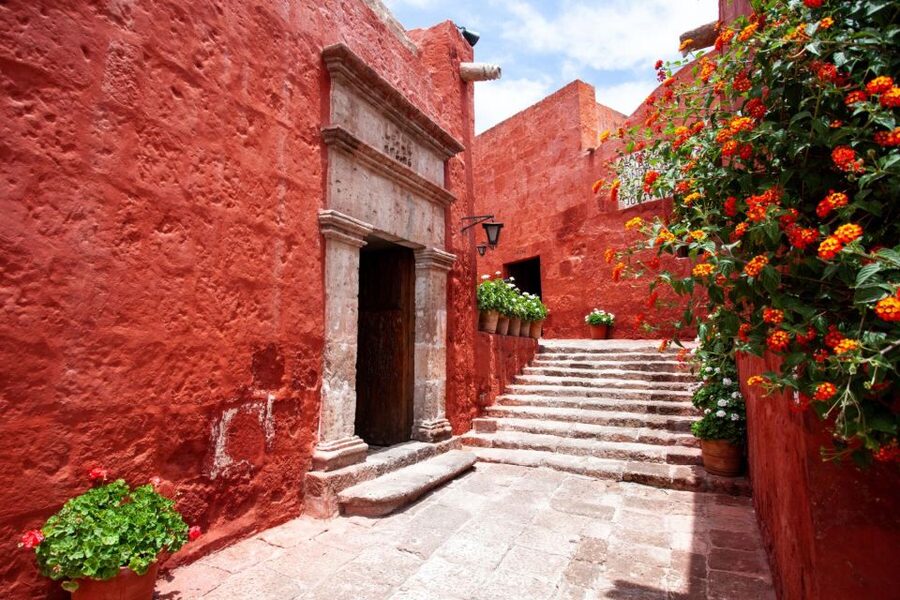
After another walk of about 10 minutes, you reach Tambo La Cabezona. This colonial group of homes has a communal entrance and dates from the sixteenth century.
The site is also linked with one of Arequipa’s first mills. That small fact adds useful context to the previous stop. The tambos were not merely places to sleep. They were tied to trade, food production, and the movement of goods through the city.
You spend around 20 minutes at Tambo La Cabezona. The visit includes walking and a guided explanation, so listen for details about how the communal layout worked. Shared entrances and connected homes can look simple when you see them quickly, but they reveal how older urban communities were organized.
This is one place where a guide earns the fee. Without explanation, you might pass through and see only old stone, walls, and doorways. With context, you can picture merchants stopping in Arequipa, workers using the mill, and families continuing to live among buildings that began serving the city centuries ago.
The two tambos also keep the tour from becoming a procession of grand monuments. You get a look at the city’s more modest, functional architecture before reaching the ceremonial heart of Arequipa.
A few more Peru trips worth weighing up
- From Arequipa: Colca Canyon Full-Day Guided Tour with Meals
★ 4.5 · 982 reviews - Tour to the Salinas Lagoon and National Reserve in Arequipa
★ 4.5 · 548 reviews - From Arequipa: Sillar Route Trek
★ 4.2 · 461 reviews - Arequipa: Chili River White Water Rafting with Hotel Pickup
★ 4.8 · 329 reviews
Plaza de Armas, the city’s grand public room
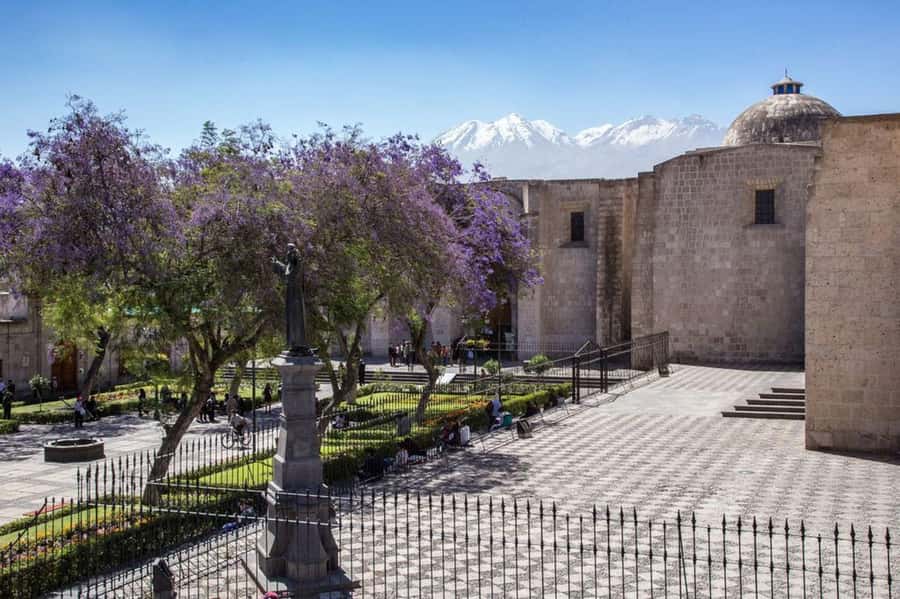
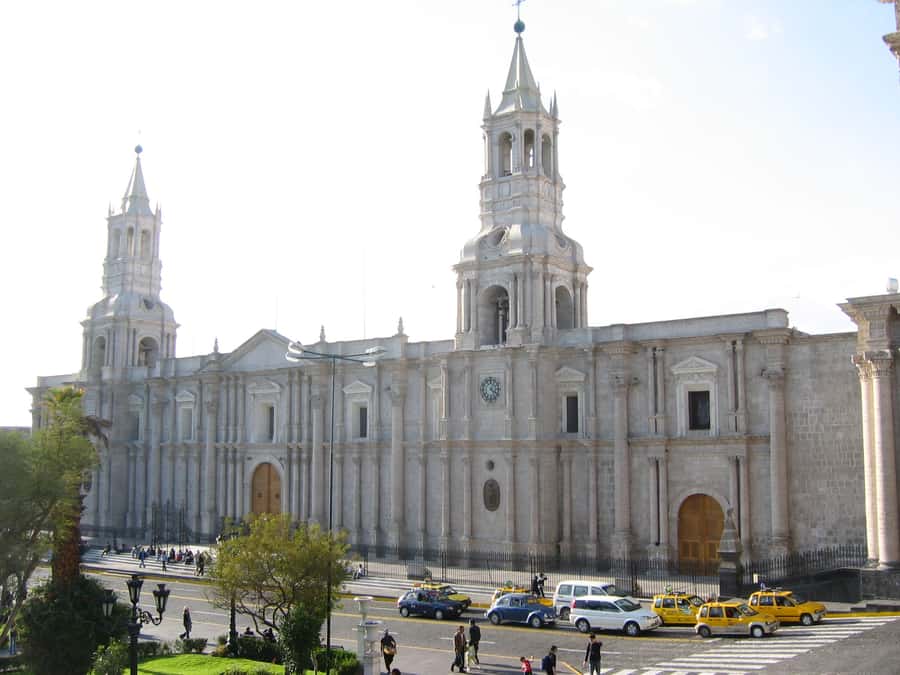
A 15-minute walk brings you to the Plaza de Armas, followed by about 30 minutes of guided sightseeing. This is Arequipa’s main meeting point and its most formal public space.
The square is surrounded by elegant portals, with the Cathedral of Arequipa occupying one side. A bronze fountain sits in the center. After the narrower streets of San Lázaro and Barrio del Solar, the open space feels like a clear change of scale.
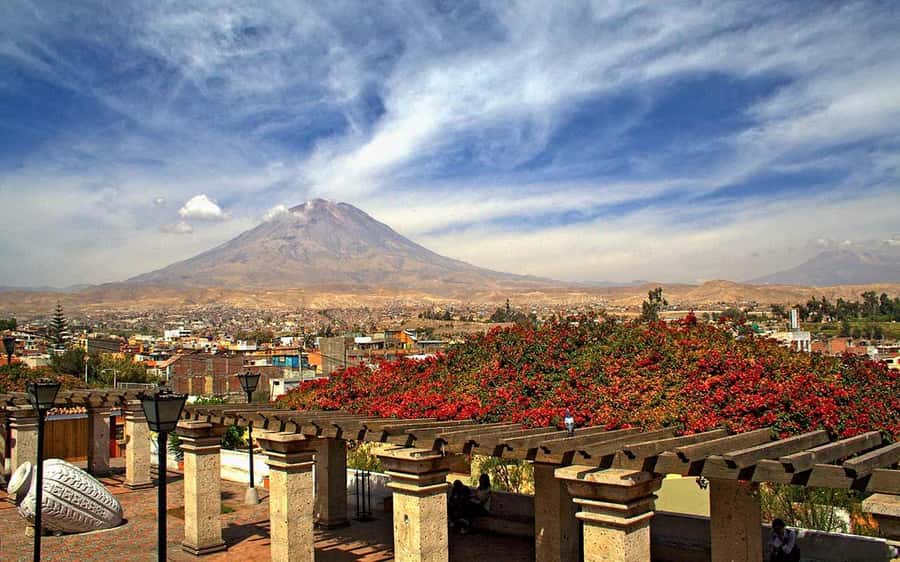
The half-hour stop gives you time for photographs and a proper explanation of the square. I would pay attention to the contrast between the bright sillar buildings and the dark volcanic setting around Arequipa, though the tour information does not promise a separate viewpoint or extended cathedral interior visit.
This is described as a panoramic tour of the plaza, so treat it as an exterior visit unless your guide says otherwise. That distinction matters if you want a detailed look inside the cathedral. The attraction here is the setting, the portals, the fountain, and the role of the square in local life.
The Plaza de Armas also prepares you for Santa Catalina. The square represents Arequipa’s public and religious center. The monastery, only a five-minute walk away, offers a more private world behind its walls.
Entering Santa Catalina’s 20,000-square-meter convent
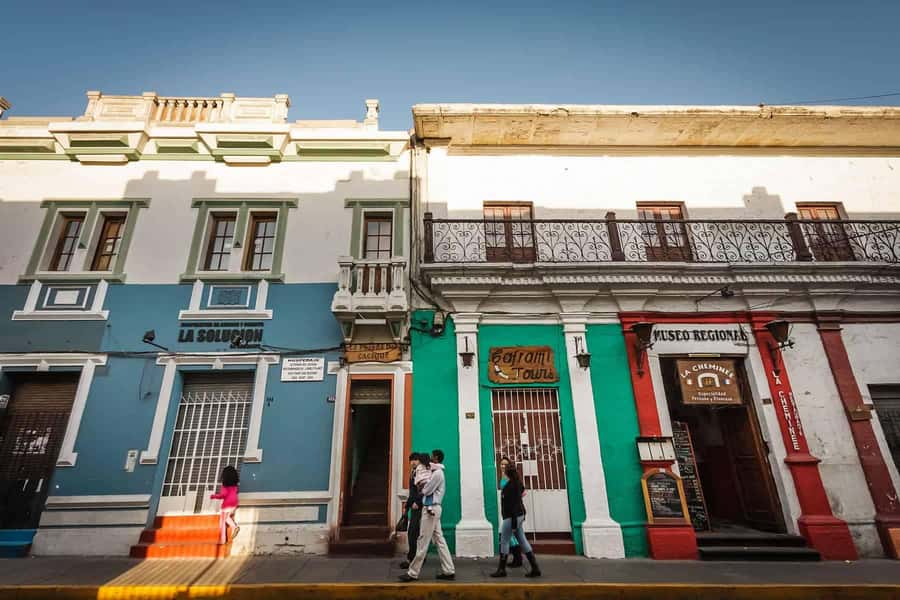
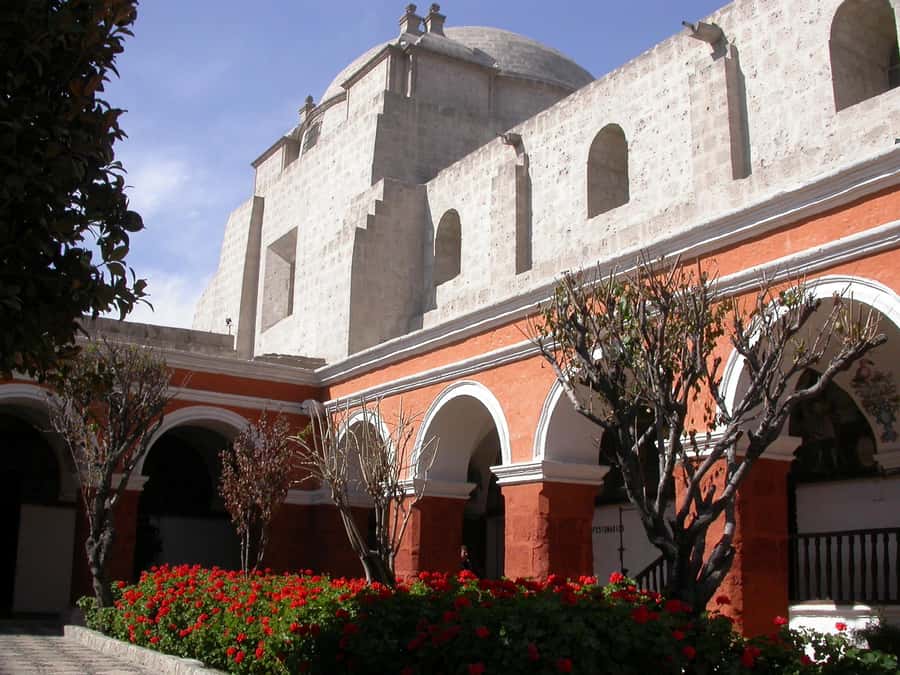
Santa Catalina Monastery is the centerpiece of the experience. Founded in 1579, the complex covers about 20,000 square meters and includes cloisters, patios, squares, streets, a bell tower, and a church.
Calling it a monastery can undersell its scale. Inside, you are not moving through one quiet room. You are walking through a contained district with its own streets and open spaces. The ashlar walls, some left in their natural pale color and others painted in red tones, give the visit a different mood from the bright public square outside.
The scheduled visit lasts one hour. That is the right amount of time for a guided introduction, photographs, and a walk through several important sections, although you may wish for longer if you enjoy architectural details. Santa Catalina is the sort of place where every turn can lead to another courtyard or passage.
The convent was founded after Doña María de Guzmán, a wealthy woman during the viceroyalty, donated her properties and began life as a cloistered nun. Many women who entered came from wealthy families. Cloistered nuns still live at Santa Catalina, adding an important present-day dimension to the visit.
The complex is open to visitors, but it is also a religious place with an ongoing community. Keep your voice low in quiet areas and follow any instructions about photography. That is especially important at the Patio del Silencio.
The Patio del Silencio and the convent’s quieter side
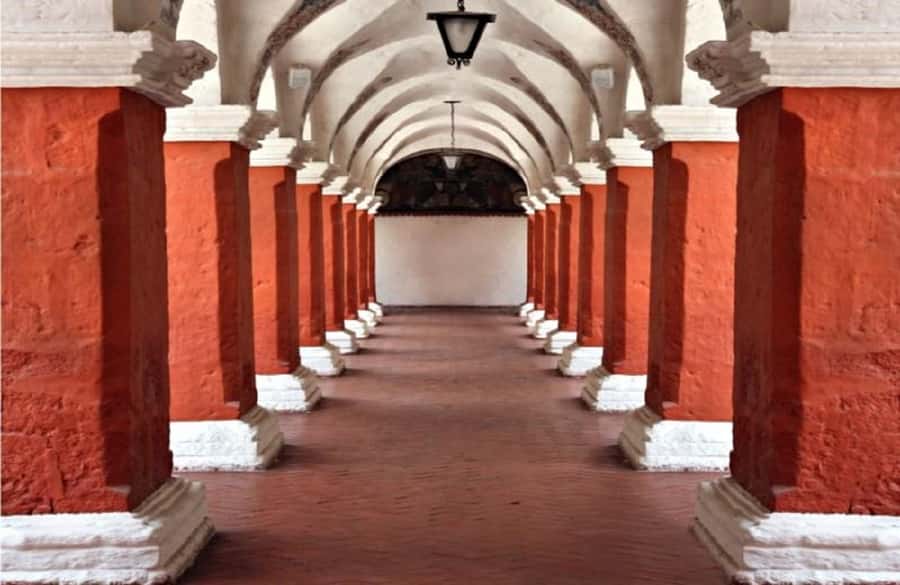
The Patio del Silencio is one of the most meaningful stops inside Santa Catalina. It was a place where the nuns met to pray and read the Bible in silence.
The name tells you what to expect. This is not a space for a rushed group conversation or loud commentary. It offers a pause in the middle of the visit and helps you understand the discipline of cloistered life more clearly than a list of dates can.
The monastery includes many areas beyond this patio. You will see streets made from ashlar, colored walls, cloisters, patios, the bell tower, and the church. The variety is part of the appeal. Some spaces feel residential, some devotional, and some almost civic in their layout.
Photography is encouraged as part of the experience, and Santa Catalina provides plenty of strong visual details. Still, the best reason to visit is not simply the color or the architecture. The complex shows how wealth, religion, gender, and daily routine shaped life during the viceroyalty.
A local guide accompanies the monastery visit when entrance is included in your chosen option. That guide can help explain the role of the convent and point out the meaning of places you might otherwise treat as decorative courtyards.
What the $35 price really covers
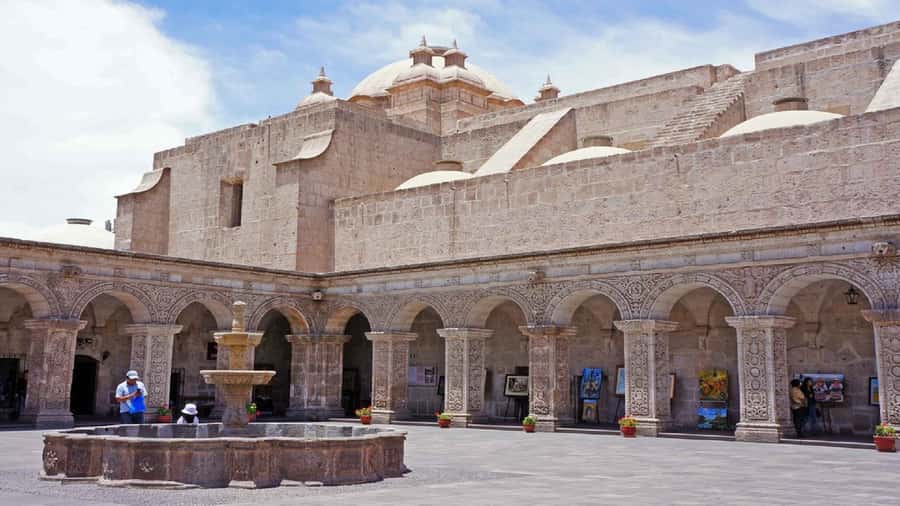
The advertised price is $35 per person, but you need to check exactly which version you are booking. Some options include hotel pickup and drop-off, while the monastery entrance may also be included. Other options leave the entrance fee for you to pay locally.
If the entrance is not included, the stated local prices are 45 PEN for adults and 25 PEN for people ages 7 to 21. Children age four and younger are complimentary. Add that fee to the tour price when comparing the total cost with other Arequipa sightseeing options.
At $35, the value is strongest if you want one organized route through several historic districts and the convenience of a guide in your language. You are paying for transport at the beginning and end when available, a professional guide, explanations at the sites, and a structured visit to Santa Catalina.
The value is less obvious if you are already staying beside the monastery and prefer to explore independently. In that case, you may not need the van transfers, and you could visit the plaza and nearby streets at your own pace. The guided context remains the main reason to choose this outing.
Pickup and drop-off apply only to hotels in Arequipa’s Historic Center. If your hotel is outside that zone, you must go to Calle Zela 301, next to Santa Catalina, at Hotel Mirador del Monasterio. If your central hotel has poor vehicle access, the van may leave you nearby rather than directly at the door.
Walking comfort, timing, and practical details
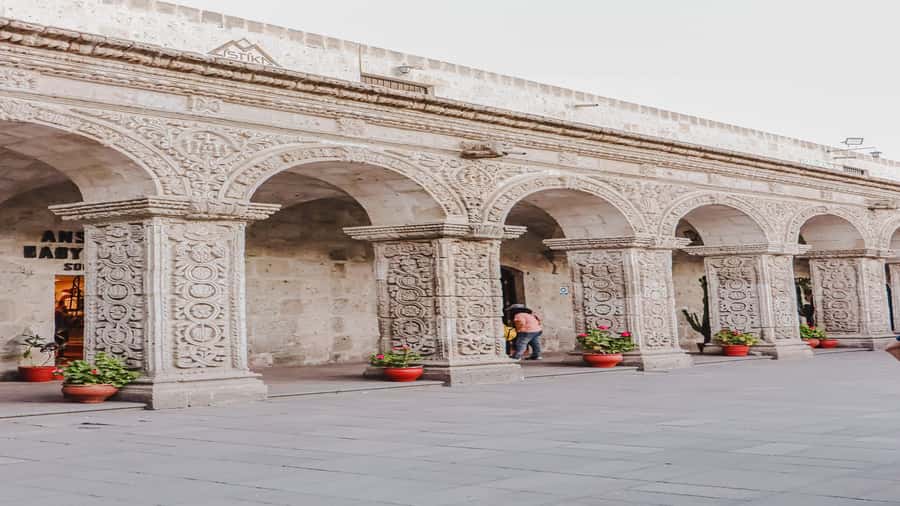
The route combines a 10-minute van ride, several walks of 5 to 15 minutes, and guided stops lasting 20 to 60 minutes. Wear comfortable clothes and shoes suited to historic streets. The tour does not list a wheelchair-accessible option, so it is not suitable for wheelchair users.
Arequipa’s strong sunlight makes a hat, sunglasses, and sunscreen sensible. Insect repellent is also listed among the recommended items. Bring water for yourself, since food and drinks are not included.
The order of visits can change. That should not affect the main sights, but it means you should avoid planning another activity that requires you to be at a precise location immediately after the tour. The full duration is three hours, followed by a van ride of about 10 minutes when drop-off is included.
Santa Catalina closes on December 25 and Good Friday. Check the date before booking if your visit falls near either holiday. Free cancellation is available up to 24 hours before the start, and you can reserve now and pay later, useful if your Peru schedule is still shifting.
Who will get the most from this experience
I would recommend this tour to a first-time visitor who wants an efficient introduction to Arequipa. It gives you several layers of the city in one outing: an old neighborhood, working colonial compounds, the main square, and the famous convent.
It also suits you if you value stories more than simply checking off buildings. The history of San Lázaro, the purpose of the tambos, and the life of cloistered nuns all make more sense with a guide.
Families with older children may enjoy the changing scenery and the convent’s maze-like layout. Younger children may find the walking and quiet religious spaces less engaging, though children four and younger are free.
Independent walkers should think about the trade-off. You can reach several of these places on your own, but you would need to arrange your own route and pay close attention to the monastery ticket. The tour is best viewed as a time-saving history lesson, not as a private exploration with unlimited time at every stop.
Should you book this Arequipa walking tour?
Book it if you want a compact, guided introduction to Arequipa and especially if the monastery entrance and central hotel transfers are included in your chosen option. The mix of San Lázaro, Tambo El Matadero, Tambo La Cabezona, Plaza de Armas, and Santa Catalina gives you more depth than a simple central-square stroll.
Think twice if you dislike group pacing, need wheelchair access, or want to spend several hours inside Santa Catalina alone. For most visitors staying in the historic center, the strongest reason to book is the guide. Gisela, Milei, and Sline are associated with the warm, clear style this route needs, and good explanations turn old walls into a readable story.
FAQ
How long does the Arequipa walking tour last?
The experience lasts three hours. It includes short van transfers, walking between sites, guided stops, and about one hour inside Santa Catalina Monastery.
What languages are available?
The tour is offered with a live guide in English or Spanish.
Is hotel pickup included?
Pickup and drop-off are available only for hotels located within Arequipa’s Historic Center when you select that option. If your hotel is outside the center, go to Calle Zela 301, next to Santa Catalina at Hotel Mirador del Monasterio.
Is the Santa Catalina entrance fee included?
It depends on the option you choose. If entrance is not included, the local fee is 45 PEN for adults and 25 PEN for people ages 7 to 21.
What should I bring?
Bring sunglasses, sunscreen, insect repellent, comfortable clothes, and a hat. Food and drinks are not included.
Can wheelchair users join the tour?
No. The experience is not suitable for wheelchair users.
Just added around Arequipa
- From Arequipa: Colca Canyon and Condor Watching Day Trip★ 3.7 · 3 reviews
- Arequipa : Colca Canyon 2-Day Adventure★ 5.0 · 3 reviews
- Cooking Class Typical Food in Arequipa★ 3.9 · 3 reviews
- 3-day trek to the Colca Canyon from Arequipa ending in Puno★ 4.2 · 3 reviews
- Colca Canyon Day Trip: From Arequipa to Puno★ 3.5 · 3 reviews
- 2 day 1 night trek / Colca Canyon★ 3.0 · 3 reviews
- From Arequipa: Full Day Colca Canyon Tour★ 4.5 · 3 reviews
- Excursion Salinas Lagoon and National★ 5.0 · 3 reviews
Walking Tours, compared.
Walking tour in the Historic Center of Arequipa
Read our review →
Miraflores Trending Flavors Half-Day Walking Tour
Read our review →
Arequipa Walking Tour city center and drinks experience
Read our review →
Historic Walking Tour with Pisco Sour and Music Show
Read our review →

Trending Flavors: Miraflores Walking Tour Including Food and Drinks Tasting
Read our review →
City Tour by Panoramic Bus – Walking & Catacombs
Read our review →Browse the lists this tour appears in