
Reviewed · PISCO & PERUVIAN FOOD
Cusco: Historic Walking Tour with Pisco Sour and Music Show
Cusco reveals itself one stone at a time. This two-hour walk links the city’s grand Plaza de Armas with Qoricancha, San Blas, Inca stonework, city viewpoints, and a final pisco sour or Chicha Morada. I like the small groups of up to 10 and the way the route mixes major sights with local details, such as a luthier’s workshop and the Temple of Manco Capac.
I also like the tour as a first-day introduction, especially because guides such as Erick, Nilo, and Niki have been praised for clear explanations, humor, and useful orientation tips. The main point to check is the free-tour pricing model. The listed price is $10, but some people have found a similar walk offered freely in the square with a tip expected later, so confirm what your payment covers before booking.
In This Review
- Key points to know before you go
- Why this two-hour walk works well in Cusco
- Meeting beside the Inca Fountain
- The Cathedral and Company of Jesus
- Qoricancha and the Sun Temple story
- The 12 and 13 angled stones
- Local details, balconies, and street views
- San Blas and 7 Borreguitos Street
- A luthier’s workshop and Andean music
- The Temple of Manco Capac
- Choosing between Pisco Sour and Chicha Morada
- Guide quality and language options
- Who should book this Cusco walk?
- Should you book it?
- FAQ
- How long does the Cusco historic walking tour last?
- Where does the tour meet?
- What languages are available?
- Is a drink included?
- Are museum tickets included?
- Is the tour suitable for wheelchair users?
Key points to know before you go
- Two hours from the Plaza de Armas: You begin beside the Inca Fountain and cover a compact but busy section of central Cusco.
- A strong first-day route: The walk helps you get your bearings while introducing Inca, colonial, and modern Cusco.
- San Blas adds the charm: Narrow lanes, city views, 7 Borreguitos Street, and the Temple of Manco Capac give the tour more character than a basic square-to-cathedral walk.
- Culture beyond stone walls: A luthier’s workshop and Andean music show add living traditions to the sightseeing.
- A drink finishes the experience: Choose a Pisco Sour or non-alcoholic Chicha Morada at the end.
- Expect uneven walking: The tour is not suitable for wheelchair users or people with mobility impairments.
Why this two-hour walk works well in Cusco
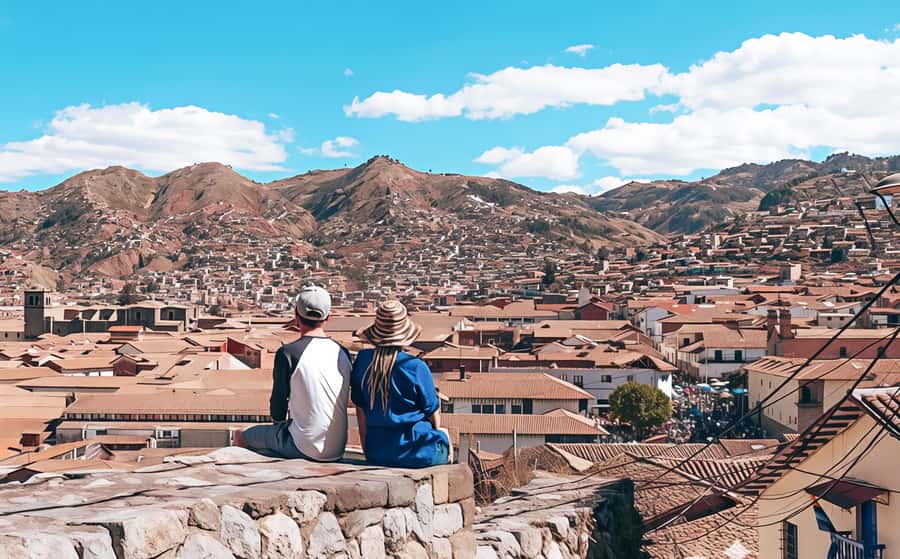
Cusco can feel confusing at first. The streets around the Plaza de Armas change quickly from broad colonial facades to narrow Inca walls, steep lanes, small courtyards, and stairways. I like having a guide connect those pieces instead of treating each sight as a separate photo stop.
The route also gives you a useful historical frame. You see how the Inca city, Spanish colonial center, Catholic institutions, craft traditions, and present-day tourism all overlap. That matters in Cusco, where a polished colonial church may sit directly above carefully fitted Inca masonry.
A small group makes a difference here. With no more than 10 people, you should be able to hear the guide and ask questions without shouting across a crowd. One English-language outing had only three people, which made it feel almost private. Group size can vary, but the limit keeps the walk more personal than a large coach-style city tour.
The $10 price can be good value if you want a guide, a drink, and a short introduction to the city without committing half a day. Still, pricing needs care. One person described the activity as a free walking tour where the expected tip had effectively been paid in advance. Another felt the same type of walk could be joined in the main square without buying a ticket. I would ask at the meeting point or when booking whether the fee is the guide payment, a prepaid tip, or a separate paid product.
More Historical Tours in Cusco
- Cusco: Historical Guided City Tour with 4 Inca Ruins
★ 4.5 · 99 reviews - Machu Picchu Private Archaeological and Historical Guided Tour
★ 5.0 · 86 reviews - 6-Day Cultural Tour to Machu Picchu
★ 5.0 · 76 reviews
Meeting beside the Inca Fountain
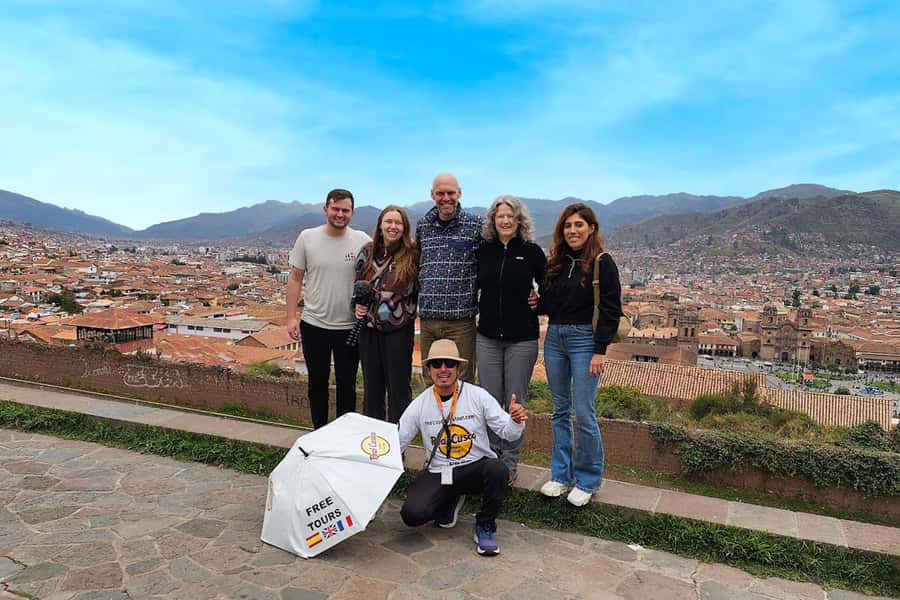
The meeting point is next to the Inca Fountain in Cusco’s Plaza de Armas, at approximately -13.516772, -71.9787231. Your guide carries a white umbrella, which is a useful detail in a square filled with people, tour groups, taxis, and vendors.
The Plaza de Armas is a sensible place to start because it gives you immediate visual context. You are surrounded by arcaded buildings, churches, and the central monument area, with Cusco’s hills rising beyond the city center. Arrive with enough time to locate the fountain and white umbrella rather than cutting it close.
The walk begins at high altitude, and the first few blocks may feel more tiring than the distance suggests. I would keep your pace steady and avoid treating the first 20 minutes like a race. This is a walking tour, not a fitness test.
The Cathedral and Company of Jesus
The first major sights are the Cathedral and the Company of Jesus, both facing the Plaza de Armas. The guide explains the importance of these buildings and places them within Cusco’s colonial center.
You should expect exterior viewing and commentary rather than a full museum visit. Entry to museums is not included, and optional admissions may require extra payment. That keeps the tour inexpensive, but it also means you should not assume every interior is part of the route.
The Cathedral is one of the square’s dominant buildings, while the Company of Jesus adds another powerful example of colonial religious architecture. Seeing both together helps explain the visual weight of Catholic institutions in central Cusco. Your guide can also point out details that are easy to miss when you walk through the square alone.
This part of the route is best for travelers who want context, not just photographs. The guide’s job is to explain what you are seeing and how the buildings relate to the city around them.
Qoricancha and the Sun Temple story
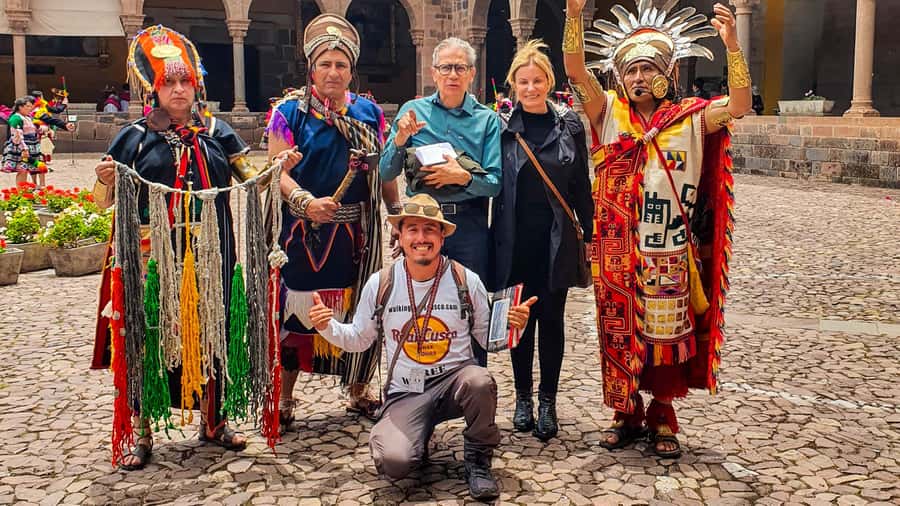
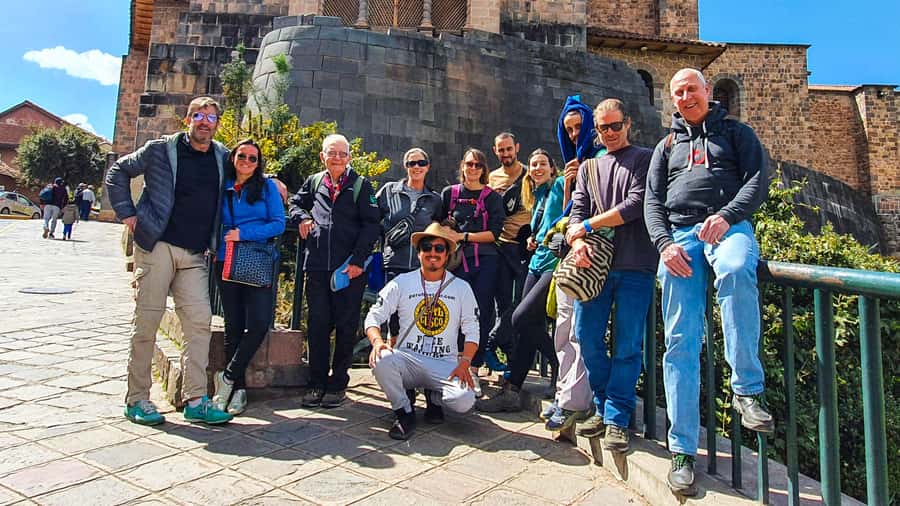
From the square, the route continues toward Qoricancha, the famous Sun Temple. This is one of the tour’s major historical stops and one of the places where the contrast between Inca engineering and Spanish colonial construction becomes especially clear.
Qoricancha is important because it represents the religious center of the Inca world in Cusco. The tour gives you background on the site and its role, but admission to museums is not included. If you want to explore the interior in detail, you may need to return separately and pay the entrance fee.
I see that as a fair trade for a two-hour orientation walk. You can learn why Qoricancha matters before deciding if a longer visit belongs on your schedule. The guide’s explanation also gives meaning to the stones and walls you will see elsewhere in the city.
More Pisco & Peruvian Food in Cusco
- Cusco by Night: Planetarium Cusco, Dinner, and Pisco Sour
★ 5.0 · 75 reviews - Private Andean Cooking Class, Pachamanca
★ 5.0 · 54 reviews - Pisco Sour Secrets: Hands-On Mixology in Historic Cusco
★ 4.5 · 50 reviews - Cusco: Legends and History Night Tour with Pisco Sour
★ 5.0 · 9 reviews
The 12 and 13 angled stones
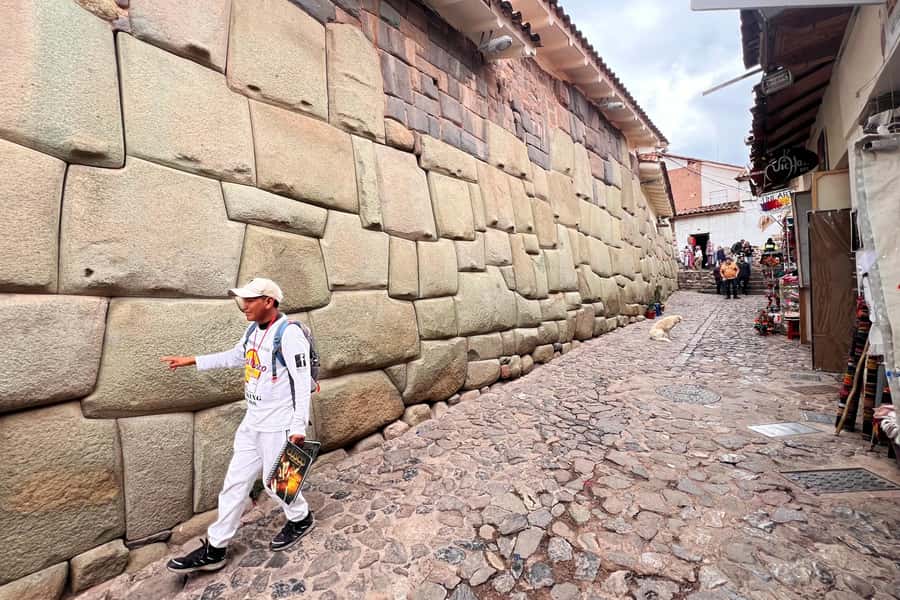
The walk then turns to some of Cusco’s most famous Inca masonry, including the legendary 12 and 13 angled stones. These are easy to dismiss as a quick photograph unless someone explains why their construction is remarkable.
The stonework shows how carefully shaped blocks were fitted together without the wide mortar joints common in many later buildings. The angled edges are not just decorative. They form part of an interlocking system that helped create strong walls.
You will also hear about the Andean Trilogy, represented by the condor, puma, and snake. These animals carry symbolic meaning in Andean thought and appear in the way people interpret carvings and city design. The tour identifies silhouettes carved into an Inca wall, giving you another reason to slow down and look closely.
This is where a guide earns the walking fee. Without explanation, the stones may look like old masonry. With context, they become evidence of a sophisticated building tradition and a different way of organizing religious and cultural ideas.
Local details, balconies, and street views
Along the central streets, the guide points out Cusco’s most beautiful balcony and lesser-known details that are easy to pass without noticing. The exact balcony is not specified in the tour information, so I would treat this as a guided discovery rather than a guaranteed landmark with a formal name.
The route is not limited to the biggest attractions. That is useful if you have already seen photographs of the square and Qoricancha and want a little more texture. A guide can show you how the streets change, where the Inca walls remain visible, and how newer buildings have grown around older foundations.
Several people have especially liked the views from the route. One outing included a beautiful sunset viewpoint, while another offered broad city views from San Blas. Timing matters here. The tour lasts two hours, but the starting time varies, so check availability if sunset photographs are important to you.
Do not book solely for a guaranteed sunset unless the departure time clearly matches it. The view is a welcome part of the experience, but light, weather, and the day’s route can affect what you see.
San Blas and 7 Borreguitos Street
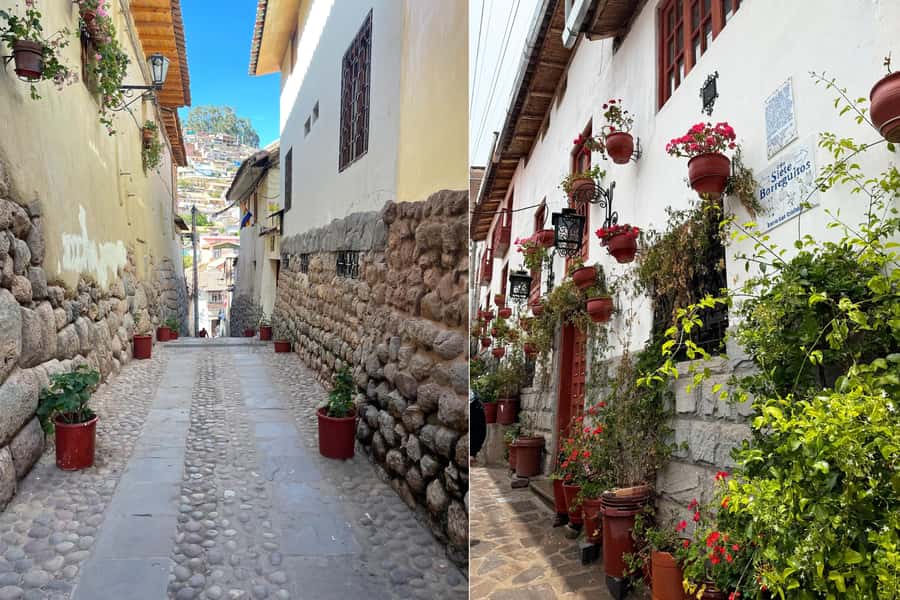
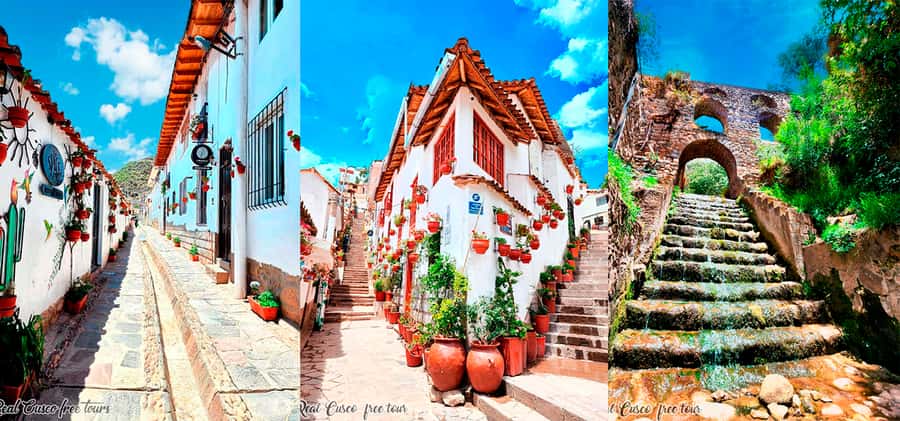
San Blas is the most atmospheric section of the walk. Its picturesque streets climb away from the center, with narrow lanes, old walls, craft shops, and views across Cusco. The route includes 7 Borreguitos Street, often described as the city’s most picturesque street.
That claim is subjective, but the stop makes sense for photographs. The lane gives you a change from the formal architecture of the Plaza de Armas and the large religious buildings. You get a closer look at the smaller-scale streets that make San Blas such a popular place to wander.
The climb is also the main physical consideration. The tour is not suitable for people with mobility impairments or wheelchair users, and San Blas makes that restriction easy to understand. The streets can be steep or uneven, so wear shoes with a secure grip and expect the walk to require some effort.
I would place this tour early in a Cusco stay if you are comfortable walking uphill. It gives you a basic map of the center and San Blas, then leaves you better prepared to return to the streets and explore at your own pace.
A luthier’s workshop and Andean music
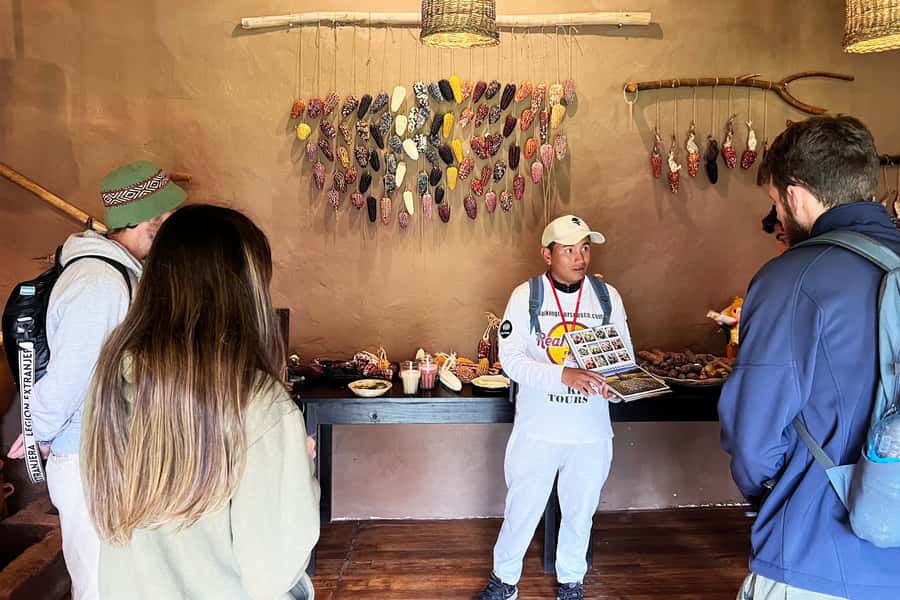
A visit to a luthier’s workshop adds a practical craft element to the history lesson. A luthier is an instrument maker, and this stop shows a living part of Andean culture rather than only old walls and colonial churches.
The tour also includes an Andean music show. This can be a welcome change of rhythm after the historical explanations, giving you a chance to hear local instruments and see performance traditions connected to the region.
There is one important caution. On at least one occasion, the music vendor was closed, even though the show was a key reason for choosing this tour. The guide suggested a local dance show afterward, and that became a positive alternative, but you should treat the music performance as subject to availability.
That does not cancel out the value of the stop, but it changes the booking decision. If the music show is your main priority, ask whether it is operating on your date. If you mainly want a city walk with the show as an extra, the risk is easier to accept.
The Temple of Manco Capac
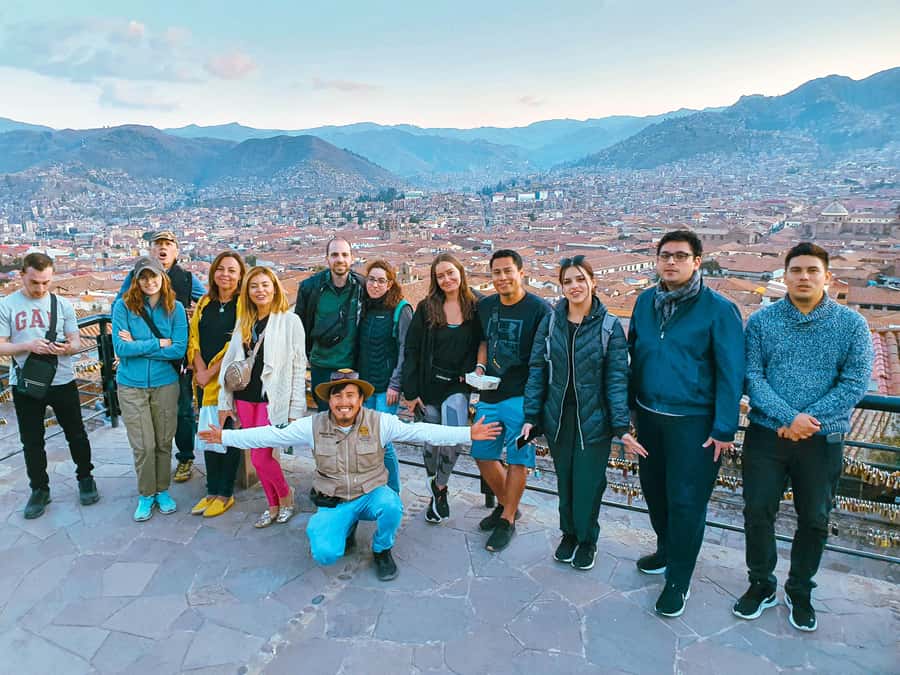
The route includes the Temple of the First Inca Ruler, associated with Manco Capac. This stop adds an origin story to the tour’s broader look at Cusco.
The exact level of access is not specified, so expect the guide to explain the site and its importance rather than assume a full interior visit. It fits well near the end of the walk because the route has already introduced Inca religion, building methods, symbols, and the city’s sacred center.
I like this part of the itinerary because it moves beyond the usual list of famous walls. You are not simply checking off Qoricancha and San Blas. You are also hearing how Cusco connects its urban spaces to foundational Inca figures and stories.
Choosing between Pisco Sour and Chicha Morada
The tour ends with a choice of Pisco Sour or Chicha Morada. The Pisco Sour is Peru’s national drink, made with pisco and served as a classic cocktail. Chicha Morada is a popular non-alcoholic Peruvian drink.
The final toast is a small feature, but it gives the tour a pleasant finish. After two hours of walking, a seated drink and a chance to ask last questions can feel more useful than simply being released onto another street corner.
One person described the final restaurant as cute and enjoyed the pisco toast. That detail suggests the ending is more than a paper cup handed over outdoors, though the exact venue can vary. If you do not drink alcohol, Chicha Morada means you are not left out of the closing moment.
The drink is also part of the value calculation. At $10, a guided walk plus a drink and cultural stops can be a reasonable introduction to Cusco. If you can join a free version and tip separately, compare the two arrangements so you know what you are paying for.
Guide quality and language options
The tour runs in English or Spanish with a live bilingual guide. The strongest part of the experience is likely to be the person leading your group.
Erick has been praised for humor, clear historical explanations, practical tips, and a friendly manner. Nilo has been described as engaging and well informed about the city. Niki has been appreciated for clear communication and a strong introduction to Cusco. Another guide, identified as an anthropologist, made a particularly strong impression through detailed explanations of Inca and Cusco history.
Guide quality can vary on any walking tour, but the repeated praise for explanations and personality is encouraging. You should still remember that the route may change. One small group saw a slightly different itinerary from the published description and felt it covered even more of the city. That flexibility can be helpful when a workshop, music venue, or street stop is unavailable.
French guiding requires at least four customers for the tour to proceed. The provided language options otherwise are English and Spanish, so confirm the language you need before reserving.
Who should book this Cusco walk?
I would recommend this tour to you if you have just arrived in Cusco and want a short orientation before exploring alone. It is also a good match if you want history, city views, San Blas streets, a craft visit, and a drink without paying for a long private tour.
You should book it if you enjoy walking and can manage uphill or uneven streets. The small-group format is useful for questions, and the two-hour length leaves most of the day open for museums, markets, or rest.
I would hesitate if you use a wheelchair, have limited mobility, or want a fully predictable schedule. The San Blas climbs, museum admissions, possible route changes, and uncertain music-show availability all require some flexibility.
Free cancellation up to 24 hours before the start and the option to reserve now and pay later make planning easier. Still, the payment question deserves attention. Ask whether your $10 includes a prepaid tip and whether the route is the same paid walk offered by the guide in the square.
Should you book it?
Book this tour if you want an affordable first look at Cusco, especially with a small group and a guide who can explain the Inca stones, colonial churches, Qoricancha, and San Blas in one compact outing. The pisco or Chicha Morada finish is a nice touch, and the luthier visit gives the walk a local craft angle.
Skip it if the Andean music show is your main reason for booking and you cannot accept a possible closure. Also compare the $10 ticket with the free walking option in the Plaza de Armas, since the payment and tipping setup may not be as clear as it first appears.
For most able walkers, I would place it near the beginning of a Cusco stay. It helps you get oriented, gives you a list of places to revisit, and introduces the city without taking up a full day.
FAQ
How long does the Cusco historic walking tour last?
The tour lasts two hours. Starting times vary, so you need to check availability for your chosen date.
Where does the tour meet?
You meet next to the Inca Fountain in Cusco’s Plaza de Armas. The guide will be holding a white umbrella. The coordinates are -13.516772, -71.9787231.
What languages are available?
The tour is offered in English and Spanish with a live guide. French guiding requires at least four customers for the tour to proceed.
Is a drink included?
Yes. You can choose a Pisco Sour or a non-alcoholic Chicha Morada. The tour also includes a bilingual guide and a visit to a luthier’s workshop.
Are museum tickets included?
No. Entry to museums is not included, although museum visits may be available as optional additions.
Is the tour suitable for wheelchair users?
No. The tour is not suitable for wheelchair users or people with mobility impairments. It is also not suitable for babies under one year, people over 95 years, or people with hearing impairments.
More Pisco and Peruvian Food
- Cusco: Planetarium and Night Tour with Dinner and Pisco Sour
★ 4.9 · 9 reviews - Best of Cusco: Night Tour, Pisco Sour Lessons, and Dinner
★ 4.4 · 8 reviews - Cook an Authentic Ceviche And Peruvian Pisco Sour!
★ 5.0 · 107 reviews - Winery and Pisco Distillery tour
★ 5.0 · 82 reviews
More Walking Tours in Cusco
- Walking Culinary Experience
★ 5.0 · 41 reviews - Cusco: Walking Tour Cusco
★ 3.4 · 6 reviews - Cusco: Walking Tour with a Local Guide
★ 4.3 · 5 reviews - Cusco: Cultural Walking Tour with Local Guide⭐⭐⭐⭐⭐
★ 5.0 · 4 reviews
Just added around Cusco
- Cusco: Rainbow Mountain and viewpoint red valley ( optional)★ 4.8 · 3 reviews
- Tour Pallay Punchu Trek Full Day★ 4.2 · 3 reviews
- Montaña de Colores: tour en cuatrimotos día completo★ 3.3 · 3 reviews
- Excursion Cusco – Puno – Titicaca Observatory Train★ 5.0 · 3 reviews
- Cusco: Palcoyo Mountain Day Trip with Breakfast and Lunch★ 4.8 · 3 reviews
- Maras Moray★ 5.0 · 3 reviews
- Tour to Laguna Humantay with breakfast and lunch from Cusco★ 4.7 · 3 reviews
- From Cusco:Chinchero, Moray, Maras, Ollantaytambo with lunch★ 5.0 · 3 reviews
Pisco & Peruvian Food, compared.
Cook an Authentic Ceviche And Peruvian Pisco Sour!
Read our review →
Pisco and Wine Route with tasting in 03 Wineries
Read our review →
Cusco by Night: Planetarium Cusco, Dinner, and Pisco Sour
Read our review →
Ballestas island & Paracas reserve from PISCO CRUISESHIP TERMINAL
Read our review →
Larco Museum, Pisco Old Tavern and Magic Water Circuit Evening Tour
Read our review →
Miraflores: Amazing Peruvian Cooking Class Ceviche Seafood and Pisco Sour
Read our review →
Browse the lists this tour appears in