
Reviewed · WALKING TOURS
Cusco: Walking Tour Cusco
Cusco rewards slow walking. This 210-minute tour gives you a useful first look at the city, linking the Main Square, the Twelve Angled Stone, San Blas, Coricancha, Plaza Regocijo, Plaza San Francisco, and San Pedro Market in one route. I like the mix of major sights and ordinary city life, especially the final market visit and the chance to see how Inca stonework still fits into modern Cusco.
I also like the small-group feel reported by one participant, who ended up taking the tour alone, and the guide quality praised by several people, including a guide named Juan. The main drawback is practical: a scheduled 8 a.m. departure reportedly failed to arrive, although the operator arranged a private afternoon tour at the same price. Confirming the start time is wise.
The tour costs $29 per person. That is fair if you want historical orientation, local context, and a planned route without arranging several separate stops. It is less attractive if you prefer to enter every monument, linger at each place, or explore at your own pace.
In This Review
- Key points before you book
- Why this three-and-a-half-hour route works
- Starting in Cusco’s Main Square
- The Twelve Angled Stone and Inca masonry
- San Blas, the old Inca noble quarter
- Coricancha, the Temple of the Sun
- Plaza Regocijo and its patio of joy
- Plaza San Francisco and the final approach
- San Pedro Market, where the city gets practical
- What the $29 price really covers
- Who should book this walk
- What to bring and how to prepare
- Should you book the Cusco Walking Tour?
- FAQ
- How long does the Cusco walking tour last?
- Where does the tour begin?
- How early should I arrive?
- Is hotel pickup included?
- What languages are available?
- Are admissions, snacks, and drinks included?
- Is the tour suitable for wheelchair users?
Key points before you book
- Three and a half hours on foot: The 210-minute route covers central Cusco sights without transfers.
- San Pedro Market is the lively finale: You see food and products from many parts of the Cusco Region in one place.
- San Blas adds an artisan side of Cusco: The old Inca noble quarter now has respected craft workshops and steep stone streets.
- The Twelve Angled Stone is a quick but memorable stop: Its carefully fitted corners show the precision of Inca masonry.
- Coricancha connects two eras: The former Inca Temple of the Sun later became part of the colonial religious setting.
- The $29 fee covers guiding, not admissions: Bring money if you want to enter attractions along the route.
Why this three-and-a-half-hour route works
Cusco can feel confusing at first. Streets change character quickly, the altitude can make a short uphill walk feel longer, and many important sites sit within a compact central area. A guided walk helps you connect the pieces instead of seeing them as isolated photo stops.
The route lasts 210 minutes, or three and a half hours. That is long enough for a broad introduction but not so long that the city becomes a walking endurance test. You should still expect a fair amount of time on your feet, including streets in San Blas and the descent toward the lower parts of the center.
The tour does not include pickup or drop-off. You meet your guide in Cusco’s Plaza de Armas, near the Inca monument and Calle Portal Belén. Arrive 15 minutes early. This matters because the square has several landmarks, arcades, and entrances, and you do not want to be searching for the meeting point while the group is moving off.
Guiding is available in English, Spanish, and Portuguese. The strongest praise in the available feedback went to the guides, with Juan receiving special mention for his work. Another participant had the entire tour privately because nobody else joined, which suggests the actual group size may vary. Do not count on a private outing, but a small group is possible.
More Walking Tours in Cusco
- Cusco: Historic Walking Tour with Pisco Sour and Music Show
★ 4.6 · 65 reviews - Walking Culinary Experience
★ 5.0 · 41 reviews - Cusco: Walking Tour with a Local Guide
★ 4.3 · 5 reviews
Starting in Cusco’s Main Square
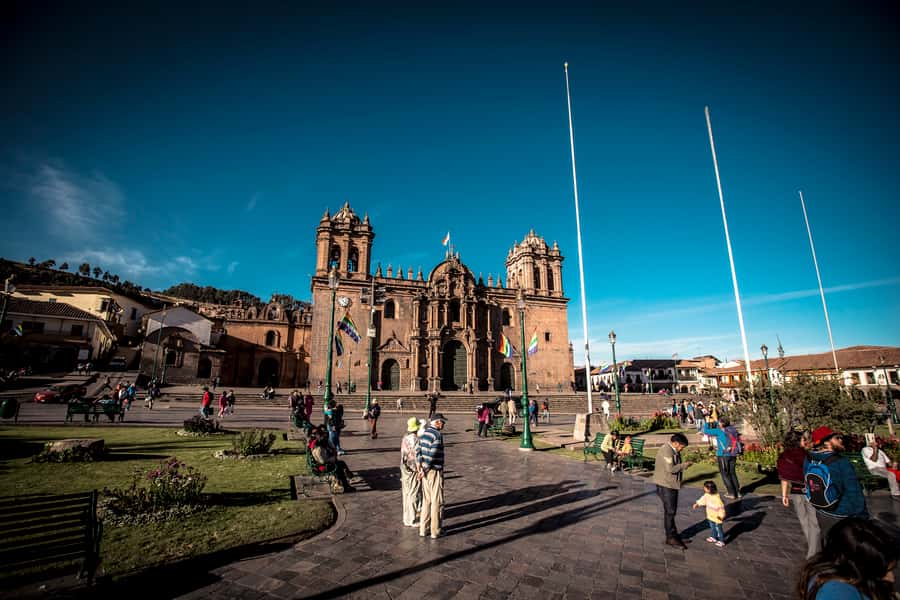
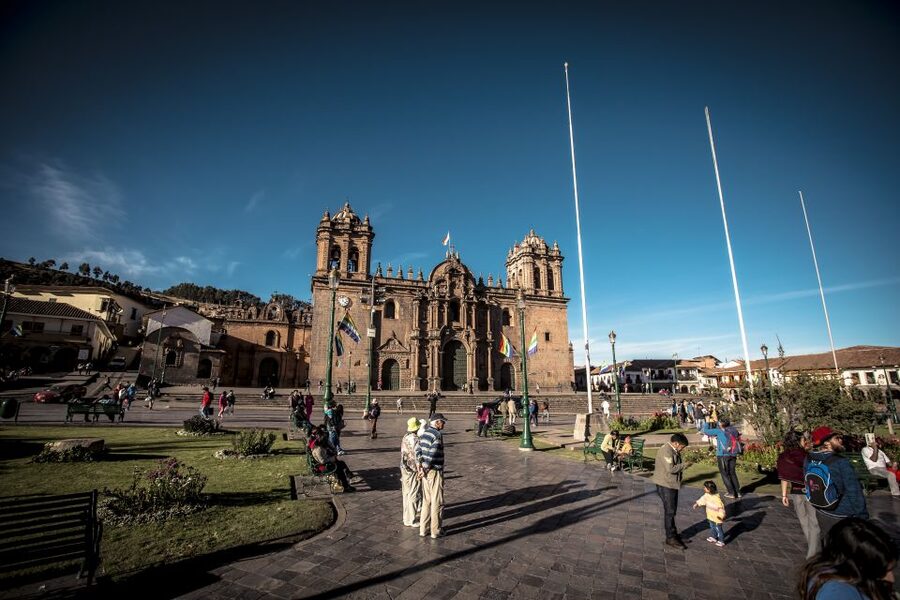
The walk begins in the Plaza de Armas, Cusco’s grand central square. This is the right place to start because several major buildings frame it, including the Cathedral and La Compañía de Jesus.
The square offers an immediate lesson in Cusco’s layered past. You see Spanish colonial churches and arcades, while the city’s deeper Inca identity remains close by in the stone streets and foundations. A guide can help you understand the setting before you begin moving through narrower lanes.
I like starting here because it gives you a fixed point in a city that can otherwise feel like a maze. You can also return to the square later for restaurants, shops, or a quiet pause. The tour allows time to relax in this central space, though the precise amount of free time may depend on the guide and the group.
The churches are viewed as part of the walking route, but admission is not included. If you want to go inside the Cathedral or La Compañía de Jesus, ask the guide about current entry arrangements and costs. The tour price covers the guide, not admissions.
The Twelve Angled Stone and Inca masonry
From the Main Square, the route continues along the street known for the Twelve Angled Stone. This is one of Cusco’s most compact sights, but it deserves more than a quick photograph.
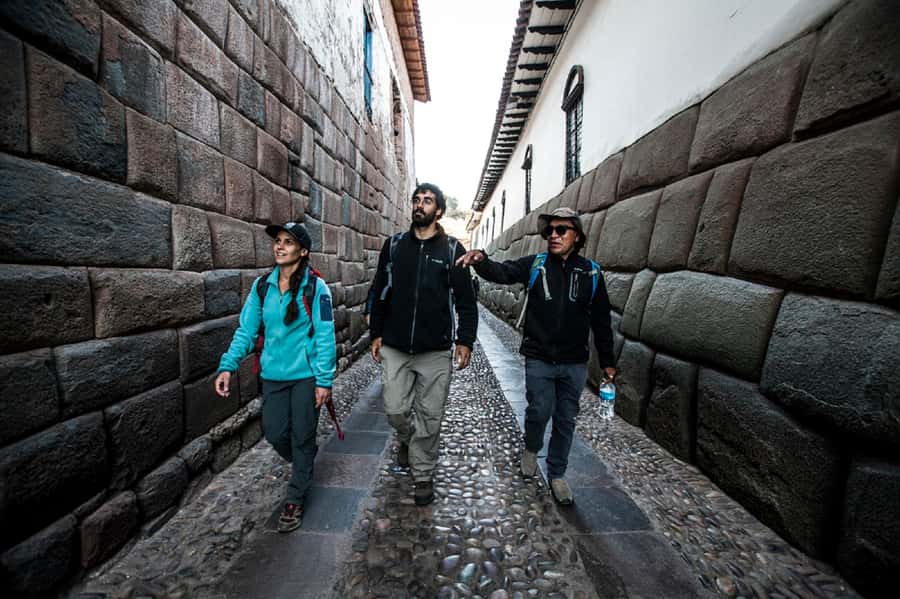
The stone is famous for its twelve corners and sides, fitted into the surrounding masonry with striking accuracy. There is no mortar holding the visible pieces together in the way you might expect from ordinary construction. The point of the stop is not size. It is precision.
You will probably spend only a short time here, since it is part of a street wall rather than a large archaeological site. That is also the appeal. You are looking at an original piece of Inca workmanship in the middle of an active city street, with shops and pedestrians nearby.
The guide’s explanation is valuable here because the stone can look like just another old wall if you do not know what to notice. Look closely at the joints and the way each corner meets the next. This is a good example of why a walking guide adds value beyond a map.
San Blas, the old Inca noble quarter
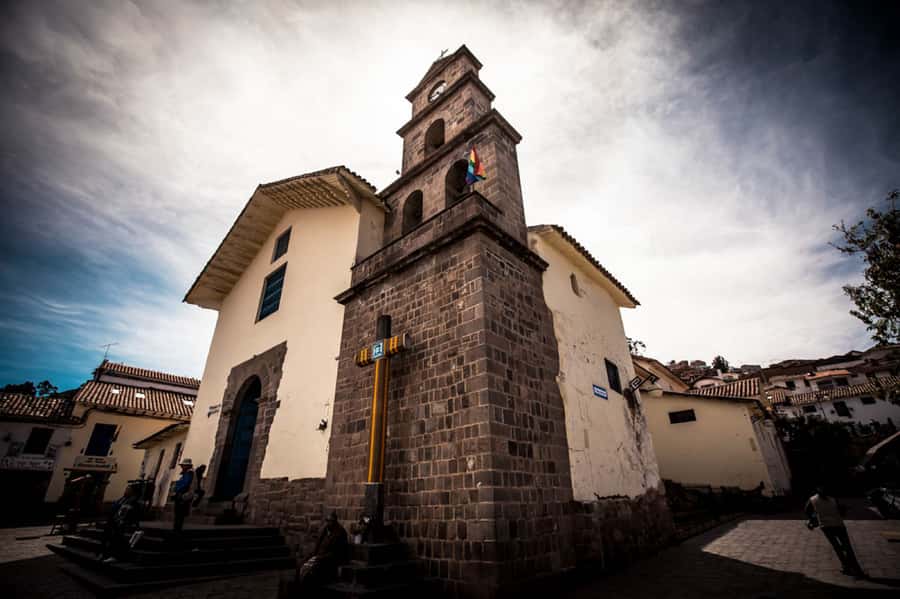
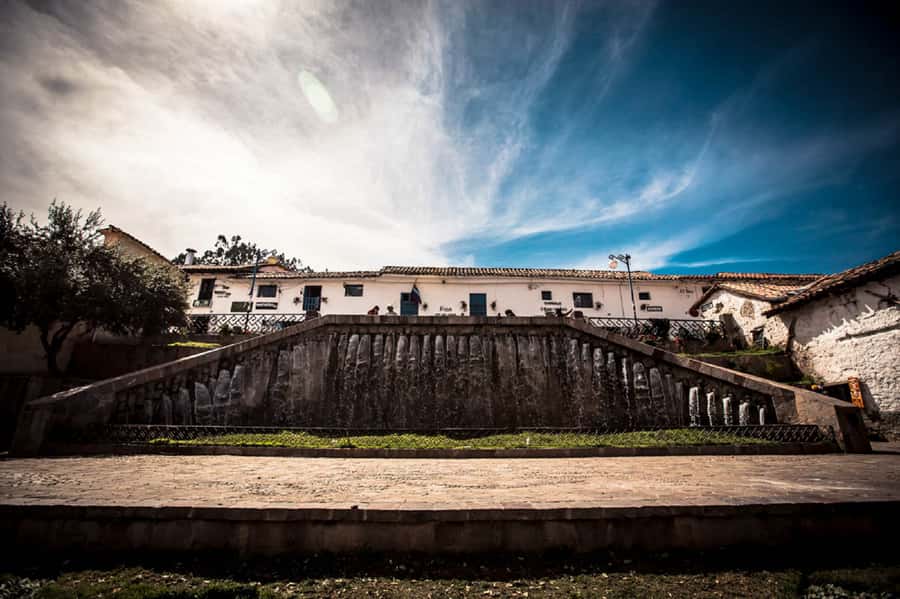
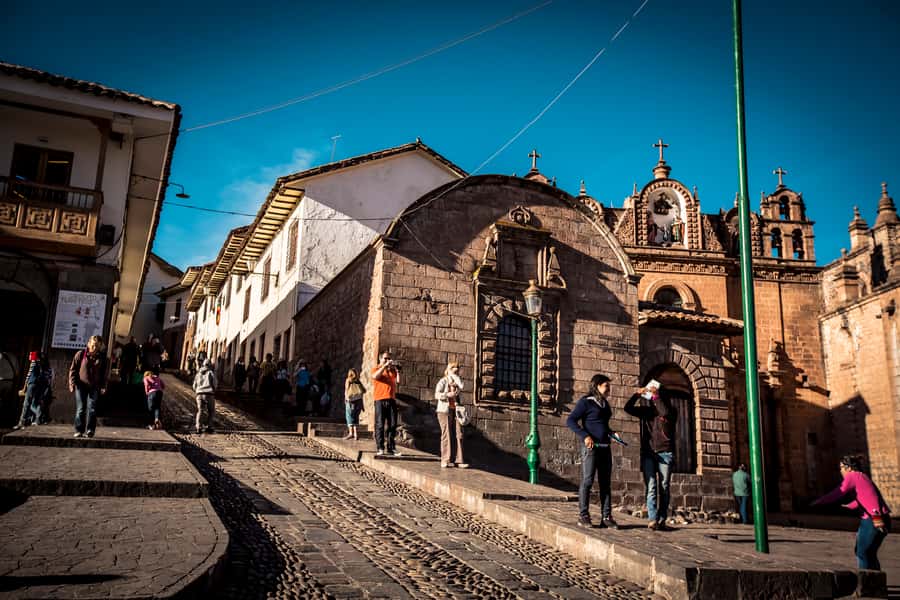
The route then climbs or continues toward San Blas, a district originally associated with Inca nobility. Today, San Blas is known for artisan workshops and stone buildings, giving it a different feel from the formal Main Square.
The neighborhood is attractive because it combines old construction with working creative spaces. You may see workshop fronts and craft activity rather than only churches and monuments. The tour does not promise purchases or workshop demonstrations, so treat this as a neighborhood walk with an artisan character, not a dedicated shopping excursion.
San Blas streets can be uneven and sloped. Comfortable shoes are not a minor suggestion here. Wear shoes with good support, and choose clothing that lets you walk comfortably. Sunscreen is also sensible because the route is outdoors and Cusco sits at high elevation, even though the tour information does not specify how much direct sun you will get.
I like this part of the walk because it gives you a sense of Cusco beyond the postcard center. The stonework remains imposing, but the district feels more local and less ceremonial. If you have extra time after the tour, San Blas is a useful area to revisit slowly, especially if you want to browse crafts.
More walking tours on foot:
- Cusco: Cultural Walking Tour with Local Guide⭐⭐⭐⭐⭐
★ 5.0 · 4 reviews - Cusco: Rainbow Mountain In Quad Bikes /walk 5 minutes/+meals
★ 3.5 · 3 reviews - Best of Cusco: Private Walking Tour with a Local
★ 3.6 · 3 reviews - Walking tour in the Historic Center of Arequipa
★ 4.4 · 180 reviews
Coricancha, the Temple of the Sun
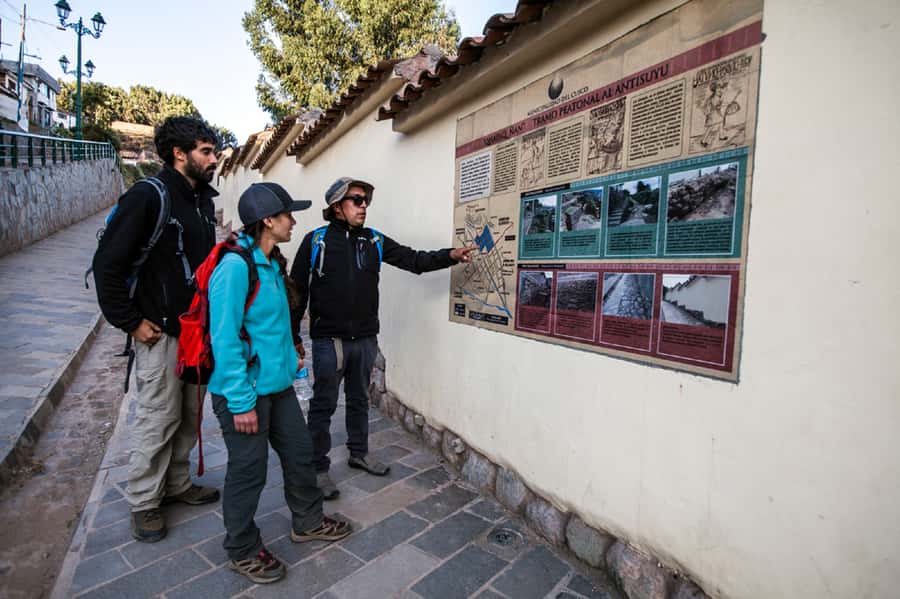
The walk descends toward Coricancha, also known as the Temple of the Sun. During the Inca Empire, this was a major place of worship dedicated to Inti, the sun.
Coricancha is one of the most important historical stops on the route because it brings the city’s Inca and colonial stories together. The tour explains its role as a center for honoring the sun, but the experience may be brief if you do not purchase admission or enter the site.
That distinction matters when you compare this tour with a dedicated archaeological visit. You will see Coricancha and receive context, but admissions are not included. If entering the complex is important to you, budget separately and ask whether the walking schedule allows enough time.
Even from outside, the stop helps you understand the city’s structure. Cusco is not simply a colonial town built on top of an older one. Its streets, masonry, religious sites, and public spaces reflect several periods at once. A guide can make that connection clearer than a quick solo visit.
Plaza Regocijo and its patio of joy
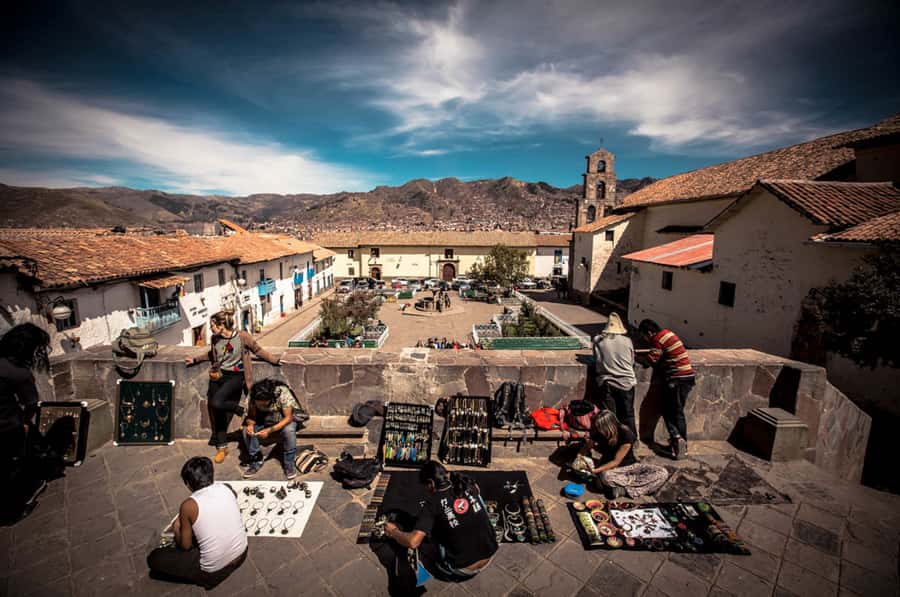
After Coricancha, the tour continues to Plaza Regocijo. The name comes from the Quechua word Cusipata, translated as patio of joy. Public celebrations, including bullfights, were once held here.
The square is surrounded by colonial houses, including the Casa de Garcilaso de la Vega. This gives the stop a calmer architectural focus after the tighter streets of San Blas. It is also a useful place to pause and take in the scale of central Cusco.
The story behind the name makes Plaza Regocijo more than another attractive square. Public spaces tell you how a city once gathered, celebrated, and displayed power. Your guide can connect the buildings around the plaza with the events that took place here.
Do not expect a large standalone attraction with a long indoor visit. Plaza Regocijo works best as part of the route, giving you another piece of Cusco’s public and colonial center.
Plaza San Francisco and the final approach
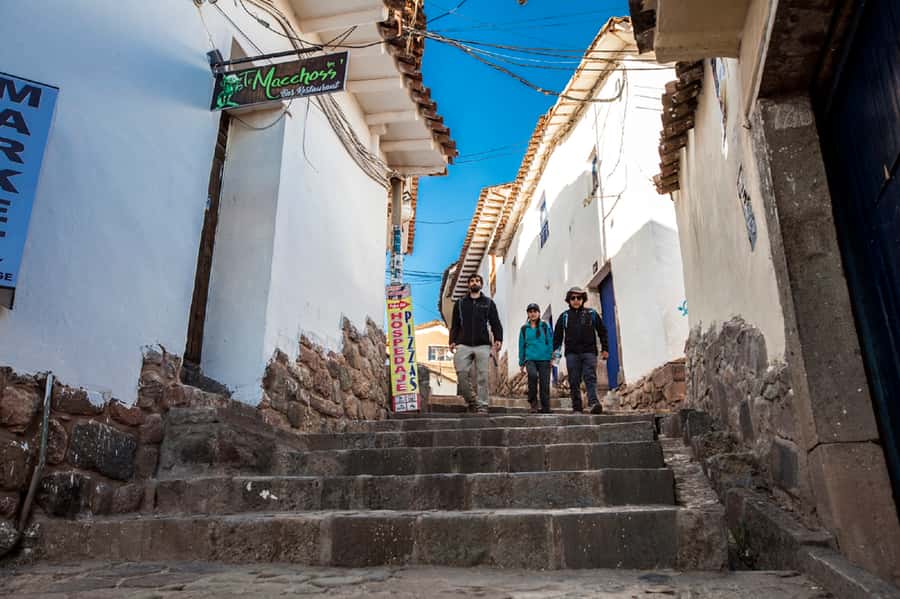
The walk continues to Plaza San Francisco before reaching San Pedro Market. This transition is one of the tour’s strengths. You move from grand plazas and historic stonework into a part of town where daily commerce takes priority.
Plaza San Francisco helps complete the central-city picture. Along with the Main Square and Plaza Regocijo, it shows how Cusco uses several public spaces for different purposes. The walk does not treat the city as a series of disconnected monuments. It links them through the streets between them.
The exact pace can depend on the guide, the size of the group, and how long people spend at earlier stops. If you want detailed explanations at every location, the three-and-a-half-hour schedule may feel brisk. If your goal is to get your bearings and note places to revisit, the timing works well.
San Pedro Market, where the city gets practical
The tour ends at San Pedro Market, described as a display of thousands of products from different parts of the Cusco Region. This is the stop I would most want included in a first visit.
A market tells you things a monument cannot. Here, you can see the range of food, goods, and regional products that move through Cusco. The experience uses more than sightseeing: you can take in the colors, smells, sounds, and variety of everyday commerce.
The information provided does not promise a food tasting, and snacks and beverages are not included. Bring your own money if you want to buy something. You should also keep personal spending separate from the $29 tour cost.
San Pedro Market can feel more immediate than the formal center. It is not polished for sightseeing in the same way as a plaza or church, and that is exactly why it adds value. Keep your belongings secure and follow your guide’s advice, but do not approach the market expecting a museum. It is a working place.
The tour ends at the market before you return to your hotel independently. Since transfers are not included, confirm how you will get back. The route does not provide hotel drop-off.
What the $29 price really covers
At $29 per person, this is a reasonably priced orientation walk. You are paying for a professional guide, a three-and-a-half-hour route, and the convenience of connecting many central sights without planning the order yourself.
The value is strongest if you want historical explanation. The Twelve Angled Stone, Coricancha, and the old quarters become more meaningful when someone points out what you are seeing. The market visit also adds a local dimension that a church-and-plaza tour might miss.
The price is less compelling if you expect entry to every major building. Admissions, food, drinks, personal expenses, and transfers are excluded. Think of the fee as payment for interpretation and route planning, not an all-inclusive day excursion.
The current score is 3.4 out of 5 from six ratings, so I would keep expectations measured. Most of the available feedback praises the guide and the interest of the walk, but the scheduling problem at the 8 a.m. departure is a real warning. Confirm the time and meeting point before setting out.
Who should book this walk
I would recommend it to a first-time visitor who wants a broad introduction to central Cusco. It also suits you if you prefer walking to riding between sights, want English, Spanish, or Portuguese guidance, and would like a market included in the experience.
It is a good fit for people with only a few days in Cusco who still want time to return to favorite areas independently. One participant specifically found that Cusco itself deserves several days, and I agree with that practical advice. This tour can help you choose where to spend those extra hours.
You should think twice if you use a wheelchair, since the activity is not suitable for wheelchair users. It is also not designed for unaccompanied minors, and children must be with an adult. Anyone joining should be ready for outdoor walking and should wear comfortable shoes.
Peruvian residents and foreign visitors who have stayed in Peru for more than 60 days may face additional sales tax because the advertised total does not include it where applicable. Check this before booking so the final cost does not surprise you.
What to bring and how to prepare
Bring comfortable shoes, sunscreen, and comfortable clothes. The route includes central streets, San Blas, and a descent toward the market, so practical clothing matters more than looking dressed up.
Arrive at the Plaza de Armas 15 minutes before the start. Look for the meeting point near the Inca monument, with Calle Portal Belén as the reference. You are responsible for reaching the square because pickup is not included.
Do not bring pets, and do not plan to send a minor alone. The activity is guided in English, Spanish, or Portuguese, so choose the language that will let you ask questions easily.
The booking terms are flexible: you can cancel up to 24 hours before the activity for a full refund, and you can reserve now and pay later. Those terms help if your Cusco plans are still shifting, though they do not remove the need to confirm the start time.
Should you book the Cusco Walking Tour?
Book it if you want a fairly priced introduction to Cusco that combines major landmarks with San Blas and San Pedro Market. The guide is the main reason to choose it, and the route gives you useful context in a manageable 210 minutes.
Skip it if you want extensive interior visits, hotel transportation, tastings, or a completely private schedule. You will need to pay admissions separately and make your own way back to your hotel.
My practical advice is to book this early in your Cusco stay, arrive ahead of time, and confirm the departure. If Juan or another strong guide leads the walk, the experience can give you a clear map of the city and several ideas for exploring on your own afterward.
FAQ
How long does the Cusco walking tour last?
The tour lasts 210 minutes, or three and a half hours.
Where does the tour begin?
It begins in Cusco’s Plaza de Armas, near the Inca monument. Calle Portal Belén is given as the reference point.
How early should I arrive?
You should arrive 15 minutes before the activity starts.
Is hotel pickup included?
No. Pickup and drop-off are not included, so you must reach the meeting point and return to your hotel independently.
What languages are available?
The tour is available with a live guide in English, Spanish, or Portuguese.
Are admissions, snacks, and drinks included?
No. Admissions, snacks, beverages, and personal expenses are not included in the price.
Is the tour suitable for wheelchair users?
No. The activity is not suitable for wheelchair users. Children must be accompanied by an adult, and unaccompanied minors are not allowed.
Just added around Cusco
- Cusco: Rainbow Mountain and viewpoint red valley ( optional)★ 4.8 · 3 reviews
- Montaña de Colores: tour en cuatrimotos día completo★ 3.3 · 3 reviews
- Tour Pallay Punchu Trek Full Day★ 4.2 · 3 reviews
- Excursion Cusco – Puno – Titicaca Observatory Train★ 5.0 · 3 reviews
- Maras Moray★ 5.0 · 3 reviews
- Cusco: Palcoyo Mountain Day Trip with Breakfast and Lunch★ 4.8 · 3 reviews
- Tour to Laguna Humantay with breakfast and lunch from Cusco★ 4.7 · 3 reviews
- From Cusco:Chinchero, Moray, Maras, Ollantaytambo with lunch★ 5.0 · 3 reviews
Walking Tours, compared.
Walking tour in the Historic Center of Arequipa
Read our review →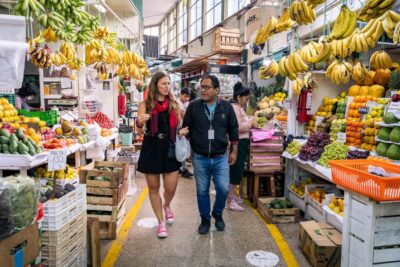
Miraflores Trending Flavors Half-Day Walking Tour
Read our review →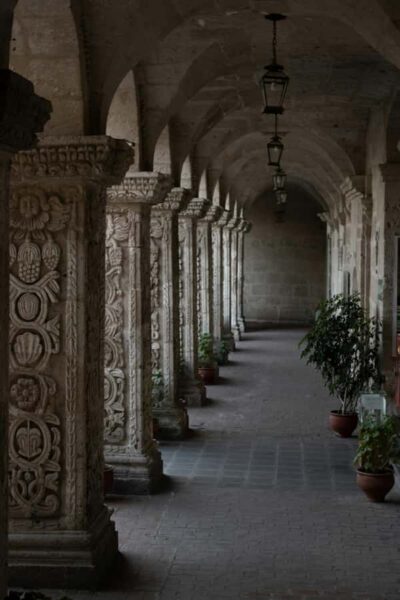
Arequipa Walking Tour city center and drinks experience
Read our review →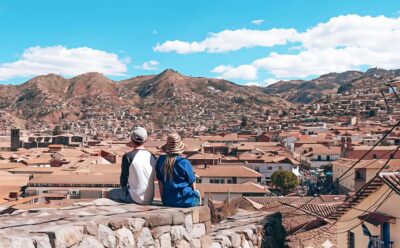
Historic Walking Tour with Pisco Sour and Music Show
Read our review →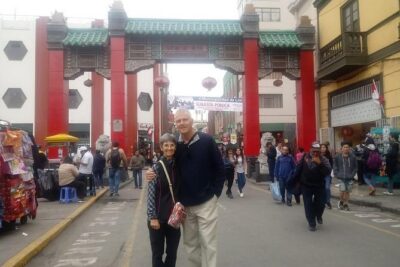
Trending Flavors: Miraflores Walking Tour Including Food and Drinks Tasting
Read our review →
City Tour by Panoramic Bus – Walking & Catacombs
Read our review →Browse the lists this tour appears in