
Reviewed · MARAS & MORAY
Maras Moray
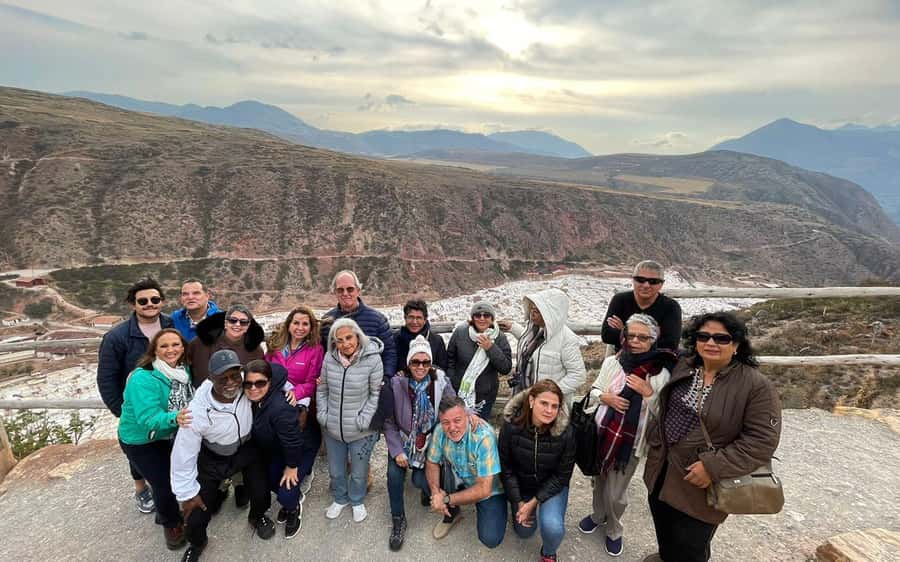
Two Inca puzzles, one half-day. This six-hour outing links Moray’s circular terraces with the working salt pans of Maras, plus a stop in Chinchero for alpaca and llama wool production. I like the efficient route and the chance to see two very different sides of the Cusco region without giving up a full day. I also like the guide service, especially when English-speaking guide Raul is leading the group. The main drawback is that the $18 price does not include the required entrance fees, and the Chinchero stop may be more of a textile demonstration and shop visit than free time in town.
For a first or early visit to Cusco, this is a useful introduction to Inca farming, mountain water, local craft, and high-altitude scenery. The pace is gentle enough for most people, but you should still bring water, sun protection, and sturdy shoes. If your head feels heavy during your first days at altitude, tell the guide and ask for a little more time with English explanations.
In This Review
- Key points about the Maras and Moray trip
- Why this half-day route works near Cusco
- Chinchero textiles and the first stop of the morning
- Moray’s circular terraces and Inca experimentation
- Maras salt pans and mountain water
- The guide service and English explanations
- Transport, timing, and the missing viewpoint stops
- What the $18 price really covers
- What to bring for the high-altitude morning
- Who should choose this Cusco excursion
- Should you book Maras and Moray?
- FAQ
- How long does the Maras and Moray tour last?
- What time does pickup take place?
- Are entrance fees included in the $18 price?
- Is transportation included?
- Is the tour available in English?
- Does the tour require a high level of physical fitness?
- What should I bring?
Key points about the Maras and Moray trip
- Moray’s circular terraces form a rare Inca agricultural site, built in descending rings rather than the usual straight platforms.
- Maras salt pans still depend on mineral-rich water from mountain springs, with about 3,800 small production areas spread across the site.
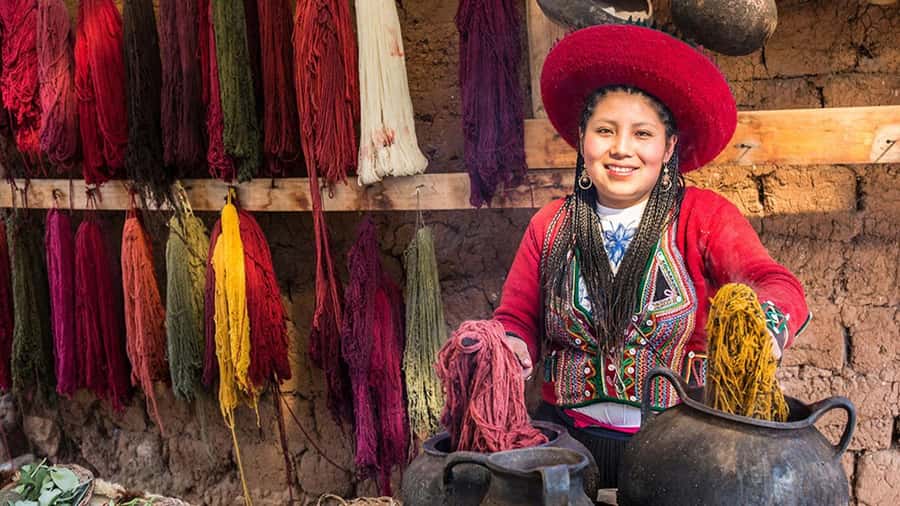
- Chinchero textiles show how natural dyes and wool-working methods have been passed down through generations.
- The six-hour schedule gives you a focused half-day near Cusco instead of taking over your entire day.
- Guide Raul received especially strong praise for translating carefully into English and allowing extra time for photographs.
- The advertised $18 is only the tour price, with a $20 tourist ticket and $7 Maras entrance fee listed separately.
Why this half-day route works near Cusco
The Maras and Moray combination makes sense because the two main stops complement each other. Moray explains how the Incas worked with crops and altitude. Maras shows how people still use a natural mountain water source to produce salt.
You leave Cusco at about 8:30 in the morning and return after roughly six hours. That timing gives you the afternoon for another Cusco activity, a slow lunch, or simply time to rest. I consider that a real advantage in a region where many popular trips run from before sunrise until dinner.
The tour includes hotel pickup, tourist transport, and a professional guide in English and Spanish. You should wait at your hotel reception five minutes before the scheduled pickup, since the guide will call your name. Exact pickup times can vary because the service says approximately 8:30.
The route does not require high physical effort, but it is not suitable for people with mobility impairments. You will be walking around archaeological remains and salt production areas, so sports shoes are a better choice than sandals or smooth-soled casual shoes.
More salt-pan and terrace mornings:
- From Cusco: Sacred Valley & Maras Salt Mines Tour with Lunch
★ 4.8 · 2,227 reviews - From Cusco: Moray, Maras Salt Mines & Chinchero Weavers Tour
★ 4.8 · 1,925 reviews - Cusco: Sacred Valley, Pisac, Ollantaytambo, Salt Mines Moray
★ 4.6 · 1,058 reviews
Chinchero textiles and the first stop of the morning
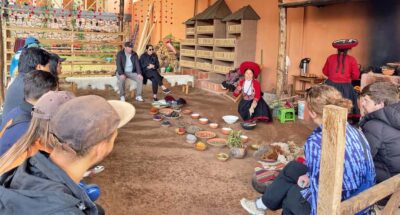
Chinchero is known for its handmade textiles and methods that reach back to the Inca era. At the textile center, you can see how wool from alpacas and llamas is prepared and colored with natural materials.
This stop adds human detail to a tour that could otherwise feel like a sequence of ruins and viewpoints. You are not only looking at old stonework. You are also seeing how local craft traditions continue to shape daily work and the goods sold in the region.
The demonstration focuses on the process of obtaining colors and producing different wool products. It can help you understand why alpaca textiles are such a common purchase around Cusco, and why the finished pieces vary in color and texture.
You should set your expectations correctly. The practical experience of this stop may be a visit to the textile center, where the process is explained and products are offered for sale, rather than a long period to wander around Chinchero independently. If you want time to explore the town itself, ask your guide at the start of the morning.
That distinction matters because the tour description gives the impression of free time in the village, while the actual stop may focus mainly on the textile center. It is not necessarily a bad stop, but it is a different kind of visit. Come prepared to watch a demonstration, ask questions, and browse rather than treat it as a town walk.
Moray’s circular terraces and Inca experimentation
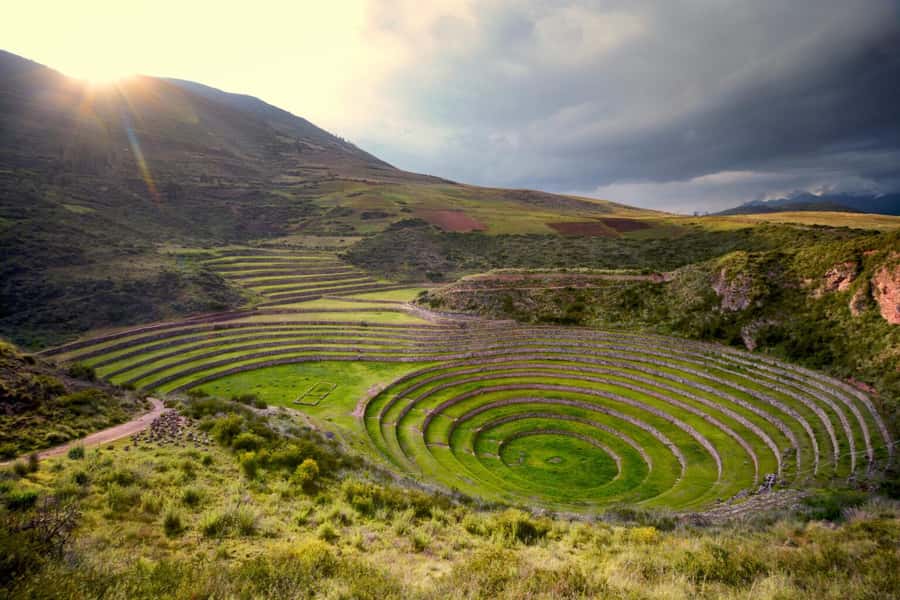
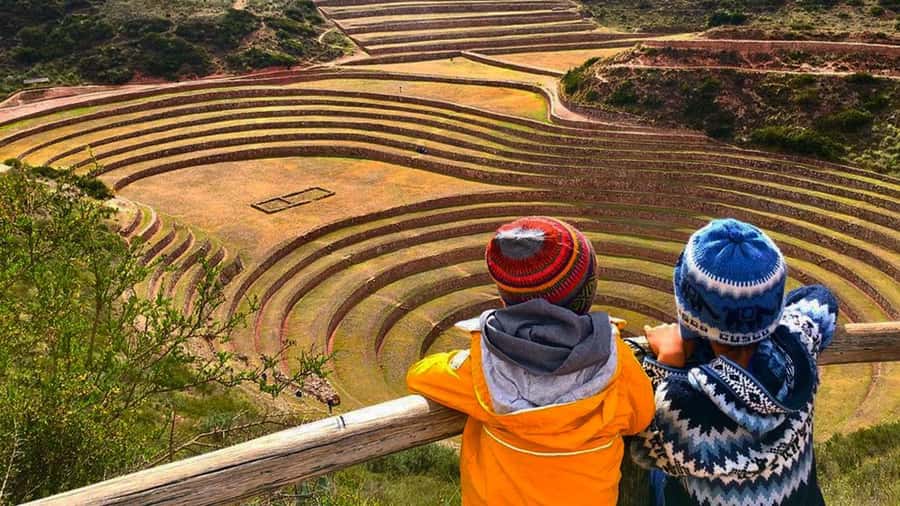
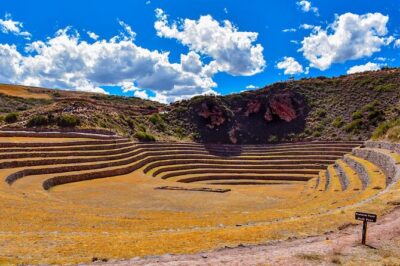
Moray is the intellectual centerpiece of the trip. Its terraces form a series of large circular depressions, each ring dropping toward the center. These are not ordinary farm terraces, and their shape immediately sets them apart from other Inca sites.
The stated purpose was experimental agriculture. The site was used for obtaining and domesticating crops and varieties such as corn, potatoes, and olluco. The terraces allowed the Incas to work with different growing conditions within one carefully shaped place.
You can read the site from above, where the circles are easiest to understand. From that angle, the terraces look almost designed with a compass. The experience becomes more meaningful when you consider the practical problem behind the construction: how to test crops in a region with major changes in altitude and temperature.
Your guide is important here. Without explanation, Moray can look like a striking set of rings in the ground. With a good explanation, you begin to see it as a working agricultural project tied to food supply and crop development.
The walking demands are modest according to the tour information, but you are still at high elevation in the Cusco region. Take your time, especially if this is one of your first days in Cusco. One English-speaking visitor specifically noted that the guide sometimes spoke quickly while the group was still adjusting to altitude. A simple request to slow down should help.
Moray also provides the best setting for mountain views. You can look beyond the terraces toward mountains and snow-capped peaks regarded as apus, or sacred deities, in Inca times. The natural setting is not just decoration. It helps explain the Inca habit of reading mountains as active forces within the world around them.
Maras salt pans and mountain water
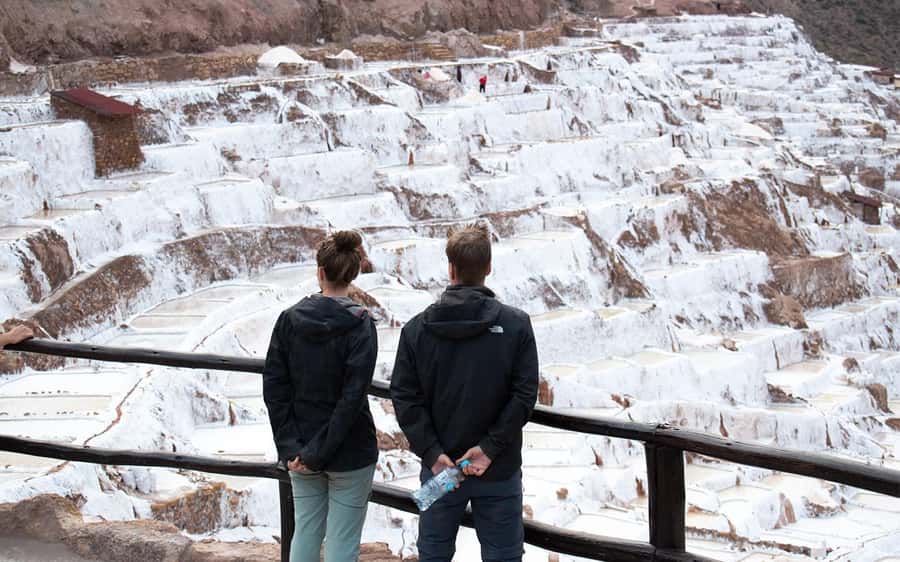
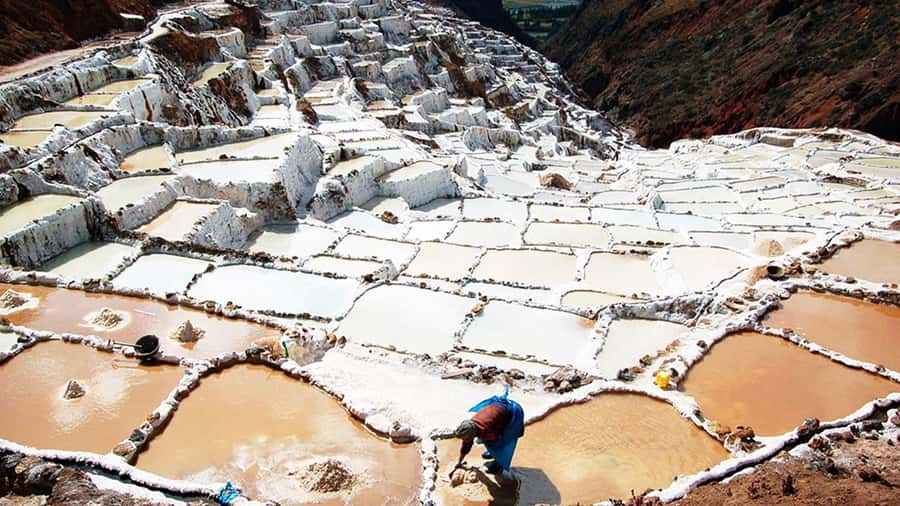
At Maras, the subject changes from crops to salt. The site is supplied by water sources in the mountains containing sodium chloride. That water flows into many small salt-producing areas, where evaporation leaves salt behind.
The site includes approximately 3,800 salt production areas. Seen together, they create a striking pattern on the mountainside, with the individual pans forming a broad patchwork of pale surfaces and narrow dividing walls.
This is a working place, not simply an abandoned archaeological site. The value of the visit comes from seeing how geology, water, and human labor fit together. The salt exists because of the mineral content of the spring water, but people have shaped the channels and collection areas to make production possible.
The salt pans sit at more than 3,000 meters above sea level. That altitude affects the practical side of your visit. The sun can feel intense, weather can shift, and a short walk may feel more tiring than its distance suggests. Bring sunscreen, water, and a hat if you use one.
You should also carry cash. The Maras admission is listed separately at $7, and the wider tourist ticket is listed at $20. The information does not specify every payment method at the entrance, so cash is the sensible choice.
The salt pans are often the most photogenic part of the morning, but the exact colors and appearance can vary with conditions. Your guide can add useful context about the salt extraction process, while you take time to look across the full spread of production areas.
A few more Peru trips worth weighing up
- Cusco: Humantay Lake Tour with Breakfast and Buffet Lunch
★ 4.9 · 2,976 reviews - From Cusco: Full-Day Group Tour of Machu Picchu
★ 4.7 · 1,767 reviews - Machu Picchu Day Trip from Cusco
★ 4.5 · 1,644 reviews - Cusco: Half-Day City Tour with Sacsayhuaman and Q’enco
★ 4.6 · 1,129 reviews
The guide service and English explanations
The guide can make a major difference on a short sightseeing trip. You have only a few hours, so clear explanations and sensible timing matter more than a long speech at every stop.
The service operates in English and Spanish. Guide Raul received particular praise for handling both languages thoughtfully. He first explained information in Spanish, then returned to give the English-speaking visitor a full explanation rather than leaving a rushed translation as an afterthought.
That guide also noticed when the group wanted photographs. Instead of keeping everyone together every second, he allowed time to walk around freely and take pictures while continuing with the Spanish explanation, then came back to explain the same material in English.
I value that kind of practical awareness. Moray and Maras both reward a few quiet minutes to look, frame a picture, or simply absorb the setting. A rigid schedule can make a scenic stop feel hurried, even when the total tour time is reasonable.
There is one small limitation. Raul was sometimes described as speaking quickly, which can be difficult during your first days at high altitude. If you need slower English or a repeated explanation, say so early. The guide’s willingness to adjust is likely to matter more than perfect presentation speed.
Transport, timing, and the missing viewpoint stops
Transport is included, along with pickup from your hotel or accommodation. The route is designed as a morning circuit, with the vehicle taking you from Cusco to Chinchero, then Moray, then Maras, before returning to the city.
The six-hour length is a good fit if you want major sights but do not want a full-day commitment. You get enough time at the principal stops to understand them and take photographs, while still keeping your afternoon open.
The pace has been praised as comfortable, with enough time at each stop. That is especially helpful at Moray, where rushing can reduce the site to a quick photograph, and at Maras, where the broad view deserves more than a brief glance.
The route also passes several viewpoints. The vehicle may not stop at all of them, and one useful suggestion is that one or two short photo stops would improve the outing. If a mountain view catches your eye, ask whether a safe stop is possible, but do not assume every viewpoint is part of the planned schedule.
A half-day tour always involves choices. More stops would mean less time at Moray or Maras, or a later return to Cusco. Here, the advantage is a clean, focused route. The trade-off is that you may pass scenery that deserves a photograph without stopping.
What the $18 price really covers
At first glance, $18 per person is an inexpensive way to see two major attractions. The included hotel pickup, transport, and bilingual guide make the base price useful, especially if you do not want to arrange separate taxis or negotiate transport.
But the listed admission costs add up quickly. You should budget another $20 for the tourist ticket and $7 for Maras, bringing the stated total to about $45 per person before food or drinks.
That changes the value calculation, but it does not make the trip poor value. You are still paying for transportation between several places, hotel pickup, and a guide over about six hours. The important point is to compare the full cost, not the headline price alone.
Food is not included. Since this is a half-day outing, bring a snack and a bottle of water. The tour information does not promise a meal stop, so do not rely on buying lunch as part of the schedule.
The price is strongest for people who want convenience. If you already have a private vehicle and feel comfortable arranging the route yourself, the tour may offer less savings. If you want a simple shared excursion with explanations in English or Spanish, the cost is easier to justify.
What to bring for the high-altitude morning
Keep your day bag light, but cover the basics. The recommended items are:
- Camera
- Sports shoes
- Cash
- Sunscreen
- Passport or identification card
- Personal medication
- A snack and bottle of water
Your passport or ID may be needed for entrance or identification purposes, so carry the document requested for your booking. Keep cash separate and easy to reach for the listed entry fees.
Altitude is the main comfort issue, even though the tour does not require strenuous activity. You may feel fine at one stop and slower at the next, especially during your first days in Cusco. Walk at a steady pace and tell the guide if you need a pause.
The weather at more than 3,000 meters can make sun protection important even during a cool morning. Sunscreen is not an optional extra here. Your camera is also worth bringing, since both Moray’s geometry and Maras’s salt patterns are highly visual.
Who should choose this Cusco excursion
I would choose this trip if you want two distinctive places in one morning and prefer a guide to explain what you are seeing. It suits first-time visitors who want context, photographers who value the circular terraces and salt patterns, and anyone with only a few free hours in Cusco.
It also works well after you have settled into the city but before committing to a longer Sacred Valley or mountain outing. The tour gives you a measured introduction to high-altitude sightseeing without demanding a full day.
You may want a different arrangement if you have limited mobility, since the activity is not suitable for people with mobility impairments. You may also prefer a private tour if you want guaranteed photo stops, a flexible Chinchero visit, or control over the pace.
The Chinchero stop deserves special attention when making your choice. If you are interested in weaving, natural dyes, and alpaca or llama wool, it adds real value. If you mainly want free time in a village, confirm the plan before booking.
Should you book Maras and Moray?
Book it if you want a practical, well-paced half-day from Cusco that combines agricultural engineering, living craft traditions, and a working salt site. The strongest features are the route, the manageable timing, and the chance to receive careful bilingual guidance, especially with a guide such as Raul.
Go in with three clear expectations: the $18 price excludes $27 in listed admissions, Chinchero may center on a textile demonstration and shop, and the vehicle may pass viewpoints without stopping. Those are small issues if you value convenience, but they matter if you want a completely independent day.
For most able-bodied visitors who want an informative introduction to Moray and Maras, I think the tour is a sound choice. Bring cash, water, sun protection, and patience for altitude, then let the morning focus on what makes these sites special: clever farming, mineral-rich mountain water, and traditions that still have practical life.
FAQ
How long does the Maras and Moray tour last?
The tour lasts approximately six hours, including pickup from your hotel or accommodation, visits to Chinchero, Moray, and Maras, and the return to Cusco.
What time does pickup take place?
Pickup is scheduled for approximately 8:30 in the morning. Wait at your hotel reception five minutes before the planned time, and listen for the guide to call your name.
Are entrance fees included in the $18 price?
No. The listed price excludes the $20 tourist ticket and the $7 entrance fee for Maras. Food is also not included.
Is transportation included?
Yes. Hotel pickup and tourist transport are included in the tour.
Is the tour available in English?
Yes. The tour includes a live guide in English and Spanish.
Does the tour require a high level of physical fitness?
No. The tour information says it does not require high physical effort. However, it is not suitable for people with mobility impairments.
What should I bring?
Bring a camera, sports shoes, cash, sunscreen, your passport or ID card, and personal medication. A snack and bottle of water are also recommended because the tour lasts half a day.
Just added around Cusco
- Cusco: Rainbow Mountain and viewpoint red valley ( optional)★ 4.8 · 3 reviews
- Montaña de Colores: tour en cuatrimotos día completo★ 3.3 · 3 reviews
- Tour Pallay Punchu Trek Full Day★ 4.2 · 3 reviews
- Excursion Cusco – Puno – Titicaca Observatory Train★ 5.0 · 3 reviews
- Cusco: Palcoyo Mountain Day Trip with Breakfast and Lunch★ 4.8 · 3 reviews
- From Cusco:Chinchero, Moray, Maras, Ollantaytambo with lunch★ 5.0 · 3 reviews
- Tour to Laguna Humantay with breakfast and lunch from Cusco★ 4.7 · 3 reviews
- From Cusco: Waqrapukara Hike Full-Day Tour With Meals★ 3.7 · 3 reviews
Maras & Moray, compared.
Sacred Valley & Maras Salt Mines Tour with Lunch
Read our review →
Moray, Maras Salt Mines & Chinchero Weavers Tour
Read our review →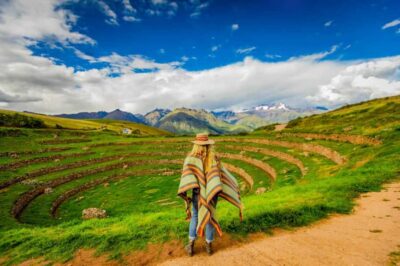
Sacred Valley, Pisac, Ollantaytambo, Salt Mines Moray
Read our review →
Chinchero,Moray & Salt Mines drop-off in Ollantaytambo
Read our review →
Sacred Valley: Chinchero, Moray, Ollantaytambo & Pisac+Lunch
Read our review →
Sacred Valley: Maras & Moray by Quad Bike from Cusco
Read our review →
Moray, Maras Salt Mines & Chinchero Weavers Half-Day
Read our review →Browse the lists this tour appears in