
Reviewed · COOKING CLASSES
Private Andean Cooking Class, Pachamanca
Food tells the story of the Andes. This private three-hour class in central Cusco gives you a hands-on look at Peruvian cooking, from marinated meats and corn tamales to uchucuta pepper sauce, chicha, and ingredients gathered from across the country. The class takes place at Marcelo Batata Cooking Classes and begins at 9:00 a.m. at C. Palacio 135.
I like the personal format, since your group works with a professional chef rather than being folded into a large class. I also like the mix of cooking and tasting, especially the chance to sample Andean grains, fruits, peppers, pisco, and chicha. The main consideration is that the exact dishes may vary. The planned experience features tamales, uchucuta, and clay-pot cooking, while other class descriptions feature ceviche, lomo saltado, alpaca, and pisco cocktails.
In This Review
- Five things to know before booking
- Starting with marination at Marcelo Batata
- Corn tamales and the food of the Andes
- A private market of grains, peppers, and superfoods
- Uchucuta, the pepper sauce with an Andean bite
- Chicha tasting and Peruvian drinks
- Cooking ceviche, lomo saltado, and alpaca
- Clay pots, lunch, and the final tasting
- Why three hours works well in Cusco
- Is $150 per person good value?
- Language, dietary needs, and practical details
- Who should book this Cusco cooking class?
- Should you book the Pachamanca class?
- FAQ
- Where does the cooking class begin?
- What time does the class start?
- How long does the experience last?
- Is the class private?
- Can I request an English-speaking class?
- Are vegetarian and special dietary options available?
Five things to know before booking
- A private class at 9:00 a.m. gives you a relaxed way to fill a morning in Cusco and finish with lunch.
- Andean tamales and uchucuta connect the cooking to local corn, peppers, and older regional traditions.
- The menu may include ceviche, lomo saltado, alpaca, and pisco drinks, so ask what your session will prepare.
- Families are welcome, with mocktails and child-friendly help available when requested.
- Vegetarian and dietary requests are possible, but you need to state them when booking.
- The $150 per person price makes the most sense for people who value private instruction, food, and cultural context in one outing.
Starting with marination at Marcelo Batata
You meet at C. Palacio 135 in Cusco at 9:00 a.m. The experience ends at the same location, so you do not need to arrange a separate ride between stops. This is useful if you are fitting the class between visits to ruins, museums, or other Cusco plans.
The opening lesson focuses on marination. You prepare meats and other ingredients in a special sauce before cooking them. This is a small but important step, since Peruvian food often depends on building flavor before anything reaches the pan, pot, wok, or clay vessel.
Your chef guides the work, rather than simply cooking in front of you. That matters if you want to repeat the dishes at home. You can see how ingredients are handled, taste along the way, and ask why a particular sauce or seasoning is used.
The chefs named in the available class experiences include Alejandro, Fernando, José, José Luis, and Christina. The person leading your class depends on the booking, but the teaching style is intended to be active and social. Some instructors also send recipes afterward, which adds real value for anyone who wants to recreate the meal.
More Cooking Classes in Cusco
- Cusco: Peruvian Cooking Class, Cocktails & Local Market Tour
★ 4.9 · 512 reviews - Cooking class and market tour with a local chef
★ 5.0 · 186 reviews - Vegan Peruvian Cooking Class Cocktails and Local Market in Cusco
★ 5.0 · 46 reviews
Corn tamales and the food of the Andes
The next lesson centers on Andean tamales made from corn. Corn is not just another ingredient here. It has a major place in Andean farming and food traditions, and making tamales gives you a direct connection to that older way of cooking.
You learn the preparation rather than simply receiving a finished tamale. The process lets you see how the corn mixture is formed and prepared for cooking. It is the kind of task that can look simple until you try to get the texture right.
This part should suit beginners. The class is designed for all skill levels, and the private format means the chef can give more attention to your pace. If you already cook often, you may appreciate the cultural background and the chance to work with ingredients you do not normally find at home.
The tamale lesson also helps explain why this experience is different from a standard restaurant meal. You are not only tasting a Peruvian dish. You are learning one method by which Andean food traditions are carried forward.
A private market of grains, peppers, and superfoods
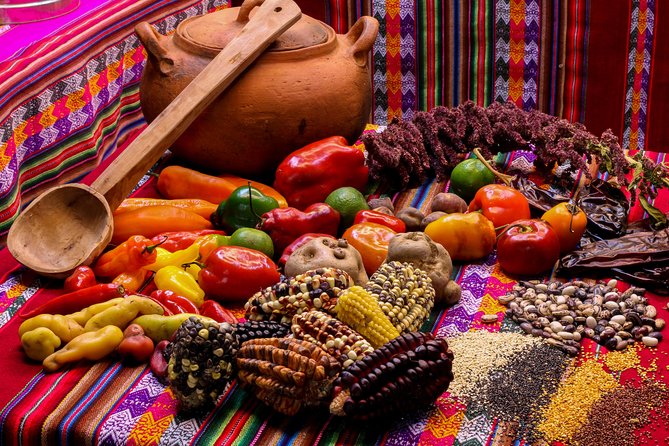
The private market section introduces a range of Andean products. You examine ancient grains, superfoods, fruits, vegetables, herbs, potatoes, and peppers, while learning about their place in local diets and culture.
The tasting element is one of the strongest parts of the class. You may sample local fruits and see the variety of produce used in Peruvian cooking. Previous class menus have included different types of potatoes, corn, peppers, grains, and local meats.
This is especially useful early in your Peru trip. The class gives you a better vocabulary for menus and market stalls. You may recognize ingredients later in Cusco, Lima, or elsewhere in the country instead of treating every unfamiliar food as a mystery.
I also like that the market lesson places food in a wider setting. You hear about agricultural products and their health benefits, not just cooking instructions. That makes the class a good choice for anyone curious about how geography, farming, and diet meet in the Andes.
The phrase private market should not lead you to expect a full public market tour. The supplied details describe a private market experience within the class, not a long walking visit through Cusco’s market districts. If you are mainly seeking a public market excursion, this class may not fill that particular need.
Uchucuta, the pepper sauce with an Andean bite
The class then turns to uchucuta, a spicy pepper sauce associated with Inca-era cooking. You prepare it using traditional techniques passed down through generations.
This is a worthwhile lesson for anyone who wants to understand how Peruvian meals get their character. Sauces can change the entire feel of a dish, and uchucuta gives you a direct taste of Andean pepper cookery. The sauce is spicy, so tell the chef about your comfort level and dietary needs when you book.
The class is not presented as a mild, generic introduction to Peruvian food. You work with ingredients that have a clear regional identity. That gives the session more substance than a cooking demonstration built around dishes you could find in any international food school.
At the same time, spice preferences vary. If you are sensitive to heat, ask how the sauce will be prepared and whether your portion can be adjusted. A private class is the right setting for that kind of request, but it is best handled before the cooking begins.
More Pisco & Peruvian Food in Cusco
- Cusco by Night: Planetarium Cusco, Dinner, and Pisco Sour
★ 5.0 · 75 reviews - Cusco: Historic Walking Tour with Pisco Sour and Music Show
★ 4.6 · 65 reviews - Pisco Sour Secrets: Hands-On Mixology in Historic Cusco
★ 4.5 · 50 reviews - Cusco: Legends and History Night Tour with Pisco Sour
★ 5.0 · 9 reviews
Chicha tasting and Peruvian drinks
Chicha is described as the drink of the Incas, with an ancestral fermentation process. Tasting it adds another layer to the meal, since you are learning about a traditional drink rather than only sampling modern restaurant fare.
The class may also include cocktails made with pisco. Other versions of the experience have featured pisco tastings, pisco sours, and Chilcanos. This is one reason to ask for the current menu before booking if drinks are a major part of your interest.
Families should pay attention here. The class can provide mocktails for children when requested, so the drink portion does not have to exclude younger participants. Adults can focus on the pisco tasting while children receive a nonalcoholic alternative.
Beverages and bottled water are included. Still, the exact drink selection is not completely clear from the supplied details. The main description highlights chicha, while past sessions have included pisco cocktails. Consider this a flexible part of the experience rather than a guaranteed list of specific drinks.
Cooking ceviche, lomo saltado, and alpaca
Although the Andean Pachamanca outline emphasizes tamales, uchucuta, chicha, and clay-pot cooking, the class has also featured several well-known Peruvian dishes. These include ceviche, lomo saltado, and alpaca lomo saltado.
Ceviche gives you practice with fresh ingredients, seasoning, and balance. In the class, you prepare it yourself, with the chef helping you adjust the dish to your food preferences. That makes the lesson more useful than simply being served a plate and told what is in it.
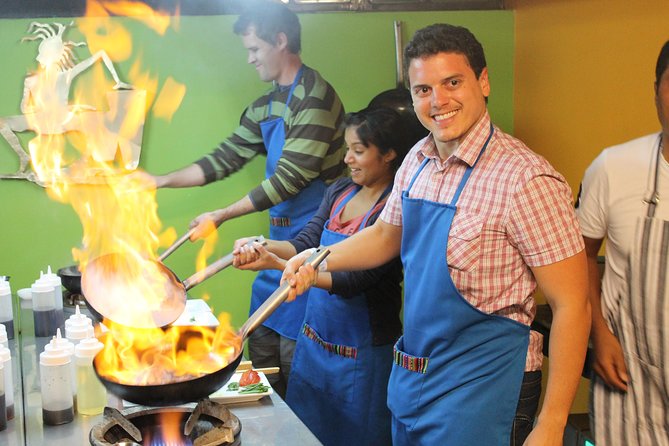
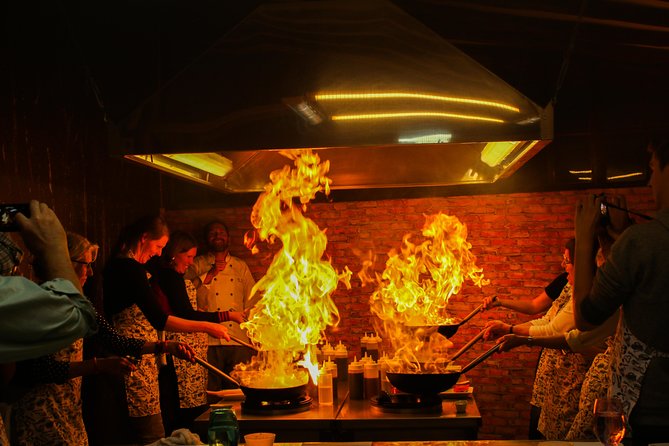
Lomo saltado brings heat and movement into the kitchen. It is cooked in a wok, and some sessions include a dramatic flambé. This is likely to be the most theatrical moment of the class, but it is still tied to a practical lesson about timing and high-heat cooking.
Alpaca is another possible ingredient. It offers a taste of a meat closely associated with the Andes, but it is not guaranteed in every session. If you do not eat meat, vegetarian options are available when requested at booking.
Because the stated lunch includes one appetizer and one main course, you should not expect a long tasting menu. You will get a prepared meal, but the value is in cooking it with the chef and learning the methods behind it.
Clay pots, lunch, and the final tasting
The final stage brings together the ingredients cooked in clay pots. This is the heart of the Pachamanca theme, since the cooking method connects food with earth, fire, and Andean tradition.
The experience ends with a shared tasting of what you prepared. You can expect one appetizer and one main course, along with beverages and bottled water. The meal is included, so you do not need to budget for a separate restaurant lunch afterward.
This final meal is also when the class pays off most clearly. You have handled the ingredients, prepared sauces, cooked the dishes, and then sat down to taste the result. It is a satisfying close to a morning that mixes instruction with lunch.
The courtyard setting mentioned in one class description adds to the appeal, though you should not assume every session uses the same arrangement. The important point is that you eat the food connected to your own work, rather than watching a chef prepare everything alone.
Why three hours works well in Cusco
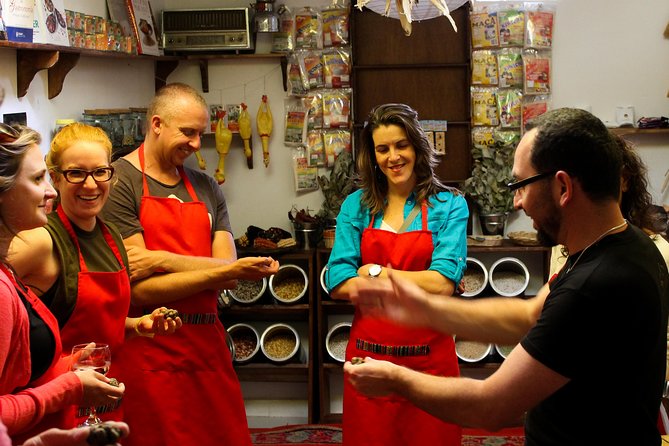
At roughly three hours, the class is long enough to feel substantial without taking an entire day. A 9:00 a.m. start lets you cook through the morning and finish around lunchtime.
I see this as a useful break between major sightseeing days. Cusco itineraries often fill quickly with ruins, churches, museums, and high-altitude walks. A cooking class gives your schedule a different rhythm and lets you rest your feet while still learning something specific about Peru.
The private format also helps with timing. Only your group participates, so you are not waiting for a large crowd to catch up. It is a good fit for couples, families, honeymooners, and small groups who want the chef’s attention.
Families receive particular benefits. Chef Fernando has used children’s music, mocktails, and extra assistance to keep younger cooks involved. Grandparents and children can participate together, making this one of the easier food activities to share across generations.
Is $150 per person good value?
At $150 per person, this is not a bargain cooking lesson. The price needs to be judged against what is included: a private class, a professional chef, drinks, bottled water, lunch, ingredient tastings, and a three-hour cultural activity in central Cusco.
For a couple or small group, I think the price can be fair if you care about personal instruction. You are paying for more than the food. You receive direct guidance, explanations of local ingredients, and a meal you help prepare.
The value improves if you use the recipes later. Several class experiences have included recipes sent by email after the session. That gives the class a longer life than a single meal, especially if you enjoy cooking at home.
The value is weaker if you mainly want a cheap lunch or a formal restaurant tasting. You may spend less by eating out, and a restaurant will offer a more polished plate with less work. Book this class for the process, conversation, and regional food knowledge, not simply for the amount of food on the table.
Language, dietary needs, and practical details
The class can operate in Spanish or English, depending on your request. State your preferred language at booking so the provider can plan accordingly.
Vegetarian options are available. You should also report allergies or other dietary requirements at the time of booking. Since the menu may include meat, seafood, alcohol, and spicy sauces, early notice is important.
You must provide your original passport at the beginning of the course for tax purposes. Keep this requirement in mind when planning your morning, and do not rely only on a photocopy unless the provider confirms that is acceptable.
Confirmation is provided when you book. Free cancellation is available if you cancel at least 24 hours before the start time. A cancellation or change made later is not refunded, and the provider may offer another date or a full refund if the minimum group requirement is not met.
Who should book this Cusco cooking class?
I would choose this class if you want a private, hands-on introduction to Peruvian food rather than a passive tasting. It is especially suited to people who enjoy asking questions, trying unfamiliar ingredients, and learning recipes they can use again.
It also works well for families. The private setting, possible mocktails, and child-friendly teaching make it easier to include children without asking them to sit quietly through a long demonstration.
Couples may find it a good honeymoon or anniversary activity, particularly if you want something more personal than another restaurant meal. The class has also worked well as a change of pace during a busy Peru itinerary.
You may want to skip it if you dislike cooking, have very strict dietary limits that were not discussed in advance, or want a guaranteed menu centered on one particular dish. Because the class can feature different combinations of tamales, ceviche, lomo saltado, alpaca, pisco drinks, and Andean sauces, confirm the planned menu before paying.
Should you book the Pachamanca class?
Yes, if you want to understand Peru through its ingredients and cooking methods. The best parts are the private chef instruction, the tasting of Andean products, the tamale and uchucuta lessons, and the chance to finish with food you helped prepare.
The only real caution is menu uncertainty. Ask whether your date will focus on the Pachamanca program, ceviche and lomo saltado, pisco cocktails, or a combination. If the answer matches your interests, $150 buys a useful and memorable morning in Cusco, with lunch included and plenty to take home beyond a full stomach.
FAQ
Where does the cooking class begin?
The class begins at C. Palacio 135, Cusco 08002, Peru.
What time does the class start?
The scheduled start time is 9:00 a.m.
How long does the experience last?
The class lasts approximately three hours.
Is the class private?
Yes. Only your group participates in the activity.
Can I request an English-speaking class?
Yes. The class operates in Spanish or English depending on your request. State your preferred language when booking.
Are vegetarian and special dietary options available?
A vegetarian option is available, and you should advise the provider of any specific dietary requirements when booking.
More Cooking Classes
- Cusco Cooking Class by ChocoMuseo in Cusco
★ 5.0 · 29 reviews - Cusco: Peruvian Cooking Class & Market Tour
★ 4.9 · 19 reviews - Cusco: 3-Hour Peruvian Cooking Class
★ 4.7 · 16 reviews - Market Tour, Tasting of 35 Fruits, and 4-Course Peruvian Cooking Class in Lima
★ 5.0 · 86 reviews
More Pisco and Peruvian Food
- Cusco: Planetarium and Night Tour with Dinner and Pisco Sour
★ 4.9 · 9 reviews - Best of Cusco: Night Tour, Pisco Sour Lessons, and Dinner
★ 4.4 · 8 reviews - Cook an Authentic Ceviche And Peruvian Pisco Sour!
★ 5.0 · 107 reviews - Winery and Pisco Distillery tour
★ 5.0 · 82 reviews
Just added around Cusco
- Cusco: Rainbow Mountain and viewpoint red valley ( optional)★ 4.8 · 3 reviews
- Montaña de Colores: tour en cuatrimotos día completo★ 3.3 · 3 reviews
- Tour Pallay Punchu Trek Full Day★ 4.2 · 3 reviews
- Excursion Cusco – Puno – Titicaca Observatory Train★ 5.0 · 3 reviews
- Cusco: Palcoyo Mountain Day Trip with Breakfast and Lunch★ 4.8 · 3 reviews
- Maras Moray★ 5.0 · 3 reviews
- Tour to Laguna Humantay with breakfast and lunch from Cusco★ 4.7 · 3 reviews
- From Cusco:Chinchero, Moray, Maras, Ollantaytambo with lunch★ 5.0 · 3 reviews
Cooking Classes, compared.
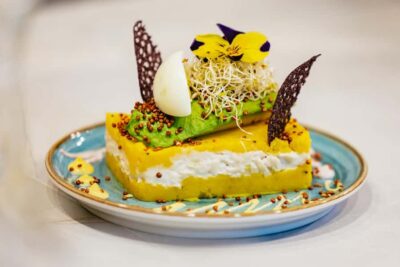
Peruvian Cooking Class, Cocktails & Local Market Tour
Read our review →
Cooking class and market tour with a local chef
Read our review →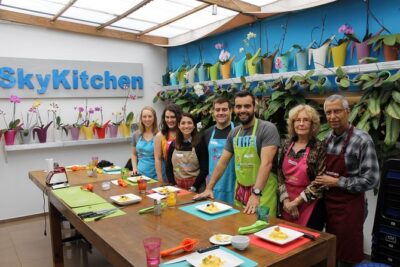
Market Tour, Tasting of 35 Fruits, and 4-Course Peruvian Cooking Class in Lima
Read our review →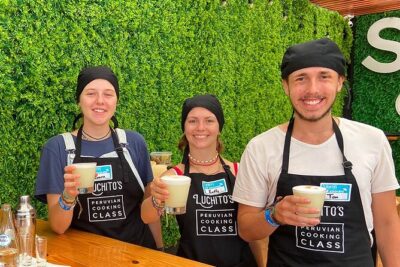
#1 Rated Cooking Classes with Local Market Tour & Pickup
Read our review →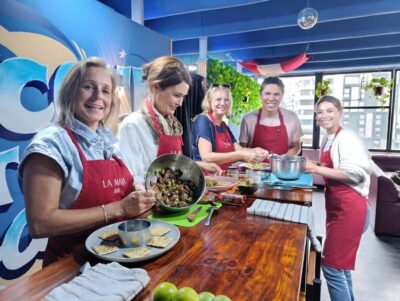
Miraflores: Amazing Peruvian Cooking Class Ceviche Seafood and Pisco Sour
Read our review →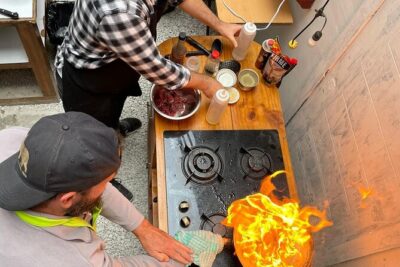
Private Cooking + Market with Maido’s Former Creative Chef (+trasportation)
Read our review →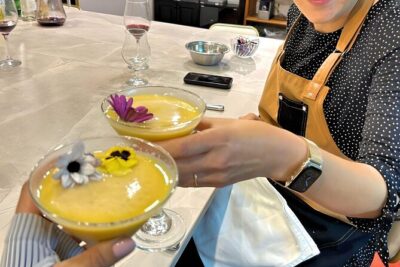
Vegan Peruvian Cooking Class Cocktails and Local Market in Cusco
Read our review →
Browse the lists this tour appears in