
Reviewed · HISTORICAL TOURS
Guided Tour of Historic and Monumental Trujillo
Stone walls, royal stories, and conquistador wealth make this two-hour walking tour a strong introduction to Trujillo. Starting in Plaza Mayor, you move into the medieval quarter to see the castle, churches, manor houses, towers, convents, and fortified homes that shaped this hilltop city.
I like the way the tour links famous people with actual buildings, especially Francisco Pizarro and the Catholic Monarchs. I also like the promise of useful photo stops, since Trujillo’s narrow lanes and high viewpoints reward a guide who knows where to pause. The main consideration is the pace: there are many landmarks in about two hours, so this is a broad orientation rather than a slow, detailed visit inside every monument.
The walk begins and ends at Plaza Mayor, costs $13.90 per person, and accepts a mobile ticket. Guide Ana has been praised for making the route complete and easy to follow, with plenty of comments about the old town.
In This Review
- Key points to know before booking
- Why Plaza Mayor is the right starting point
- San Carlos Palace and the Pizarro connection
- Inside Trujillo’s medieval quarter
- Fortified homes and the Catholic Monarchs
- The castle, alcazaba, and ancient cistern
- Pizarro’s house and the people behind the monuments
- Santa María la Mayor and the older layers of Trujillo
- Gates, walls, and the final walk through history
- What $13.90 buys you
- Who should book this Trujillo walk
- My booking advice
- FAQ
- How long is the Guided Tour of Historic and Monumental Trujillo?
- Where does the tour begin?
- Where does the tour end?
- How much does the tour cost?
- What are the main places included?
- Is a mobile ticket accepted?
- Can I cancel for a full refund?
Key points to know before booking
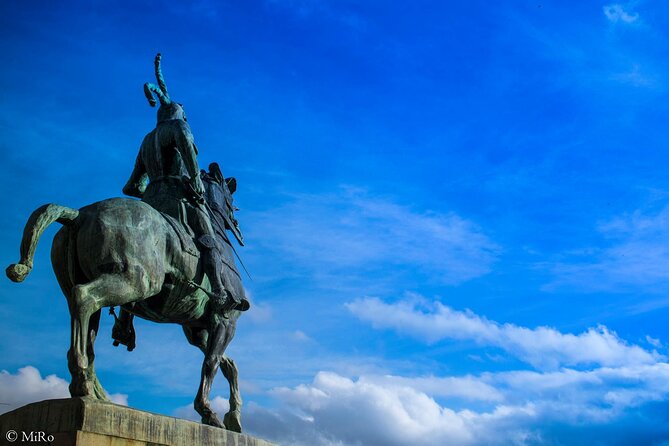
- Plaza Mayor sets the scene: Renaissance palaces surround an impressive square dominated by the equestrian statue of Francisco Pizarro.
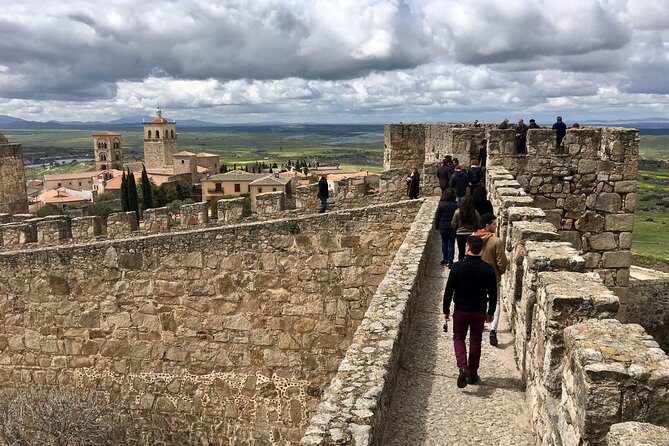
- The route covers the medieval core: You see the Muslim alcazaba, city walls, fortified houses, palaces, churches, convents, and historic gates.
- Royal and conquest stories shape the walk: The tour connects Trujillo with the Catholic Monarchs, Carlos V, Isabel la Católica, and the discovery of the Americas.
- The castle is part of the experience: You see the Muslim fortress and its tenth to twelfth-century cistern, known as the aljibe.
- Photography is part of the plan: The guide points out especially useful corners and viewpoints for pictures.
- Small details give the city personality: Stories include María de Escobar, who lived in the Casa Fuerte de los Escobar and took wheat and barley seeds to Peru.
Why Plaza Mayor is the right starting point
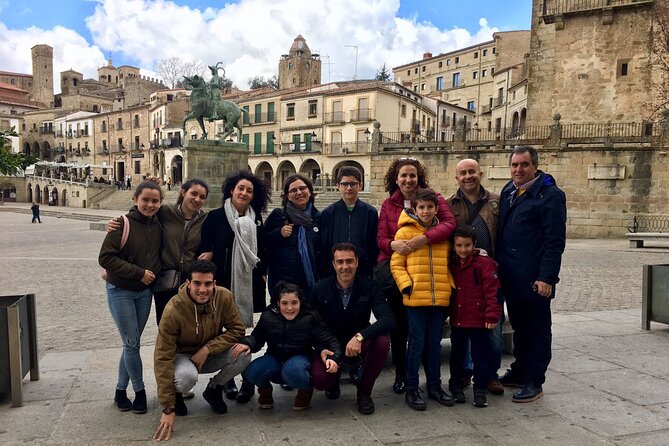
Plaza Mayor gives you the quickest possible lesson in Trujillo. The large square is framed by Renaissance palaces, so before you hear a single detail about the castle or walls, you already see the wealth that flowed through the town.
The equestrian monument to Francisco Pizarro takes center stage. Pizarro was born in Trujillo and conquered the Inca Empire in Peru, and his presence here makes the city’s connection with Spain’s age of exploration impossible to miss.
This is a good place to pay attention to the contrast between public grandeur and private power. The square was shaped by men who gained influence, land, and money through royal service and overseas conquest. A guide can help you read those façades as more than attractive stonework.
The tour allows about 20 minutes here, followed by a short explanation of the square’s construction. Work began in 1562 by order of Hernando Pizarro, Francisco’s brother. That date matters because the square belongs to a later Renaissance phase, even though the streets and fortified quarter beyond it are much older.
Give yourself a few minutes before the start to look around. The square is the broadest, easiest place on the route for photographs, and it helps to notice the main monuments before the group heads uphill.
More history on the ground:
- Lima’s Vibrant Heritage: Exploring the City’s Landmarks Half-day
★ 4.5 · 581 reviews - Lima: Historic Center Street Food, Market, and Eateries Tour
★ 4.9 · 216 reviews - Walking tour in the Historic Center of Arequipa
★ 4.4 · 180 reviews
San Carlos Palace and the Pizarro connection
From Plaza Mayor, the route introduces Palacio de San Carlos, also called the Palacio de los Vargas-Carvajal. It is a Plateresque building, a Spanish Renaissance style known for detailed decoration and carefully worked façades.
You spend only a few minutes at this stop, so expect an exterior explanation rather than a long palace visit. The building preserves its original Plateresque façade, along with another façade facing Domingo Street. That second view is worth remembering when you later explore on your own, since the building changes character depending on where you see it.
The nearby equestrian monument receives its own brief stop. Two minutes is enough for the guide to frame the statue’s importance, but not enough for a detailed discussion of Pizarro’s life or the wider history of Spanish rule in Peru. If that subject interests you, note the questions that come to mind and ask them during the walk.
I like this early section because it gives the tour a clear thread. Trujillo is not presented only as a medieval town. It is also a place shaped by nobles, military orders, royal politics, and overseas expansion.
Inside Trujillo’s medieval quarter
The central part of the tour takes you through the historic center. Here the street plan becomes tighter, the buildings become more defensive, and the polished Renaissance square gives way to a more rugged medieval setting.
You can expect to see strong houses, manor homes, palaces, churches, convents, the old walls, and the Muslim alcazaba. These are not separate pieces of history scattered across the town. They sit close together, showing how religious, military, and family power once shared the same small urban space.
The route also fits several themed connections into the walk. These include the routes associated with Isabel la Católica and Carlos V, the Discoverers, and film locations. That mix should suit you if you like history that moves between politics, exploration, architecture, and popular culture.
The historic center stop is listed as lasting up to two hours, while the full experience is also described as approximately two hours. Read the individual stop times as guide markers, not as extra hours added to the walk. The actual length may depend on the guide’s route and how much time the group spends at each place.
Because the tour covers so much, comfortable shoes are sensible. The supplied information does not specify the condition of every street or the amount of uphill walking, so I would not assume the route feels flat or effortless. Trujillo’s castle and walled quarter sit above the main square, and the tour’s focus on the medieval area means you should be ready for a walking experience rather than a simple square-side talk.
Fortified homes and the Catholic Monarchs
Casa-Fuerte de Luis de Chaves El Viejo is one of the most useful stops for understanding Trujillo as a strategic town. This strong house dates from the thirteenth and fourteenth centuries, when private residences could also serve defensive purposes.
The building has a royal connection. The Catholic Monarchs stayed here during the Wars of Succession, giving the house importance beyond its architecture. This is the sort of detail that makes a fortified residence easier to picture: it was not merely a noble family home, but a place tied to conflict and high politics.
The next stop, Palacio Viejo or Palacio de la Cadena, connects the town to the Military Order of Santiago. Its church was founded in the thirteenth century by the order. A short explanation here helps show why military-religious organizations mattered so much in medieval Spain, particularly in towns shaped by frontier warfare and royal expansion.
You may find these brief stops more satisfying if you look for the practical features of the buildings. Thick walls, controlled entrances, and a sense of enclosure tell you that noble status did not remove the need for protection. In Trujillo, a palace could look grand and still be built with danger in mind.
A few more Peru trips worth weighing up
- Visit Trujillo Medieval Scene and Route of the Discoverers
★ 5.0 · 204 reviews - Guided tour in Trujillo at Sunset “El Collector de Atardeceres”
★ 5.0 · 88 reviews - Full Day Tour Huacas, Chan Chan & Huanchaco – Trujillo
★ 4.5 · 64 reviews - Pyramids of the Sun and the Moon, Huanchaco and Chan Chan
★ 4.8 · 11 reviews
The castle, alcazaba, and ancient cistern
Castillo de Trujillo is the route’s most dramatic setting. The fortress began as a Muslim alcazaba, and the remains date from the tenth to the twelfth centuries. From here, the tour shifts from noble residences to the larger military system that protected the town.
The castle stop is listed at about 10 minutes. That is enough for an introduction to the fortress and its cistern, or aljibe, but not a full archaeological visit. You should think of this part as a guided orientation that helps you understand the castle’s role before spending extra time there independently, if access and opening arrangements allow.
The aljibe deserves special attention. Water storage was essential in a fortified settlement, especially during a siege. A cistern can seem less dramatic than towers and walls, but it explains how the fortress functioned when outside supplies could not be trusted.
The castle also offers some of the route’s best opportunities for broad views and photographs. The guide specifically recommends useful photo corners throughout the tour, and this is an obvious place to keep your camera ready. Still, do not let the photos distract you from the town below. The relationship between the fortress, the walled quarter, and Plaza Mayor is part of the lesson.
Pizarro’s house and the people behind the monuments
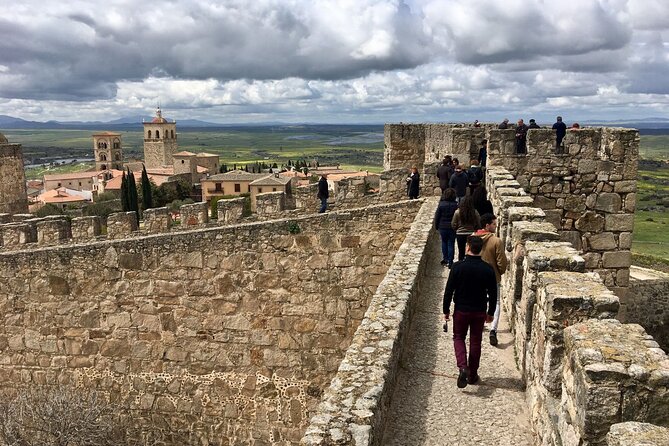
Casa Museo de Pizarro is described as a fifteenth-century manor house belonging to a hidalgo, or lower-ranking nobleman. Its value on this route is personal rather than purely military. Instead of seeing Pizarro only as a statue in the square, you connect him with the kind of domestic world from which important local families emerged.
The stop is scheduled for about 10 minutes. The information provided does not say that a full museum admission or interior visit is included, so treat the stop as a guided look at the house unless your confirmation states otherwise. That distinction matters because a walking tour can show you the building without replacing a separate museum visit.
I like the chance to compare this house with the larger palaces and strong houses seen earlier. Trujillo’s story was built by families with different levels of wealth and influence, and the old quarter makes those distinctions visible in stone.
The Casa Fuerte de los Escobar adds another human detail. This fifteenth-century military building was home to María de Escobar, who is associated with bringing wheat and barley seeds to Peru. Her story broadens the conquest narrative, which can otherwise focus too heavily on military men and royal officials.
That detail is worth holding onto as you walk. Trujillo’s overseas connections involved more than statues, titles, and grand palaces. Crops, food, farming, and everyday survival also traveled across the Atlantic, often with lasting consequences.
Santa María la Mayor and the older layers of Trujillo
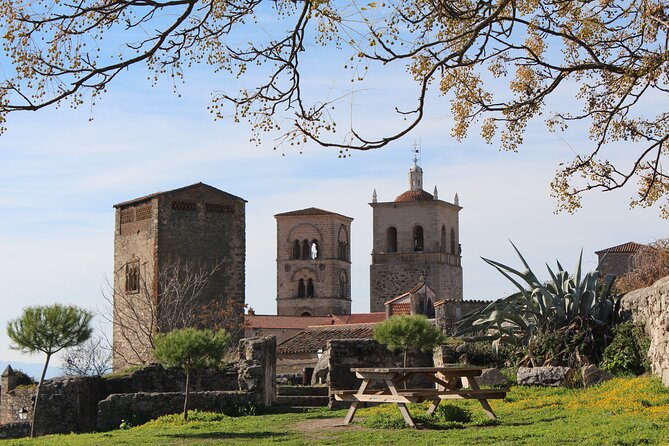
Iglesia de Santa Maria la Mayor is one of the route’s major religious landmarks. It is recognized as a Gothic church and a National Monument, but it also preserves earlier Romanesque remains, including the Torre Julia.
The church’s Spanish-Flemish altarpiece by Fernando Gallego gives the stop a strong artistic focus. Even if you are not an expert in medieval art, the combination of architecture and painted decoration makes this more than a quick church exterior.
The supplied tour details do not state whether you enter the church or how long the visit lasts. Ask the guide about access on the day, especially if seeing the altarpiece is a priority for you. The tour can still explain the building’s importance even if the interior is not available at that moment.
This is also a good point to notice how many historical periods overlap in Trujillo. Muslim fortifications, Romanesque traces, Gothic churches, Renaissance palaces, and later associations with Spain’s imperial age all occupy the same compact town.
Gates, walls, and the final walk through history
The Triumph Gate is part of the old defensive system and gives the route a clear sense of arrival and departure. It is not simply a gap in the wall. It helped control movement into the medieval town and marked a boundary between the protected quarter and the outside world.
Nearby, the Bejarano Redoubt is a thirteenth-century strong house that defended the Puerta del Triunfo. This pairing is especially useful because it shows how defenses worked together. A gate needed nearby protection, and a strong house could serve as a private residence while also guarding a vulnerable point.
The final listed stop is Puerta de San Andres, one of the seven gates in Trujillo’s wall. It sits beside the Church of San Andrés, adding another layer to the route’s habit of placing military and religious buildings side by side.
These final stops may appeal most to you if you enjoy reading towns through their edges and entrances. Gates reveal how people entered, left, traded, worshiped, and defended themselves. They also provide strong photo subjects, with stonework, wall lines, and church architecture gathered in one area.
Since the tour returns to Plaza Mayor, you finish where you began. That makes it easy to continue with lunch, revisit a palace façade, or spend more time with the castle and church if your schedule allows.
What $13.90 buys you
At $13.90 per person, the tour offers good value if you want a structured introduction to Trujillo. You get about two hours with a guide, a route through the main historic areas, explanations of major buildings, and help finding photo spots that you might miss while walking alone.
The price is especially reasonable for a first visit because the old town contains many names and dates that can blur together. A guide gives those details a sequence: Plaza Mayor and the Pizarros, fortified noble homes, the castle, religious monuments, and the gates.
The tradeoff is depth. The tour covers many places, but several stops last only a few minutes. If you want long interior visits, close study of the altarpiece, or a detailed history of the conquest of Peru, you will need extra time beyond this walk.
The group can include up to 30 people. That is not a tiny private tour, so your experience may feel more or less personal depending on the group and the guide. Ana has been noted for making the route lively and full of commentary, which is encouraging, but guide assignments can vary.
Who should book this Trujillo walk
I would choose this tour if you have limited time in Extremadura and want the main story before exploring alone. It suits first-time visitors, history fans, photographers, and anyone who prefers context over simply reading plaques.
It also works well for people interested in the Discoverers, Isabel la Católica, Carlos V, or historic film settings. The tour brings those themes into the streets instead of treating them as isolated facts.
You may want a different plan if you dislike walking, need a slow pace, or want guaranteed access to every interior. The experience is designed as a broad guided route through the old town, not as a museum tour with long stops at each monument.
Confirmation arrives when you book, and a mobile ticket is accepted. Service animals are allowed, the meeting point is near public transportation, and the activity states that most people can participate. Free cancellation is available up to 24 hours before the start time, but changes or cancellations inside that window are not accepted.
My booking advice
I would book this tour for a first look at Trujillo, especially at $13.90. Its best feature is the range: in a short time, you move from Renaissance palace fronts to Muslim defenses, royal stories, Gothic art, and the personal histories of families connected with Peru.
Go in expecting a lively orientation, not a private architectural seminar. If possible, ask about church and museum access, wear practical shoes, and leave time afterward to return to the castle, Santa Maria la Mayor, or any building that caught your attention.
FAQ
How long is the Guided Tour of Historic and Monumental Trujillo?
The experience lasts approximately two hours.
Where does the tour begin?
It begins at TurismoTrujillo.es Actividades Turísticas, Plaza Mayor 20, 10200 Trujillo, Cáceres, Spain.
Where does the tour end?
The walk returns to the meeting point in Plaza Mayor.
How much does the tour cost?
The listed price is $13.90 per person.
What are the main places included?
The route includes Plaza Mayor, Palacio de San Carlos, the historic center, Casa-Fuerte de Luis de Chaves, Palacio Viejo or de la Cadena, Castillo de Trujillo, Pizarro House Museum, Santa Maria la Mayor, Casa Fuerte de los Escobar, the Triumph Gate, Bejarano Redoubt, and Puerta de San Andres.
Is a mobile ticket accepted?
Yes. The experience provides a mobile ticket.
Can I cancel for a full refund?
Yes, if you cancel at least 24 hours before the experience start time. Cancellations or changes made less than 24 hours before the start time are not accepted for a refund.
Just added around Trujillo
- Trujillo: El Brujo Complex Archaeological Tour with Tickets★ 4.6 · 3 reviews
- Guided Tours Trujillo Essential★ 5.0 · 5 reviews
- From Trujillo: Temple of the Moon and Sun and Chan Chan★ 3.3 · 5 reviews
- From Trujillo: Complete full day tour with museums★ 5.0 · 5 reviews
- Shore Excursion from Salaverry port★ 4.5 · 8 reviews
- Guided Walking Tour in Trujillo Through the Centuries★ 4.5 · 8 reviews
- Pyramids of the Sun and the Moon, Huanchaco and Chan Chan★ 4.1 · 9 reviews
- Trujillo Shore Excursion from Salaverry Port★ 5.0 · 9 reviews
Historical Tours, compared.
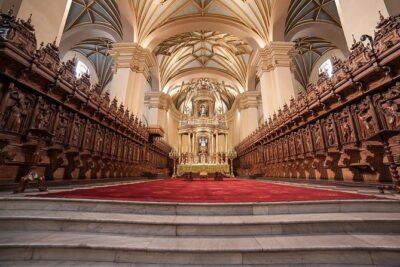
Lima’s Vibrant Heritage: Exploring the City’s Landmarks Half-day
Read our review →
Historic Center Street Food, Market, and Eateries Tour
Read our review →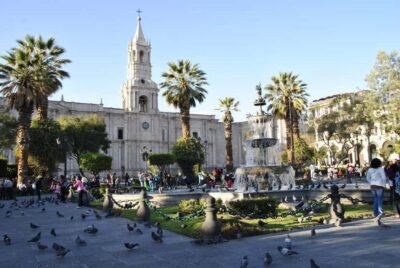
Walking tour in the Historic Center of Arequipa
Read our review →
Historic Downtown, Miraflores & Catacombs Private Tour
Read our review →
Machu Picchu Private Archaeological and Historical Guided Tour
Read our review →
Browse the lists this tour appears in