
Reviewed · INCA RUINS & ARCHAEOLOGY
Cusco Half Day City Tour: Four Ruins
The Incas left Cusco surrounded by stone. This half-day outing takes you to four important sites: Sacsayhuaman’s giant walls and the water terraces of Tambomachay, with Q’enqo and Puka Pukara between them. I like the small maximum group of 15 and the chance to see several different kinds of Inca sites in one outing. The main drawback is pace: some people find the visits shorter than expected, and a late pickup can cut into an already busy day.
You’ll ride from central Cusco with an English- and Spanish-speaking guide, usually starting at 10 a.m. The tour is priced at $45 per person, but site admission is extra, at PEN70 per person, with a separate PEN20 charge listed for Qorikancha. The guide adds the most value here, especially when explaining why a stone wall, spring, or carved channel mattered.
This is a useful first look at Cusco’s surrounding ruins, but it is not a slow archaeological study. You may walk uphill and climb steps at high altitude, so take your time. Guide Edith received warm praise for clear bilingual explanations and a considerate pace, while guide Freddy was singled out for keeping communication clear and offering helpful Cusco suggestions.
In This Review
- Four things to know before you book
- Why these four ruins make a good Cusco introduction
- Sacsayhuaman: giant stones above Cusco
- Q’enqo: a mysterious temple carved from rock
- Puka Pukara: the Inca roadside post
- Tambomachay: water, ceremony, and quiet
- What the $45 price really covers
- Timing, pickup, and the pace of the day
- Guide quality can shape the whole experience
- Who should book this four-ruin tour?
- FAQ
- How much does the Cusco Four Ruins tour cost?
- What entrance fees should I budget for?
- How long does the tour last?
- What time does the tour start?
- Where does the tour begin?
- Where does the tour end?
- Which ruins are included?
- Is transportation included?
- Is the guide bilingual?
- How many people can join the group?
- Should you book it?
Four things to know before you book
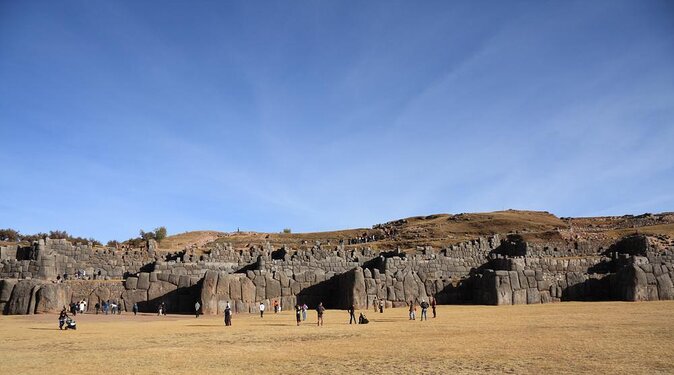
- Sacsayhuaman gives you the grandest view: Massive zigzag walls and broad views toward Cusco make this the tour’s headline stop.
- The four ruins show different Inca purposes: You’ll see a possible fortress, a carved ceremonial site, a road post, and a spring-fed complex.
- Admission is not included: Budget PEN70 for the archaeological sites, plus the listed PEN20 Qorikancha entrance if that stop is included in your arrangements.
- The group is capped at 15 people: That is small enough for questions and easier movement than a large coach tour.
- The timing can vary: The advertised duration is about six hours, though one outing lasted closer to four hours and another began 35 to 40 minutes late.
- Altitude matters: The sites rise to roughly 12,150 feet at Tambomachay, and uphill walking can leave you short of breath before the tour is over.
Why these four ruins make a good Cusco introduction
Cusco can feel like one large archaeological site. Inca walls form the base of colonial buildings, roads lead outward from the old imperial center, and important ruins sit on the hills north of town. This tour helps you sort those pieces into a clearer picture.
The four stops are close enough to combine in one half-day route, but each has a different character. Sacsayhuaman is about scale and power. Q’enqo is puzzling and intimate. Puka Pukara reveals the practical side of Inca travel. Tambomachay is quiet, precise, and tied to flowing water.
I especially like this mix because you are not simply seeing four piles of stone. You are comparing military-looking walls, carved bedrock, roadside buildings, and ceremonial waterworks. The guide’s explanations help turn visual details into clues about Inca life and belief.
Still, keep your expectations realistic. Six hours sounds generous, but transport, group assembly, and walking between parking areas can reduce your time at each place. One outing took only about four hours, while another was praised for well-managed timing. Build a little flexibility into your day rather than scheduling an important evening activity too tightly.
More City Tours in Cusco
- Cusco: Half-Day City Tour with Sacsayhuaman and Q’enco
★ 4.6 · 1,129 reviews - City Tour Cusco Qoricancha Sacsayhuaman y Tambomachay
★ 4.7 · 617 reviews - Cusco: Sightseeing Tour of the City on an Open-Top Bus
★ 4.0 · 481 reviews
Sacsayhuaman: giant stones above Cusco
Sacsayhuaman is the stop that makes people reach for their cameras before the guide has finished the introduction. Its enormous zigzag wall uses stones reported to reach about 5 meters high, 2.5 meters wide, and as much as 90 to 125 tons. The fit and scale are difficult to grasp from a photograph.
The name is generally translated from Quechua as place where the hawk is satiated, linked to the birds associated with the area. Spanish forces later called the site a fortress because of its military appearance, though its full role may have included ceremonies, storage, roads, shrines, residences, towers, and water channels.
That uncertainty is worth keeping in mind. Sacsayhuaman was not simply a stone castle in the European sense. Its walls, platforms, and sacred features formed part of a larger Inca complex connected to Cusco and the surrounding hills.
The views are another reason to pay attention here. From the site, you can look across Cusco toward peaks including Ausangate, Pachatusán, and Cinca. These mountains carried sacred meaning for the Incas, so the view was not just pretty scenery. It linked the built site to the wider world of mountains and worship.
Your visit is scheduled for about one hour. That is enough to hear the main explanation, walk around the major walls, and take in the view, but not enough to inspect every corner at leisure. If you want long photography stops or a detailed study of construction methods, you may feel hurried.
Q’enqo: a mysterious temple carved from rock
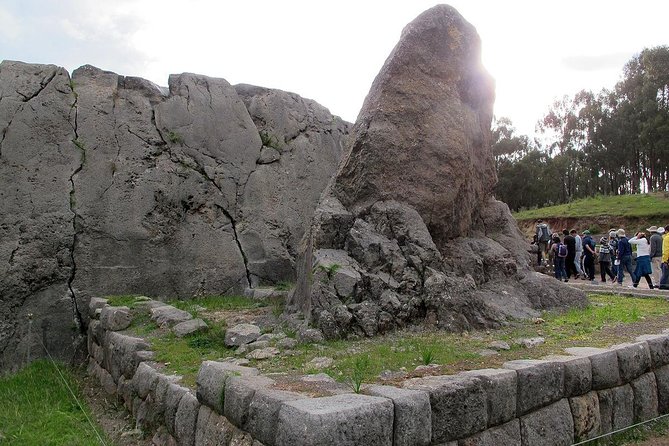
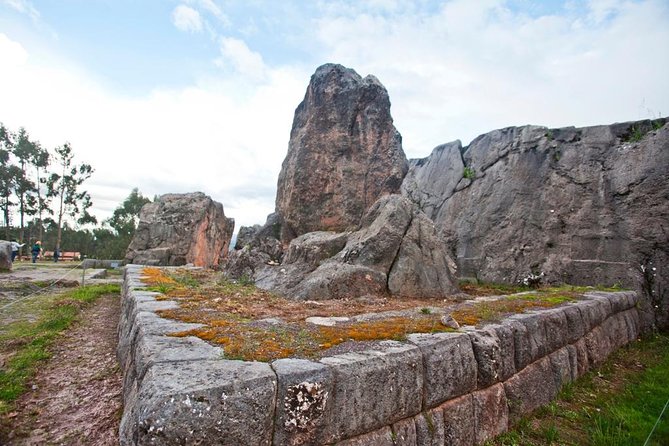
Q’enqo changes the mood. Instead of broad walls and open platforms, you encounter a site carved from a huge natural monolith. Its name means labyrinth or zigzag, referring to a crooked channel cut into the rock.
The channel clearly carried some liquid, but its original purpose is not known. It may have carried holy water, chicha, or blood. Those possibilities point toward ceremonies involving death, sacrifice, purification, or the treatment of bodies, but you should expect the guide to explain theories rather than offer one certain answer.
That is part of Q’enqo’s appeal. The site survived, but much of its meaning did not. You can see the physical evidence, then listen as the guide separates established details from educated guesses.
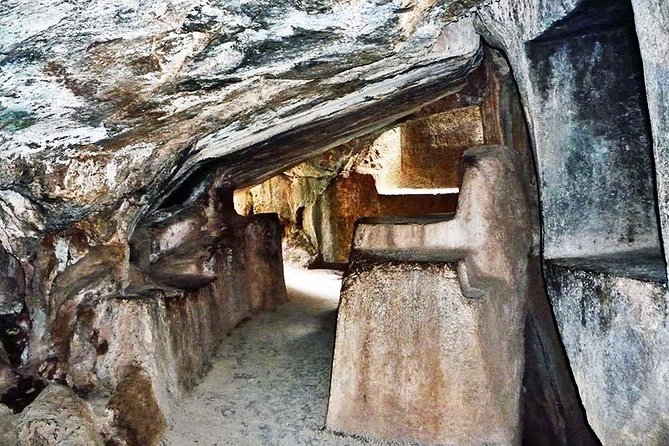
Natural chambers and man-made cuts blend together here. One chamber contains 19 small niches and an amphitheater-like space. The exact use of that area is also unclear, though it is commonly linked to ceremonies honoring the sun, moon, and stars.
The visit is listed at about one hour, but the same time concern applies. Q’enqo rewards a careful look at the rock surface, channels, niches, and enclosed spaces. A hurried group may hear the explanation and move on before you have fully taken in the details.
For me, this is the stop where a good guide matters most. A bare visit can feel cryptic. A clear explanation gives you several possible readings without pretending that every ancient question has an easy answer.
Puka Pukara: the Inca roadside post
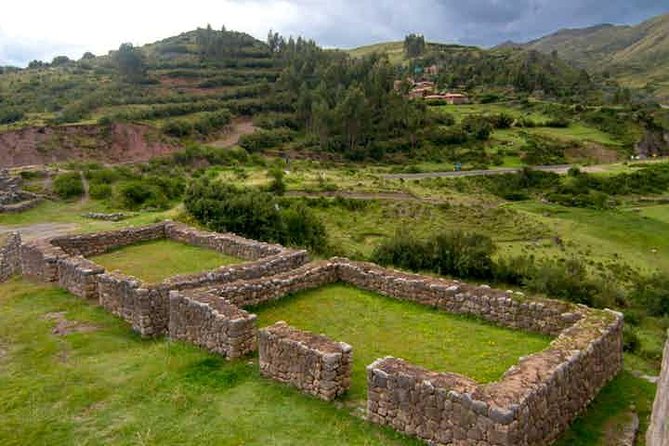
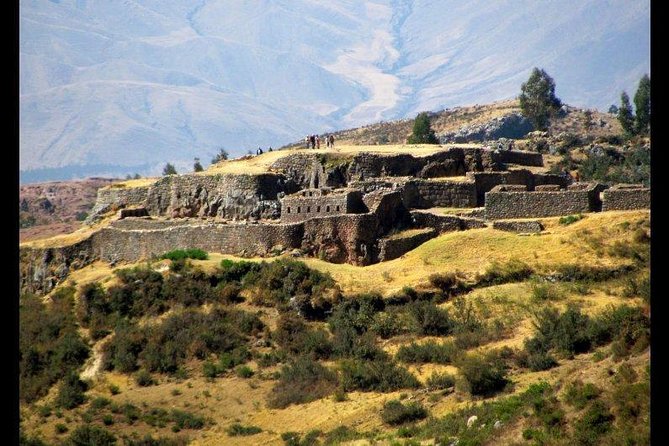
Puka Pukara means red fort, a name connected to the reddish soil and the site’s position. Its rougher stonework looks less polished than the monumental walls at Sacsayhuaman, but that does not make it less useful for understanding the Inca system.
The complex includes inner squares, canals, aqueducts, baths, rooms, platforms, and an ancient road associated with the Qhapaq Ñan, the Inca road network. Three irregular walls create different levels. The builders arranged rooms around existing rocks instead of forcing the hill into a rigid shape.
That practical design gives Puka Pukara its character. You can see how the Incas adapted construction to the slope and stone already present. Some rooms are rectangular, others trapezoidal, and the layout includes platforms to the east and south.
The site may have served as a barracks and tambo, or roadside lodging place. Chroniclers connected it with the Inca ruler’s visits to Tambomachay, suggesting that soldiers and dancers in the royal entourage waited here. A reported tunnel between Puka Pukara and Tambomachay adds another layer of local tradition, though it should be treated as a rumor rather than a confirmed feature.
This stop is less polished and less immediately dramatic than Sacsayhuaman. That is precisely why I find it useful. It shows the working side of the empire: movement, rest, water, and organization. You are looking at infrastructure, not only ceremony.
Expect roughly one hour here. The uneven ground and uphill sections may require more effort than the compact size suggests. Comfortable shoes and a patient pace will help.
More Inca Ruins & Archaeology in Cusco
- Cusco City Sightseeing, San Pedro Market, Cathedral and Qorikancha Temple
★ 4.5 · 139 reviews - Cusco: 3-Hour Horse Riding Tour to the Temple of the Moon
★ 5.0 · 105 reviews - Cusco City Sightseeing and Sacsayhuaman Archeological Park Tour
★ 4.5 · 101 reviews - Cusco: Historical Guided City Tour with 4 Inca Ruins
★ 4.5 · 99 reviews
Tambomachay: water, ceremony, and quiet
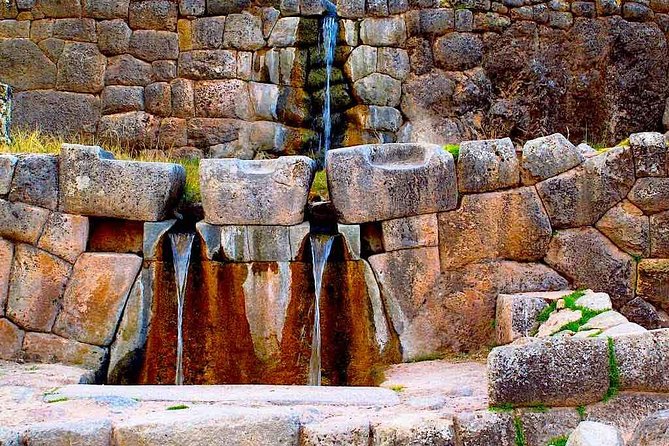
Tambomachay is the most peaceful stop on the route. It sits about four miles north of Cusco at approximately 12,150 feet, or 3,700 meters. The high setting and steady sound of water make it feel very different from the broad, exposed walls of Sacsayhuaman.
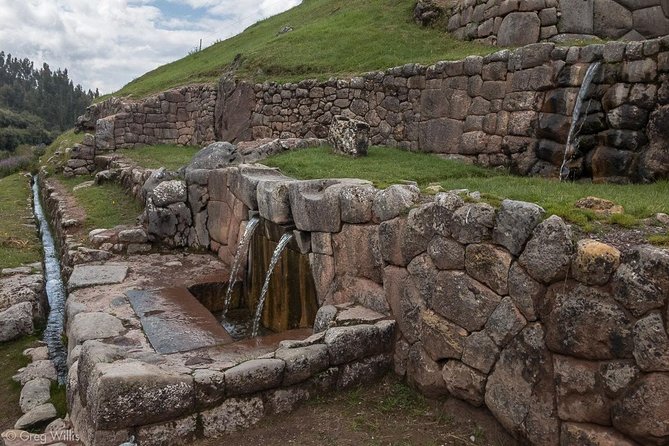
The complex has three stepped terraces made with precise Inca stonework. Trapezoidal niches appear in the retaining walls, while a natural spring feeds small aqueducts, canals, and waterfalls. The water still gives the site its central character.
Tambomachay is also called El Baño del Inca, or the Bath of the Inca. One long-standing theory says it served as a bathing place for the ruler and perhaps the wider Inca nobility. Other interpretations suggest a ceremonial center, military post, or combination of functions.
I like this site because it makes Inca engineering feel immediate. You do not need to imagine water as an abstract part of the system. You can watch it move through carefully built channels and terraces.
The scheduled visit is about 45 minutes, the shortest of the four. That should be enough to see the main water features and hear the explanation, but you may want longer if you enjoy quiet views or close examination of stonework.
Altitude is most important here. Even visitors who feel fine in central Cusco can notice the effort of steps and slopes at this height. One guide was praised for not pushing people to walk faster or climb every stair, which is the right approach. You should set your own pace, sip water, and tell the guide if you need a pause.
What the $45 price really covers
At $45 per person, the tour is reasonably priced for a small-group outing with transport and a bilingual guide. You are paying for a simple way to connect four sites that would otherwise require separate transport arrangements and careful route planning.
The price does not cover admission. The listed entrance fee for the archaeological sites is PEN70 per person. A separate PEN20 entrance to Qorikancha is also listed, although Qorikancha is not one of the four ruins described in the main route, so confirm exactly what your booking includes before departure.
That extra cost is important when comparing tours. The advertised price is not the full amount you will spend on the experience. Ask about the admissions at booking, since one participant specifically wished the fees had been explained earlier.
Transport is included, and the vehicle was described as comfortable. However, one full van had every seat occupied, so the 15-person limit does not guarantee an especially spacious ride. Since the transfers between Cusco and the sites are fairly short, this may be a minor issue, but it matters if you prefer extra personal space.
The strongest value comes from the guide. A plain transfer between ruins would save you little. A guide who explains the difference between confirmed facts and possible interpretations, speaks clearly in both languages, and adjusts the pace can make the same stone walls far more meaningful.
Timing, pickup, and the pace of the day
The stated start time is 10 a.m. at Heidi Travel EIRL, Plateros 324, Cusco 08000. The tour returns to the same meeting point, and the advertised duration is approximately six hours.
Allow for the possibility that the schedule may shift. One outing began 35 minutes late, and another group waited 30 to 40 minutes while arrangements were sorted out. This sounds frustrating, especially when you are eager to get moving, so I would arrive ready for a little uncertainty and avoid booking a fixed appointment immediately afterward.
The tour may also include an alpaca wool shop where different materials are explained. This was a pleasant surprise for one family, but it is not part of the listed four-site plan. If you want only archaeological stops, ask about any added visit before setting out.
The overall pace has received mixed impressions. Some people found it well managed and comfortable. Others wanted more time at each ruin or felt the route was rushed. That difference often comes down to group size, pickup delays, traffic, and how long the guide spends at each stop.
You should think of this as an overview tour. It gives you a strong first pass through the main ruins north of Cusco, not a full day of slow exploration. If you want to linger at every wall, bring your own guidebook and plan a separate visit.
Guide quality can shape the whole experience
The most praised part of this outing is the guiding. Edith was described as considerate and clear in both English and Spanish. She did not pressure people who found the altitude or stairs difficult, and she provided useful detail about the origins and purpose of the sites.
Freddy also received strong praise for taking care to communicate in English after an initially confusing start. His personal suggestions for other Cusco activities added value beyond the formal route.
Those details matter because the sites often have uncertain interpretations. A good guide can say what is visible, explain the main theories, and give you historical context without turning every possibility into fact.
The bilingual format should suit mixed-language groups, but communication at the beginning may not always be perfect. One outing had confusion about group arrangements and difficulty getting clear information before the guide took over. If you are unsure where to wait or what is happening, ask directly at the meeting point.
Who should book this four-ruin tour?
I would choose this experience if you are staying in Cusco for a short time and want a practical introduction to the Inca sites outside the city center. It also works well early in a trip, when you want context before visiting larger attractions elsewhere in the region.
It suits families, couples, and solo visitors who appreciate transport and a guide rather than arranging every stop independently. The 15-person maximum gives you a better chance to hear explanations and ask questions than a large bus tour.
It may not suit you if you dislike fixed schedules, have difficulty with high-altitude walking, or want long, quiet visits at each ruin. You can participate in the tour, but the operator notes that most people can do so, not that every visitor will find the terrain easy.
Bring water, wear shoes with a secure grip, and keep your admission money ready. Most importantly, do not judge the day by distance alone. At these elevations, a short uphill path can feel like a serious climb.
FAQ
How much does the Cusco Four Ruins tour cost?
The tour costs $45 per person. Admission fees are not included.
What entrance fees should I budget for?
The listed entrance fee for the archaeological sites is PEN70 per person. A separate PEN20 entrance fee for Qorikancha is also listed.
How long does the tour last?
The advertised duration is approximately six hours. Actual timing can vary, with one outing lasting about four hours.
What time does the tour start?
The stated start time is 10 a.m.
Where does the tour begin?
It begins at Heidi Travel EIRL, Plateros 324, Cusco 08000, Peru.
Where does the tour end?
The activity ends back at the same meeting point.
Which ruins are included?
The route includes Sacsayhuaman, Q’enqo, Puka Pukara, and Tambomachay.
Is transportation included?
Yes. Transport is included in the tour price.
Is the guide bilingual?
Yes. The tour includes a guide who speaks English and Spanish.
How many people can join the group?
The maximum group size is 15 people.
Should you book it?
Book this tour if you want an efficient introduction to four major sites, value a bilingual guide, and accept that the schedule may move quickly. Sacsayhuaman supplies the drama, Q’enqo the mystery, Puka Pukara the practical Inca story, and Tambomachay the water and calm.
I would confirm the admission fees, ask about any added alpaca shop stop, and leave extra time after the tour in case pickup or group arrangements run late. If you can handle the altitude and prefer guided context over independent wandering, $45 is fair value. If your priority is unhurried archaeology, choose a private or longer visit instead.
More Half-Day
- Cusco: City Tour | Half-Day Tour to 4 Archaeological Sites
★ 4.6 · 206 reviews - Cusco: Half-Day City Tour
★ 4.2 · 129 reviews - From Cusco: Moray, Maras Salt Mines & Chinchero Weavers Half-Day
★ 5.0 · 126 reviews - Cusco: Half-Day Horseback Riding at Devil’s Balcony
★ 4.9 · 89 reviews
More Inca Sites and Ruins
- Horse Riding Chacan Mountain And Temple Of The Moon
★ 5.0 · 78 reviews - Cusco 4-Hour Private Tour Including Sacsayhuaman and Qenqo
★ 5.0 · 77 reviews - Half-Day City Tour of Cusco Including Tambomachay
★ 4.5 · 59 reviews - Sacsayhuaman Temple, Tambomachay and Puca Pucara Half-Day Tour
★ 4.5 · 59 reviews
Just added around Cusco
- Cusco: Rainbow Mountain and viewpoint red valley ( optional)★ 4.8 · 3 reviews
- Tour Pallay Punchu Trek Full Day★ 4.2 · 3 reviews
- Montaña de Colores: tour en cuatrimotos día completo★ 3.3 · 3 reviews
- Excursion Cusco – Puno – Titicaca Observatory Train★ 5.0 · 3 reviews
- Cusco: Palcoyo Mountain Day Trip with Breakfast and Lunch★ 4.8 · 3 reviews
- Maras Moray★ 5.0 · 3 reviews
- Tour to Laguna Humantay with breakfast and lunch from Cusco★ 4.7 · 3 reviews
- From Cusco:Chinchero, Moray, Maras, Ollantaytambo with lunch★ 5.0 · 3 reviews
Inca Ruins & Archaeology, compared.

Half-Day City Tour with Sacsayhuaman and Q’enco
Read our review →
City Tour Cusco Qoricancha Sacsayhuaman y Tambomachay
Read our review →
The Charm of Barranco & Pre Inca Pyramid in Miraflores
Read our review →
Pachacamac Ruins & Barranco Half-Day Guided Tour
Read our review →
Pre Inca Temple of Pachacamac Half-Day Tour from Lima
Read our review →

Cusco City Sightseeing, San Pedro Market, Cathedral and Qorikancha Temple
Read our review →
3-Hour Horse Riding Tour to the Temple of the Moon
Read our review →Browse the lists this tour appears in