
Reviewed · CITY TOURS
Cusco: City Tour | Half-Day Tour to 4 Archaeological Sites
Cusco’s greatest ruins fit into one busy afternoon. This $29 half-day outing gives you a useful first look at the Inca capital, combining the Qoricancha temple with four major sites in the hills above town. I especially like the hotel pickup and the guides, including Luis, Maribel, Joel, and Fabrisio, who are repeatedly praised for clear explanations and warm care of mixed-language groups. The main catch is that the tour is bilingual, so explanations take longer, and some departures may feel rushed or run beyond the advertised four hours.
I also like the route’s variety. You move from a Spanish church built over the Inca Temple of the Sun to enormous stone walls, ceremonial caves, water fountains, and a fine view over Cusco. You must budget extra for entry tickets, though, and carry soles because admission is not included and may be collected in cash.
In This Review
- Key points to know before booking
- Why this four-hour Cusco route works well
- Qoricancha, where Inca gold met Spanish stone
- Sacsayhuamán and Cusco’s giant fitted stones
- Qenqo’s carved rock and ceremonial atmosphere
- Puca Pucara, a watch post above the city
- Tambomachay, fountains and the last big view
- What the bilingual format feels like
- Transport, pickup, and the question of timing
- The extra textile stop and other things to watch
- What you will actually pay
- Who should book this half-day tour?
- FAQ
- How long is the Cusco City Tour?
- What sites are included?
- Is hotel pickup included?
- Is the tour offered in English?
- Are entrance fees included in the $29 price?
- Should I bring cash?
- Can I use a tourist ticket purchased for another tour?
- Is the Cathedral of Cusco part of the tour?
- What languages are available?
- Should you book it?
Key points to know before booking
- Five important stops in about four hours: Qoricancha, Sacsayhuamán, Qenqo, Puca Pucara, and Tambomachay.
- Excellent guide feedback: Luis, Maribel, Joel, Yenny, Jessica, Leo, and Fabrisio are praised for their history, humor, patience, and care.
- Bilingual pacing matters: English and Spanish explanations are provided, but the same information is usually repeated in both languages.
- Entry costs are extra: Qoricancha costs 20 soles, while the wider tourist ticket costs between 70 and 120 soles.
- Afternoon departures have appeal: A 2 p.m. start can finish with an evening view over Cusco and leave you free for dinner.
- Keep an eye on the clock: Pickup delays, traffic, crowded sites, or an unplanned textile stop can reduce time at the ruins.
Why this four-hour Cusco route works well
Cusco is not a city you can understand by wandering only around the Plaza de Armas. The Inca capital spreads into steep hills, and its most famous ceremonial sites sit outside the compact center. This tour solves that problem with transport, a bilingual guide, and a route that covers the main sights in one half-day.
For $29, the value is strong if you want orientation rather than a slow, private archaeological study. You get transport and guiding for less than many standalone sightseeing options, while seeing sites that would be awkward to connect on foot. I would use it early in a Cusco stay, when the city still feels like a puzzle and you want the broad picture.
The route is called a city tour, but only part of it takes place inside the historic center. Qoricancha is in town. Sacsayhuamán, Qenqo, Puca Pucara, and Tambomachay are reached by vehicle. That mix is important: you get colonial and Inca architecture, urban streets and high mountain sites, plus a quick lesson in how Cusco was organized beyond its central plaza.
The rating of 4.6 from 206 bookings fits the experience described by the strongest feedback. The guide is the heart of the outing. Luis receives especially warm praise for including English speakers in mostly Spanish-speaking groups, while Maribel, Joel, Yenny, Jessica, Leo, and Fabrisio are also singled out for strong presentation and care.
More City Tours in Cusco
- Cusco: Half-Day City Tour with Sacsayhuaman and Q’enco
★ 4.6 · 1,129 reviews - City Tour Cusco Qoricancha Sacsayhuaman y Tambomachay
★ 4.7 · 617 reviews - Cusco: Sightseeing Tour of the City on an Open-Top Bus
★ 4.0 · 481 reviews
Qoricancha, where Inca gold met Spanish stone
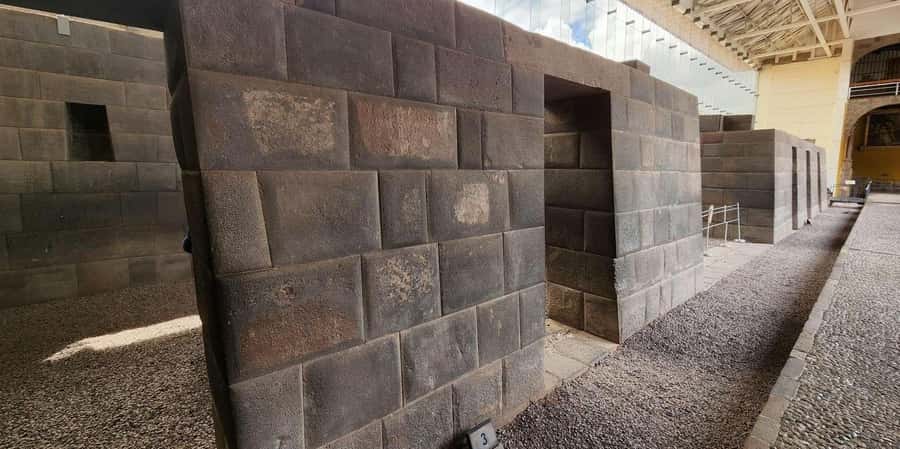
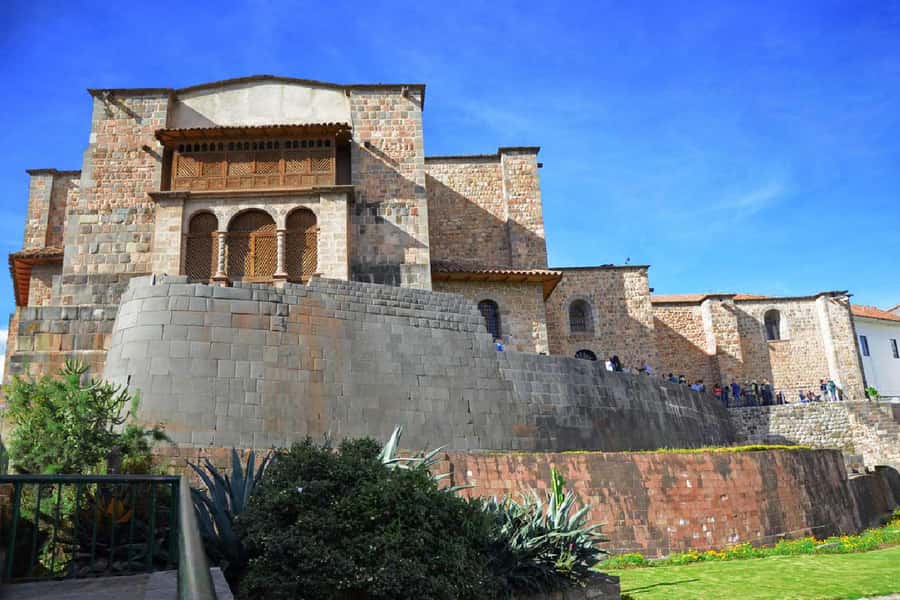
The tour begins in the center, with the Temple of Qoricancha, also called the Temple of Santo Domingo. In Inca times, this was the Temple of the Sun and one of the most important religious places in the empire. The Spanish church now occupies the site, creating the kind of cultural collision that defines Cusco.
Inside, you can see several temple spaces, Inca construction, and paintings from the Cusquenian School. The point is not simply to admire old stone. Your guide can help you notice the contrast between the precise Inca masonry and the later colonial building placed over it.
The 20-sole entrance fee is separate. This is a small extra cost compared with the tour price, but you should know about it before pickup. Entry fees are not bundled into the $29, and one useful practical warning is that you should have cash in soles available.
Qoricancha is also where the tour shifts from a city walk to a vehicle-based circuit. If your group is bilingual, the guide may explain the temple first in one language and then the other. That is considerate, but it can make the stop feel shorter than the clock suggests.
Sacsayhuamán and Cusco’s giant fitted stones
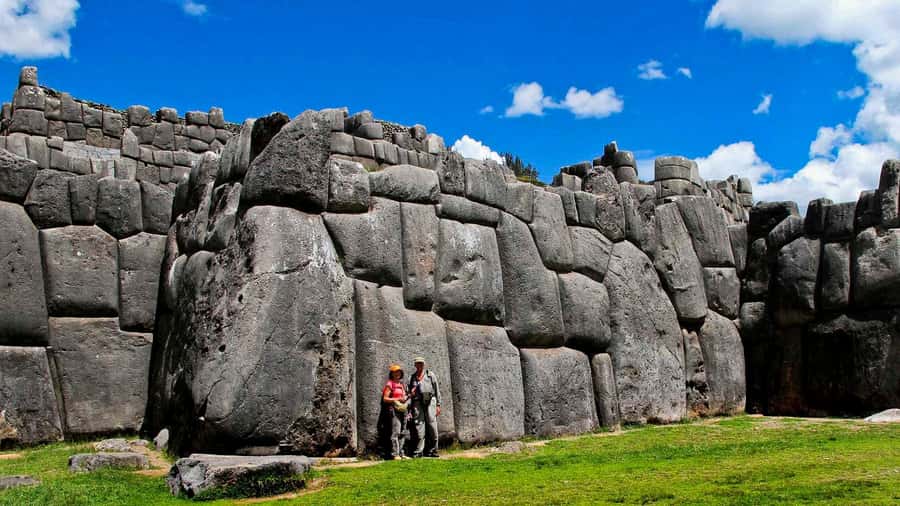
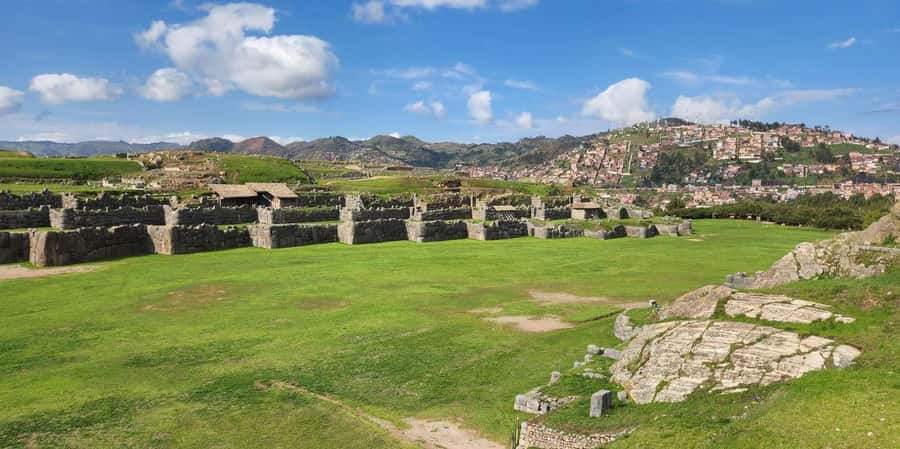
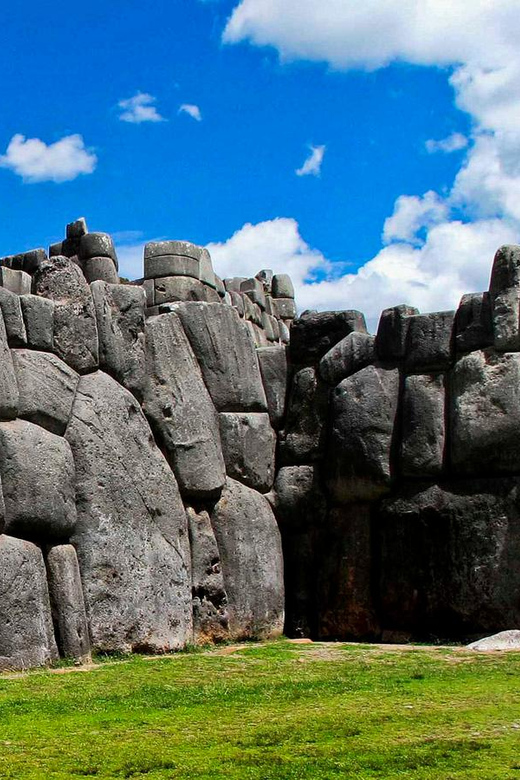
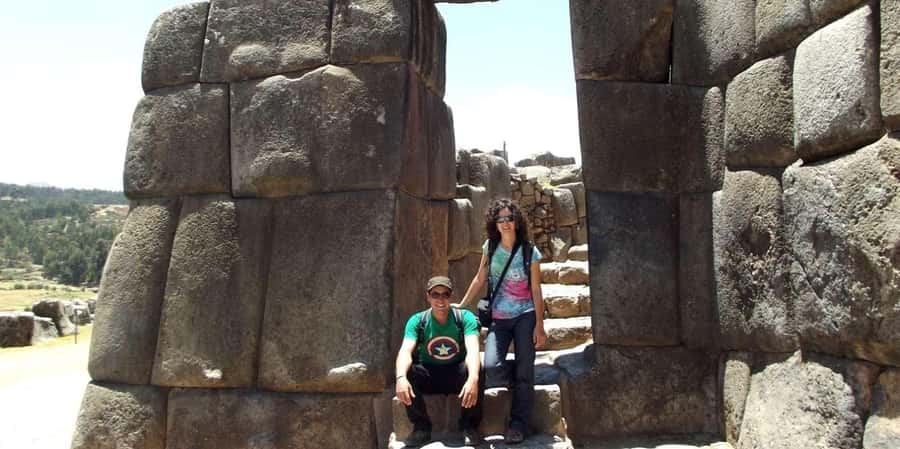
Sacsayhuamán is the visual heavyweight of the afternoon. Its walls use huge blocks fitted together with remarkable precision. Some stones are described as about 9 meters high and more than 350 tons, figures that help you grasp the scale better than a quick photograph can.
The site is also linked with Inti Raymi, the Festival of the Sun, celebrated each June 24. That connection gives the complex more meaning than the familiar idea of a fortress. It was part of ceremonial life as well as a powerful defensive and architectural statement.
I would pay close attention to how your guide explains the site, while remembering that Inca archaeology includes theories and interpretations. One strong comment about the tour praised the teaching but asked for more care when separating established facts from guesses. That is fair advice for any ancient site. You want a guide who can say what is known, what is likely, and what remains uncertain.
Sacsayhuamán can also be the point where timing becomes tight. A late pickup, traffic, or an added stop may leave you with less time than expected. One booking ended with only about 30 minutes at Sacsayhuamán because the group arrived close to closing time. That does not appear to be every departure, but it is a good reason to confirm the day’s schedule and keep your evening flexible.
Qenqo’s carved rock and ceremonial atmosphere
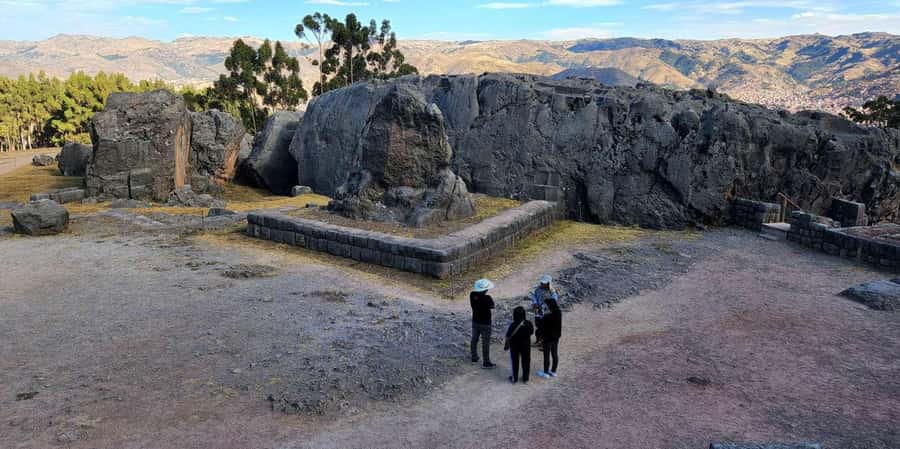
Qenqo is smaller and more mysterious than Sacsayhuamán. It was a ceremonial and religious center, with rocky formations, paths, and an amphitheater-like area. The tour description connects it with sacrifices, so listen carefully to how your guide presents that history rather than treating every dramatic story as settled fact.
This stop adds texture to the route. After the grand walls of Sacsayhuamán, Qenqo feels more enclosed and puzzling. You are looking at rock shaped and used by people whose rituals are not fully understood today.
The paths and rocky surfaces mean you should wear shoes suitable for uneven ground. The provided details do not promise a particular accessibility level, so anyone who has trouble with steps or rough surfaces should ask the operator before booking.
A few more Peru trips worth weighing up
- Cusco: Half-Day City Tour
★ 4.2 · 129 reviews - From Cusco: Moray, Maras Salt Mines & Chinchero Weavers Half-Day
★ 5.0 · 126 reviews - Cusco: Half-Day Horseback Riding at Devil’s Balcony
★ 4.9 · 89 reviews - Half-Day City Tour of Cusco Including Tambomachay
★ 4.5 · 59 reviews
Puca Pucara, a watch post above the city
Puca Pucara is described as an Inca surveillance post and an entry control point for the capital. Its walls, terraces, and stone steps are less monumental than Sacsayhuamán, but the location helps explain how movement into Cusco was monitored.
I like this stop because it broadens the story. You are not only seeing temples and royal architecture. You are also seeing the practical network that supported the Inca state. The terraces and walls invite you to think about people arriving, waiting, and being checked as they approached the capital.
It is a quick stop on a compact route, so do not expect a long independent exploration. The guide’s explanation matters here, since the site’s purpose may be less immediately obvious than the giant stones at Sacsayhuamán.
Tambomachay, fountains and the last big view
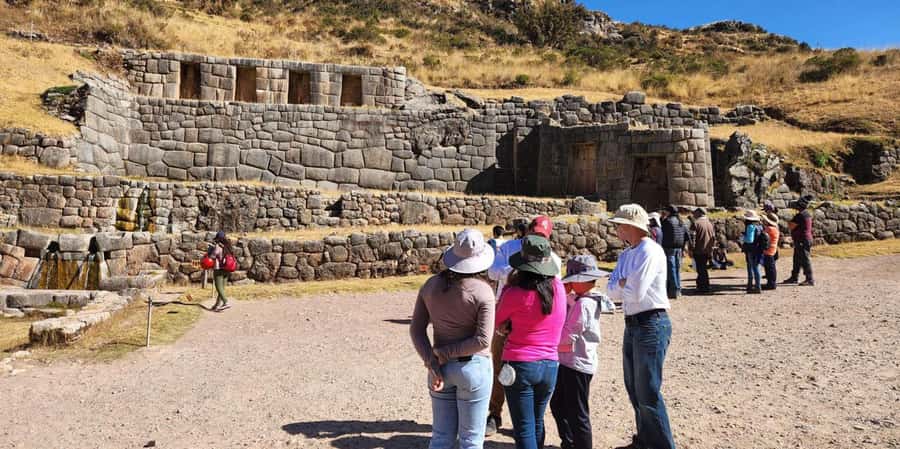
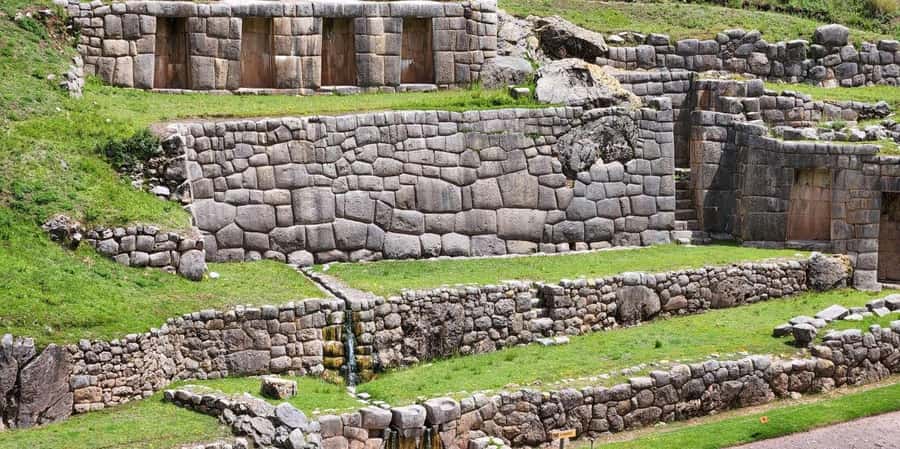
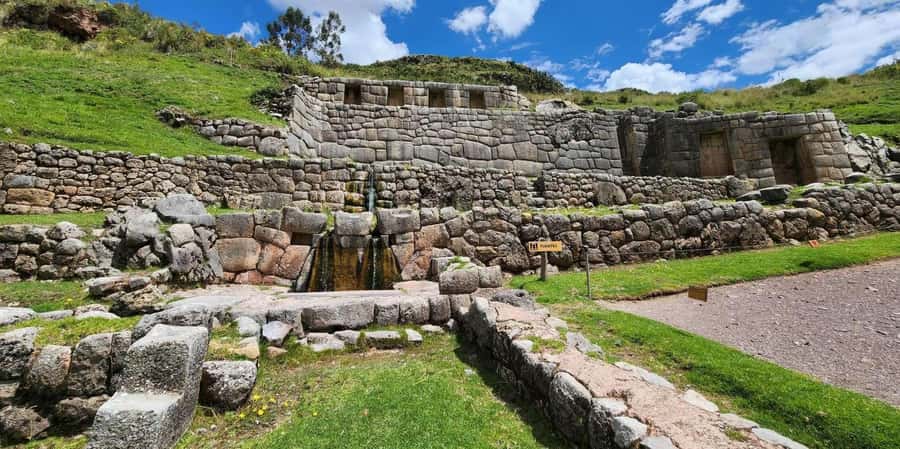
Tambomachay is the final archaeological stop. It is known as a water temple, associated with the worship of water, leisure, and the idea of eternal youth. Its platforms and fountains make it a calmer ending after the heavier stonework and ceremonial spaces earlier in the afternoon.
Several details make this stop worth protecting in the schedule. One guide praised the final view over Cusco, and another booking chose the 2 p.m. departure because the tour ended with an evening look across the city. If the timing works, this is a pleasant way to finish before returning for dinner and drinks.
Do not treat Tambomachay as a throwaway stop. The fountains are the feature, but the wider setting gives the site its appeal. Bring a layer for the end of the day. At altitude, the temperature can drop, and one afternoon departure became cold enough for a jacket and hot tea from vendors along the route.
What the bilingual format feels like
The guides work in English and Spanish. This is a real benefit if you are traveling with Spanish-speaking friends or joining a mixed group. Luis is repeatedly praised for making the only English speaker feel included, and other guides are described as switching between languages clearly and patiently.
The tradeoff is time. Every major explanation may be delivered twice. Some people found the arrangement smooth, while others felt bilingual tours do not work as well as a single-language group. One comment also noted that questions asked in Spanish were not always repeated in English.
I would choose this format if price and route matter more to you than maximum time at each ruin. If you want every explanation in English and prefer a slower pace, a dedicated English-language tour may suit you better, though the information provided here does not give a price for that alternative.
Guide quality is the biggest strength. The best comments describe guides as funny, personable, prepared, and able to answer questions without making the tour feel like a lecture. One guide was even described as the author of a detailed book about the Incas and the region. That sort of personal command can turn a stone wall into a readable part of Cusco’s story.
Transport, pickup, and the question of timing
Hotel pickup is included from Cusco’s Centro Histórico. That saves you the trouble of finding a meeting point, though it can add uncertainty at the beginning. Several comments describe an easy pickup, while another notes that transportation and the initial collection of passengers could be improved.
The advertised duration is four hours. Most of the praise describes a well-paced half-day, with enough time for the main stops and a useful balance of walking and transport. Still, timing is not perfectly fixed. One departure lasted 5.5 hours, and another felt rushed even though it covered all locations.
I suggest avoiding a tight dinner reservation, airport transfer, or evening show immediately afterward. The tour normally returns to central Cusco in time for dinner, but pickup traffic, a bilingual group, weather, or an extra stop can change the finish time.
Rain does not necessarily ruin the outing. One guide rearranged the order after afternoon rain so the group could explore when conditions improved. You should still carry a rain layer and wear shoes that can handle wet stone.
The extra textile stop and other things to watch
The stated route focuses on archaeological sites, but one booking included a local textile market that was not expected. The stop took more time than any individual ruin and caused the group to reach Sacsayhuamán late. That is the clearest warning in the feedback.
An added craft or textile visit is not automatically bad. You might enjoy seeing local work, and some tours use these stops to show regional traditions. But if your priority is archaeology, ask at the beginning if any shopping stop is planned. You can also make it clear that you want the promised sites to receive the available time.
Another small issue is photography. One guide was praised as a great photographer, while another booking complained that too many photos were taken. If you prefer to control your own time and pictures, say so politely.
Crowds are another normal limitation. Sacsayhuamán and the other major sites are popular, so you may not have solitude. The listed express security check can help with entry flow, but it does not turn a busy archaeological park into a private visit.
What you will actually pay
The headline price is $29 per person, which is good value for transport, hotel pickup, and a live bilingual guide covering five places. The admission fees change the calculation, so do not treat $29 as your complete sightseeing budget.
You need to allow for:
- 20 soles for Qoricancha
- 70 to 120 soles for the tourist ticket covering the archaeological sites
- An optional additional charge for the Cathedral of Cusco, if you choose that visit
The tourist ticket may also help if you plan to visit other museums and sites in Cusco or the Sacred Valley. One practical suggestion is to buy the full ticket from the office near the main plaza if you already expect to see more attractions. That can be better value than purchasing isolated admissions.
Because the tour does not include food, drinks, or shopping, bring enough cash for the fees and perhaps tea along the route. The information provided specifically warns that entry is not included and may be cash only.
Who should book this half-day tour?
I would recommend it for a first visit to Cusco, especially if you want a clear introduction before tackling more demanding trips. It suits couples, solo visitors, and families who value a guide and do not want to arrange several taxi rides.
It is also a smart choice if you have limited time. In four hours, you see the city’s most important Inca and colonial sites, rather than spending the whole day on one complex. The route gives you enough context to decide which places deserve a longer return visit.
You should think twice if you dislike group schedules, repeated bilingual explanations, shopping stops, or uncertain end times. Independent visitors who want to linger at every wall may find the pace too brisk.
FAQ
How long is the Cusco City Tour?
The advertised duration is four hours. Some departures may take longer because of pickup delays, traffic, bilingual guiding, weather, or additional stops.
What sites are included?
The route includes Qoricancha, Sacsayhuamán, Qenqo, Puca Pucara, and Tambomachay. Qoricancha is in central Cusco, while the other four archaeological sites are outside the main center.
Is hotel pickup included?
Yes. Pickup is included from hotels in Cusco’s Centro Histórico.
Is the tour offered in English?
Yes. The live guide speaks English and Spanish, and the tour is bilingual.
Are entrance fees included in the $29 price?
No. Qoricancha costs 20 soles, and the tourist ticket costs between 70 and 120 soles. The Cathedral of Cusco is an optional visit and is not included.
Should I bring cash?
Yes. Entry is not included, and one booking specifically notes that admission is cash only. Carry soles to avoid a last-minute problem.
Can I use a tourist ticket purchased for another tour?
Yes. You can show a tourist ticket you have already purchased if it covers the required sites.
Is the Cathedral of Cusco part of the tour?
It is listed as an optional visit, not a required stop on the main archaeological route.
What languages are available?
The tour is available in English and Spanish. Explanations are given in both languages, which may affect the pace of the group.
Should you book it?
Book this tour if you want strong value, broad coverage, and a guide-led introduction to Cusco. The route gives you Qoricancha, the huge stones of Sacsayhuamán, the ceremonial spaces of Qenqo, the watch post at Puca Pucara, and the fountains of Tambomachay without arranging your own transport.
I would book it early in a Cusco visit, carry soles, bring layers and rain protection, and keep the evening open. Confirm the pickup time and ask about any textile stop. If those small uncertainties do not bother you, this is a practical way to get your bearings and see a remarkable amount of Cusco in half a day.
Just added around Cusco
- Cusco: Rainbow Mountain and viewpoint red valley ( optional)★ 4.8 · 3 reviews
- Montaña de Colores: tour en cuatrimotos día completo★ 3.3 · 3 reviews
- Tour Pallay Punchu Trek Full Day★ 4.2 · 3 reviews
- Excursion Cusco – Puno – Titicaca Observatory Train★ 5.0 · 3 reviews
- Cusco: Palcoyo Mountain Day Trip with Breakfast and Lunch★ 4.8 · 3 reviews
- Maras Moray★ 5.0 · 3 reviews
- Tour to Laguna Humantay with breakfast and lunch from Cusco★ 4.7 · 3 reviews
- From Cusco:Chinchero, Moray, Maras, Ollantaytambo with lunch★ 5.0 · 3 reviews
City Tours, compared.

Half-Day City Tour with Sacsayhuaman and Q’enco
Read our review →
City Tour Cusco Qoricancha Sacsayhuaman y Tambomachay
Read our review →
Lima’s Vibrant Heritage: Exploring the City’s Landmarks Half-day
Read our review →
Sightseeing Tour of the City on an Open-Top Bus
Read our review →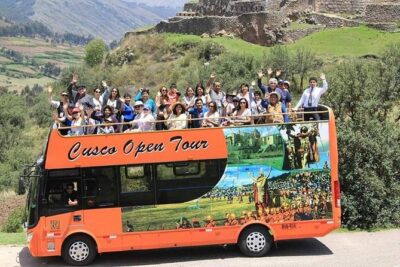
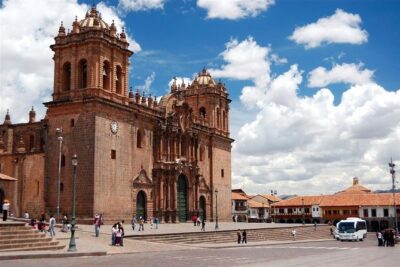
City Tour in Cusco & visit Museum South American Camelid Private.
Read our review →
Cusco City Sightseeing, San Pedro Market, Cathedral and Qorikancha Temple
Read our review →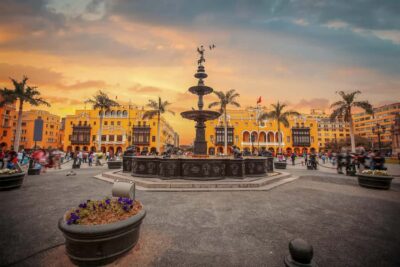
Browse the lists this tour appears in