
Reviewed · HISTORICAL TOURS
Puno: History and Culture Walking Tour
Puno rewards a slow, uphill look. I like the easy two-hour route, which links the city’s best-known sights without taking up a whole morning, and I like the small group, limited to 10 people. The panoramic view from Huajsapata Lookout is another strong point, especially if you want to understand Puno’s setting before exploring its streets.
The main drawback is that the advertised $20 price does not include the Carlos Dreyer Museum entrance, which costs 20 soles per person. You also need to bring a passport or ID card and leave large luggage behind, so this is best treated as a walking outing rather than a transfer between hotels or stations.
In This Review
- Key points to know before you book
- Why this short Puno walk works well
- Starting at Plaza de Armas
- Huajsapata Lookout and the view over Lake Titicaca
- Puno Cathedral’s Spanish and Andean details
- Carlos Dreyer Museum and older Andean objects
- How much value do you get for $20?
- Timing, group size, and the walking pace
- Who should book this Puno experience?
- Booking advice and cancellation flexibility
- Should you book the Puno History and Culture Walking Tour?
- FAQ
- How long does the Puno History and Culture Walking Tour last?
- How much does the tour cost?
- What languages does the guide speak?
- Where does the tour begin?
- Where does the tour end?
- What attractions are included in the route?
- How many people can join the group?
- What should I bring, and are there any age restrictions?
Key points to know before you book
- Huajsapata Lookout opens the tour with city and Lake Titicaca views, giving you a useful sense of Puno’s location.
- Manco Capac’s monument adds an Incan reference to the first stop and gives the lookout more than just a photo opportunity.
- Puno Cathedral combines Spanish Baroque design with Andean elements, making it one of the most interesting architectural stops.
- Carlos Dreyer Museum requires an extra 20 soles, but its jewelry, ceramics, and textiles add useful cultural context.
- The English and Spanish guide works with a small group of up to 10, which should make questions easier than on a large coach tour.
- The walk begins and ends at Plaza de Armas, with no transport included or needed during the activity.
Why this short Puno walk works well
Puno can feel confusing at first. The city is busy, high above Lake Titicaca, and full of layers that are easy to miss if you simply stroll from the main square to a restaurant. This tour gives you a clear two-hour introduction, moving from a high viewpoint to the cathedral and then into a museum.
I see it as a good first activity in Puno. You get the broad view, a major religious building, and a collection of older objects before deciding how much more time you want to spend in the city.
The tour is led in English or Spanish by a live guide. That matters here because the appeal is not only seeing buildings. The guide can explain the connection between Spanish colonial architecture, Andean design, Puno’s founding, and the region’s earlier cultures.
The group limit of 10 is also useful. It is small enough that you can normally hear the guide and ask questions without having to fight for attention. One guide named Samuel received especially strong praise for making the experience enjoyable, while another assessment specifically valued the guide’s command of the city and ability to answer questions.
The tour has a 4.1 rating from 13 reviews, so I would describe it as a generally solid introduction rather than a guaranteed standout. The positive comments focus on the guide and the fact that the walk covers the important central sights. Keep your expectations realistic: this is a compact orientation, not a full-day study of Puno’s past.
More history on the ground:
- Aymara Route Mystical Cultural Tour
★ 4.7 · 27 reviews - Guided Tour of Historic and Monumental Trujillo
★ 5.0 · 930 reviews - Lima’s Vibrant Heritage: Exploring the City’s Landmarks Half-day
★ 4.5 · 581 reviews
Starting at Plaza de Armas
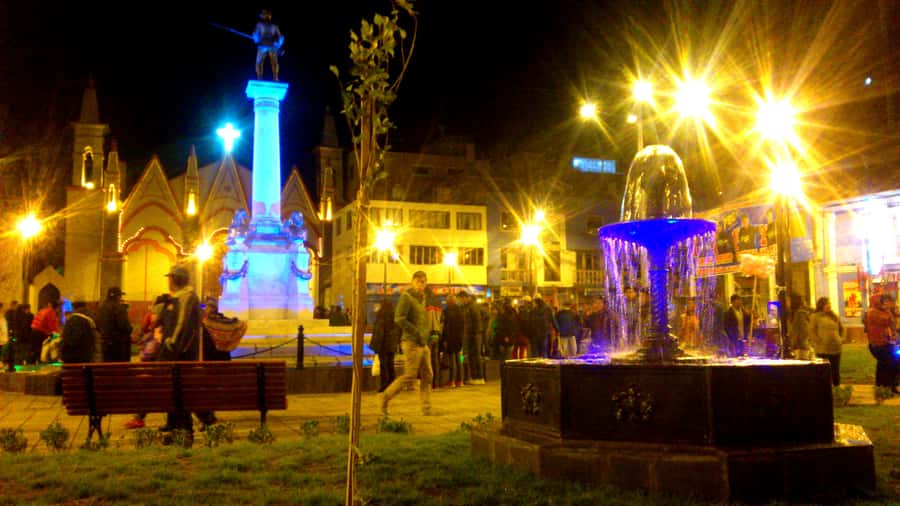
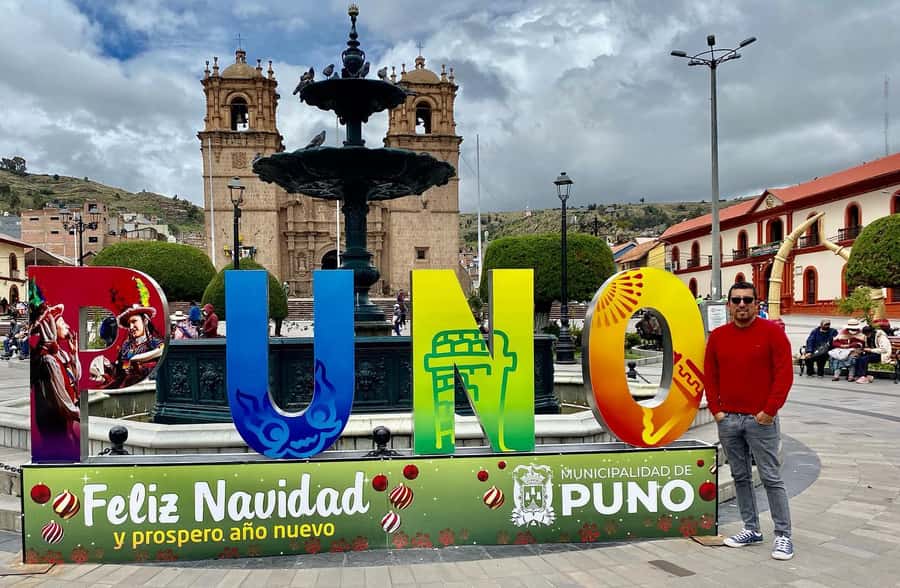
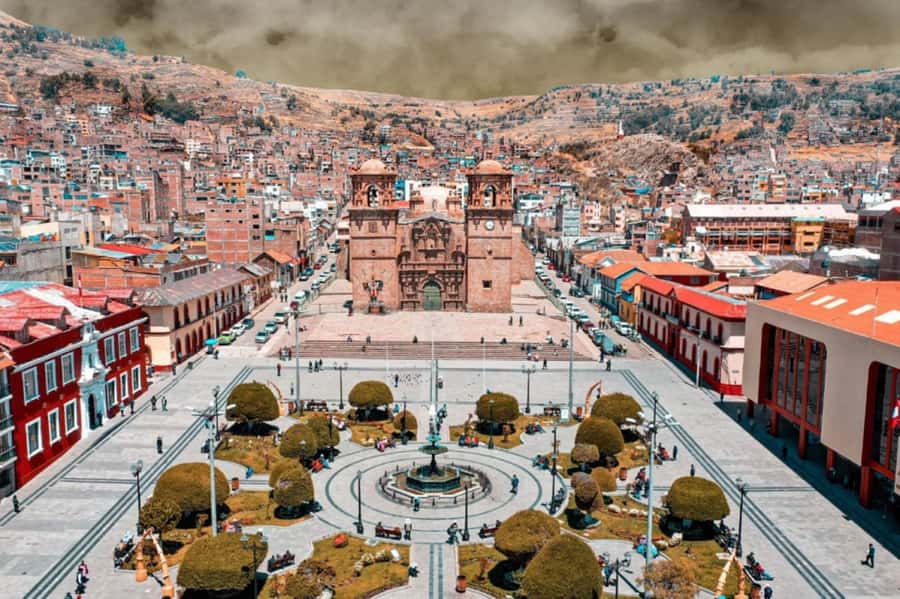
You meet at Plaza de Armas, also called Plaza Mayor de Puno. This central starting point makes sense because the square is an easy reference point in the city and places you close to the cathedral.
The activity returns to the same meeting point at the end. That simple arrangement is convenient if you are staying nearby or want to continue exploring central Puno on foot afterward.
Bring your passport or another accepted ID card. The tour does not allow luggage or large bags, so do not plan to join while carrying a full suitcase or a large travel pack. A small personal bag is the safer choice, though the supplied information only specifically confirms that large bags are not allowed.
From the square, the route heads toward Huajsapata Lookout. The walk gives the guide a chance to introduce Puno before you reach the main viewpoint, though the exact streets and walking distance are not specified.
Huajsapata Lookout and the view over Lake Titicaca
Huajsapata Lookout is the visual opening act. From here, you can take in panoramic views of Puno and Lake Titicaca, a useful way to place the city in its high-altitude setting.
This stop is valuable because it provides context that a street-level walk cannot. Looking out over the city and lake helps you understand why Puno feels tied to both urban life and the water. You are not just checking off a viewpoint. You are getting a reference image for the rest of the tour.
The view is likely to be one of the best reasons to choose this activity over a museum-only visit. If you have just arrived in Puno, it can also help you get your bearings quickly.
The lookout includes a monument dedicated to Manco Capac, identified in the tour information as the founder of the Incan Empire. The monument gives the stop a historical focus and offers your guide a natural opening to discuss Incan origins and local identity.
I would allow yourself a moment here instead of rushing straight to photographs. The value of the stop comes from combining the view with the explanation. Ask the guide how the monument fits into Puno’s historical story, since the tour is designed around guided interpretation rather than silent sightseeing.
One practical caution: the information does not describe the route’s level of difficulty or the exact amount of uphill walking. You should be prepared for a city walk that includes a lookout, but you should not assume that the route is completely flat or effortless.
Puno Cathedral’s Spanish and Andean details
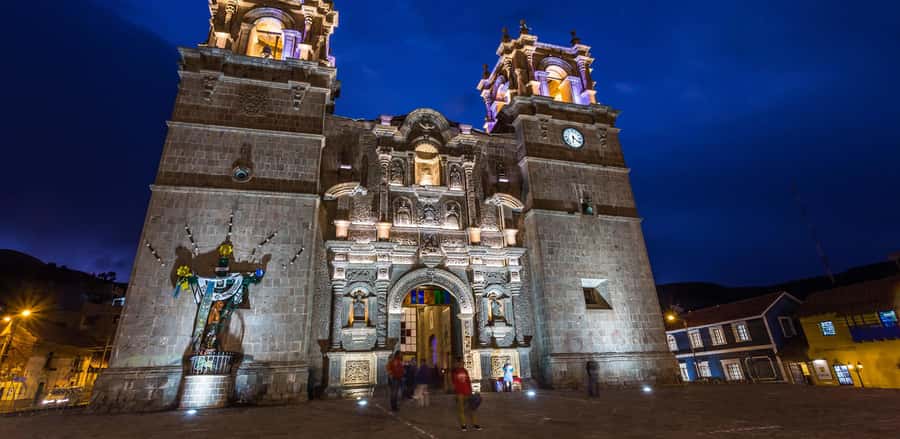
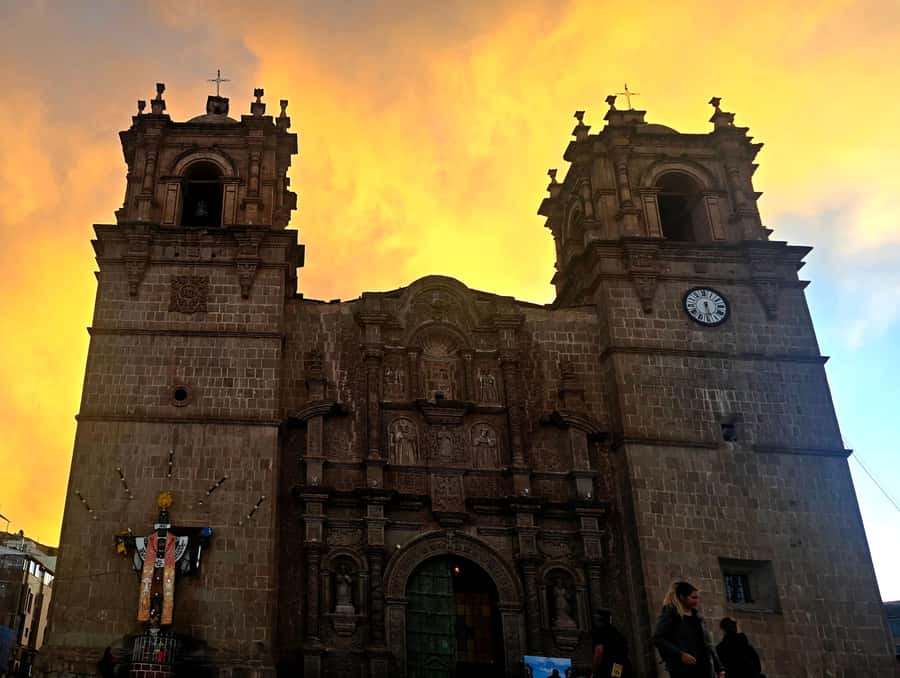
From Huajsapata, the guide leads you to the 18th-century Cathedral of Puno. This is not simply a stop to admire a grand facade. The cathedral is presented as a meeting point between Spanish Baroque architecture and indigenous Andean elements.
That combination gives the building its real interest. Spanish colonial churches often reflect European religious design, but local workmanship and Andean artistic traditions shaped how those buildings looked and felt in Peru. Here, you can see Puno’s mixed cultural character in a single major landmark.
The word Spanish alone does not explain the cathedral. Look for the details your guide points out, especially the ways European forms and Andean design appear together. You will get more from this stop if you treat it as evidence of cultural exchange, power, adaptation, and local skill rather than as a quick photo stop.
The cathedral is also a good pause between the open viewpoint and the museum. Huajsapata gives you the broad setting. The cathedral brings the story into the city’s built environment. The museum then moves the focus to objects and earlier cultures.
The available information does not state whether the cathedral interior has a separate entrance charge or how much time the group spends inside. The confirmed extra admission cost is for the Carlos Dreyer Museum, so you should keep your budget focused on that fee.
More walking tours on foot:
- Walking tour in the Historic Center of Arequipa
★ 4.4 · 180 reviews - Lima: Miraflores Trending Flavors Half-Day Walking Tour
★ 4.9 · 98 reviews - Arequipa: Walk through the Historic Center of the City
★ 4.9 · 87 reviews - Arequipa Walking Tour city center and drinks experience
★ 5.0 · 72 reviews
Carlos Dreyer Museum and older Andean objects
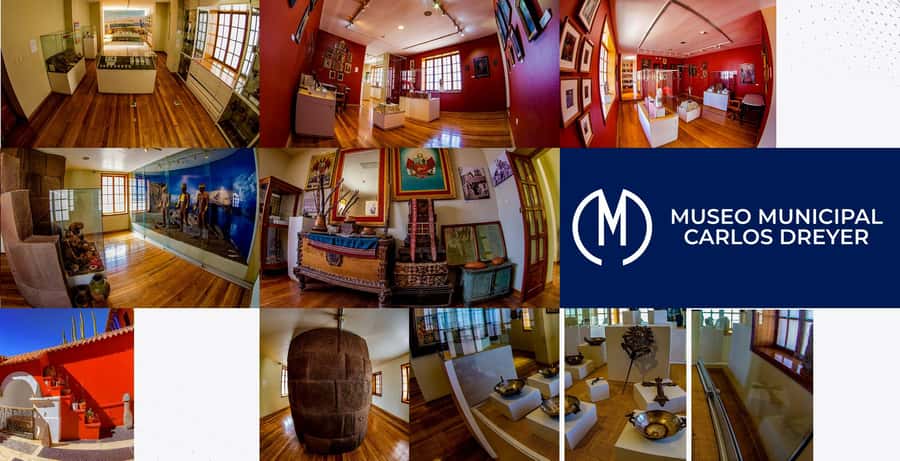
The final main attraction is the Carlos Dreyer Museum. This stop adds the most tangible historical material to the walk, with displays of pre-Columbian jewelry, ceramics, and textiles.
You can expect the guide to explain Puno’s founding and provide background for the collection. That makes the museum more useful than simply wandering through display cases without context. Jewelry can show craftsmanship and status, while ceramics and textiles offer clues about daily life, design, and older cultural traditions.
The museum entrance costs 20 soles per person and is not part of the $20 tour price. That extra fee is important when you compare the total cost with other short city walks. Even so, I think the museum can justify the added expense if you want more than views and colonial architecture.
If your main goal is a quick orientation, you may feel the extra museum charge is less appealing. If you enjoy archaeology, material culture, or textiles, the collection gives the tour more substance. The choice is straightforward because the entrance fee is clearly separated from the guide service.
The tour information does not list the museum’s opening hours, collection size, or the exact objects on display beyond jewelry, ceramics, and textiles. You should therefore book this for the combination of museum and guided explanation, not for a promise of a large or specialist archaeological collection.
How much value do you get for $20?
At $20 per person, the tour is reasonably priced for a private-feeling introduction in a group of no more than 10. You are paying for a live English or Spanish guide, a planned route, and interpretation at three different types of stop: viewpoint, cathedral, and museum.
The value depends on what you want from Puno. For a first look at the city, the price is fair because the route covers several major attractions in only two hours. You can then spend the rest of your day on other plans, including time around Lake Titicaca if that is part of your trip.
Remember to add the 20 soles museum entrance. The final cost is not simply the advertised tour price, but the extra charge is modest and clearly identified.
I would not choose this tour solely because it is cheap. I would choose it because the guide connects the sights. Without that interpretation, you could visit the plaza, cathedral, viewpoint, and museum independently, but the links between Spanish and Andean culture would be easier to miss.
The strongest value comes from the guide. The positive feedback specifically praises Samuel and also notes that the guide knew the city and answered questions about the important sights. That is exactly what you want from a short walking tour: clear explanations, local orientation, and enough flexibility for questions.
Timing, group size, and the walking pace
The activity lasts two hours, with starting times available according to the date you select. Since the precise departure schedule is not provided here, check availability before building the rest of your day around it.
A two-hour duration keeps the tour focused. You will not spend an entire day inside one museum or on a long city circuit. On the other hand, the short length means the guide may need to keep a steady pace, especially if the group has many questions.
The maximum group size is 10. That is a useful middle ground. You get the social feel of a small group without the cost of a private tour, and you should have a better chance to hear explanations at the cathedral and museum.
The activity is not suitable for children under 5. The information does not give further details about accessibility, walking surfaces, or physical requirements, so you should ask before booking if those points are important for you.
Because the walk begins and ends at Plaza de Armas, you can use it as a morning orientation or an afternoon introduction. The exact start time is not fixed in the information provided, so confirm the available option that fits your plans.
Who should book this Puno experience?
I would recommend this tour to you if you are spending a short time in Puno and want the city’s main cultural stops explained in a compact format. It is also a sensible choice if you have just arrived and want a broad introduction before exploring alone.
It suits people who enjoy architecture, local history, museum objects, and city views. The mix is well balanced: you are not spending the whole two hours inside a church or museum, and you are not relying on scenery alone.
This is also a good fit if you prefer a small group. A maximum of 10 makes the guide’s comments easier to follow and gives you a better chance to ask about details that catch your attention.
I would be more cautious if you dislike walking, want a very slow pace, or need to carry luggage. The route includes a lookout and several central attractions, but the available information does not promise a flat or fully accessible path.
Families with very young children should look elsewhere because children under 5 are not accepted. Older children may find the viewpoint and monument engaging, but the tour’s suitability for them is not specifically described.
You should also consider the museum fee. If your budget is tight, you can focus on the guided city sights, but the information presents the Carlos Dreyer Museum as a central part of the experience. Ask about the arrangement before arrival if you are unsure whether the museum visit can be skipped.
Booking advice and cancellation flexibility
You can reserve now and pay later, which is helpful if your Peru schedule is still moving around. You can also cancel up to 24 hours before the activity for a full refund.
That flexibility matters in Puno because plans can change. A museum visit, lake excursion, or transport connection may affect your preferred starting time. Check availability for the date you want, then keep the meeting point at Plaza de Armas clearly marked in your plans.
Bring your passport or ID card. Do not arrive with large luggage, since it is not allowed on the activity.
Should you book the Puno History and Culture Walking Tour?
Book it if you want a short, guide-led introduction to Puno with a strong viewpoint, a distinctive cathedral, and a museum collection of older Andean objects. The small group and the positive comments about Samuel and the guides’ answers to questions add confidence.
Skip it if you want a long archaeological tour, a private guide, or a walk with no additional admission costs. The extra 20 soles for the Carlos Dreyer Museum should be part of your decision.
For most first-time visitors with two spare hours, I think this is a sensible Puno choice. It gives you the city’s major cultural markers, helps you understand the relationship between Spanish and Andean traditions, and leaves the rest of your day free.
FAQ
How long does the Puno History and Culture Walking Tour last?
The tour lasts two hours. Starting times depend on availability for your chosen date.
How much does the tour cost?
The listed price is $20 per person. The Carlos Dreyer Museum entrance is extra and costs 20 soles per person.
What languages does the guide speak?
The live guide speaks English and Spanish.
Where does the tour begin?
The meeting point is Plaza de Armas of Puno, also called Plaza Mayor de Puno.
Where does the tour end?
The activity ends back at the same meeting point at Plaza de Armas.
What attractions are included in the route?
The route includes Huajsapata Lookout, the monument to Manco Capac, the 18th-century Cathedral of Puno, and the Carlos Dreyer Museum.
How many people can join the group?
The group is limited to 10 participants.
What should I bring, and are there any age restrictions?
Bring a passport or ID card. Large bags and luggage are not allowed, and the activity is not suitable for children under 5.
Just added around Puno
- Discover the Celestial Wonder of Sillustani: Towers of Time★ 4.2 · 3 reviews
- Puno: Two-day excursion to Uros, Amantani and Taquile★ 4.2 · 3 reviews
- From Puno: Travel to Cusco in Titicaca Train All Inclusive★ 3.9 · 3 reviews
- 5h tour from Puno to Aramu Muru portal and Inca Ruins★ 4.6 · 3 reviews
- From Puno: Excursion to Uros and Taquile Islands + Income★ 4.7 · 4 reviews
- Puno: 2-day Uros Kayak Tour with Homestay at Amantani Island★ 4.6 · 4 reviews
- FromPuno: Uros and Amantani Islands Full-Day Tour with Lunch★ 4.5 · 4 reviews
- Puno: Lake Titicaca, Uros, and Taquile Full-Day Tour★ 4.5 · 4 reviews
Historical Tours, compared.
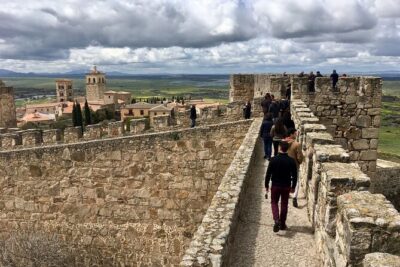
Guided Tour of Historic and Monumental Trujillo
Read our review →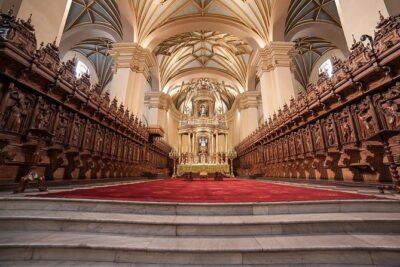
Lima’s Vibrant Heritage: Exploring the City’s Landmarks Half-day
Read our review →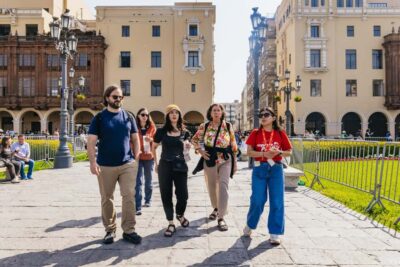
Historic Center Street Food, Market, and Eateries Tour
Read our review →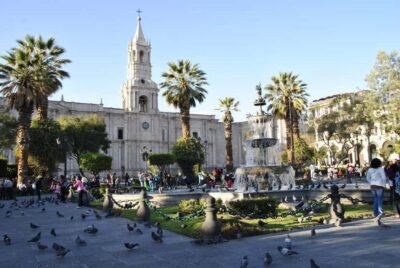
Walking tour in the Historic Center of Arequipa
Read our review →
Historic Downtown, Miraflores & Catacombs Private Tour
Read our review →
Machu Picchu Private Archaeological and Historical Guided Tour
Read our review →Browse the lists this tour appears in