
Reviewed · INCA RUINS & ARCHAEOLOGY
Cusco City Tour with Sacsayhuaman & Inca Sites – Small Group
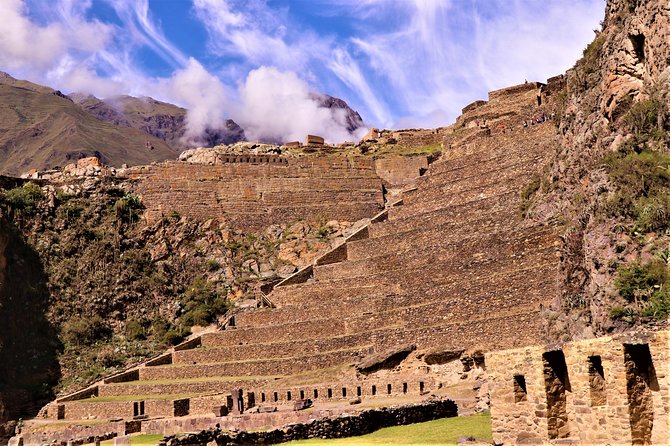
Cusco reveals its secrets in stone. This half-day tour gives you a useful first look at the city and its nearby Inca sites, combining the Plaza de Armas, Coricancha, Sacsayhuaman, Qenqo, Puka Pukara, and Tambomachay with a guide who keeps the story moving. I especially like the clear mix of colonial and Inca sights, plus the small group capped at 16 people. The main consideration is pace: six stops in four to five hours means you will see a lot, but you will not have unlimited time at each site.
The 1:00 pm start works well if you have spent the morning resting or arriving in Cusco. I also like that transport is included for the hilltop ruins and that the key entrance fees are covered. The cathedral is shown from the outside, however, and its interior visit is not included, so you will need another plan if that is high on your list.
In This Review
- Key points to know before booking
- Why this half-day route works in Cusco
- Plaza de Armas and the 12 Angled Stone
- Coricancha, where two building traditions meet
- Sacsayhuaman and the best view over Cusco
- Qenqo and the mystery of carved rock
- Puka Pukara, the small military checkpoint
- Tambomachay and the Inca respect for water
- Guides, group size, and the human side of the tour
- Is $98 a fair price?
- Timing, pickup, and practical planning
- Who should book this Cusco city tour?
- Should you book it?
- FAQ
- Where does the Cusco City Tour begin?
- What time does the tour start?
- How long does the tour last?
- What sites are included?
- Is the cathedral included?
- Are entrance fees included?
- Does the tour include hotel pickup?
- How large is the group?
- Can I cancel for a full refund?
Key points to know before booking
- Six major stops in roughly four to five hours: You cover central Cusco and the four main ruins on the city’s northern hills.
- Coricancha entrance included: Compare Inca stonework with the Santo Domingo convent built above it.
- Sacsayhuaman delivers the big visual moment: The giant zigzag walls and views over Cusco are the tour’s headline attraction.
- Small group, maximum 16 people: This is more personal than a large coach outing, though it is not a private tour.
- Afternoon departure at 1:00 pm: A sensible choice after a slow morning, especially while adjusting to Cusco’s altitude.
- Cathedral entry is extra: You see the Plaza de Armas and surrounding buildings, but the cathedral interior is not part of the price.
Why this half-day route works in Cusco
Cusco is easiest to understand when you see its two layers together. Spanish churches and colonial arcades occupy the old Inca ceremonial center, while original Inca walls still run beneath and beside them. This tour connects those pieces instead of treating the city center and ruins as separate outings.
The route also solves a practical problem. Cusco’s central streets are easy to explore on foot, but the nearby ruins sit uphill and spread across several locations. A vehicle saves you the effort of arranging taxis between Sacsayhuaman, Qenqo, Puka Pukara, and Tambomachay.
You should expect a fairly active afternoon. The tour is rated for people with moderate physical fitness, and you will walk through archaeological sites, use uneven paths, and spend time outdoors. The itinerary gives each stop about 30 minutes, which is enough for an explanation and a look around, but not for a slow archaeological study.
More City Tours in Cusco
- Cusco: Half-Day City Tour with Sacsayhuaman and Q’enco
★ 4.6 · 1,129 reviews - City Tour Cusco Qoricancha Sacsayhuaman y Tambomachay
★ 4.7 · 617 reviews - Cusco: Sightseeing Tour of the City on an Open-Top Bus
★ 4.0 · 481 reviews
Plaza de Armas and the 12 Angled Stone
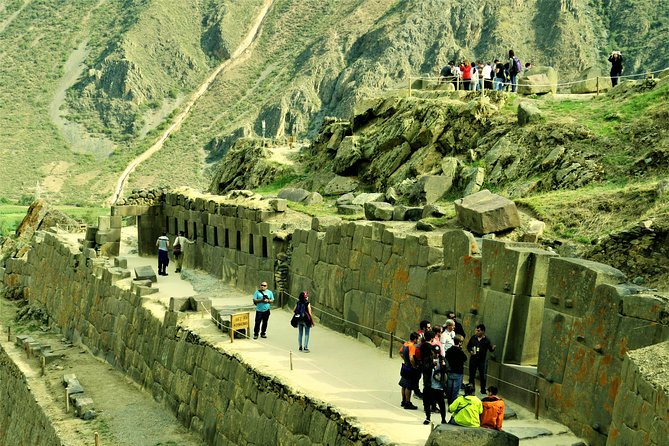
The tour begins in Cusco’s Plaza de Armas, the city’s grand central square. Your guide uses the surrounding buildings to explain how this area once served as the main ceremonial center of the Inca Empire, then became the focus of Spanish colonial Cusco.
This is a smart opening stop because it gives you the basic map of the city. You see the relationship between the cathedral, colonial buildings, and the older Inca foundations before heading into the narrower streets. The square is also a convenient meeting place in the historic center.
From there, you walk to the famous 12 Angled Stone. Its carefully fitted edges show the precision of Inca masonry in a way that is easy to grasp even if you know little about Inca construction. The stone is part of an original wall, not an isolated museum piece, so you can see how it fits into the larger structure.
The walk continues along Loreto Street, one of the clearest places to see original Inca urban design. Stone walls line both sides, and the passage makes the contrast with the Spanish buildings especially clear. Allow yourself comfortable shoes here. The distance is not the issue, but old stone streets can be hard on tired feet.
The cathedral is part of the setting, but not part of the paid visit. If you want to see the interior, plan a separate visit and confirm opening times locally. That missing entry is the clearest limitation of the central Cusco portion.
Coricancha, where two building traditions meet
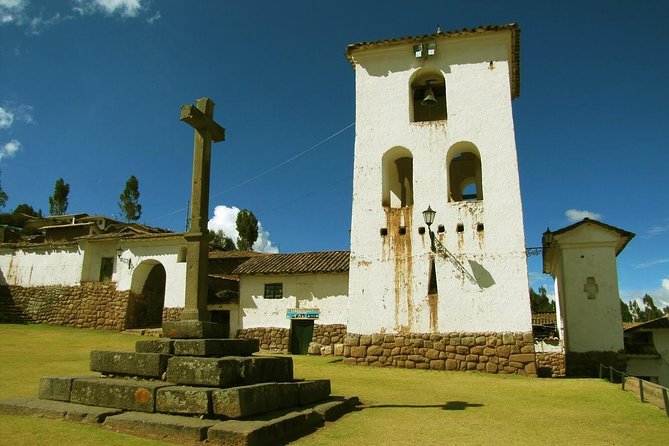
Coricancha was the most important temple in the Inca Empire and was dedicated to the Sun. Spanish authorities later built the Santo Domingo convent directly on top of its foundations, creating one of Cusco’s most striking examples of layered architecture.
Inside, your guide points out the difference between the precise, tightly fitted Inca walls and the colonial structures above them. The comparison is worth more than simply looking at a beautiful church or an old wall on its own. You get a direct lesson in how Spanish Cusco was built over the Inca capital.
The temple was once covered in gold and used for ceremonies, worship, and astronomy. Those details help explain why Coricancha mattered so much, but the surviving stonework is the real reason to pay close attention. Look for the clean joins and the way the walls angle and curve without obvious mortar.
Coricancha entry is included in the $98 price. That improves the value, since this is one of the most important paid sights in central Cusco. The allotted half hour is brisk, so listen closely to the guide rather than trying to examine every room at length.
Sacsayhuaman and the best view over Cusco
A vehicle takes you to Sacsayhuaman, the largest and most dramatic site on the route. The massive zigzag walls are built from enormous stone blocks fitted so closely that the familiar paper comparison feels almost inadequate. This is where the scale of Inca engineering becomes unmistakable.
Sacsayhuaman is more than a viewpoint, though the view is excellent. From the site, you can look down over Cusco and out toward the surrounding mountains. The location also helps you understand the strategic importance of the old capital, since the site controls the high ground above the city.
Your guide covers battles, ceremonies, and the continuing role of Sacsayhuaman in the Inti Raymi festival. That current connection gives the ruins a little more life than a simple stop for photographs. The site is still tied to Cusco’s public traditions, not frozen as an empty relic.
Thirty minutes goes quickly here. You will have time to see the main walls, hear the explanation, and enjoy the views, but you may wish for longer if stonework fascinates you. The partial tourist ticket includes Sacsayhuaman, so you do not need to purchase that entry separately.
More Inca Ruins & Archaeology in Cusco
- Cusco City Sightseeing, San Pedro Market, Cathedral and Qorikancha Temple
★ 4.5 · 139 reviews - Cusco: 3-Hour Horse Riding Tour to the Temple of the Moon
★ 5.0 · 105 reviews - Cusco City Sightseeing and Sacsayhuaman Archeological Park Tour
★ 4.5 · 101 reviews - Cusco: Historical Guided City Tour with 4 Inca Ruins
★ 4.5 · 99 reviews
Qenqo and the mystery of carved rock
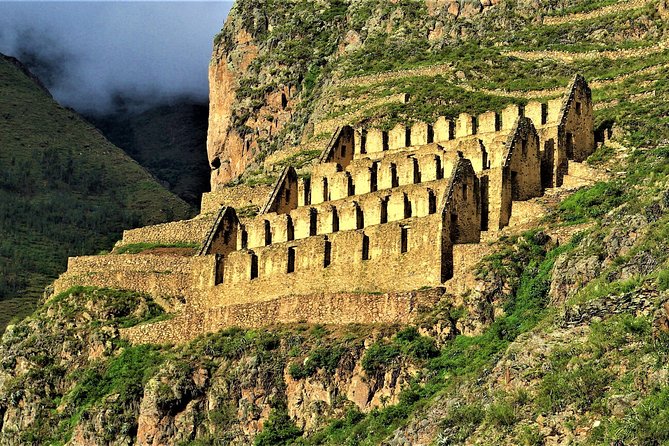
Qenqo is smaller and more puzzling than Sacsayhuaman. This ceremonial center was carved largely from natural rock, with winding passages, channels, and hidden altars that may have served ritual purposes.
The name Qenqo means zigzag in Quechua, and the shape of the site gives the word a physical meaning. Your guide explains the different theories about how the complex was used rather than presenting one uncertain answer as settled fact. That approach is useful because Qenqo leaves more questions than clear instructions.
The passages can feel enclosed compared with the open terraces at Sacsayhuaman. If you prefer broad views and large walls, this may be a quieter stop. If you like archaeological puzzles, it may be one of the most memorable parts of the afternoon.
Qenqo is included in the partial tourist ticket. As at the other ruins, expect outdoor walking on uneven ground. The short stop is enough to understand the site’s purpose and layout, but not to linger over every carved surface.
Puka Pukara, the small military checkpoint
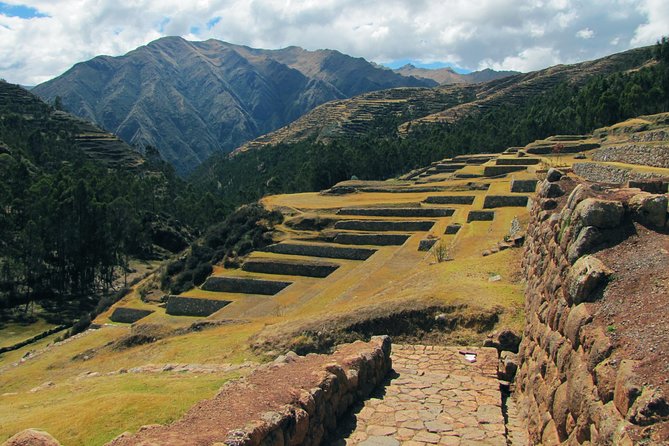
Puka Pukara translates as Red Fortress. It was likely a military checkpoint and resting place along the road linking Cusco with the Sacred Valley and the jungle.
Compared with Sacsayhuaman, Puka Pukara is modest. Its value comes from its position and function. The terraces, walls, guard posts, and rooms help you picture the network of roads and messengers that supported the Inca capital.
The open setting provides broad views of the surrounding countryside. Your guide can point out how the site worked as a lookout and stopping point, rather than treating it as another fortress built only for war.
Entry is listed as free for this stop, while the overall circuit ticket also covers the four main northern ruins. The distinction does not change your visit, but it helps explain what is included in the tour package.
Tambomachay and the Inca respect for water
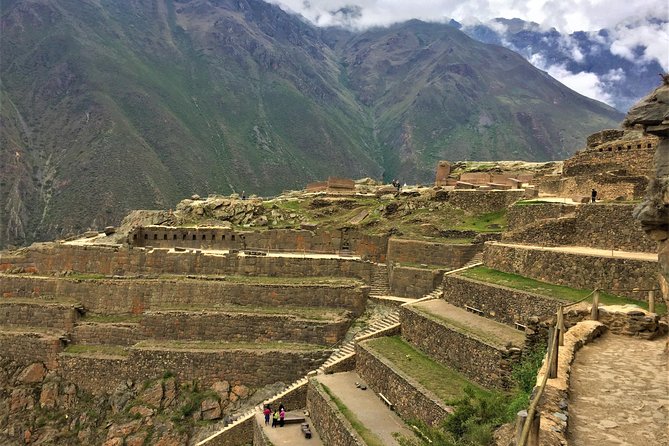
Tambomachay is the calmest stop on the route. It is known for clear fountains, canals, aqueducts, and carefully shaped stonework. The site is often called the Inca Baths and may have served as a place of rest and water worship for Inca nobility.
Watch the water channels closely. Their continued flow after centuries gives the site a practical quality that balances the more ceremonial explanations elsewhere. The ruins are not just decorative. They show careful planning around a natural resource that held spiritual and daily importance.
This is a good final stop because it slows the afternoon down before the return to Cusco. You can take photographs, enjoy the fresh air, and think back over the contrast between the city walls, fortress ruins, carved stone, and flowing water.
Tambomachay entry is included. The site is peaceful, but you still need to be comfortable walking outdoors and standing for the guide’s explanation.
Guides, group size, and the human side of the tour
A good guide matters greatly on a route like this. Without context, the stops can blur into a series of old walls. With a strong guide, you begin to see the city’s political, religious, military, and engineering systems as connected parts of one culture.
The operator’s wider guiding team receives especially warm praise for personal attention, clear storytelling, and care when someone feels unwell. Guides named in the provider’s other Peru programs include Katia, Jennifer, Roger, Leo, and Frank. Their reported strengths include explaining Quechua culture, answering questions, keeping a family group engaged, and helping when a group member became sick.
That does not mean a particular guide is guaranteed for this departure. Still, it suggests that guiding is an important part of the company’s service. If you want a private pace or a custom focus, the maximum of 16 people may feel too large. If you want company without joining a big bus, it is a useful middle ground.
Is $98 a fair price?
At $98 per person, this tour is not the cheapest way to walk around Cusco. It is also not simply a walking tour. The price includes a professional guide, hotel pickup and drop-off within the Cusco Historic Center, transport to the hilltop sites, Coricancha entry, and the partial tourist ticket for Sacsayhuaman, Qenqo, Puka Pukara, and Tambomachay.
That package makes the price reasonable if you want the logistics handled for you. Hiring separate taxis and arranging several site entries could take time, and a guide adds meaning to places that can otherwise seem confusing.
The value is strongest for a first visit or a short stay. You see six major sights in one afternoon and finish back at the meeting point. The value is weaker if you already know Cusco well, want long photography stops, or plan to visit the ruins at your own slow pace.
Meals and snacks are not included, so eat beforehand or carry something small. The tour is only four to five hours, but altitude and walking can make a half-day feel demanding.
Timing, pickup, and practical planning
The stated meeting point is the Plaza de Armas, with a 1:00 pm start. Hotel pickup and drop-off are included for hotels in the Cusco Historic Center, while the activity ends back at the meeting point.
The afternoon schedule gives you a free morning. You can rest, get breakfast, visit a nearby market, or simply allow your body time to adjust to Cusco before the more active portion begins. The published itinerary specifically lists the 1:00 pm departure, so confirm the exact pickup arrangement when booking if you are staying in the historic center.
Wear shoes suitable for uneven paths and bring water. A light layer is sensible for an afternoon that includes exposed ruins and changing mountain conditions. You should also bring sun protection and a camera, since Sacsayhuaman, Puka Pukara, and Tambomachay offer open-air views.
Confirmation is provided at booking. Free cancellation is available until 24 hours before the start time for a full refund. Changes or cancellations made less than 24 hours before the start are not accepted for a refund.
Who should book this Cusco city tour?
I would choose this tour if you are visiting Cusco for the first time, have limited time, or want the city’s main Inca sites explained in one organized outing. It is also a good fit if you prefer a guide but do not want a large group.
Families can benefit from the short explanations and vehicle transfers, though everyone should be comfortable with moderate walking. The route also suits history-minded visitors who want to compare Inca masonry, colonial construction, religious sites, military positions, and water engineering in one compact experience.
I would look elsewhere if the cathedral interior is essential, if you want a private guide, or if you prefer spending an hour or more at each archaeological site. You may also find the pace too quick if you need frequent breaks.
Should you book it?
Book this tour if you want a well-planned introduction to Cusco with the major nearby ruins added on. The strongest reasons are the efficient route, included entries, small group size, and the chance to see Coricancha and Sacsayhuaman on the same afternoon.
Go in knowing that the cathedral is not included, the schedule is brisk, and the tour is best for orientation rather than deep archaeological study. For a first afternoon in Cusco, $98 buys useful structure, transport, and context. That is a fair deal if you value your time and want the stones to tell a coherent story.
FAQ
Where does the Cusco City Tour begin?
The tour begins at the Plaza de Armas in Cusco, Peru.
What time does the tour start?
The stated start time is 1:00 pm.
How long does the tour last?
The experience lasts approximately four to five hours.
What sites are included?
The route includes the Plaza de Armas, the 12 Angled Stone, Loreto Street, Coricancha, Sacsayhuaman, Qenqo, Puka Pukara, and Tambomachay.
Is the cathedral included?
No. You can see the cathedral and learn about the buildings around the Plaza de Armas, but cathedral entrance and an interior visit are not included.
Are entrance fees included?
Coricancha entrance is included. The partial tourist ticket also covers Sacsayhuaman, Qenqo, Puka Pukara, and Tambomachay.
Does the tour include hotel pickup?
Yes, hotel pickup and drop-off are included for hotels in the Cusco Historic Center.
How large is the group?
The tour has a maximum of 16 people.
Can I cancel for a full refund?
Yes. You can cancel at least 24 hours before the experience start time for a full refund. Cancellations or changes made less than 24 hours before the start time are not accepted for a refund.
More Inca Sites and Ruins
- Horse Riding Chacan Mountain And Temple Of The Moon
★ 5.0 · 78 reviews - Cusco 4-Hour Private Tour Including Sacsayhuaman and Qenqo
★ 5.0 · 77 reviews - Half-Day City Tour of Cusco Including Tambomachay
★ 4.5 · 59 reviews - Sacsayhuaman Temple, Tambomachay and Puca Pucara Half-Day Tour
★ 4.5 · 59 reviews
Just added around Cusco
- Cusco: Rainbow Mountain and viewpoint red valley ( optional)★ 4.8 · 3 reviews
- Tour Pallay Punchu Trek Full Day★ 4.2 · 3 reviews
- Montaña de Colores: tour en cuatrimotos día completo★ 3.3 · 3 reviews
- Excursion Cusco – Puno – Titicaca Observatory Train★ 5.0 · 3 reviews
- Cusco: Palcoyo Mountain Day Trip with Breakfast and Lunch★ 4.8 · 3 reviews
- Maras Moray★ 5.0 · 3 reviews
- Tour to Laguna Humantay with breakfast and lunch from Cusco★ 4.7 · 3 reviews
- From Cusco:Chinchero, Moray, Maras, Ollantaytambo with lunch★ 5.0 · 3 reviews
Inca Ruins & Archaeology, compared.

Half-Day City Tour with Sacsayhuaman and Q’enco
Read our review →
City Tour Cusco Qoricancha Sacsayhuaman y Tambomachay
Read our review →
The Charm of Barranco & Pre Inca Pyramid in Miraflores
Read our review →
Pachacamac Ruins & Barranco Half-Day Guided Tour
Read our review →
Pre Inca Temple of Pachacamac Half-Day Tour from Lima
Read our review →

Cusco City Sightseeing, San Pedro Market, Cathedral and Qorikancha Temple
Read our review →
3-Hour Horse Riding Tour to the Temple of the Moon
Read our review →Browse the lists this tour appears in