
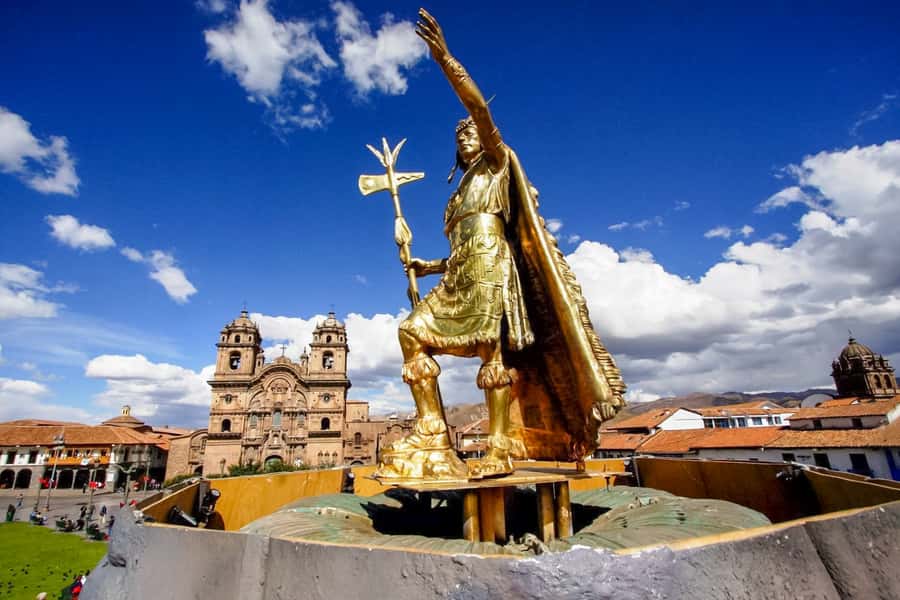
Reviewed · INCA RUINS & ARCHAEOLOGY
Cusco: City and Nearby Ruins 5-Hour Guided Tour
Cusco’s best ruins fit one afternoon. This $22 tour links the city’s most important Inca and colonial sights, from the gold-lined Coricancha site to the enormous stones at Sacsayhuaman and the strange carved chambers of Qenqo. I like the way it combines walking in central Cusco with a minibus trip to four nearby ruins, and I like that a guide explains what you are seeing instead of leaving you to decode the stones alone. The main caution is time: the schedule can feel tight, and an unplanned alpaca shop stop has caused some groups to reach the final ruins at dusk.
The tour earns a solid 4.4 out of 5 from 30 ratings, with especially warm praise for clear explanations and guides who care about Cusco and Inca culture. I would confirm your language at pickup, since one booking was conducted in Spanish despite being sold as English, and entrance fees are not included in the $22 price.
In This Review
- Key points to know before booking
- Why this five-hour route works in Cusco
- Coricancha, where Inca ceremony meets colonial Cusco
- Plaza de Armas and the Cathedral’s striking interior
- Sacsayhuaman and the stones that make people stop talking
- Qenqo’s carved rock and underground passages
- Tambomachay and Puka Pukara near the end of the route
- The guide can make or break the afternoon
- What the $22 price really covers
- Timing, transport, and the feel of the day
- Who should book this Cusco ruins tour?
- FAQ
- How long does the Cusco city and ruins tour last?
- What time does the tour begin?
- Where does pickup take place?
- Which sites are included?
- Are entrance fees included in the price?
- What languages are available?
- Is this a private tour or a group tour?
- Should you book it?
Key points to know before booking
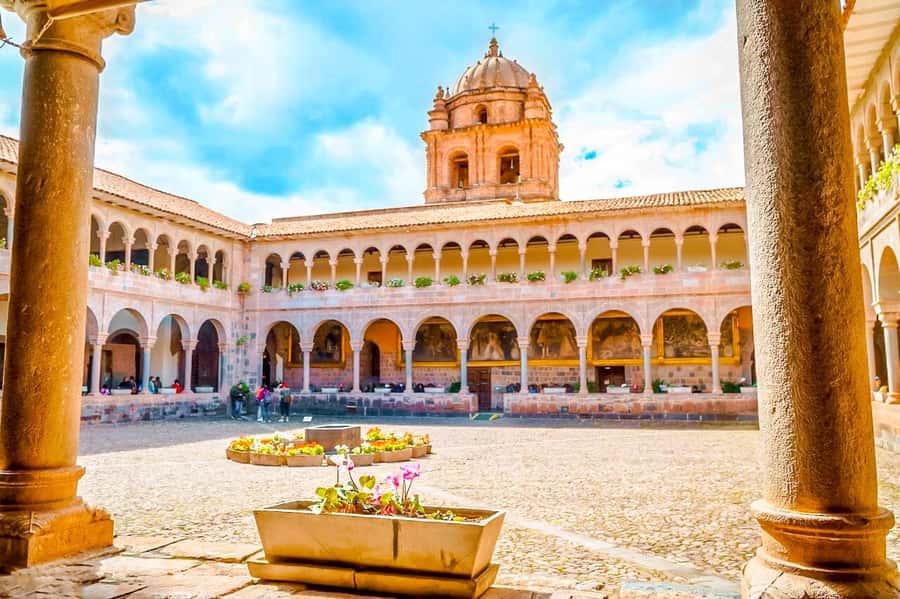
- Coricancha begins the story: See the Inca ceremonial center beneath the later church and learn how Cusco was reshaped after the conquest.
- Sacsayhuaman is the visual high point: Massive stones, some said to weigh up to 180 tons, fit together with remarkable precision.
- Qenqo feels unlike the other ruins: Carved rock and underground passages create a darker, more mysterious visit.
- The tour covers five major sights in five hours: Two central stops are reached on foot, while a small bus handles the three northern sites.
- Entrance tickets cost extra: You buy the required site tickets separately, often at the stops.
- Ask about shopping stops: An alpaca textile visit has taken roughly 45 minutes from some groups, leaving less daylight for the last ruins.
Why this five-hour route works in Cusco
Cusco is compact in its historic center, but its most famous ruins spread across the hills north of town. That makes this tour useful if you have only one free afternoon, or if you want the basic geography before visiting larger sites elsewhere in Peru.
The route starts after lunch with pickup from accommodation in downtown Cusco. You then visit Coricancha and the Plaza de Armas area on foot before taking transportation to Sacsayhuaman, Qenqo, Tambomachay, and Puka Pukara. The day ends back in central Cusco.
I like this structure because it avoids treating the ruins as isolated photo stops. You first see the Inca foundations in the city, then move outward to ceremonial, military, and water-related sites. The guide can connect those pieces as you go.
The tradeoff is pace. Five hours sounds generous, but it must cover transportation, five locations, ticket purchases, explanations, and the return to town. You will get a useful overview, not a leisurely archaeological study.
More City Tours in Cusco
- Cusco: Half-Day City Tour with Sacsayhuaman and Q’enco
★ 4.6 · 1,129 reviews - City Tour Cusco Qoricancha Sacsayhuaman y Tambomachay
★ 4.7 · 617 reviews - Cusco: Sightseeing Tour of the City on an Open-Top Bus
★ 4.0 · 481 reviews
Coricancha, where Inca ceremony meets colonial Cusco
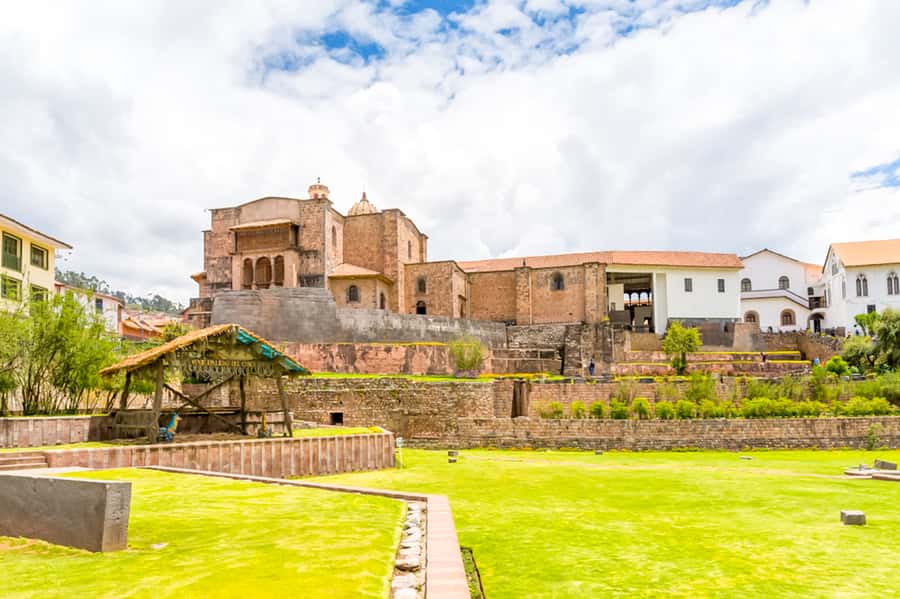
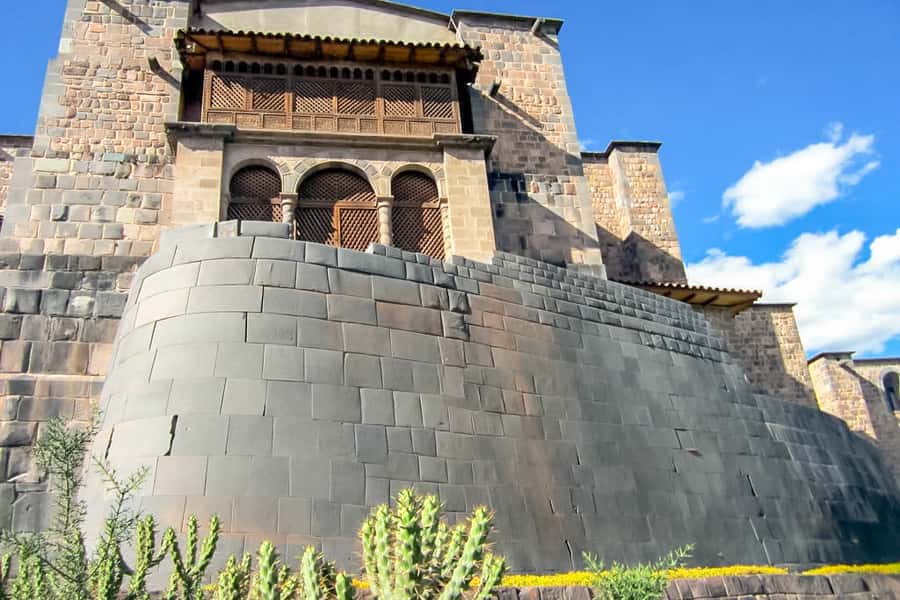
Coricancha is a strong first stop because it shows how Spanish Cusco was built directly over the Inca city. The site was a major ceremonial construction during the height of Inca power. Its importance is easier to grasp here than at a remote ruin because modern Cusco presses right against it.
Your guide explains the relationship between the Inca complex and the later church built above it. Look closely at the masonry and the way the older stonework survives beneath the colonial structure. The contrast helps you understand that conquest did not erase the earlier city completely. It changed the use and meaning of its buildings.
This is one of the places where a live guide adds real value. Without explanation, you might notice polished stone and old walls but miss the larger point: Coricancha helps show how the Spanish reused existing Inca foundations and ceremonial spaces.
Allow yourself a moment to look beyond the basic route. The most useful details are often the small ones, such as how tightly the stones fit and how the later building sits on the earlier structure. The stop is not simply an old building visit. It is a lesson in how Cusco’s two major cultural layers occupy the same ground.
Plaza de Armas and the Cathedral’s striking interior
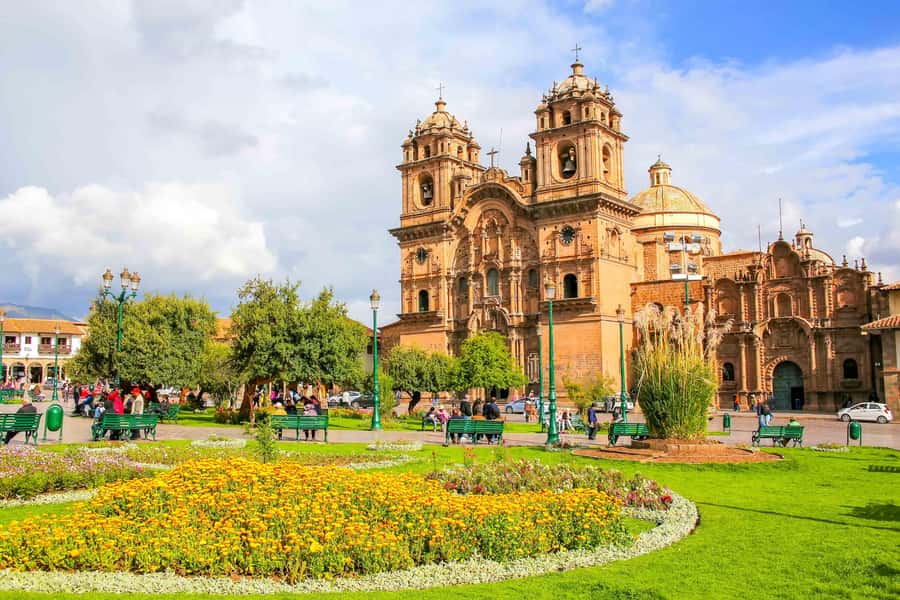
From Coricancha, the tour continues to the Plaza de Armas, Cusco’s main square. This is the city’s public heart, framed by colonial buildings and the Cathedral. The square also makes a practical transition between the Inca center and the ruins outside town.
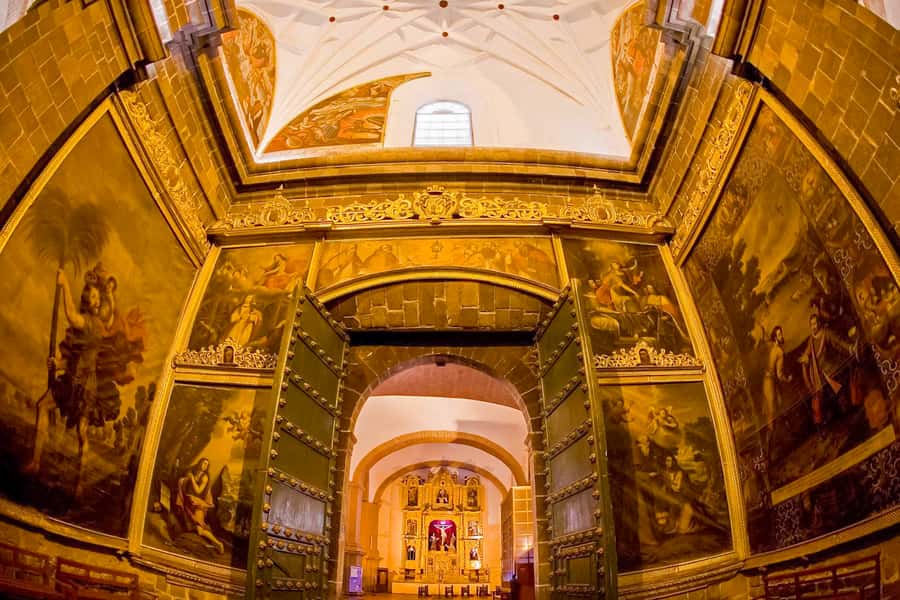
The Cathedral is particularly worthwhile for its interior. The guide explains how it was constructed over Inca buildings, giving you another clear example of colonial Cusco being built on top of the earlier city.
The Cathedral visit is included on the afternoon route described here, but the schedule notes that it is not included on the morning tour. If you are comparing different start times, confirm what your particular departure covers. That small distinction matters because the Cathedral is one of the strongest parts of the central-city portion.
The stop can feel quick if the group is large or the schedule has slipped. Still, I would not dismiss it. The Cathedral adds context that the outer ruins cannot provide, especially if this is your first look at Cusco. You see how religion, government, and older Inca spaces became linked in the colonial city.
Sacsayhuaman and the stones that make people stop talking
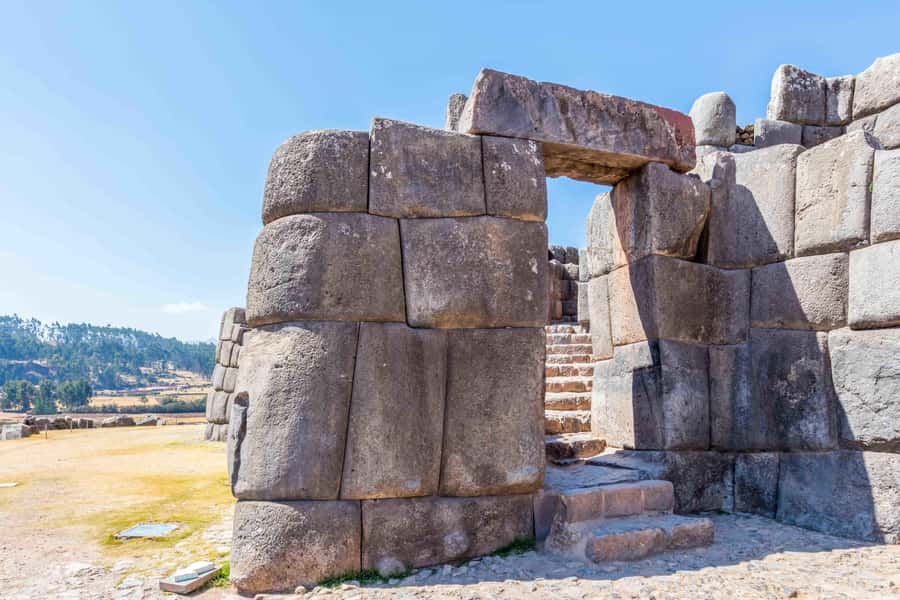
After the central sights, a small bus takes you toward the northern outskirts of Cusco and Sacsayhuaman. This is likely to be the most impressive stop for sheer scale.
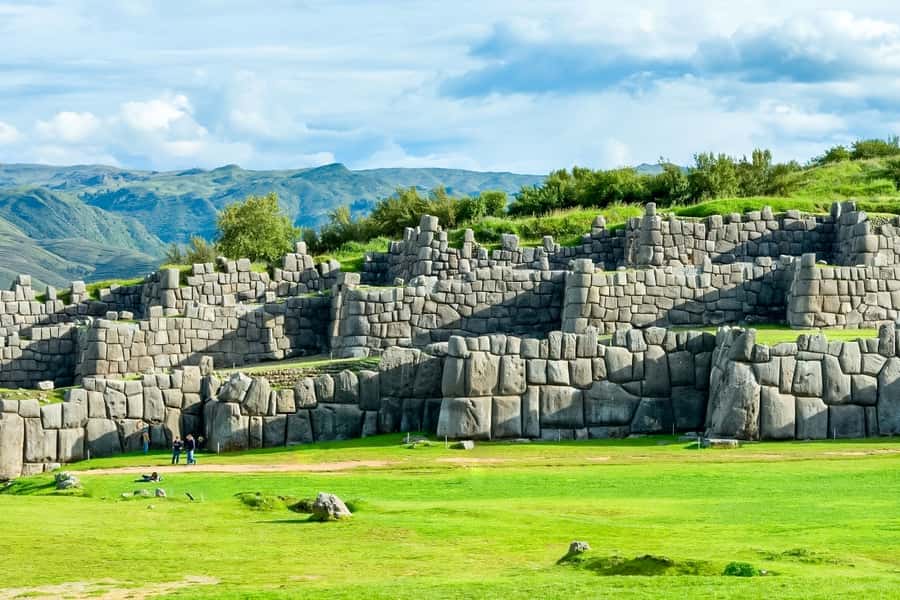
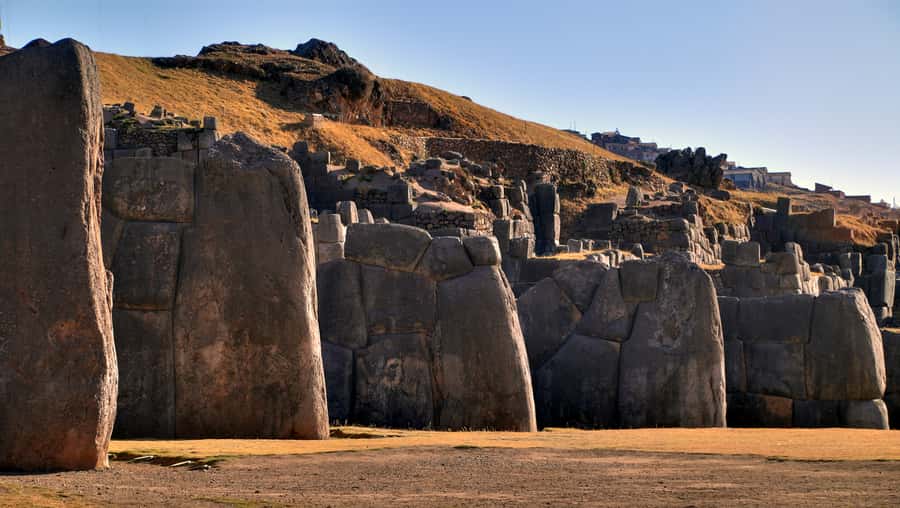
The walls are built from huge rocks fitted together with striking accuracy. The largest stones are described as weighing up to 180 tons. You do not need an expert lecture to appreciate the engineering, but a guide can help you notice the irregular shapes, tight joints, and the way the walls follow the site.
The experience here is visual and physical. You walk near openings in the walls and see how the enormous blocks were assembled into defensive or ceremonial structures. The site makes a fine contrast with Coricancha. Coricancha brings you into the religious center of Inca Cusco, while Sacsayhuaman shows power expressed through stone on a massive scale.
You should expect some walking and uneven surfaces at the archaeological sites. The supplied information does not specify accessibility details, so anyone with mobility concerns should ask the provider before booking.
Sacsayhuaman also exposes the tour’s time problem. If the group leaves central Cusco late, or spends a long time at a shopping stop, you may get less time here and at the remaining sites. I would rather have a clear, focused visit to the ruins than an extended retail stop, so it is reasonable to ask the guide about the schedule.
More Inca Ruins & Archaeology in Cusco
- Cusco City Sightseeing, San Pedro Market, Cathedral and Qorikancha Temple
★ 4.5 · 139 reviews - Cusco: 3-Hour Horse Riding Tour to the Temple of the Moon
★ 5.0 · 105 reviews - Cusco City Sightseeing and Sacsayhuaman Archeological Park Tour
★ 4.5 · 101 reviews - Cusco: Historical Guided City Tour with 4 Inca Ruins
★ 4.5 · 99 reviews
Qenqo’s carved rock and underground passages
Qenqo, whose name refers to a zigzag form, has a different mood from Sacsayhuaman. Instead of giant walls dominating an open slope, you find unusual carved stones and subterranean passages hidden within the site.
The interior is the reason to pay attention. The carved rock creates a more enclosed and puzzling visit, and the site is associated with the possible mummification of the dead. That interpretation is presented as likely rather than certain, so your guide’s explanation matters. You can appreciate the atmosphere without treating every theory as settled fact.
Qenqo rewards curiosity. Look for the way the stone has been shaped and how the underground areas change your sense of the site. It is a useful reminder that Inca sacred places were not all monumental plazas. Some depended on carved natural rock, restricted spaces, and ritual activity that is harder to read today.
One drawback is that the stop may be brief. Several locations compete for the same five-hour block, and the site can be less immediately understandable than Sacsayhuaman. Ask questions while you are there. The guide is especially important at Qenqo because the physical remains do not explain themselves.
Tambomachay and Puka Pukara near the end of the route
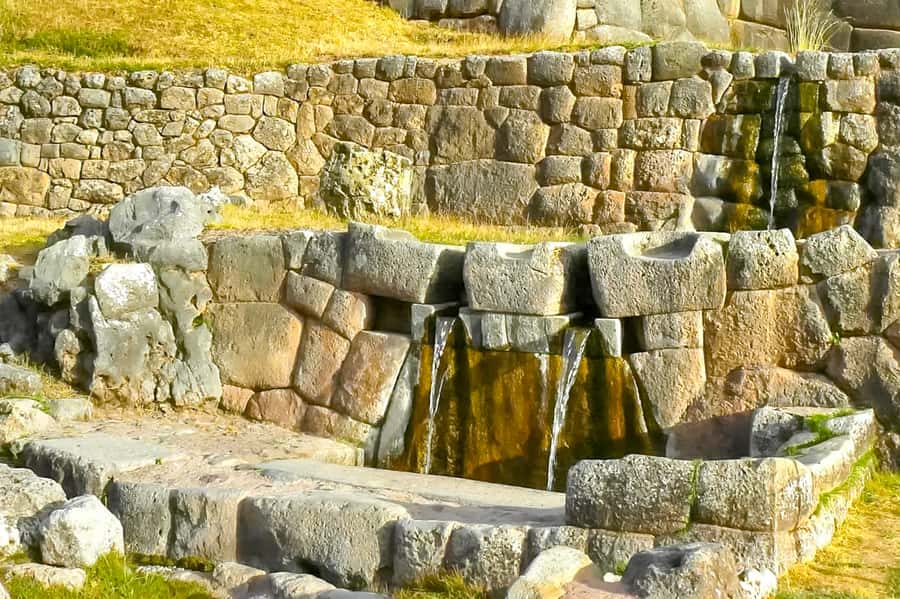
Tambomachay is known for its Inca baths and water features. It brings a new element to the tour: rather than focusing mainly on walls or burial-related spaces, it shows the importance of water in Inca construction and ceremony.
The site is a good place to listen closely to the guide’s interpretation. The tour information identifies it as the location of Inca baths, but it does not promise a long visit or extensive time for independent exploration. If you reach it late in the afternoon, expect the stop to be efficient.
Nearby Puka Pukara served as a military lookout point. Its position helps explain why it was useful. From a lookout, the surrounding routes and approaches could be watched, giving the site a practical role that differs from the ceremonial focus of Coricancha or Tambomachay.
These final stops are valuable because they broaden the picture of Inca life. You see ceremonial construction, urban foundations, large-scale stonework, carved ritual spaces, water works, and military observation in one short route.
The concern is daylight. One German booking described the last two stops taking place in twilight or darkness after a 45-minute alpaca shopping visit. That may not happen on every departure, but it is a clear reason to ask whether shopping is part of the plan and how the guide protects time at the ruins.
The guide can make or break the afternoon
The strongest part of this experience is the live explanation. The guide speaks Spanish or English, and private or small-group formats are available. A highly praised guide named Peto was described as deeply committed to Cusco and Inca culture, with clear explanations and strong organization.
That kind of guide changes the value of the tour. At Sacsayhuaman, you get more than a view of giant rocks. At Qenqo, you have a better chance of understanding why the carved passages matter. At the Cathedral, you can follow the link between Inca foundations and colonial construction.
Language confirmation deserves special attention. One booking recorded a serious problem, with the tour conducted in Spanish instead of English. Another English-speaking participant found that the guide often translated less because the rest of the group spoke Spanish. If you need English throughout, confirm the language before departure and make it clear at pickup.
A small group is usually the best fit for this route. It gives you a better chance to hear the guide and ask questions, though the exact group size is not specified. Private tours are available if you want more control over the pace and language.
What the $22 price really covers
At $22 per person, the tour is inexpensive for five hours of guiding and transportation. The price is strongest if you want an efficient introduction to Cusco and prefer not to arrange separate transport to the four outer sites.
The important catch is that entrance fees are not included. You should budget extra for the required admissions. Tickets can be purchased locally, and one useful tip is to buy the individual entrance tickets at the sites. That process was described as straightforward during the tour.
This means the advertised price is not the final cost of the afternoon. Still, the value remains good if the route runs as planned. You receive a professional guide, a ride between the center and northern ruins, and access to five major sights in one outing.
The value drops if shopping takes a large part of the schedule, especially because the final ruins are the least convenient to visit independently. I would ask two questions before confirming: Are there any textile or alpaca shop stops, and are all five sights included in this departure?
Timing, transport, and the feel of the day
The tour lasts five hours and begins in the early afternoon, with pickup from downtown Cusco accommodation. Two central stops are within walking distance, while a small bus carries the group to the three outer sites. That arrangement limits the need to arrange taxis and keeps the route moving.
The early afternoon start works well if you want a relaxed morning in Cusco. It also gives you time to eat before pickup. The downside is that the final stops may approach dusk, depending on the season, traffic, group pace, and any added stop.
Because the tour ends back in downtown Cusco, it is easy to fit into a broader city stay. You can use the morning for another activity, then spend the afternoon on the main ruins route. The tour is also useful soon after arrival because it gives you a fast orientation to the city and its surrounding sites.
Bring practical patience. The route has a lot packed into it, and the pace may feel brisk. If your priority is detailed photography, long quiet pauses, or close study of each wall, a private format or separate visits may suit you better.
Pets are not allowed. The booking is also non-refundable, and confirmed tickets cannot be modified or exchanged, so check your date, language, and pickup details carefully before paying.
Who should book this Cusco ruins tour?
I would choose this tour if you have one afternoon, want the major sights in a single circuit, and value explanations more than a slow pace. It is especially useful for first-time visitors who want to understand how the Inca and colonial parts of Cusco fit together.
It also suits anyone who would rather pay a modest fee for transportation than arrange separate rides to Sacsayhuaman, Qenqo, Tambomachay, and Puka Pukara. A small group or private departure is worth considering if language clarity and questions matter to you.
I would hesitate if you dislike shopping stops, need a completely fixed timetable, or want long visits at each ruin. The alpaca store issue is not a minor detail when daylight is limited. Ask about it before booking, and request that the archaeological sites receive priority.
FAQ
How long does the Cusco city and ruins tour last?
The tour lasts five hours.
What time does the tour begin?
It begins in the early afternoon. Exact starting times depend on availability.
Where does pickup take place?
Pickup is provided from your accommodation in downtown Cusco.
Which sites are included?
The route includes Coricancha, the Plaza de Armas and Cathedral, Sacsayhuaman, Qenqo, Tambomachay, and Puka Pukara.
Are entrance fees included in the price?
No. Entrance fees are not included. Tickets can be purchased at the sites during the tour.
What languages are available?
Live guiding is available in Spanish and English. Confirm your preferred language before departure.
Is this a private tour or a group tour?
Small-group and private options are available.
Should you book it?
Book this tour if you want a low-cost, well-packed introduction to Cusco’s main city sights and nearby ruins. The route is strong, the guide can add valuable context, and Sacsayhuaman and Qenqo give the afternoon real variety.
Before paying, confirm the tour language and ask directly about any textile shop stop. If the answer is clear and the schedule protects the ruins, $22 plus entrance fees is a fair price for five hours. If you want a slower, more focused visit, choose the private option or split these sites across separate outings.
More Inca Sites and Ruins
- Horse Riding Chacan Mountain And Temple Of The Moon
★ 5.0 · 78 reviews - Cusco 4-Hour Private Tour Including Sacsayhuaman and Qenqo
★ 5.0 · 77 reviews - Half-Day City Tour of Cusco Including Tambomachay
★ 4.5 · 59 reviews - Sacsayhuaman Temple, Tambomachay and Puca Pucara Half-Day Tour
★ 4.5 · 59 reviews
Just added around Cusco
- Cusco: Rainbow Mountain and viewpoint red valley ( optional)★ 4.8 · 3 reviews
- Tour Pallay Punchu Trek Full Day★ 4.2 · 3 reviews
- Montaña de Colores: tour en cuatrimotos día completo★ 3.3 · 3 reviews
- Excursion Cusco – Puno – Titicaca Observatory Train★ 5.0 · 3 reviews
- Cusco: Palcoyo Mountain Day Trip with Breakfast and Lunch★ 4.8 · 3 reviews
- Maras Moray★ 5.0 · 3 reviews
- Tour to Laguna Humantay with breakfast and lunch from Cusco★ 4.7 · 3 reviews
- From Cusco:Chinchero, Moray, Maras, Ollantaytambo with lunch★ 5.0 · 3 reviews
Inca Ruins & Archaeology, compared.

Half-Day City Tour with Sacsayhuaman and Q’enco
Read our review →
City Tour Cusco Qoricancha Sacsayhuaman y Tambomachay
Read our review →
The Charm of Barranco & Pre Inca Pyramid in Miraflores
Read our review →
Pachacamac Ruins & Barranco Half-Day Guided Tour
Read our review →
Pre Inca Temple of Pachacamac Half-Day Tour from Lima
Read our review →

Cusco City Sightseeing, San Pedro Market, Cathedral and Qorikancha Temple
Read our review →
3-Hour Horse Riding Tour to the Temple of the Moon
Read our review →Browse the lists this tour appears in