
Reviewed · AREQUIPA TOURS
8-Hours Tour in Arequipa Laguna de Salinas with Pick-up
Salt flats meet volcano country. This 8 to 10-hour trip from Arequipa takes you across the Salinas y Aguada Blanca National Reserve to salt plains, mirror-like lagoons, flamingos, vicuñas, and wide-open Andean scenery. I like the excellent chance to see wild camelids and birds, and I like that the trip includes several stops instead of rushing straight to the lagoon.
The price is appealing at $30 per person, especially when a small group receives a faster 4×4 vehicle. The catch is the rough, dusty road, the sudden climb to around 4,200 meters, and the fact that the lagoon’s famous reflections depend on weather and season. This is a scenic high-altitude outing, not a soft-edged sightseeing ride.
In This Review
- Key Points Before You Book
- Why Laguna de Salinas Is Worth the Long Ride
- Leaving Arequipa at 6:00 in the Morning
- Salt Flats and the First Stop in Arequipa
- Salinas y Aguada Blanca National Reserve: Animals Along the Road
- The Bumpy Road and the 4,200-Meter Problem
- Laguna de Salinas and the Famous Mirror Effect
- Optional Thermal Wells and What to Expect
- How Good Is the Guiding?
- Is the $30 Price Good Value?
- What to Pack for the High Andes
- Who Should Book This Arequipa Day Trip?
- Should You Book the Laguna de Salinas Tour?
- FAQ
- How long does the Laguna de Salinas tour take?
- Where does the tour start and finish?
- Is breakfast included?
- How much do the hot springs cost?
- Are entrance fees included?
- Is the mirror effect at Laguna de Salinas guaranteed?
- How many people can join the tour?
Key Points Before You Book
- The altitude is serious: The main sights sit around 4,200 meters, and some people experience nausea, headaches, or motion sickness.
- The road is part of the adventure: Expect long stretches of bumpy, dusty track, with about two hours each way through the reserve.
- Wildlife is a major reward: Vicuñas, llamas, alpacas, flamingos, Andean geese, guanacos, and small rabbits may appear along the route.
- Reflections are not guaranteed: The mirror effect at Laguna de Salinas needs calm water and suitable conditions. Wind or a dry season can change the view.
- The hot springs are optional: Entry costs 5 soles per person, but the pools are small and may feel cool rather than hot.
- Bring extra cash and food: Breakfast is not included, and community charges of 10 soles per person are listed separately.
Why Laguna de Salinas Is Worth the Long Ride
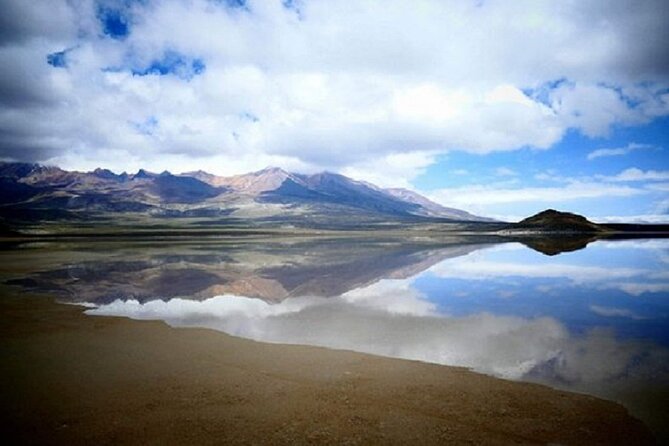
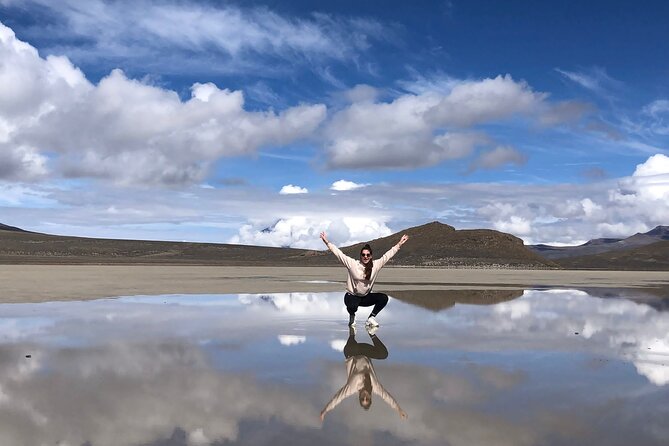
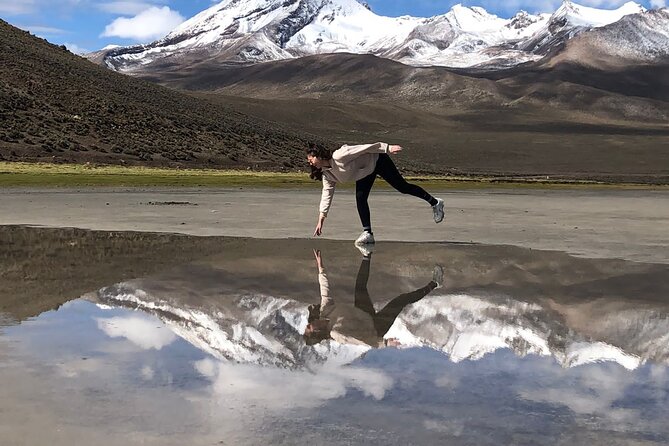
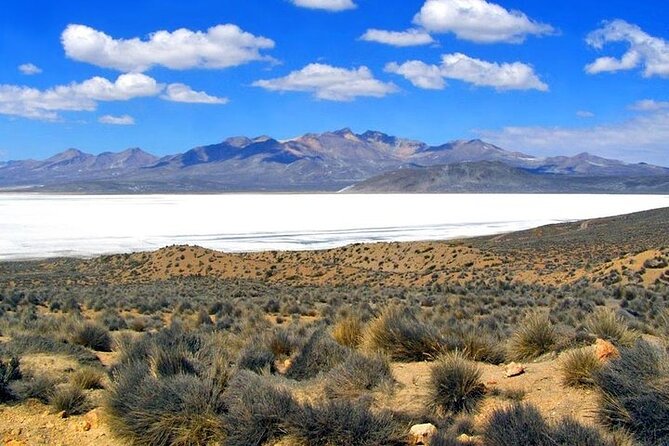
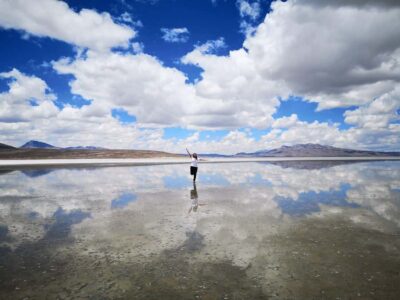
Laguna de Salinas is not a conventional lake destination. It is a broad salt-producing area where white mineral flats, shallow water, volcanoes, and high Andean skies come together. In the wet season, water can spread across the salt surface and create the famous mirror effect. On a calm day, the reflections can make the mountains seem to continue beneath your feet.
That image is the reason many people book this excursion, but you should set realistic expectations. The water may be absent, too shallow, or disturbed by wind. A trip can still be worthwhile in dry conditions, when the salt flats take on a stark white appearance, but the photographs will look different from the classic reflective images.
I particularly like the setting around the lagoon because it feels spacious and quiet. Several departures have reached the area early, before many other groups arrived. That gives you time to walk nearby, look for birds, and take photographs without a crowded viewpoint pressing in around you.
The views of Misti Volcano are another strong point. Even when the lagoon does not produce reflections, the road up from Arequipa can offer memorable views of Misti and the surrounding mountains. The volcano gives the journey a clear visual anchor, while the changing terrain helps break up the long drive.
A few more Peru trips worth weighing up
- From Arequipa: Colca Canyon Full-Day Guided Tour with Meals
★ 4.5 · 982 reviews - Tour to the Salinas Lagoon and National Reserve in Arequipa
★ 4.5 · 548 reviews - From Arequipa: Sillar Route Trek
★ 4.2 · 461 reviews
Leaving Arequipa at 6:00 in the Morning
The tour begins at 6:00 a.m. from C. Álvarez Thomas 115 in Arequipa. That early start is useful. It gives you the best chance of reaching the lagoon before the busiest period, and it leaves enough time for the reserve’s scattered stops.
Breakfast is not included in the $30 price. Some departures stop for breakfast around 9:00 a.m., after roughly three hours on the road. That timing matters, so do not leave Arequipa expecting a meal right away. Bring water and snacks, especially if you know you feel unwell when hungry or traveling at altitude.
The trip ends on Calle San Agustín, about two blocks from Arequipa’s main Plaza de Armas. That is a practical finish for an evening walk through the historic center, but remember that the stated duration is approximate. Although the outing is advertised as 8 to 10 hours, some people have completed it in closer to six hours. Ask about the expected return time when you book.
Salt Flats and the First Stop in Arequipa
The first scheduled stop lasts about an hour and focuses on the salt-producing plains. This is where you begin to see how the area’s name connects to daily life. The salt is not just a photogenic surface. It is also a working resource, shaped by water, minerals, and the dry high-altitude climate.
The flat white ground can look almost snow-covered from a distance, though the surrounding volcanic scenery quickly reminds you that you are in southern Peru. The stop offers a gentle introduction before the road climbs farther into the reserve.
This is also a good time to pay attention to your body. You may not feel altitude symptoms immediately. The combination of an early start, a long drive, and increasing elevation can catch up with you later, so move slowly and drink water.
Salinas y Aguada Blanca National Reserve: Animals Along the Road
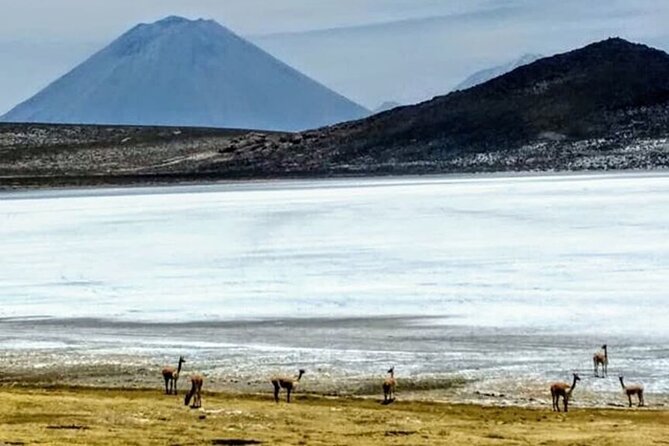
The reserve is more than a route to the lagoon. It protects a high Andean environment where several South American camelids live. Vicuñas are among the most exciting sightings because they are wild and often move in small groups across the open plains.
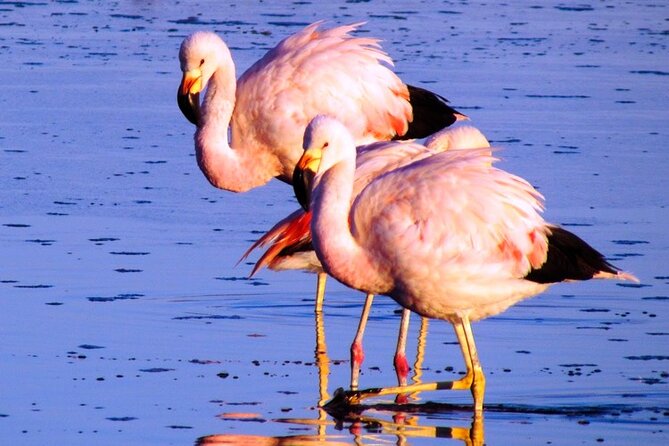
You might also see guanacos, llamas, alpacas, and Andean birds. Flamingos and parihuanas can appear around the lagoons, while Andean geese may be visible near wet areas. Small rabbits have also been spotted along the route.
Do not expect every animal to stand close to the vehicle. Some birds remain far away, and a pair of binoculars would be useful, though binoculars are not listed as part of the tour. The guide may stop when wildlife is visible, but animals do not follow a schedule. The best moments come from watching the open country carefully rather than expecting a guaranteed close encounter.
One memorable feature is the chance to feed llamas at one of the stops. This is not the main reason to come, but it adds a more personal connection to the region’s camelids. The wild vicuñas are the more distinctive sight, while the domestic llamas and alpacas offer a closer look.
The reserve drive takes about two hours in each direction, with additional stops. That means transportation is not a minor part of the experience. It is the experience. You spend a large part of the day looking through the windows, bouncing over rough ground, and waiting for the next mountain, bird, or animal to appear.
A completely different sort of day out from Arequipa:
- Arequipa: Chili River White Water Rafting with Hotel Pickup
★ 4.8 · 329 reviews - 2-Day Tour Colca Canyon in Arequipa with end in Puno
★ 4.6 · 248 reviews - From Arequipa: 2-Day Colca Canyon Trekking Tour
★ 4.8 · 243 reviews - Colca Canyon Plus
★ 5.0 · 198 reviews
The Bumpy Road and the 4,200-Meter Problem
You should be ready for a rough ride. Several accounts describe the road as very bumpy and dusty, with about half of the journey on dirt track. A Toyota Land Cruiser or another 4×4 may be used for smaller groups, while larger groups can travel in a minibus. The vehicle is air-conditioned, but air conditioning does not soften a rough road.
The combination of vibration, dust, and altitude can be difficult. Some people have experienced car sickness or altitude sickness at the lagoon. One driver helped a passenger manage altitude symptoms, but you should not depend on the crew to solve a serious reaction.
This outing suits you if you have a moderate level of physical fitness and can handle a long day at high elevation. You do not need to be an athlete, but you should be comfortable walking short distances in cold, exposed conditions and getting in and out of a vehicle repeatedly.
At the first sign of severe symptoms, tell the guide. Do not treat the high altitude as a small inconvenience. Rest, drink water, and avoid rushing around for photographs. The best picture is not worth making yourself dangerously ill.
Laguna de Salinas and the Famous Mirror Effect
The lagoon stop lasts about 30 minutes according to the planned schedule. That is enough for a short walk and photographs, but it may feel brief if the water is calm and the scenery is at its best. If the group reaches the lagoon early and conditions are favorable, you may have a peaceful stretch of time to take it in.
After rain, shallow lagoons can form across the salt flats. When the surface is still, the water reflects the sky and nearby mountains. Guides may help with creative photographs and special effects, which can make this stop more fun than simply standing at a viewpoint.
But weather controls the experience. Wind can break up the reflection even when water is present. In a dry period, there may be little or no water at all. One person booked mainly for reflected photographs and found the visit disappointing when strong wind made them impossible. Another went in late June and found water in the lagoon but no suitable reflection.
I would book this for the full setting, not one photograph. The salt plains, volcanic views, wildlife, and silence remain valuable when the mirror effect fails. If reflections are your only goal, check current conditions before paying for the trip.
Optional Thermal Wells and What to Expect
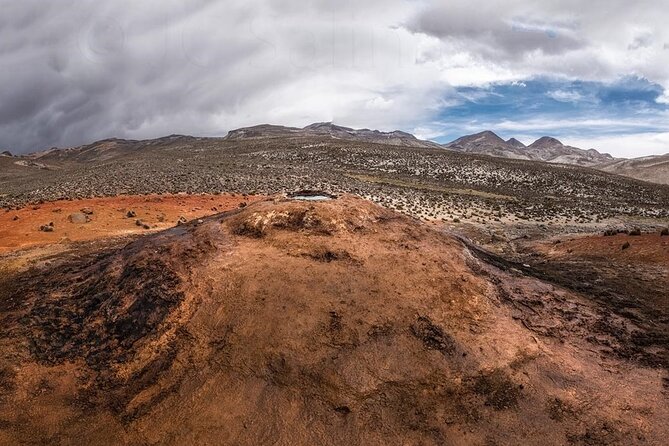
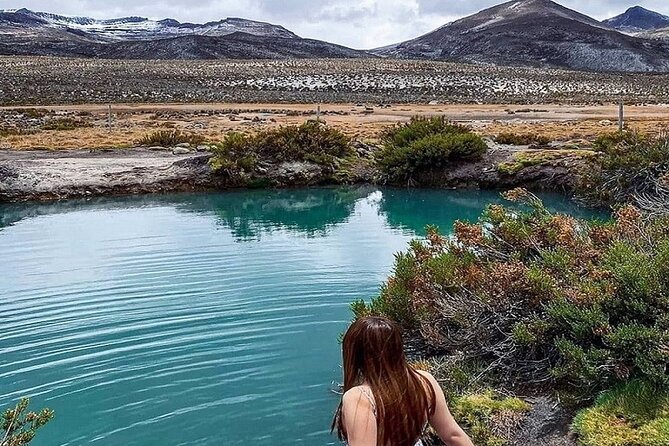
The itinerary includes a 30-minute stop at small natural thermal wells in the Arequipa Region. You can bathe if you wish, but admission costs 5 soles per person. That fee is not included.
Keep your expectations modest. These are small pools with moderately warm natural water, not a large spa complex. Some people found the water closer to 19 degrees Celsius and decided not to enter, especially in the cold high-altitude air. The phrase hot springs may sound warmer than the actual experience.
If you enjoy a quick soak and have extra time, the stop could be pleasant. If you are hoping for genuinely hot water, ask the guide about the temperature before changing. Bring the necessary clothing and a towel only if you plan to use the pools, since the stop is optional.
The surroundings can also be part of the appeal. Llamas may be nearby, and the wells offer a chance to pause after the rough drive. Still, I would treat the thermal pools as a bonus, not a central reason to book.
How Good Is the Guiding?
The guide can make a major difference on this outing. The strongest experiences have included friendly, attentive guides such as Patricia, Jack, Fanny, Fernando, and Jennifer. Patricia made a special effort to keep an English-speaking passenger involved, while Fernando was praised for giving explanations throughout the day.
Language service has not been consistent. Some departures have included strong English, while others have been conducted mainly in Spanish despite an English request. At times, the driver has had to handle both driving and guiding, which can mean limited explanations about the reserve, wildlife, and salt production.
That variation is important because the scenery does much of the work. If you mainly want transportation, stops, and a chance to take photographs, a basic guide may be enough. If you want stories, natural context, and clear explanations, confirm the language and guiding arrangements before departure.
The group can include up to 20 people. A smaller group may lead to a 4×4 vehicle and a quicker ride, though the vehicle type is not guaranteed. A larger group may feel less flexible at photo stops.
Is the $30 Price Good Value?
At $30 per person, this is an inexpensive way to reach a remote area outside Arequipa. The air-conditioned vehicle and professional guide are included, and the route covers several locations rather than only the lagoon. For a full day of mountain scenery and wildlife, the base price is attractive.
You need to budget beyond the advertised amount. Breakfast is extra, the hot springs cost 5 soles per person, and community taxes are listed at 10 soles per person. Admission to the national reserve is also not included, so confirm the current entrance amount before you go.
The value depends on what you want. You get good value if you enjoy long scenic drives, open mountain country, wildlife spotting, and a destination that can feel quiet and remote. You get weaker value if you want a polished guided lesson, a smooth road, a guaranteed reflection, or a true hot-spring experience.
I would also compare the final price with the exact vehicle and language arrangement. A smaller 4×4 and a capable bilingual guide can make the day feel far better than a crowded ride with little explanation.
What to Pack for the High Andes
Pack for changing conditions and a long day in the vehicle.
- Water, snacks, and money for breakfast
- Extra cash for the 5-sol hot springs fee and 10-sol community tax
- Warm layers, since the high-altitude reserve can feel cold
- Sun protection for the exposed salt flats
- Sturdy shoes for short walks near the lagoon
- A camera, with realistic expectations about reflections
- Motion-sickness or altitude medication only if it is suitable for you and approved by a medical professional
A small day bag is easier to manage than a large suitcase. Keep water and snacks within reach rather than buried in luggage.
Who Should Book This Arequipa Day Trip?
I recommend it to you if you want to see a side of Arequipa far beyond the city streets. It is especially suitable for people who enjoy unusual natural settings, wildlife, volcano views, and simple outdoor stops.
It can also work well for couples, solo visitors, and families who are comfortable with a demanding road journey. The guides can be warm and attentive, and a good bilingual guide can add a lot to the day.
I would hesitate if you are sensitive to motion sickness, have concerns about 4,200-meter altitude, or dislike long periods in a vehicle. I would also think twice if your entire plan depends on taking mirror photographs. The lagoon may be dry or windy, and no tour operator can control that.
The tour allows service animals, but the high elevation, rough road, and outdoor stops still deserve careful thought for any animal accompanying you. The stated physical requirement is moderate fitness.
Should You Book the Laguna de Salinas Tour?
Book it if you see the lagoon as one part of a larger high-altitude day. The salt flats, Misti views, wild vicuñas, flamingos, llamas, and wide Andean scenery can make the long ride worthwhile, even when the water does not reflect the mountains.
Skip it if you want comfort, predictable timing, or guaranteed photographs. Before booking, confirm the guiding language, expected vehicle, current lagoon conditions, reserve fee, and return time. If those details suit you, $30 is a fair starting price for a remote and memorable outing from Arequipa.
Cancellation is free up to 24 hours before the 6:00 a.m. start time. Poor weather can also lead to a new date or a full refund, according to the tour terms.
FAQ
How long does the Laguna de Salinas tour take?
The planned duration is approximately 8 to 10 hours, starting at 6:00 a.m. Some departures have taken closer to six hours, so you should confirm the expected return time before setting evening plans.
Where does the tour start and finish?
The tour starts at C. Álvarez Thomas 115 in Arequipa. It ends on Calle San Agustín, about two blocks from Arequipa’s main Plaza de Armas.
Is breakfast included?
No. Breakfast is not included in the tour price. Some departures stop for breakfast around 9:00 a.m., and you should bring extra money, water, and snacks.
How much do the hot springs cost?
Entry to the optional thermal wells costs 5 soles per person. The pools are small natural wells with moderately warm water, and the actual temperature can feel cool.
Are entrance fees included?
No. Admission to the Salinas y Aguada Blanca National Reserve is not included. Community taxes of 10 soles per person are also listed separately.
Is the mirror effect at Laguna de Salinas guaranteed?
No. The mirror effect depends on rain, water levels, and wind. The lagoon may be dry, or wind may disturb the surface and prevent clear reflections.
How many people can join the tour?
The maximum group size is 20 people. Smaller groups may use a 4×4 vehicle, but the vehicle type is not guaranteed.
Just added around Arequipa
- From Arequipa: Colca Canyon and Condor Watching Day Trip★ 3.7 · 3 reviews
- Arequipa : Colca Canyon 2-Day Adventure★ 5.0 · 3 reviews
- Cooking Class Typical Food in Arequipa★ 3.9 · 3 reviews
- 3-day trek to the Colca Canyon from Arequipa ending in Puno★ 4.2 · 3 reviews
- Colca Canyon Day Trip: From Arequipa to Puno★ 3.5 · 3 reviews
- 2 day 1 night trek / Colca Canyon★ 3.0 · 3 reviews
- From Arequipa: Full Day Colca Canyon Tour★ 4.5 · 3 reviews
- Walking tour through the Historic Center of Arequipa★ 4.0 · 3 reviews
Arequipa Tours, compared.
Tour to the Salinas Lagoon and National Reserve in Arequipa
Read our review →
Chili River White Water Rafting with Hotel Pickup
Read our review →
2-Day Tour Colca Canyon in Arequipa with end in Puno
Read our review →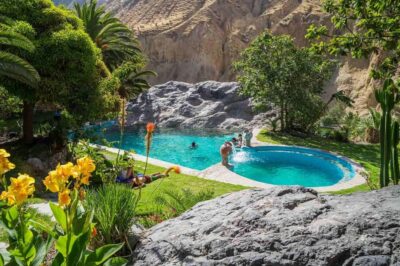
Walking tour in the Historic Center of Arequipa
Read our review →Browse the lists this tour appears in