
Reviewed · SACRED VALLEY TOURS
Sacred Valley Textile Workshop – Dyeing & Weaving in Cusco
Make something you can carry home. This hands-on Cusco textile workshop lets you collect plants, dye baby-alpaca yarn, and weave a small piece with Andean master weavers. I like the direct contact with the craft, and I like that the day includes private transport, lunch, and time with the local women who keep these methods alive. The workshop is led by Ruth Pimentel and other skilled weavers connected with the Sacred Valley communities.
The main drawback is the travel time. The drive to the workshop area near Calca can take about an hour and a half each way, so this is a full-day outing rather than a quick class. That journey does bring fine countryside views, but you should not squeeze another major Cusco attraction into the same day.
In This Review
- Key points at a glance
- Why this Cusco textile workshop is different
- The morning drive from Cusco to the Sacred Valley
- Meeting Ruth and the weaving family
- Gathering plants for the dye bath
- From alpaca wool to colored yarn
- Learning the backstrap loom
- Lunch, conversation, and a slower afternoon
- What you take home
- Is the $420 price fair?
- Who should book this experience?
- Booking advice and weather plans
- Should you book the Sacred Valley Textile Workshop?
- FAQ
- Where does the Sacred Valley Textile Workshop take place?
- What time does the experience start?
- How long does the workshop last?
- Is transportation included?
- Is lunch included?
- What textile techniques will I learn?
- What will I take home?
- Is this a private experience?
- What happens if the weather is poor?
Key points at a glance
- Collect plants for natural dyes: Walk outside with the weavers and gather leaves and other botanicals used to color wool.
- Work with baby-alpaca yarn: Learn how wool is prepared, spun, dyed, wound, and selected for weaving.
- Use a backstrap loom: Try the traditional floor-based weaving method used for generations by Andean women.
- Learn from Ruth Pimentel: The workshop is connected with a celebrated Indigenous master weaver recognized by UNESCO.
- Share a local lunch: Food, coffee or tea, conversation, and sometimes music or dancing are part of the day.
- Take home your work: Depending on the project, you may leave with a bracelet, bookmark, headband, dyed yarn, or another small textile piece.
Why this Cusco textile workshop is different
Many craft visits in Peru involve watching an artisan work, then browsing a shop. This experience asks you to take part. You do not simply see a dye bath or a loom from a distance. You help gather plant material, prepare wool, choose colors, and make something with your own hands.
That difference matters. Spinning and weaving look simple when an expert does them at speed. Once you try, you discover how much tension, timing, and finger control the work requires. A small bracelet can take real concentration. That effort gives you a better sense of why larger Andean textiles require so much patience.
The workshop also gives context to the objects sold in Peru’s markets. A colorful belt or blanket is not just a souvenir. It represents hours of spinning, repeated pattern work, plant knowledge, and skills passed from one generation to the next.
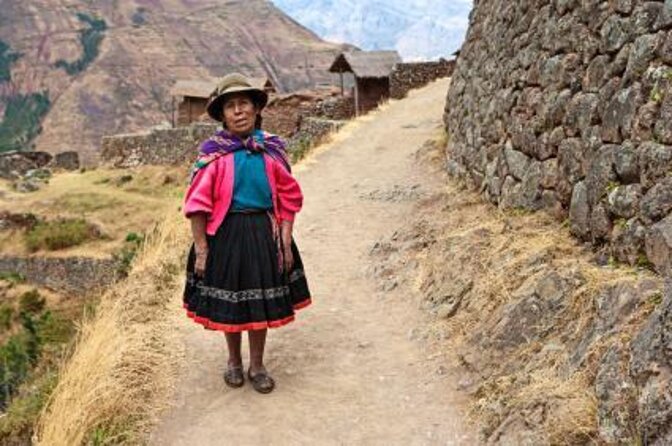
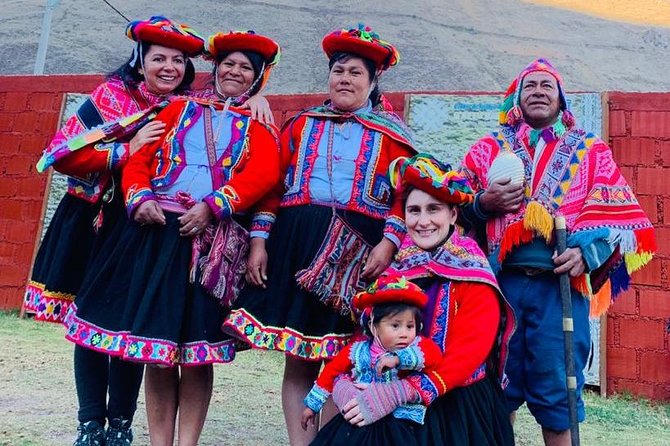
Ruth Pimentel is presented as Peru’s only UNESCO-awarded Indigenous master weaver. Ruth and the other master weavers from Parobamba share both technique and family tradition. The wider Pimentel family has worked to preserve Andean textile practices while giving visitors a respectful way to learn.
More Sacred Valley Tours in Cusco
- From Cusco: Sacred Valley & Maras Salt Mines Tour with Lunch
★ 4.8 · 2,227 reviews - From Cusco: Moray, Maras Salt Mines & Chinchero Weavers Tour
★ 4.8 · 1,925 reviews - Cusco: Sacred Valley, Pisac, Ollantaytambo, Salt Mines Moray
★ 4.6 · 1,058 reviews
The morning drive from Cusco to the Sacred Valley
Pickup begins around 8:30 am. Private transport makes the start easy, especially if you are still finding your way around Cusco or prefer not to arrange a separate taxi and local connections.
The road toward the workshop area takes you away from the city and into the countryside. The drive has been described as about an hour and a half, with opportunities for scenic stops and photographs. Treat this as part of the day, not wasted time. You get a look at rural Peru before the workshop begins.
The length of the drive is the clearest planning issue. The advertised workshop lasts about eight hours, but the full day can be longer once transport is included. If you have a train, museum booking, or evening flight, allow plenty of room.
This outing can also work well early in a Cusco stay, when you want a gentle day without a demanding hike. The altitude is still a factor, but the pace is calmer than a mountain excursion. Sit back, drink water, and avoid treating the day as a race.
Meeting Ruth and the weaving family
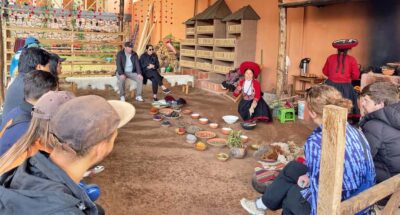
At the workshop, the welcome is personal and family-centered. Ruth and the other weavers introduce the traditions behind the craft, including the role of Quechua women and the importance of keeping local methods in use.
Translation is part of the experience. Guides such as Nayda, Delia, and Edwin have helped explain the process between English-speaking visitors and the weavers. Nayda receives especially strong praise for her patience, warmth, and ability to answer detailed questions throughout the day.
The guide does more than translate instructions. You may learn some Quechua words, hear about plant uses beyond dyeing, and discuss local customs and daily life. That conversation helps the workshop feel like time spent with a community rather than a quick demonstration arranged for a busload of people.
The tone is participatory, but remember that you are entering someone else’s home, workplace, and cultural setting. Come ready to listen. Ask before taking photographs, pay attention during demonstrations, and understand that the purpose is not to master a centuries-old craft in one morning.
Gathering plants for the dye bath
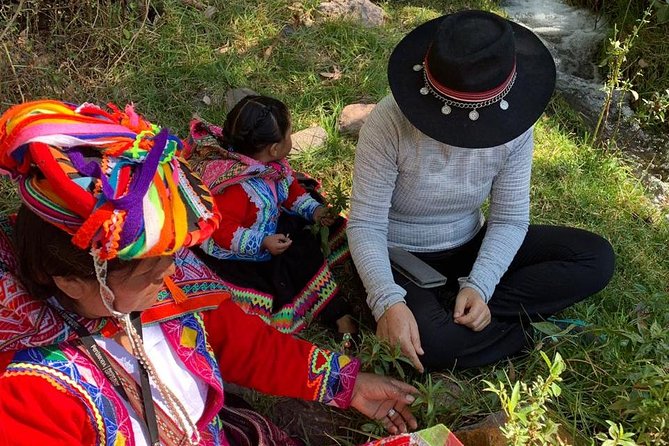
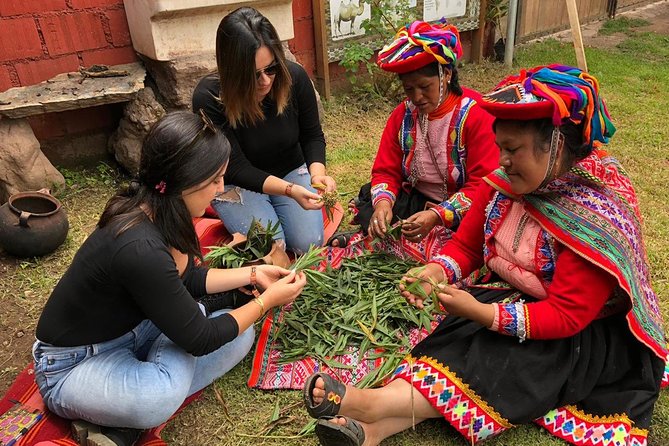
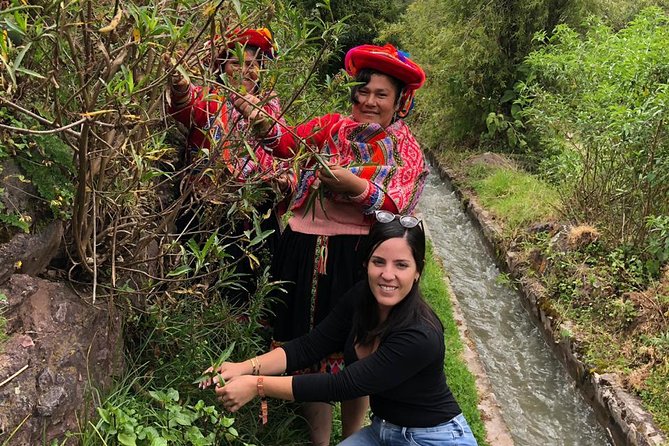
One of the most memorable parts of the day takes place before the yarn changes color. You walk out to collect leaves and other natural materials used in the dyeing process.
The weavers explain which plants provide color and which have other uses, including medicinal purposes. This connects the textile work to local knowledge of the surrounding countryside. A plant is not simply a source of green, yellow, brown, or another shade. It can be part of food, healing, household practice, and seasonal life.
The activity is modest but important. You see that natural dyeing starts with observation and preparation. The color does not begin in a bottle. It begins with knowing what grows nearby and how to handle it.
This portion also makes the day active without being strenuous. You may walk on hillside paths or uneven ground, so comfortable shoes are sensible. The exact plants and colors depend on the season and what is available that day.
More of the Sacred Valley in a day:
- Cusco:Chinchero,Moray & Salt Mines drop-off in Ollantaytambo
★ 4.8 · 793 reviews - Sacred Valley: Chinchero, Moray, Ollantaytambo & Pisac+Lunch
★ 4.8 · 501 reviews - Sacred Valley: Maras & Moray by Quad Bike from Cusco
★ 4.6 · 418 reviews - Pisac Indian Market and Ollantaytambo Fortress with Lunch
★ 4.5 · 395 reviews
From alpaca wool to colored yarn
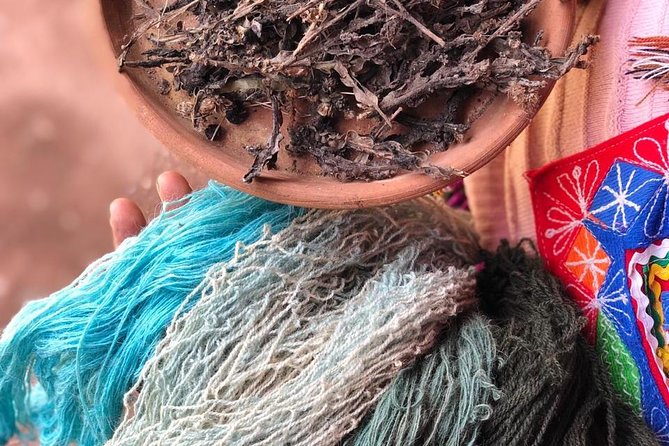
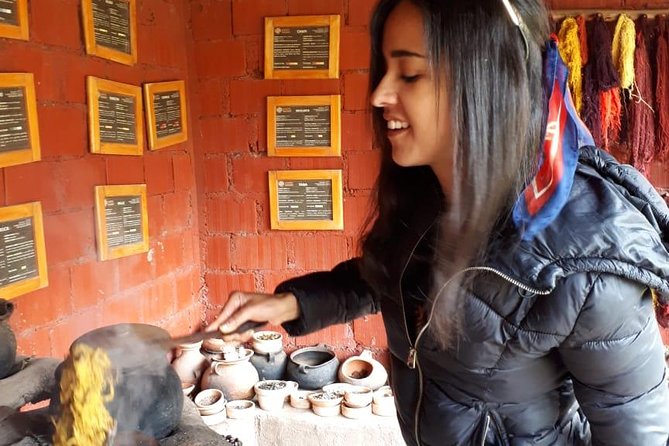
The workshop covers several stages of textile preparation. You may see or try making yarn from alpaca wool, spinning it, winding it into balls, and preparing it for the dye bath.
The yarn used is described as premium baby alpaca. The point is not only the softness of the material. You also get to understand the work required before a thread is ready for a loom.
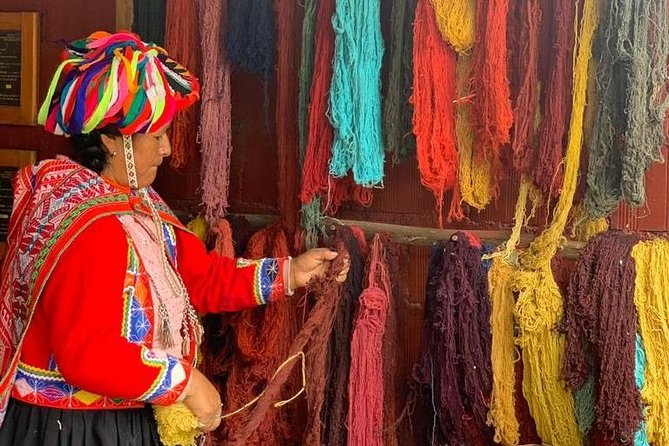
Once the natural materials are collected, the wool is prepared and dyed. You take part in the process rather than simply receiving a finished colored strand. Some sessions let you take home yarn you helped dye, which is a useful reminder of the work completed before the weaving even started.
The colors available for your project can vary. In some sessions, participants choose four prepared colors for a bracelet or similar piece. The exact finished item may differ, with past projects including bookmarks, bracelets, and headbands.
Do not expect instant perfection. Dyeing by hand and working with natural materials has variables. The result is part of the appeal, especially if you enjoy craft projects and want a piece with a clear connection to the place where you made it.
Learning the backstrap loom
The weaving lesson is the heart of the day. The weavers show you how to set up and use a backstrap loom, a traditional method associated with generations of Andean women.
You may work close to the floor, and one account specifically warns that the weaving portion involves sitting there for several hours. It is not a polished classroom with everyone at a table. Bring patience, wear comfortable clothing, and be prepared to change position when you can.
The technique can be challenging. You need to manage the threads, keep the tension steady, follow the pattern, and repeat small movements accurately. The artisans guide your hands and step in when needed, but you still do the work.
That difficulty is useful. A master weaver can produce precise patterns quickly, while a first-time learner may spend several minutes on a small section. The contrast helps you appreciate the skill behind the large textiles sold in shops and markets throughout the Andes.
The finished item is generally small enough to complete during the session. Bracelets and bookmarks are common projects, while some participants have made headbands or binchas. The piece may not look factory-perfect, but it will carry the mark of your effort.
Lunch, conversation, and a slower afternoon
Lunch is included and has been widely praised for its quality. The meal is home-cooked and shared with the weavers, guides, and other people present at the workshop.
Food can include local ingredients such as fruit, avocado, yucca, and other Andean or Peruvian dishes. One account also mentions guinea pig as a possible delicacy during the day, though you should not assume it will be served on every departure.
This shared meal is more than a break between activities. It gives you time to ask questions, learn about the community, and talk about where you come from. The social side of the workshop is one reason solo visitors can feel comfortable here.
Coffee or tea is included as well. There may also be a snack before or after the plant-gathering walk. The schedule has room to breathe, with a short rest after lunch and time to enjoy the quiet setting.
Some sessions end with traditional clothing and dancing. You may be invited to try on garments, learn more about how they are worn, and dance with the group. It is a lighthearted finish, not a formal performance, and it adds a human touch to a day focused on careful handwork.
What you take home
Your finished textile is presented in elegant packaging with a signed provenance card. The exact item depends on the project and the instruction available that day, but past participants have taken home bracelets, bookmarks, headbands, and naturally dyed yarn.
That provenance card adds useful meaning. It identifies the handmade origin of the piece instead of leaving you with an anonymous souvenir. If you buy additional items at the workshop shop, you can purchase directly from the women who made them.
The shop is not an obligation, and that is worth noting. You can enjoy the class without treating it as a shopping stop. If you do want a larger textile, buying here gives you a clearer connection to the artisans and their work than bargaining for an unmarked item elsewhere.
Take care with luggage space. Handmade wool pieces are easy to pack, but larger textiles can add weight quickly. Ask about care instructions before you leave, especially if you buy naturally dyed goods.
Is the $420 price fair?
At $420 per person, this is not a budget activity. The price needs to be judged against what is included: roughly eight hours, private transport from Cusco, an English-supported cultural lesson, hands-on instruction, lunch, coffee or tea, and a finished textile piece.
You are also paying for a small-scale experience rather than a large group visit. The workshop supports a family and community effort to maintain textile knowledge, and the instruction comes from experienced weavers rather than a general sightseeing guide.
The value is strongest if you care about textiles, traditional crafts, local food, or respectful cultural exchange. A textile designer, knitter, weaver, or anyone who enjoys making things will likely find the cost easier to justify.
The value is weaker if you only want a quick look at Peruvian crafts. You could see woven goods for much less at a market, but you would not get the plant walk, dyeing lesson, spinning, loom practice, meal, countryside drive, and time with the makers.
The price also covers convenience. You do not need to arrange transport to Calca, find lunch, or coordinate a translation service. That removes a lot of small decisions from a long day.
Who should book this experience?
I would recommend it most strongly to:
- People who enjoy hands-on arts and crafts
- Visitors who want a cultural activity beyond ruins and museums
- Solo visitors who prefer a welcoming, guided day
- Families with children who can sit patiently and follow instructions
- Couples and friends looking for a shared keepsake
- Textile professionals or hobbyists who want to study Andean methods
It is less suitable if you dislike sitting on the floor, have very little time in Cusco, or want a fast-paced sightseeing day. The workshop rewards curiosity and patience. You will get more from it if you accept that the process matters more than producing a perfect object.
The activity is private, and only your group is meant to participate, though one account describes a second guest joining the day. Most people can take part, and service animals are allowed. Public transportation is nearby, but hotel pickup by private vehicle is the practical choice.
Booking advice and weather plans
Confirmation is provided when you book. Free cancellation is available until 24 hours before the scheduled start time. Cancellations or changes made inside that window are not refunded or accepted, so check your plans before the cutoff.
The experience requires good weather. If poor conditions cause cancellation, you can choose another date or receive a full refund.
Because the start is early and the ride is long, bring water, sun protection, comfortable walking shoes, and a layer for changing temperatures. The day combines outdoor plant gathering with indoor or sheltered craft work, so simple practical clothing works best.
Should you book the Sacred Valley Textile Workshop?
Book it if you want to understand Andean textiles by doing the work yourself. The strongest parts are the plant gathering, natural dyeing, backstrap weaving, generous instruction from Ruth and the other master weavers, and the shared meal.
I would not book it as a filler activity between major Cusco sights. The transport alone can take several hours, and the workshop deserves your full attention. But if you can give it the day, this is a thoughtful way to meet local makers, support living craft traditions, and return home with something you helped create.
FAQ
Where does the Sacred Valley Textile Workshop take place?
The workshop takes place in the hills near Cusco, in the Sacred Valley area associated with Calca and local weaving communities.
What time does the experience start?
Hotel pickup and the experience start at approximately 8:30 am.
How long does the workshop last?
The workshop lasts about eight hours, not including the full time needed for transportation. The drive from Cusco can take about an hour and a half each way.
Is transportation included?
Yes. Hotel pickup by private transport is offered, and transportation to and from the workshop is included.
Is lunch included?
Yes. Lunch and coffee or tea are included.
What textile techniques will I learn?
You may learn how to prepare and spin alpaca wool, collect plants for natural dyes, prepare and dye yarn, and use a traditional backstrap loom.
What will I take home?
The finished project can vary. Past projects include bracelets, bookmarks, headbands, and naturally dyed yarn. The finished textile is presented in packaging with a signed provenance card.
Is this a private experience?
Yes. It is described as a private tour or activity, with only your group scheduled to participate.
What happens if the weather is poor?
The experience requires good weather. If it is canceled because of poor conditions, you can select another date or receive a full refund.
More Workshops
- Cusco: Peruvian Cooking Class, Cocktails & Local Market Tour
★ 4.9 · 512 reviews - Cooking class and market tour with a local chef
★ 5.0 · 186 reviews - The First Class Machu Picchu Train by Inca Rail
★ 4.0 · 182 reviews - The Textile Workshop Experience in Cusco Region
★ 5.0 · 118 reviews
Just added around Cusco
- Cusco: Rainbow Mountain and viewpoint red valley ( optional)★ 4.8 · 3 reviews
- Tour Pallay Punchu Trek Full Day★ 4.2 · 3 reviews
- Montaña de Colores: tour en cuatrimotos día completo★ 3.3 · 3 reviews
- Excursion Cusco – Puno – Titicaca Observatory Train★ 5.0 · 3 reviews
- Cusco: Palcoyo Mountain Day Trip with Breakfast and Lunch★ 4.8 · 3 reviews
- Maras Moray★ 5.0 · 3 reviews
- Tour to Laguna Humantay with breakfast and lunch from Cusco★ 4.7 · 3 reviews
- From Cusco:Chinchero, Moray, Maras, Ollantaytambo with lunch★ 5.0 · 3 reviews
Sacred Valley Tours, compared.
Sacred Valley & Maras Salt Mines Tour with Lunch
Read our review →
Moray, Maras Salt Mines & Chinchero Weavers Tour
Read our review →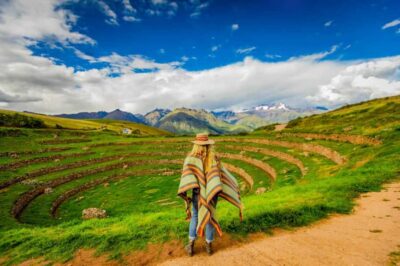
Sacred Valley, Pisac, Ollantaytambo, Salt Mines Moray
Read our review →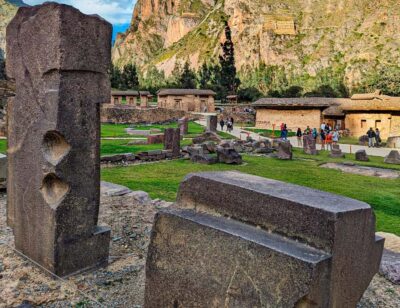
Chinchero,Moray & Salt Mines drop-off in Ollantaytambo
Read our review →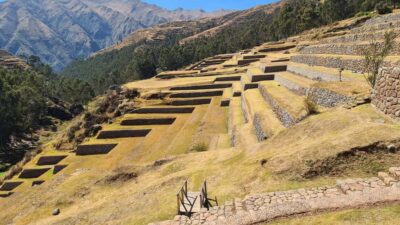
Sacred Valley: Chinchero, Moray, Ollantaytambo & Pisac+Lunch
Read our review →
Sacred Valley: Maras & Moray by Quad Bike from Cusco
Read our review →
Pisac Indian Market and Ollantaytambo Fortress with Lunch
Read our review →
2-Day Trip to the Sacred Valley and Machu Picchu
Read our review →Browse the lists this tour appears in