
Reviewed · MACHU PICCHU TOURS
Inca Trail Machu Picchu 4 Days
Machu Picchu rewards the uphill route. This four-day Inca Trail trip gives you far more than a visit to the citadel: you walk through Inca ruins, cloud forest, stone tunnels, and high mountain passes before arriving at the Sun Gate. I especially like the small group limit of 10 people and the careful camp support, including cooks, tents, meals, and portable facilities. The main drawback is clear: this is a demanding hike, with about nine hours of walking on the toughest day and a 4,200-meter pass to cross.
The price is $905 per person, which is a serious sum, but it covers permits, transport, camping equipment, food, a guide, porters, and the return train. I also like that the trip reaches Machu Picchu early, around 8:00 am, giving you time at the citadel before returning to Aguas Calientes. You need strong physical fitness, proper hiking gear, and a willingness to sleep simply for several nights.
In This Review
- Key points to know before booking
- Why this Inca Trail route is worth four days
- Day 1: From Km 82 to Ayapata
- Day 2: Death Pass is the real test
- Day 3: Stone tunnels, baths, and Wiñayhuayna
- Day 4: Entering Machu Picchu through the Sun Gate
- What the $905 price really covers
- Guides, cooks, and the human side of the trek
- How hard is the 4-day Inca Trail?
- Group size, timing, and booking details
- Who should choose Dreamy Tours?
- Should you book this Inca Trail experience?
- FAQ
- How long is the Inca Trail Machu Picchu experience?
- Where does the tour start?
- What is the maximum group size?
- How difficult is the hike?
- Is camping equipment included?
- Is a sleeping bag included?
- Are meals included?
- Is the return train included?
- Can I cancel the booking for a refund?
Key points to know before booking
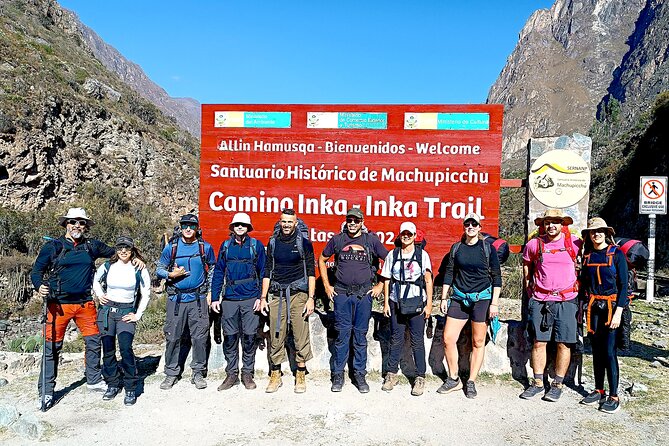
- The classic 4-day route: You walk from Km 82 to Machu Picchu rather than arriving only by train.
- The hardest climb comes on Day 2: The trail reaches Warmihuañusca, also called Death Pass, at about 4,200 meters.
- Early arrival at the ruins: The group aims to reach Machu Picchu after sunrise at Inti Punku, the Sun Gate, around 8:00 am.
- A well-supported camp: Tents, meals, cooking gear, dining equipment, bathroom facilities, oxygen, and first aid are included.
- Food is a real strength: The kitchen team serves three breakfasts, lunches, dinners, and snacks, with one account even describing a freshly baked cake.
- The trip is highly rated: It has a 5 out of 5 rating from 39 reviews, with 100 percent of respondents recommending it.
Why this Inca Trail route is worth four days
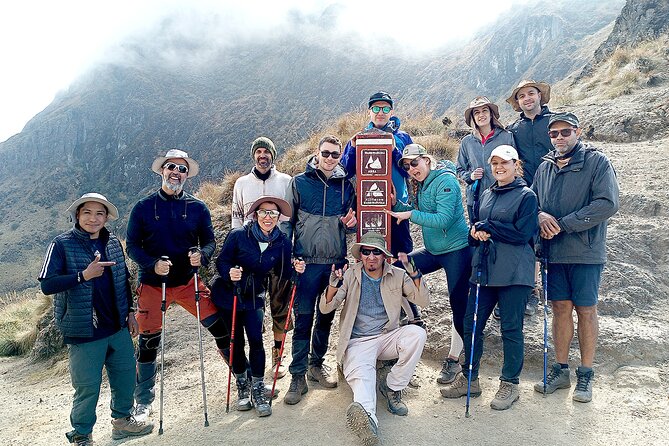
The Inca Trail works because Machu Picchu becomes the final chapter, not the whole story. You spend three days walking through changing scenery and old stone sites before entering the citadel through Inti Punku. That approach gives the destination a sense of arrival that a direct train trip cannot match.
The route also gives you time to adjust to the rhythm of mountain travel. You walk, rest, eat, sleep, and repeat. The days are long, but the group pauses regularly, and the guide allows people to move at their own pace.
This is not a luxury trek. Camps are practical rather than plush, and the schedule is tightly linked to permits, trail rules, train availability, and Machu Picchu entry times. Still, the support is substantial. You are not expected to carry tents, kitchen equipment, cooking supplies, or the full camp operation yourself.
The tour begins in Cusco at 5:30 am. That early pickup matters because Km 82 is several hours away in the Sacred Valley. Before starting the hike, you stop in Ollantaytambo, where you can choose to have breakfast. You then meet the group at the trailhead and present your documents for control and registration.
More Inca Trail Treks in Cusco
- Cusco: 4-Day Inca Trail to Machu Picchu with Accommodation
★ 4.8 · 432 reviews - From Cusco: 7 Lakes Ausangate Trek with Breakfast and Lunch
★ 4.8 · 360 reviews - Cusco: Machu Picchu 2-Day Inca Trail with Panoramic Train
★ 4.9 · 260 reviews
Day 1: From Km 82 to Ayapata
The first day begins by crossing the Urubamba River at about 2,200 meters. From there, the route follows a comparatively manageable section of the Inca Trail. If you are nervous about the first day, this gentler start gives you time to find your walking rhythm and settle into the group.
Lunch is served at Miskay, a small riverside location. Here, the guide explains the archaeological complex of Llactapata, adding some useful context before the trail continues. This is one reason the guide matters. The route is not just a long mountain path, and the ruins make more sense when you understand their role in Inca culture and the movement of people through the valley.
The walk continues toward Wayllabamba at 3,100 meters before climbing to Ayapata, where the group camps. The full day takes roughly seven hours. That is a substantial opening day, though the trail is described as easier to follow than the sections that come later.
At camp, you should expect the basic comforts of an organized trek: a tent, a dining area, meals, and a place to wash or use the facilities. The camp team handles much of the work behind the scenes. The food is one of the strongest parts of the experience, with a cook preparing meals despite the remote setting.
You do not need to bring breakfast on the first morning because it is not included. Plan to eat in Ollantaytambo or make another arrangement before reaching Km 82.
Day 2: Death Pass is the real test
Day 2 is the physical heart of the trip. The walking time is listed at about eight to nine hours, and the conditions can be cold. You begin with a three-kilometer walk to Llulluchapampa, reaching approximately 3,850 meters.
This section moves through rainforest with the sound of running water. Then the trail climbs for another two to three hours toward Warmihuañusca, known as Death Pass. At 4,200 meters, this is the highest and hardest point of the trek.
The climb is not technical, but the altitude and steady slope make it demanding. You should expect to walk slowly, take short breaks, and manage your energy carefully. A strong level of fitness is required, and suitable clothing is important because the high sections can be cold.
After a brief stop at the summit, the trail drops steeply toward the Pacaymayu River. Descents can be hard on tired knees, so trekking poles may be useful, though the supplied information does not confirm that the operator provides them. Bring only what you need and keep your day pack light.
The route then reaches the Runkurakay Pass at about 3,050 meters before continuing to Chaquicocha camp at approximately 3,650 meters. The day ends with mountain views and a chance to rest.
This is the day when preparation makes a real difference. You will not be strolling between monuments. You will be climbing and descending for most of the day, often at altitude. The guide’s habit of allowing each person to walk at their own pace is helpful here. The group still travels together, but you are not forced to match a single fast speed.
Day 3: Stone tunnels, baths, and Wiñayhuayna
Day 3 is shorter, at around six hours, and many people find it the most rewarding section. The route changes from the harsher high-pass experience to a greener environment, with rainforest and views over the Urubamba River and the Sacred Valley.
You pass two small lakes near the second pass, at around 3,950 meters. From there, the trail makes a gentle ascent through a small Inca tunnel. These tunnels are a fine reminder that the Inca Trail was designed as a working road, not simply a scenic footpath.
Phuyupatamarca comes next, at about 3,600 meters. Its name means city above the clouds. The site is well preserved and includes a long chain of Inca baths. The stonework and water engineering are especially interesting because they show how practical concerns, ceremony, and careful construction came together.
Another tunnel leads toward Wiñayhuayna, whose name means forever young. The complex sits at about 2,650 meters and is one of the most important sites on the route. The trail then descends through the valley, with the first views of Machu Picchu Mountain appearing ahead.
The pace on this day is easier than Day 2, but the route is still not effortless. Repeated stone steps and descents can test your legs. The reward is variety: high passes, small lakes, tunnels, agricultural terraces, baths, rainforest, and archaeological sites all appear within one walking day.
The camp setup and meal service also matter here. After several days outside, a hot dinner and a regular evening tea time can make a big difference. One account specifically praised the nightly 30-minute tea service and the quality of the food, including a cake prepared at camp. That is a small luxury, but on a long trek it feels like a grand one.
More Machu Picchu Tours in Cusco
- From Cusco: Full-Day Group Tour of Machu Picchu
★ 4.7 · 1,767 reviews - Machu Picchu Day Trip from Cusco
★ 4.5 · 1,644 reviews - Machu Picchu: Full-Day Tour from Cusco with Optional Lunch
★ 4.6 · 927 reviews - From Cusco: 2-Day Trip to the Sacred Valley and Machu Picchu
★ 4.6 · 265 reviews
Day 4: Entering Machu Picchu through the Sun Gate
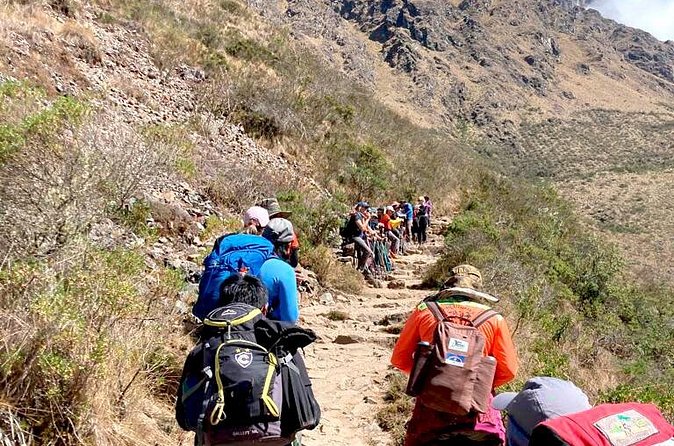
The final morning begins after breakfast with the walk to Inti Punku, or the Sun Gate. This is the traditional approach to Machu Picchu, and the group aims to see the first light over the citadel.
The last uphill section takes nearly an hour. By around 8:00 am, you reach Machu Picchu at about 2,400 meters. The route from the Sun Gate gives you a powerful sense of place because you have walked into the ruins rather than simply arriving at a station and boarding a bus.
A guided tour of the citadel lasts about two hours. The guide explains the purpose and meaning of the archaeological park, which is useful because Machu Picchu can otherwise feel like a collection of impressive walls without a clear story.
After the guided visit, you have free time to explore. The listed options include the Inca Bridge, more of the monuments within the site, and Huayna Picchu for a higher panoramic view. Be careful when planning these extras. The provided information does not state that Huayna Picchu entry is included, so confirm availability and any separate ticket requirement before counting on that climb.
The day is listed as about three hours of walking, not including all of your time inside the citadel. Afterward, you descend to Aguas Calientes for lunch, which is not included, and take the return train to Ollantaytambo. From there, tourist transport returns you to Cusco.
The train is included, but the exact departure depends on availability. One practical account noted some trouble with schedules and having to hurry for transport. Keep your belongings organized and pay close attention to the guide’s timing on the final day.
What the $905 price really covers
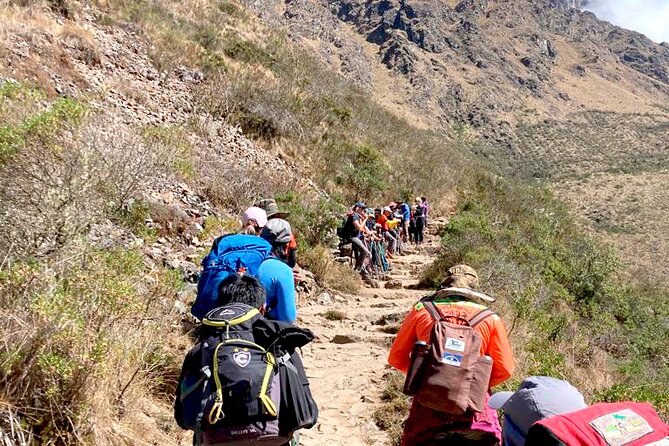
At $905 per person, this is not a budget walk. The value comes from the number of services bundled into the price.
Included are the Inca Trail and Machu Picchu entrance fees, transport from Cusco to Km 82, the return tourist transport from Ollantaytambo to Cusco, a professional Spanish or Portuguese-speaking guide, the bus between Machu Picchu village and the archaeological site, camping equipment, cooking equipment, food carriers, a cook, oxygen, and first-aid supplies.
You also receive three breakfasts, three lunches, three dinners, and three snacks. That food package is significant because the cook and camp operation must function along the trail. You are paying not only for meals but also for the people and equipment that make those meals possible.
A porter service is part of the operation, but an extra carrier is not included. If you need someone to carry more of your personal gear, budget for that separately and ask the company about arrangements before departure.
You must also pay for or arrange a sleeping bag. Breakfast on the first day is excluded, as is lunch at Machu Picchu or in Aguas Calientes. These are manageable costs, but they should be included in your trip budget.
For a small group, full trail logistics, food, permits, guiding, and transport, the price can be fair. It is especially good value if you want a supported camping trip and do not want to organize each moving part yourself. It is less attractive if you are comparing it with a simple train-and-site visit.
Guides, cooks, and the human side of the trek
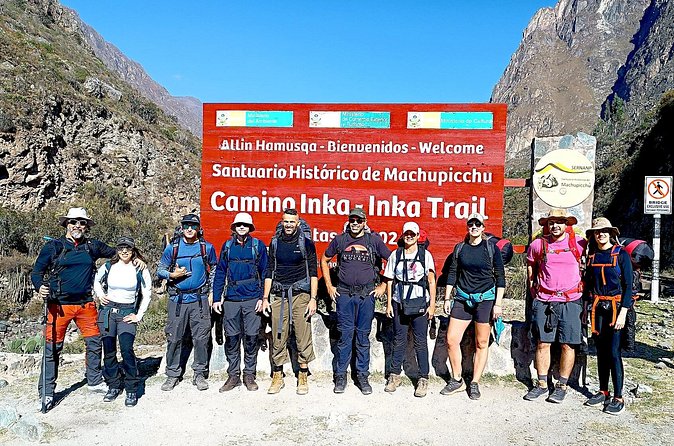
The guide can make or break a multi-day walk. Franklin receives especially warm praise for keeping the group together while still allowing time to explore. His explanations cover ruins, Inca culture, and the economic role of different sites, which gives the walk more meaning.
Other accounts praise the guides for being attentive, friendly, and safety-conscious. Giuliana is also singled out for her helpful attitude and positive energy. The supplied information does not promise a particular guide, so treat these names as examples of the team rather than a guaranteed assignment.
The cooks and porters are just as important. A camp kitchen, dining tent, cooking tent, tables, chairs, bathroom equipment, and food supplies require a large support effort. You will carry a day pack, but the wider operation depends on the people moving equipment along the trail.
That support is one of the strongest reasons to choose an organized trek. Without it, you would have to carry far more and spend valuable time managing food and shelter instead of paying attention to the route.
How hard is the 4-day Inca Trail?
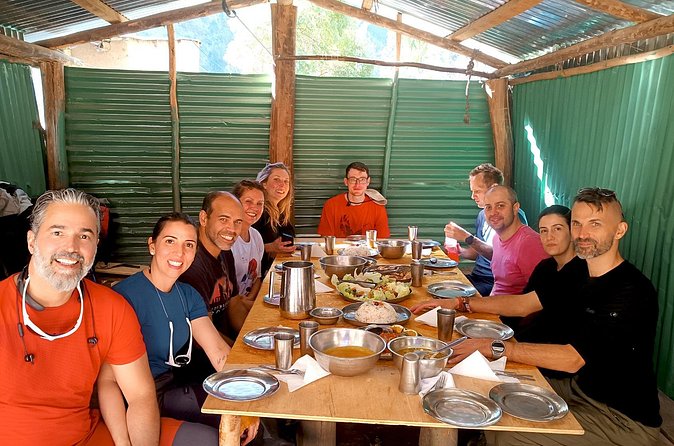
The tour requires strong physical fitness. The difficulty comes from the combination of long days, steep stone steps, cold weather, high altitude, and changing conditions.
Day 1 takes about seven hours. Day 2 takes eight to nine hours and includes the 4,200-meter Death Pass. Day 3 takes about six hours, while Day 4 includes the final walk to the Sun Gate and the visit to Machu Picchu.
You should arrive with appropriate hiking equipment. One account specifically advises minimum physical preparation and suitable gear for spending time on the trail comfortably. The tour includes oxygen and first aid, but those supplies are safety support, not a substitute for preparation.
A useful approach is to think in terms of steady effort rather than speed. Walk at a pace you can maintain, use the short stops, and protect your energy for the high pass. You will enjoy the route far more if you treat the trek as a series of manageable sections instead of one giant challenge.
Group size, timing, and booking details
The maximum group size is 10 people. That is small enough for the guide to keep track of the group and respond to individual needs, while still giving you the social feel of a shared trek.
The experience is generally booked about 60 days ahead. That advance planning matters because the Inca Trail has controlled entry and the trip depends on permits, Machu Picchu admission, and train availability.
Confirmation is provided at booking. The operating period shown runs from July 27, 2023, through November 26, 2026, with hours listed Monday through Friday from midnight to 11:30 pm. The start point is Cusco.
The cancellation rule is strict: the experience is non-refundable and cannot be changed for any reason. Do not pay until your dates, passport details, fitness level, and travel plans are settled.
Who should choose Dreamy Tours?
I would recommend this trip to you if you want the full walking approach to Machu Picchu, enjoy archaeological sites along the way, and are comfortable camping for three nights. It also suits you if reliable meal service and a staffed camp are worth paying for.
Families and friend groups can enjoy it, provided everyone understands the physical demand. A family account described the arrival at Machu Picchu as a particularly memorable moment, but the mountain work comes first.
I would not choose this trip for a relaxed holiday, a soft-adventure outing, or a last-minute plan. The second day is genuinely hard, the cancellation terms are unforgiving, and the schedule leaves little room for casual delays.
Should you book this Inca Trail experience?
Book it if you want Machu Picchu to feel earned. The combination of high passes, Inca tunnels, Wiñayhuayna, camp meals, and the early approach through the Sun Gate gives you a complete four-day experience rather than a quick photo stop.
The strongest reasons to go are the small group, attentive guiding, impressive food operation, and extensive practical support. The strongest reasons to hesitate are the high price, difficult second day, extra cost for a sleeping bag and carrier, and non-refundable booking terms.
If you are fit, prepared, and willing to trade comfort for a more meaningful arrival at Machu Picchu, Dreamy Tours is a strong choice. If you mainly want to see the citadel with minimal exertion, take the train instead.
FAQ
How long is the Inca Trail Machu Picchu experience?
The experience lasts approximately four days and includes three nights of camping before the visit to Machu Picchu.
Where does the tour start?
The tour starts in Cusco, with hotel pickup at about 5:30 am on the first day.
What is the maximum group size?
The maximum group size is 10 people.
How difficult is the hike?
You need a strong physical fitness level. The hardest day includes about eight to nine hours of walking and reaches Warmihuañusca, or Death Pass, at approximately 4,200 meters.
Is camping equipment included?
Yes. The package includes tents, mats, bathroom equipment, a dining area, tables, chairs, cooking equipment, and food carriers.
Is a sleeping bag included?
No. You must arrange or pay for a sleeping bag separately.
Are meals included?
Yes. The package includes three breakfasts, three lunches, three dinners, and three snacks. Breakfast on the first day and lunch at Machu Picchu or in Aguas Calientes are not included.
Is the return train included?
Yes. The return train from Machu Picchu village to Ollantaytambo is included, subject to availability. Tourist transport then takes you from Ollantaytambo to Cusco.
Can I cancel the booking for a refund?
No. The experience is non-refundable and cannot be changed for any reason after booking.
More Treks to Machu Picchu
- Short Inca trail to MachuPicchu || 2days – 1nigth ||
★ 5.0 · 103 reviews - Salkantay Trek Challenge – 3 Days / 2 Nights
★ 5.0 · 101 reviews - Small Group 5 Days Salkantay and Machu Picchu by Llactapata Tour
★ 5.0 · 88 reviews - Choquequirao Trek 4 days and 3 nights
★ 5.0 · 81 reviews
More Ways to Reach Machu Picchu
- From Cusco: 2-Day Inca Trail to Machu Picchu
★ 4.2 · 244 reviews - Machu Picchu: Inca Trail 2-Day Overnight Guided Tour
★ 4.9 · 203 reviews - The First Class Machu Picchu Train by Inca Rail
★ 4.0 · 182 reviews - From Cusco: 1-day Machu Picchu Tour by Train
★ 4.6 · 138 reviews
Just added around Cusco
- Cusco: Rainbow Mountain and viewpoint red valley ( optional)★ 4.8 · 3 reviews
- Tour Pallay Punchu Trek Full Day★ 4.2 · 3 reviews
- Montaña de Colores: tour en cuatrimotos día completo★ 3.3 · 3 reviews
- Excursion Cusco – Puno – Titicaca Observatory Train★ 5.0 · 3 reviews
- Cusco: Palcoyo Mountain Day Trip with Breakfast and Lunch★ 4.8 · 3 reviews
- Maras Moray★ 5.0 · 3 reviews
- Tour to Laguna Humantay with breakfast and lunch from Cusco★ 4.7 · 3 reviews
- From Cusco:Chinchero, Moray, Maras, Ollantaytambo with lunch★ 5.0 · 3 reviews
Machu Picchu Tours, compared.



Machu Picchu: Full-Day Tour from Cusco with Optional Lunch
Read our review →
4-Day Inca Trail to Machu Picchu with Accommodation
Read our review →
2-Day Trip to the Sacred Valley and Machu Picchu
Read our review →
Machu Picchu 2-Day Inca Trail with Panoramic Train
Read our review →

Machu Picchu: Inca Trail 2-Day Overnight Guided Tour
Read our review →Browse the lists this tour appears in