
Reviewed · MACHU PICCHU TOURS
Cusco: 4-Day Inca Trail to Machu Picchu with Accommodation
Machu Picchu is only part of the adventure. This four-day Inca Jungle route combines a 50-kilometer downhill bike ride, forest hikes, coffee making, hot springs, and the famous citadel at a price of $470 per person. I like the mix of transport and activities, which keeps the trip moving without turning every day into a long hike. I also like the small groups, limited to nine people, and the strong guiding from people such as Francis, Gerson, Luis, Amaru, and Richard.
The main tradeoff is comfort. The first night is in an eco-house in the forest, followed by simple hostels in Santa Teresa and Aguas Calientes. That suits you if you want an active, social trip, but it may disappoint you if you expect polished hotels. Optional activities such as rafting and ziplining can also add to the final cost.
In This Review
- The trip in five useful facts
- What kind of Inca Trail is this?
- Day one: from Cusco to Abra Málaga by bike
- Day two: coffee, Qhapaq Ñan, and Cocalmayo
- Day three: plantations, Hidroeléctrica, and the railway walk
- Day four: the 4:00 AM climb to Machu Picchu
- The guides are a major part of the value
- What is included for $470?
- Who should book this four-day route?
- Should you book it?
- FAQ
- Is this the classic four-day Inca Trail?
- What time does the tour start in Cusco?
- How much biking is included?
- Are the Cocalmayo thermal baths included?
- Is the bus up to Machu Picchu included?
- What accommodation is included?
The trip in five useful facts
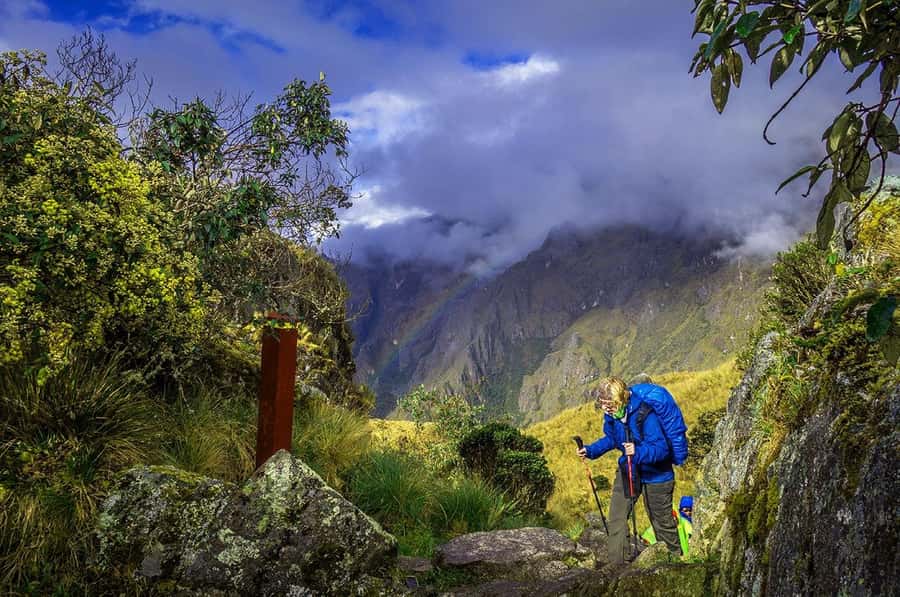
- 50 kilometers downhill from Abra Málaga: You begin high in the Andes and cycle through Puna and cloud forest zones toward Huaman Marq’a.
- Coffee is part of the journey: At Pispitayoc, you learn how local coffee is roasted and help prepare it.
- Cocalmayo breaks up the hiking: The thermal baths offer a warm rest after the second day’s descent.
- Machu Picchu starts before sunrise: The final morning begins at 4:00 AM, with a roughly 90-minute walk to the citadel.
- A small group makes a difference: With no more than nine participants, guides can keep an eye on different walking speeds and individual needs.
- Most major costs are covered: Meals, three nights, Machu Picchu entry, the return train, and transport back to Cusco are included.
What kind of Inca Trail is this?
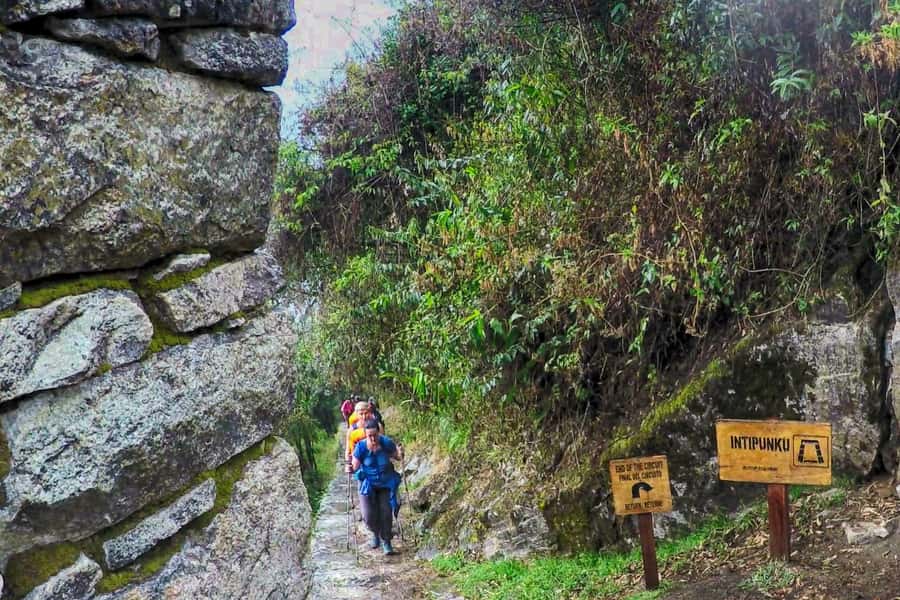
The name can cause confusion. This is not the classic four-day Inca Trail that crosses high mountain passes and camps along the route. It is the Inca Jungle Trail, a more varied route through the Sacred Valley, forest, plantations, villages, and the railway corridor to Aguas Calientes.
That distinction matters. You still walk on sections connected to the Inca road network, known as the Qhapaq Ñan, but the trip also includes road transport, mountain biking, and a train. You get a broader sample of the region, with less time carrying camping gear and more time around local communities.
I would choose this trip if you want to reach Machu Picchu while adding adventure sports and rural scenery. If your main goal is a serious high-altitude trek, the traditional Inca Trail is a different experience.
More Inca Trail Treks in Cusco
- From Cusco: 7 Lakes Ausangate Trek with Breakfast and Lunch
★ 4.8 · 360 reviews - Cusco: Machu Picchu 2-Day Inca Trail with Panoramic Train
★ 4.9 · 260 reviews - From Cusco: 2-Day Inca Trail to Machu Picchu
★ 4.2 · 244 reviews
Day one: from Cusco to Abra Málaga by bike
Your morning begins with a 6:00 AM pickup at Cusco’s Plaza Mayor. The guide identifies you by name and wears the agency jacket, so the meeting is fairly clear, though you should still arrive early. The route passes through Chinchero, Urubamba, and Ollantaytambo, giving you a quick road view of the Sacred Valley before the main activity begins.
At Abra Málaga, you receive a Kona bicycle, helmet, goggles, gloves, elbow pads, knee pads, and a rain jacket. The pass offers views toward Huacay Willca, and the ride then drops through two very different ecological zones: the high, open Puna and the warmer cloud forest.
The ride is described as about three hours and 50 kilometers, almost all downhill. That makes it less demanding than a long uphill cycle, but do not treat it as effortless. You still need to control the bike for several hours, and wet weather can change the feel of the road quickly. The safety equipment is included, which is reassuring, but you should be comfortable riding a bicycle before signing up.
The scenery is the reward. You move from cold mountain air to thicker forest, with the road doing most of the work for your legs. Several people rate this opening ride as a highlight because it gives you big Andean views without spending the first day on a punishing climb.
The cycling ends near Huaman Marq’a ruins. From there, a short van ride and a walk take you toward Santa María and then Pispitayoc village. Your first night is in an eco-house in the forest, with dinner included.
This is one of the most memorable parts of the trip because it feels tied to the local setting rather than built around a standard hotel stop. The house has been described as simple but welcoming, with a family atmosphere and coffee made on site. You should expect basic conditions, not resort service. One review specifically praised the forest stay and the family’s friendly dog, while another found the accommodation less impressive overall. Both points can be true: the setting is special, but the facilities are modest.
Day two: coffee, Qhapaq Ñan, and Cocalmayo
After breakfast, your guide explains coffee roasting. You do not simply watch a demonstration. You get to take part in roasting and preparing the beans, which gives the morning a useful connection to the farms and plantations around you.
The hike then follows part of the Qhapaq Ñan network. The route passes coffee, coca, and fruit plantations, with opportunities to spot different bird species. This is where the tour feels more than a collection of outdoor activities. You are walking through places where agriculture still shapes daily life, while your guide explains local plants, Andean customs, and Inca culture.
The climb reaches the Huancarcasa viewpoint at about 1,750 meters. Take your time here. The stop gives your group a chance to rest and look across the surrounding valleys before the route drops toward Qellomayo at 1,200 meters.
Lunch comes in Qellomayo, and the food receives unusually strong praise throughout the trip. Three breakfasts, three lunches, and three dinners are included, and portions are generally described as generous. Vegetarian meals have also been handled well. You will need to buy your own water, though, and some roadside stops charge high prices, so carry cash and fill up when you can.
The final two-hour section leads toward Santa Teresa. Cocalmayo thermal baths at around 1,450 meters are an optional stop, and the entrance fee is not included. I think this is a worthwhile extra after the day’s hiking, especially if your legs are tired, but it is best to budget for the ticket rather than assume every activity is covered.
You spend the night in Santa Teresa at a hostel, with dinner included. Santa Teresa is a practical overnight base rather than a major sightseeing stop. The point is to rest, eat, and prepare for the next morning.
Day three: plantations, Hidroeléctrica, and the railway walk
Day three starts with breakfast in Santa Teresa. The route continues for about three hours through coffee and coca plantations before reaching Hidroeléctrica at roughly 1,900 meters.
Lunch and a rest stop here divide the day nicely. Afterward, you walk beside the railway tracks for another three hours to Aguas Calientes, located at about 1,950 meters. This section is flatter and less dramatic than the earlier mountain paths, but it gives you time to settle into the approach to Machu Picchu.
The railway walk is also the day’s main drawback for some people. It is long, and the setting is more practical than scenic in places. Still, you are walking toward the mountain citadel rather than simply arriving by train, and the gradual build-up gives the final morning more meaning.
Aguas Calientes provides your third night, in a hostel. The afternoon is free, which is welcome after three active days. You can rest, look around town, or simply organize your small daypack for the early climb. In the evening, the group meets for dinner and discusses the next morning’s route and timing.
Some of the strongest praise goes to guides who manage this stage carefully. Gerson, Franchesco, Luis, and Francis are repeatedly singled out for keeping groups organized, explaining the area, and helping people with different fitness levels. The small group limit helps here. You are not just following a flag through a crowd. You have a better chance to ask questions and receive practical help.
More Machu Picchu Tours in Cusco
- From Cusco: Full-Day Group Tour of Machu Picchu
★ 4.7 · 1,767 reviews - Machu Picchu Day Trip from Cusco
★ 4.5 · 1,644 reviews - Machu Picchu: Full-Day Tour from Cusco with Optional Lunch
★ 4.6 · 927 reviews - From Cusco: 2-Day Trip to the Sacred Valley and Machu Picchu
★ 4.6 · 265 reviews
Day four: the 4:00 AM climb to Machu Picchu
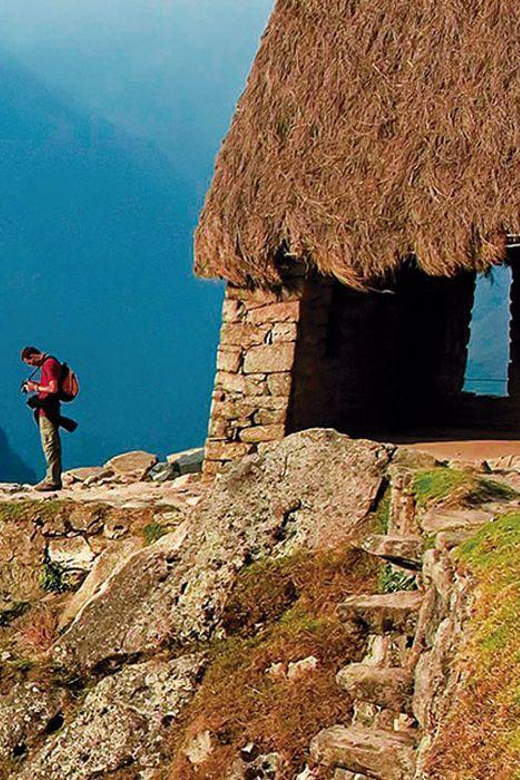
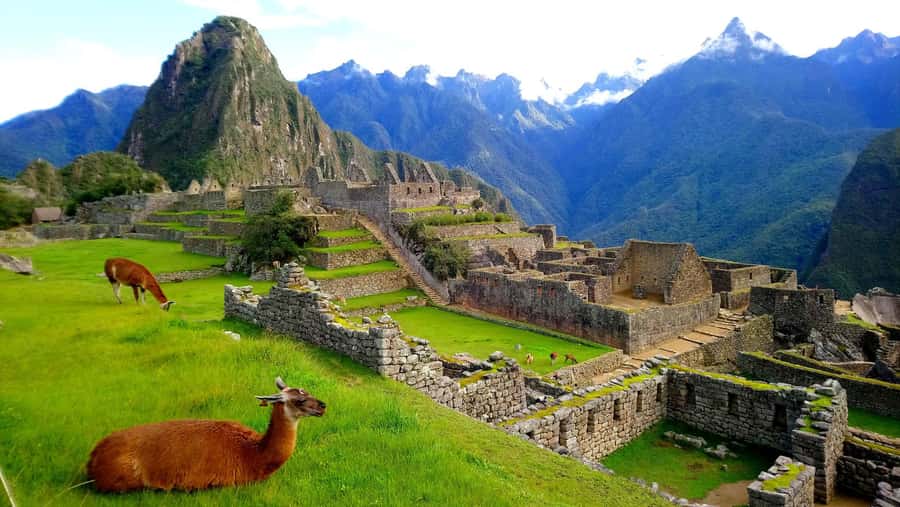
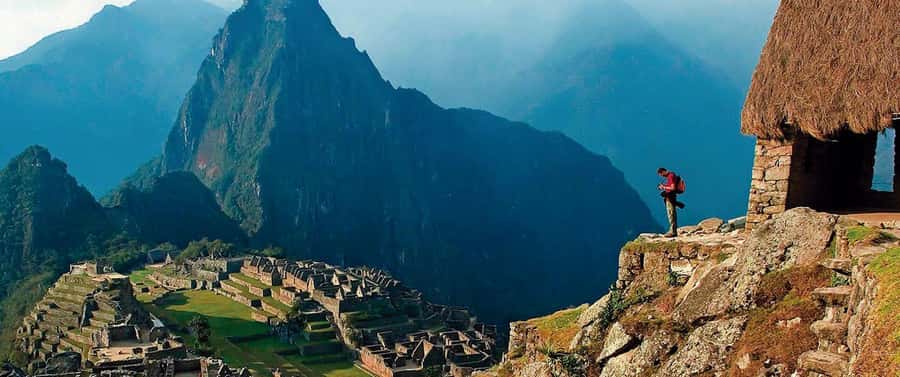
The final morning begins at 4:00 AM. You walk uphill from Aguas Calientes to Machu Picchu, reaching the citadel at approximately 2,400 meters after about an hour and a half.
This early start is tiring, but it lets you approach the site on foot and arrive in the morning. You can choose the optional bus instead, but the bus ticket is not included in the package. If you want the full physical finish, walk. If your legs are spent or you prefer to save energy for the ruins, the bus is a sensible extra.
Inside Machu Picchu, the guide leads a two-hour tour of the main areas. That guided time is important. The stones and terraces are impressive on their own, but the site makes more sense when someone explains its construction, setting, and role in the wider Inca world.
After the tour, you have free time for personal exploration. Entry arrangements can be a concern because Machu Picchu access is tied to timed circuits and availability. Several guides, including Gerson and Franchesco, received praise for handling the ticket process and arranging schedules carefully. Still, you should confirm exactly which circuit and entry time you are receiving before departure, rather than assuming all route options are identical.
The return is less romantic but well organized. You walk back to Aguas Calientes to collect your belongings, then take a train to Ollantaytambo. From there, a bus returns you to Cusco. The train can feel like a small luxury after three days of walking, biking, and basic lodging.
The guides are a major part of the value
The route is good, but the guide can shape the entire mood of the four days. The most praised guides are Francis, Gerson, Luis, Amaru, Richard, Franchesco, Armando, Guillermo, Gustavo, and Rene.
What matters is not only information about Inca culture. The best guides also help the group become comfortable with one another, watch people on difficult sections, explain optional activities, and keep meals and transport on schedule. Solo participants especially benefit from this. One person described Armando’s group as feeling like a family, while others appreciated guides who encouraged older participants and helped when someone was unwell.
English and Spanish guiding are available. The quality of English may vary by guide, but the strongest feedback points to guides who explain culture in clear, approachable ways rather than giving a dry lecture.
What is included for $470?
At $470 per person, the package offers strong value if you intend to use most of what is included. The price covers:
- Pickup in central Cusco
- Transport from Cusco to Abra Málaga and Santa María
- Bicycle and protective equipment
- Rain jacket
- Three breakfasts, lunches, and dinners
- One night in Pispitayoc
- One night in Santa Teresa
- One night in Aguas Calientes
- Machu Picchu entry
- Professional bilingual guide
- Return train from Aguas Calientes to Ollantaytambo
- Bus from Ollantaytambo to Cusco
- First-aid kit
You must pay for your first breakfast, your final lunch in Aguas Calientes, Cocalmayo entry, and any Machu Picchu bus rides. Optional rafting and ziplining are also extra. One person paid 240 soles for rafting and ziplining together, while another noted a surprise 10-sol car fee connected with ziplining. Ask your guide for the full extra-cost list before choosing add-ons.
Luggage transfers may also cost extra. If you want to carry only a daypack, ask how bags can be sent ahead and what each transfer costs.
Who should book this four-day route?
I would recommend it to you if you want:
- A first active trip to Machu Picchu
- A small group with a social feel
- A mix of biking, walking, train travel, and local activities
- Cultural explanations along the route
- Most meals and transport arranged in advance
- A route that is active but not the full classic Inca Trail
You should think twice if you dislike early starts, basic hostels, long walking days, or changing activity levels. The second and third days involve several hours of walking, and the final climb begins before dawn.
The tour is not suitable for pregnant women, wheelchair users, or people with back problems. Bring your passport or ID card, with a copy accepted according to the tour information. Also bring more cash than you think you need for water, thermal baths, optional activities, and small transport charges.
Should you book it?
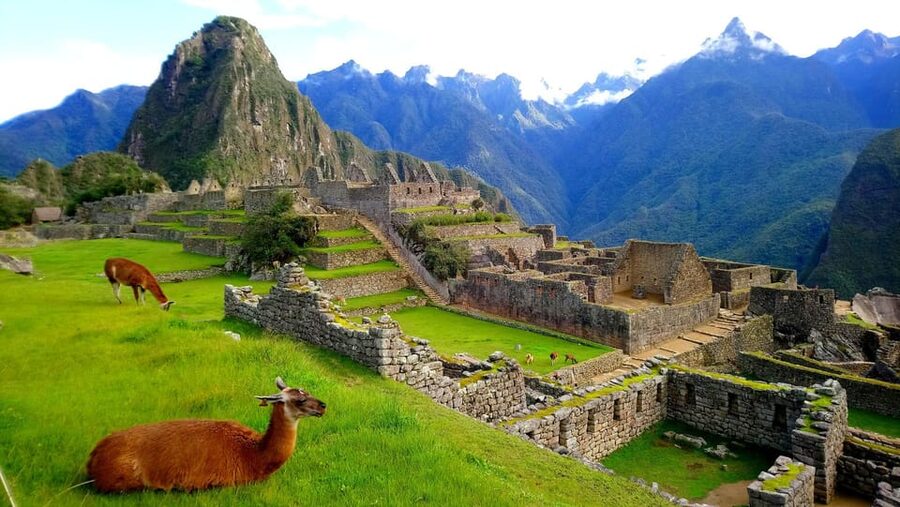
Book this trip if you want Machu Picchu to be the grand finish of a wider Andean adventure. The bike ride, coffee roasting, forest homestay, plantation walks, thermal baths, and railway approach give the famous ruins a strong sense of place.
I would not book it for luxury or complete quiet. The accommodation is functional, the schedule starts early, and optional extras can push up the budget. But at $470, with entry, meals, three nights, the train, and the return ride included, this is a well-priced choice for an active person who values variety and a good guide more than polished rooms.
FAQ
Is this the classic four-day Inca Trail?
No. This is the Inca Jungle Trail, which combines mountain biking, hiking, road transport, a railway walk, and a train journey to and from Machu Picchu.
What time does the tour start in Cusco?
Pickup is at 6:00 AM from Cusco’s Main Square, or Plaza Mayor. The guide calls the guest’s name and wears the agency jacket.
How much biking is included?
The downhill ride from Abra Málaga covers about 50 kilometers and lasts around three hours. A Kona bicycle, helmet, goggles, gloves, elbow pads, knee pads, and a rain jacket are included.
Are the Cocalmayo thermal baths included?
No. The thermal baths are optional, and the entrance ticket must be paid separately.
Is the bus up to Machu Picchu included?
No. You can walk from Aguas Calientes to Machu Picchu, or buy the optional bus ticket separately.
What accommodation is included?
You spend one night in an eco-house in Pispitayoc, one night in a hostel in Santa Teresa, and one night in a hostel in Aguas Calientes. Dinner is included on the first two nights, and the listed meal plan covers three breakfasts, three lunches, and three dinners.
More Treks to Machu Picchu
- Short Inca trail to MachuPicchu || 2days – 1nigth ||
★ 5.0 · 103 reviews - Salkantay Trek Challenge – 3 Days / 2 Nights
★ 5.0 · 101 reviews - Small Group 5 Days Salkantay and Machu Picchu by Llactapata Tour
★ 5.0 · 88 reviews - Choquequirao Trek 4 days and 3 nights
★ 5.0 · 81 reviews
More Ways to Reach Machu Picchu
- Machu Picchu: Inca Trail 2-Day Overnight Guided Tour
★ 4.9 · 203 reviews - The First Class Machu Picchu Train by Inca Rail
★ 4.0 · 182 reviews - From Cusco: 1-day Machu Picchu Tour by Train
★ 4.6 · 138 reviews - Private Tour to Sacred Valley and Machu Picchu from Cusco
★ 5.0 · 133 reviews
Just added around Cusco
- Cusco: Rainbow Mountain and viewpoint red valley ( optional)★ 4.8 · 3 reviews
- Montaña de Colores: tour en cuatrimotos día completo★ 3.3 · 3 reviews
- Tour Pallay Punchu Trek Full Day★ 4.2 · 3 reviews
- Excursion Cusco – Puno – Titicaca Observatory Train★ 5.0 · 3 reviews
- Cusco: Palcoyo Mountain Day Trip with Breakfast and Lunch★ 4.8 · 3 reviews
- Maras Moray★ 5.0 · 3 reviews
- From Cusco:Chinchero, Moray, Maras, Ollantaytambo with lunch★ 5.0 · 3 reviews
- Tour to Laguna Humantay with breakfast and lunch from Cusco★ 4.7 · 3 reviews
Machu Picchu Tours, compared.



Machu Picchu: Full-Day Tour from Cusco with Optional Lunch
Read our review →
2-Day Trip to the Sacred Valley and Machu Picchu
Read our review →
Machu Picchu 2-Day Inca Trail with Panoramic Train
Read our review →

Machu Picchu: Inca Trail 2-Day Overnight Guided Tour
Read our review →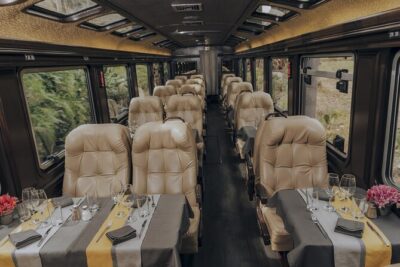
The First Class Machu Picchu Train by Inca Rail
Read our review →Browse the lists this tour appears in