
Reviewed · MACHU PICCHU TOURS
4 Day Inca Trail To Machu Picchu – Private Service
Machu Picchu is best earned on foot. This four-day private trek from Cusco follows the classic Inca Trail through mountain passes, cloud forest, ruins, and small Andean settlements before reaching the citadel through the Sun Gate. I like the one-group-only format, which gives your guide room to set a sensible pace and answer questions, and I like that camping gear, cooks, porters, meals, permits, and transport are bundled into one price. The main caution is simple: this is a serious high-altitude hike, not a gentle sightseeing walk.
I also like the strong human side of the service. Guides such as Victor, Guillermo, Rene, Guido, Hugo, Felipe, Aldo, and Wilber Ramos are repeatedly praised for their patience, historical insight, encouragement, and ability to adapt to slower walkers. The drawback is the early start, basic camping, cold nights, long climbs, and strict cancellation policy. You need to be ready for effort, mud, stairs, and a very early final morning.
In This Review
- The key facts at a glance
- Why the private format matters on the Inca Trail
- Day one: Piscacucho, Patallacta, and the first camp
- Day two: the hard climb to 4,200 meters
- Day three: Phuyupatamarca, Intipata, and Wiñay Wayna
- Day four: the Sun Gate and Machu Picchu
- Camping, food, porters, and what you carry
- What the $1,395 price really buys
- The guides and support crew
- Who should book this trek?
- Should you book the 4-day private Inca Trail?
- FAQ
- What is included in the private Inca Trail tour?
- How difficult is the four-day Inca Trail?
- What time does the tour start?
- Is food included during the trek?
- Can I climb Huayna Picchu?
- Is a personal porter included?
- Can children join the trek?
The key facts at a glance
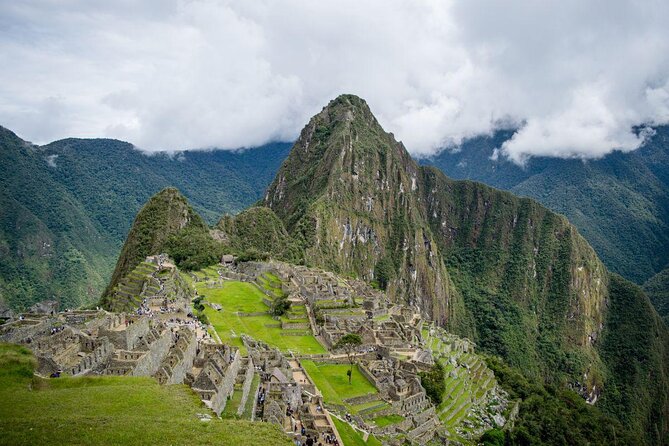
- Dead Woman’s Pass reaches 4,200 meters, making the second day the physical test of the trek.
- Wiñay Wayna is your final camp, placing you close to Machu Picchu before the dawn walk to the Sun Gate.
- A private group means personal attention, with no strangers setting your walking speed.
- Porters and cooks carry much of the burden, including camping and kitchen equipment, and prepare three lunches, three dinners, and three breakfasts.
- The trip begins around 4:00 or 4:30 a.m., with collection from your hotel in Cusco.
- The $1,395 price covers major essentials, but you still need to budget for tips, insurance, optional Huayna Picchu, and some meals.
Why the private format matters on the Inca Trail
The biggest advantage here is not luxury. It is control.
On a standard group trek, you may need to match the pace of people you have never met. With private service, your party is the only group taking part. That gives the guide more freedom to stop when you need water, explain an Inca site properly, or let a slower walker catch up without feeling rushed.
That flexibility matters most on day two. The climb to Dead Woman’s Pass is steep, high, and tiring. A patient guide can help you break the climb into manageable sections. Rene is praised for encouraging a slower group, while Felipe is described as good at keeping people on pace without losing the friendly feel of the outing. Those are useful qualities on a route where morale can matter almost as much as leg strength.
The private arrangement also suits families and groups of friends. The minimum age is 10, but every child needs to be comfortable with long walking days and cold camping nights. The tour requires a moderate level of fitness, and I would treat that description seriously.
More Inca Trail Treks in Cusco
- Cusco: 4-Day Inca Trail to Machu Picchu with Accommodation
★ 4.8 · 432 reviews - From Cusco: 7 Lakes Ausangate Trek with Breakfast and Lunch
★ 4.8 · 360 reviews - Cusco: Machu Picchu 2-Day Inca Trail with Panoramic Train
★ 4.9 · 260 reviews
Day one: Piscacucho, Patallacta, and the first camp
The first morning begins very early, with hotel pickup listed around 4:00 to 4:30 a.m. You travel toward kilometer 82, known as Piscacucho, where the group checks in at the Inca Trail control point. Bring your passport and trail ticket. Access is limited, so this checkpoint is not a minor formality.
Use the restrooms before setting off, apply sunscreen, and put on insect repellent. The trail starts at about 2,720 meters beside the Vilcanota River. The early section introduces the broad Sacred Valley and gives you the first sense that this is more than a hike to a famous ruin. You are following an old ceremonial route through terrain that changes quickly.
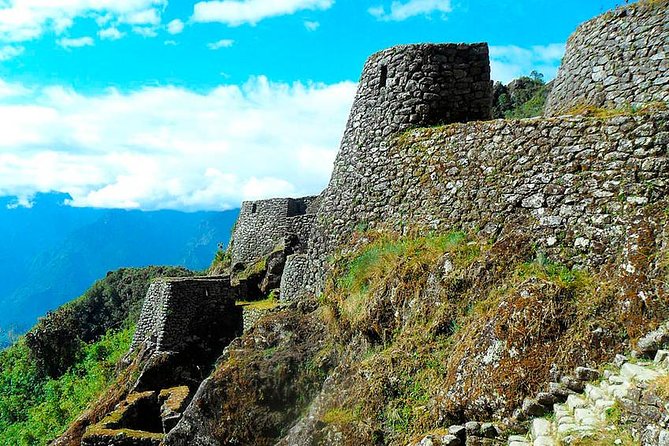
The path soon turns toward cloud forest. One rewarding view is Huillca Raccay, an Inca fortress perched above the route. You also reach Patallacta, a large archaeological site with terraces and structures spread across the valley. This is one of the first moments when the route’s design becomes clear. The Incas were not simply crossing the mountains. They built a chain of settlements, resting places, religious sites, and farming terraces along the way.
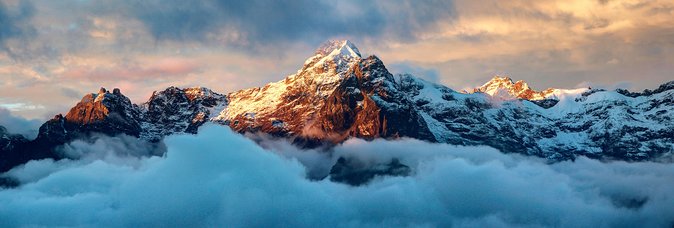
You may also see the Urubamba range and the snow-capped peak of Veronica, known locally as Waqay Willca. The contrast is striking: river valley below, steep forested slopes around you, and high snowy peaks in the distance.
The day ends near Wayllabamba at roughly 3,000 meters. Walking time is listed at about seven hours. Night temperatures can fall to around 5 degrees Celsius, depending on the month. That first evening is a good test of your camping routine. Organize your sleeping clothes, headlamp, toiletries, and water before dark. You do not want to rummage through a large bag when the temperature drops.
Day two: the hard climb to 4,200 meters
Day two is the toughest part of the route for most people. Breakfast is served early, with departure around 5:30 a.m. You climb toward Abra de Warrmihuañusca, better known as Dead Woman’s Pass, at 4,200 meters.
The ascent takes several hours and can feel relentless. Thin air makes every step count, especially if you have not spent enough time adjusting to Cusco’s altitude. Go slowly. There is no prize for reaching the pass first, and a private guide should help you find a pace you can sustain.
The pass itself is a major achievement. At 13,779 feet, it is the highest point of the trek. Take time to enjoy the view and catch your breath, but do not linger too long if the weather is cold or unsettled.
After the pass, the trail drops to Pacaymayu at about 3,550 meters for lunch. The descent may sound easier, but steep downhill walking can be hard on knees and ankles. One useful mental trick is to treat the route as a series of short sections rather than one enormous day.
This part of the trail also offers birds, including hummingbirds, and native vegetation such as polylepis trees. These distinctive high-Andean trees grow in the cloud forest at elevations around 3,650 meters. Your guide can add meaning to what might otherwise look like a difficult stretch of trail.
After lunch, there is another climb of about two hours to Runkurakay Pass, close to 4,000 meters. Camp is usually reached around 5:00 p.m., with night temperatures near 4 degrees Celsius. You will be tired, and the cold can make the evening feel shorter than expected. Eat well, drink water, and get into your sleeping bag rather than trying to stay up late.
Day three: Phuyupatamarca, Intipata, and Wiñay Wayna
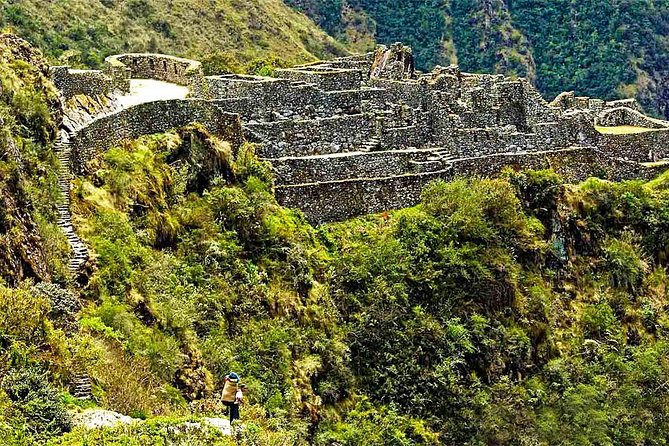
Day three is shorter in distance, around 10 kilometers and roughly five hours, but it is still not a rest day. The route becomes especially scenic as you move through high mountain country and cloud forest.
A gentle climb leads to Phuyupatamarca, or Town in the Clouds, at about 3,680 meters. The site is known for its position above steep valleys and canyons. The views here reward the work of the previous day, and this is a good place to ask your guide about how the Inca road linked different ecological zones.
The route then drops through cloud forest and a long sequence of Inca steps. Around 3,000 steps lead toward Intipata, an impressive agricultural site built into the slopes. This is where the route may remind you that downhill walking is not always easy. The stone steps can be tiring, particularly after two days of high-altitude hiking.
You reach Wiñay Wayna at about 2,680 meters by lunchtime. The name means Forever Young, and the site is one of the great archaeological highlights of the entire route. Its terraces and ceremonial structures cling to a steep mountainside, and its setting makes it easy to understand why this final section of the Inca Trail feels so special.
The camp is close to the ruins, so you have a valuable chance to visit them without treating the stop as a rushed photo break. Wiñay Wayna is also important because you are now near the finish. After the long climbs and cold nights, the emotional lift can be real. Still, save some energy for the next morning. The final approach begins before sunrise.
More Machu Picchu Tours in Cusco
- From Cusco: Full-Day Group Tour of Machu Picchu
★ 4.7 · 1,767 reviews - Machu Picchu Day Trip from Cusco
★ 4.5 · 1,644 reviews - Machu Picchu: Full-Day Tour from Cusco with Optional Lunch
★ 4.6 · 927 reviews - From Cusco: 2-Day Trip to the Sacred Valley and Machu Picchu
★ 4.6 · 265 reviews
Day four: the Sun Gate and Machu Picchu
Day four starts early. The goal is to reach Intipunku, the Sun Gate, before sunrise. The listed walking distance is about 5 kilometers, taking around two hours, though the total morning includes time at the gate and the onward visit to Machu Picchu.
At Intipunku, you get your first major view of Machu Picchu from above. The citadel sits at about 2,400 meters, below the Sun Gate at roughly 2,730 meters. If the weather cooperates, seeing the ruins emerge in the morning light is a fitting reward for the previous three days.
The final approach is not just a transport trick. You arrive on foot from the historic trail, rather than stepping off a bus at the main entrance. That gives the site a stronger sense of arrival, even though you will still need to follow the current entry rules and your guide’s instructions.
The tour includes the bus from Machu Picchu down to Aguas Calientes. A train then returns you toward Ollantaytambo, where collection is provided. Pay attention to this detail when planning the rest of your trip. The listed return arrangement is not a direct drop-off back to your Cusco hotel.
The final day has some exclusions. Breakfast on the first morning, and lunch and dinner on the last day, are not included. Plan for food around Aguas Calientes or at the end of the route. The exact Machu Picchu touring schedule is not fully described, so ask the operator how much guided time inside the citadel is included.
Camping, food, porters, and what you carry
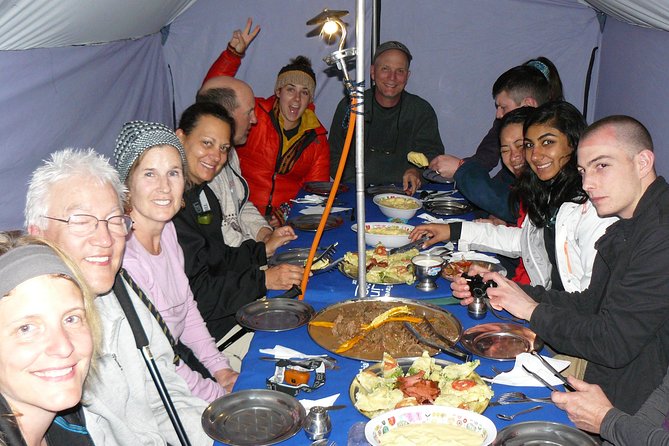
This is camping, but you are not expected to haul the entire operation yourself. The package includes a dining tent with tables and chairs, a cook, four-person tents shared by two people, foam mattresses, cooking and camping equipment carried by porters, an oxygen bottle, and a first-aid kit.
The food receives some of the warmest praise. Cooks such as Gregorio, Wilfredo, Felix, and their teams are credited with producing generous meals in difficult conditions. One cook even prepared a birthday cake on the trail. That does not turn the trek into a hotel stay, but it can make a very cold evening feel considerably better.
You receive three lunches, three dinners, and three breakfasts. Drinking water is provided after you bring water for the first morning. The supplied water is previously boiled, so carry your own bottle or hydration system.
There is an important inconsistency about the personal porter. The inclusions say a porter can carry 7 kilograms of personal effects, while the exclusions repeat that this service is not included. Confirm this before paying, and ask exactly what bag size and weight are permitted. Do not assume that your full suitcase will be carried.
Walking sticks are not included. You can bring your own or arrange them separately. Travel insurance is strongly recommended, which is sensible for a high-altitude trek with a non-refundable booking.
What the $1,395 price really buys
At $1,395 per person, this is not a low-cost walk. Yet the price includes several costly and difficult-to-arrange parts: trail transport from Cusco to kilometer 82, train service toward Ollantaytambo, the Aguas Calientes bus, camping equipment, cooks, porters, guide service, meals, water, and trail support.
A private trek also costs more because the guide’s attention is reserved for your group. That is valuable if your party has mixed fitness levels, wants plenty of cultural explanation, or prefers not to walk with strangers.
The price becomes less attractive if you expect hotel comfort, a direct Cusco return, every meal, or a fully clear personal porter arrangement. A single supplement adds $60. Huayna Picchu entrance is extra, and permits for that climb need to be obtained well ahead of time. If you get the 7:00 to 8:00 a.m. Huayna Picchu time, you may miss the guided Machu Picchu visit. The later 10:00 to 11:00 a.m. session may fit the schedule better, but the operator must confirm the actual timing.
The guides and support crew
The most consistent strength of this service is the staff. Victor is praised for treating his group warmly while keeping everyone informed and on schedule. Guillermo is credited with bringing the Inca past and the natural world to life. Guido is described as passionate, patient, and strong in English.
Hugo receives praise for answering a constant stream of questions. Aldo is noted for careful timing and friendly guidance. Wilber Ramos is described as particularly safe and well informed. These details matter because a guide on this route does much more than point out ruins. The guide watches the pace, explains the meaning of sites, helps with altitude concerns, and keeps spirits up when the trail turns into a staircase.
The porters are equally important. They carry the heavy shared equipment that allows you to sleep under shelter and eat hot meals. Tip money is not included, so carry cash in small denominations and ask the company for current guidance on fair gratuities.
Who should book this trek?
I would choose this experience if you want the classic Inca Trail and value a private guide more than a bargain price. It suits couples, families with older children, and groups of friends who want to share a demanding challenge without being tied to a large party.
You should be comfortable with several hours of walking, steep climbs, steep descents, stone steps, cold nights, and high altitude. The second day is the key test, but the whole route requires steady effort.
I would not choose it if you want a relaxed Machu Picchu visit, dislike tents, need flexible cancellation, or are not prepared to train and adjust to altitude. The minimum age is 10, but age alone says little about readiness.
Should you book the 4-day private Inca Trail?
Book it if the route itself is your goal, not simply Machu Picchu. The ruins of Patallacta, Runkurakay, Phuyupatamarca, Intipata, and Wiñay Wayna give the trek its meaning, while the Sun Gate provides a memorable arrival.
The $1,395 cost is reasonable for a private, supported trek with transport, meals, cooks, porters, camping gear, and experienced guides. Before committing, confirm the personal porter allowance, exact final-day meals, return arrangements, and Huayna Picchu timing. If those details suit you and you are ready for Dead Woman’s Pass, this is a strong choice for a demanding but rewarding four-day route.
FAQ
What is included in the private Inca Trail tour?
The package includes a professional bilingual guide, camping equipment, a cook, dining tent, foam sleeping mattress, porters for camping and cooking equipment, an oxygen bottle, first-aid kit, water after the first morning, transport to kilometer 82, train service toward Ollantaytambo, the bus from Machu Picchu to Aguas Calientes, and collection from Ollantaytambo train station.
How difficult is the four-day Inca Trail?
The tour requires a moderate physical fitness level. Day two is especially difficult because it climbs to Dead Woman’s Pass at 4,200 meters. The route also includes steep descents and many stone steps.
What time does the tour start?
Hotel pickup is listed around 4:00 to 4:30 a.m. The day two walking start is around 5:30 a.m., and day four begins early so you can reach the Sun Gate before sunrise.
Is food included during the trek?
Three breakfasts, three lunches, and three dinners are included. The first morning’s breakfast is not included, and lunch and dinner on the last day are also excluded. Other meals not specifically listed are your responsibility.
Can I climb Huayna Picchu?
Yes, but Huayna Picchu entrance is not included. Tickets should be booked well ahead of time. Available sessions are listed as 7:00 to 8:00 a.m. and 10:00 to 11:00 a.m. The earlier session may cause you to miss the guided Machu Picchu visit.
Is a personal porter included?
The tour details conflict on this point. One section says a personal porter carries up to 7 kilograms, while another says this service is not included. Confirm the allowance and cost directly before booking.
Can children join the trek?
The minimum age is 10 years. All participants should also meet the stated moderate fitness requirement and be ready for high altitude, long walking days, and cold camping conditions.
More Treks to Machu Picchu
- Short Inca trail to MachuPicchu || 2days – 1nigth ||
★ 5.0 · 103 reviews - Salkantay Trek Challenge – 3 Days / 2 Nights
★ 5.0 · 101 reviews - Small Group 5 Days Salkantay and Machu Picchu by Llactapata Tour
★ 5.0 · 88 reviews - Choquequirao Trek 4 days and 3 nights
★ 5.0 · 81 reviews
More Ways to Reach Machu Picchu
- From Cusco: 2-Day Inca Trail to Machu Picchu
★ 4.2 · 244 reviews - Machu Picchu: Inca Trail 2-Day Overnight Guided Tour
★ 4.9 · 203 reviews - The First Class Machu Picchu Train by Inca Rail
★ 4.0 · 182 reviews - From Cusco: 1-day Machu Picchu Tour by Train
★ 4.6 · 138 reviews
Just added around Cusco
- Cusco: Rainbow Mountain and viewpoint red valley ( optional)★ 4.8 · 3 reviews
- Tour Pallay Punchu Trek Full Day★ 4.2 · 3 reviews
- Montaña de Colores: tour en cuatrimotos día completo★ 3.3 · 3 reviews
- Excursion Cusco – Puno – Titicaca Observatory Train★ 5.0 · 3 reviews
- Cusco: Palcoyo Mountain Day Trip with Breakfast and Lunch★ 4.8 · 3 reviews
- Maras Moray★ 5.0 · 3 reviews
- Tour to Laguna Humantay with breakfast and lunch from Cusco★ 4.7 · 3 reviews
- From Cusco:Chinchero, Moray, Maras, Ollantaytambo with lunch★ 5.0 · 3 reviews
Machu Picchu Tours, compared.



Machu Picchu: Full-Day Tour from Cusco with Optional Lunch
Read our review →
4-Day Inca Trail to Machu Picchu with Accommodation
Read our review →
2-Day Trip to the Sacred Valley and Machu Picchu
Read our review →
Machu Picchu 2-Day Inca Trail with Panoramic Train
Read our review →

Machu Picchu: Inca Trail 2-Day Overnight Guided Tour
Read our review →Browse the lists this tour appears in