
Reviewed · MACHU PICCHU TOURS
4 Day Classic Inca Trail to Machu Picchu by 360° Train
The Inca Trail earns its reputation. This four-day trek combines ancient ruins, mountain passes, and a first view of Machu Picchu from the Sun Gate, with meals, camping, permits, and return transport arranged for you. I like the small maximum group of nine, and I like that the route includes major sites such as Llactapata, Runkurakay, Sayacmarca, Phuyupatamarca, and Wiñay Wayna rather than rushing straight to the citadel.
The main drawback is the physical demand. You will hike about nine hours each day, climb to 4,215 meters at Dead Woman’s Pass, and handle steep Inca steps. I also see some concern about communication and equipment charges, so you should confirm pickup, sleeping bag arrangements, backup dates, and the full packing list before paying the $820 price.
The route gives you the full Inca Trail experience, not a short walk to the ruins. You sleep in a private tent at each campsite, eat three breakfasts, three dinners, and four lunches, and finish with a train to Ollantaytambo followed by a bus to Cusco. The 97 percent recommendation rate and 4.9 rating from 62 published ratings are encouraging, but the serious complaints about last-minute changes and guide conduct deserve attention before you commit.
In This Review
- Key facts to know before you book
- What the $820 price really covers
- Day one from KM-82 to Ayapata
- Day two and the climb to Dead Woman’s Pass
- Day three through Phuyupatamarca and Wiñay Wayna
- Day four and the first view from the Sun Gate
- Camping, food, and what you carry
- Small groups, communication, and service concerns
- Who should choose this four-day route
- Should you book Happy Gringo Tours?
- FAQ
- How much does the four-day Inca Trail tour cost?
- How long does the tour last?
- How many people can join the group?
- What time does the tour start?
- Where does the trek begin?
- Is the Inca Trail permit included?
- Are meals included?
- Is camping included?
- Do I need strong physical fitness?
- Is travel insurance included?
Key facts to know before you book
- Nine-person maximum: A small group can make a four-day mountain trek easier to manage and more personal.
- Dead Woman’s Pass reaches 4,215 meters: Day two is the hardest section, with a long climb followed by steep downhill steps.
- Four lunches are included: Food is supplied throughout the trek, including fresh organic meals prepared by the support team.
- Private tent camping: You sleep in your own tent at each campsite, but sleeping bag arrangements need to be confirmed.
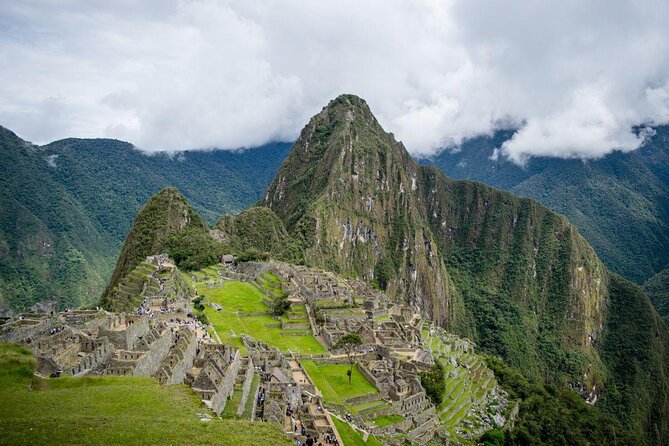
- Machu Picchu begins at the Sun Gate: On the final morning, you enter early and walk to the overlook before visiting the main temples.
- The price is $820 per person: Permits, Machu Picchu admission, meals, camping, and the return train are included, while tips and insurance are not.
What the $820 price really covers
At $820, this is not a bargain trek, but the price includes the costly and limited parts of the Inca Trail. Your Inca Trail permit and Machu Picchu ticket are included, along with three breakfasts, three dinners, four lunches, camping, and the return train from Aguas Calientes toward Ollantaytambo.
That matters because access to the classic Inca Trail is controlled. You are not simply turning up at KM-82 and buying a walk. The permit must match your passport, and your name and passport details need to be correct when you book.
The package also includes the work of a cook and porters, who carry tents, food, water, and cooking equipment. You should not assume that every personal item is carried for you. One serious complaint says participants were expected to carry rented sleeping bags and liners or pay an additional 150 soles, listed there as about $40 or 40 euros per day. The company disputed parts of that account and said sleeping bags can be carried by clients when no extra porter is hired.
That dispute points to a practical question you should settle in writing: Is a sleeping bag included, and who carries it? The advertised package lists meals, tickets, and camping, but it does not clearly list a sleeping bag, porter service for personal gear, travel insurance, or tips.
Tips are not included. Neither is health insurance. Set aside money for both, and ask exactly what the company expects you to carry.
More Inca Trail Treks in Cusco
- Cusco: 4-Day Inca Trail to Machu Picchu with Accommodation
★ 4.8 · 432 reviews - From Cusco: 7 Lakes Ausangate Trek with Breakfast and Lunch
★ 4.8 · 360 reviews - Cusco: Machu Picchu 2-Day Inca Trail with Panoramic Train
★ 4.9 · 260 reviews
Day one from KM-82 to Ayapata
The day starts early, with pickup listed for 4:00 am. You travel to Piscacucho Estacion de Tren and then continue to the trailhead at KM-82. This is the official entry point, where you show your passport at the checkpoint. Your passport must match the permit, so do not book under a nickname or an old passport number.
The opening section is fairly gentle by Inca Trail standards. You walk for a couple of hours over flatter ground toward Llactapata, an early archaeological site that gives you your first sense of how the trail links ruins, terraces, and high mountain routes.
After several more hours, you reach the first lunch stop. The food is described as fresh and organic, prepared by the porters and cooks who wait ahead of the group. Four included lunches are useful here, since buying food along the official trail is not presented as part of the plan.
The first real uphill begins after lunch. You continue for another couple of hours before reaching Ayapata base camp. The day lasts about nine hours, so the relatively mild start should not fool you. By camp, you have already spent most of a full day walking.
Your reward is a private tent at the first campsite. Private camping sounds simple, but it gives you more personal space than a shared tent or crowded sleeping shelter. Still, confirm the tent and sleeping equipment arrangements before departure, especially if you are not bringing your own sleeping bag.
Day two and the climb to Dead Woman’s Pass
Day two is the physical test. After breakfast, you climb for roughly five hours toward Dead Woman’s Pass, the highest point of the route at 4,215 meters, or 13,779 feet.
The altitude is the serious issue, not just the distance. The climb is long, and the pass is followed by about two hours of steep descent on Inca steps. You need strong physical fitness, as the tour information makes clear. A casual walking background is not enough preparation for this day.
The support structure helps. Breakfast comes before the climb, lunch follows the descent, and breaks are built into the schedule. You can expect the day to feel slow and demanding. That is not a flaw in the route. It is the point where a steady pace matters more than speed.
After lunch, the trail rises and falls again. You visit Runkurakay and Sayacmarca, two important Inca sites, with about two hours of uphill walking and two hours downhill, broken up by stops. Runkurakay is reached along the route after the pass, while Sayacmarca comes later, perched along the trail before the final stretch to camp.
Chaquicocha is the second campsite, reached about 30 minutes after Sayacmarca. The total day again runs around nine hours. You should expect tired legs, especially from the downhill steps, which can be harder on knees than the climb.
I like that the tour does not treat the Inca Trail as a single scenic walk. Day two gives you the full contrast: high-altitude exertion, sharp stone stairways, and archaeological sites woven into the route. The drawback is that there is little room for a slow start or an unplanned rest day.
Day three through Phuyupatamarca and Wiñay Wayna
Day three begins with breakfast and about two hours of hiking to Phuyupatamarca, called the City in the Clouds. This is the last major summit listed on the route and one of the best sections for mountain views, plants, and wildlife.
From there, the trail continues toward Inti Pata, known as Sun Above the Terraces. The names are memorable, but the practical benefit is even better: this day replaces the punishing pass climb with a steady sequence of ruins, terraces, and changing views.
Lunch follows, then you visit Wiñay Wayna, translated as Forever Young. This is one of the most impressive sites on the classic route, with terraces and stonework set into the steep mountainside. Its position near Machu Picchu makes the visit feel like a buildup to the main event rather than a separate stop.
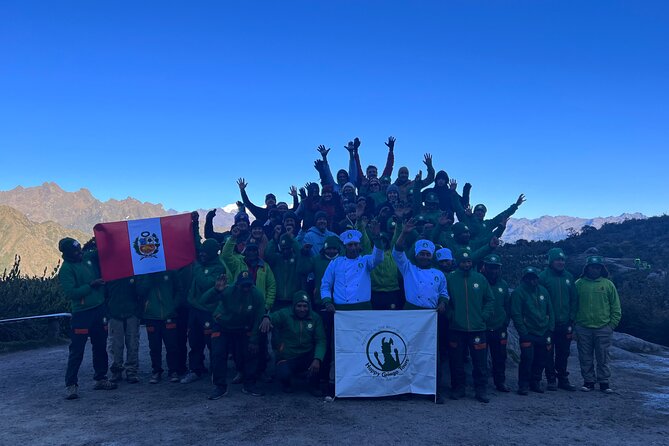
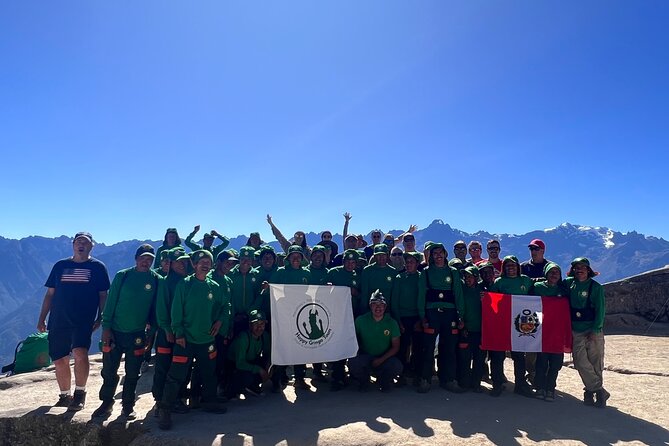
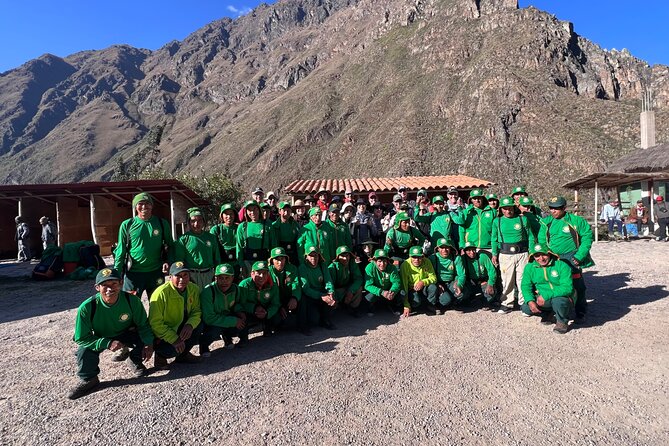
After Wiñay Wayna, you return to camp for dinner. The plan says you will say goodbye to the porters that evening. That is worth noting because the people preparing your meals and moving the camp are part of the experience, even though they may receive less attention than the guide.
Day three is still listed at about nine hours, but its rhythm should feel different from day two. You are no longer climbing toward the highest point. Instead, you are moving through the final ruins before the early morning entrance to Machu Picchu.
More Machu Picchu Tours in Cusco
- From Cusco: Full-Day Group Tour of Machu Picchu
★ 4.7 · 1,767 reviews - Machu Picchu Day Trip from Cusco
★ 4.5 · 1,644 reviews - Machu Picchu: Full-Day Tour from Cusco with Optional Lunch
★ 4.6 · 927 reviews - From Cusco: 2-Day Trip to the Sacred Valley and Machu Picchu
★ 4.6 · 265 reviews
Day four and the first view from the Sun Gate
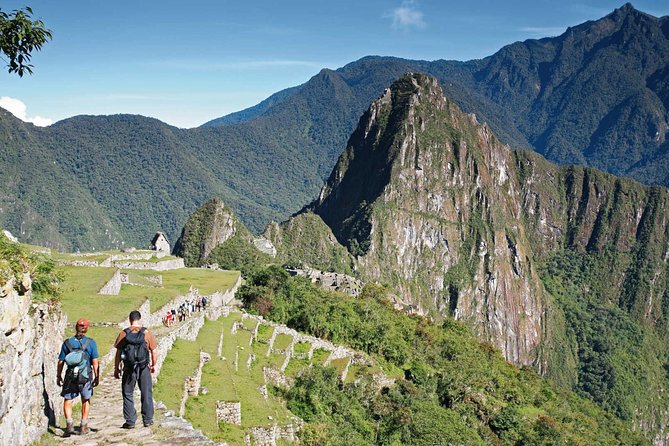
The team wakes you early on the final morning. You head to the checkpoint and enter Machu Picchu when the site opens. The first goal is the Sun Gate, where you get your initial view of the citadel from the classic Inca Trail approach.
This is one of the strongest reasons to choose the full four-day route. You do not arrive by bus and see Machu Picchu immediately from the standard entrance. You approach on foot, after several days of ruins, mountain passes, and stone stairs. The first view from the Sun Gate is part of the reward.
After reaching the site, you visit the main temples of Machu Picchu. The description does not specify the exact circuit or guide duration inside the citadel, so ask for those details before departure. The admission ticket is included, but the precise visiting route can matter if you want time at particular structures.
In the afternoon, you take the train to Ollantaytambo and then continue by bus to Cusco. The experience is titled with the 360 Train, but the supplied schedule only clearly states the return train from Aguas Calientes to Ollantaytambo. Confirm the train departure time, seating details, and final Cusco drop-off.
One itinerary note is unclear: the day-four description ends with a reference to a final dinner at Wiñay Wayna on the Inca Trail. That appears inconsistent with the stated return from Machu Picchu, so ask the operator to clarify it. Do not assume a final dinner is included after you leave the trail.
Camping, food, and what you carry
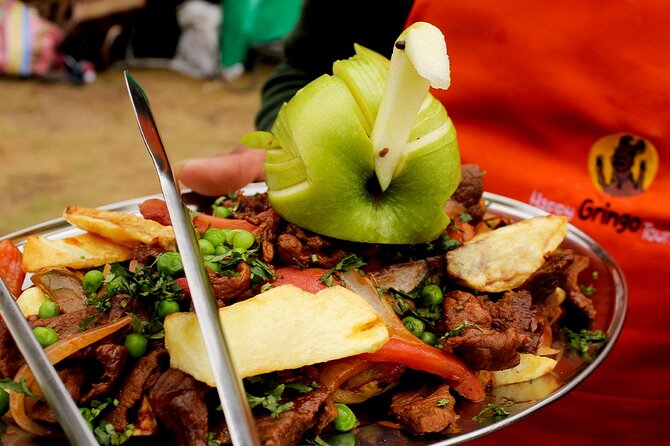
The camping setup is one of the package’s stronger features. You receive a private tent at each site, which should make it easier to rest after long walking days. The tour also supplies breakfast, lunch, and dinner throughout the four-day schedule.
The food is described as fresh and organic, with the porters waiting at lunch stops with prepared meals. That is a real benefit on a route where you need regular food and cannot simply wander into a restaurant when you are tired.
The included meals do not mean every comfort is included. Health insurance and tips are excluded, and the sleeping bag question is not settled by the inclusions. The complaints about sleeping bags, linen, and porter duties conflict with the operator’s explanation, so ask for a written answer before you go.
You should also ask how much of your personal luggage can be carried. The company says the support team carries tents, food, water, and gas, but that does not necessarily include your daypack or sleeping bag.
Small groups, communication, and service concerns
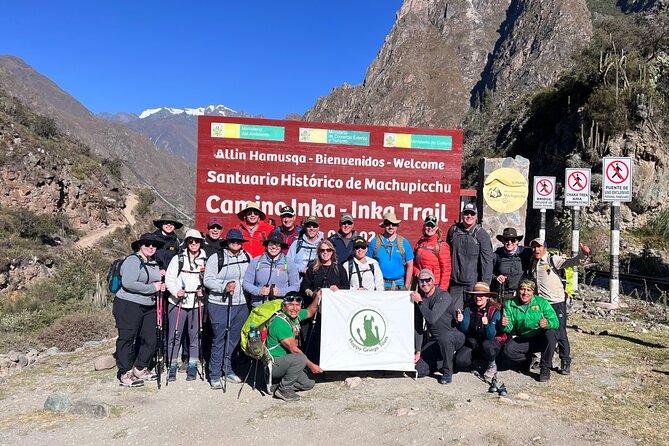
A maximum of nine people is a good group size for this route. You spend long hours on narrow paths, and a small group can make breaks, pacing, and communication easier. It also reduces the chance of feeling like part of a large procession.
The operator has a high overall score, but two serious complaints raise service concerns. One account describes poor communication and a change to the start date only about a day and a half before departure. The company responded that a backup date had been accepted and denied misleading communication.
Another account alleges that pickup was not provided as promised, the guide failed to explain the plan, and the guide behaved inappropriately while drinking alcohol. The company disputed the allegations, gave a different account of the pickup arrangement and alcohol, and defended the guide.
I cannot resolve that dispute from the available information. I can give you useful advice: get the pickup point, start date, backup date, guide contact, sleeping bag terms, and train details in writing. Keep your own record of the agreed arrangements. On a high-altitude trek, clear communication is not a luxury.
The company says confirmation arrives at booking, but the complaints suggest that practical details may not arrive early enough for everyone. Since the trek is often booked about 56 days in advance, use that time to confirm everything rather than waiting for the final week.
Who should choose this four-day route
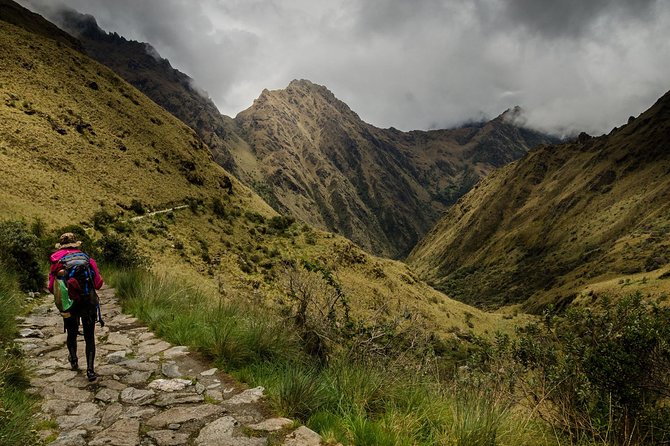
This tour suits you if you want the classic Inca Trail in one organized package and you are comfortable with demanding days. It is especially useful if you value included meals, a small group, private tent camping, and a return train rather than arranging each part yourself.
You should have strong physical fitness. Nine-hour days, altitude, steep descents, and uneven Inca steps are not minor details. If you are unsure about your ability to handle 4,215 meters, this is the wrong place to test yourself without preparation.
The route is less suitable if you need flexible dates, quick answers, or a generous cancellation policy. The booking is non-refundable and cannot be changed for any reason. If poor weather cancels the trip, you are offered a different date or a full refund. If the minimum group size is not met, you are offered another date, another experience, or a full refund.
That protection does not cover a personal change of plans. Make sure your Cusco hotel and other activities can tolerate a schedule change, especially since one complaint involved a late date adjustment.
Should you book Happy Gringo Tours?
I would consider this tour for the route itself, the small group, the included meals, and the private camping. The archaeological sequence is excellent, and arriving at Machu Picchu through the Sun Gate gives you a far more satisfying approach than simply taking the bus up from Aguas Calientes.
I would not book until the operator confirms several points in writing:
- Your exact start date and any backup date
- The 4:00 am pickup location
- Sleeping bag and linen costs
- What personal equipment the porters carry
- The guide’s name and contact details
- The exact Machu Picchu circuit
- The return train and bus schedule
- The confusing final-dinner reference
At $820, the package can be good value if those details are clear and the service runs as planned. The Inca Trail is the star here, but permits and logistics are too important to leave vague. Book it if you are fit, organized, and willing to confirm the fine print. If you need a flexible or highly polished operator, compare alternatives before making a non-refundable commitment.
FAQ
How much does the four-day Inca Trail tour cost?
The listed price is $820 per person.
How long does the tour last?
The tour lasts approximately four days.
How many people can join the group?
The maximum group size is nine people.
What time does the tour start?
The listed start time is 4:00 am.
Where does the trek begin?
The group drives to KM-82, also known as the Piscacucho trailhead, where you show your passport at the checkpoint.
Is the Inca Trail permit included?
Yes. The Inca Trail and Machu Picchu tickets are included.
Are meals included?
Yes. The package includes three breakfasts, three dinners, and four lunches.
Is camping included?
Yes. The tour includes a private tent at each campsite.
Do I need strong physical fitness?
Yes. The tour states that participants should have a strong physical fitness level. The route includes roughly nine-hour hiking days and reaches Dead Woman’s Pass at 4,215 meters.
Is travel insurance included?
No. Health insurance is not included, and tips for the guide, cook, and porters are also excluded.
More Treks to Machu Picchu
- Short Inca trail to MachuPicchu || 2days – 1nigth ||
★ 5.0 · 103 reviews - Salkantay Trek Challenge – 3 Days / 2 Nights
★ 5.0 · 101 reviews - Small Group 5 Days Salkantay and Machu Picchu by Llactapata Tour
★ 5.0 · 88 reviews - Choquequirao Trek 4 days and 3 nights
★ 5.0 · 81 reviews
More Ways to Reach Machu Picchu
- From Cusco: 2-Day Inca Trail to Machu Picchu
★ 4.2 · 244 reviews - Machu Picchu: Inca Trail 2-Day Overnight Guided Tour
★ 4.9 · 203 reviews - The First Class Machu Picchu Train by Inca Rail
★ 4.0 · 182 reviews - From Cusco: 1-day Machu Picchu Tour by Train
★ 4.6 · 138 reviews
Just added around Cusco
- Cusco: Rainbow Mountain and viewpoint red valley ( optional)★ 4.8 · 3 reviews
- Montaña de Colores: tour en cuatrimotos día completo★ 3.3 · 3 reviews
- Tour Pallay Punchu Trek Full Day★ 4.2 · 3 reviews
- Excursion Cusco – Puno – Titicaca Observatory Train★ 5.0 · 3 reviews
- Cusco: Palcoyo Mountain Day Trip with Breakfast and Lunch★ 4.8 · 3 reviews
- Maras Moray★ 5.0 · 3 reviews
- Tour to Laguna Humantay with breakfast and lunch from Cusco★ 4.7 · 3 reviews
- From Cusco:Chinchero, Moray, Maras, Ollantaytambo with lunch★ 5.0 · 3 reviews
Machu Picchu Tours, compared.



Machu Picchu: Full-Day Tour from Cusco with Optional Lunch
Read our review →
4-Day Inca Trail to Machu Picchu with Accommodation
Read our review →
2-Day Trip to the Sacred Valley and Machu Picchu
Read our review →
Machu Picchu 2-Day Inca Trail with Panoramic Train
Read our review →

Machu Picchu: Inca Trail 2-Day Overnight Guided Tour
Read our review →Browse the lists this tour appears in