
Reviewed · MARAS & MORAY
Moray and Maras half day tour
Two Inca puzzles fit into one morning. I like the sharp contrast between Moray’s great circular terraces and the bright salt pools of Maras, and I like that the $14 tour includes transport and a bilingual guide. The catch is the extra 80 soles for entrance tickets, plus a real risk of spending too much sightseeing time in shops.
This is a brisk outing, not a leisurely day in the Sacred Valley. You get roughly 40 minutes at Moray and 40 minutes at the salt mines, with a textile stop in Chinchero between the Cusco pickup and the archaeological sites. That makes it a good choice if your schedule is tight, but less appealing if you want long, quiet visits.
In This Review
- Key points to know before booking
- What the $14 price really covers
- Leaving Cusco for Chinchero
- Moray’s circular terraces and Inca farming experiments
- The Maras Salt Mines after Moray
- A fast route through striking Andean scenery
- The guide, the language, and the feel of the visit
- Timing the half-day around your Cusco plans
- Who will get the most from this tour
- What to bring and how to avoid surprises
- Should you book the Moray and Maras half-day tour?
- FAQ
- How long does the Moray and Maras tour last?
- Where does pickup take place?
- Is the entrance fee included in the $14 price?
- What languages does the guide speak?
- What is included in the tour?
- Can I cancel the booking for a refund?
Key points to know before booking
- Moray is the intellectual highlight: The huge circular terraces show how the Incas worked with altitude and climate to grow different plants.
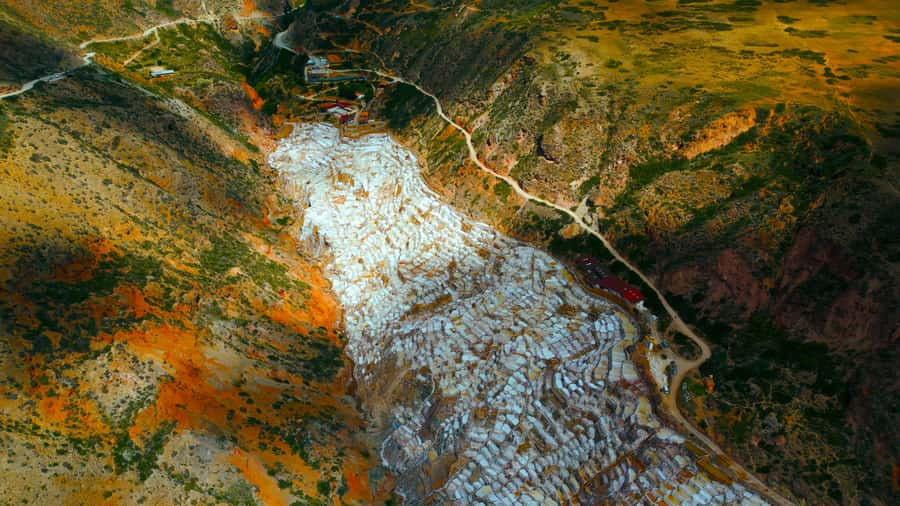
- Maras brings the visual drama: Hundreds of salt ponds spread across a mountainside, creating one of the most unusual views near Cusco.
- Chinchero is also a shopping stop: You can see wool coloring and weaving methods, but sales pressure has been a repeated concern.
- The tour runs about five hours: Pickup is around 8:20 a.m., and the tour ends around 2:20 p.m. near Plaza Kusipata.
- Budget for 80 soles in cash: Entrance fees are not included in the advertised $14 price.
- The value is strong if you accept the pace: Transport, a bilingual guide, and three distinct stops make this inexpensive, but the schedule leaves little room for delays.
What the $14 price really covers
At $14 per person, this is one of the cheaper ways to combine Moray and the Maras Salt Mines from Cusco. Your fee covers tourist transport and a professional guide who speaks Spanish and English. Pickup is included from the historic center, unless the operator gives you a nearby meeting point instead.
The low headline price needs a little unpacking. Entrance tickets are separate, and you are told to bring 80 soles in cash for Moray and the salt mines. That extra cost is important when comparing this tour with a higher-priced option that might include admission.
Even after adding the ticket money, the tour can make financial sense. A vehicle takes you to several places that are not well suited to a casual walk from Cusco, and the route fits into half a day. You also avoid arranging separate transport to Chinchero, Moray, and Maras.
Still, the bargain has limits. The itinerary is tightly packed, and the textile and salt shop stops can feel more commercial than cultural. If you dislike shopping pitches, you should treat the $14 price as payment for efficient transport and basic guiding, not as a private or slow-paced cultural visit.
The experience has a rating of 4.4 out of 5 from 16 ratings, which fits the overall picture: strong scenery, useful explanations, and good timing for many people, with some concerns about sales stops and ticket handling.
More salt-pan and terrace mornings:
- From Cusco: Sacred Valley & Maras Salt Mines Tour with Lunch
★ 4.8 · 2,227 reviews - From Cusco: Moray, Maras Salt Mines & Chinchero Weavers Tour
★ 4.8 · 1,925 reviews - Cusco: Sacred Valley, Pisac, Ollantaytambo, Salt Mines Moray
★ 4.6 · 1,058 reviews
Leaving Cusco for Chinchero
Pickup is scheduled around 8:20 a.m. in Cusco’s main square area. The first vehicle ride takes about 40 minutes to Chinchero District, giving you a quick transition from city streets to the open Andean countryside.
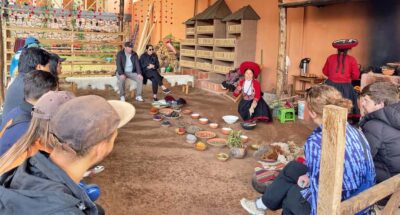
The first stop is a textile store rather than the main Chinchero archaeological site. You can watch wool being colored with natural products and learn how fabric is produced. This adds a practical side to the morning. Instead of simply looking at finished textiles, you get a short explanation of the work behind them.
I like this stop when it stays focused on the craft. Natural dyeing and wool production help connect the modern local economy with older Andean skills. It is also a chance to see a process that can be hard to understand from a market stall alone.
The weak point is the sales setting. You might be encouraged to buy something, and the pressure has been described as uncomfortable. One particularly useful caution is to decide in advance how much time and money you want to give to shopping. You can appreciate the demonstration without treating it as an obligation to purchase.
The schedule gives this visit about 30 minutes. That is enough for a short demonstration and browsing, but not enough for a broad exploration of Chinchero. If Chinchero’s church, ruins, or market are high on your list, this tour does not present them as the main event.
Moray’s circular terraces and Inca farming experiments
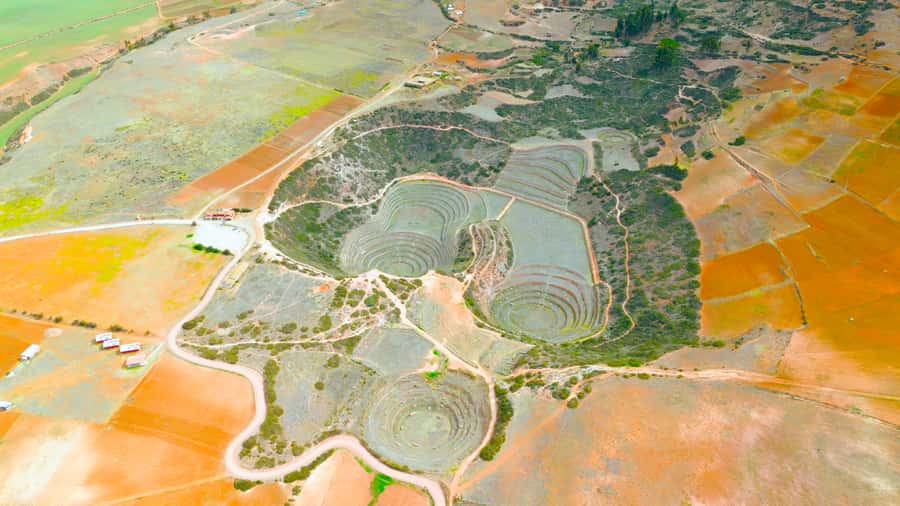
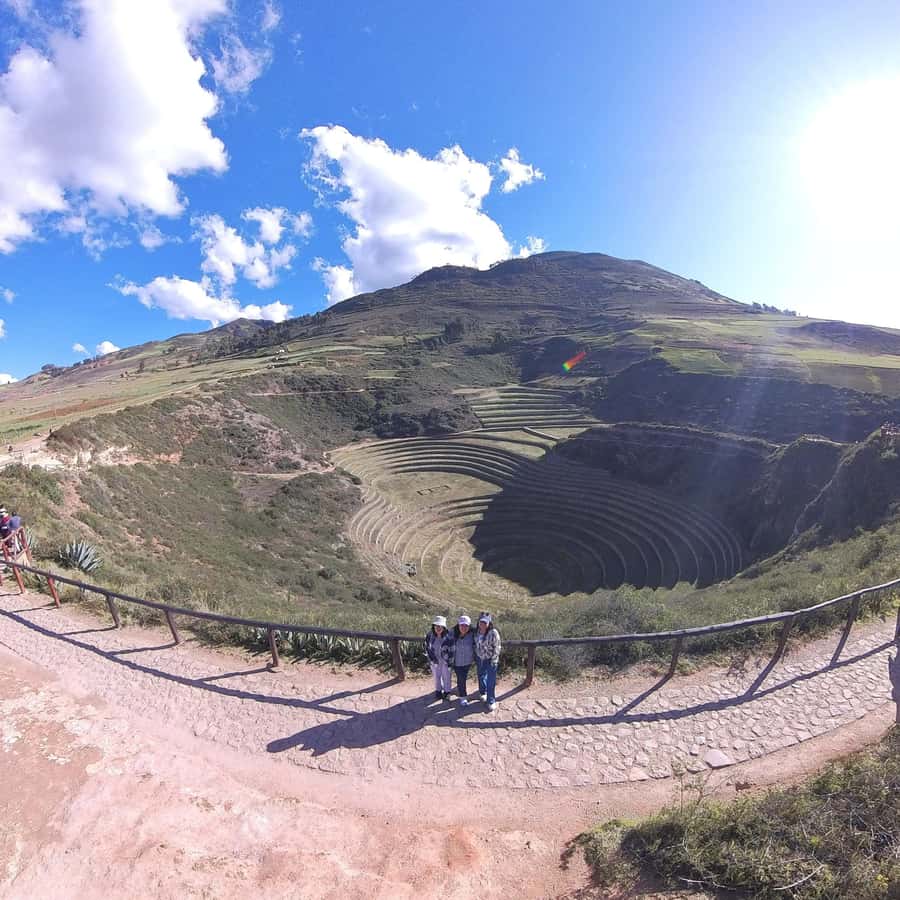
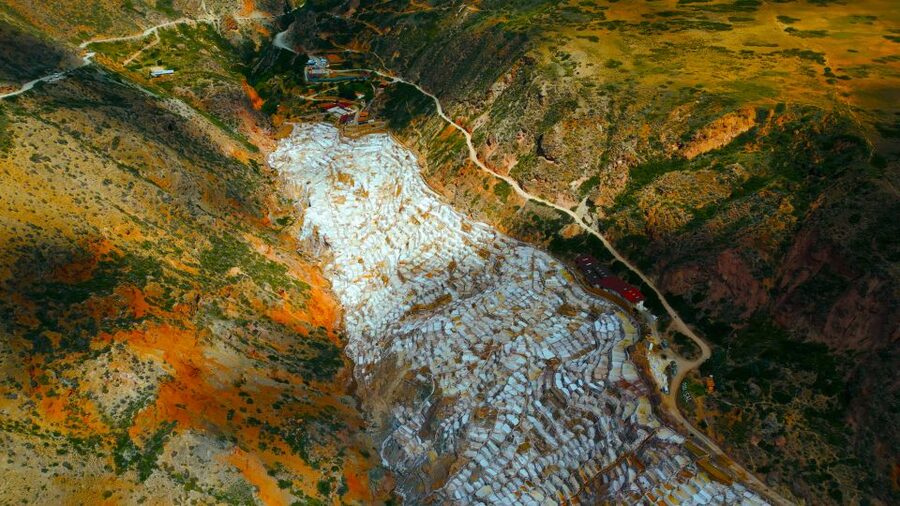
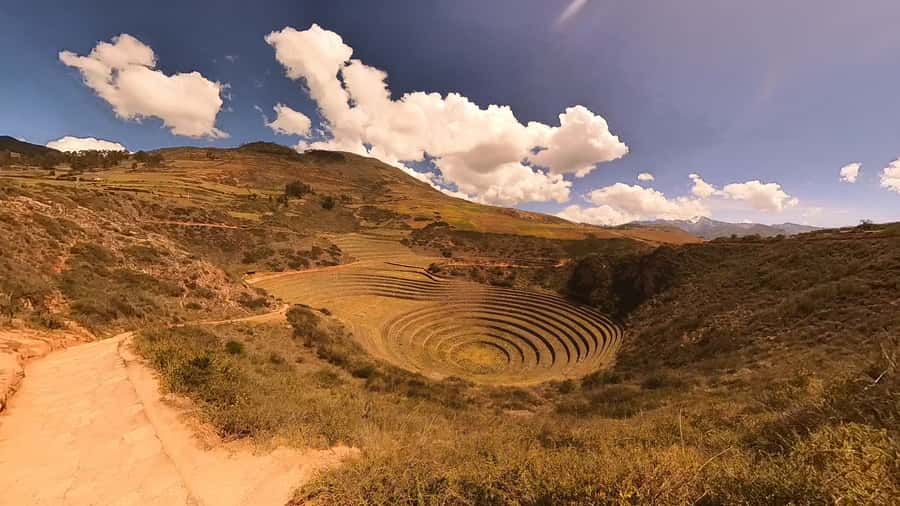
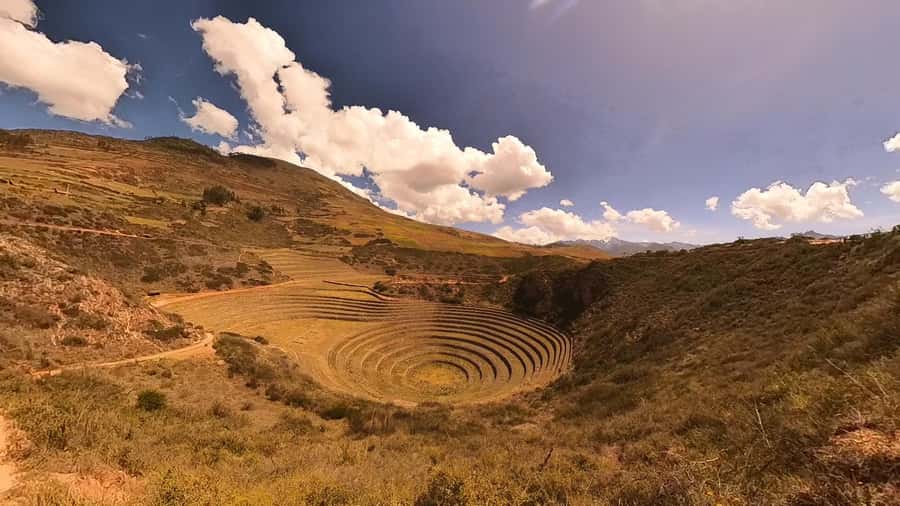
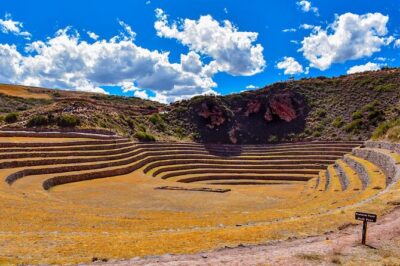
From Chinchero, the vehicle continues to Moray. The archaeological complex is known for its large circular terraces cut into the earth, arranged like a series of immense bowls.
The shape is what first grabs your attention, but the purpose makes the site more interesting. The terraces were used for agricultural experiments. Different levels created different growing conditions, allowing Inca farmers to adapt plant varieties to changes in altitude and climate.
That idea gives Moray more weight than a quick photo stop. You are not only looking at impressive stonework or unusual geometry. You are seeing a planned attempt to understand how crops behaved in different conditions. The site links engineering, farming, and careful observation.
You have about 40 minutes at Moray. That is enough to view the circular formations, hear the guide explain their agricultural role, and take photographs from the main viewing areas. It is not much time for a slow walk or extended reflection.
The time limit matters because Moray rewards looking from several angles. The scale can be difficult to grasp from a single viewpoint, and you may want a few minutes simply to take in the setting. If the group moves quickly, you may leave feeling that the stop was informative but abbreviated.
There is also a practical warning about how time is managed. A complaint about this experience described the visit to Moray being shortened for an unplanned salt shop stop later in the route. I cannot treat that as a guaranteed part of every departure, but it is a reason to pay attention to the schedule and ask the guide how much time you will have at each site.
The guide can make a major difference here. A clear explanation turns the terraces from a striking pattern into a lesson in Inca agriculture. The available feedback gives the guide high marks for explaining the buildings and sites, so this is one place where the bilingual format can add real value.
The Maras Salt Mines after Moray
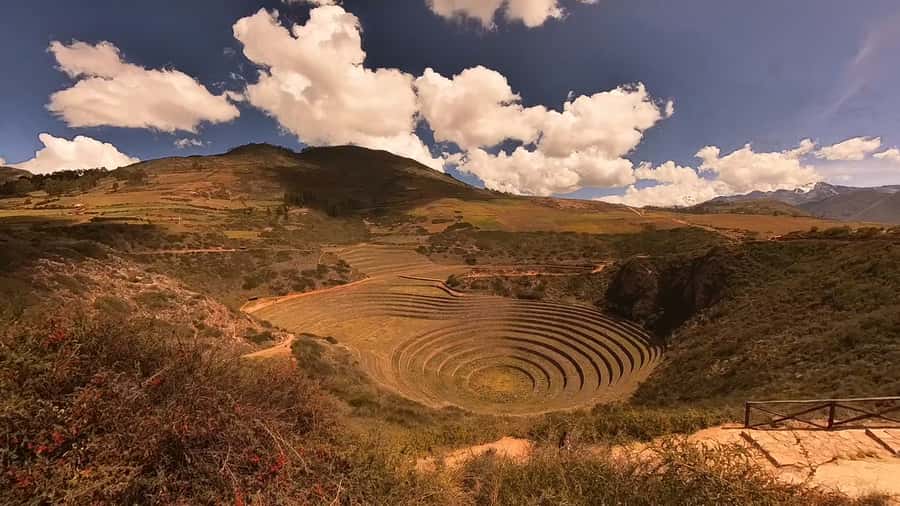
The ride from Moray to the Maras Salt Mines takes about 45 minutes. That transfer gives you a break after the first archaeological stop, though it also means the morning contains a fair amount of vehicle time.
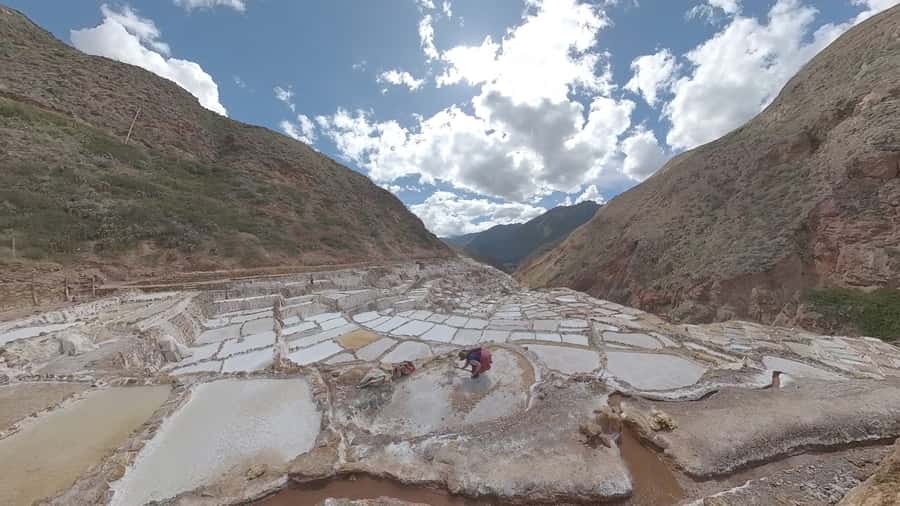
Maras is visually unlike Moray. Instead of broad circular earthworks, you see many small salt pools arranged across the mountainside. Salt water flows through the system, and workers collect the salt as it forms and dries in the ponds.
The appeal is both natural and human-made. The pools follow the contours of the slope, while the extraction process shows how people have used a local natural resource for centuries. You get an attractive view, but you also see a working method rather than a museum display.
The visit is scheduled for about 40 minutes. That gives you time to walk through the viewing area, watch the salt extraction process, and take pictures of the white and earthy tones set against the Andean scenery. As at Moray, you should not expect an extended visit.
A salt shop may also be part of the experience in practice, and this has caused frustration when shopping takes longer than the archaeological stops. The program includes a visit to the mines, but it does not promise a separate shopping stop. If a shop visit is added, you are reasonable to ask whether it will reduce your time at the site.
The entrance arrangements deserve care. The tour information says to bring 80 soles for admission, and there has been a serious complaint about money collected for Moray without clear proof that the proper ticket was purchased. This does not establish that the problem occurs on every tour, but you should protect yourself by asking for tickets or receipts and confirming what the 80 soles covers before handing over cash.
A few more Peru trips worth weighing up
- Cusco: Half-Day City Tour with Sacsayhuaman and Q’enco
★ 4.6 · 1,129 reviews - Cusco: City Tour | Half-Day Tour to 4 Archaeological Sites
★ 4.6 · 206 reviews - Cusco: Half-Day City Tour
★ 4.2 · 129 reviews - From Cusco: Moray, Maras Salt Mines & Chinchero Weavers Half-Day
★ 5.0 · 126 reviews
A fast route through striking Andean scenery
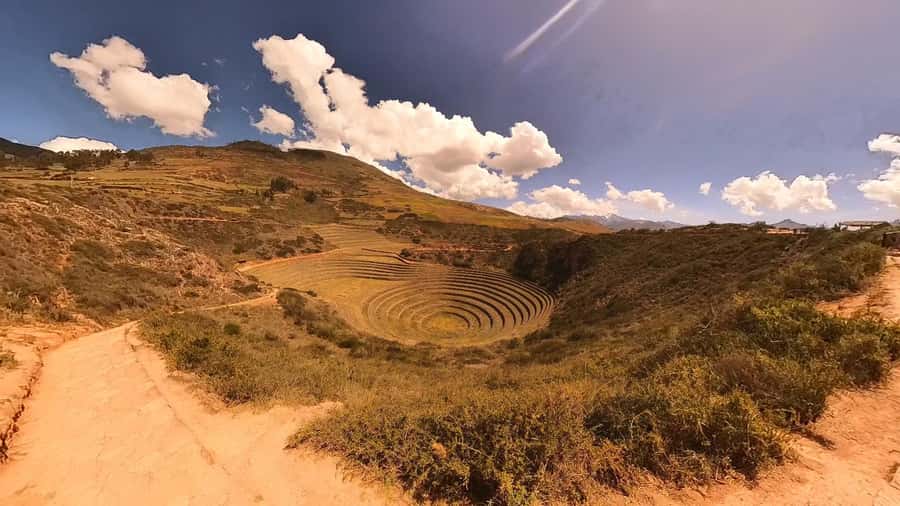
The route works because each stop offers something different. Chinchero presents local textile production, Moray explains Inca farming experiments, and Maras shows a long-running salt operation. You are not repeating the same kind of attraction three times.
The scenery between stops is part of the pleasure. You will see broad Andean views around the archaeological sites and salt ponds, with the road linking highland villages and open countryside. The supplied details do not specify every viewpoint or road condition, so I would not book this for a carefully planned scenic drive. The main purpose is reaching the three stops efficiently.
The transport is a bus or coach, and the first listed ride takes about 40 minutes. Additional rides connect Chinchero with Moray and Moray with Maras. For you, the main benefit is convenience. You can spend the morning looking out the window or listening to the guide instead of negotiating separate rides.
The main tradeoff is the fixed pace. A five-hour outing sounds generous until you divide it among pickup, several transfers, a textile demonstration, two attractions, and the return to Cusco. Delays, slow boarding, or an extended shop visit can quickly reduce your time at Moray or Maras.
The guide, the language, and the feel of the visit
A professional bilingual guide is included, with Spanish and English offered. That matters most at Moray, where the terraces need interpretation, and at Chinchero, where the wool dyeing process benefits from explanation.
The best comments about the tour praise the guide for explaining the sites and buildings clearly. You should expect an organized group experience rather than a private conversation. The schedule favors moving along, and the guide’s job is to keep the vehicle and group on time.
The mood may vary depending on the guide and the balance between explanation and sales stops. Some departures appear to move efficiently, which suits people who want to cover the route without wasted time. Others have created frustration when shopping became too prominent.
I would set a clear expectation before leaving Cusco. You are paying for a short route with several highlights, not a private historian-led visit. Listen to the explanations, keep track of admission money, and speak up politely if an unofficial stop begins to cut into the advertised sightseeing time.
Timing the half-day around your Cusco plans
The tour begins around 8:20 a.m. and ends around 2:20 p.m., one block from the main square at Plaza Kusipata. That finish is useful if you want your afternoon free for lunch, museums, or another Cusco activity.
The six-hour clock time listed in the schedule includes pickup and return, while the activity is described as five hours. You should allow for the full morning-to-early-afternoon window rather than planning something important at exactly 2:20 p.m.
The route suits a first full day in Cusco when you want an easy introduction to nearby sites. It also works well near the end of a stay if you have already visited the city’s main sights and want one more outing without committing to a full Sacred Valley day.
It is less suitable if you need a slow pace, want extensive photography time, or have mobility concerns that require details not provided here. The tour information does not describe accessibility, group size, walking distances, or vehicle features, so you should ask the provider directly if any of those points affect your decision.
Who will get the most from this tour
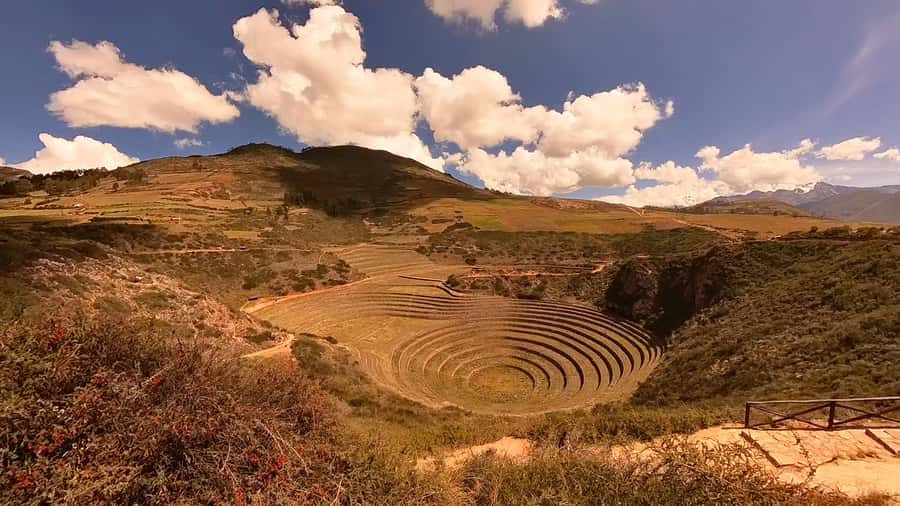
I would recommend this outing to you if you want three distinct experiences at a low starting price and do not mind a firm schedule. Moray and Maras are the real reasons to book, while Chinchero adds a short craft demonstration and a possible shopping opportunity.
It is especially useful for:
- First-time visitors to the Cusco region who want to see major nearby sights in one morning.
- Budget-conscious visitors who value shared transport and a guide.
- People with limited time who cannot spare a full day for several separate excursions.
- History and farming enthusiasts who want context for Moray’s terraces.
- Photographers who prefer variety and want circular terraces, salt ponds, and mountain views in one route.
I would be more cautious if you dislike commercial stops or want control over the length of each visit. A private tour, or a small-group option with a clearer no-shopping policy, may be worth paying more for.
What to bring and how to avoid surprises
Bring 80 soles in cash for the entrance tickets. This is the most important practical detail, since the advertised price does not include admission.
Wear clothing suited to a highland outing and bring whatever you normally need for a morning outside, but the supplied tour information specifically confirms only cash as a required item. Pickup is included in Cusco’s historic center, and the provider will send a meeting point if your accommodation falls outside that area.
Before the vehicle leaves, confirm three things:
- How much of the 80 soles is being used for each entrance.
- How long you will have at Moray and Maras.
- Whether the textile or salt shop visit is part of the planned schedule.
Those questions are not fussy. They help keep the morning focused on the sites you paid to see.
The tour allows free cancellation up to 24 hours before departure for a full refund, and you can reserve now and pay later. That flexibility is useful when your Cusco plans depend on altitude adjustment, weather, or changing arrival times.
Should you book the Moray and Maras half-day tour?
Book it if you want an inexpensive, efficient morning built around Moray and the Maras Salt Mines, with Chinchero added on the way. The combination is excellent, the guide can add useful context, and the finish near Plaza Kusipata leaves your afternoon open.
Go in with realistic expectations. The $14 price excludes 80 soles in admissions, both main sites receive only about 40 minutes, and shopping stops may take more space than you would like. Keep your cash organized, ask for ticket confirmation, and make sure the guide respects the sightseeing schedule.
For a first visit, a tight itinerary, and a limited budget, I think this is a worthwhile choice. If authentic site time matters more to you than low cost, spend more for a tour that promises longer visits and no forced shopping.
FAQ
How long does the Moray and Maras tour last?
The tour takes about five hours. Pickup is scheduled around 8:20 a.m., and the tour ends around 2:20 p.m. one block from Cusco’s main square at Plaza Kusipata.
Where does pickup take place?
Pickup is available in Cusco’s historic city center. If your location is outside that area, the provider will send you a meeting point.
Is the entrance fee included in the $14 price?
No. Entrance tickets to Moray and the Maras Salt Mines are not included. You should bring 80 soles in cash for the admissions.
What languages does the guide speak?
The live guide is available in Spanish and English.
What is included in the tour?
Tourist transport and a professional bilingual guide are included. The entrance fees are not included.
Can I cancel the booking for a refund?
Yes. You can cancel up to 24 hours before the activity for a full refund. The tour also offers a reserve-now-and-pay-later option.
Just added around Cusco
- Cusco: Rainbow Mountain and viewpoint red valley ( optional)★ 4.8 · 3 reviews
- Tour Pallay Punchu Trek Full Day★ 4.2 · 3 reviews
- Montaña de Colores: tour en cuatrimotos día completo★ 3.3 · 3 reviews
- Excursion Cusco – Puno – Titicaca Observatory Train★ 5.0 · 3 reviews
- Cusco: Palcoyo Mountain Day Trip with Breakfast and Lunch★ 4.8 · 3 reviews
- Maras Moray★ 5.0 · 3 reviews
- Tour to Laguna Humantay with breakfast and lunch from Cusco★ 4.7 · 3 reviews
- From Cusco:Chinchero, Moray, Maras, Ollantaytambo with lunch★ 5.0 · 3 reviews
Maras & Moray, compared.
Sacred Valley & Maras Salt Mines Tour with Lunch
Read our review →
Moray, Maras Salt Mines & Chinchero Weavers Tour
Read our review →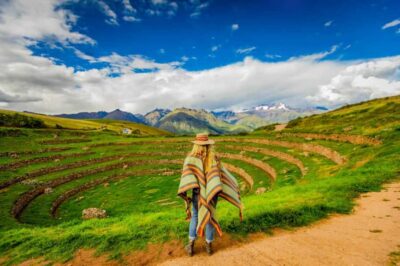
Sacred Valley, Pisac, Ollantaytambo, Salt Mines Moray
Read our review →
Chinchero,Moray & Salt Mines drop-off in Ollantaytambo
Read our review →
Sacred Valley: Chinchero, Moray, Ollantaytambo & Pisac+Lunch
Read our review →
Sacred Valley: Maras & Moray by Quad Bike from Cusco
Read our review →
Moray, Maras Salt Mines & Chinchero Weavers Half-Day
Read our review →Browse the lists this tour appears in