
Reviewed · LAKE TITICACA TOURS
Full Day Tour to Titicaca Lake in Puno: Uros and Amantani
Lake Titicaca rewards an early start. This $29 full-day boat tour links the floating Uros islands with Amantani Island, giving you a close look at reed-built homes, local textiles, farming traditions, and wide water views. I like the contrast between the carefully made Uros islands and the quieter, more traditional feel of Amantani. I also like that lunch is prepared locally and usually centers on trout.
The main drawback is the amount of time spent on the boat. You may spend roughly five hours traveling to and from the islands, with only several hours on land. The Uros visit can also feel commercial, especially when shopping and optional boat rides become part of the presentation.
At nine hours, this is a long but affordable day from Puno. It works best if you want to see two famous Lake Titicaca stops in one outing and do not mind a slow schedule.
In This Review
- Key points to know before you go
- Starting from Puno at 7:15 am
- Seeing how the Uros islands are built
- The commercial side of Uros
- The long crossing to Amantani Island
- Walking up into Amantani
- Lunch with a view of Lake Titicaca
- Textiles, farming, and everyday island life
- Is $29 a good value?
- Who will enjoy this full-day trip?
- Should you book the Uros and Amantani tour?
- FAQ
- How long does the tour last?
- Where does hotel pickup take place?
- Which languages does the guide speak?
- How long is the visit to the Uros islands?
- Are the Uros islands really made from reeds?
- Is the traditional totora boat ride included?
- What lunch is included?
- Is cancellation available?
Key points to know before you go
- The day begins around 7:15 am: Hotel pickup in Puno’s historic center takes you to the port for the motor boat.
- Uros islands are made from totora reeds: The reeds serve as building material, fuel, food, and the foundation beneath the islands.
- Amantani requires a one-hour walk: Bring patience and comfortable shoes for the uphill route to town.
- Lunch is a local trout meal: The food is included, and it is one of the strongest parts of the day.
- The traditional totora boat costs extra: The optional ride is 15 soles and may be worthwhile if you want to support the island community.
- The boat ride takes much of the day: The return to Puno is scheduled for about 5:00 pm.
Starting from Puno at 7:15 am
Your day starts with pickup at your hotel in Puno’s historic center. Pickup outside that area can be arranged for an extra charge, so check the cost before booking if your accommodation is farther out.
From the hotel, you go to the lake port and board a tourist motor boat. The first ride takes about 50 minutes, though the full crossing times can vary in practice. The boat is described as comfortable, which matters because the total time on the water is substantial.
I recommend eating breakfast before pickup. Breakfast is not included, and an early departure leaves little time to find food after you meet the group. Bring water, sun protection, and an extra layer, since you will spend hours outside and on the open lake.
The guide speaks English and Spanish and accompanies the group from the start. The guide introduces the lake, explains the island communities, and helps organize the visits. One useful strength of the tour is the attention to different food and transport preferences, though the quality of any guided experience can depend on the individual guide assigned that day.
More Lake Titicaca Tours in Puno
- From Puno: Uros, Amantaní & Taquile Islands 2-Day Tour
★ 4.5 · 452 reviews - From Puno: Floating Islands of the Uros Half-Day Tour
★ 4.4 · 394 reviews - Lake Titicaca 2-Day Tour to Uros, Amantani and Taquile
★ 4.4 · 199 reviews
Seeing how the Uros islands are built
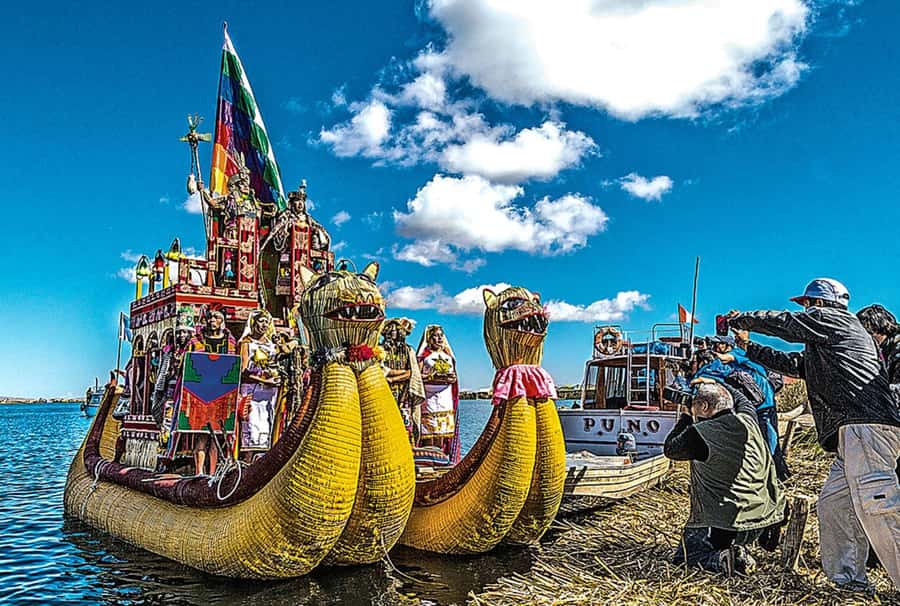
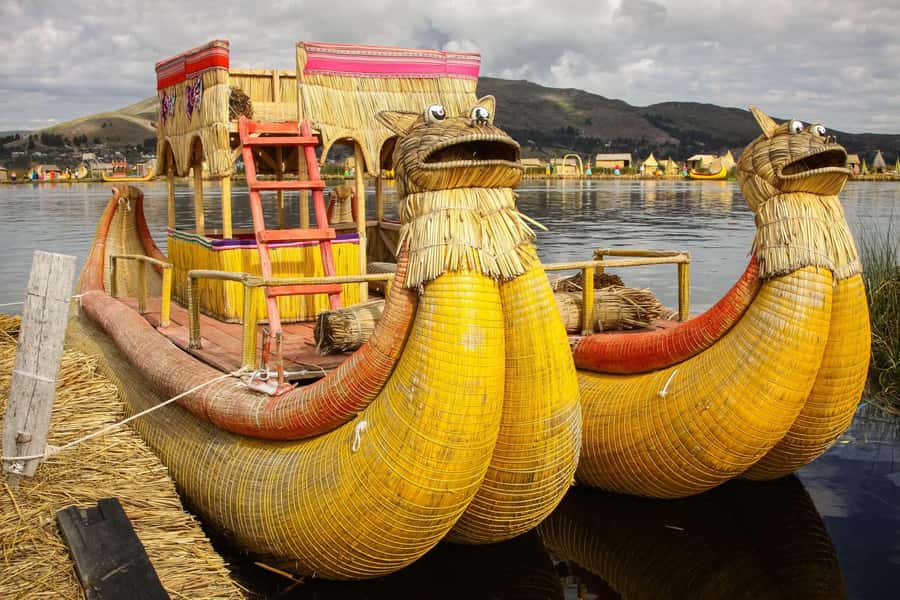
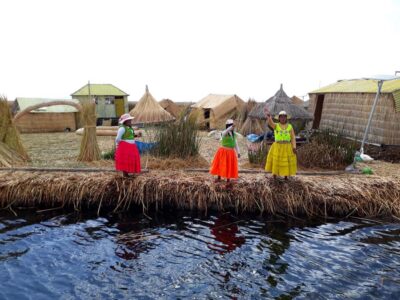
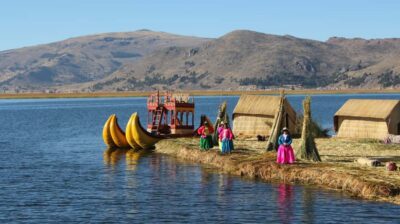
The first major stop is the Uros floating-island group. The Uros are an Indigenous community whose islands are made from totora reeds, the tall reeds that grow around Lake Titicaca. The same material is used for houses, boats, fuel, and some food.
That construction is what makes the visit special. You are not simply looking at a pretty island. You are seeing a settlement that must be repaired and secured over time because the reed foundation is part of the island itself. The community’s practical use of totora gives the stop a clear connection between daily life, local materials, and the lake.
The visit usually includes the main island and perhaps two or three additional islands. The advertised stop lasts around 45 to 50 minutes, with about 30 minutes possible on some individual islands. That is enough time for an introduction, photographs, and a short look at the homes and boats, but not enough for a slow, independent exploration.
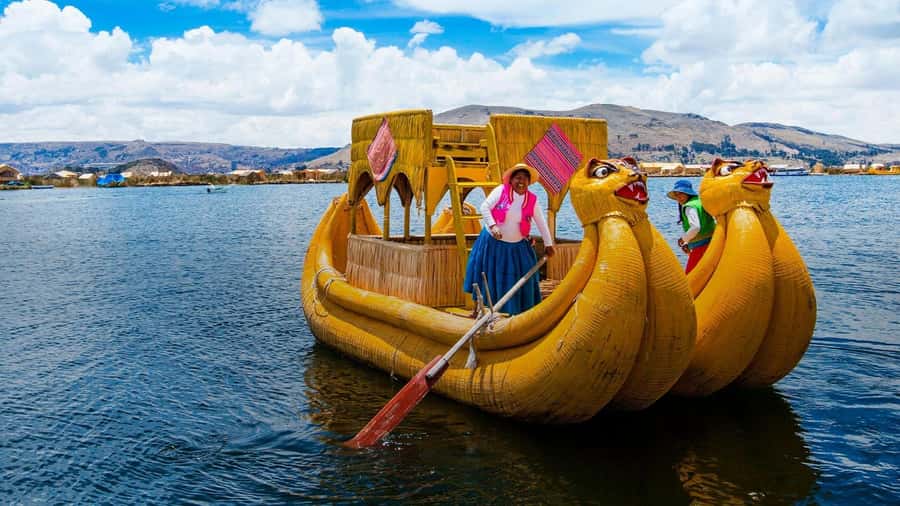
The optional totora boat ride costs 15 soles. I would consider paying for it if the price is clearly explained and you want a more memorable way to move between the islands. One person found the extra cost worthwhile and felt it helped support the island community. Just remember that this is not included in the $29 tour price.
The commercial side of Uros

The Uros visit has a real tension that you should understand before booking. The islands are fascinating, but the stop is structured for tourism. Explanations about island construction may lead into opportunities to buy textiles or other local goods, and the short visit can feel organized around purchases.
I would not call that automatically dishonest. Tourism is part of how many island residents earn money, and selling textiles is presented as part of the local economy. Still, if you want a quiet, private encounter with island life, this may feel too managed.
The tour’s strongest approach is to treat Uros as an introduction rather than the whole reason for the day. Look carefully at the reed layers, the boats, and the way the residents explain maintenance. Take photographs, listen to the guide, and decide for yourself if the optional boat ride or textile shopping suits your interests.
The stop can feel rushed. You may spend more time moving between islands than expected, especially if the boat follows a regular group schedule. That is one reason the tour suits people who want a broad first look at Lake Titicaca rather than a detailed cultural visit.
The long crossing to Amantani Island
After Uros, the motor boat continues toward Amantani. This section takes about two hours according to the planned schedule, though the total return schedule means you should be ready for a long day on the water.
This is the part that divides people most sharply. The boat is comfortable, but the ride takes up a large share of the day. If you enjoy watching the lake and want time to rest after hiking elsewhere in Peru, the slow pace can be pleasant. If you expect constant activity, it may feel inefficient.
I would bring a book, music, or a simple way to pass the time, while still leaving room to listen to the guide. The crossing is not a quick transfer between attractions. It is a major part of the experience, and you should book with that in mind.
The scheduled return leaves Amantani around 2:30 pm, with arrival at Puno’s port at about 5:00 pm. Hotel drop-off follows. In practical terms, this is a full day, not a short morning outing, so avoid scheduling another activity in Puno that evening.
More islands and reed villages on Titicaca:
- Puno: Full-Day Tour of Lake Titicaca and Uros & Taquile
★ 4.4 · 178 reviews - Floating Islands of the Uros
★ 4.2 · 101 reviews - From Puno: full day tour to Uros and Taquile with Lunch
★ 4.6 · 95 reviews - Lake Titicaca, Uros and Taquile Full-Day Tour
★ 4.3 · 69 reviews
Walking up into Amantani
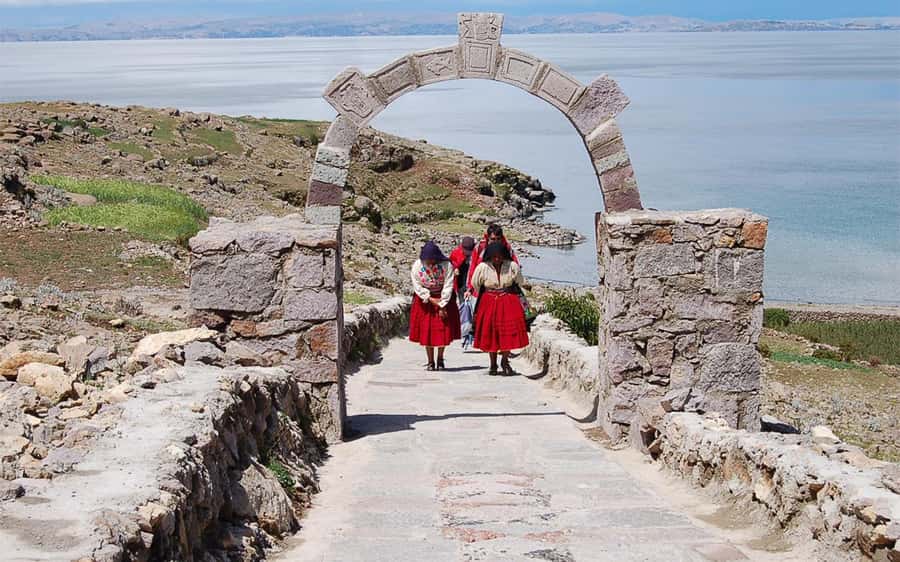
Amantani offers a different setting from Uros. Instead of floating reed platforms, you visit an ancestral island associated with Inca stories, agriculture, textiles, and local customs.
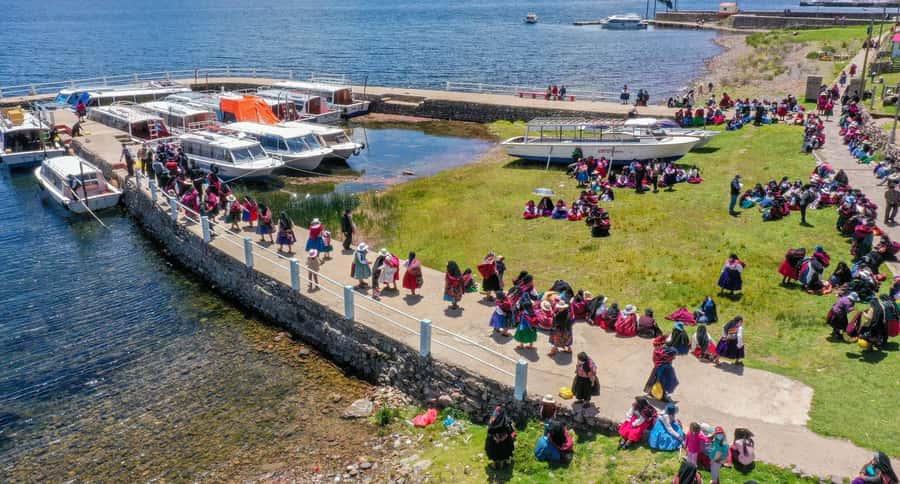
The arrival includes about a one-hour walk to reach the town. The walk is important to the shape of the day, but it is also a possible challenge. The tour information does not specify the exact elevation gain or trail condition, so you should not assume it will be effortless. Comfortable shoes are a sensible choice, and anyone concerned about the walk should ask the operator for more detail before paying.
Once you reach the town, you have roughly two and a half to three hours for lunch, a guided visit, and free time. That gives Amantani more room than the brief Uros stop. You can look at the views, observe local customs, meet residents, and see textiles that reflect the island’s way of life.
The emphasis here is not on a single dramatic monument. The value comes from seeing how the community connects farming, family life, textiles, and older cultural traditions. The island keeps stories linked to the Inca period, but the visit also shows that culture as something practiced in the present, not just preserved in a museum.
Lunch with a view of Lake Titicaca

Lunch is included and is served in a local restaurant. Trout is the main traditional dish described for the meal, and the food received some of the warmest praise in the available feedback.
That makes lunch more than a basic stop between boat rides. It gives you a taste of a local ingredient while supporting a restaurant on the island. The meal is also a useful pause after the walk to town and before more exploring.
The guide is attentive to food preferences, though the information provided does not list a full menu or specific alternatives. If you have dietary restrictions, tell the operator when booking and confirm what can be provided. Breakfast is not included, so plan that separately.
The setting is part of the appeal. You eat with broad views over Lake Titicaca, then have time to walk and look around rather than immediately rushing back to the boat. This slower period is where the tour feels most rewarding.
Textiles, farming, and everyday island life
Amantani gives you a better chance to notice the relationship between place and work. The community’s customs are linked to agriculture, while local textiles offer another way residents present and preserve their traditions.
You may find the interaction more meaningful if you approach it with curiosity rather than expecting a staged performance. Ask the guide about the island’s stories, how farming fits daily life, and what the textile designs represent. The guide is there to interpret what you see, and the English and Spanish service makes questions easier for many visitors.
Free time is included, but it is limited. The schedule allows about three hours on Amantani, not an entire afternoon. You will need to balance lunch, the guided portion, shopping or textiles, photographs, and the return walk.
I like this stop because it adds human scale to the day. Uros shows an ingenious use of reeds and a tourism-facing island economy. Amantani lets you see a more settled community and the customs that have grown around its fields, homes, and local crafts.
Is $29 a good value?
At $29 per person, the tour includes a tourist boat, guide, hotel pickup and drop-off in the historic center, typical lunch, and entrance fees. For a full day with two major Lake Titicaca destinations, that is a low price.
The value is strongest if you want convenience. Arranging a boat, port transport, island visits, lunch, and return transfer separately would take more work. The included lunch and fees also make the basic cost easier to understand.
The price does not cover optional extras. The traditional totora boat ride costs 15 soles, and pickup or return outside the historic center may cost extra. One person felt a remote hotel transfer was overpriced compared with a regular ride in Puno, even though the charge was known in advance. Confirm that fee before you commit.
The score of 4.1 from 29 ratings reflects the tour’s mixed character. The food, guide service, comfortable boat, and chance to see both islands are strong points. Long transport times and the commercial feel at Uros keep it from being an easy recommendation for everyone.
Who will enjoy this full-day trip?

I would recommend it to you if you want a practical introduction to Lake Titicaca and prefer having transport, a guide, lunch, and entrance fees arranged in one package. It also suits anyone recovering from a trek who appreciates a slow day with sitting, scenery, and a few short walks.
It is a good match for first-time visitors to Puno who want to compare two very different island communities. Families and mixed-age groups may also appreciate the organized schedule, though the one-hour walk on Amantani should be considered carefully.
I would think twice if you dislike long boat rides, shopping-oriented stops, or fixed group schedules. You may also prefer a different option if you want extended time on one island instead of a broad sample of Uros and Amantani.
The tour is conducted in English and Spanish. Pickup is included for hotels in Puno’s historic center, while remote locations require coordination and an added charge. Free cancellation is available up to 24 hours before departure, and you can reserve now and pay later, which helps if your Puno plans are still shifting.
Should you book the Uros and Amantani tour?
Book it if you want to see both Uros and Amantani in one affordable day, and you accept that the boat is as much a part of the experience as the islands. The included trout lunch, helpful guide, and comfortable transport make the $29 base price attractive.
Do not book it expecting a quiet, untouched visit to Uros or hours of independent wandering. The Uros stop is short and commercial, while the journey takes time. For many people, Amantani is the more satisfying half because it allows a longer look at local customs, textiles, farming traditions, and island life.
Bring breakfast, water, sun protection, comfortable walking shoes, and 15 soles if you want the traditional reed boat. With those expectations set, this is a useful, scenic introduction to one of Peru’s most distinctive places.
FAQ
How long does the tour last?
The tour lasts about nine hours. Pickup begins around 7:15 am, and the group is scheduled to return to Puno at about 5:00 pm.
Where does hotel pickup take place?
Pickup is included from hotels within the historic center of Puno. Pickup from remote locations must be coordinated and may cost extra.
Which languages does the guide speak?
The live guide provides service in English and Spanish.
How long is the visit to the Uros islands?
The Uros visit lasts about 45 to 50 minutes. The main island is visited, and the group may also visit two or three additional islands for about 30 minutes each.
Are the Uros islands really made from reeds?
Yes. The Uros residents build the floating islands with totora reeds. They also use totora for homes, boats, fuel, and food.
Is the traditional totora boat ride included?
No. The traditional totora boat is an optional extra and costs 15 soles.
What lunch is included?
A typical local lunch is included, with trout described as the main dish. Breakfast is not included.
Is cancellation available?
Yes. You can cancel up to 24 hours in advance for a full refund. You can also reserve the tour and pay later.
More Full-Day
- Puno: Full-Day Route of the Sun Tour to Cusco with Lunch
★ 4.7 · 131 reviews - Full Day Lake Titicaca Tour to Uros and Taquile Islands
★ 4.5 · 56 reviews - Full Day Guided Tour of the Aymara Route from Puno
★ 5.0 · 55 reviews - Full-Day Tour of Uros, Taquile and Sillustani from Puno
★ 5.0 · 41 reviews
Just added around Puno
- Discover the Celestial Wonder of Sillustani: Towers of Time★ 4.2 · 3 reviews
- Puno: Two-day excursion to Uros, Amantani and Taquile★ 4.2 · 3 reviews
- From Puno: Travel to Cusco in Titicaca Train All Inclusive★ 3.9 · 3 reviews
- 5h tour from Puno to Aramu Muru portal and Inca Ruins★ 4.6 · 3 reviews
- From Puno: Excursion to Uros and Taquile Islands + Income★ 4.7 · 4 reviews
- Puno: 2-day Uros Kayak Tour with Homestay at Amantani Island★ 4.6 · 4 reviews
- FromPuno: Uros and Amantani Islands Full-Day Tour with Lunch★ 4.5 · 4 reviews
- Puno: Lake Titicaca, Uros, and Taquile Full-Day Tour★ 4.5 · 4 reviews
Lake Titicaca Tours, compared.
Lake Titicaca 2-Day Tour to Uros, Amantani and Taquile
Read our review →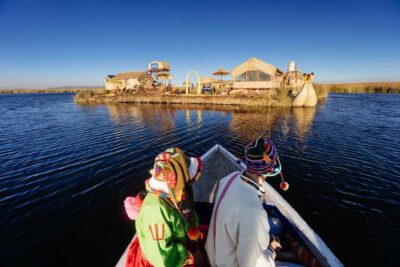
Full-Day Tour of Lake Titicaca and Uros & Taquile
Read our review →

Browse the lists this tour appears in