
Reviewed · SACRED VALLEY TOURS
From Cusco: Ollantaytambo Fortress Half-Day Private Tour
Ancient stones still shape daily life here. This private five-hour tour takes you from Cusco to Ollantaytambo, where a guide helps you make sense of the fortress, agricultural terraces, old canals, and narrow streets. I like the freedom of a private group, and I like that the visit includes both the archaeological site and the living town below.
The main consideration is the climb. You will tackle about 150 steps to reach the upper part of the fortress, and the tour does not suit wheelchair users. You also need to buy the Cusco Tourist Ticket separately, so the $126 price per person is not the full cost of the outing.
In This Review
- Key points to know before you go
- Why Ollantaytambo deserves a half-day
- From Cusco to the Sacred Valley
- Climbing the 150 steps of the fortress
- The Temple of the Sun and its massive stones
- The Terrace of the Ten Niches
- Stone platforms, canals, and the Inca town
- The story of Manco Inca’s victory
- What the $126 price includes
- Who will enjoy this private tour most
- Practical booking advice
- Should you book the Ollantaytambo fortress tour?
- FAQ
- How long does the Ollantaytambo private tour last?
- Is transportation from Cusco included?
- Can I be picked up from an Airbnb or private residence?
- Is the Cusco Tourist Ticket included in the price?
- What languages does the guide speak?
- Is the tour suitable for wheelchair users?
Key points to know before you go
- The Temple of the Sun uses six enormous pink-granite monoliths, each part of a structure that shows the Inca skill in moving and fitting heavy stone.
- About 150 steps connect the lower and upper sections of the fortress, so comfortable shoes and a steady pace matter.
- Ollantaytambo was more than a fortress, serving as a religious, military, and agricultural center.
- The town remains a living Inca-era street plan, with narrow lanes, shared courtyards, canals, and houses still occupied today.
- Private transport and a bilingual guide are included for pickup from hotels in Cusco’s Historic Center.
- The Cusco Tourist Ticket is not included, and you must arrange it before visiting the fortress.
Why Ollantaytambo deserves a half-day
Ollantaytambo gives you a rare chance to see an Inca archaeological site that is still tied closely to everyday life. The ruins are not separated from town by a wide modern boundary. Instead, old streets, canals, terraces, homes, and stone walls fit together in one remarkable place.
The name Ollantaytambo comes from the Quechua term Ulla-nta-wi, meaning place to see down. That name makes sense once you climb above the settlement. From the fortress, the valley opens below you, and the position explains why this was an important strategic site.
The excursion lasts five hours, including transportation from Cusco, the fortress visit, and a short walk through the town. That makes it useful if you have limited time in the Sacred Valley or if you want to visit Ollantaytambo before continuing elsewhere in the region. It is also a good choice if a full-day Sacred Valley program feels too long.
The tour is private, so you are not tied to the rhythm of a large group. You can ask questions as you go, pause to study the stonework, and set a reasonable pace on the steps. The exact starting time depends on availability, so check that before booking.
More Sacred Valley Tours in Cusco
- From Cusco: Sacred Valley & Maras Salt Mines Tour with Lunch
★ 4.8 · 2,227 reviews - From Cusco: Moray, Maras Salt Mines & Chinchero Weavers Tour
★ 4.8 · 1,925 reviews - Cusco: Sacred Valley, Pisac, Ollantaytambo, Salt Mines Moray
★ 4.6 · 1,058 reviews
From Cusco to the Sacred Valley
Pickup and drop-off are provided from hotels in Cusco’s Historic Center. This is convenient, but the pickup rule is specific: private residences and Airbnb properties are not covered. If you are staying in one, contact the operator before the tour to arrange a meeting point.
The drive takes you from Cusco toward Ollantaytambo in the province of Urubamba. The site is about 80 kilometers from Cusco and roughly 40 kilometers from Machu Picchu. Those distances help explain why many people use Ollantaytambo as part of a wider Sacred Valley or Machu Picchu plan, although this particular outing is focused on the fortress and town.
Your guide speaks English and Spanish. That matters here because the stones alone do not explain the whole site. You will get more from the visit if you understand how the terraces supported farming, why the settlement was placed where it was, and how the buildings served religious and military purposes.
The transport is private, but the activity remains a walking tour once you arrive. Wear shoes with a firm grip, use sunscreen, and choose comfortable clothing. The highland sun can be strong even when the air feels cool.
Climbing the 150 steps of the fortress
The main visit begins at the Ollantaytambo archaeological complex. You climb around 150 steps between the lower and upper areas of the fortress. This is not a technical hike, but the steps can make the tour tiring, especially if you are still adjusting to Cusco’s altitude.
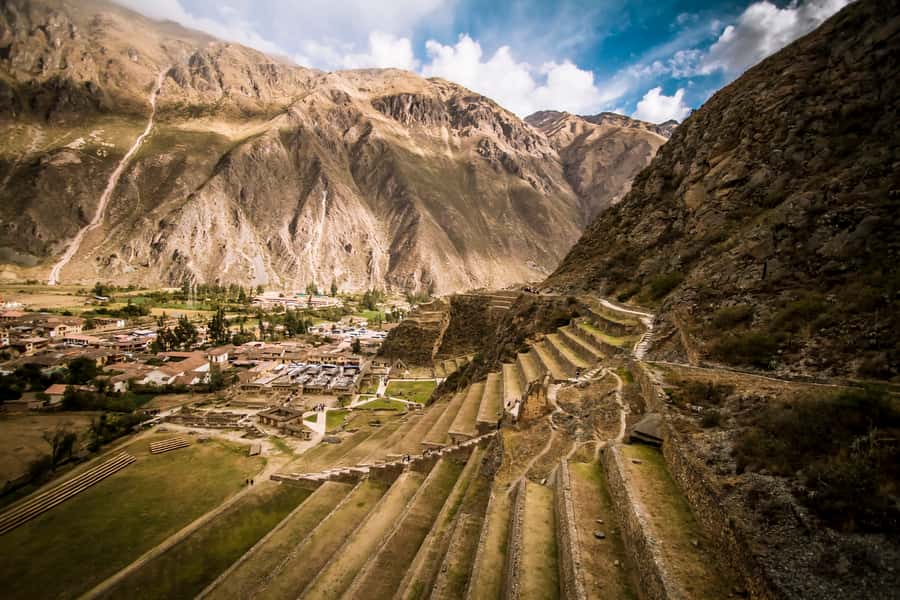
I would treat the climb as part of the experience rather than a quick route to the top. The changing views help you understand how the site was built into the slope. Stone terraces rise above the town, and large structures occupy commanding positions over the valley.
The fortress was a military center, but that description is only part of the story. It also had religious and agricultural roles. Its terraces helped organize farming, while its imposing walls and upper position offered defense and control.
Take your time with the ascent. A private guide can usually explain the site as you move rather than rushing everyone to the summit. If you need pauses, say so. The value of a private tour is greatest when you use that flexibility.
The Temple of the Sun and its massive stones
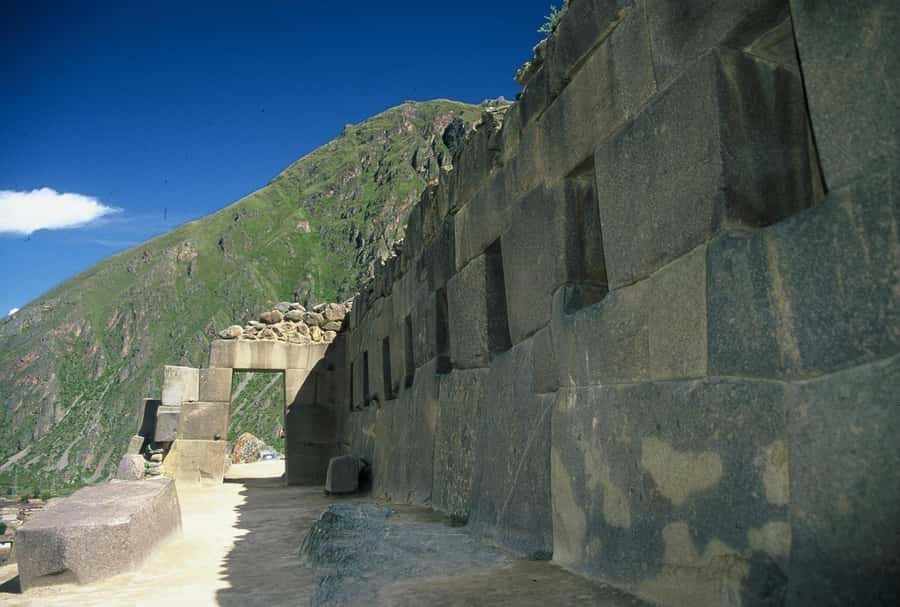
At the upper section, the Temple of the Sun is the major feature. It is formed from six huge monoliths of pink granite, with each stone weighing more than 50 tons. Their scale is difficult to appreciate from a photograph. Standing near them, you get a better sense of the labor and planning involved.
The stonework is the real lesson here. Look closely at the way the blocks meet and at the contrast between the smooth, carefully worked surfaces and the rougher stone around them. Your guide can give the religious context, but you should also allow time simply to inspect the construction.
The temple was never completed in the form originally intended. That unfinished quality is part of what makes the site so interesting. You can see a major project interrupted, while the remaining blocks still reveal the ambition of the builders.
The pink granite catches the light, and the material gives the upper site a different character from the darker terraces and surrounding mountains. Bring sunscreen and water if you have it available, since there is limited reason to expect shade during an open-air archaeological visit.
More of the Sacred Valley in a day:
- Cusco:Chinchero,Moray & Salt Mines drop-off in Ollantaytambo
★ 4.8 · 793 reviews - Sacred Valley: Chinchero, Moray, Ollantaytambo & Pisac+Lunch
★ 4.8 · 501 reviews - Sacred Valley: Maras & Moray by Quad Bike from Cusco
★ 4.6 · 418 reviews - Pisac Indian Market and Ollantaytambo Fortress with Lunch
★ 4.5 · 395 reviews
The Terrace of the Ten Niches
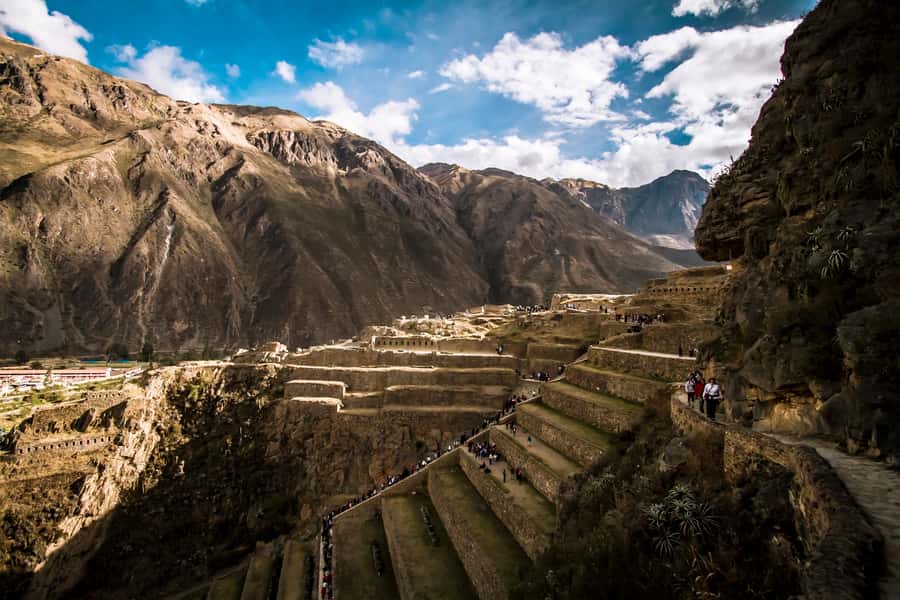
The Terrace of the Ten Niches is another important feature of the upper complex. Its name points to a row of recessed openings in the stonework, an example of how architectural details at Ollantaytambo had purpose and meaning beyond simple decoration.
This is a good place to slow down and listen to the guide. Without explanation, the terrace can look like another wall in a large ruin. With context, it becomes part of the ceremonial and architectural plan of the site.
The terraces also help you read the wider complex. Ollantaytambo was not built as one isolated monument. Platforms, paths, temples, defensive structures, canals, and houses worked together. The site rewards visitors who look beyond the biggest stones.
Because the visit is private, you can ask about details that catch your eye. That is useful at a complex site where several periods and functions are visible at once.
Stone platforms, canals, and the Inca town
After the fortress, the tour includes a short visit to Ollantaytambo town. This is not just a tourist add-on. The settlement preserves its old street plan and remains inhabited, giving you a direct look at how Inca urban design continues to shape the present.
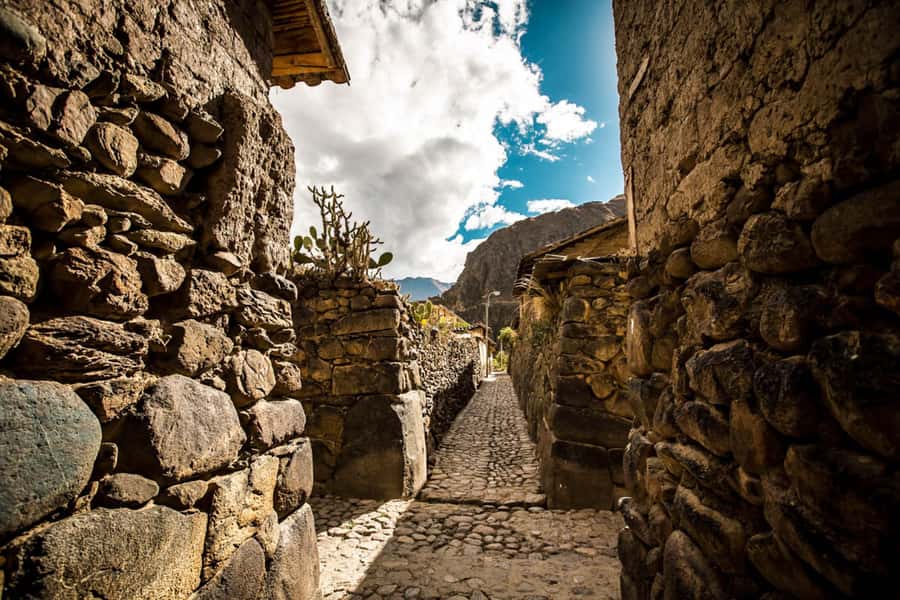
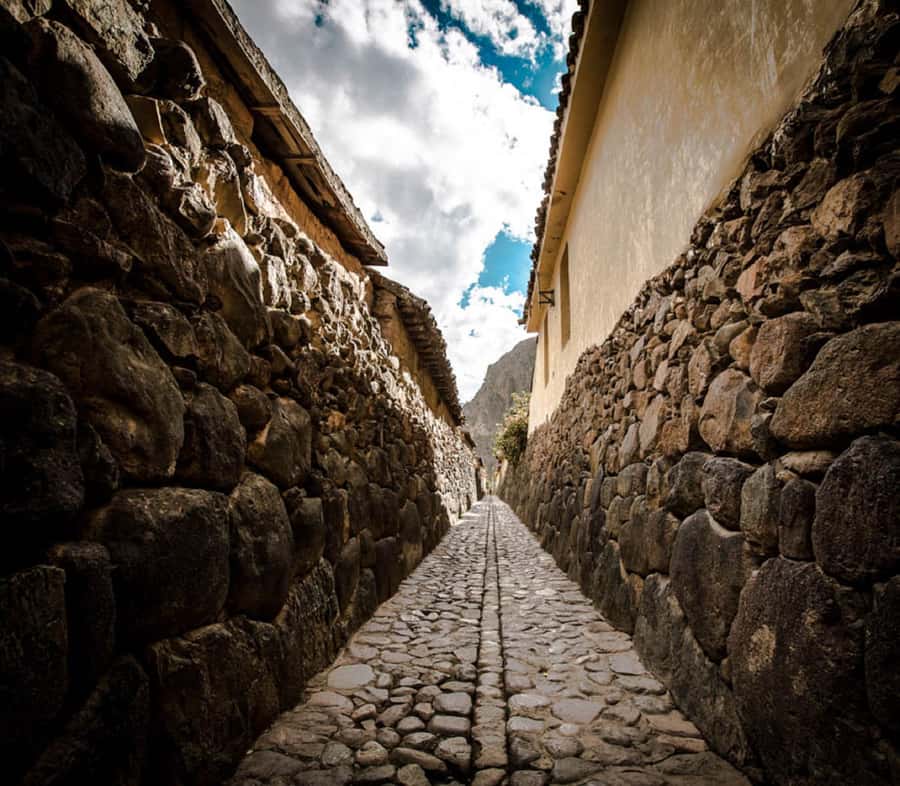
The streets are narrow, straight, and paved with cobblestones. They open toward the Urubamba River, while canals run through the settlement. Each block, or court, consists of houses arranged around a central patio, with several homes sharing an entrance.
That layout is easy to miss if you focus only on the shops. Look at the doorways, the stone foundations, the drainage channels, and the way the streets fit together. The town makes the fortress easier to understand because you can see the wider system of Inca planning at ground level.
Small shops add a modern layer, but the town is not merely a museum set. Residents still live there and maintain traditions inherited from their Inca ancestors. Be respectful as you walk. Keep your voice down near homes, avoid blocking doorways, and ask before photographing people.
I particularly like this part of the excursion because it connects grand ruins with ordinary spaces. A temple and fortress can feel remote. A working street with houses, canals, and shared courtyards feels immediate.
The story of Manco Inca’s victory
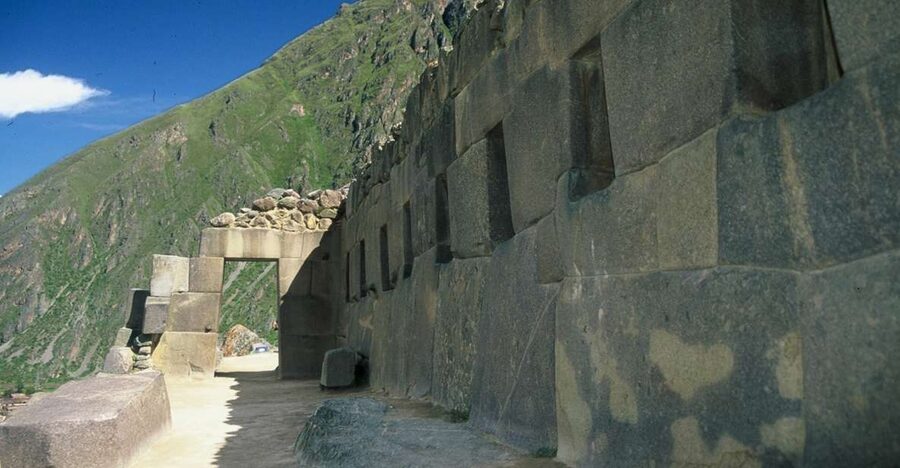
Ollantaytambo also carries an important chapter from the Spanish invasion. Manco Inca faced the Spanish troops led by Hernando Pizarro here and defeated them. The site’s military position, terraces, and strong walls were not symbolic features. They helped the settlement resist attack.
Your guide can place that encounter within the physical setting. From the upper complex, the slopes and valley routes help explain why Ollantaytambo was strategically useful. The architecture becomes easier to read when you understand that this was a defended center, not simply a ceremonial hilltop.
The story also gives the visit a human dimension. You are not only looking at ancient engineering. You are looking at a place that remained important during a violent period of change and served as a base for resistance.
What the $126 price includes
At $126 per person, this is not the cheapest way to see Ollantaytambo. The price needs to be judged against what is included: private round-trip transportation from an eligible Cusco hotel and a professional bilingual guide for a five-hour outing.
That arrangement can be good value if you want personal attention and do not want to arrange a taxi, negotiate a driver, or join a large group. It is also helpful if you want the fortress and town explained in one visit instead of trying to piece the site together on your own.
The price does not include the Cusco Tourist Ticket, known as the BTC. You must purchase that separately to enter the Ollantaytambo fortress. Personal expenses are also extra, including anything you choose to buy in town.
There is an additional tax note for Peruvian citizens and foreign passengers who have stayed in Peru for more than 60 days. Sales taxes are not included in the quoted total for those cases and may be collected by the local operator. Check your status before paying so the final amount does not surprise you.
Who will enjoy this private tour most
I would recommend this tour to someone who wants a focused introduction to Ollantaytambo rather than a packed day covering several Sacred Valley sites. The five-hour format leaves enough time for the major fortress features and a short town visit without turning the day into an exhausting marathon.
It suits history lovers, photographers, architecture fans, and anyone interested in living traditions. The private format is also useful for couples, families with older children, or small groups that prefer to ask questions and stop when needed.
The tour is less suitable if you want a completely flat outing. The 150-step climb is a central part of the visit, and the activity is not suitable for wheelchair users. Unaccompanied minors are not allowed, so children must join with an adult.
If you are sensitive to altitude, plan conservatively. The supplied details do not specify the pace or altitude arrangements, so you should discuss any health concerns before booking. Comfortable shoes, sunscreen, and suitable clothing are not optional extras here. They make the climb and open-air site much easier.
Practical booking advice
Pickup is available from hotels in Cusco’s Historic Center. If your lodging is outside that area or is a private residence, confirm the meeting point before the day of the tour.
You can cancel up to 24 hours in advance for a full refund, and the reserve-now, pay-later option keeps your plans flexible. Those policies help if your Sacred Valley schedule may change, but they do not remove the need to secure the BTC separately.
Pets are not allowed. Bring comfortable shoes and sunscreen, and dress for walking rather than for a short vehicle transfer. A small day bag is sensible, although the supplied details do not specify luggage storage or water provision, so plan accordingly.
Should you book the Ollantaytambo fortress tour?
Book it if you want a private, well-focused look at one of the Sacred Valley’s most important Inca sites, with transport from central Cusco and a guide to connect the stones, town, farming terraces, and military story.
Think twice if the separate BTC cost pushes the total beyond your budget or if 150 steps will make the visit uncomfortable. For everyone else, the combination of the Temple of the Sun, the Terrace of the Ten Niches, huge pink-granite blocks, and a living Inca street plan makes this a strong half-day choice.
FAQ
How long does the Ollantaytambo private tour last?
The tour lasts five hours, including transportation from Cusco, the fortress visit, and a short visit to Ollantaytambo town.
Is transportation from Cusco included?
Yes. Round-trip pickup and drop-off are included for hotels located in Cusco’s Historic Center.
Can I be picked up from an Airbnb or private residence?
No direct pickup from private residences or Airbnb properties is included. If you stay in one, contact the operator before the tour to arrange a meeting point.
Is the Cusco Tourist Ticket included in the price?
No. You must acquire the Cusco Tourist Ticket, or BTC, separately to visit the Ollantaytambo fortress.
What languages does the guide speak?
The professional tour guide provides service in English and Spanish.
Is the tour suitable for wheelchair users?
No. The tour is not suitable for wheelchair users, and the fortress visit includes a climb of about 150 steps.
More Half-Day
- Cusco: Half-Day City Tour with Sacsayhuaman and Q’enco
★ 4.6 · 1,129 reviews - Cusco: City Tour | Half-Day Tour to 4 Archaeological Sites
★ 4.6 · 206 reviews - Cusco: Half-Day City Tour
★ 4.2 · 129 reviews - From Cusco: Moray, Maras Salt Mines & Chinchero Weavers Half-Day
★ 5.0 · 126 reviews
Just added around Cusco
- Cusco: Rainbow Mountain and viewpoint red valley ( optional)★ 4.8 · 3 reviews
- Tour Pallay Punchu Trek Full Day★ 4.2 · 3 reviews
- Montaña de Colores: tour en cuatrimotos día completo★ 3.3 · 3 reviews
- Excursion Cusco – Puno – Titicaca Observatory Train★ 5.0 · 3 reviews
- Maras Moray★ 5.0 · 3 reviews
- Cusco: Palcoyo Mountain Day Trip with Breakfast and Lunch★ 4.8 · 3 reviews
- Tour to Laguna Humantay with breakfast and lunch from Cusco★ 4.7 · 3 reviews
- From Cusco:Chinchero, Moray, Maras, Ollantaytambo with lunch★ 5.0 · 3 reviews
Sacred Valley Tours, compared.
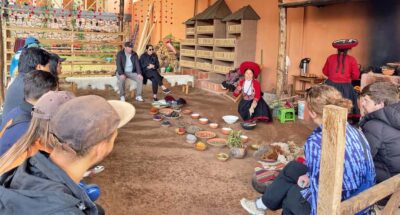
Sacred Valley & Maras Salt Mines Tour with Lunch
Read our review →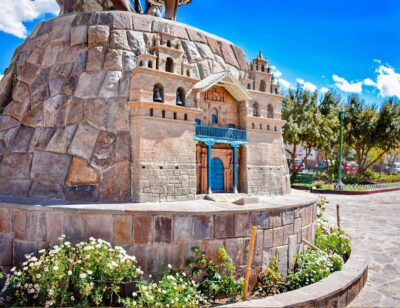
Moray, Maras Salt Mines & Chinchero Weavers Tour
Read our review →
Sacred Valley, Pisac, Ollantaytambo, Salt Mines Moray
Read our review →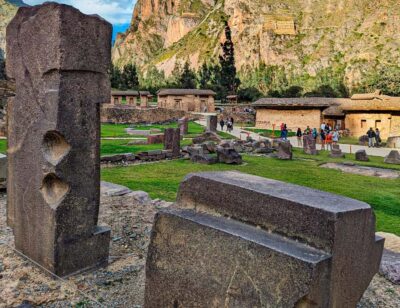
Chinchero,Moray & Salt Mines drop-off in Ollantaytambo
Read our review →
Sacred Valley: Chinchero, Moray, Ollantaytambo & Pisac+Lunch
Read our review →
Sacred Valley: Maras & Moray by Quad Bike from Cusco
Read our review →
Pisac Indian Market and Ollantaytambo Fortress with Lunch
Read our review →
2-Day Trip to the Sacred Valley and Machu Picchu
Read our review →Browse the lists this tour appears in