
Reviewed · SACRED VALLEY TOURS
Cusco: Sacred Valley and Salt Mines Ending in Ollantaytambo
One day, four major Andean sights. This $40 Sacred Valley tour packs Chinchero, Moray, the Maras Salt Mines, Urubamba, and Ollantaytambo into a single day, which makes it a useful choice if your Peru schedule is tight. I like the wide range of stops and the fact that you finish near the Ollantaytambo train station instead of returning to Cusco. The trade-off is simple: the pace is brisk, and you may wish for more time at a few places.
I also like the mix of archaeology, farming, textiles, food, and mountain scenery. The guide named Jhonnattan received special praise for explaining the sites clearly in both English and Spanish. Just watch the costs: lunch and entrance fees are not included in the advertised price, so the final bill will be higher than $40.
In This Review
- Key points to know before booking
- Why this route makes sense from Cusco
- Chinchero at 3,772 meters
- Moray and the Inca farming experiment
- The Maras Salt Mines and their 4,000 wells
- Urubamba buffet lunch, with one detail to confirm
- Ollantaytambo, the final stop at 3:30 PM
- A fast schedule with real value
- The guide can shape the whole day
- What to bring for the high-altitude day
- Who should book this Sacred Valley tour?
- Should you book it?
- FAQ
- How long does the tour last?
- Where does the tour begin?
- Where does the tour end?
- Which places are included in the route?
- Is lunch included in the price?
- Are entrance fees included?
- What languages are available?
- What should I bring?
Key points to know before booking
- Chinchero sits at 3,772 meters, so the first stop can feel demanding if you have only just arrived in Cusco.
- Moray’s circular terraces are one of the most unusual sights in the Sacred Valley, with broad rings dropping into a natural hollow.
- Maras contains more than 4,000 salt wells, still used to produce salt from mineral-rich mountain water.
- The tour ends in Ollantaytambo at about 3:30 PM, a helpful setup for a train journey onward.
- Lunch and entrance fees cost extra, although a buffet lunch was included on at least one reported departure.
- The day covers a lot of ground, so comfortable shoes, water, a hat, and sunscreen are essential.
Why this route makes sense from Cusco
The Sacred Valley is not one single sight. It is a long corridor of fields, villages, archaeological sites, and steep mountains, and the most useful way to see it is often by combining several stops. This route does exactly that, moving from Chinchero to Moray, then Maras, Urubamba, and Ollantaytambo.
You begin with hotel pickup in Cusco and ride into the valley by tourist transport. The contrast is part of the appeal. Around Cusco, the city feels dense and high. In the Sacred Valley, you see broad crop fields, small settlements, and mountains that were respected long before the Inca period.
The route is especially practical if you plan to spend the night in Ollantaytambo or catch a train from there. Instead of making the long return journey to Cusco, you finish close to the station. That saves time and avoids paying for a separate transfer on the same day.
The schedule is listed as 12 hours, with drop-off near Ollantaytambo train station at around 3:30 PM. That means your pickup from Cusco will be early, and you should check the precise departure time when you book. The exact group size is not provided, so expect the usual tour transport rather than a private sightseeing day.
More Sacred Valley Tours in Cusco
- Cusco:Sacred Valley Pisaq,Ollantaytambo,Chinchero with Lunch
★ 4.8 · 183 reviews - From Cusco: Chinchero, Moray, Maras and Ollantaytambo
★ 4.5 · 83 reviews - from Urubamba & Ollantaytambo:Sacred Valley Full-Day Private
★ 4.9 · 31 reviews
Chinchero at 3,772 meters
Chinchero gives you three experiences in one stop: an archaeological site, a colonial church, and a local market. It is a good opening lesson in how Andean culture continued through the Spanish colonial period rather than simply ending with the conquest.
The town sits at 3,772 meters above sea level. If you have recently arrived in Cusco, take this seriously. Walk slowly, drink water, and do not spend the first ten minutes racing after the guide. The air is thin, and even a gentle slope can feel like a small personal argument.
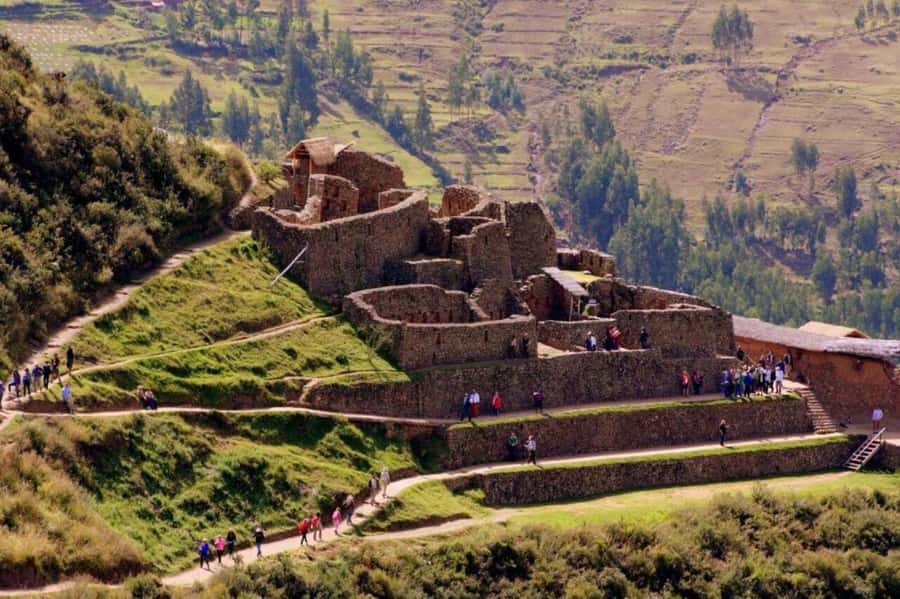
The archaeological area shows the remains of the Inca presence in the region. You also visit a 17th-century colonial church decorated with canvases from the Cusco School. These paintings reflect the way European religious art was adapted for the Andes, making the church more than a quick photo stop.
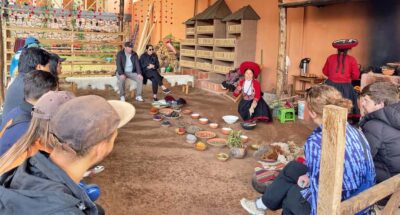
The market adds a more everyday side to the visit. You can look at handmade textiles and, according to the information provided, may still barter. The focus is on traditional textiles made by local Andean women. This is a useful place to pay attention to technique rather than treating the market as a row of souvenirs.
Because the full day has several stops, your time in Chinchero may feel short. If textiles are a main interest, you will need to make decisions quickly. Look first, listen to the guide, and save shopping until you know how much time remains.
Moray and the Inca farming experiment
Moray is one of the tour’s most memorable stops. Its circular agricultural terraces descend into a natural depression, forming a series of wide rings that look almost too carefully designed to be farmland.
The site is described as an experimental agricultural center. The terraces allowed the Incas to work with different growing conditions at different levels. You do not need to be an archaeology expert to understand the basic idea: the shape of the terraces created changes in temperature and exposure that could be useful for testing crops.
The setting also helps you understand the scale of Inca engineering. This is not just a stone wall or a single ruin. It is a large, carefully planned agricultural project tied to food production, altitude, and water management.
Bring a camera, but do not spend the entire stop looking at the site through a screen. The circular form is best understood from a viewpoint where the terraces can be seen all at once. Your guide’s explanation matters here because the site can otherwise look like an attractive hole in the ground without its farming purpose.
Entrance to Moray is not included. Keep money available for this fee, and check the current amount before departure because prices can change. The tour information also says entrance fees must be paid separately for Maras.
The Maras Salt Mines and their 4,000 wells
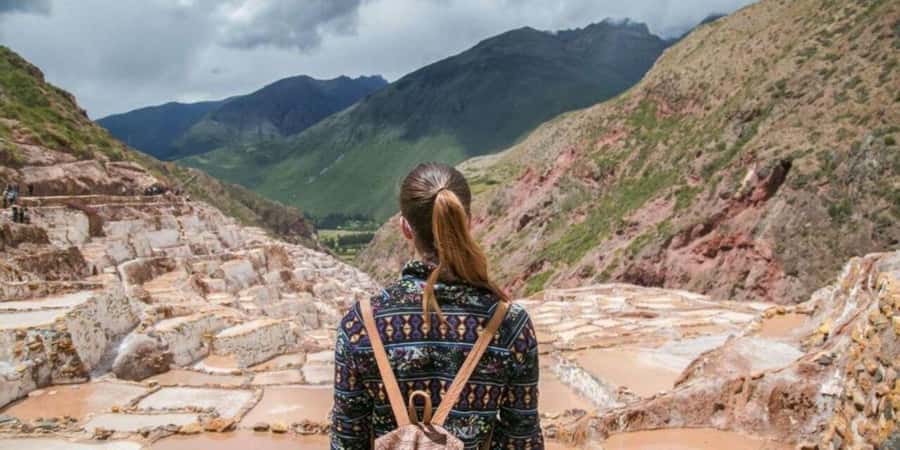
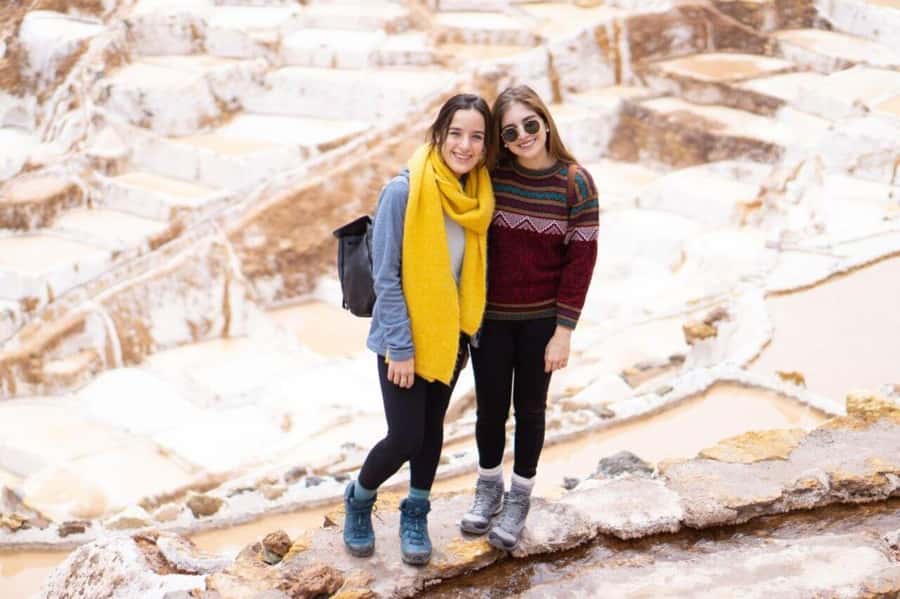
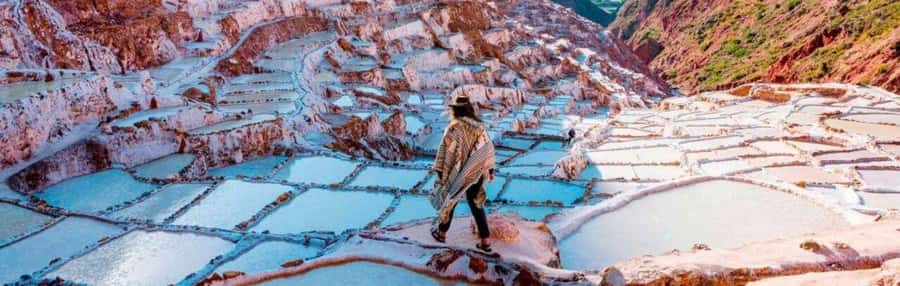
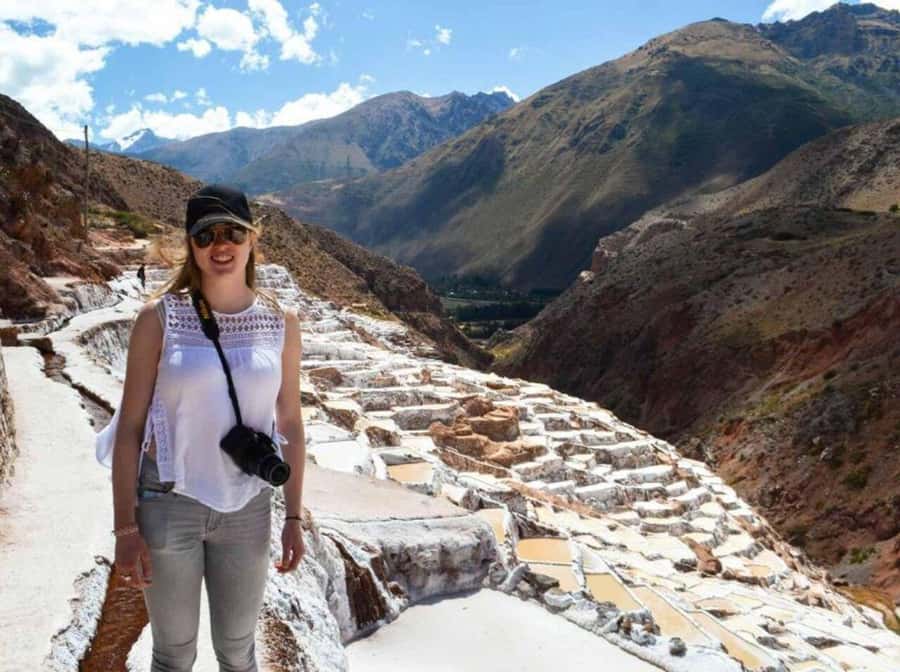
The Maras Salt Mines bring a completely different texture to the day. More than 4,000 small wells spread across the mountainside, each supplied by salty water that flows through the area. As the water evaporates, salt remains behind and can be collected.
This is a working production site, not simply an archaeological display. The salt pools show how local communities continue to use a process tied to the natural water source and the steep terrain.
The view is striking because the wells form thousands of small shapes across the slope. Light, weather, and water levels affect their appearance, so the scene can look different from one visit to the next. It is one of those places where a guide can help you notice the practical details, including how the wells are arranged and why the salt forms.
The walk may involve uneven ground, so wear shoes with a good grip. The information for this tour specifically recommends comfortable footwear, and this is not decorative advice. You should also bring sunscreen and a hat. At high altitude, the sun can feel strong even when the air is cool.
Maras also has an entrance fee outside the $40 tour price. Since the route includes several paid sites, your budget should include these extras from the start. That still leaves the tour with good value, but the headline price is not the total cost of the day.
More of the Sacred Valley in a day:
- Super Sacred Valley
★ 3.8 · 6 reviews - From Cusco:Chinchero, Moray, Maras, Ollantaytambo with lunch
★ 5.0 · 3 reviews - From Cusco: Sacred Valley VIP Tour with Buffet Lunch
★ 4.7 · 3 reviews - Cusco | Visit Maras, Moray, Chinchero, Pisac | Valle Vip
★ 4.4 · 3 reviews
Urubamba buffet lunch, with one detail to confirm
Urubamba is the lunch stop, and the planned meal is a buffet at a typical local restaurant. This gives you a chance to sample regional flavors without spending time choosing from a menu while the group waits.
The published terms list lunch as not included. At least one departure included a buffet lunch, so there may be variation between departures or booking arrangements. I would not assume the meal is covered. Confirm it before you go, and carry enough cash in case you need to pay separately.
A buffet works well on a schedule like this because you can eat at your own pace. It also lets you try several local dishes, though the exact menu is not specified. Keep your meal reasonably light if you are sensitive to altitude or if the road has made you feel queasy.
Urubamba is more than a practical meal break. Its fields and village setting show why the valley has long been important for agriculture. As you ride through the area, look for the patchwork of crops and the mountains rising beyond it. The scenery is not empty wilderness. It is a lived-in farming region.
Ollantaytambo, the final stop at 3:30 PM
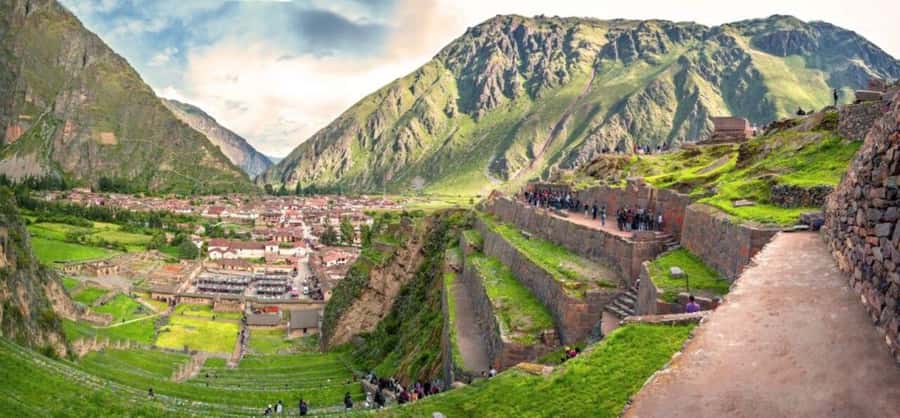
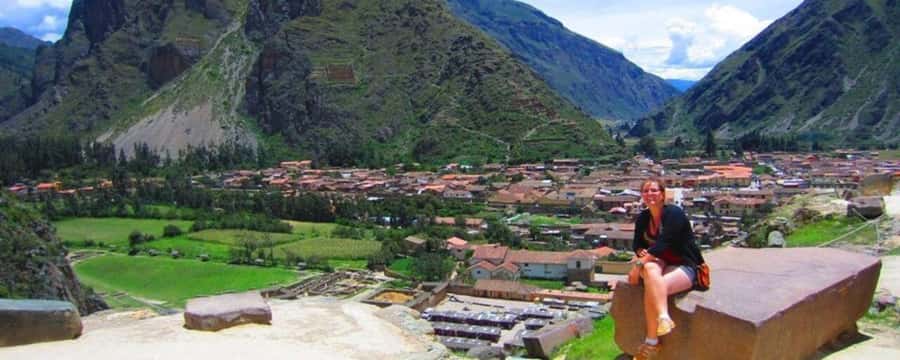
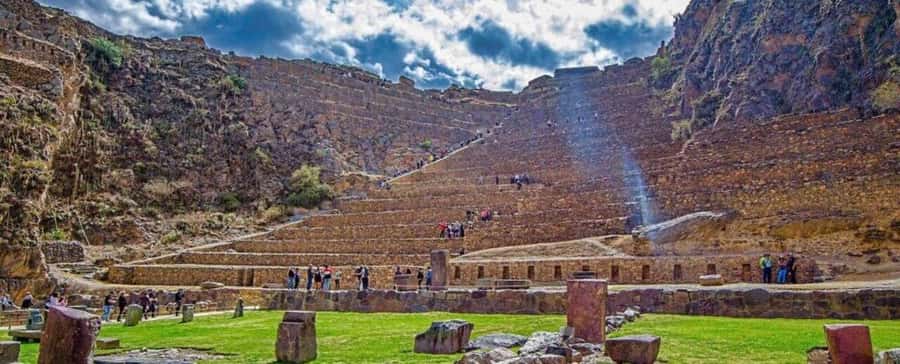
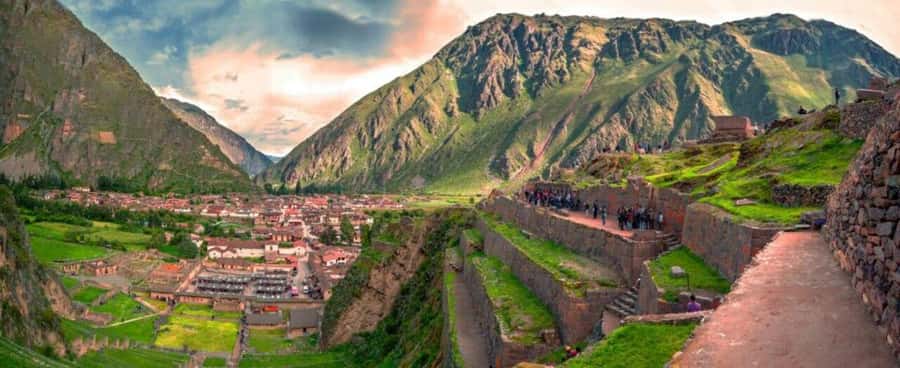
The day ends in Ollantaytambo, often called a living Inca city because its old street plan and stone structures remain part of an inhabited town. This is a strong final stop because it combines daily life with one of the Sacred Valley’s major archaeological sites.
The main attraction is the military fortress built to protect the valley from possible invaders. Its terraces and stonework rise above the town, giving you a clear sense of why the location mattered. The site also helps connect the earlier stops. Chinchero showed the relationship between Inca and colonial culture, Moray focused on agriculture, and Ollantaytambo brings defense, power, and settlement into the picture.
Your transport drops you near the Ollantaytambo train station at about 3:30 PM. This is the most useful feature for anyone continuing toward Machu Picchu or another destination by train, but you should still leave yourself time to find your platform, collect luggage, and manage any delay. The tour does not promise a private station escort.
The final stop may feel rushed if the group arrives late or if earlier visits run over. Still, ending here is more practical than returning to Cusco after covering the same route. If you want a long, quiet exploration of Ollantaytambo, plan an overnight stay and return to the ruins independently.
A fast schedule with real value
At $40 per person, the basic price is attractive for a 12-hour guided route with hotel pickup, transport, and visits to five important places. You are paying for coverage and convenience. Organizing all these stops independently would require separate transport and careful timing.
The value becomes less clear once you add the entrance fees and lunch. Since both are excluded, calculate the complete day rather than judging the tour by the advertised price alone. Even with those additions, the route can make financial sense if you want to see a large section of the valley in one day.
The main cost is not money. It is time at each site.
One reported departure covered the sights effectively but moved quickly from place to place. Another described the day as fast while still allowing time for photographs, history, and a good overall experience. That is the fair reading of this itinerary: you will see a lot, but you will not linger everywhere.
I would choose this tour if you have one free day, want a broad introduction, and need to finish in Ollantaytambo. I would choose a slower or private arrangement if Moray, Maras, textiles, or Inca architecture is a major personal interest.
The guide can shape the whole day
A full-day route depends heavily on the guide. The strongest feedback here names Jhonnattan as a professional guide who moved between English and Spanish with ease and gave clear explanations at the archaeological sites.
That matters because the stops are visually impressive but easy to misunderstand. At Moray, you want the agricultural purpose explained. At Chinchero, the church and textile traditions benefit from context. At Ollantaytambo, the fortress makes more sense when you understand its role in defending the valley.
The tour offers live guiding in English and Spanish. If you need one language in particular, confirm the arrangement at booking. A bilingual guide can be useful for mixed-language groups, but the pace of explanations may vary depending on the group.
The guide also appears to add practical value at the end of the day, including recommendations after drop-off. That is helpful when you are continuing from Ollantaytambo and need to orient yourself quickly.
What to bring for the high-altitude day
Pack for sun, walking, and changing comfort rather than for a polished city outing.
- Comfortable walking shoes
- A hat
- Sunscreen
- Water
- A camera
- Clothing suitable for walking
The altitude is the main concern. Chinchero is above 3,700 meters, and the route includes outdoor sites with walking on uneven surfaces. Drink water throughout the day and keep your pace steady.
Do not rely on the buffet stop as your only food plan. Lunch is listed as extra, and the exact arrangements can vary. A small personal snack is sensible, though the provided information does not specify whether one is supplied.
Who should book this Sacred Valley tour?
This tour suits you best if you:
- Have only one day for the Sacred Valley
- Want to combine several major sights
- Prefer a guided visit to independent transport planning
- Need to finish near Ollantaytambo
- Enjoy a full day with a quick rhythm
- Want explanations in English or Spanish
It may not suit you if you dislike early starts, high-altitude walking, or frequent transitions. Families with young children should consider the long duration and the amount of time spent getting on and off transport.
It is also not ideal if you want a slow market visit or extended time at the fortress. The route is designed for breadth. You see the main points, learn the basic story, take photographs, and move on.
Free cancellation up to 24 hours before departure and the option to reserve now and pay later make planning easier. Those terms are useful if your Cusco schedule is still shifting, but they do not change the need to confirm pickup time, lunch arrangements, and entrance costs.
Should you book it?
Book this tour if you want a strong first look at the Sacred Valley and need a practical connection to Ollantaytambo. The combination of Chinchero, Moray, Maras, Urubamba, and the fortress gives you more variety than a simple valley drive, and the $40 starting price is appealing.
Go in with the right expectations. This is a quick-moving sightseeing day, not a relaxed archaeological study. Budget separately for lunch and entrance fees, bring water and sun protection, and accept that some stops will feel brief.
For many people, that is a fair exchange. You get a broad introduction, a bilingual guide, hotel pickup in Cusco, and a useful final drop-off near the train station. If you value time at each site above seeing several places, choose a slower option instead.
FAQ
How long does the tour last?
The tour duration is listed as 12 hours. Transport drops you near the Ollantaytambo train station at approximately 3:30 PM, and you should check the available starting times when booking.
Where does the tour begin?
The tour includes hotel pickup in Cusco before traveling into the Sacred Valley.
Where does the tour end?
The tour ends near the Ollantaytambo train station. This is useful if you plan to continue by train.
Which places are included in the route?
The route includes Chinchero, Moray, the Maras Salt Mines, Urubamba for lunch, and Ollantaytambo.
Is lunch included in the price?
Lunch is listed as not included. The planned meal is a buffet at a typical local restaurant, but you should confirm the arrangement for your departure.
Are entrance fees included?
No. Entrance fees to Moray and the Maras Salt Mines must be paid separately.
What languages are available?
The tour offers a live guide in English and Spanish.
What should I bring?
Bring comfortable shoes, a hat, sunscreen, water, and a camera. Clothing should be suitable for walking.
More Salt Pans and Inca Terraces
- From Cusco: Sacred Valley & Moray, Salt Mines with Lunch
★ 4.6 · 3 reviews - From Cusco: Sacred Valley & Maras Salt Mines Tour with Lunch
★ 4.8 · 2,227 reviews - From Cusco: Moray, Maras Salt Mines & Chinchero Weavers Tour
★ 4.8 · 1,925 reviews - Cusco: Sacred Valley, Pisac, Ollantaytambo, Salt Mines Moray
★ 4.6 · 1,058 reviews
Just added around Urubamba
- From Cusco:Chinchero, Moray, Maras, Ollantaytambo with lunch★ 5.0 · 3 reviews
- Sun and Moon Tour★ 4.5 · 3 reviews
- From Cusco: Sacred Valley VIP Tour with Buffet Lunch★ 4.7 · 3 reviews
- Cusco | Visit Maras, Moray, Chinchero, Pisac | Valle Vip★ 4.4 · 3 reviews
- 1 Day – Humantay Lake★ 3.1 · 3 reviews
- Peru in 5 days: Lima, Cusco, Machupicchu & Rainbow Mountain★ 5.0 · 3 reviews
- Guided tour of Cusco and its 4 ruins★ 3.8 · 3 reviews
- Sacred Valley Tour 1 Day★ 5.0 · 3 reviews
Sacred Valley Tours, compared.
Sacred Valley & Maras Salt Mines Tour with Lunch
Read our review →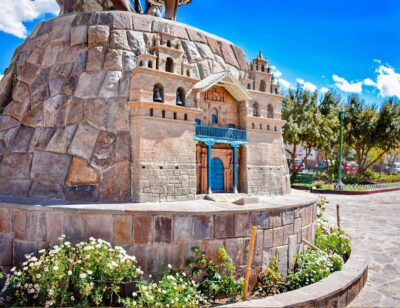
Moray, Maras Salt Mines & Chinchero Weavers Tour
Read our review →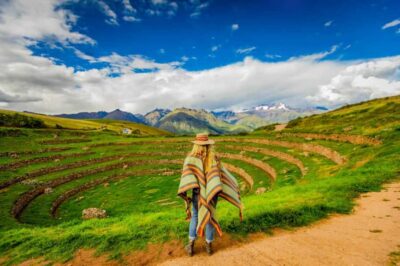
Sacred Valley, Pisac, Ollantaytambo, Salt Mines Moray
Read our review →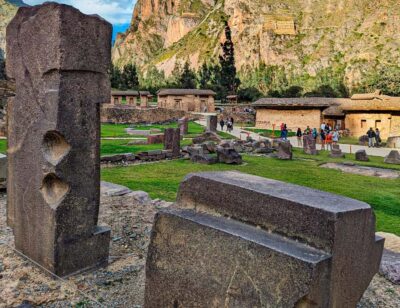
Chinchero,Moray & Salt Mines drop-off in Ollantaytambo
Read our review →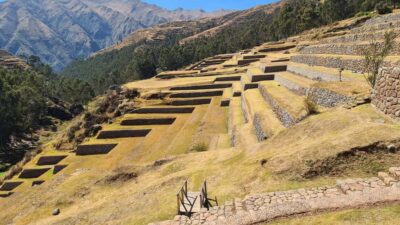
Sacred Valley: Chinchero, Moray, Ollantaytambo & Pisac+Lunch
Read our review →
Sacred Valley: Maras & Moray by Quad Bike from Cusco
Read our review →
Pisac Indian Market and Ollantaytambo Fortress with Lunch
Read our review →
2-Day Trip to the Sacred Valley and Machu Picchu
Read our review →Browse the lists this tour appears in