
Reviewed · INCA RUINS & ARCHAEOLOGY
Guided tour of Cusco and its 4 ruins
Cusco’s best sights are spread across the hills. This six-hour guided outing brings together the Cathedral, Qoricancha, and four major Inca sites, giving you a useful first look at the city and its surroundings. I like the mix of central Cusco and archaeological sites, and I especially like that transport is included between the ruins. The main concern is timing: the advertised duration and the actual schedule need careful checking, particularly on Sundays.
I also like the chance to hear the sites explained by a live guide in either English or Spanish. One guide praised for this tour was a university professor known as Doctor, whose enthusiasm for history made a strong impression. Still, this is a packed program, and entrance tickets cost extra. If the city center matters most to you, confirm the order of visits before booking.
In This Review
- Four details that shape the experience
- What this Cusco tour is trying to do
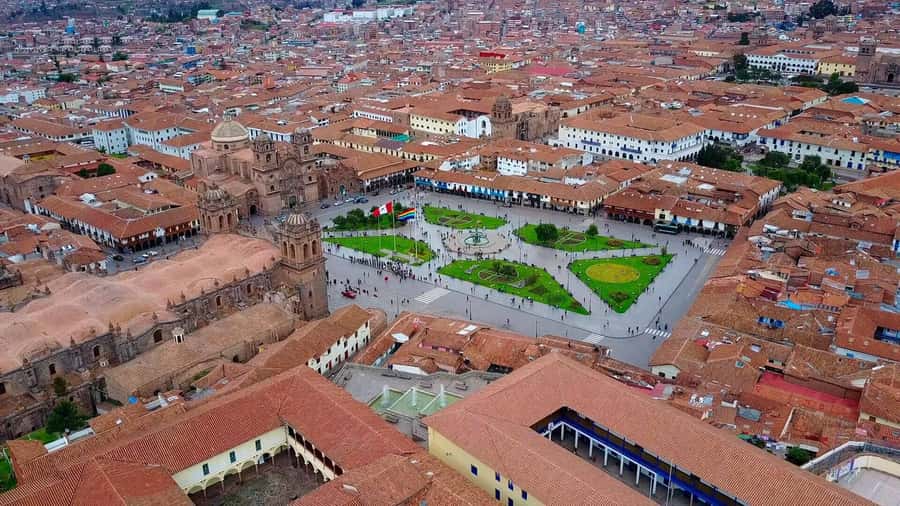
- Starting in the Plaza de Armas and Cusco Cathedral
- Qoricancha, the Temple of the Sun
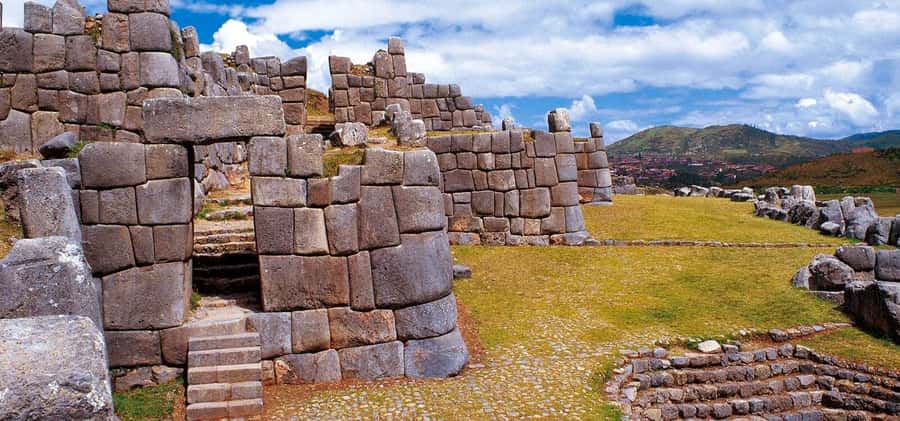
- Sacsayhuamán and the scale of Inca stonework
- Qenqo, a shrine built for ceremony
- Puca Pucara, the Red Fortress
- Tambomachay and the Inca relationship with water
- The real cost: $20 plus entrance fees
- Sunday planning and the schedule problem
- Who will get the most from this outing
- Should you book the Cusco four-ruins tour?
- FAQ
- How long does the tour last?
- What languages are available?
- Is transportation included?
- Are entrance tickets included in the price?
- How much are the entrance fees for foreign visitors?
- Can I cancel the booking?
Four details that shape the experience
- The tour combines city sights and hilltop ruins: You begin around the Plaza de Armas, then continue by minibus to Sacsayhuamán, Qenqo, Puca Pucara, and Tambomachay.
- Qoricancha shows two cultures in one place: The former Inca Temple of the Sun later became part of a Spanish religious complex.
- Sacsayhuamán is the main archaeological stop: The enormous stonework gives you the clearest sense of Inca building skill during this outing.
- Tickets are not included: Foreign visitors pay separate fees for the Cathedral, Qoricancha, and the four ruins.
- Sunday timing needs special care: The order may change, with the ruins visited first and the central sights later.
- The schedule may be closer to four and a half hours: The activity is sold as six hours, but the stated drop-off time and one reported Sunday experience point to a shorter or variable program.
What this Cusco tour is trying to do
This excursion gives you a quick sweep of the most important sights in and around Cusco. It is not a slow museum visit or a full archaeological study. Instead, you get a guided introduction to the city’s colonial center, its most important Inca religious site, and four ruins on the hills above town.
That broad reach is the appeal. Cusco can feel confusing at first because the old Inca capital and the Spanish city sit on top of one another. A guide helps connect the pieces. You see how the Plaza de Armas developed, then walk to Qoricancha, then travel beyond the center to places that are difficult to visit efficiently on foot.
The tour includes pickup at a meeting point, minibus transport, a guide, and a return transfer to central Cusco. It does not include admission fees. The listed price is $20 per person, but a foreign visitor should budget roughly another $33.50 in entrance charges based on the supplied prices. That brings the combined cost to about $53.50 per foreign adult, subject to exchange rates.
For a half-day orientation, that can be fair value. You are paying for transport and a guide, not simply a ride past the monuments. The value falls if the schedule runs late or if the city-center visits are cut short.
More Inca Ruins & Archaeology in Cusco
- Cusco: Half-Day City Tour with Sacsayhuaman and Q’enco
★ 4.6 · 1,129 reviews - City Tour Cusco Qoricancha Sacsayhuaman y Tambomachay
★ 4.7 · 617 reviews - Cusco City Sightseeing, San Pedro Market, Cathedral and Qorikancha Temple
★ 4.5 · 139 reviews
Starting in the Plaza de Armas and Cusco Cathedral
The central portion begins at the Plaza de Armas, Cusco’s main square. The Cathedral is the first major interior visit in the planned order, and it gives you a look at the Spanish religious presence that shaped the city after the Inca period.
The building is presented as one of Cusco’s most important temples, with a mix of architecture and religious art. The description also points to decorative elements made with Inca gold, a detail that helps explain the complex relationship between conquest, local craft, and Spanish worship.
I would pay close attention to the guide here. A cathedral can become a blur of chapels, paintings, and carved details if you walk through without context. The live explanation should help you understand what you are seeing rather than simply count the altars.
The admission fee is 40 soles, about $10.70, for a foreign visitor and 12.50 soles, about $3.40, for a local visitor. That cost is separate from the $20 tour price. If the Cathedral is one of your main reasons for booking, confirm that it will be visited during your departure time.
This point matters because the order can change on Sundays. The standard description places the Cathedral and Plaza de Armas first, but one Sunday departure began with the ruins and reached the city center only after the planned four-and-a-half-hour window had nearly passed. For a visitor with a dinner booking, train connection, or limited time in Cusco, that is not a minor detail.
Qoricancha, the Temple of the Sun
From the Cathedral, the group walks to nearby Qoricancha. The short walk is useful because you move directly between two very different chapters of Cusco’s past rather than treating them as unrelated stops.
Qoricancha was one of the Inca Empire’s most important religious centers. It is also one of the clearest places to see the meeting of Inca and Spanish culture. The exact construction date remains uncertain, but the site’s importance is not. Its original role was tied to the worship of the sun, while the later Spanish religious complex changed the setting and its meaning.
The architectural contrast is the main reason to visit. You might find Inca stonework beneath or beside Spanish additions, creating a visual lesson in how the city was rebuilt rather than erased completely. The guide’s explanation is especially valuable here because the site can be easy to misunderstand if you only focus on the later structure.
Qoricancha admission is 15 soles, about $4 per person. That is modest compared with the Cathedral and the four ruins, but it still adds to the final cost. The tour description calls this one of the best examples of cultural fusion in Cusco, and that is the right way to approach it: not as a single-period monument, but as a place where two traditions occupy the same walls.
If Qoricancha is your priority, ask about the day’s order before setting out. A Sunday schedule that places it near the end may work well for some people, but it can be frustrating if you need to leave early.
Sacsayhuamán and the scale of Inca stonework
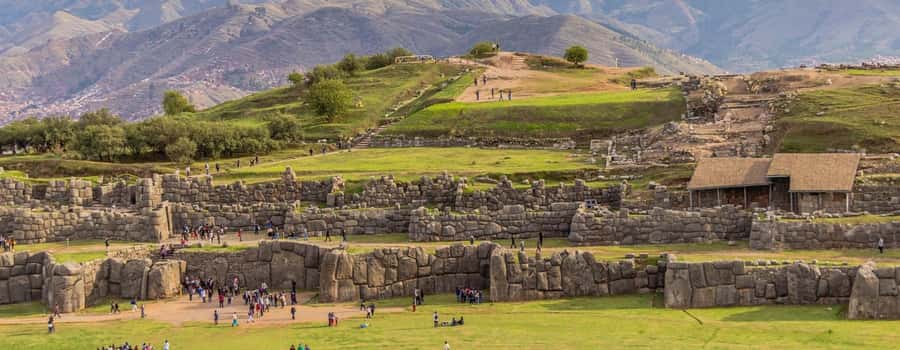
After the city-center visits, the minibus travels for about 30 minutes to Sacsayhuamán. This is the largest and most visually powerful stop on the ruins circuit.
The site is described as the greatest architectural work of the Incas, and the reason is easy to grasp even during a short visit: the scale of the stone construction. Your guide will explain how the fortress is understood and why its design mattered. The outing is not simply a photo stop. The guided portion should give you a better sense of the site’s purpose and construction.
Sacsayhuamán also changes the pace of the day. After the enclosed religious interiors in the center, you are out among broad stone terraces and open views over the Cusco area. The minibus is important here because the ruins sit outside the central walking zone and are linked by a route that would take much longer on foot.
The drawback is that a half-day circuit gives you limited time at each site. Sacsayhuamán deserves attention, but the schedule must also fit three more ruins and the return to Cusco. If you want long photography stops or a detailed archaeological visit, this tour may feel rushed.
Entrance to the four ruins, including Sacsayhuamán, costs 70 soles, about $18.80, for a foreign visitor and 40 soles, about $10.70, for a local visitor. This is the largest extra ticket in the program, so include it when comparing the $20 headline price with the actual cost.
More Inca sites and ruins to walk around:
- Lima: The Charm of Barranco & Pre Inca Pyramid in Miraflores
★ 4.9 · 322 reviews - Lima: Pachacamac Ruins & Barranco Half-Day Guided Tour
★ 4.6 · 296 reviews - Pre Inca Temple of Pachacamac Half-Day Tour from Lima
★ 4.5 · 283 reviews - Lima: Pachacamac Inca Archaeological Complex Tour
★ 4.8 · 164 reviews
Qenqo, a shrine built for ceremony
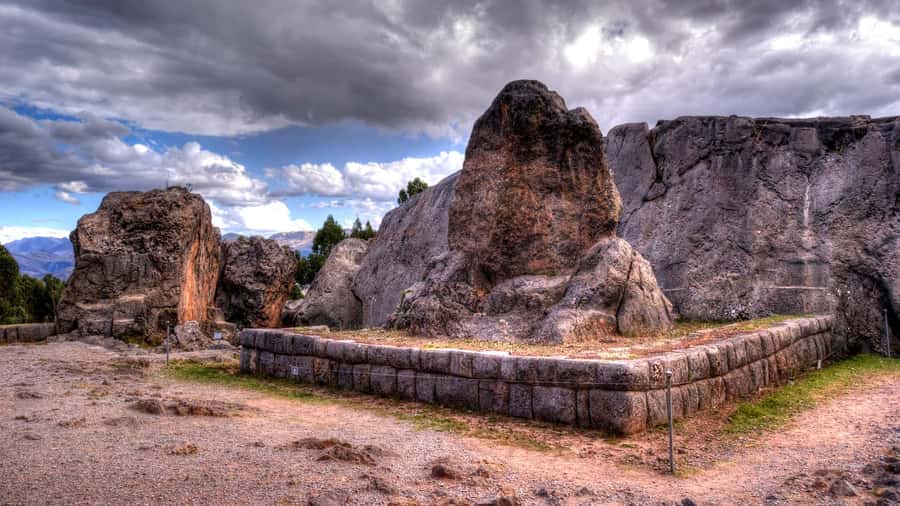
The minibus continues to Qenqo, described as one of the most important sanctuaries of its time. This stop adds a religious dimension to the ruins circuit after the monumental scale of Sacsayhuamán.
Qenqo is valuable because it shifts your attention from massive defensive-looking stonework to ritual use. The guide will explain why the shrine mattered and how it fit into Inca religious life. That context is important. Without it, the site may seem smaller and less dramatic than Sacsayhuamán, but its role was not measured by size.
This is one of the stops where a strong guide can make a real difference. The most highly praised guide connected closely with the history and taught with clear passion. A guide with that sort of energy can turn a brief stop into a memorable lesson.
You should also expect the site to be visited as part of a continuous circuit, not as a long independent exploration. The tour covers four ruins in one outing, so the time at Qenqo is shaped by the group schedule and the need to continue to Puca Pucara and Tambomachay.
Puca Pucara, the Red Fortress
Puca Pucara is known as the Red Fortress and is presented as a watchtower. It gives the circuit a different purpose again, moving from religious sites to the practical network that supported movement around Cusco.
The stop is brief in the overall rhythm of the day, but it helps you see that the ruins around Cusco were not isolated monuments. They formed part of a wider system of roads, observation points, ceremonial places, and water sites.
I would treat Puca Pucara as a context stop rather than the single reason to book the tour. Its value comes from the explanation and from seeing how it fits with the other locations. If you expect every ruin to have the scale of Sacsayhuamán, this one may feel modest.
The included minibus makes the sequence practical. You can visit the four sites without arranging separate taxis or figuring out the route yourself. That is a solid benefit for a first visit to Cusco, especially when you want an overview before choosing which places deserve a longer return visit.
Tambomachay and the Inca relationship with water
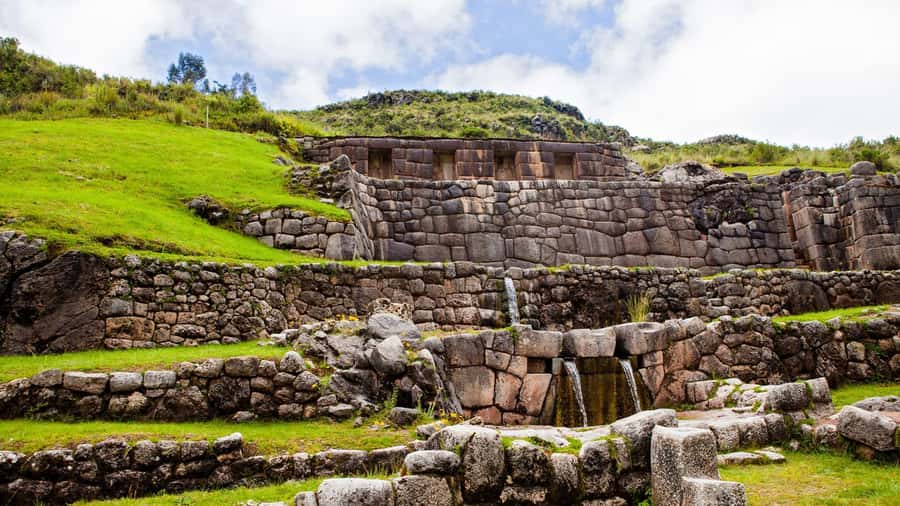
The last ruin is Tambomachay, also called the Inca Bath. It is associated with the worship of water, giving the tour a calmer final theme after the fortress and sanctuary.
The site helps widen your understanding of Inca priorities. Water was not simply a useful resource. It also had religious meaning, and Tambomachay reflects that connection. Your guide will explain why this place mattered and how it was used within the wider sacred world around Cusco.
As the final stop, Tambomachay can be a fitting close to the ruins circuit. You finish with a site tied to water and ritual rather than another defensive structure. The schedule still matters, though. If the day began late or traffic slows the return, this stop may be reached under time pressure.
The tour then returns you near the Plaza de Armas. The supplied details describe the full activity as six hours but also refer to a four-and-a-half-hour tour and a drop-off after four and a half hours. Treat the duration as variable unless the operator confirms the exact departure and return times for your date.
The real cost: $20 plus entrance fees
The $20 price looks attractive for a guided tour with transport, but it is only the operating cost. Foreign visitors pay:
- 40 soles for the Cathedral, about $10.70
- 15 soles for Qoricancha, about $4
- 70 soles for the four ruins, about $18.80
That is 125 soles in listed admission fees, or about $33.50, before the tour price. The total comes to around $53.50 per foreign visitor at the stated exchange values.
For local visitors, the listed admissions total 67.50 soles: 12.50 soles for the Cathedral and 40 soles for the four ruins, plus 15 soles for Qoricancha. The information provided does not state a separate local price for the tour itself, so you should confirm the final amount when booking.
I consider the value reasonable if you want a guide and transport in one package. The minibus saves you from arranging several rides, while the guide ties together the Cathedral, Qoricancha, and the ruins. The price is less compelling if you plan to visit the city center independently or if you mainly want one site, such as Sacsayhuamán.
Free cancellation is available up to 24 hours before the activity, and you can reserve without paying immediately. Those terms help if your Cusco plans are still shifting, but they do not solve the key issue: confirming the day’s order and timing.
Sunday planning and the schedule problem
This is the most important practical warning. On Sundays, the order of visits may change. The ruins can come first, followed by Qoricancha, the Cathedral, and the Plaza de Armas.
That revised order is not automatically bad. It may suit you if you prefer to begin outside the city and finish in the center. The problem comes when the schedule still describes a four-and-a-half-hour outing even though the changed order pushes the central visits later.
One Sunday departure involved pickup at 9:30 a.m. By 2 p.m., the Cathedral and Qoricancha had not yet been visited, and the visitor had to leave before completing the program. If those central sights are the main reason you booked, this could seriously affect your day.
I recommend asking three clear questions before paying:
- What is the exact pickup time?
- Which stop comes first on my date?
- What is the expected drop-off time near the Plaza de Armas?
That small check can protect your lunch plans, transport connections, and time at the sites you care about most.
Who will get the most from this outing
I would choose this tour if you have limited time in Cusco and want a guided overview of both the city and the nearby ruins. It suits you if arranging transport feels like a chore, or if you want historical explanations rather than simply taking photographs.
It is also a good fit for someone visiting Cusco at the start of a longer Peru trip. The tour shows you the major locations quickly, helping you decide where to spend more time later.
You may want another plan if you dislike fixed schedules or want to study each monument slowly. The four ruins are covered in one circuit, and the central visits can be affected by the day’s order. You should also think twice if the Cathedral and Qoricancha are your top priorities but the operator cannot confirm when you will reach them.
The guide can make a major difference. A university professor with real enthusiasm for the subject was praised as exceptional, and that is exactly the kind of leadership this compact program needs. The itinerary has many stops, so clear explanations and good time control matter as much as the sites themselves.
Should you book the Cusco four-ruins tour?
Book it if you want a broad, affordable introduction to Cusco, with a live English or Spanish guide and minibus transport included. The strongest parts are the range of places, the contrast between Qoricancha and the Cathedral, and the chance to see Sacsayhuamán, Qenqo, Puca Pucara, and Tambomachay in one outing.
Before booking, confirm the Sunday order and the actual duration. I would also budget for the 125 soles in foreign admission fees and decide which stops matter most to you.
For a first look at Cusco, I think this is a useful choice at a fair total price. Just do not treat the $20 as the complete cost, and do not assume the printed schedule will work the same way every day.
FAQ
How long does the tour last?
The activity is described as six hours, but the supplied details also refer to a four-and-a-half-hour tour and a return near the Plaza de Armas after four and a half hours. Confirm the expected duration and drop-off time for your date.
What languages are available?
The live guide is available in English or Spanish.
Is transportation included?
Yes. Pickup at the meeting point, minibus transportation between the sites, and a return transfer to central Cusco are included.
Are entrance tickets included in the price?
No. The Cathedral, Qoricancha, and four ruins each require separate admission fees.
How much are the entrance fees for foreign visitors?
The Cathedral costs 40 soles, Qoricancha costs 15 soles, and the four ruins cost 70 soles. The total listed admission cost is 125 soles per foreign visitor.
Can I cancel the booking?
Yes. You can cancel up to 24 hours in advance for a full refund. The activity also allows you to reserve and pay later.
Just added around Urubamba
- From Cusco:Chinchero, Moray, Maras, Ollantaytambo with lunch★ 5.0 · 3 reviews
- Sun and Moon Tour★ 4.5 · 3 reviews
- From Cusco: Sacred Valley VIP Tour with Buffet Lunch★ 4.7 · 3 reviews
- Cusco | Visit Maras, Moray, Chinchero, Pisac | Valle Vip★ 4.4 · 3 reviews
- 1 Day – Humantay Lake★ 3.1 · 3 reviews
- Peru in 5 days: Lima, Cusco, Machupicchu & Rainbow Mountain★ 5.0 · 3 reviews
- Sacred Valley Tour 1 Day★ 5.0 · 3 reviews
- From Cusco: Salkantay trek 5 days/4 nights meals included★ 4.0 · 3 reviews
Inca Ruins & Archaeology, compared.

Half-Day City Tour with Sacsayhuaman and Q’enco
Read our review →
City Tour Cusco Qoricancha Sacsayhuaman y Tambomachay
Read our review →
The Charm of Barranco & Pre Inca Pyramid in Miraflores
Read our review →
Pachacamac Ruins & Barranco Half-Day Guided Tour
Read our review →
Pre Inca Temple of Pachacamac Half-Day Tour from Lima
Read our review →

Cusco City Sightseeing, San Pedro Market, Cathedral and Qorikancha Temple
Read our review →
3-Hour Horse Riding Tour to the Temple of the Moon
Read our review →Browse the lists this tour appears in