
Reviewed · SACRED VALLEY TOURS
Cusco: Pisac, Sacsayhuaman, Q’enqo, and Tambomachay Tour
Sacred Valley views meet Cusco’s finest ruins. I like the way this six-hour private tour combines Pisac’s market and archaeological park with Sacsayhuaman, Q’enqo, Tambomachay, and Puka-Pukara. I also like that hotel pickup, transport, and an English or Spanish-speaking guide are included. The main drawback is that entrance tickets cost extra, and one booking had a vehicle that was too tight for four adults.
You get a lot of Inca history in one outing, but the pace is brisk. This tour suits you best if you want a guided introduction to several important sites rather than a slow day at one location. Good walking shoes, water, a hat, and sunscreen are not optional extras here. Cusco’s sun can be strong, and the ruins involve walking on uneven ground.
In This Review
- Key details before you book
- Starting in Cusco and heading toward Pisac
- Pisac market and the town’s local character
- Pisac Archaeological Park and the terraces below
- Taray Viewpoint and the Sacred Valley
- Sacsayhuaman, Cusco’s monumental stonework
- Q’enqo and the ritual side of Inca belief
- Tambomachay and the worship of water
- Puka-Pukara from the panoramic viewpoint
- What the $77 price really covers
- Who will enjoy this six-hour route?
- Should you book the Pisac and ruins tour?
- FAQ
- How long does the tour last?
- What places does the tour visit?
- Is hotel pickup included?
- Are entrance tickets included?
- What is included in the $77 price?
- What languages are available?
- Is this a private tour?
- What should I bring?
- Is the tour suitable for wheelchair users?
- Can I cancel the booking?
Key details before you book
- Pisac combines a market town with an archaeological park, giving you both present-day local life and an important Inca site.
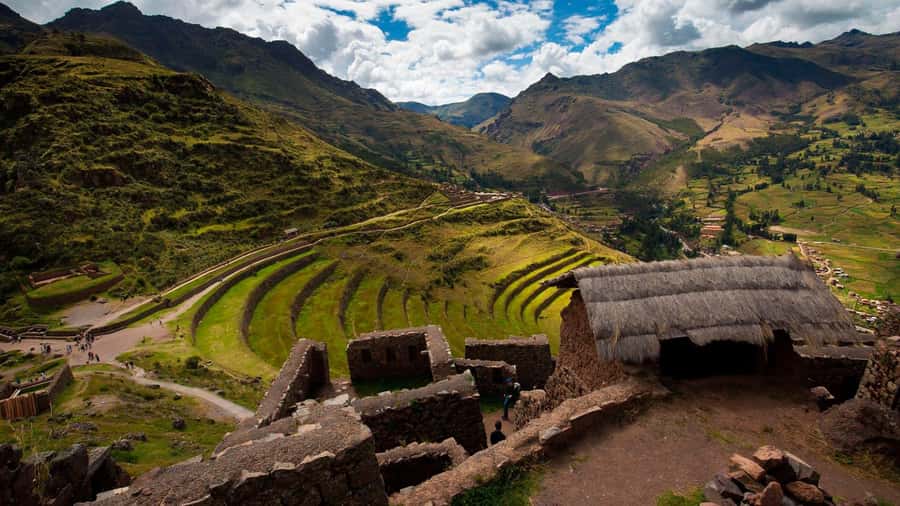
- Taray Viewpoint provides a wide Sacred Valley view, including the many agricultural terraces below.
- Sacsayhuaman is the major architectural stop, with enormous stone monuments close to Cusco.
- Q’enqo and Tambomachay show different sides of Inca religion, from ritual practices to water worship.
- Puka-Pukara is viewed panoramically, rather than described as a long exploration stop.
- The $77 price excludes admission, so foreign visitors should budget an additional S/ 70, about $18.70, for the archaeological sites.
Starting in Cusco and heading toward Pisac
The day begins with pickup at your hotel in Cusco’s historic center. If your hotel is outside that area, you receive a separate meeting point through prior coordination, so check this detail before booking.
Transport is by car or minibus. The tour is arranged as a private group, which gives you a more personal setting than a large coach excursion. That matters in Cusco, where a guide who can adjust explanations and answer questions is worth paying for.
The route first heads toward Pisac in the Sacred Valley. The experience information calls this a full-day tour, but the stated duration is six hours, so I would plan around the six-hour figure. You will visit several sites in a relatively compact schedule, with limited time for lingering.
A guide makes a real difference here. The strongest guide feedback came from Juan Carlos, a trained archaeologist who explained the sites with a clear, evidence-based approach. He was praised for answering difficult questions and for making complicated subjects easier to follow. Jessica also received warm praise as both driver and guide, with special credit for her kindness and ability to handle a booking problem.
Guide quality can vary from one departure to another, but these comments point to the value of asking questions. If you are curious about construction methods, ritual use, or the Spanish conquest, speak up. This is not just a transport service with a few facts added along the way.
More Inca Ruins & Archaeology in Cusco
- Cusco: Half-Day City Tour with Sacsayhuaman and Q’enco
★ 4.6 · 1,129 reviews - City Tour Cusco Qoricancha Sacsayhuaman y Tambomachay
★ 4.7 · 617 reviews - Cusco City Sightseeing, San Pedro Market, Cathedral and Qorikancha Temple
★ 4.5 · 139 reviews
Pisac market and the town’s local character
Pisac gives the outing its most obvious change of mood. You can walk through the town, browse artisan stalls, and visit the famous market before touring the archaeological park.
The market is useful for seeing the commercial side of the Sacred Valley. It is a place to look at local crafts and get your bearings in a town that still functions as a community, not only as a tourist stop. You may find textiles, souvenirs, and handmade goods, though the exact stalls and atmosphere can change by day.
I like having the town visit paired with the ruins. If you only visit an archaeological site, it can feel detached from present-day life. In Pisac, you first see a working town and market, then learn how the surrounding slopes were shaped and used by the Incas.
The market can also be the most distracting part of the visit. If you enjoy shopping, it is easy to spend your available time browsing. Keep an eye on the schedule, since the tour still needs to cover the archaeological park and the sites near Cusco.
You should also remember that the tour does not list shopping time as a separate, fixed portion of the itinerary. Treat the market as part of the guided visit, not as an open-ended shopping session.
Pisac Archaeological Park and the terraces below
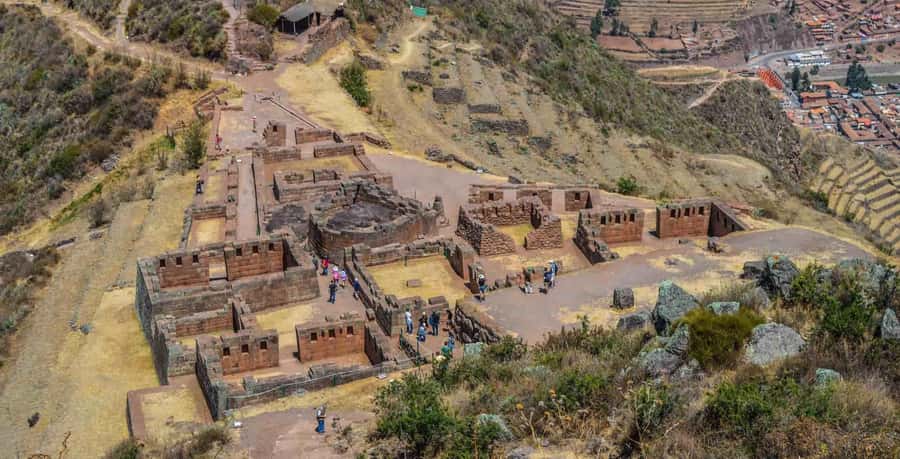
Before leaving Pisac, you receive a guided tour of the archaeological park. It is described as one of the important sites in the Sacred Valley, and the surrounding terraces are a major reason it deserves attention.
The terraces are not simply scenic decoration. They show the scale of Inca agricultural planning and the effort required to use steep mountain slopes. At this point, listen for how your guide explains the relationship between the settlement, the cultivated land, and the wider valley.
Pisac is especially rewarding for visitors who want context. You see stonework and agricultural terraces, but you also gain a sense of how a major Inca site fit into the larger Sacred Valley. Juan Carlos’s archaeological training would be particularly useful here, since the site invites questions about purpose and construction.
The practical issue is footing. The tour specifically recommends comfortable shoes and clothing for walking. The information does not give a precise walking distance or terrain description, so you should expect uneven surfaces and take care on steps and stone paths.
If you have back problems, this tour is not recommended. It is also not suitable for wheelchair users. Those limits are important because the itinerary includes several archaeological sites, not just viewpoints beside the road.
Taray Viewpoint and the Sacred Valley
On the way back toward Cusco, the tour stops at Taray Viewpoint. This is your chance to see the Sacred Valley from above and appreciate the large number of agricultural terraces spread through the area.
The viewpoint gives the day a useful pause between Pisac and the Cusco ruins. After walking through town and the archaeological park, you can step back and see the valley as a whole. I find this kind of stop helps connect the separate pieces of an ancient site to the broader setting.
Bring your camera, but do not forget to simply look. The appeal here is the wide view and the pattern of terraces, not a long list of structures to inspect. Weather can change, so a hat, sunscreen, and water remain sensible even if the morning begins cool.
The viewpoint is also a good place to ask your guide to explain what you are seeing. A broad view can be hard to read without help. With context, the terraces become evidence of planning and labor rather than just attractive lines on a mountain slope.
More Sacred Valley Tours in Cusco
- From Cusco: Sacred Valley & Maras Salt Mines Tour with Lunch
★ 4.8 · 2,227 reviews - From Cusco: Moray, Maras Salt Mines & Chinchero Weavers Tour
★ 4.8 · 1,925 reviews - Cusco: Sacred Valley, Pisac, Ollantaytambo, Salt Mines Moray
★ 4.6 · 1,058 reviews - Cusco:Chinchero,Moray & Salt Mines drop-off in Ollantaytambo
★ 4.8 · 793 reviews
Sacsayhuaman, Cusco’s monumental stonework
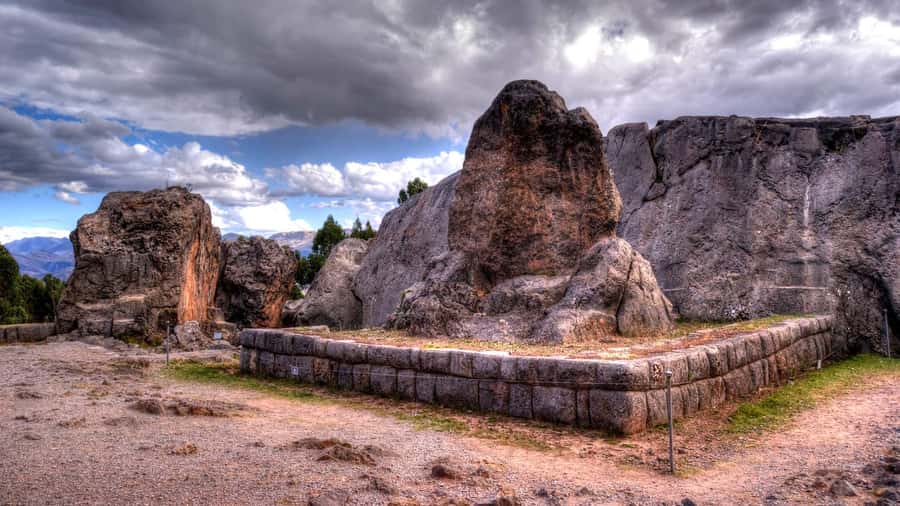
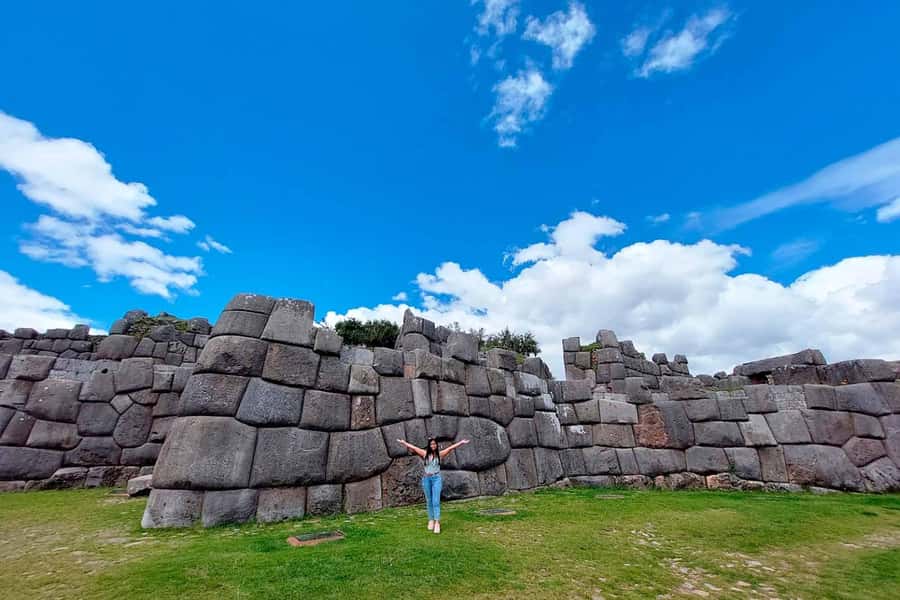
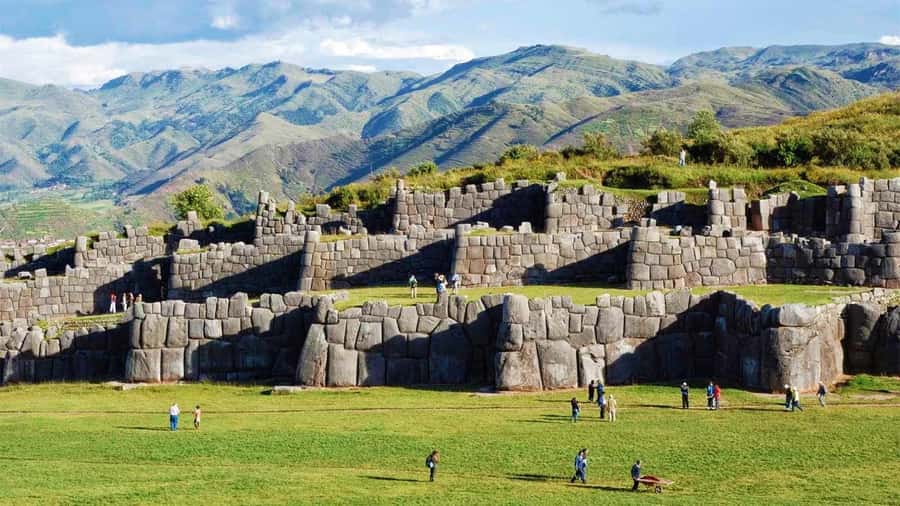
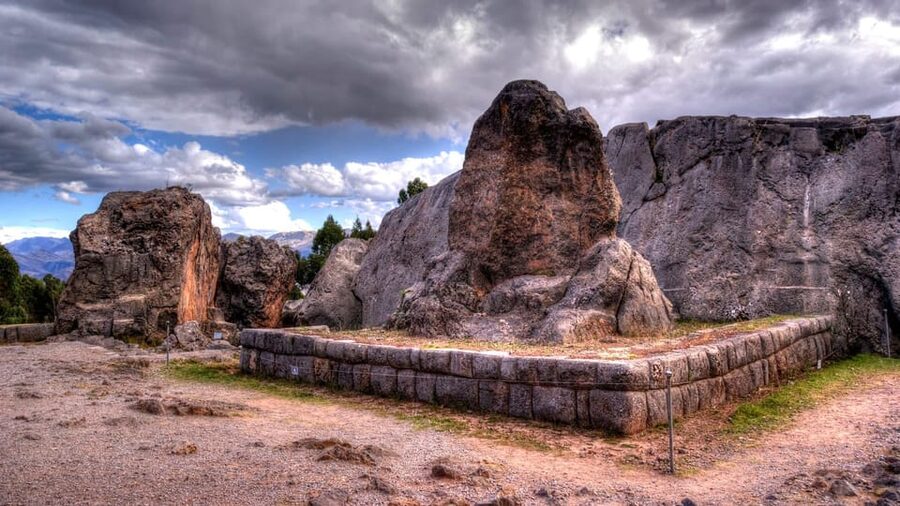
The ruin visits around Cusco begin with Sacsayhuaman, described as a ceremonial fort made of stone monuments. It is likely to be the most visually imposing stop of the day.
The scale of the stones is the main event. Your guide can add the historical framework, including the Inca period and the Spanish conquest, so you are not left with only an impressive wall and a camera full of photographs.
Sacsayhuaman works well late in this itinerary because you have already received some background in Pisac and at the viewpoint. You can compare the site with the construction and planning seen in the Sacred Valley.
Do not expect a quiet, private examination of every corner. This is one of the best-known sites near Cusco, and the six-hour schedule includes four stops in the Cusco area. The benefit is breadth. The tradeoff is that you may need to keep moving.
Your guide’s explanation matters most here. A strong guide can help you distinguish ceremonial use from military interpretation and explain what changed after the Spanish conquest. The supplied guide feedback gives reason to value that human explanation. Juan Carlos was praised for precision, while Jessica was praised for her personal care and clear handling of the day.
Q’enqo and the ritual side of Inca belief
Q’enqo is presented as a ritual site where sacrifices once took place. It offers a different experience from the grand stonework of Sacsayhuaman.
This stop is less about a sweeping view and more about interpreting carved stone, spaces, and ceremony. I would pay close attention to the guide’s wording here. Archaeological sites can attract simple claims, while the evidence and interpretation may be more complex.
That is another reason a guide with a careful approach is valuable. You can ask what is known, what is inferred, and how the site fits into Inca religious practice. The information supplied for Juan Carlos specifically praises his logical, evidence-based explanations, a useful quality at a ritual site.
Q’enqo also adds variety to the route. Sacsayhuaman shows monumental construction. Q’enqo turns your attention to belief and ritual. Together, they make the history feel less one-dimensional.
Again, comfortable footwear is important. The tour is not designed for wheelchair users, and people with back problems are advised not to participate. You should be ready for walking and changing ground conditions.
Tambomachay and the worship of water
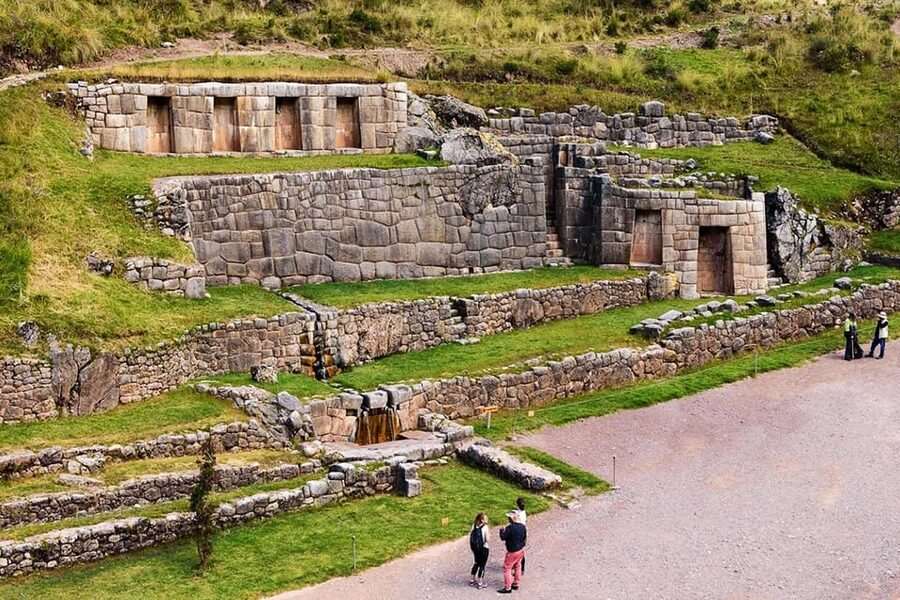
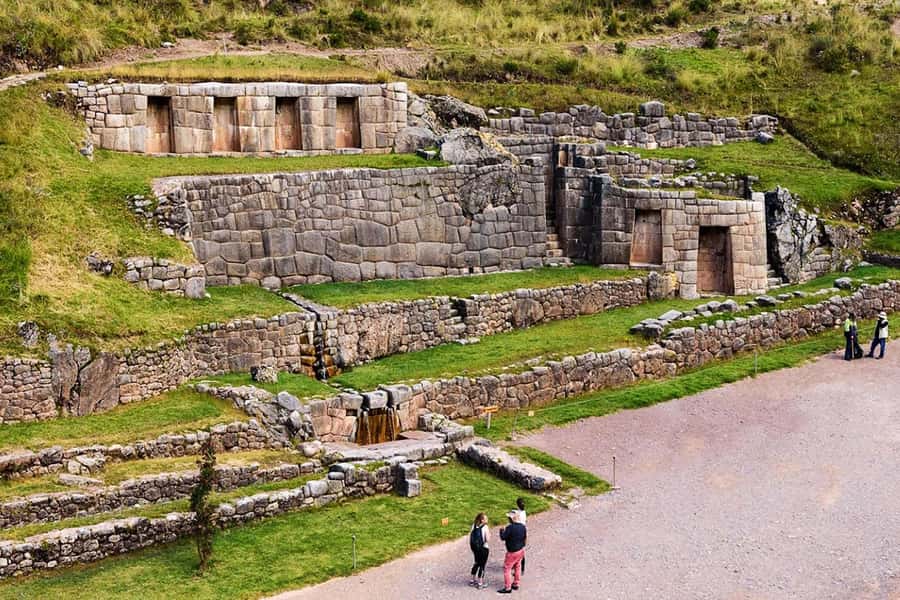
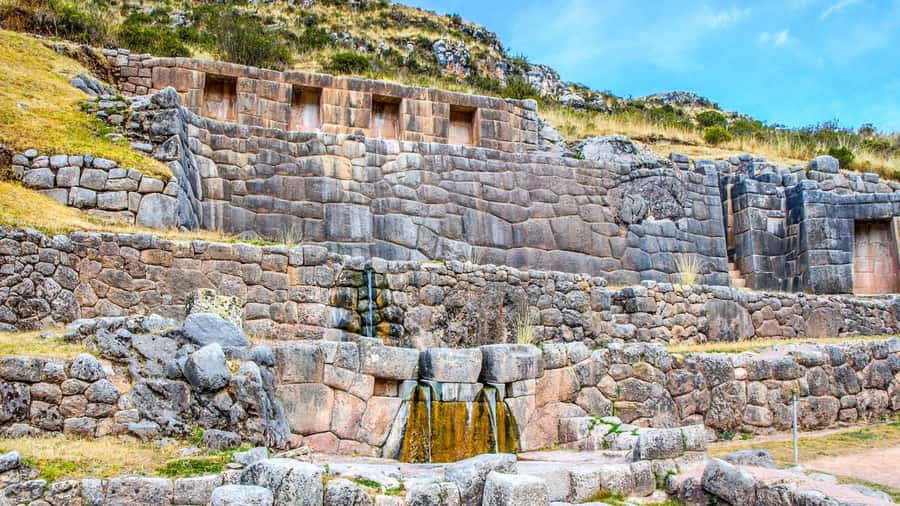
Tambomachay is described as a temple dedicated to the worship of the God of Water. It is a quieter kind of stop in the itinerary, focused on water, stone channels, and religious meaning rather than sheer size.
This site helps explain why water held such importance in Inca culture. Your guide can connect the physical features of the temple with its ceremonial purpose, giving you something to look for beyond the stones themselves.
I like that Tambomachay follows Q’enqo. The two stops provide a useful contrast between ritual activity and water worship. If you rush through them as a group of ruins, they may blur together. Ask your guide to explain what makes each site different.
The schedule may not allow a long, reflective visit. Six hours covers Pisac, the viewpoint, and four sites near Cusco, including the final panoramic view of Puka-Pukara. You will get an overview, but a specialist interested in Inca religion may prefer a longer, more focused archaeological outing.
Puka-Pukara from the panoramic viewpoint
The final site is Puka-Pukara, an ancient tambo, or guard post, along the Inca roads. The tour offers a panoramic view rather than promising an extended walk through the ruins.
That distinction is useful when setting expectations. Puka-Pukara is part of the route’s wider story of roads, movement, and protection. You see how the Inca network included places connected with travel and control, not only temples and ceremonial centers.
The panoramic stop also gives you one last chance for photographs before returning to Cusco. It is a compact finish to a day that has moved from market streets to terraces, monumental walls, ritual spaces, water worship, and road infrastructure.
If you want to study Puka-Pukara in detail, this tour may feel too brief. If you want to understand how several nearby sites fit into a larger system, the stop earns its place.
What the $77 price really covers
The advertised price is $77 per person. That includes hotel pickup and drop-off, transport by car or minibus, and an English or Spanish-speaking guide.
Admission is not included. Foreign visitors pay S/ 70, about $18.70, per person, while Peruvians pay S/ 40, about $10.70. For a foreign visitor, the practical total is therefore about $95.70 per person before any optional spending in Pisac.
That is a fair value if you want one organized outing covering Pisac and the main ruins near Cusco. You are paying for transport between scattered sites, a private group arrangement, and guided interpretation. It can also save you the trouble of arranging separate rides and working out the route yourself.
The value depends heavily on the guide and the vehicle. One booking involving four adults had a vehicle that was not comfortable for the group, despite the reservation being made for four people. The driver and guide, Jessica, was praised for making up for that problem, but the transport issue is still worth raising before you go.
If four adults are booking together, confirm the vehicle size and seating arrangement. The listing allows a car or minibus, but it does not promise a specific vehicle type. That small check could make a major difference during a six-hour outing.
Who will enjoy this six-hour route?
I would recommend this experience if you want a broad introduction to the Sacred Valley and Cusco’s nearby Inca sites in one day. It is especially suitable for first-time visitors, history-minded visitors, and anyone who prefers a guide to explain what they are seeing.
It is also a good fit if you value a private group rather than a large shared coach. You can ask questions directly, and the guide can give more attention to your interests.
You may want a different plan if you prefer slow travel. The route covers many locations, and the duration is fixed at six hours. You should not book it expecting long shopping time in Pisac or a detailed archaeological study of every site.
It is not suitable for wheelchair users or people with back problems. You should also be comfortable walking in changing weather and on archaeological ground.
For clothing, keep it simple: comfortable shoes, light clothing suited to walking, a hat, sunscreen, and water. Bring a camera if you want to record the valley views, terraces, stonework, and Puka-Pukara panorama. Smoking is not allowed during the activity.
The tour offers free cancellation up to 24 hours before departure and allows you to reserve now and pay later. Those options help if your Cusco schedule is still moving, but the key practical questions remain the vehicle size, pickup location, language, and entrance fee.
Should you book the Pisac and ruins tour?
Book it if you want a well-packed introduction to Pisac, the Sacred Valley, and the four major sites around Cusco. The combination is strong, the guide can add real value, and the private-group format is a useful advantage.
I would be most inclined to book when the operator can confirm a suitable vehicle and a guide with strong archaeological background. Juan Carlos received exceptional praise for his precise explanations, while Jessica was praised for both guiding and caring for the group when transport arrangements went wrong.
Skip it if you need wheelchair access, have back problems, or want a relaxed day with long stops. Also budget the separate S/ 70 foreign admission fee. With that added cost and the six-hour pace in mind, this is best viewed as an efficient, information-filled day rather than a leisurely outing.
FAQ
How long does the tour last?
The stated duration is six hours. The experience is described as a full-day outing, but you should plan according to the six-hour duration.
What places does the tour visit?
The itinerary includes Pisac town and market, the Pisac archaeological park, Taray Viewpoint, Sacsayhuaman, Q’enqo, Tambomachay, and a panoramic view of Puka-Pukara.
Is hotel pickup included?
Yes. Pickup and drop-off are included for hotels in Cusco’s historic center. If your hotel is farther away, a meeting point is arranged in advance.
Are entrance tickets included?
No. Foreign visitors pay S/ 70, about $18.70, per person. Peruvian visitors pay S/ 40, about $10.70, per person.
What is included in the $77 price?
The price includes hotel pickup and drop-off, transport by car or minibus, and an English or Spanish-speaking guide.
What languages are available?
The tour is offered with a live guide in English or Spanish.
Is this a private tour?
Yes. The activity is organized as a private group.
What should I bring?
Bring comfortable shoes, a hat, sunscreen, water, and a camera. You should also wear clothing suitable for walking and changing weather conditions.
Is the tour suitable for wheelchair users?
No. The tour is not suitable for wheelchair users.
Can I cancel the booking?
Yes. You can cancel up to 24 hours in advance for a full refund. The tour also offers a reserve-now, pay-later option.
More Inca Sites and Ruins
- Cusco: 3-Hour Horse Riding Tour to the Temple of the Moon
★ 5.0 · 105 reviews - Cusco City Sightseeing and Sacsayhuaman Archeological Park Tour
★ 4.5 · 101 reviews - Cusco: Historical Guided City Tour with 4 Inca Ruins
★ 4.5 · 99 reviews - Horse Riding Chacan Mountain And Temple Of The Moon
★ 5.0 · 78 reviews
More of the Sacred Valley
- Sacred Valley: Chinchero, Moray, Ollantaytambo & Pisac+Lunch
★ 4.8 · 501 reviews - Sacred Valley: Maras & Moray by Quad Bike from Cusco
★ 4.6 · 418 reviews - Pisac Indian Market and Ollantaytambo Fortress with Lunch
★ 4.5 · 395 reviews - From Cusco: 2-Day Trip to the Sacred Valley and Machu Picchu
★ 4.6 · 265 reviews
Just added around Cusco
- Cusco: Rainbow Mountain and viewpoint red valley ( optional)★ 4.8 · 3 reviews
- Tour Pallay Punchu Trek Full Day★ 4.2 · 3 reviews
- Montaña de Colores: tour en cuatrimotos día completo★ 3.3 · 3 reviews
- Excursion Cusco – Puno – Titicaca Observatory Train★ 5.0 · 3 reviews
- Cusco: Palcoyo Mountain Day Trip with Breakfast and Lunch★ 4.8 · 3 reviews
- Maras Moray★ 5.0 · 3 reviews
- Tour to Laguna Humantay with breakfast and lunch from Cusco★ 4.7 · 3 reviews
- From Cusco:Chinchero, Moray, Maras, Ollantaytambo with lunch★ 5.0 · 3 reviews
Sacred Valley Tours, compared.
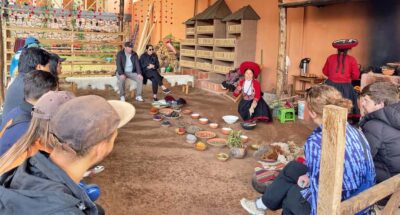
Sacred Valley & Maras Salt Mines Tour with Lunch
Read our review →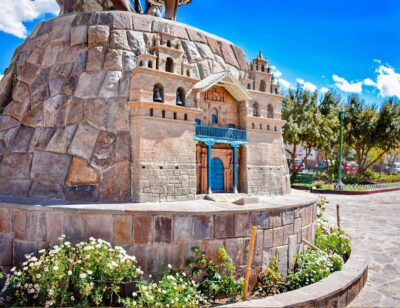
Moray, Maras Salt Mines & Chinchero Weavers Tour
Read our review →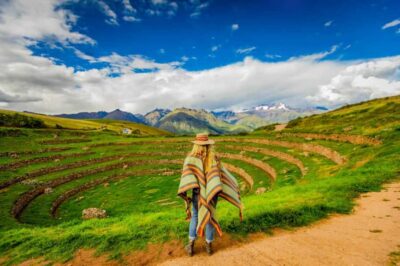
Sacred Valley, Pisac, Ollantaytambo, Salt Mines Moray
Read our review →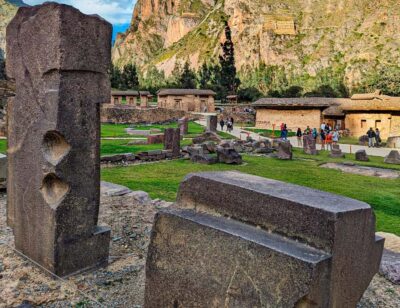
Chinchero,Moray & Salt Mines drop-off in Ollantaytambo
Read our review →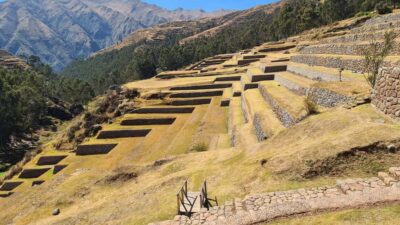
Sacred Valley: Chinchero, Moray, Ollantaytambo & Pisac+Lunch
Read our review →
Sacred Valley: Maras & Moray by Quad Bike from Cusco
Read our review →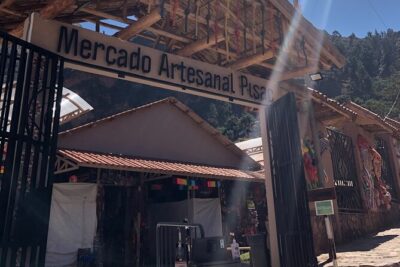
Pisac Indian Market and Ollantaytambo Fortress with Lunch
Read our review →
2-Day Trip to the Sacred Valley and Machu Picchu
Read our review →Browse the lists this tour appears in