
Reviewed · SACRED VALLEY TOURS
Cusco: Full-Day Sacred Valley History Tour
The Sacred Valley packs a lot into one day. This 11-hour tour links Písac, Urubamba, Ollantaytambo, and Chinchero, giving you broad views, Inca ruins, Quechua textile traditions, and a buffet lunch without arranging separate transport. I especially like the strong mix of archaeology and living culture, plus the small group size of up to 15 people.
Guides such as Eddy and Manuel have been praised for clear bilingual explanations and solid knowledge of Cusco, Inca culture, and local customs. The main drawback is the long day and sometimes untidy start: pickup can run late, and the van may spend time gathering passengers before leaving Cusco.
In This Review
- Key points to know before booking
- Why this Sacred Valley day trip works
- Starting in Cusco and climbing toward El Mirador
- Písac combines terraces, stonework, and a famous market
- Urubamba brings a needed lunch break
- Following the Urubamba River to Ollantaytambo
- Chinchero shows a living Quechua tradition
- Guides and group size make a real difference
- What the $45 price really includes
- Who should book this tour
- FAQ
- How long is the Sacred Valley tour?
- Where does pickup take place?
- Where does the tour end?
- Which languages does the guide speak?
- How many people are in the group?
- Is lunch included?
- Are entrance fees included?
- What should I bring?
- Is the tour suitable for wheelchair users?
- Can I cancel the booking?
- Should you book the Cusco Sacred Valley tour?
Key points to know before booking
- Four major Sacred Valley stops: You visit the Písac area, Urubamba, Ollantaytambo, and Chinchero in one long circuit.
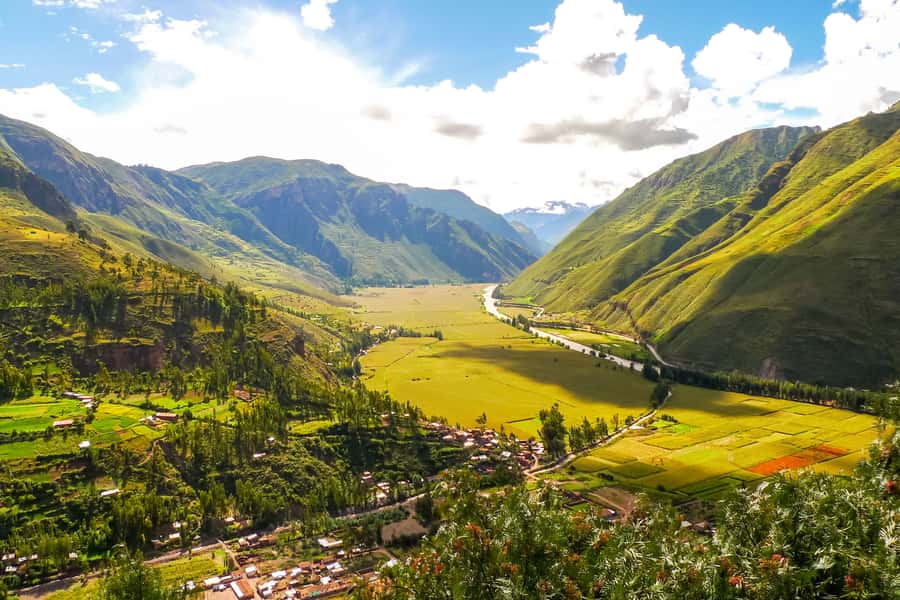
- A useful first viewpoint: El Mirador gives you a broad introduction to the valley, its fertile plains, terraces, and irrigation channels.
- Living Quechua traditions: Chinchero offers a look at natural dyes and textile making, with alpaca and sheep wool products available for purchase.
- Lunch is included, but allow time: The Urubamba buffet is convenient, though its quality has been described as plain and the meal may take longer than expected.
- Small group, bilingual guide: The vehicle holds no more than 15 participants, with guiding in English and Spanish.
- Budget price with an important extra: The $45 fare includes transport and lunch, but the S/70 tourist ticket is not included unless you select an option that covers site entrances.
Why this Sacred Valley day trip works
The Sacred Valley is one of the best day trips from Cusco because it gives you a different view of Inca life. Cusco is a high Andean city built around temples, stone streets, and Spanish colonial buildings. The valley below offered the Incas something vital: fertile plains in a high mountain region.
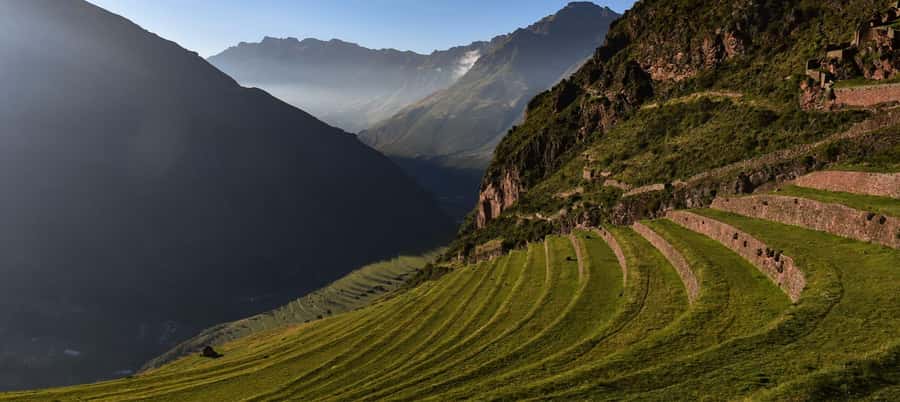
That agricultural advantage explains much of what you see during the day. Inca terraces climb the slopes, irrigation channels carry water, and settlements sit near the Urubamba River. This is not just a string of ruins. The valley shows how the Incas used farming, engineering, religion, and local communities together.
At $45 per person, the tour is priced for convenience rather than luxury. You get hotel pickup in Cusco’s historic center, round-trip transport, a bilingual guide, and buffet lunch. That is useful value when you want to cover several widely separated places in one day.
The trade-off is pace. Four important stops, plus meals and driving, make for a full schedule. You will see a lot, but you will not have unlimited time at each site. If you want quiet photography, long walks, or a slow visit to every ruin, a private tour would give you more control.
More Historical Tours in Cusco
- Cusco: Historical Guided City Tour with 4 Inca Ruins
★ 4.5 · 99 reviews - Machu Picchu Private Archaeological and Historical Guided Tour
★ 5.0 · 86 reviews - 6-Day Cultural Tour to Machu Picchu
★ 5.0 · 76 reviews
Starting in Cusco and climbing toward El Mirador
Pickup is scheduled around 7:30 in the morning from hotels in Cusco’s historic center. In practice, allow patience at the start. The vehicle may collect several people from different hotels, and one account describes nearly an hour lost before the tour properly got moving.
That delay matters because the day already runs until about 7:00 in the evening. If your pickup time is 7:30, be ready early, but do not worry if the van does not leave immediately. Confirm the meeting details with the provider and keep water and a small snack handy for the first part of the morning.
The road winds around the mountains north of Cusco. Your guide can use this drive to explain Cusco, the Inca world, and the communities of the region. Guides Eddy and Manuel were singled out for their explanations, and a good bilingual guide is especially valuable here because much of the context comes while you are riding.
The first stop is El Mirador, or the Lookout Point. From here, you can see the Sacred Valley spread below the mountains. The view helps you understand why the Incas valued this area. Instead of seeing only steep Andean slopes, you can pick out fertile plains, terraces, and the broad route of the valley.
This is also a smart first stop in terms of storytelling. The guide can explain how the Incas shaped farmland with contour terraces and irrigation channels. The stonework later in the day is impressive, but this viewpoint shows the wider system that made Inca settlements possible.
Písac combines terraces, stonework, and a famous market
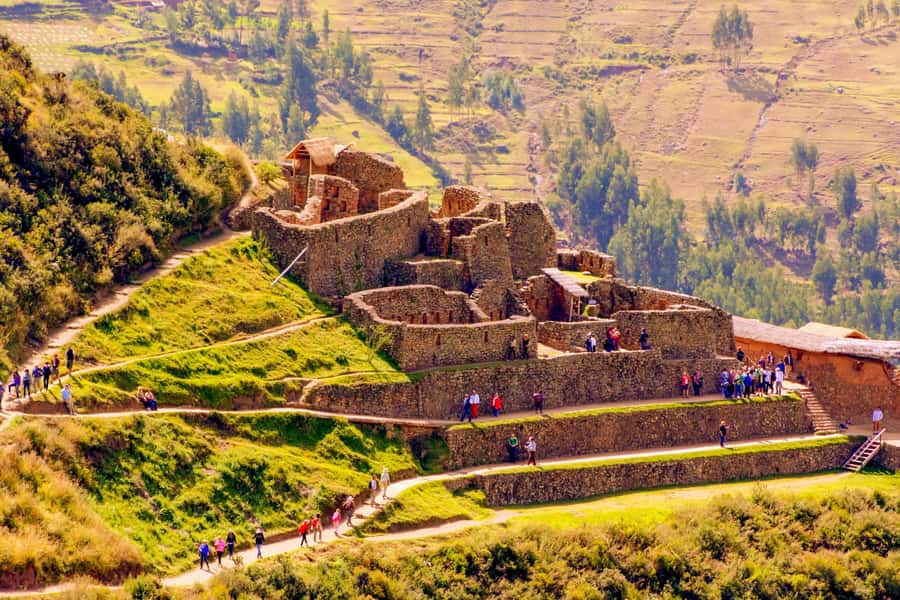
The Písac portion of the day brings together an archaeological site and a colorful market tradition. At the ruins, you can see impressive agricultural terraces and carefully fitted stone construction. The terraces are not decorative. They show how the Incas turned difficult mountain slopes into productive farmland.
Your guide will explain aspects of Inca culture and point out stone art and construction details. This is one of the places where a guide adds real value. Without context, terraces can look like broad green steps and walls can blur together. With an explanation of their farming and cultural role, the site becomes easier to read.
The market is another reason Písac appeals to first-time visitors. Expect a more commercial setting than at Chinchero, with colorful handmade goods and local crafts. One stop includes a look at Inca jewelry techniques, adding a small but useful connection between ancient design and modern artisan work.
Keep your expectations measured. A market stop is not the same as visiting a remote village with no tourist activity. It is a chance to browse, compare textiles and jewelry, and buy something if you like the piece. Take your time, but remember that the group must stay on schedule.
Písac is also a good place to watch your footing. The tour recommends comfortable shoes, and that advice applies throughout the day. Ruined walls, terraces, and uneven paths are part of the experience. This tour is not suitable for wheelchair users.
Urubamba brings a needed lunch break
After Písac, the vehicle continues to Urubamba for a buffet lunch. The meal is included, which makes the day easier and keeps you from having to search for food in an unfamiliar town.
The buffet has received mixed practical feedback. The restaurant setting can be attractive, but the food may seem bland or underwhelming if you are hoping for a memorable meal. One schedule placed lunch from about 1:30 to 2:45, and that felt too late and too long for some people who were already hungry.
I would treat lunch as a functional pause, not a culinary highlight. Eat enough to keep going, but do not build your expectations around a special Andean feast. A small snack in your day bag is sensible, especially if the morning pickup or Písac visit runs behind.
The length of the meal also affects your time at the later sites. A full hour gives the group a chance to eat and regroup, but a shorter lunch would leave more room for Ollantaytambo and Chinchero. If your priority is archaeology, note this part of the schedule before booking.
More Sacred Valley Tours in Cusco
- From Cusco: Sacred Valley & Maras Salt Mines Tour with Lunch
★ 4.8 · 2,227 reviews - From Cusco: Moray, Maras Salt Mines & Chinchero Weavers Tour
★ 4.8 · 1,925 reviews - Cusco: Sacred Valley, Pisac, Ollantaytambo, Salt Mines Moray
★ 4.6 · 1,058 reviews - Cusco:Chinchero,Moray & Salt Mines drop-off in Ollantaytambo
★ 4.8 · 793 reviews
Following the Urubamba River to Ollantaytambo
After lunch, the route follows the Urubamba River toward Ollantaytambo. The drive itself is part of the appeal. You are not simply being shuttled between attractions; you are seeing how the valley’s settlements and farmland follow the river corridor.
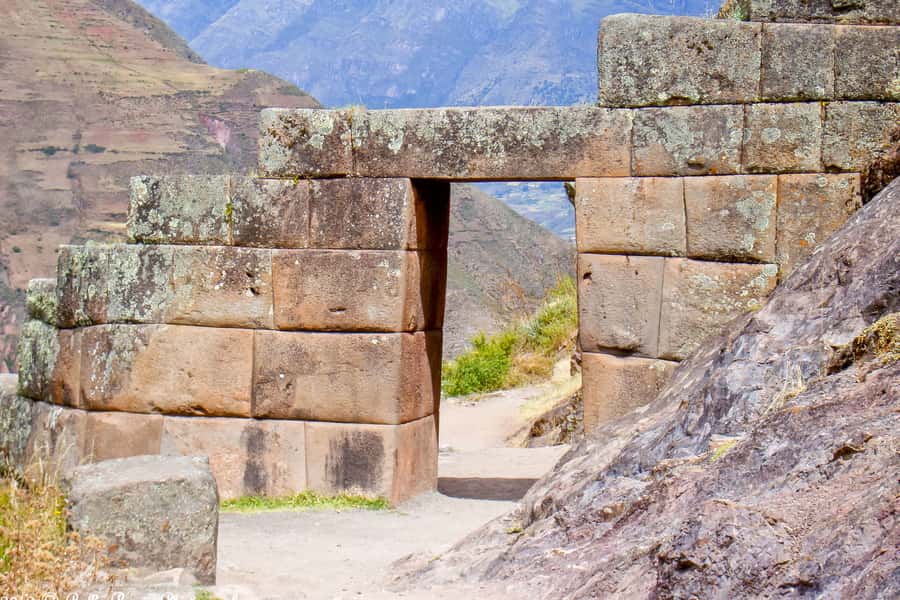
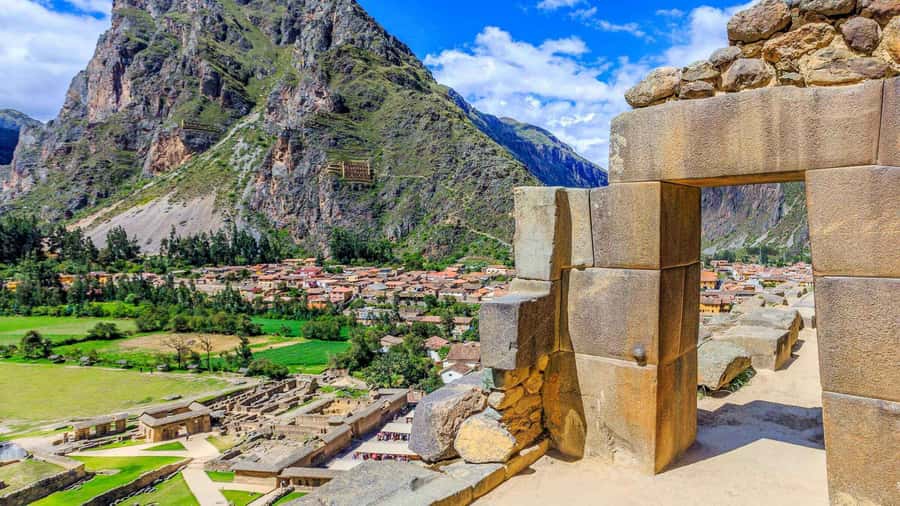
Ollantaytambo is the strongest archaeological stop on this route. The town and ruins preserve an important center of Inca construction from the height of the empire. Massive stonework, terraces, and mountain surroundings give the site a scale that is hard to grasp from photographs.
The ruins also connect architecture with Inca belief. Rock formations at the site are associated with Wiracocha, an important Inca god. Your guide can help you understand how religious ideas shaped the placement and design of the site.
There is one logistical point to watch. Not everyone in the vehicle may be following the same plan after Ollantaytambo. Some participants may have booked transport onward by train to Machu Picchu, while others continue to Chinchero and then return to Cusco. That means the group can change during the day.
For you, this can be either useful or confusing. If you are continuing to Chinchero, listen carefully when the guide explains the meeting point and departure time. If your own trip includes a train from Ollantaytambo, confirm the exact arrangement before booking this full-day version.
Chinchero shows a living Quechua tradition
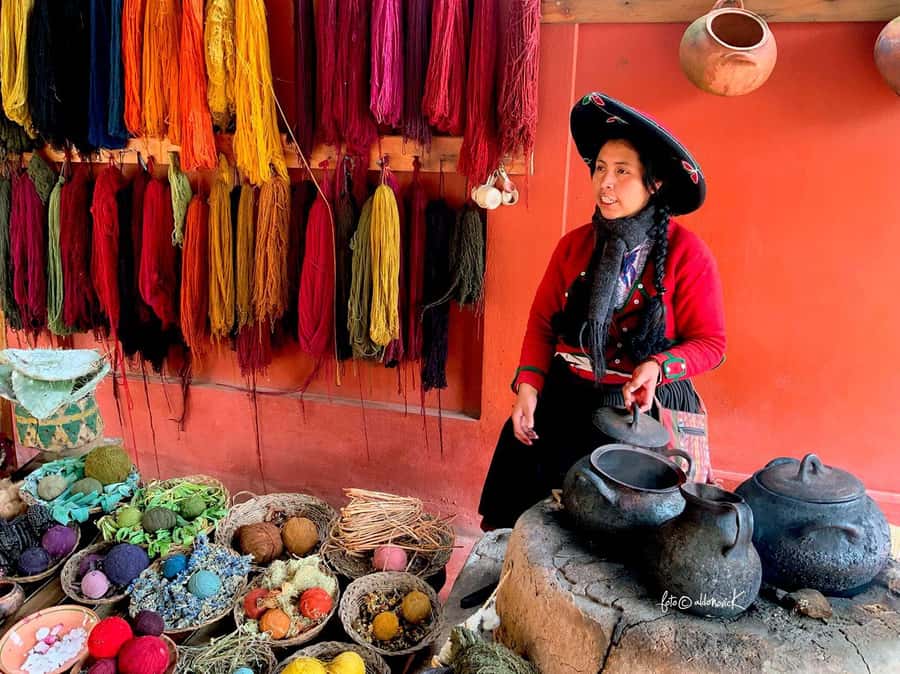
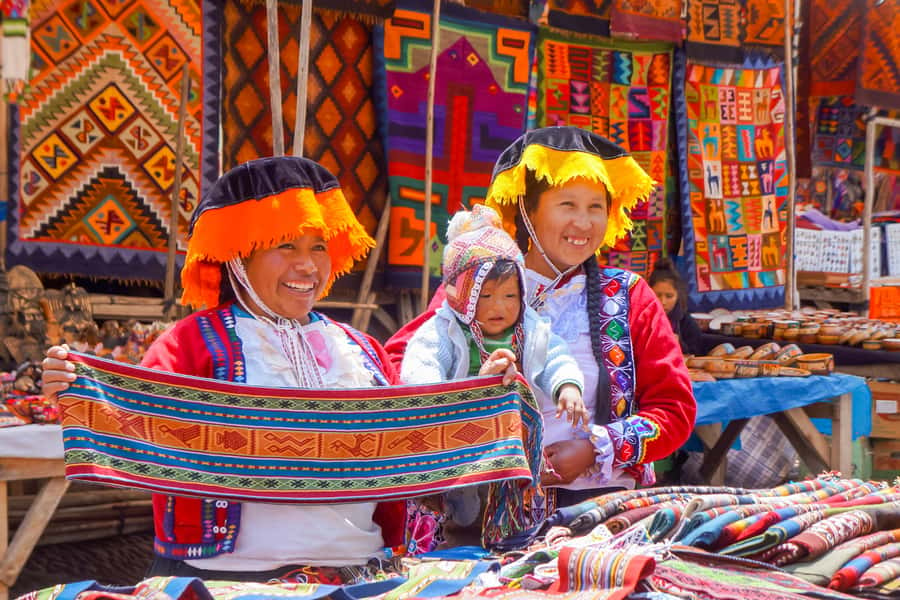
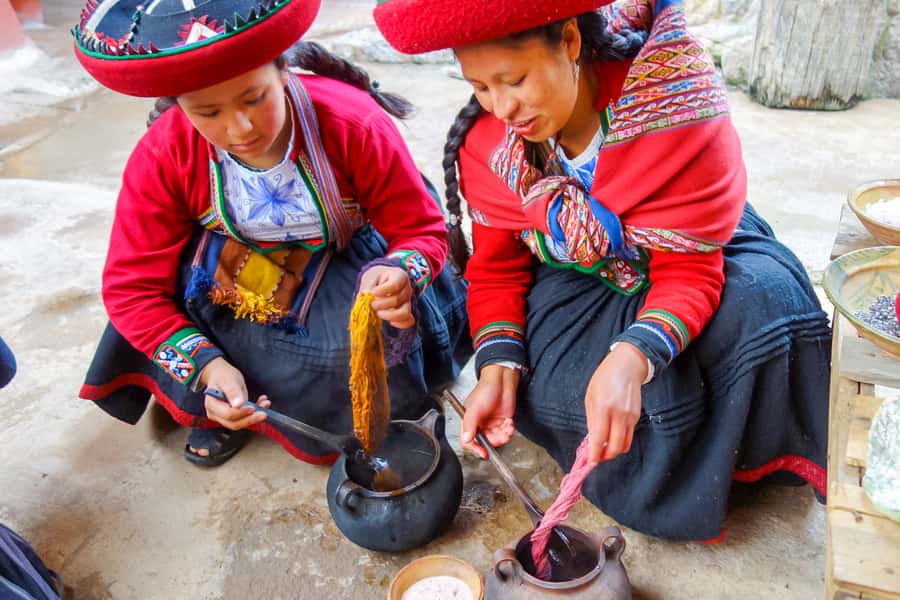
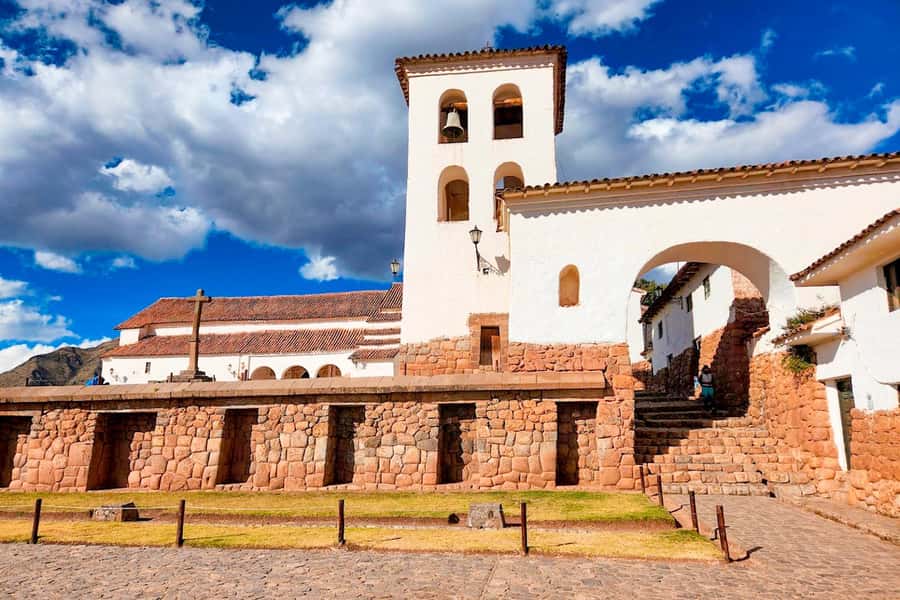
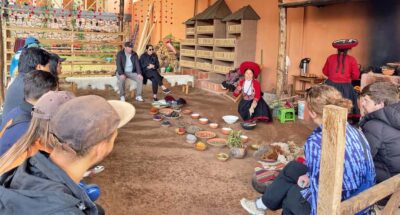
Chinchero gives the tour its clearest look at present-day cultural practice. Here, you learn how natural dyes are made and how artisans produce textiles using techniques associated with Inca traditions.
The stop focuses on alpaca and sheep wool, dyeing, and knitting. You may see how colors are created from natural materials before the wool is worked into cloth. The value is not just in watching a demonstration. You get a better sense of the labor behind the multicolored clothing and woven goods found throughout the Cusco region.
Chinchero is described as a place where residents maintain age-old customs, live in traditional-style dwellings, and speak Quechua. That makes it a useful counterpoint to the stone ruins at Písac and Ollantaytambo. The Inca past is not locked behind a wall here. Elements of language, dress, craft, and community life continue into the present.
Bring cash if you hope to buy textiles. Alpaca goods can be beautiful and practical, but take a moment to check what you are buying and choose a piece you genuinely want. The tour gives you access to the craft tradition, but you are not required to purchase anything.
Chinchero is often the most personal stop of the day. The ruins explain state power and engineering. The textile demonstration shows how knowledge passes through families and communities.
Guides and group size make a real difference
The tour uses a bilingual English and Spanish guide, and the quality of the commentary matters because there is a lot of driving. A guide who can explain the valley clearly turns travel time into part of the experience rather than dead time.
Eddy has been praised for discussing the history of Cusco, its people, and local culture while traveling between stops. Manuel has also been praised for clear explanations and for connecting visits to jewelry, archaeological sites, and alpaca and sheep textiles.
You should still expect the tour to serve both language groups. If most of the group speaks Spanish, each explanation may be given in both languages, which can lengthen talks. One English-speaking pair found themselves in a mostly Spanish-speaking group, but considered the guide’s bilingual work very good.
The group limit is 15 people. That is small enough to feel more manageable than a large coach tour, though it is not intimate. Pickup from multiple hotels can create a slow beginning, and the vehicle may carry people with different onward plans.
At the end of the day, the tour drops you at Plaza Regocijo rather than returning you directly to your hotel. That central location is convenient for reaching the historic center, but you should plan for the final walk or local ride yourself.
What the $45 price really includes
The $45 price makes sense if you want broad coverage at a modest cost. Transport is the major benefit. Písac, Urubamba, Ollantaytambo, and Chinchero are spread across the valley, and arranging all four independently would require more planning and transport expense.
The buffet lunch is included, as is pickup from hotels in the historic center. The bilingual guide adds the most value at the archaeological sites, where the meaning of terraces, stonework, and religious features is not always obvious.
Read the ticket terms closely. The S/70 tourist ticket is listed as an additional cost, while entrances to the ruins are included if you select the appropriate option. Do not assume every $45 booking includes every entrance. Confirm which version you are buying before payment.
The reserve-now, pay-later option can help if your Cusco plans are still shifting. Free cancellation is available up to 24 hours before the tour for a full refund. These terms are useful, but the main booking decision is still about pace: you are paying for a wide overview, not a slow archaeological study.
Who should book this tour
I would choose this tour if you have one free day in Cusco and want to see the Sacred Valley without handling several transfers. It suits first-time visitors, budget-minded couples, solo visitors comfortable in a small group, and anyone who wants both Inca sites and current Quechua craft traditions.
It also suits you if you value explanation. The best part of the day is not simply reaching each stop. It is learning why the terraces mattered, how the river supported settlement, and how textile skills remain part of local life.
Think twice if you dislike early starts, long drives, mixed-language commentary, or fixed meal stops. You should also consider another arrangement if you need wheelchair access, want to spend a long time at one ruin, or have a strict train schedule from Ollantaytambo.
Bring comfortable shoes, water, sun protection, and a snack. Cash is useful at Chinchero if you want alpaca textiles. Keep your evening flexible because the advertised return is around 7:00 PM, and pickup delays can make the day feel even longer.
FAQ
How long is the Sacred Valley tour?
The tour lasts about 11 hours. Pickup is around 7:30 AM, with return to Cusco at approximately 7:00 PM.
Where does pickup take place?
Pickup is included from hotels in the historic center of Cusco.
Where does the tour end?
Drop-off is at Plaza Regocijo in Cusco.
Which languages does the guide speak?
The live guide provides commentary in English and Spanish.
How many people are in the group?
The tour is limited to 15 participants.
Is lunch included?
Yes. A buffet lunch in Urubamba is included.
Are entrance fees included?
Entrance fees are included if you select the option that covers them. The S/70 tourist ticket is otherwise listed as an additional cost, so check the selected option carefully.
What should I bring?
Comfortable shoes are specifically recommended. Cash is also useful if you want to purchase alpaca textiles in Chinchero.
Is the tour suitable for wheelchair users?
No. The tour is not suitable for wheelchair users.
Can I cancel the booking?
You can cancel up to 24 hours in advance for a full refund. A reserve-now, pay-later option is also available.
Should you book the Cusco Sacred Valley tour?
Book it if you want a practical one-day introduction to the Sacred Valley at a reasonable price. The combination of Písac terraces, Ollantaytambo stonework, the Urubamba River, and Chinchero textiles gives you a strong range of experiences, while the bilingual guides add useful context.
Go in prepared for a long day, a possible delay at pickup, a basic buffet, and limited time at each site. If those compromises suit you, this tour offers a lot for $45 and is a sensible way to see the valley beyond Cusco.
More History on the Ground
- Cusco: Historic Walking Tour with Pisco Sour and Music Show
★ 4.6 · 65 reviews - Pisco Sour Secrets: Hands-On Mixology in Historic Cusco
★ 4.5 · 50 reviews - Machu Picchu: historical and photographic guided tour
★ 4.9 · 27 reviews - Historic/music Cusco FreeWalkingTour “free drink” Group Tour
★ 4.9 · 11 reviews
More of the Sacred Valley
- Sacred Valley: Chinchero, Moray, Ollantaytambo & Pisac+Lunch
★ 4.8 · 501 reviews - Sacred Valley: Maras & Moray by Quad Bike from Cusco
★ 4.6 · 418 reviews - Pisac Indian Market and Ollantaytambo Fortress with Lunch
★ 4.5 · 395 reviews - From Cusco: 2-Day Trip to the Sacred Valley and Machu Picchu
★ 4.6 · 265 reviews
Just added around Cusco
- Cusco: Rainbow Mountain and viewpoint red valley ( optional)★ 4.8 · 3 reviews
- Montaña de Colores: tour en cuatrimotos día completo★ 3.3 · 3 reviews
- Tour Pallay Punchu Trek Full Day★ 4.2 · 3 reviews
- Excursion Cusco – Puno – Titicaca Observatory Train★ 5.0 · 3 reviews
- Cusco: Palcoyo Mountain Day Trip with Breakfast and Lunch★ 4.8 · 3 reviews
- Maras Moray★ 5.0 · 3 reviews
- Tour to Laguna Humantay with breakfast and lunch from Cusco★ 4.7 · 3 reviews
- From Cusco:Chinchero, Moray, Maras, Ollantaytambo with lunch★ 5.0 · 3 reviews
Sacred Valley Tours, compared.
Sacred Valley & Maras Salt Mines Tour with Lunch
Read our review →
Moray, Maras Salt Mines & Chinchero Weavers Tour
Read our review →
Sacred Valley, Pisac, Ollantaytambo, Salt Mines Moray
Read our review →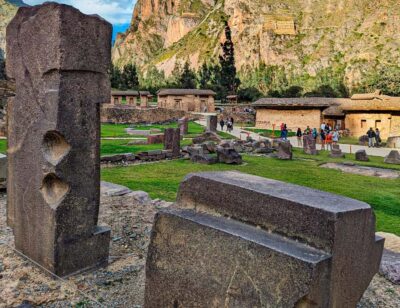
Chinchero,Moray & Salt Mines drop-off in Ollantaytambo
Read our review →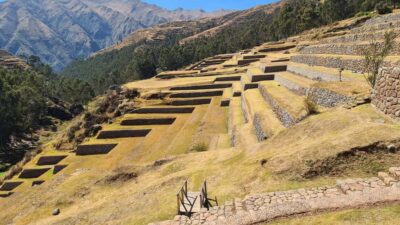
Sacred Valley: Chinchero, Moray, Ollantaytambo & Pisac+Lunch
Read our review →
Sacred Valley: Maras & Moray by Quad Bike from Cusco
Read our review →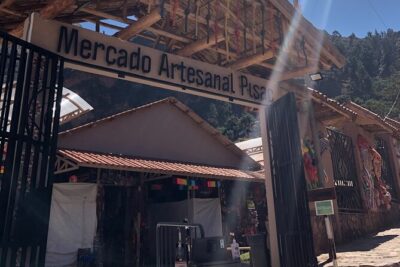
Pisac Indian Market and Ollantaytambo Fortress with Lunch
Read our review →
2-Day Trip to the Sacred Valley and Machu Picchu
Read our review →Browse the lists this tour appears in