
Reviewed · MACHU PICCHU TOURS
10-Day Taste Peru Experience: Lima, Nasca, Cusco & Machu Picchu
Peru packs a lot into ten days. This tour links Lima’s food and colonial sights with the Nazca Lines, Cusco, the Sacred Valley, and Machu Picchu, making it a practical choice if you want the major highlights without arranging every hotel, transfer, and guide yourself. I especially like the personal guides at the archaeological sites and the smart mix of famous sights with smaller cultural stops. I also like that hotels, nine breakfasts, five lunches, and most transfers are covered. The main drawback is the pace: you move often, and the jump from sea level to Cusco at about 11,000 feet can make the first days there uncomfortable.
The $2,005 price is fair for the amount included, but you must add the Lima to Cusco and Cusco to Lima flights, plus a $10 Pisco airport tax. I would also treat the morning flight requirement seriously. A late arrival in Cusco can throw off the carefully timed afternoon tour, while the Nazca flight, held to 12 passengers, depends on weather and operating conditions.
In This Review
- Key points to know before booking
- Lima begins with food, fountains, and old stone
- The Nazca Lines require a short flight from Pisco
- Ica combines vineyards with a desert oasis
- Cusco brings the biggest adjustment
- Sacsayhuaman and four highland sites
- The Sacred Valley adds people, textiles, and open space
- Moray, Maras, and Ollantaytambo tell different stories
- Machu Picchu is the grand finish
- What $2,005 really covers
- Who should book this Peru route?
- Should you book it?
- FAQ
- Is the Lima to Cusco flight included?
- When should I book the flight to Cusco?
- How many people can fly over the Nazca Lines?
- Is the Nazca flight suitable for young children?
- Which Machu Picchu route will I receive?
- Are meals included?
Key points to know before booking
- The Nazca flight uses a small plane for up to 12 passengers, giving you the only clear view of the giant desert drawings.
- Cusco arrives quickly after the coast, so plan for altitude issues and ask your doctor about medicine before departure.
- Machu Picchu route 2 is the priority route, but route 3B or 1B may be offered if route 2 is unavailable.
- The tour includes nine hotel nights, airport and station transfers, guides, breakfasts, five lunches, and several entrance tickets.
- Lima gets real attention, with the Larco Museum, colonial center, pisco tasting, seafood dinner, and Magic Water Circuit.
- This is an active, tightly scheduled trip, best for someone who values coverage and convenience over long free periods.
Lima begins with food, fountains, and old stone
Your first day is simple by design. You are met at Lima airport and taken to your hotel, which gives you a chance to settle in before the sightseeing begins.
Day two gives Lima a proper introduction. The morning starts in Miraflores at Love Park, where you get a broad view of the Pacific. From there, Huaca Pucllana provides an important reminder that Lima was home to major societies long before the Spanish arrived. The ceremonial center sits within the modern city, so the contrast is immediate.
The tour then shifts to Lima’s Main Square, with the Government Palace and Town Hall framing the space. Inside the Cathedral, you see one of the city’s major colonial religious buildings. The Santo Domingo Convent adds a more personal touch, since its corridors are linked to San Martin de Porras and Santa Rosa de Lima, two important figures from seventeenth-century Peru.
I like this order because you get several versions of Lima in a few hours: Pacific views, pre-Hispanic remains, Spanish colonial buildings, and religious art. The drawback is that each stop is an introduction rather than an extended visit. If you want long museum time or relaxed wandering, the schedule may feel brisk.
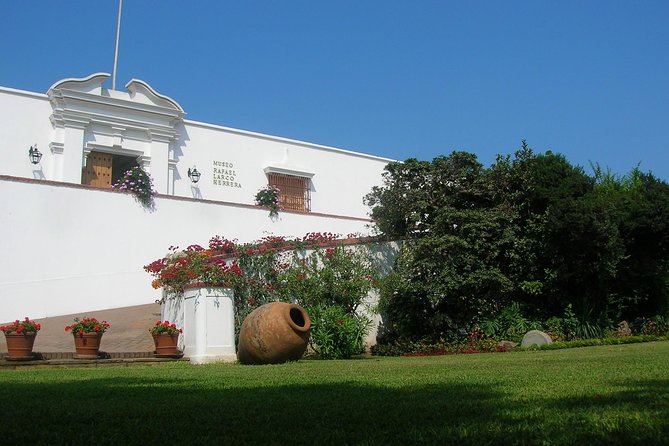
The Larco Museum is one of the strongest parts of the Lima program. Its collection includes gold objects, textiles, and the famous erotic pottery, but the real value is the chance to see how ancient Peruvian cultures understood the world. The open storage area adds another unusual detail, letting you view a large quantity of pottery beyond the main displays.
The pisco stops give the day a local flavor. You taste pisco in a traditional tavern in Pueblo Libre, with a Chilcano and a butifarra included during the afternoon visit. Later, dinner at Pescados Capitales focuses on seafood and fresh ingredients. Since food and drinks are generally excluded unless specifically named, check what your included dinner covers before ordering extras.
The evening ends at the Magic Water Circuit in the Reserve Park. Thirteen fountains use water, light, and color to create a nighttime show. It is more polished and theatrical than the archaeological sites, but that contrast is part of the fun. You get a cheerful modern Lima finale after a day of churches, museums, and ancient objects.
Other ways to reach Machu Picchu:
- 7 Days: Lima, Ica, Cusco & Machupicchu with local flights
★ 5.0 · 52 reviews - Machu Picchu, Cusco & Lima 7-Day Tour
★ 5.0 · 30 reviews - From Cusco: Full-Day Group Tour of Machu Picchu
★ 4.7 · 1,767 reviews
The Nazca Lines require a short flight from Pisco
Day three takes you toward Paracas using the Paracas Premium Service. The key event is the transfer to Pisco airport for the Nazca Lines flight.
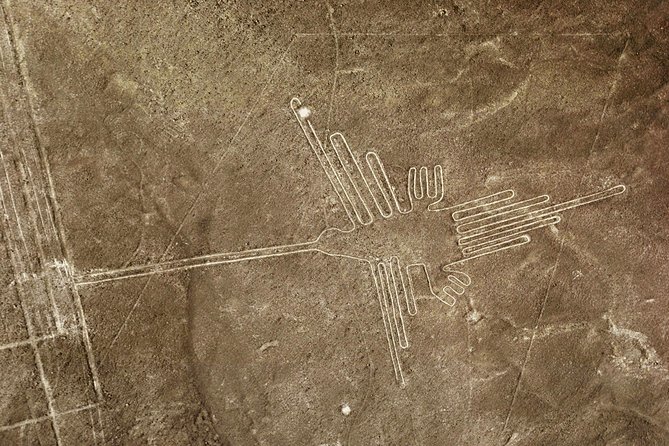
From the ground, the drawings are hard to understand. From the air, you can see enormous figures such as a monkey, hummingbird, condor, and spider, along with large geometric forms. Their original purpose remains uncertain, and the possibility that they served as an astronomical calendar adds to the mystery without pretending there is one settled answer.
The aircraft holds up to 12 passengers. That small capacity is useful for a more controlled flight, but it also means the timing can be sensitive to airport operations and conditions. The experience is not recommended for children under eight.
After the flight, you return to Paracas and have the rest of the day free at your hotel and in the surrounding area. This is one of the few breathing spaces in the program, so use it well. The seven-hour day includes significant transport, and the flight itself is only one part of the outing.
The package lists admission as free for this day, but you should still remember the separate $10 Pisco airport tax. It is a small cost, yet it is exactly the kind of fee that can surprise you if you are traveling with limited cash.
Ica combines vineyards with a desert oasis
Day four turns inland to Ica, a region closely tied to Peruvian pisco. Tacama winery has operated since 1540 and includes colonial buildings, a bell tower, vineyards, and a wine cellar. The visit explains the connection between grape growing and pisco production, with pisco and wine tasting included.
The handcrafted cellar El Catador offers a different look at production. You see old clay vessels and an oak press, details that help explain how pisco was made before modern equipment became common. Lunch at Tacama is included, and the day also gives you a chance to sample Ica cooking.
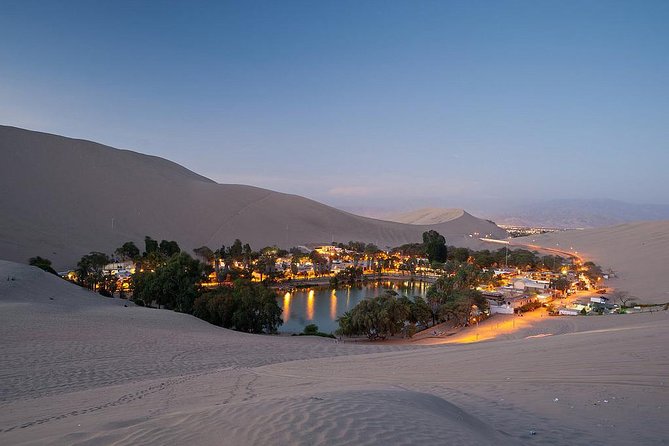
Huacachina provides the visual change. The oasis is surrounded by sand dunes and palm trees, an unexpected setting after the vineyards. The stop is mainly about the scene and the contrast between desert and water, so you should not expect a long adventure activity to be included.
In the afternoon, you return to Lima in the Paracas Premium Service. This is a useful regional loop, but it is also another long day on the road. If you prefer slow travel, the two-day Paracas and Ica section may feel compressed. If you want to add the coast and desert without booking extra hotels and buses, it offers good value.
Cusco brings the biggest adjustment
On day five, you fly to Cusco and are met at the airport. The domestic flight is not included, and it must be booked in the morning. Arrival by noon is required because the afternoon city tour begins soon after.
The altitude is the serious practical issue here. Cusco sits at roughly 11,000 feet, and the sudden change from coastal Lima can cause breathlessness, stomach trouble, headaches, or fatigue. One person described needing medicine and patches during the first days, so do not treat altitude as a minor footnote. Ask your doctor about suitable medicine before you leave, and keep your first afternoon as calm as the schedule allows.
The Cusco tour starts at San Cristobal Plaza for a panoramic view. It then moves through San Pedro Market, where you see the produce and other goods that supply the city. This is a good place to connect the highland setting with daily life rather than viewing Cusco only as an archaeological stop.
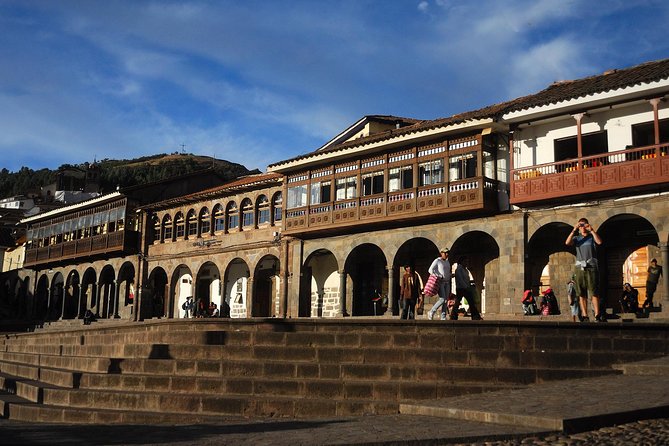
Korikancha, the Inca Gold Enclosure, follows. The Santo Domingo Church now occupies the site, creating a layered visit in which Inca and Spanish construction share the same space. From San Blas, the artisans’ district, you walk toward Hatun Rumiyoc Street, the Inca Roca Palace, and the famous Twelve Angle Stone.
The day ends at the Main Square and Cathedral. Colonial paintings and religious objects fill the cathedral, while the stonework along the streets shows the precision of Inca construction. The five-hour tour covers a lot, and walking plus altitude can be tiring. Comfortable shoes and a slower personal pace matter more here than fashionable clothing.
More Nazca Lines overflights:
- Lima: Ballestas & Huacachina Day Trip w/ Nazca Lines Flight
★ 4.9 · 117 reviews - Private Tour to the Astonished Nazca Lines and Huacachina Oasis
★ 5.0 · 84 reviews - From Lima: Ballestas, Nazca Lines & Huacachina Oasis
★ 4.5 · 82 reviews - Nazca Lines & Ballestas Islands Private Tour Bus&Flight from Lima
★ 4.0 · 77 reviews
Sacsayhuaman and four highland sites
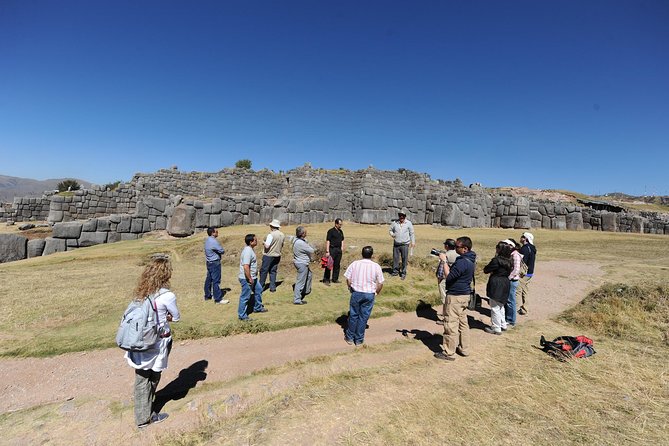
Day six moves outside the center to Sacsayhuaman, one of the most impressive stone sites near Cusco. Its huge blocks and elevated views help you understand the scale of Inca engineering better than a single street wall can.
Q’enqo comes next, with a sacrificial altar cut into a rock cave. At Puca Pucara, the viewpoint and stone remains offer another angle on the defensive and ceremonial network around Cusco. Tambomachay adds water features and architecture tied to Andean beliefs.
The morning lasts about four hours, leaving the afternoon free. That free time is valuable, especially after the altitude change and the packed city tour. You can rest, walk a little, or simply avoid turning every hour into another scheduled activity.
The Sacred Valley adds people, textiles, and open space
Day seven heads into the Sacred Valley. At Awanacancha, you can feed llamas and alpacas while local people demonstrate textile weaving and dyeing methods. This is a more hands-on cultural stop than a standard monument visit, though it is also presented as a tourist complex, so the experience is structured.
Pisac combines an Inca site high above the colonial town with time at the handicraft market. The elevated ruins give you views across the valley, while the town offers a chance to shop for textiles and other handmade goods. Keep your shopping time realistic, since the rest of the day continues to the Inkariy Museum.
Lunch is included at the museum. Its rooms use cultural representations of pre-Hispanic Peruvian civilizations to explain the country’s earlier societies. The museum is especially useful if you want more context than you get from seeing stones and terraces alone.
You spend the night in the Sacred Valley rather than returning to Cusco. That saves backtracking and places you closer to the next day’s sites. The six-hour schedule remains full, but the change of base makes the route more efficient.
Moray, Maras, and Ollantaytambo tell different stories
Day eight begins with the Living Culture Yucay Museum. Its displays and demonstrations cover farming, adobe construction, traditional chicherias, and local folklore. This stop widens the focus beyond royal Inca sites and shows how building, agriculture, drink, and community customs fit together.
Moray is one of the most unusual archaeological sites in the region. Its concentric terraces look like a giant amphitheater, and the design is associated with creating different microclimates for agriculture. You do not need to accept every theory about its purpose to appreciate the ingenuity of the form.
At Maras, colonial-era salt ponds spread down the hillside in white bands against the green valley. The view is striking, and it is one of the best photo stops on the trip. The footing and terrain may require care, so take your time instead of rushing for a picture.
A buffet lunch is included before Ollantaytambo. The town and fortress are among the most rewarding stops in the Sacred Valley because the stonework, terraces, and living settlement remain closely linked. A guide can help you see how the Incas shaped and moved the stones, rather than leaving you with only a grand view.
Machu Picchu is the grand finish
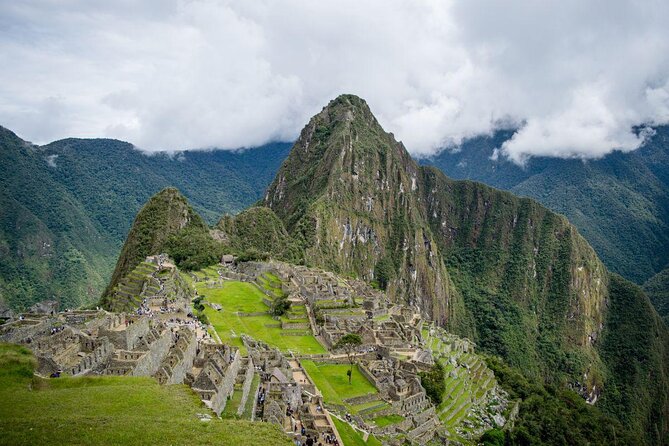
Day nine is devoted to Machu Picchu. You take the bus up the winding road beside the Urubamba River and canyon, then enter the site for a guided visit. Terraces, ceremonial areas, stairs, and urban sections unfold across the mountain setting.
A guided visit is important here. Machu Picchu is visually powerful, but the meaning of the structures is easier to follow when someone explains how the parts relate. Lunch at a nearby restaurant is included before the return to Cusco and the hotel.
Pay close attention to the ticket rules. Machu Picchu now uses visitor circuits, with route 2 given priority. If it is unavailable, route 3B or route 1B may be offered for your approval before the ticket is issued. Once purchased, the admission ticket is nonrefundable, and its date cannot be changed. If your plans shift, a new ticket is required.
The four-hour stated duration does not tell the whole story. The bus, site visit, lunch, and return transfer make this a major travel day. Still, putting Machu Picchu near the end works well because the earlier Cusco and Sacred Valley visits give you useful context.
What $2,005 really covers
At $2,005 per person, the package offers solid value for a ten-day route. You receive nine nights of accommodation, nine breakfasts, five lunches, private transfers between airports, hotels, buses, and railway stations, several guided excursions, and many entrance fees.
The included meals are concentrated around the organized day trips: Tacama lunch, Sacred Valley lunches, and Machu Picchu lunch. You still need money for unspecified food and drinks, so budget beyond the advertised price.
The two domestic flights are not included. You must also pay the $10 Pisco airport tax. Those exclusions do not ruin the value, but they make the headline price less than the full trip cost.
Hotels are described as selected properties, with adequate rooms and breakfast each morning. This is a tour built around location, transport, and sightseeing rather than luxury lodging. That suits you if a clean base is enough, but not if hotel quality is the main reason you travel.
The maximum group size is 20. That is large enough for a tour feel, yet small enough to keep transfers and site visits manageable. The strongest service feature is the use of personal guides at the sites, along with daily WhatsApp communication during the trip. Initial communication about timing and flights could be clearer, so ask for the complete schedule before you book your air tickets.
Who should book this Peru route?
I would choose this tour if you want Peru’s main sights in one organized trip and prefer not to coordinate separate cars, trains, hotels, guides, and airport pickups. It is particularly well suited to first-time visitors who want Lima, the desert, Cusco, the Sacred Valley, and Machu Picchu in a single package.
I would be cautious if you need long free periods, dislike early starts, or know that altitude affects you strongly. The schedule is physically demanding, and the first Cusco days can be rough after the coast. Families should note that the Nazca flight is not recommended for children under eight.
Free cancellation is available up to 24 hours before the start time, but that flexibility does not change the strict Machu Picchu ticket rules. Read the route terms carefully before confirming dates.
Should you book it?
Book this experience if convenience, strong guiding, and broad coverage matter more to you than a slow pace. The Lima food stops, small Nazca aircraft, pisco country, carefully chosen Sacred Valley sites, and Machu Picchu create a well-rounded first look at Peru.
Skip it if you want to build your own trip, spend several quiet days in each place, or choose premium hotels. For most people with ten days and a clear desire to see the headline sights, the package gives you a lot for the money, provided you plan for altitude and add the domestic flights to your budget.
FAQ
Is the Lima to Cusco flight included?
No. The Lima to Cusco and Cusco to Lima flights are not included in the price.
When should I book the flight to Cusco?
You must book a morning flight and arrive by noon, since the Cusco city tour begins in the afternoon.
How many people can fly over the Nazca Lines?
The Nazca aircraft holds up to 12 passengers.
Is the Nazca flight suitable for young children?
The overflight is not recommended for children under eight years old.
Which Machu Picchu route will I receive?
Route 2 is given priority. If it is unavailable, route 3B or route 1B will be offered for your decision before the ticket is issued.
Are meals included?
Nine breakfasts and five lunches are included. Other food and drinks are not included unless specifically stated, and the package includes lunch at Tacama, Sacred Valley lunches, and Machu Picchu lunch.
Just added around Lima
- Enjoy Lima Walking Historic Center, Plaza San Martin and Plaza de Armas★ 5.0 · 3 reviews
- Full Day Lima: Local Market+ CityTour+ Barranco & Miraflores★ 5.0 · 3 reviews
- City Tour 1 day Lima★ 5.0 · 3 reviews
- Lima: Lunuhuaná Extreme All In + Cerro Azul + Rafting + ATV + Canopy★ 4.4 · 3 reviews
- Lima: Street Food Tasting Tour with Pisco Sour Class★ 5.0 · 3 reviews
- Lima: Villa El Salvador Shanty Town Tour★ 5.0 · 3 reviews
- Tour Panorámico en Miraflores en Scooter Eléctrico★ 4.6 · 3 reviews
- Private Tour Casa Aliaga,San Francisco Convent, Larco Museum★ 4.8 · 3 reviews
Machu Picchu Tours, compared.



Machu Picchu: Full-Day Tour from Cusco with Optional Lunch
Read our review →
4-Day Inca Trail to Machu Picchu with Accommodation
Read our review →
2-Day Trip to the Sacred Valley and Machu Picchu
Read our review →
Machu Picchu 2-Day Inca Trail with Panoramic Train
Read our review →

Machu Picchu: Inca Trail 2-Day Overnight Guided Tour
Read our review →Browse the lists this tour appears in