
Reviewed · MACHU PICCHU TOURS
Salkantay Trek To Machu Picchu 5 Days And 4 Nights
The Andes demand your attention. This five-day Salkantay Trek pairs dramatic mountain scenery with the practical support of guides, cooks, horses, tents, and trains, so you can focus on walking rather than managing every detail. I especially like the visit to Humantay Lake and the coffee plantation near Lucmabamba. The main caution is altitude: the route reaches 15,252 feet, and the first two days are demanding.
I also like the small-group format, capped at 16 people, and the thoughtful camping setup with mattresses, pillows, hot washing water, a toilet tent, and a horse for 8 kilograms of personal belongings. Guides such as Christian, Eddie, Ericsson, Hipo, and Dario have earned strong praise for their care, local knowledge, and good humor. Still, this is a real mountain trek, not a gentle walk with a few scenic stops.
In This Review
- Key points to know before booking
- Why this Salkantay route is worth considering
- Day one: Humantay Lake and the first high-altitude test
- Day two: crossing the 15,252-foot Salkantay Pass
- Day three: rainforest paths, a waterfall, and coffee at Lucmabamba
- Day four: Llactapata and your first distant view of Machu Picchu
- Day five: Machu Picchu, optional Huayna Picchu, and the return to Cusco
- Camping, food, and support on the trail
- What the $690 price really covers
- Who should book this trek
- Should you book the Salkantay Trek to Machu Picchu?
- FAQ
- How long is the Salkantay Trek to Machu Picchu?
- What is the highest point of the trek?
- Is camping equipment included?
- How much personal luggage can the horse carry?
- Are tickets for the Machu Picchu bus included?
- Is Huayna Picchu included?
Key points to know before booking
- The Salkantay Pass reaches 15,252 feet, making acclimatization and a steady pace especially important.
- Humantay Lake is your first major reward, reached by a two-hour excursion from Soraypampa.
- Day three brings a welcome change of pace, with rainforest walking, a waterfall, and a coffee plantation visit.
- Your personal gear allowance is 8 kilograms, carried by horse in a provided duffle bag.
- The price includes four nights of lodging and camping support, plus meals, guides, transport, and the train to Aguas Calientes.
- The Machu Picchu bus ticket, sleeping bag, poles, tips, and day-five lunch cost extra, so budget for them.
Why this Salkantay route is worth considering
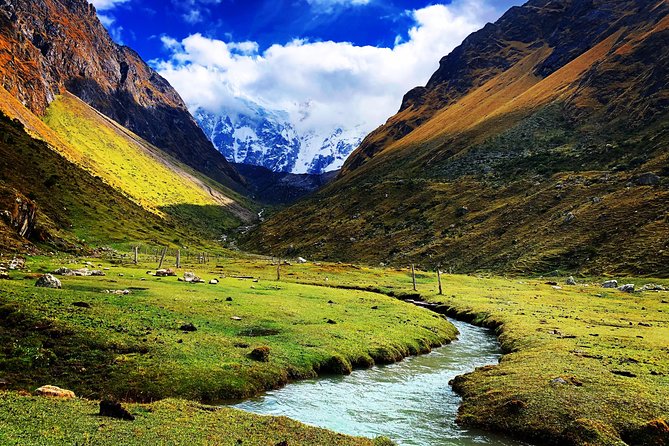
The Salkantay Trek gives you a broad sample of the Andes in five days. You begin among high, cold mountains and glacial lakes, cross a serious mountain pass, then descend through warmer valleys and rainforest before reaching Machu Picchu.
That variety is the route’s great strength. You are not walking through the same type of scenery for five straight days. One morning may bring frost, rock, and huge mountain slopes. A day later, you are following the Santa Teresa River beneath tropical vegetation and stopping for locally grown coffee.
At $690 per person, the trip is not a budget hike in the basic sense, but the price covers a lot. You receive a bilingual English-speaking guide, cooks, support staff, horses, tents, mattresses, food, emergency equipment, transport, the train, and a hotel night in Aguas Calientes. Buying all those pieces separately would take time and could create plenty of opportunities for costly mistakes.
The value is especially clear if you do not want to arrange food, camps, baggage transport, and the final train connection yourself. You pay for organization and support, not just for access to a trail.
The trade-off is that a guided group follows a fixed schedule. The early pickup is at 4:30 a.m., the walking days are long, and you will need to stay with the group’s pace and timetable. That is a fair exchange for the logistics included, but independent hikers looking for solitude and complete flexibility may prefer a different plan.
More Hiking & Trekking in Cusco
- From Cusco: 7 Lakes Ausangate Trek with Breakfast and Lunch
★ 4.8 · 360 reviews - Cusco: Rainbow Mountain Tour and Red Valley Hike (Optional)
★ 4.7 · 149 reviews - Cusco: Full-Day Rainbow Mountain & Red Valley Trekking Tour
★ 4.5 · 121 reviews
Day one: Humantay Lake and the first high-altitude test
Your day begins before sunrise with hotel pickup in Cusco. The drive to Mollepata takes about three hours, followed by breakfast at a local home. After another one hour and 45 minutes on the road, you reach Soraypampa, the starting point of the trek.
This long transfer is useful, but it makes day one feel full before the hiking really begins. Bring something small to eat and keep water close. You will also want warm layers within easy reach because the temperature can change quickly at high elevation.
At Soraypampa, you meet the support crew. Horses carry the group equipment, including food, tents, tables, chairs, and kitchen supplies. You are allowed to send up to 8 kilograms of personal items in the provided duffle bag, which leaves you with a much lighter daypack.
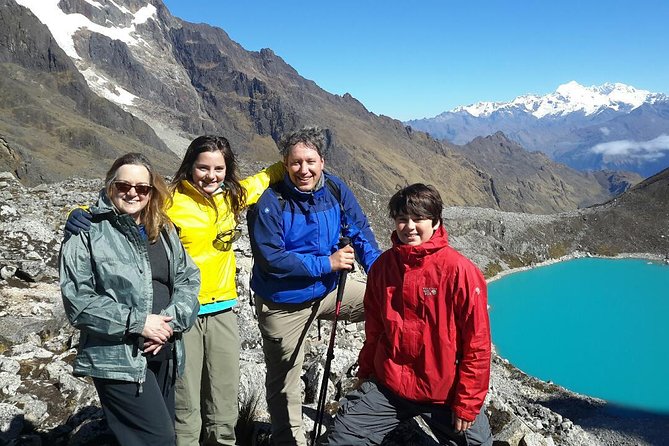
The first walk is a two-hour excursion to Humantay Lake. The lake sits below the Humantay Mountain and gives you an immediate payoff for the early start. The trail is steep in places, and the altitude can make a short climb feel much longer than expected.
I would treat this first walk as an altitude check, not a race. Your guide can help you find a workable pace, and the medical kit, emergency oxygen, and emergency horse provide added reassurance. They do not make the altitude harmless, though. If you arrive in Cusco without enough time to adjust, this section may feel rough.
The published day runs about six hours, including the lake excursion and the movement toward camp. You should expect beautiful views, but also a demanding introduction. The first day tells you a lot about how your body will handle the rest of the route.
Day two: crossing the 15,252-foot Salkantay Pass
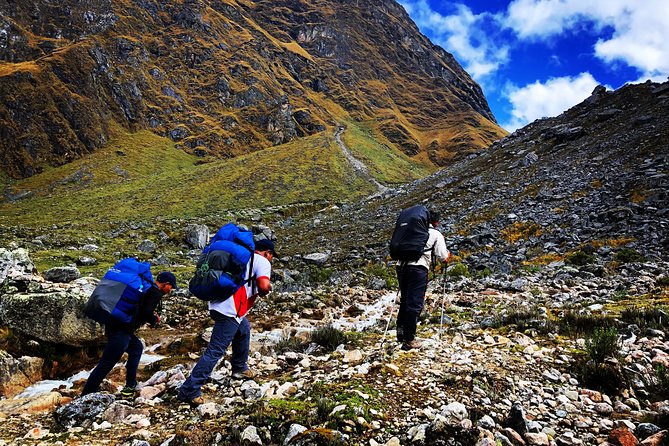
Day two is the hardest section for many people. After breakfast, you climb for about one hour to the Salkantay Pass, the highest point of the trek at 15,252 feet.
At the pass, the guide explains the importance of Salkantay in Andean and Inca culture. The group also makes an offering to Salkantay. This moment adds meaning to the climb, turning the pass into more than a high point for photographs. It connects the physical effort with the cultural setting around you.
The views from this height are the main reward. You see Salkantay and Humantay Mountains in their high, rugged setting, with a sense of how quickly the terrain changes across the Andes.
After reaching the pass, you descend for about two hours to Huayrac, at 12,464 feet, for lunch. The descent may be easier on your lungs, but it can be tough on your knees. Trekking poles are recommended here, and I would consider renting them if you do not own a pair.
After lunch, you continue downhill for roughly four hours to Colpapampa, at 10,170 feet. The total day is about eight hours. That is a serious walking day, especially after the high climb in the morning.
The good news is that the route becomes lower and warmer as you go. The less good news is that tired legs still have to cover the distance. Wear boots that are already broken in, and do not save your water or snacks for the final stretch.
The support team matters most on a day like this. A cook and assistant cook prepare meals, while wranglers and horses handle the heavy group equipment. You can walk with a daypack instead of carrying camping supplies, which makes the pass more manageable.
Day three: rainforest paths, a waterfall, and coffee at Lucmabamba
Day three offers a welcome reset. The route leaves behind the hardest high-altitude work and follows the Santa Teresa River through rainforest terrain.
The walking lasts about six hours, with gentle climbs and descents rather than one major summit. That does not mean it is effortless. Uneven trail surfaces and the accumulated fatigue from the first two days still require attention, but the route is generally more forgiving.
One of the day’s highlights is a large waterfall along the path. The changing plant life and warmer air make this section feel like a different trip from the cold upper Andes.
You reach Lucmabamba around noon and have lunch at camp. Later, you visit the coffee plantation beside the campsite. This is a particularly good addition because it gives you contact with a local product and working agricultural life, rather than offering only mountain scenery.
The coffee stop also breaks up the rhythm of long-distance hiking. You can learn how coffee is grown and processed in the area, then enjoy the setting without needing to rush through another major climb.
Camping here should feel more comfortable than the high camps, thanks to the lower elevation and milder conditions. The provided dining tent, tables, chairs, and hot water for washing make the evening more civilized than the word camping might suggest.
Meals are another strength of the trip. Breakfast, lunch, and dinner are supplied on the trek, and the cooks prepare multi-course meals. Food needs can vary, so tell the guide and cooking team about dietary requirements during the pre-departure briefing.
More Inca Trail Treks in Cusco
- Cusco: 4-Day Inca Trail to Machu Picchu with Accommodation
★ 4.8 · 432 reviews - Cusco: Machu Picchu 2-Day Inca Trail with Panoramic Train
★ 4.9 · 260 reviews - From Cusco: 2-Day Inca Trail to Machu Picchu
★ 4.2 · 244 reviews - Machu Picchu: Inca Trail 2-Day Overnight Guided Tour
★ 4.9 · 203 reviews
Day four: Llactapata and your first distant view of Machu Picchu
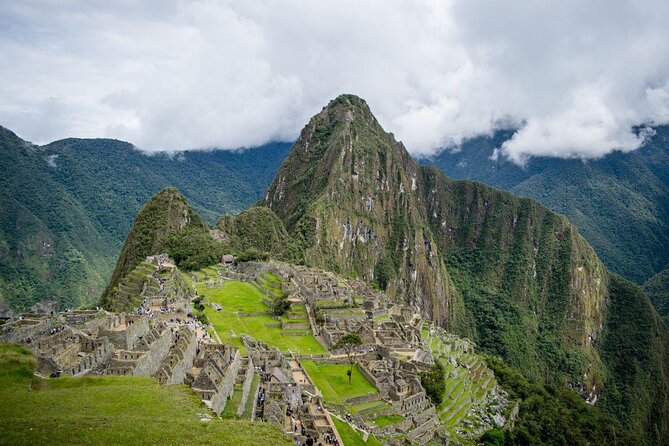
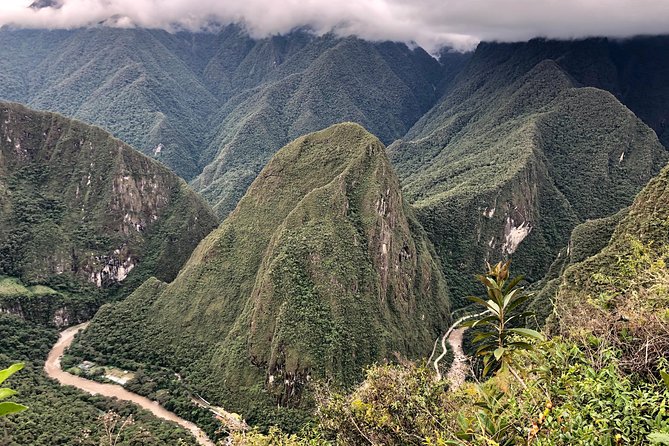
The fourth day begins early with breakfast, then a moderate climb of about three and a half hours through the rainforest to Llactapata. The ruin sits at 8,856 feet and gives you your first view of Machu Picchu in the distance.
That first glimpse matters. Machu Picchu is not simply revealed at the end of a train ride. You see it from across the mountains, after several days of walking toward it. The distant view creates a satisfying sense of arrival, even though you still have more hiking and transport ahead.
Your guide provides a thorough tour of Llactapata. The site gives the day historical weight and provides a quieter counterpoint to Machu Picchu itself. The setting also helps you understand how closely Inca sites relate to mountain ridges, valleys, and routes through the region.
From Llactapata, you descend for about two and a half hours to Hydro for lunch. Again, trekking poles can be useful, particularly if your legs are tired from the pass and the previous downhill sections.
At 3 p.m., you board the train to Aguas Calientes. The train is included, as is the hotel night in Aguas Calientes, based on double occupancy. Having a proper bed before the Machu Picchu visit is a smart part of the schedule. You can shower, repack, and prepare for the final morning rather than sleeping in another tent.
Dinner is served at a restaurant. Day four takes about five hours of walking, but the combination of the climb, descent, lunch, train, and hotel check-in makes it a busy day.
Day five: Machu Picchu, optional Huayna Picchu, and the return to Cusco
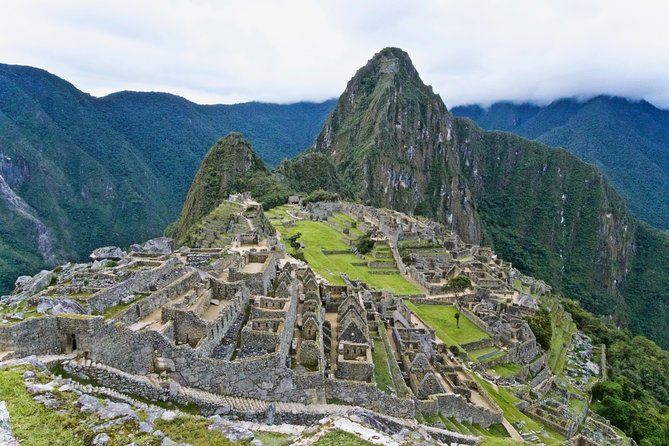
After breakfast at the hotel, you take a bus to Machu Picchu. The round-trip bus ticket is not included, so you should account for that extra cost before departure.
Inside the site, your guide leads a two-hour walking tour. This is an important benefit. Machu Picchu is visually powerful, but the structures, terraces, temples, and setting become far more meaningful when someone explains what you are seeing.
After the guided visit, you have some time at Machu Picchu if you are not climbing Huayna Picchu. The optional Huayna Picchu climb is not included in the package and begins at 10 a.m. If you want to add it, confirm availability and any required ticket arrangements before the trek.
Once you return to Aguas Calientes, you board the train toward either Ollantaytambo or Poroy. From there, private transport takes you back to Cusco.
The final day is listed at about three hours, but allow extra time for the bus, site entry procedures, train, and road transfer. The timetable is not a slow farewell. It is a carefully connected travel day with several moving parts.
Day-five lunch in Aguas Calientes is also not included. You will want cash or another payment method available for lunch, the bus ticket, tips, and any optional extras.
Camping, food, and support on the trail
The equipment package is stronger than what you get on a bare-bones trek. Two people share a four-person tent, and each person receives a mattress and pillow. There is also a kitchen tent, dining tent, portable toilet tent, and hot water for washing.
You do need to bring or rent a sleeping bag. Down or synthetic options can be rented from the operator. A headlamp is essential for early mornings and camp use, while wet wipes, toilet paper, a small towel, sunscreen, insect repellent, and warm clothing belong in your personal kit.
The food deserves particular attention. The cooks prepare breakfast, lunch, and dinner across the four camping or hotel evenings covered by the schedule. Strong praise has gone to the three-course meals and the ability of the cooking team to cater to dietary needs.
You should still carry small personal snacks. Even with regular meals, an eight-hour day at altitude can leave you wanting something between stops.
The bilingual guides are a major part of the experience. Christian is frequently singled out for his understanding of Peruvian wildlife, plants, and Inca history, as well as for checking on each person in the group. Eddie and Ericsson are also praised for their support and energy, while Hipo and Dario have made strong impressions on other departures.
Guiding quality can vary from one departure to another, so specific guide assignments are not guaranteed. Still, the company has a clear record of attentive guiding, and the maximum group size of 16 allows for more personal help than a large coach-style tour.
What the $690 price really covers
At $690 per person, the cost is best judged as a complete trekking package rather than a simple guided walk.
Included value comes from:
- Hotel pickup and transport to Soraypampa
- A bilingual guide and pre-departure briefing
- Camping tents, mattresses, pillows, and camp furniture
- A chef, assistant chef, wranglers, horses, and baggage support
- Meals from breakfast on day one through breakfast on day five
- An 8-kilogram personal baggage allowance
- Emergency oxygen, a medical kit, and an emergency horse
- The coffee plantation visit
- Hotel lodging in Aguas Calientes
- The expedition train and private transport back to Cusco
You still need to pay for a sleeping bag if you rent one, trekking poles if needed, the round-trip Machu Picchu bus, day-five lunch, and crew tips. The package also does not include a Huayna Picchu ticket.
The pre-departure briefing, held at your hotel one or two days before the trek, is useful for checking your packing, understanding the daily plan, and raising health or equipment concerns. Do not skip it.
Who should book this trek
I would recommend this route to someone with moderate physical fitness who wants a demanding but well-supported route to Machu Picchu. It suits you if you enjoy long days on foot, changing climates, mountain scenery, cultural stops, and the social side of a small group.
It is also a good choice for families with older children or teenagers who can manage sustained hiking. One family described the five-day route as a highly successful shared experience, but the altitude and eight-hour second day still deserve serious attention.
You should think twice if you dislike early starts, steep descents, shared camping arrangements, or fixed transport schedules. The route is not ideal for someone seeking a relaxed holiday with occasional walks.
Most important, give yourself time to acclimatize in Cusco before the trek. The highest point is above 15,000 feet, and fitness alone does not prevent altitude trouble. Walk slowly, follow your guide’s advice, and speak up early if you feel unwell.
The cancellation terms are simple: cancel at least 24 hours before the local start time for a full refund. Changes or cancellations inside 24 hours are not accepted for a refund.
Should you book the Salkantay Trek to Machu Picchu?
Book it if you want the full mountain experience without carrying the full logistical burden. The route combines Humantay Lake, the Salkantay Pass, rainforest trails, coffee, Llactapata, and Machu Picchu in a well-shaped five-day journey.
The best reasons to choose it are the excellent support system, strong cooking team, small group size, and guides who bring real care and local understanding to the walk. The main reasons to hesitate are the altitude, early pickup, long hiking days, extra costs for the bus and sleeping bag, and the need to carry yourself through difficult terrain.
If those demands sound worthwhile, the $690 price offers solid value. You get much more than a path to Machu Picchu. You get a challenging route through several Andean climates, with the practical help that lets you enjoy the journey instead of worrying about every camp and connection.
FAQ
How long is the Salkantay Trek to Machu Picchu?
The experience lasts five days and four nights. Daily walking times are listed at approximately six hours on day one, eight hours on day two, six hours on day three, five hours on day four, and three hours on day five.
What is the highest point of the trek?
The highest point is the Salkantay Pass at 15,252 feet. A moderate level of physical fitness is recommended, and acclimatization is important.
Is camping equipment included?
Yes. The package includes a four-person tent shared by two people, a mattress, a pillow, a kitchen tent, a dining tent, tables, chairs, and a portable toilet tent. A sleeping bag is not included but can be rented.
How much personal luggage can the horse carry?
A horse carries up to 8 kilograms of your personal belongings. A duffle bag is provided for this purpose.
Are tickets for the Machu Picchu bus included?
No. The round-trip bus ticket to Machu Picchu is not included. The train from Aguas Calientes and private transport onward to Cusco are included.
Is Huayna Picchu included?
No. Huayna Picchu is an optional extra and is not included in the package. The hike begins at 10 a.m. for those who have arranged it.
More Ways to Reach Machu Picchu
- The First Class Machu Picchu Train by Inca Rail
★ 4.0 · 182 reviews - From Cusco: 1-day Machu Picchu Tour by Train
★ 4.6 · 138 reviews - Private Tour to Sacred Valley and Machu Picchu from Cusco
★ 5.0 · 133 reviews - Machupicchu 1 day tour
★ 5.0 · 128 reviews
More Machu Picchu Tours in Cusco
- From Cusco: Full-Day Group Tour of Machu Picchu
★ 4.7 · 1,767 reviews - Machu Picchu Day Trip from Cusco
★ 4.5 · 1,644 reviews - Machu Picchu: Full-Day Tour from Cusco with Optional Lunch
★ 4.6 · 927 reviews - From Cusco: 2-Day Trip to the Sacred Valley and Machu Picchu
★ 4.6 · 265 reviews
Just added around Cusco
- Cusco: Rainbow Mountain and viewpoint red valley ( optional)★ 4.8 · 3 reviews
- Tour Pallay Punchu Trek Full Day★ 4.2 · 3 reviews
- Montaña de Colores: tour en cuatrimotos día completo★ 3.3 · 3 reviews
- Excursion Cusco – Puno – Titicaca Observatory Train★ 5.0 · 3 reviews
- Cusco: Palcoyo Mountain Day Trip with Breakfast and Lunch★ 4.8 · 3 reviews
- Maras Moray★ 5.0 · 3 reviews
- Tour to Laguna Humantay with breakfast and lunch from Cusco★ 4.7 · 3 reviews
- From Cusco:Chinchero, Moray, Maras, Ollantaytambo with lunch★ 5.0 · 3 reviews
Machu Picchu Tours, compared.



Machu Picchu: Full-Day Tour from Cusco with Optional Lunch
Read our review →
4-Day Inca Trail to Machu Picchu with Accommodation
Read our review →
2-Day Trip to the Sacred Valley and Machu Picchu
Read our review →
Machu Picchu 2-Day Inca Trail with Panoramic Train
Read our review →

Machu Picchu: Inca Trail 2-Day Overnight Guided Tour
Read our review →Browse the lists this tour appears in