
Reviewed · MACHU PICCHU TOURS
Sacred Valley & Machu Picchu by Train: 2-Day, 1-Night Tour
Machu Picchu is only part of the story. This $698, two-day tour links the Sacred Valley’s best-known sites with a sunrise visit to Machu Picchu, using trains and door-to-door transport to keep the route moving. I like the broad first-day plan, which includes Pisac, Moray, Maras, and Ollantaytambo. I also like that lunch, dinner, entrance tickets, buses, trains, and a hotel are included. The tradeoff is clear: this is a packed schedule, and you have little control over train times or free time.
The small-group limit of 16 people should make the guided visits easier to follow than a large coach outing. Guides connected with this experience include Herbert Vidal, Alex, and Oliver, with particular praise for clear explanations, patience, and quick answers. Still, the non-refundable booking policy and extra cost of Huayna Picchu or Machu Picchu Mountain deserve attention before you commit.
In This Review
- Key points at a glance
- Why this two-day route works
- Starting in Cusco at the Alpaca Center
- Taray viewpoint and the first Sacred Valley views
- Pisac’s terraces, stonework, and market
- Lunch in Urubamba before Maras and Moray
- Moray’s circular terraces
- The salt pools of Maras
- Ollantaytambo before the evening train
- Aguas Calientes and the early Machu Picchu start
- Three hours inside Machu Picchu
- Returning by Expedition train to Cusco
- Who should book this tour?
- FAQ
- How long is the Sacred Valley and Machu Picchu tour?
- Is hotel pickup in Cusco included?
- Which languages are available?
- What sites are visited in the Sacred Valley?
- Are the train and Machu Picchu bus tickets included?
- Are Huayna Picchu and Machu Picchu Mountain included?
- What should I bring?
Key points at a glance
- A full Sacred Valley circuit: See the Alpaca Center, Taray viewpoint, Pisac, Moray, Maras, and Ollantaytambo before reaching the train.
- A three-hour Machu Picchu tour: The guide covers terraces, storehouses, temples, and palaces inside the citadel.
- Transport is handled door to door: Pickup and return are available from a Cusco hotel, hostel, or Airbnb.
- Meals and lodging are partly covered: Day-one buffet lunch, dinner in Ollantaytambo, and one night in a three-star Aguas Calientes hotel are included.
- Early entry matters: You leave early for the first buses toward Machu Picchu and aim for a sunrise arrival.
- The main choice is convenience versus flexibility: The package reduces planning work, but train schedules and optional mountain hikes are not included in the base price.
Why this two-day route works
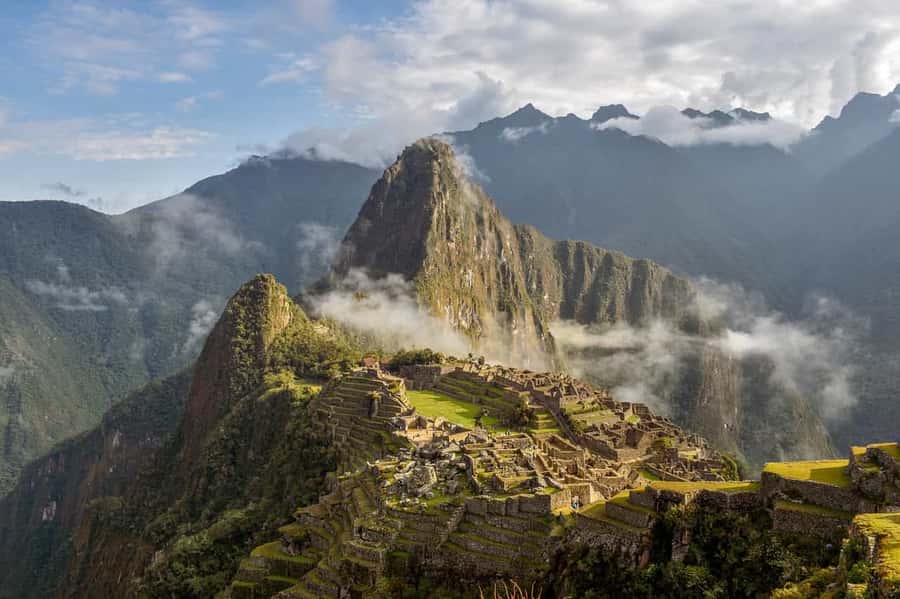
I like this tour because it treats Machu Picchu as part of a larger Inca itinerary rather than an isolated day trip. The first day gives you a useful introduction to the Sacred Valley, then places you near the entrance to Machu Picchu for an early start.
That matters because a Cusco to Machu Picchu day trip can feel rushed. Here, you sleep in Aguas Calientes, the town below the citadel, instead of returning to Cusco after the visit. You still have a demanding schedule, but the overnight stop removes some of the backtracking.
The route also mixes major archaeological sites with living craft traditions. At Pisac, you see monumental stonework and terraces. At the market, you can browse ceramics, textiles, jewelry, Andean instruments, alpaca goods, and souvenirs. At the Alpaca Center, you learn about weaving and natural dyes before the ruins begin.
This is not a slow, free-form trip. The schedule moves from stop to stop, and your guide will need to keep the group on time for lunch, the train, buses, and entry arrangements at Machu Picchu. I would choose it for efficient sightseeing, not for long pauses in villages or independent exploration.
More Machu Picchu Tours in Cusco
- From Cusco: Full-Day Group Tour of Machu Picchu
★ 4.7 · 1,767 reviews - Machu Picchu Day Trip from Cusco
★ 4.5 · 1,644 reviews - Machu Picchu: Full-Day Tour from Cusco with Optional Lunch
★ 4.6 · 927 reviews
Starting in Cusco at the Alpaca Center
Pickup is available from your Cusco hotel, hostel, or Airbnb. You should send the provider your accommodation details and a working phone number, WhatsApp contact, or email after booking so the pickup can be arranged.
The first stop comes after about a 30-minute drive: an alpaca farm and textile center. You may see llamas, alpacas, vicuñas, and guanacos, then watch or learn about the textile process. The explanation of natural colors gives the stop more purpose than a simple animal visit.
There is also a shop. That can be useful if you want an early look at Andean textile work, but keep your budget in mind. Since Pisac Market comes later, you can compare goods and prices rather than buying the first item you see.
Bring a daypack, not a suitcase or large bag. Large luggage is not allowed on the experience, and you will be changing between vans, trains, buses, and hotel accommodation. Pack only what you need for two days, including your passport.
Taray viewpoint and the first Sacred Valley views
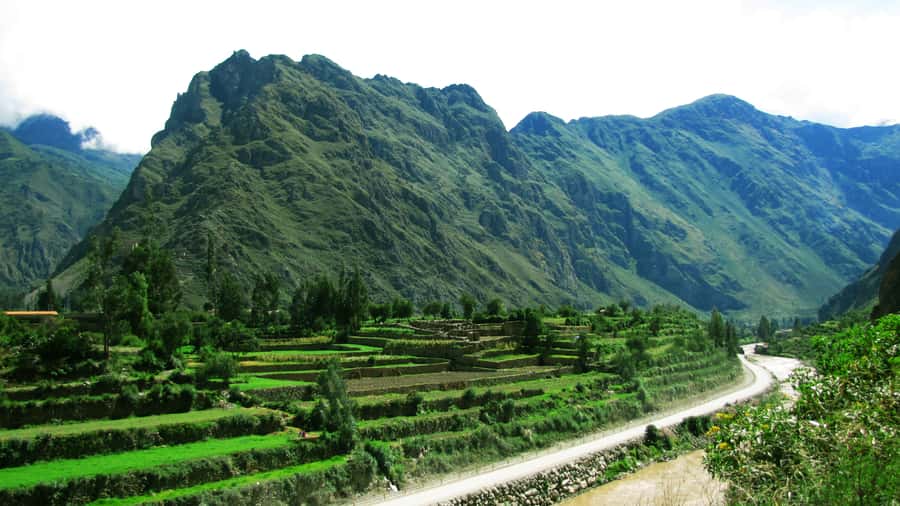
After the farm, the drive continues to Mirador Taray, a viewpoint above the Sacred Valley. From here, you can look across the Urubamba River and the agricultural land once worked by the Incas.
This is an important orientation stop. The valley is not just a scenic backdrop. Its terraces, river corridor, and cultivated slopes explain why the Incas built so many settlements and farming systems here. Your guide can connect the view with the archaeological sites you visit later.
The viewpoint is also a good place to take photographs before the more detailed ruin visits. If you prefer quiet time, remember that the group schedule may allow only a limited pause. The benefit is that you get the view without having to arrange a separate excursion from Cusco.
Pisac’s terraces, stonework, and market
Pisac archaeological site sits high in the mountains and includes stone walls, agricultural terraces, irrigation systems, temples, and storehouses. The site also contains what is described as the largest cemetery of the Inca Empire.
The terraces are the main visual lesson here. They show how the Incas shaped steep slopes for cultivation, while the irrigation works point to careful water management. The high position also makes the site feel defensive and ceremonial at the same time.
You will walk through an extensive site, so comfortable shoes are sensible. The tour does not list a separate accessibility plan, and the route includes archaeological areas on mountain terrain. If steep or uneven ground is a concern, ask the operator before booking.
After the ruins, you visit Pisac Market. This is the place to practice friendly bargaining for textiles, ceramics, jewelry, alpaca products, instruments, and small souvenirs. I would first walk around the stalls and compare similar items. You will have a better sense of fair prices after seeing the textile center earlier in the day.
The market gives the schedule a welcome change of pace. You are not only looking at old stones; you are also seeing how local craft goods are presented and sold today. Still, market time is part of a guided day, so do not count on an extended shopping session.
More Sacred Valley Tours in Cusco
- From Cusco: Sacred Valley & Maras Salt Mines Tour with Lunch
★ 4.8 · 2,227 reviews - From Cusco: Moray, Maras Salt Mines & Chinchero Weavers Tour
★ 4.8 · 1,925 reviews - Cusco: Sacred Valley, Pisac, Ollantaytambo, Salt Mines Moray
★ 4.6 · 1,058 reviews - Cusco:Chinchero,Moray & Salt Mines drop-off in Ollantaytambo
★ 4.8 · 793 reviews
Lunch in Urubamba before Maras and Moray
The group then travels for about an hour to Urubamba for a buffet lunch at a local restaurant. The meal includes fresh local products and a range of Peruvian dishes.
Lunch is included, which helps the $698 price make more sense. You do not need to search for a restaurant during a tight transfer day, and the buffet format should make it easier to choose something quickly. Dinner in Ollantaytambo is also included later.
You should still budget for meals not listed in the package. Lunch on day two in Aguas Calientes is on your own, and the details do not include every snack or drink. The practical approach is to carry a small amount of money for that second-day meal and personal purchases.
Moray’s circular terraces
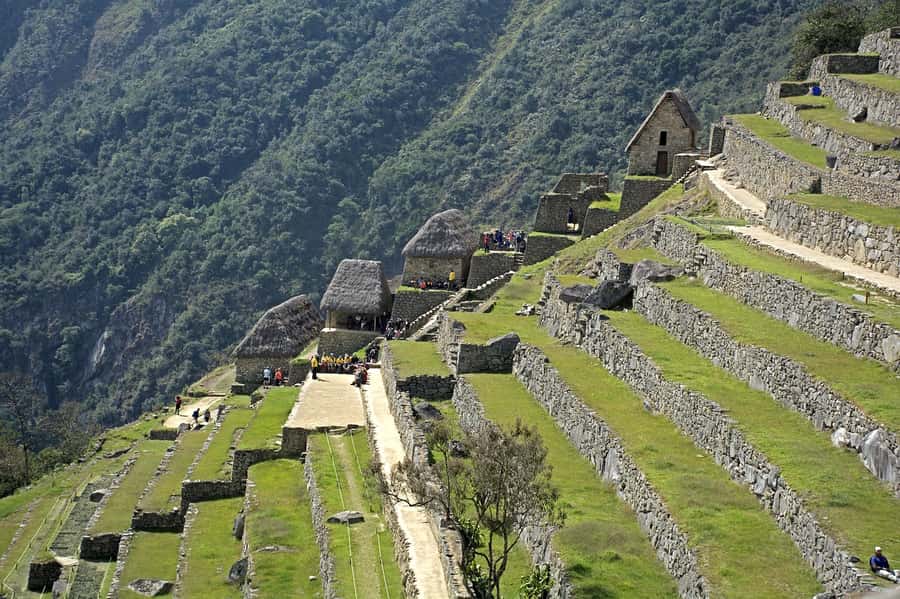
After lunch, the route reaches Moray, a remarkable set of circular terraces cut into a natural depression. The rings drop toward the center and create one of the most unusual archaeological views in the Sacred Valley.
The site is valuable because it shows the scale of Inca engineering in a setting unlike the long hillside terraces at Pisac. You can compare the two places: Pisac follows the mountain slopes, while Moray forms a series of concentric bowls.
The tour includes the entrance ticket, guide, and transport. That is helpful because Moray is paired with Maras and Ollantaytambo in the same afternoon. The drawback is that these three major stops come after a morning already filled with driving and walking. You should expect a busy day rather than a leisurely one.
The salt pools of Maras
Salineras of Maras is a series of salt ponds on the mountainside. Water flows through the system, and evaporation leaves salt behind in the pools. The bright bands and geometric shapes make this one of the most distinctive stops on the route.
Maras adds a working, practical side to the archaeological sights. You are looking at a place shaped by people and natural resources, not only at temples or royal buildings. The stop also breaks up the ruins with a different kind of visual experience.
The experience includes admission to Maras. Follow your guide’s instructions about where you may walk and where you may take photographs. The provided information does not promise access to every part of the salt works, so treat it as a guided viewpoint and visit rather than an independent exploration.
Ollantaytambo before the evening train
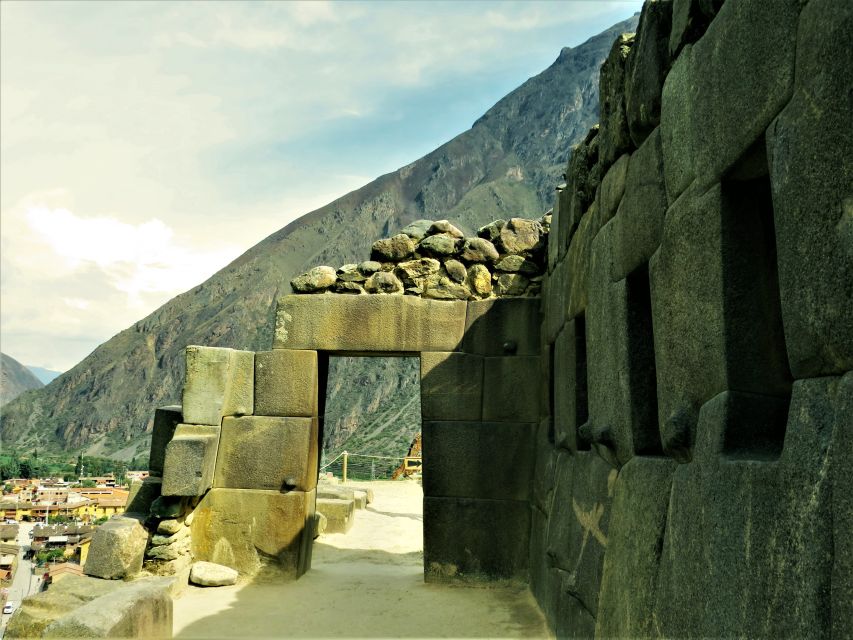
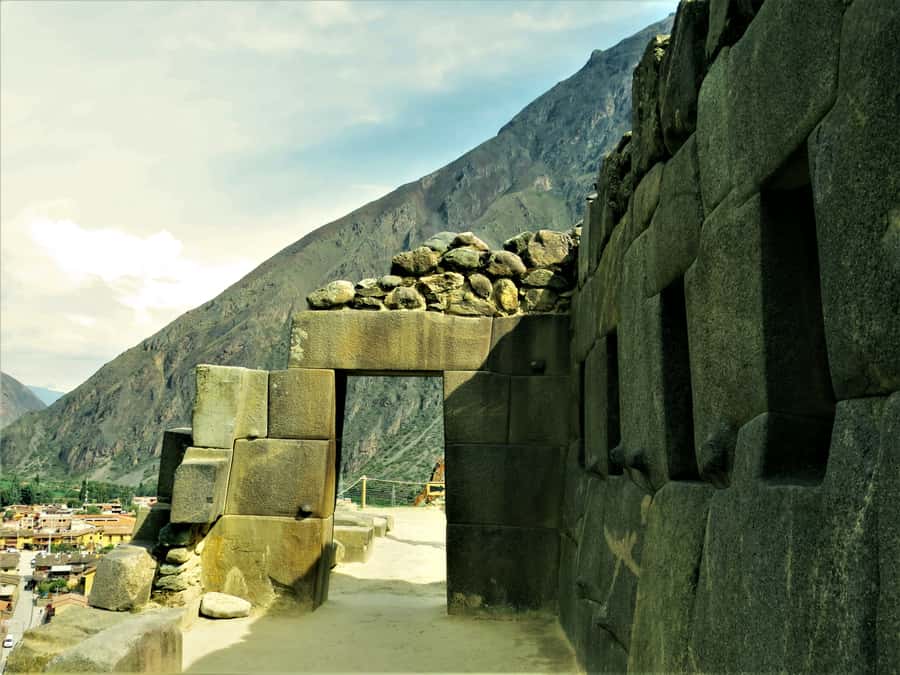
Ollantaytambo is described as the last standing Inca citadel, and the town itself is built above ancient Inca structures. The archaeological area includes temples, terraces, storehouses, and a large monolith.
This is one of the most important stops on the first day. It is not merely a quick photo stop before the train. The site lets you see how Inca planning shaped both the ceremonial area and the town below it.
You will visit after Moray and Maras, so fatigue may be a factor. I would save some energy for the climb and uneven surfaces here. The included guide is especially useful at Ollantaytambo because the stonework, terraces, and unfinished or massive blocks can be hard to interpret without context.
Dinner is included in Ollantaytambo before you board the Expedition train to Aguas Calientes. The package covers round-trip Expedition train travel, but one important limitation is that you do not choose the departure and return times. A past booking described the train rides as comfortable but wished for more control over the schedule. That is a fair concern if you value independent timing.
Aguas Calientes and the early Machu Picchu start
You spend one night in a three-star hotel in Aguas Calientes. The overnight stay is simple but strategically useful. Instead of beginning day two with a long transfer from Cusco, you can wake near the bus departure point for Machu Picchu.
Breakfast is included at the hotel according to the program. You then take one of the first buses up to the citadel. The aim is to see Machu Picchu early, with sunrise conditions possible depending on the season, entry timing, and weather.
You must carry your original passport for the checkpoint. A daypack is the right bag, since large bags and luggage are not allowed. Drones, alcohol, and drugs are prohibited, and you may not feed animals.
The early departure can make the morning feel hurried, but it is the right tradeoff for this famous site. The package includes the round-trip bus between Aguas Calientes and Machu Picchu, so you are not left to sort out that part yourself.
Three hours inside Machu Picchu
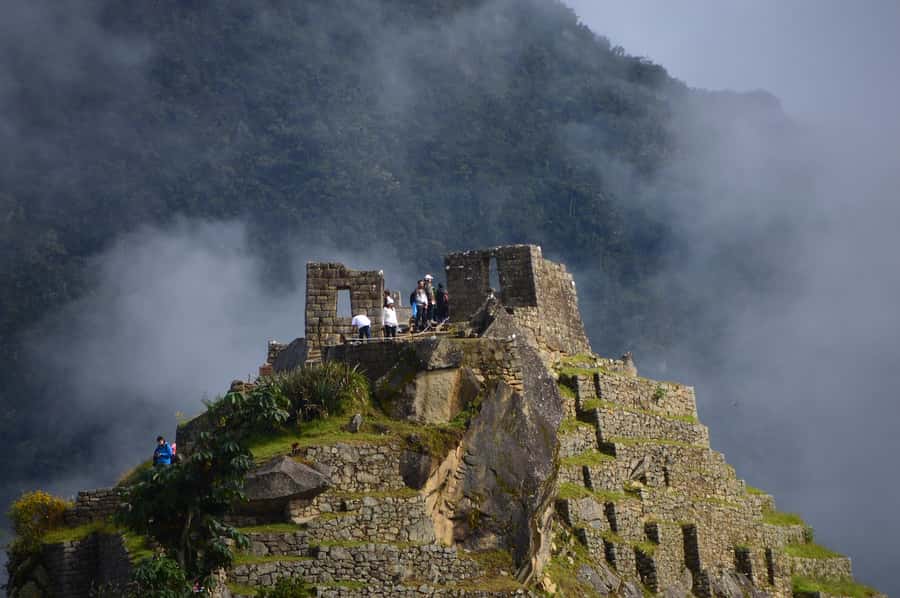
The guided visit lasts about three hours. Your guide takes you through major terraces, storehouses, temples, and palaces, helping turn a series of beautiful stone walls into an understandable Inca complex.
The strongest praise connected with this tour concerns guiding. Herbert Vidal is noted for detailed explanations, while Alex is described as an excellent guide, and Oliver is praised for patience and strong knowledge of the Inca period. Guides can vary, but these examples show the value of the human side of the trip: good explanations matter here because the site can otherwise become a procession of viewpoints and photographs.
Machu Picchu entry is included, but the two extra mountain hikes are not. Huayna Picchu and Machu Picchu Mountain require separate arrangements and additional payment. Do not assume you can add either hike casually at the last minute. If one is a priority, confirm availability and cost before booking.
After the guided circuit, you return by bus to Aguas Calientes. Lunch is optional and not included, so plan your spending and keep track of the train departure time.
Returning by Expedition train to Cusco
The return journey uses the Expedition train back to Ollantaytambo. From there, a van takes you to your Cusco hotel, completing the door-to-door service.
This arrangement is a major practical benefit. You do not need to organize a separate taxi from the train station or work out how to connect the Sacred Valley with Cusco. Transportation is covered throughout the journey.
The price also includes entrance fees to Pisac, Moray, Maras, Ollantaytambo, and Machu Picchu, along with taxes and reservation charges. Add the hotel, two train journeys, buses at Machu Picchu, day-one lunch, and dinner, and the package becomes easier to assess.
At $698 per person, it may cost more than assembling every piece yourself. You are paying for coordination, a guide, transport, tickets, meals, and a night in Aguas Calientes. I see the value if you have limited time, want help with every transfer, or do not want to manage changing train and bus connections.
The value is weaker if you are comfortable arranging transport independently, choosing your own train times, eating wherever you like, and booking a basic overnight stay yourself. The non-refundable policy also means you should be certain of your dates before paying.
Who should book this tour?
I would recommend it to you if you want to see the Sacred Valley and Machu Picchu in two days, prefer a small group, and value having a guide handle the practical work. It suits first-time visitors who want a strong overview without building a complicated Peru itinerary from separate reservations.
It is also a good fit if you want more than the usual Machu Picchu day trip. Pisac, Moray, Maras, and Ollantaytambo give you several different views of Inca construction, agriculture, trade, and daily life.
I would hesitate if you need plenty of free time, dislike early starts, want to select your own train schedule, or plan to include Huayna Picchu or Machu Picchu Mountain. The pace is full, and the optional hikes cost extra.
The best preparation is simple: wear comfortable shoes, carry your passport and a small daypack, keep money aside for day-two lunch, and provide accurate contact details for pickup. If those conditions suit you, TreXperience’s package offers a well-organized way to connect the Sacred Valley with Machu Picchu without handling every moving part yourself.
FAQ
How long is the Sacred Valley and Machu Picchu tour?
The tour lasts two days and one night. You spend the first night in a three-star hotel in Aguas Calientes.
Is hotel pickup in Cusco included?
Yes. Pickup and return are included from a hotel, hostel, or Airbnb in Cusco. You need to send your accommodation and contact details after booking.
Which languages are available?
The live tour guide is available in English and Spanish.
What sites are visited in the Sacred Valley?
The route includes an Alpaca Center, Mirador Taray, Pisac archaeological site, Pisac Market, Moray, Salineras of Maras, and Ollantaytambo.
Are the train and Machu Picchu bus tickets included?
Yes. The package includes round-trip Expedition train travel and the round-trip bus between Aguas Calientes and Machu Picchu.
Are Huayna Picchu and Machu Picchu Mountain included?
No. Both hikes are optional extras and are not included in the tour price.
What should I bring?
Bring your original passport and a daypack. Large bags and luggage are not allowed. Drones, alcohol, and drugs are prohibited, and feeding animals is not allowed.
More of the Sacred Valley
- Sacred Valley: Chinchero, Moray, Ollantaytambo & Pisac+Lunch
★ 4.8 · 501 reviews - Sacred Valley: Maras & Moray by Quad Bike from Cusco
★ 4.6 · 418 reviews - Pisac Indian Market and Ollantaytambo Fortress with Lunch
★ 4.5 · 395 reviews - Cusco:Sacred Valley Pisaq,Ollantaytambo,Chinchero with Lunch
★ 4.8 · 183 reviews
More Ways to Reach Machu Picchu
- Cusco: 4-Day Inca Trail to Machu Picchu with Accommodation
★ 4.8 · 432 reviews - From Cusco: 2-Day Trip to the Sacred Valley and Machu Picchu
★ 4.6 · 265 reviews - Cusco: Machu Picchu 2-Day Inca Trail with Panoramic Train
★ 4.9 · 260 reviews - From Cusco: 2-Day Inca Trail to Machu Picchu
★ 4.2 · 244 reviews
Just added around Cusco
- Cusco: Rainbow Mountain and viewpoint red valley ( optional)★ 4.8 · 3 reviews
- Tour Pallay Punchu Trek Full Day★ 4.2 · 3 reviews
- Montaña de Colores: tour en cuatrimotos día completo★ 3.3 · 3 reviews
- Excursion Cusco – Puno – Titicaca Observatory Train★ 5.0 · 3 reviews
- Cusco: Palcoyo Mountain Day Trip with Breakfast and Lunch★ 4.8 · 3 reviews
- Maras Moray★ 5.0 · 3 reviews
- Tour to Laguna Humantay with breakfast and lunch from Cusco★ 4.7 · 3 reviews
- From Cusco:Chinchero, Moray, Maras, Ollantaytambo with lunch★ 5.0 · 3 reviews
Machu Picchu Tours, compared.



Machu Picchu: Full-Day Tour from Cusco with Optional Lunch
Read our review →
4-Day Inca Trail to Machu Picchu with Accommodation
Read our review →
2-Day Trip to the Sacred Valley and Machu Picchu
Read our review →
Machu Picchu 2-Day Inca Trail with Panoramic Train
Read our review →

Machu Picchu: Inca Trail 2-Day Overnight Guided Tour
Read our review →Browse the lists this tour appears in