
Reviewed · MACHU PICCHU TOURS
Machu Picchu: 5-Day Salkantay Trek with Panoramic Train
The best route to Machu Picchu is rarely the easiest. This five-day Salkantay Trek combines high mountain passes, turquoise Humantay Lake, cloud forest, Inca ruins, and a final visit to Machu Picchu without making you carry all your camping gear. I especially like the excellent meals and the overnight camp at Llactapata, where you can see Machu Picchu from your tent. The main caution is altitude: the first two days are demanding, and altitude sickness can turn a beautiful hike into a serious struggle.
At $655 per person, the trip includes a professional guide, cooks, muleteers, camps, hotel, meals, entrance tickets, buses, and the panoramic train back toward Cusco. That is a strong package for five days, but you need to be ready for early starts, steep climbs, long descents, and changing weather. This is an active trip with comfort added in the right places, not a gentle sightseeing holiday.
In This Review
- Five details that make this trek different
- Why the Salkantay route earns five days
- Day 1: Humantay Lake and a cold night above 4,000 meters
- Day 2: Salkantay Pass, glacier views, and the descent to cloud forest
- Day 3: Pachamanca, coffee, and the first view of Machu Picchu
- Day 4: Llactapata, Mandor, and the railway walk to Aguas Calientes
- Day 5: Machu Picchu at sunrise and the panoramic train home
- What the $655 price really covers
- What to pack for comfort and safety
- Who should book this trek?
- Final verdict: Is this Salkantay Trek worth booking?
- FAQ
- How long is the Salkantay Trek?
- What time does pickup begin?
- What languages do the guides speak?
- Is the train back to Cusco included?
- Are Huayna Picchu and Machu Picchu Mountain included?
- What accommodation is included?
Five details that make this trek different
- Humantay Lake at 4,200 meters: You reach one of the Cusco region’s most striking mountain lakes on the very first day.
- Salkantay Pass at 4,630 meters: This is the physical high point of the trek, followed by a long descent into warmer cloud forest.
- Glamping above the trail: A warm meal, a comfortable tent, and a star-filled sky soften the first night at 4,150 meters.
- Llactapata with a Machu Picchu view: You camp near an Inca site and see the citadel from across the valley before visiting it.
- Pachamanca and local coffee: The third day adds food, farming, and local tradition rather than treating the trail as only a physical challenge.
- Vistadome or 360° train return: You finish with a scenic rail journey to Ollantaytambo and a private van to Cusco.
Why the Salkantay route earns five days
The Salkantay Trek gives you a dramatic change of scenery each day. You begin among high, cold mountains, pass glaciers and alpine lakes, descend through cloud forest, and finish beside the Urubamba River near Machu Picchu. The route feels varied because it does not repeat the same type of scenery for long.
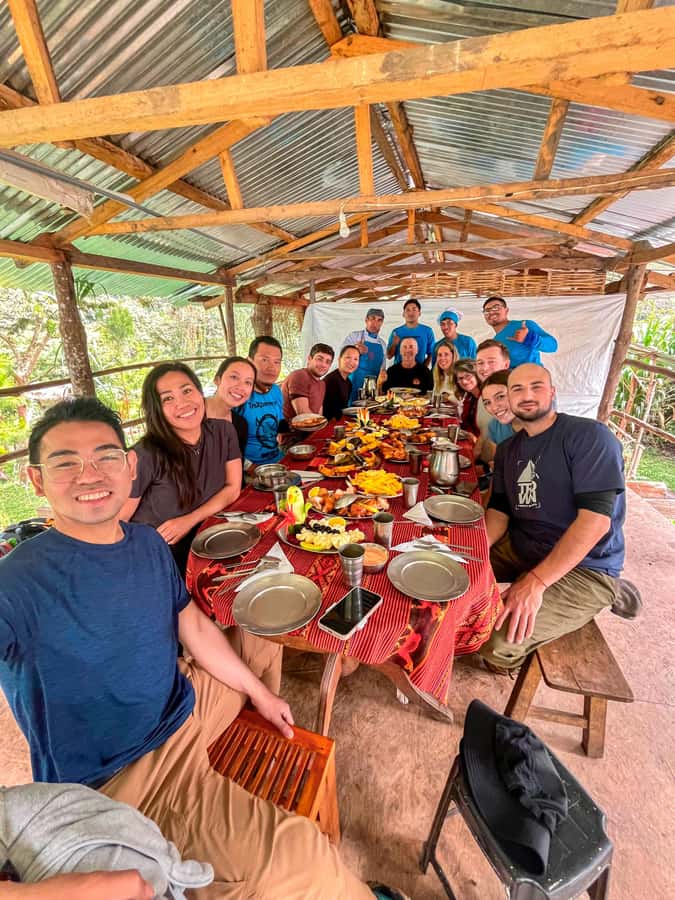
I also like the balance between effort and support. You hike under your own power, but muleteers carry camping equipment in a duffle bag weighing up to 7 kilograms, and cooks prepare breakfast, lunch, dinner, snacks, and drinks. The group is limited to 16 people, which gives guides a better chance to notice when someone is struggling.
The company receives a perfect 5 rating from 79 reviews, and the praise is strikingly consistent. Guides such as Cesar, Roger, José, Gilbert, Miguel, Elias, Eddie, and Klever are repeatedly singled out for encouragement, organization, humor, and care. The cooking team receives just as much praise. Meals are not basic trail food. Several people describe them as some of the best food they ate in Peru, with plenty of vegetarian choices.
That support matters because the physical side is real. One useful benchmark from the trip is that you should feel comfortable with long walks, including days that can feel comparable to 25 kilometers for an active hiker. You do not need to be a mountaineer, but you should train for hills and arrive ready to walk for several hours at a time.
More Hiking & Trekking in Cusco
- From Cusco: 7 Lakes Ausangate Trek with Breakfast and Lunch
★ 4.8 · 360 reviews - Cusco: Rainbow Mountain Tour and Red Valley Hike (Optional)
★ 4.7 · 149 reviews - Cusco: Full-Day Rainbow Mountain & Red Valley Trekking Tour
★ 4.5 · 121 reviews
Day 1: Humantay Lake and a cold night above 4,000 meters
Your day begins early, with pickup around 4:30 a.m. from a hotel or Airbnb near Cusco’s historic center. A three-hour drive takes you to Mollepata, where you have breakfast before meeting the guide and support team.
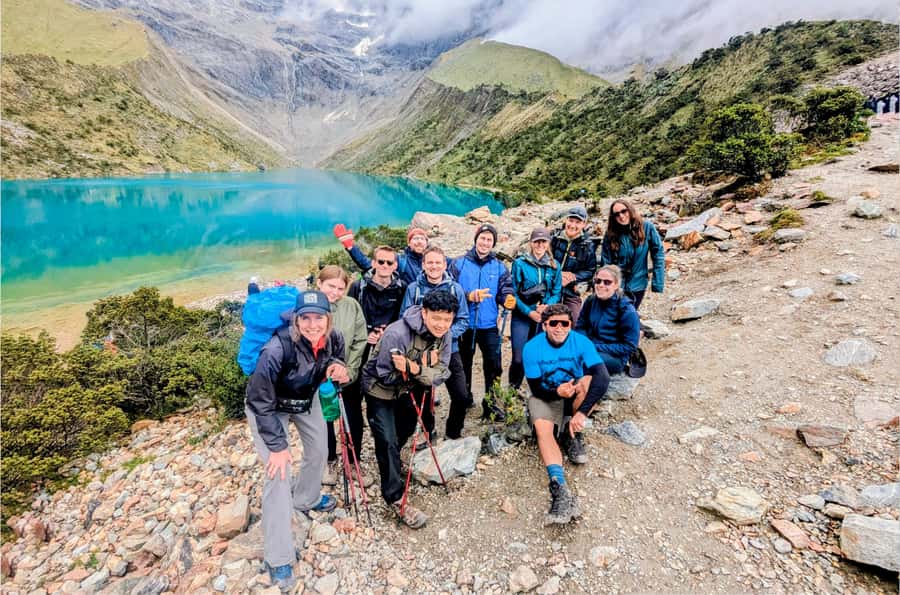
From the trailhead, the climb to Humantay Lake takes about three hours. The lake sits at 4,200 meters, so the short distance does not tell the whole story. The air is thin, the trail rises steadily, and your body may still be adjusting to Cusco’s altitude.
Humantay Lake is the day’s reward. Its turquoise water sits below steep mountain slopes and glacial peaks. Take your time here, but remember that the hike is only partway over. You descend to Soraypampa for lunch, then climb gently for another two hours to the Salkantay Glamp campsite at about 4,150 meters.
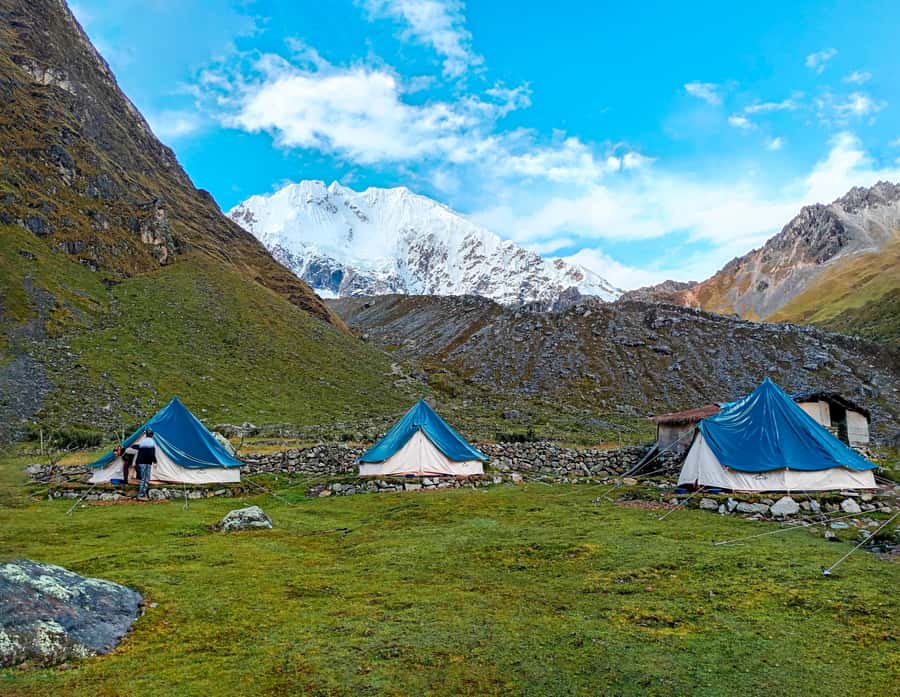
This first night is a special part of the trip. You sleep in a large, comfortable tent rather than a basic backpacking shelter, with a warm dinner and a wide view of the night sky. The mountain above camp can feel enormous, and the stars are often one of the most memorable details of the entire trek.
The drawback is simple: this is a tough first day. Starting high and climbing higher can cause headaches, nausea, or fatigue. A traveler on the trip found acetazolamide helpful for altitude problems, but medication decisions belong with your doctor. More important, spend time acclimatizing in Cusco before the trek, drink water, and tell your guide at once if you feel unwell.
Day 2: Salkantay Pass, glacier views, and the descent to cloud forest
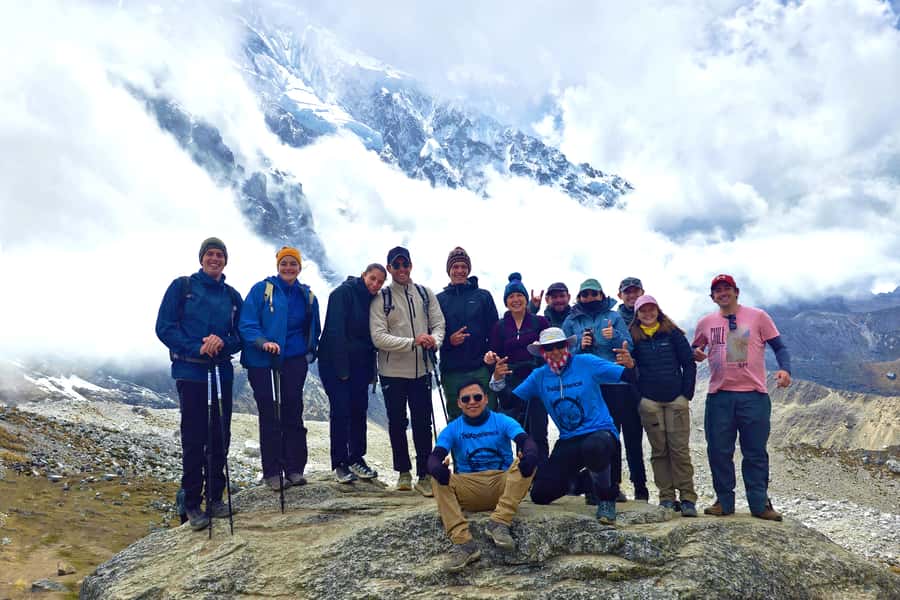
You start with coffee or coca tea, then hike toward Salkantay Pass. At 4,630 meters, this is the highest point of the five days and the moment that demands the most steady effort.
The pass gives you broad mountain views, including Salkantay’s glacial surroundings. You also stop near a glacial lake before beginning the long descent. The change happens gradually at first, then becomes clearer as the cold highlands give way to warmer, greener country.
Lunch at Wayracmachay breaks up the descent. Afterward, the trail continues toward Collpapampa at 2,770 meters. By evening, the air is noticeably warmer, and you sleep in comfortable Andean huts.
This day is not as short or easy as the itinerary may sound. The pass is a major climb, while the descent can be hard on knees and thighs. Trekking poles are not included, but they can be rented and are worth considering if you dislike steep downhill walking.
The variety makes the effort worthwhile. In the morning, you are surrounded by high peaks and cold air. By evening, plants, waterfalls, and warmer temperatures tell you that the Amazon side of Peru is getting closer. That contrast is one of the Salkantay route’s great strengths.
Day 3: Pachamanca, coffee, and the first view of Machu Picchu
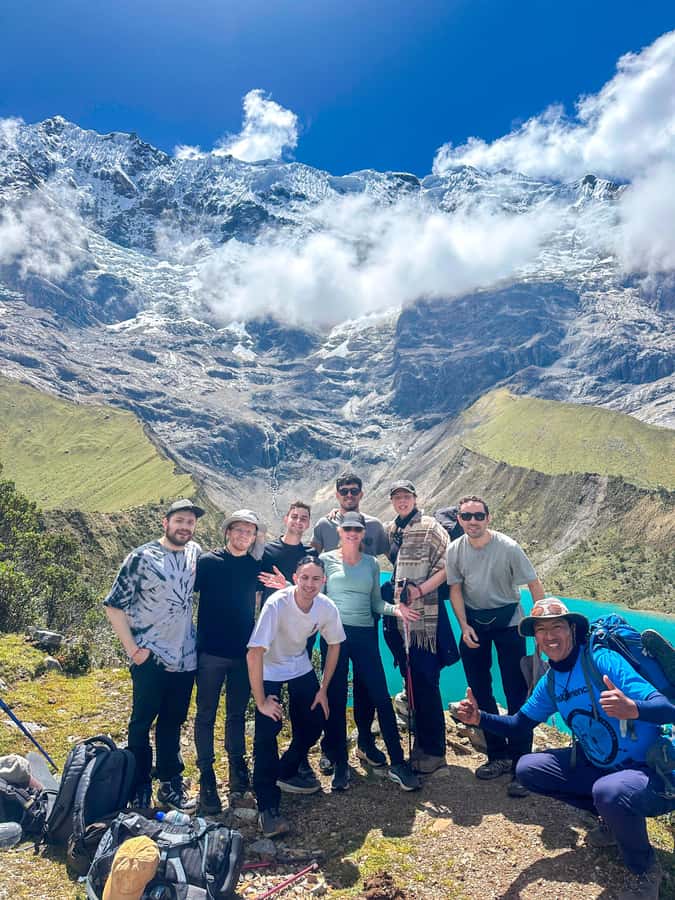
Day three feels more cultural and less severe. After breakfast, you follow trails through plantations and forest, crossing wooden bridges and passing waterfalls on the way to Lucmabamba at about 2,000 meters.
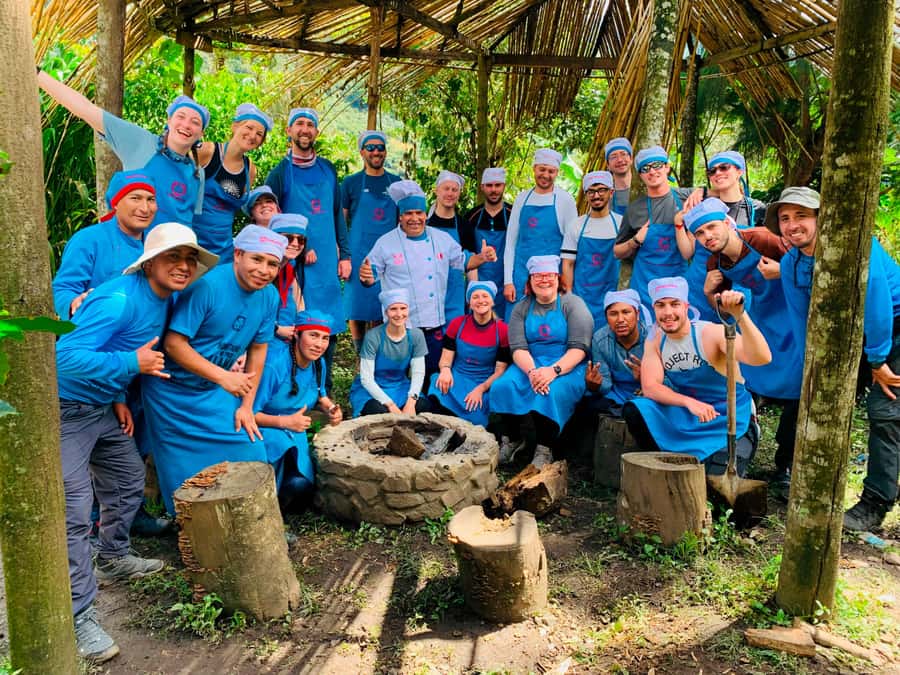
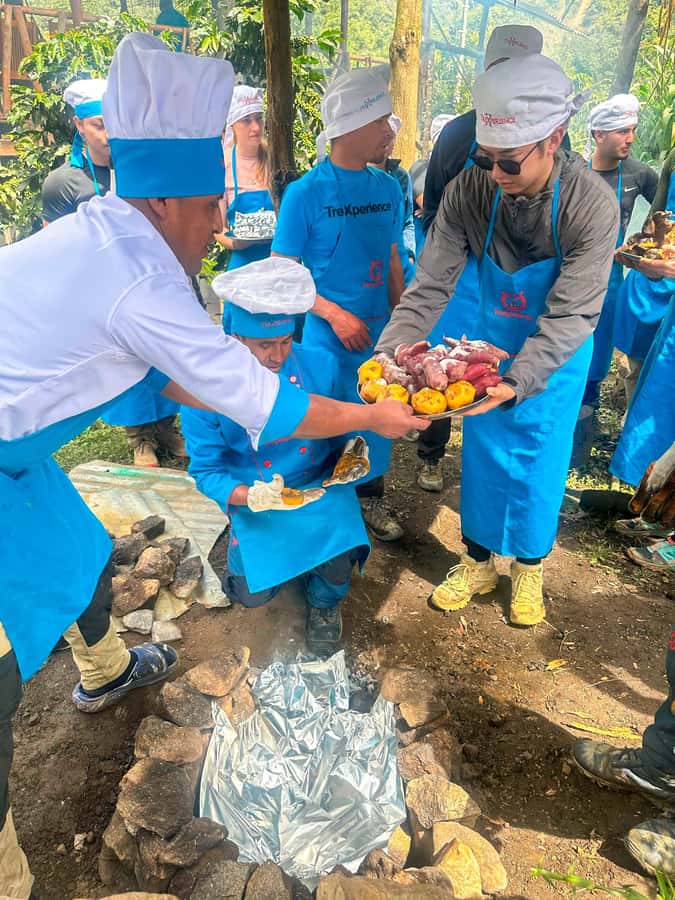
The food experience here is a real highlight. Pachamanca is a traditional Andean cooking method in which food is prepared in an earth oven heated by stones. You take part in a cooking class and enjoy the meal afterward. It gives the trek a connection to local food traditions that a packed lunch cannot provide.
You also visit coffee farms and taste freshly brewed coffee. This is a welcome stop after two demanding days, and it helps you understand the crops grown in the warmer valleys below the pass. If coffee matters to you, this may be one of the most satisfying small additions to the trip.
One point about the day’s rhythm deserves attention. The Pachamanca activity comes before the afternoon hike, so you eat and then continue walking. One person on the trip felt the flow would be better with the hike first and the feast afterward. I can see both sides: the meal is a pleasant break, but a heavy lunch before a three-hour climb may not suit everyone.
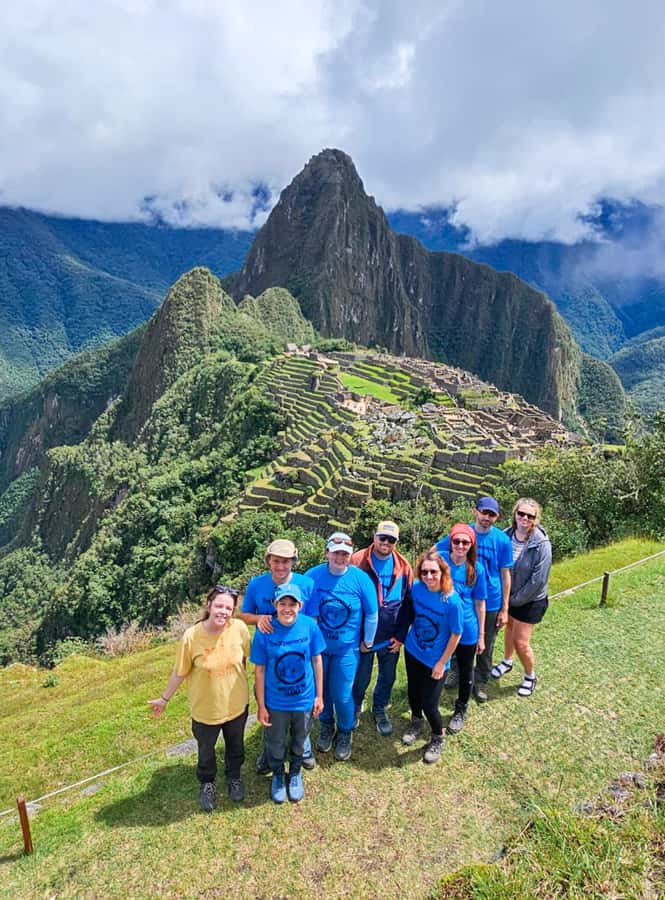
The afternoon route follows part of the Inca Trail for about three hours to Llactapata, an Inca site at 2,750 meters. The reward is your first clear view of Machu Picchu. You do not yet enter the citadel, but seeing it across the valley gives the next day a strong sense of purpose.
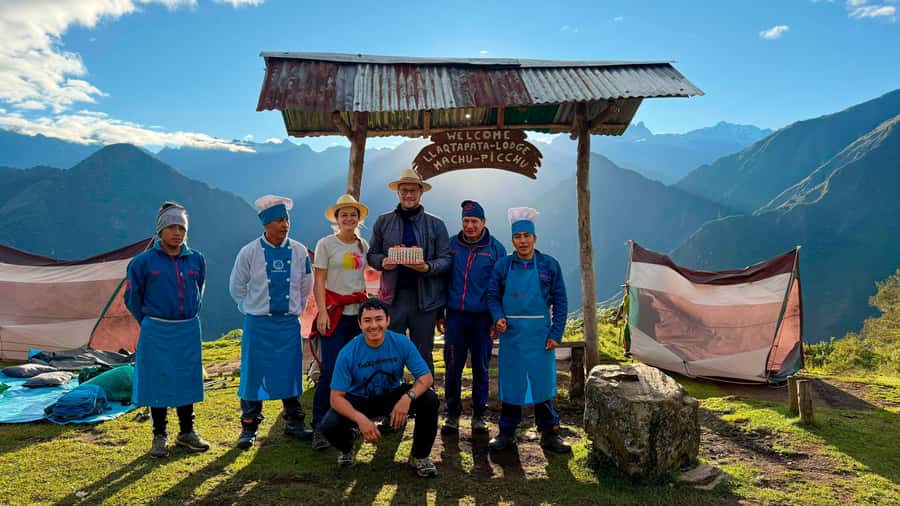
You camp at Llactapata with Machu Picchu in sight. That overnight view is a major reason to choose this route. Instead of reaching the ruins only after a train or bus ride, you approach them slowly, on foot, with the citadel appearing across the mountains.
More Inca Trail Treks in Cusco
- Cusco: 4-Day Inca Trail to Machu Picchu with Accommodation
★ 4.8 · 432 reviews - Cusco: Machu Picchu 2-Day Inca Trail with Panoramic Train
★ 4.9 · 260 reviews - From Cusco: 2-Day Inca Trail to Machu Picchu
★ 4.2 · 244 reviews - Machu Picchu: Inca Trail 2-Day Overnight Guided Tour
★ 4.9 · 203 reviews
Day 4: Llactapata, Mandor, and the railway walk to Aguas Calientes
Wake up with Machu Picchu visible from camp, then enjoy fresh coffee before descending for about two hours to the hydroelectric station. The descent is easier than the pass but still requires care, especially after three days of walking.
A final brunch with the team follows at the station. Then you walk for about three hours along the railway and the Urubamba River toward Aguas Calientes, the town below Machu Picchu.
This railway section is less remote and less dramatic than the high mountain trail, but it has its own appeal. The river, steep valley walls, and warmer vegetation create a different setting. You also stop at Mandor Botanical Gardens, where orchids and birdlife add interest to the walk.
Aguas Calientes gives you a proper bed for the final night in a three-star hotel. You can explore town, rest, or visit the hot springs before dinner at a local restaurant. After several nights in camps and huts, a shower and hotel room feel like a luxury.
The railway walk is also the day to manage your expectations. You are not simply relaxing before Machu Picchu. Three hours beside the tracks still adds to your total distance, and your feet may be tired. Wear comfortable shoes, keep water handy, and save some energy for the early morning ahead.
Day 5: Machu Picchu at sunrise and the panoramic train home
The final morning begins early. After breakfast, you take one of the first buses up to Machu Picchu, aiming for an early visit and possible sunrise views.
Your guide leads a two to three-hour tour of the citadel. This is where the guide’s skill matters most. A good guide does more than point at stones. Guides including José, Cesar, Roger, Gilbert, and Klever have been praised for explaining Inca culture, answering questions, and keeping the group organized.
After the guided visit, you have time to explore independently. Huayna Picchu and Machu Picchu Mountain are available only with separate permits booked in advance. Do not assume you can decide at the gate. If you want either climb, arrange it when booking the trek and check that your Machu Picchu entry circuit allows it.
You return to Aguas Calientes for lunch before boarding the Panoramic Vistadome or 360° train to Ollantaytambo. Large windows and broad views make the train a pleasant final chapter, especially after five days of hiking. A private van then takes you back to Cusco, with arrival expected around 7:30 p.m.
That makes the last day long. You visit Machu Picchu, return to town, take the train, transfer by van, and arrive in Cusco at night. It is efficient, but not leisurely. If you plan another early excursion the following morning, give yourself time to rest.
What the $655 price really covers
At $655, this trek offers solid value because many major costs are already bundled together. You receive:
- Entrance fees for the Salkantay Trek and Machu Picchu
- Professional English or Spanish-speaking guides
- Two camping nights, one glamping night, and one three-star hotel night
- Four breakfasts, three lunches, three dinners, water, and daily snacks
- Experienced cooks, muleteers, and camping support
- A duffle bag allowance of up to 7 kilograms
- Sleeping pad, pillow, rain poncho, and hand towels
- Round-trip Machu Picchu buses
- Vistadome or 360° train service
- Hotel pickup and drop-off near central Cusco
- Satellite phone, first-aid supplies, and oxygen
The food and support team are especially valuable. You do not need to plan four days of trail meals, and you do not have to carry camping equipment on your back. Fresh drinks, snacks, and water refills also reduce the small daily worries that can wear you down.
You still need to budget for a sleeping bag, inflatable mattress, and trekking poles if you want to rent them. Huayna Picchu and Machu Picchu Mountain permits cost extra and must be arranged in advance. Bring cash too. Small purchases and tips are easier when you are not relying only on cards.
What to pack for comfort and safety
Keep your personal backpack lightweight and no larger than 25 liters. Machu Picchu does not allow larger packs inside, so a small daypack is useful from the start.
Pack clothing for both cold and warm conditions. The route moves from 4,630-meter mountain air to humid cloud forest, so layers work better than one heavy jacket. Include hiking shoes, comfortable shoes, rain gear, hiking pants, warm layers, a sun hat, sunglasses, sunscreen, and insect repellent.
You should also bring toiletries, hand sanitizer or tissues, toilet paper, personal medication, bandages, a head torch, extra camera batteries, and cash. Your passport is required, and passport details are needed when booking. Bring a student card if you plan to use one for an applicable ticket.
The tour provides a rain poncho, but your own waterproof layer is still sensible. Weather can change quickly in the mountains, and wet clothing becomes uncomfortable fast.
Who should book this trek?
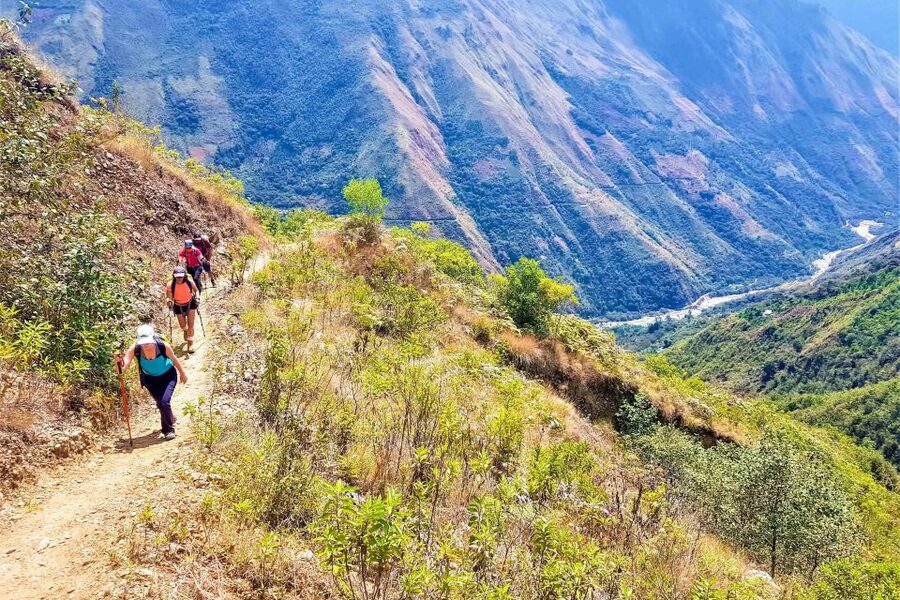
I would recommend it to you if you want Machu Picchu to feel like the end of a journey rather than a standalone sightseeing stop. The route suits active hikers who enjoy changing scenery, local food, basic camping, and a little physical discomfort in exchange for memorable views.
It is also a strong choice if you want support without giving up the feeling of walking through the Andes. The small group, cooks, muleteers, guides, and organized transfers make the trek easier to manage than an independent expedition.
You should think twice if you have heart problems, back problems, mobility limitations, or if you are pregnant. Children must be accompanied by an adult, and unaccompanied minors are not accepted. The first day’s altitude and the second day’s pass are not minor obstacles.
The guides can adjust their pace and provide encouragement. One guide even arranged an alternative for a person who could not walk part of the route. Still, flexibility from the staff does not remove the need for a reasonable level of fitness.
Final verdict: Is this Salkantay Trek worth booking?
Yes, if you want a well-supported but genuinely active route to Machu Picchu. The best reasons to book are the high mountain scenery, the Llactapata campsite view, the Pachamanca and coffee stops, and the consistently praised food and guiding.
I would not book it as a casual add-on to a short Peru visit. You need time to adjust to altitude, patience for early mornings, and enough stamina for long walking days. Tell the company about dietary needs when you book, carry cash, and arrange any Huayna Picchu or Machu Picchu Mountain permit early.
For an active visitor who wants comfort where it counts and a route with more substance than a quick train ride, $655 is a fair price. Just respect the altitude, pack light, and let the guides know how you are feeling before a headache becomes a bigger problem.
FAQ
How long is the Salkantay Trek?
The trek lasts five days and includes the walk to Machu Picchu, a guided visit to the citadel, and the return to Cusco by panoramic train and private van.
What time does pickup begin?
Pickup is around 4:30 a.m. from hotels or Airbnbs near Cusco’s historic center.
What languages do the guides speak?
Guides are available in English and Spanish.
Is the train back to Cusco included?
Yes. The package includes a Panoramic Vistadome or 360° train to Ollantaytambo, followed by a private van to Cusco.
Are Huayna Picchu and Machu Picchu Mountain included?
No. Both require separate permits, and you need to book them in advance.
What accommodation is included?
You spend two nights camping, one night glamping at the Salkantay campsite, and one night in a three-star hotel in Aguas Calientes.
More Ways to Reach Machu Picchu
- The First Class Machu Picchu Train by Inca Rail
★ 4.0 · 182 reviews - From Cusco: 1-day Machu Picchu Tour by Train
★ 4.6 · 138 reviews - Private Tour to Sacred Valley and Machu Picchu from Cusco
★ 5.0 · 133 reviews - Machupicchu 1 day tour
★ 5.0 · 128 reviews
More Machu Picchu Tours in Cusco
- From Cusco: Full-Day Group Tour of Machu Picchu
★ 4.7 · 1,767 reviews - Machu Picchu Day Trip from Cusco
★ 4.5 · 1,644 reviews - Machu Picchu: Full-Day Tour from Cusco with Optional Lunch
★ 4.6 · 927 reviews - From Cusco: 2-Day Trip to the Sacred Valley and Machu Picchu
★ 4.6 · 265 reviews
Just added around Cusco
- Cusco: Rainbow Mountain and viewpoint red valley ( optional)★ 4.8 · 3 reviews
- Montaña de Colores: tour en cuatrimotos día completo★ 3.3 · 3 reviews
- Tour Pallay Punchu Trek Full Day★ 4.2 · 3 reviews
- Excursion Cusco – Puno – Titicaca Observatory Train★ 5.0 · 3 reviews
- Cusco: Palcoyo Mountain Day Trip with Breakfast and Lunch★ 4.8 · 3 reviews
- Maras Moray★ 5.0 · 3 reviews
- Tour to Laguna Humantay with breakfast and lunch from Cusco★ 4.7 · 3 reviews
- From Cusco:Chinchero, Moray, Maras, Ollantaytambo with lunch★ 5.0 · 3 reviews
Machu Picchu Tours, compared.



Machu Picchu: Full-Day Tour from Cusco with Optional Lunch
Read our review →
4-Day Inca Trail to Machu Picchu with Accommodation
Read our review →
2-Day Trip to the Sacred Valley and Machu Picchu
Read our review →
Machu Picchu 2-Day Inca Trail with Panoramic Train
Read our review →
