
Reviewed · MACHU PICCHU TOURS
From Cusco: 5-Night Trip with Salkantay Trek & Machu Picchu
Big views come with hard miles. This five-day Salkantay trip links Cusco with Humantay Lake, the Salkantay Pass, a coffee farm, and Machu Picchu, while giving you a surprisingly varied set of places to sleep. I like the mix of high-Andes trekking and jungle-side scenery, and I like that the price includes meals, a personal porter for up to 7 kilograms, trains, buses, and entry fees. The main catch is simple: this is a serious trek, not a gentle sightseeing circuit.
I also like the small-group limit of 16 people and the final walk into Machu Picchu Town rather than relying on transport for every stage. Altitude, steep ground, cold nights, and changing weather demand proper preparation, though, and the tour is not suitable for pregnant women or people with heart, back, or other pre-existing medical conditions.
In This Review
- Key points to know before booking
- Why the Salkantay route is a strong Machu Picchu choice
- Night one: a glass cabin near Salkantay
- Day one: Humantay Lake and the Salkantay Pass
- Day two: from Wayracmachay to the Hobbit house
- Day three: coffee, warmer valleys, and Llactapata
- Day four: Llactapata, Mandor, and Machu Picchu Town
- Day five: Machu Picchu and the return to Cusco
- Food, porters, and what the price really covers
- Group size, guide support, and the level of effort
- Who should book this Salkantay trip?
- Should you book it?
- FAQ
- How long is the Salkantay and Machu Picchu trip?
- Is hotel pickup included?
- What accommodation is included?
- Are meals included?
- Is a porter included?
- Is the return train to Cusco included?
- Is Huayna Picchu included?
Key points to know before booking
- Humantay Lake and Salkantay Pass: The first hiking day brings the trip’s biggest high-altitude scenery, but it is also one of the most demanding.
- Five different sleeping settings: You spend nights in a glass cabin, two campsites, a Hobbit house, and a hotel.
- A useful porter allowance: A personal porter can carry up to 7 kilograms, leaving you with a lighter day pack.
- A long change of scenery: The route moves from glaciated mountain views to warmer valleys, a coffee farm, waterfalls, and Machu Picchu.
- Most major costs are covered: Meals, water, guides, chefs, porters, entry fees, transport, the return Expedition train, and Machu Picchu buses are included.
- Small group, English guide: The group is limited to 16 people, with hotel pickup and a live English-speaking guide.
Why the Salkantay route is a strong Machu Picchu choice
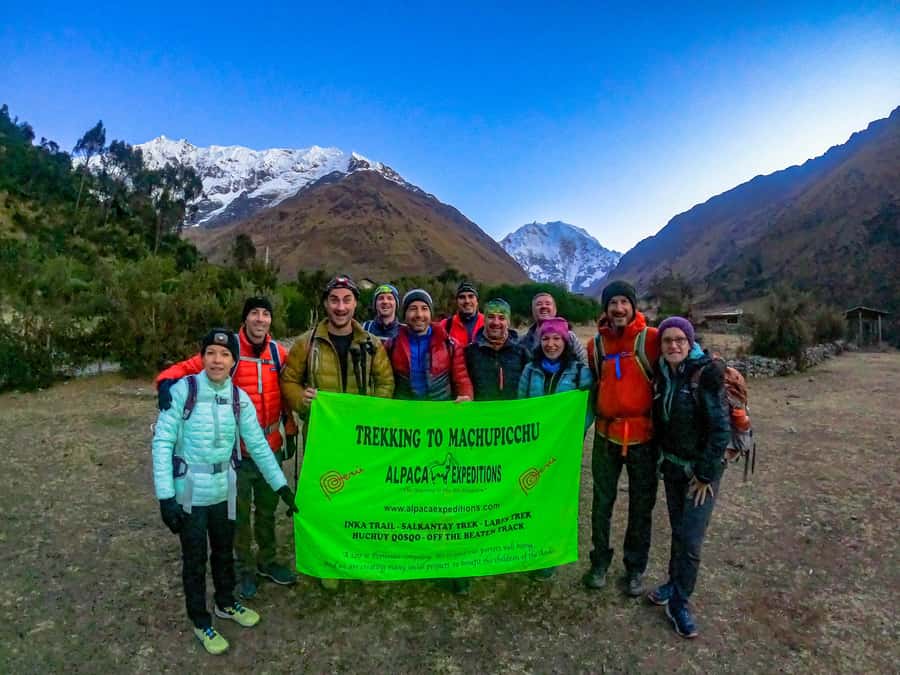
Many people come to Peru with Machu Picchu as the main goal. That is understandable, but the route you take there shapes the whole trip. Salkantay offers a broad, open approach through the Andes, with more mountain scenery than a direct rail journey and a feeling of moving through several climate zones.
The reward is variety. You begin among high peaks and glacial scenery, then descend toward warmer valleys with coffee-growing country. By the time you reach Machu Picchu Town, the trip has changed character several times.
I would choose this route if you want Machu Picchu to be the final chapter of a proper mountain journey. I would not choose it if you want a short, comfortable visit with minimal walking. The route is designed for people who enjoy long days outside and accept basic camping as part of the bargain.
At $650 per person, the package has strong practical value. You are not just paying for a guide and admission to Machu Picchu. The price covers five breakfasts, four lunches, four dinners, water, accommodation, transportation, entry fees, chefs, porters, the return train, and the round-trip bus at Machu Picchu.
You still need to budget for equipment not supplied, including a sleeping bag, air mattress, trekking poles, day pack, and headlamps. Travel insurance is also advisable. A Huayna Picchu mountain pass costs an additional $75 and must be booked ahead.
More Hiking & Trekking in Cusco
- From Cusco: 7 Lakes Ausangate Trek with Breakfast and Lunch
★ 4.8 · 360 reviews - Cusco: Rainbow Mountain Tour and Red Valley Hike (Optional)
★ 4.7 · 149 reviews - Cusco: Full-Day Rainbow Mountain & Red Valley Trekking Tour
★ 4.5 · 121 reviews
Night one: a glass cabin near Salkantay
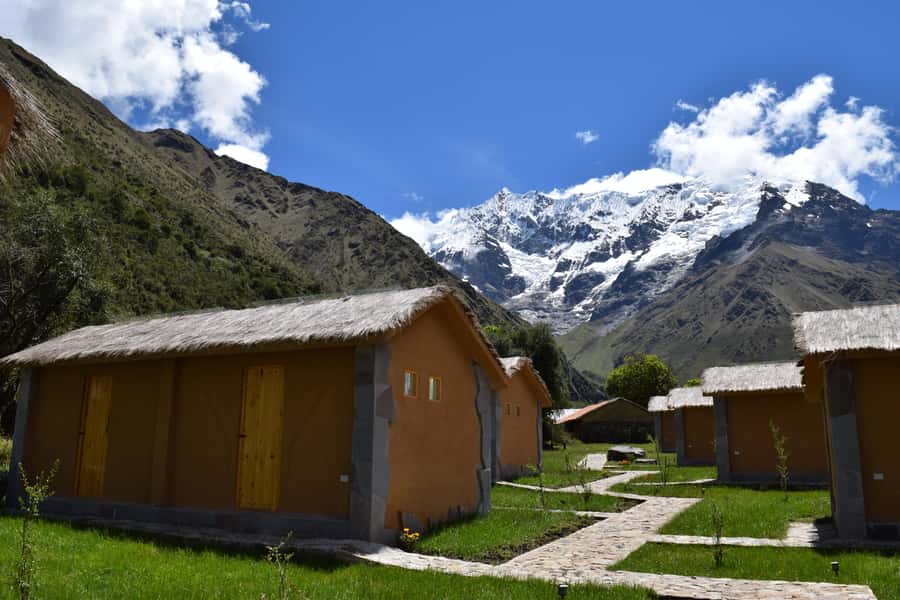
The experience begins with pickup from your hotel in Cusco, with the transfer to the Salkantay glass cabins scheduled for 3 p.m. This first night is more than a place to sleep. A glass cabin gives you a chance to settle into the mountain setting before the demanding walking starts.
It is an appealing contrast to the campsite nights that follow. You get a more comfortable first evening, then trade that comfort for a closer connection with the outdoors. The trip also includes an outdoor jacuzzi at the Hobbit house later, so accommodation is not treated as an afterthought.
You should use this first afternoon wisely. Organize your day pack, check rain gear, and keep warm clothing ready. The next stages require thermal layers, hiking shoes, sun protection, and clothing for changing conditions. Mountain weather can shift quickly, so a waterproof layer belongs near the top of your bag, not buried underneath everything else.
Day one: Humantay Lake and the Salkantay Pass
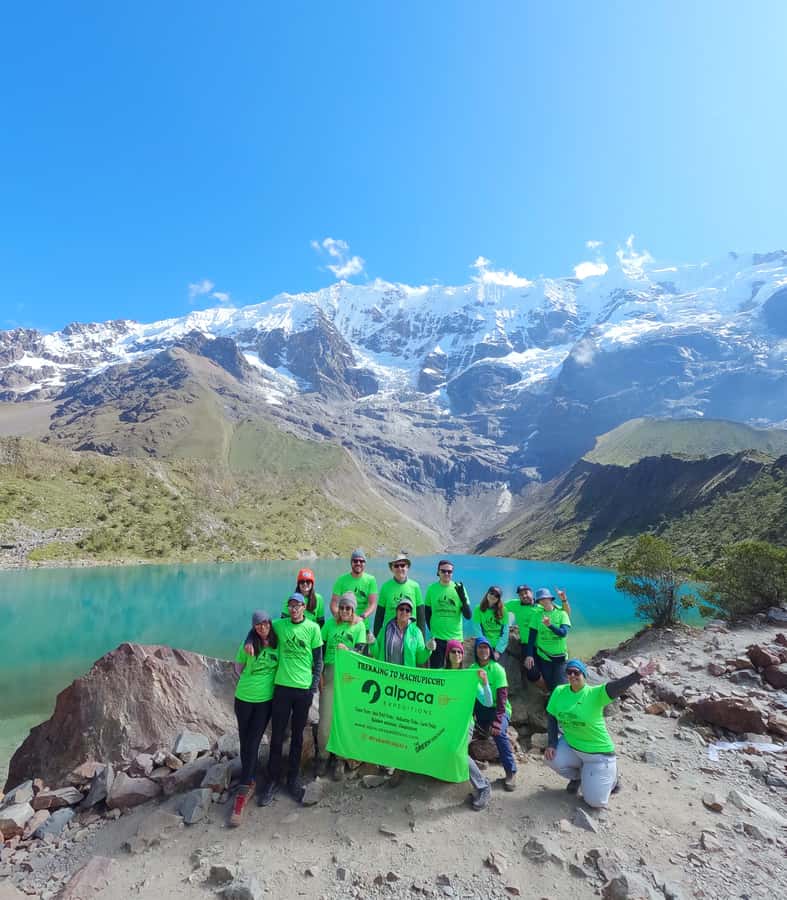
The first full hiking day follows the route from Soraypampa campsite to Humantay Lagoon, then onward to Salkantay Pass and Wayracpunko. It is the day that best explains why this trek is considered one of the great walks in the world.
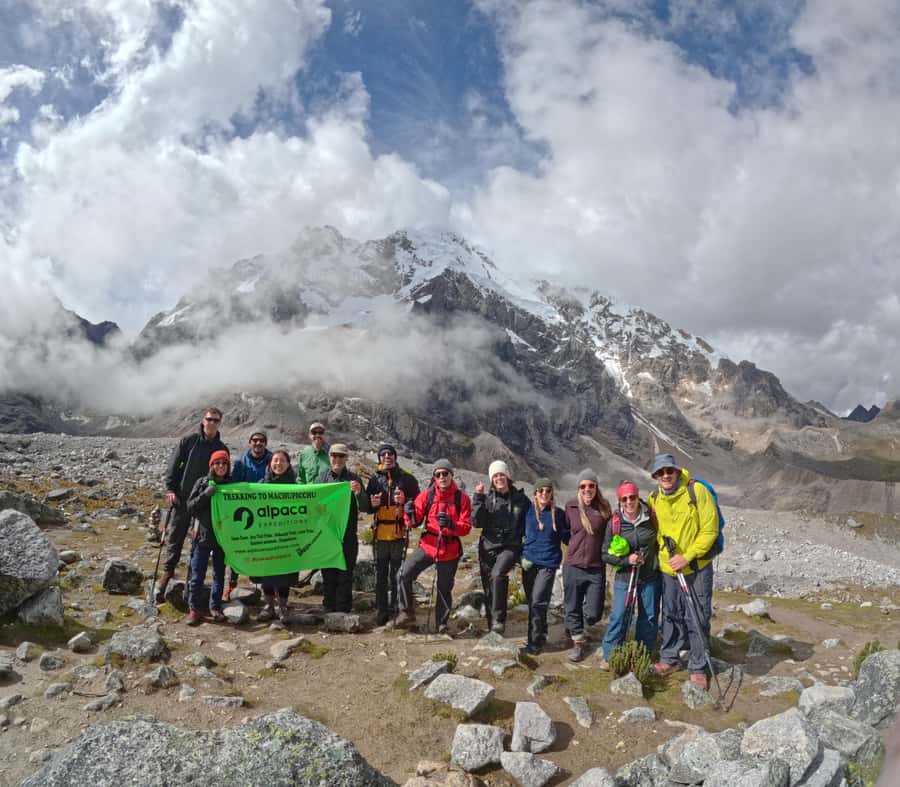
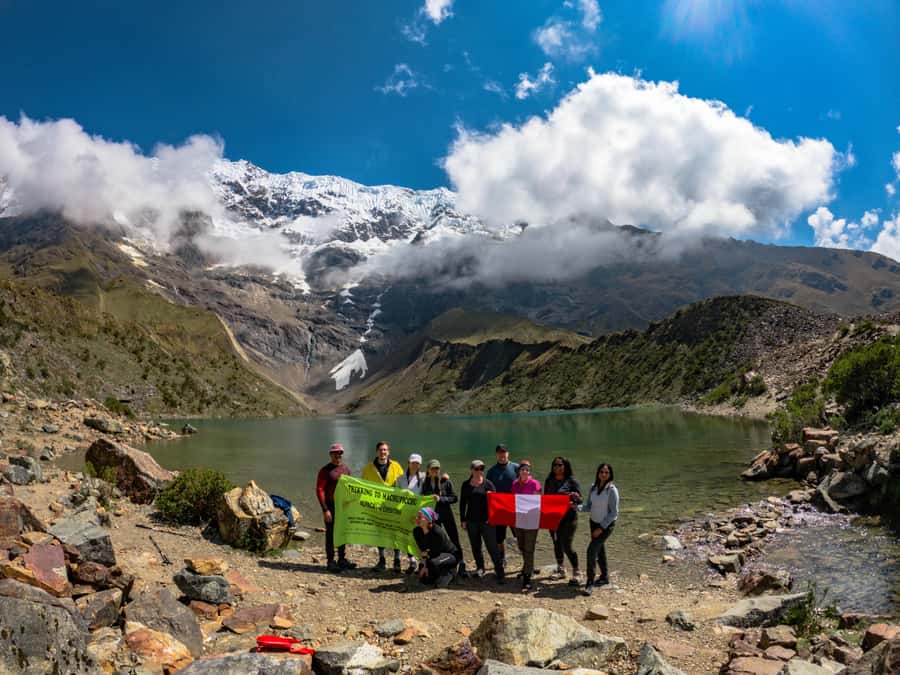
Humantay Lake is the obvious photo stop. The setting is alpine, dramatic, and tied to the glaciated peaks around Salkantay Mountain. Bring sunglasses, a sun hat, sunscreen, and a camera, but do not let the photo stop distract you from the conditions. At altitude, even a short climb can feel much harder than expected.
The Salkantay Pass is the high point of the route and the stage most likely to test your legs. The information provided does not give exact distances, walking times, or altitude figures, so you should check those details before departure. What is clear is that this is not a casual walk. Good hiking shoes, thermal clothing, rain gear, and steady pacing matter more than speed.
After the pass, the route continues toward Wayracpunko and a campsite. The first night under canvas comes after a full day in the high mountains. You receive dinner, and professional chefs are included, but camping still means less comfort than a hotel. A sleeping bag and air mattress are not included, so arrange those before you arrive.
Day two: from Wayracmachay to the Hobbit house
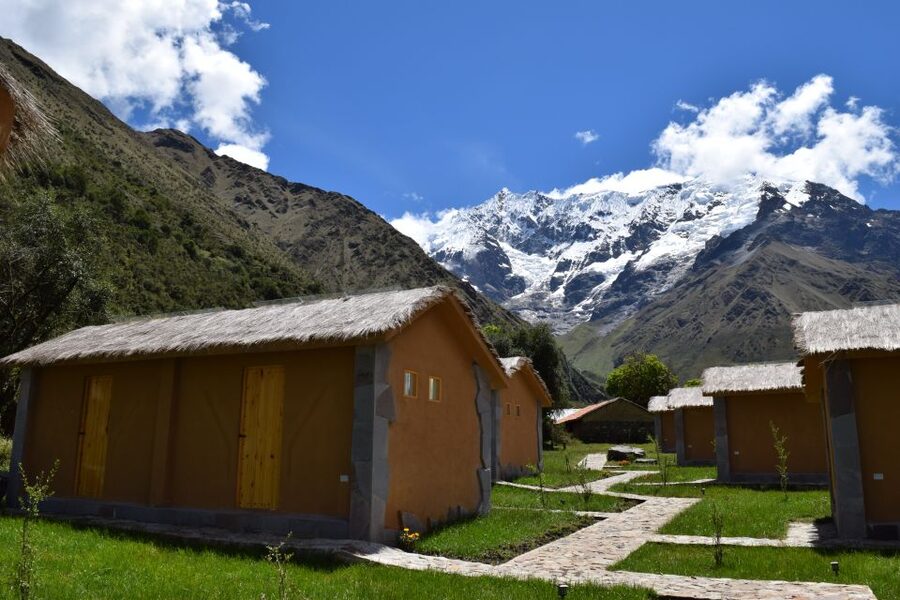
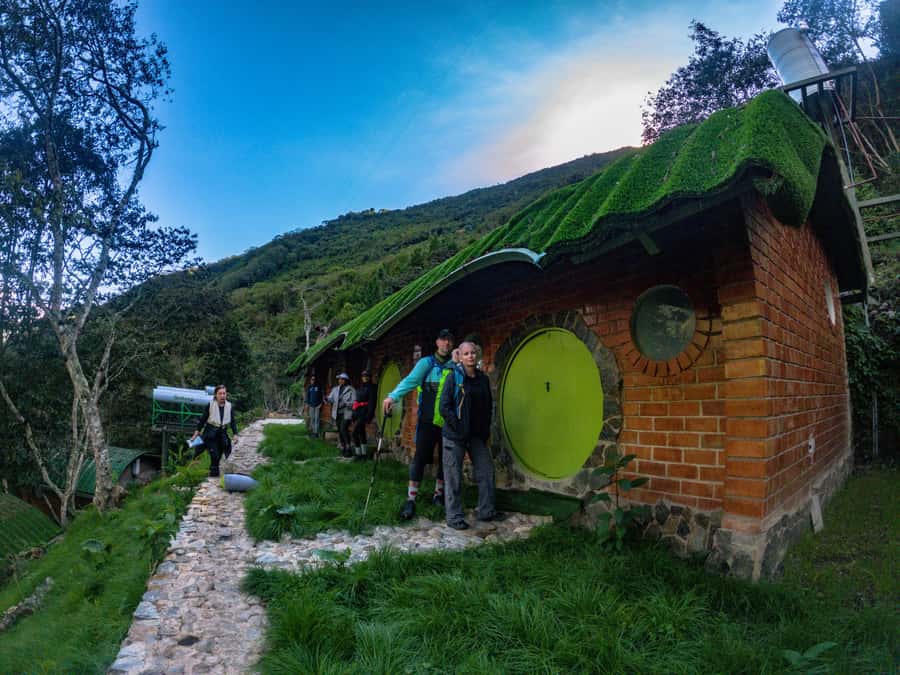
The second hiking stage runs from Wayracmachay through Chaullay and Ccollpapampa Loreta, where you spend the night in a Hobbit house. This is where the scenery begins to change and the trip feels less like a high mountain crossing.
The route descends away from the coldest alpine setting toward warmer country. That change is one of the pleasures of Salkantay. You are not looking at the same type of view for five days, and your clothing needs to change with the route. Keep insect repellent and a T-shirt handy as the temperature rises.
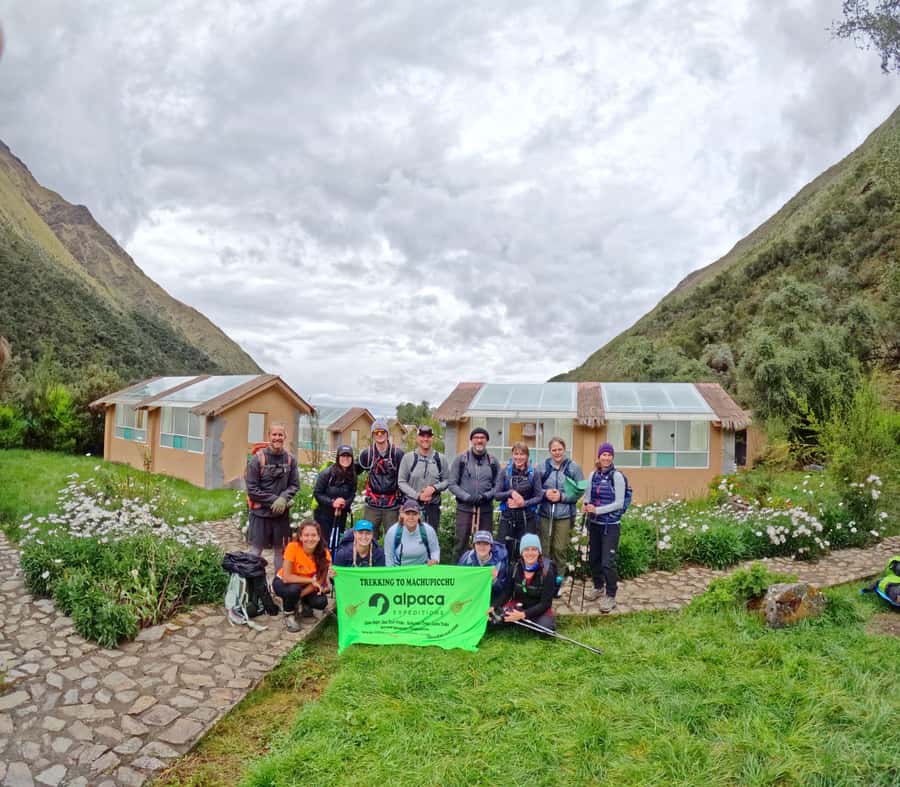
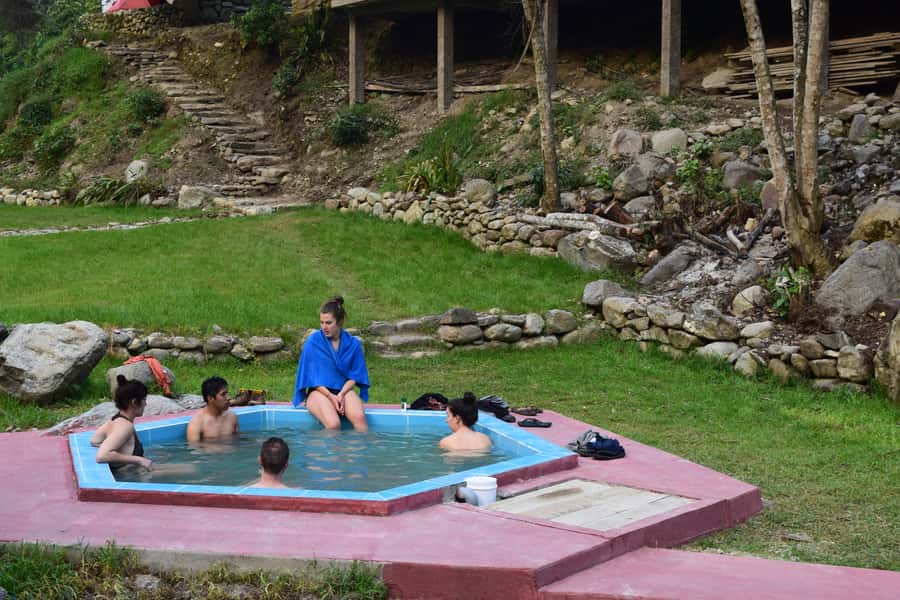
The Hobbit house is one of the most memorable accommodation choices on the trip. An outdoor jacuzzi gives you a welcome way to relax after a long day, though you should not mistake novelty for luxury throughout the whole journey. Two nights are spent camping, and comfort levels will vary from one stop to the next.
The included dinners and breakfasts help keep the logistics simple. You do not need to search for restaurants after walking, and the presence of professional chefs is useful on a trek where you need proper fuel. Still, tell the operator about dietary needs before setting out, since the supplied information does not specify special-diet arrangements.
More Inca Trail Treks in Cusco
- Cusco: 4-Day Inca Trail to Machu Picchu with Accommodation
★ 4.8 · 432 reviews - Cusco: Machu Picchu 2-Day Inca Trail with Panoramic Train
★ 4.9 · 260 reviews - From Cusco: 2-Day Inca Trail to Machu Picchu
★ 4.2 · 244 reviews - Machu Picchu: Inca Trail 2-Day Overnight Guided Tour
★ 4.9 · 203 reviews
Day three: coffee, warmer valleys, and Llactapata
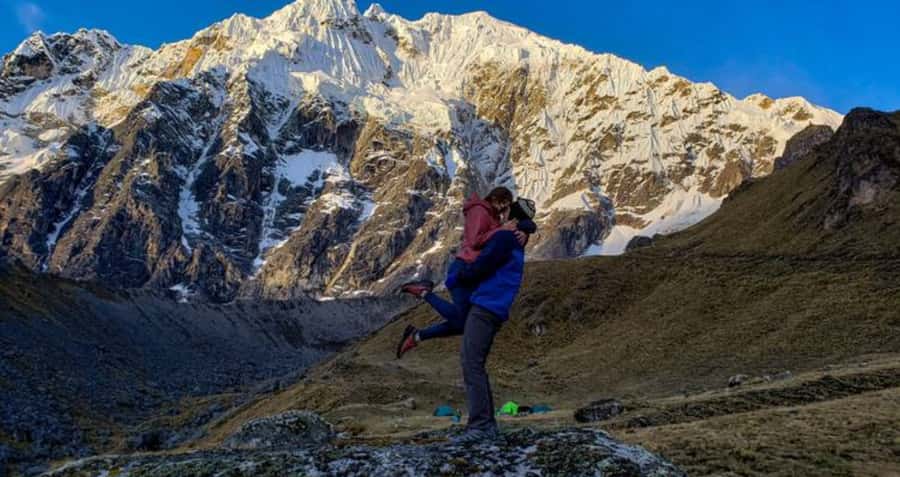
Day three travels from Loreta to La Playa Sahuayaku and Lucmabamba, including a coffee farm, before reaching Llactapata for a campsite facing Machu Picchu. This is the route’s most interesting change of pace.
The coffee farm adds a working, local element to the walk. Instead of moving only from viewpoint to viewpoint, you get a connection to the agriculture of the region. That matters because it helps explain how people use these lower, warmer valleys. The experience is still a trek, not a dedicated coffee tour, so the supplied information does not promise a detailed tasting or farm workshop.
Camping at Llactapata, with a view toward Machu Picchu, gives you a strong sense of arrival before you reach the citadel itself. You are close enough to feel that the goal is near, yet the final approach still lies ahead. This overnight stop is likely to be one of the emotional high points of the trip.
The route’s variety also brings practical concerns. Warmer sections mean more attention to water, sunscreen, and insects. Water is included, and you should carry it in a day pack along with your rain layer, snacks if you use them, and personal items.
Day four: Llactapata, Mandor, and Machu Picchu Town
The fourth day begins at the Llactapata lookout and continues to Mandor waterfalls before reaching Aguas Calientes, also known as Machu Picchu Town. This is a satisfying final walking stage because you arrive in town under your own power.
The lookout provides another chance to see the Machu Picchu area from a different angle. The route to Mandor adds waterfalls and a greener setting before the change to town. It is a useful transition: after several nights outside, you finish the trekking portion with a hotel night.
That hotel matters more than it might on an ordinary holiday. After high passes, campsites, and long walking days, a proper room gives you a chance to wash, repack, and prepare for the Machu Picchu visit. The package includes the hotel, but the exact property is not specified, so confirm the standard and location if that matters to you.
You will also want to keep your passport accessible. It is required for the trip, and you should not pack it deep inside luggage carried by a porter.
Day five: Machu Picchu and the return to Cusco
The last day is reserved for Machu Picchu, the ancient citadel that gives the trek its purpose. Entry is included, as are the round-trip bus tickets to the site. That removes two common sources of extra cost and confusion.
The bus is useful because the final day already carries plenty of anticipation and organization. You should still confirm the meeting instructions and starting time, since availability and departure times can vary.
A Huayna Picchu pass is not included. If climbing Huayna Picchu is important to you, the additional $75 fee and advance booking requirement need attention before the trip. Do not assume the regular Machu Picchu entry automatically includes it.
After the visit, the return train is included in Expedition class, followed by transportation back to Cusco. Expedition is a practical rail option rather than a premium upgrade. The important point is that you are not left to arrange the main return leg yourself after five demanding days.
Food, porters, and what the price really covers
The meals are a major part of the value. Five breakfasts, four lunches, and four dinners are included, along with water. Professional chefs prepare the food, which is a useful feature on a route where you burn plenty of energy.
A personal porter can carry up to 7 kilograms per person. That allowance changes how you pack, but it does not mean you can arrive with a full suitcase. You still need a day pack for essentials, and the operator specifically says that the day pack itself is not included.
Carry your own passport, sun protection, rain gear, warm layer, insect repellent, and any personal medical items. A headlamp is also not provided, and it is listed among the required equipment. Sleeping gear and trekking poles are extra as well.
The first-aid kit and oxygen tank are included. These are reassuring safety provisions, but they do not remove the need to judge your own fitness. The tour excludes people with certain medical conditions and is not suitable for pregnant women.
Group size, guide support, and the level of effort
The group limit is 16 participants, which is small enough to keep the walking experience more personal than a large coach tour. Hotel pickup is included, and an English-speaking guide accompanies the trip.
A local indigenous guide can add real value on a route that crosses several environments. The guide is not only there to point out the next turn. You can expect help with route logistics, group pacing, mountain conditions, and the transition from the high Andes to the valleys, though exact guide names are not provided.
The walking remains the central issue. The tour description does not provide mileage, elevation gain, or daily walking hours, so ask for those figures before paying. The route includes Humantay Lake, Salkantay Pass, descents, campsites, and the walk to Aguas Calientes. You need a reasonable level of fitness and comfort with uneven ground.
Take trekking shoes seriously. Break them in before you arrive. Sunglasses and a hat protect you from strong sun, while long sleeves and thermal clothing help with cold conditions. Pack for both extremes rather than assuming Peru will feel warm because the final destination is Machu Picchu.
Who should book this Salkantay trip?
I would recommend it to you if you want a full mountain experience with Machu Picchu at the end. It suits active visitors who enjoy scenic walking, small groups, simple campsites, and unusual accommodation. The coffee farm and changing climates add substance beyond a single famous ruin.
It is also a good fit if you value having major costs handled in advance. Meals, water, transport, entrance fees, trains, buses, chefs, and porters make the $650 price easier to assess. You still need equipment and insurance, but the package removes much of the costly transport planning.
I would steer you elsewhere if you want a relaxed holiday, dislike camping, or have medical concerns covered by the restrictions. The glass cabin and Hobbit house are fun touches, but they do not turn a demanding trek into a soft adventure.
The experience has a rating of 4.7 from six reviews, a positive signal, though a small sample. I would put more weight on the clear inclusions, the route itself, and your readiness for altitude than on the number alone.
Should you book it?
Book this Salkantay trek if you want the long way to Machu Picchu, with dramatic mountain scenery, a coffee-growing valley, several distinct sleeping places, and a return train already arranged. The strongest reasons are the route variety, included logistics, small group size, and porter support.
Before booking, confirm the daily distances, elevation details, sleeping equipment arrangements, and hotel name. If you prepare well and accept the physical demands, $650 is a solid value for five days and five nights. If your priority is comfort or easy access, choose a shorter Machu Picchu option instead.
FAQ
How long is the Salkantay and Machu Picchu trip?
The experience lasts five days and includes five nights of accommodation. Starting times depend on availability.
Is hotel pickup included?
Yes. Pickup is provided from your hotel in Cusco, and the guide comes to collect you for the hike.
What accommodation is included?
You receive one night in a glass cabin, two nights camping, one night in a Hobbit house, and one night in a hotel.
Are meals included?
Yes. The package includes five breakfasts, four lunches, and four dinners, along with water.
Is a porter included?
Yes. A personal porter can carry up to 7 kilograms per person.
Is the return train to Cusco included?
Yes. The return train is included in Expedition class, along with transportation and the round-trip bus ticket to Machu Picchu.
Is Huayna Picchu included?
No. A Huayna Picchu mountain pass costs $75 per person and must be booked in advance.
More Ways to Reach Machu Picchu
- The First Class Machu Picchu Train by Inca Rail
★ 4.0 · 182 reviews - From Cusco: 1-day Machu Picchu Tour by Train
★ 4.6 · 138 reviews - Private Tour to Sacred Valley and Machu Picchu from Cusco
★ 5.0 · 133 reviews - Machupicchu 1 day tour
★ 5.0 · 128 reviews
More Machu Picchu Tours in Cusco
- From Cusco: Full-Day Group Tour of Machu Picchu
★ 4.7 · 1,767 reviews - Machu Picchu Day Trip from Cusco
★ 4.5 · 1,644 reviews - Machu Picchu: Full-Day Tour from Cusco with Optional Lunch
★ 4.6 · 927 reviews - From Cusco: 2-Day Trip to the Sacred Valley and Machu Picchu
★ 4.6 · 265 reviews
Just added around Cusco
- Cusco: Rainbow Mountain and viewpoint red valley ( optional)★ 4.8 · 3 reviews
- Montaña de Colores: tour en cuatrimotos día completo★ 3.3 · 3 reviews
- Tour Pallay Punchu Trek Full Day★ 4.2 · 3 reviews
- Excursion Cusco – Puno – Titicaca Observatory Train★ 5.0 · 3 reviews
- Cusco: Palcoyo Mountain Day Trip with Breakfast and Lunch★ 4.8 · 3 reviews
- Maras Moray★ 5.0 · 3 reviews
- Tour to Laguna Humantay with breakfast and lunch from Cusco★ 4.7 · 3 reviews
- From Cusco:Chinchero, Moray, Maras, Ollantaytambo with lunch★ 5.0 · 3 reviews
Machu Picchu Tours, compared.



Machu Picchu: Full-Day Tour from Cusco with Optional Lunch
Read our review →
4-Day Inca Trail to Machu Picchu with Accommodation
Read our review →
2-Day Trip to the Sacred Valley and Machu Picchu
Read our review →
Machu Picchu 2-Day Inca Trail with Panoramic Train
Read our review →

Machu Picchu: Inca Trail 2-Day Overnight Guided Tour
Read our review →Browse the lists this tour appears in