
Reviewed · MACHU PICCHU TOURS
Cusco: 4-Day Salkantay Trek to Machu Picchu, Panoramic Train
The mountains make you earn Machu Picchu. This four-day Salkantay route combines high-altitude hiking, Humantay Lake, a Pachamanca barbecue, and a comfortable final train ride. I like the smart mix of rough-and-ready trekking with glamping tents, Andean huts, and a 3-star hotel in Aguas Calientes. I also like the small group size, capped at 16, and the care shown by guides such as Alex, José, Filio, Roger, and William.
The main drawback is the second night. The huts and bathrooms at Collpapampa can feel basic, and a warm shower may cost extra. You also need to be fit for long hiking days, with the high point reaching 4,630 meters. This is not a gentle path to Machu Picchu, but it is a memorable one.
In This Review
- Five things to know before you book
- Why this Salkantay route is worth your time
- Day one: Humantay Lake and the first night at SalkaGlamp
- Day two: 4,630 meters at Salkantay Pass
- Day three: Pachamanca, coffee, and the road to Aguas Calientes
- Day four: Machu Picchu and the panoramic train home
- Guides, cooks, and the value of a small group
- What to pack for comfort and safety
- Who should book this trek?
- FAQ
- How difficult is the Salkantay Trek?
- What accommodation is included?
- Is food included during the trek?
- Is Machu Picchu included?
- Can I visit Huayna Picchu or Machu Picchu Mountain?
- What train returns to Cusco?
- Should you book the Salkantay Trek?
Five things to know before you book
- Humantay Lake comes early: You hike to the turquoise lake on the first morning, after a 4:30 a.m. pickup from Cusco.
- The Salkantay Pass is serious hiking: Day two includes a two-hour climb to 4,630 meters, followed by a long descent.
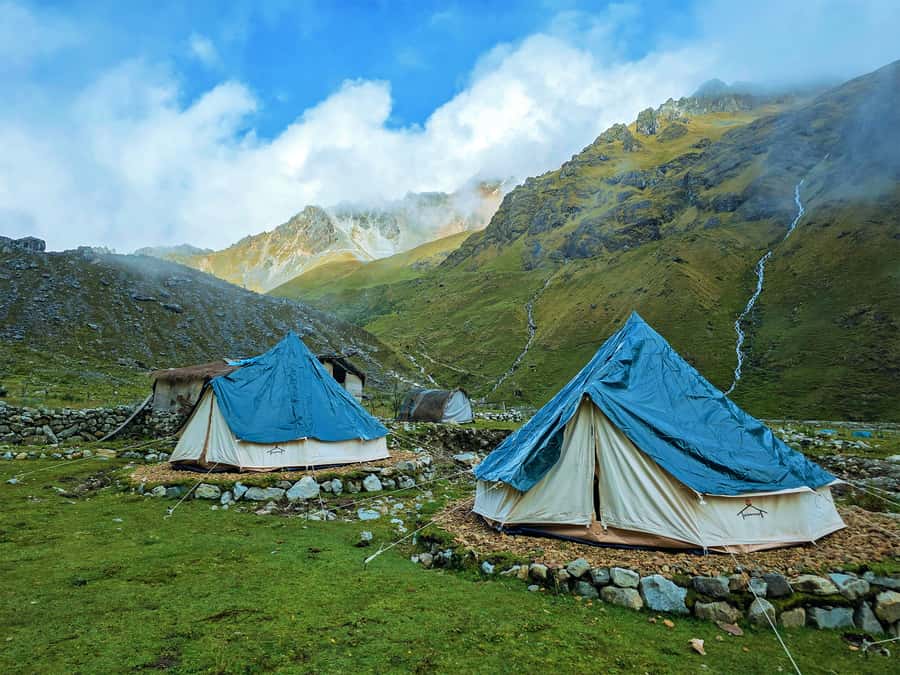
- The sleeping arrangements change each night: Expect a glamping tent, a simple Andean hut, then a 3-star hotel.
- Food is part of the trip: Trail meals, a Pachamanca barbecue, local coffee, snacks, and water are included.
- The return is comfortable: After Machu Picchu, you ride the Vistadome or 360° panoramic train back toward Cusco.
Why this Salkantay route is worth your time
The Salkantay Trek gives you a striking change of scenery over four days. You begin among high Andean peaks and cold mountain air, cross a lofty pass, then walk down into warmer cloud forest before reaching Machu Picchu.
That variety is the heart of the trip. You do not simply walk toward one famous ruin. You see turquoise water beneath Humantay Mountain, snow-covered peaks near Salkantay Pass, orchids and hummingbirds in the forest, small farming areas, coffee production, and the Urubamba valley route near Hidroelectrica.
I especially like the way the schedule pairs demanding walking with cultural activities. The underground Pachamanca barbecue and coffee-making session are not filler. They give you a closer look at local food and farming, and they break up the long miles on foot.
The cost is $552 per person. That is a substantial sum, but it covers transport, a guide, meals on the trail, three nights of lodging, Machu Picchu arrangements, the return train, snacks, water, a duffle bag, and safety equipment. If you arranged all those pieces separately, the savings in time and hassle would matter.
Still, this is not a luxury tour. The first and third nights are comfortable by trekking standards, while the second night is much more basic. Think of the price as paying for a well-organized mountain trip with helpful support, not for four nights of polished accommodation.
More Hiking & Trekking in Cusco
- From Cusco: 7 Lakes Ausangate Trek with Breakfast and Lunch
★ 4.8 · 360 reviews - Cusco: Rainbow Mountain Tour and Red Valley Hike (Optional)
★ 4.7 · 149 reviews - Cusco: Full-Day Rainbow Mountain & Red Valley Trekking Tour
★ 4.5 · 121 reviews
Day one: Humantay Lake and the first night at SalkaGlamp
Your day begins early, with pickup around 4:30 a.m. from accommodation in Cusco’s historic center. Be ready in the lobby 10 minutes early. If you stay outside the stated Cusco pickup area, you will need to reach a meeting point near the main square.
The drive takes you through Andean valleys toward Mollepata, where breakfast comes before the trek. You then continue to Challacancha and begin walking toward Humantay Lake.
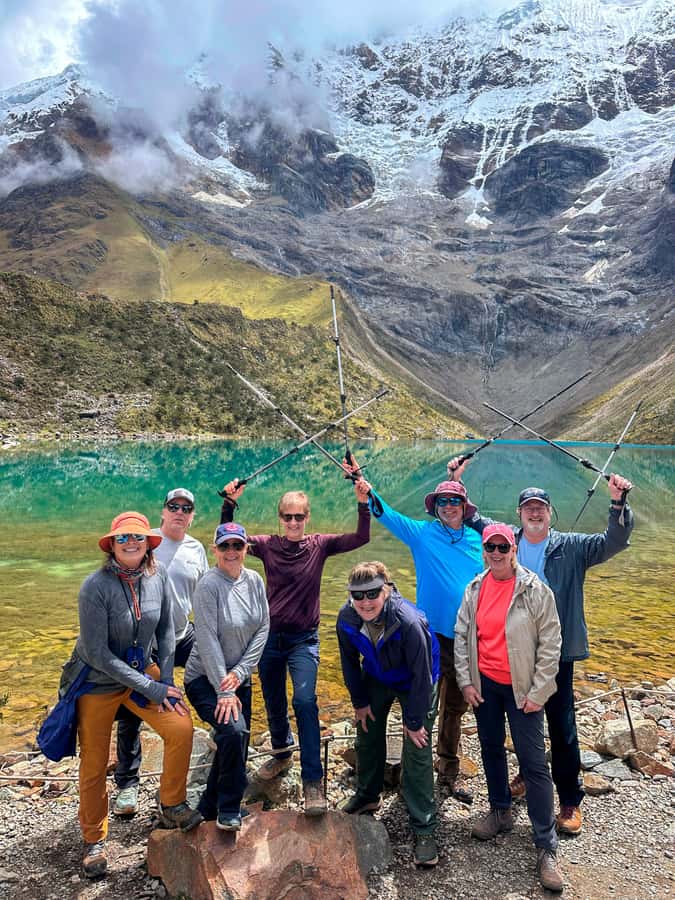
The climb to the lake is one of the day’s toughest sections because you are still adjusting to the altitude. The reward is a turquoise body of water beneath dramatic mountain slopes. The lake is compact, but the setting feels huge, with clear water and high peaks filling the view.
Give yourself time here. The lake is more than a quick photo stop. You will want to catch your breath, take pictures, and let your guide explain the area. A guide can also help keep the group together, which matters on a steep morning when people move at different speeds.
After returning downhill, you reach Soraypampa for lunch. From there, the route continues to the SalkaGlamp basecamp at Salkantaypampa.
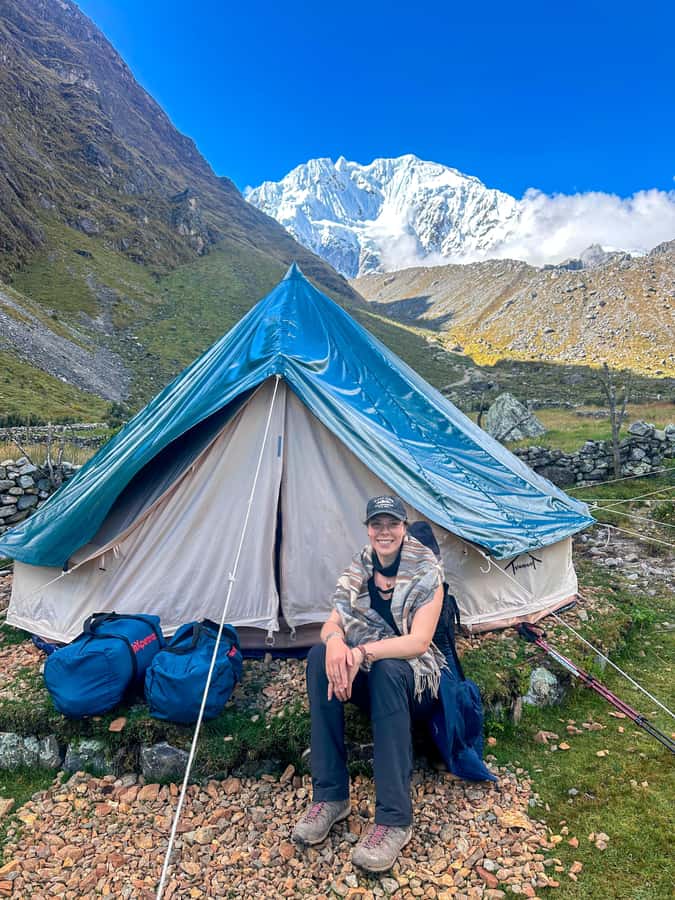
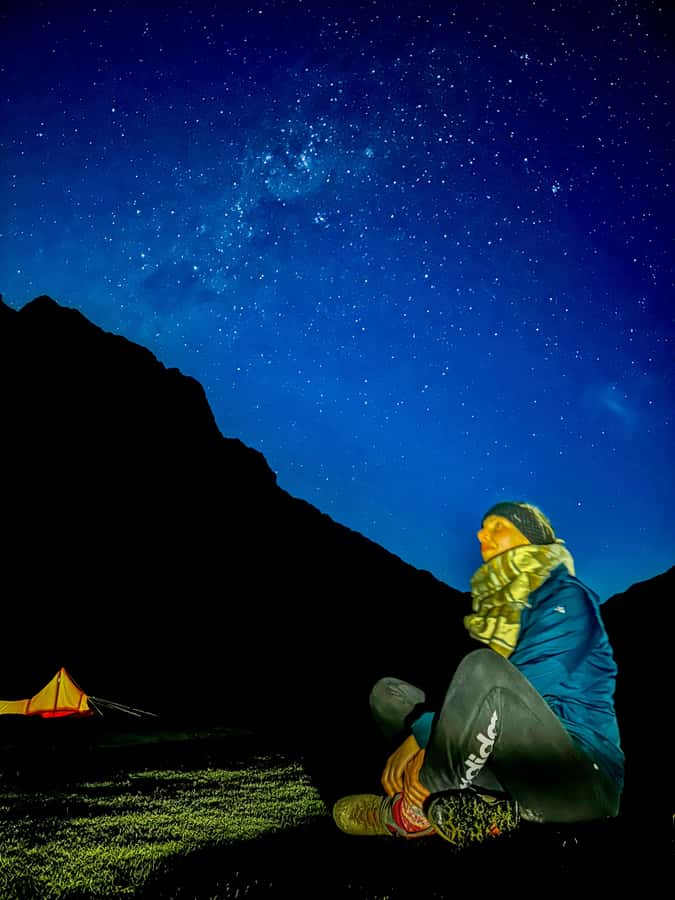
The glamping setup is a welcome change after the early start. You sleep in a tent, but you receive a pillow, sleeping pad, hand towels, and a rain poncho. Dinner is served at camp, and the night beneath the Andes should be one of the trip’s memorable moments, especially if the sky is clear.
I would not treat glamping as a hotel substitute. Conditions in the mountains can be cold and weather can change quickly. Bring warm clothing, proper rain gear, and a flashlight even though some camping equipment is provided.
Day two: 4,630 meters at Salkantay Pass
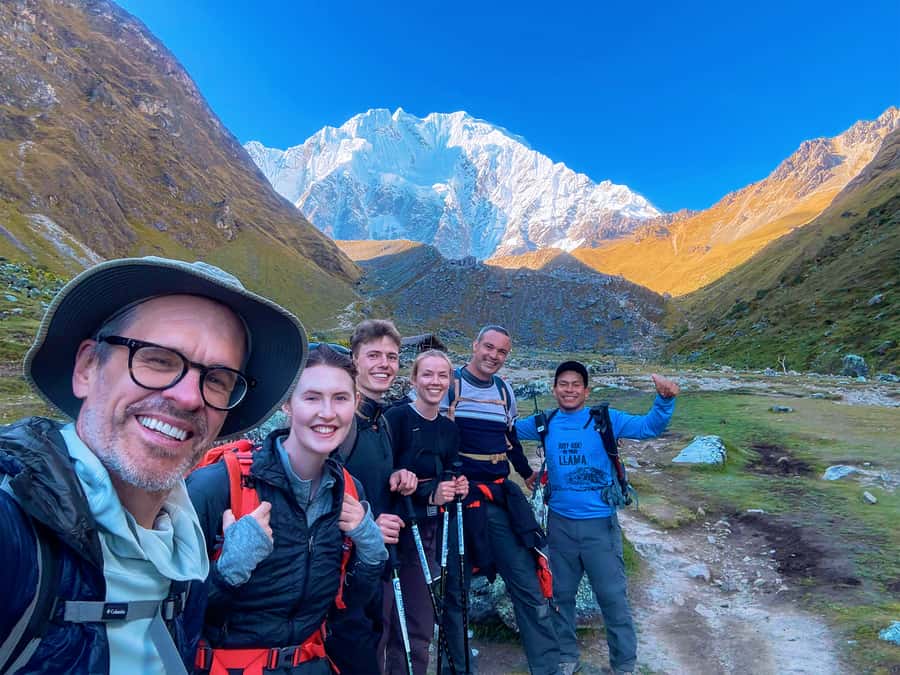
Day two is the physical test. You start with coffee or coca tea at your tent, followed by breakfast. Then comes a two-hour climb to Salkantay Pass, the highest point of the route at 4,630 meters, or about 15,190 feet.
At this height, the pace should be steady rather than fast. You may feel the altitude even if you are a strong hiker. This is one reason the safety support matters. The operator carries a first-aid kit, oxygen tank, and satellite phone, though those items are backup equipment, not a cure for poor preparation.
At the pass, you get broad views of snow-capped peaks and the lake beneath Salkantay Mountain. This is the day’s big mountain moment, and it is worth the effort. The high route also explains why the trek attracts people who want more than a direct road-and-train visit to Machu Picchu.
The descent takes about three hours to Wayracmachay, where you stop for lunch. Downhill walking can be hard on your knees, so hiking poles are worth considering. They are available to rent, as are sleeping bags and air mattresses.
After lunch, you continue for another three hours into cloud forest. The change is dramatic. Cold, open mountain scenery gives way to flowers, orchids, and hummingbirds. The trail becomes a story of altitude, with the climate and plant life shifting as you lose height.
You finish at Collpapampa and sleep in Andean huts. This is the trip’s weakest accommodation point. The huts and sanitary facilities may be in poor condition, and a hot shower can involve an extra fee. Pack wet wipes, hand sanitizer, and realistic expectations.
The upside is the setting. You are surrounded by the sounds of nature rather than city traffic, and the simple huts fit the rural character of the route. Still, if clean bathrooms and reliable hot water are high on your list, this night may test your patience.
Day three: Pachamanca, coffee, and the road to Aguas Calientes
After breakfast, you walk for about three hours toward Lucmabamba. By now the route feels warmer and more tropical, a sharp contrast with the pass from the day before.
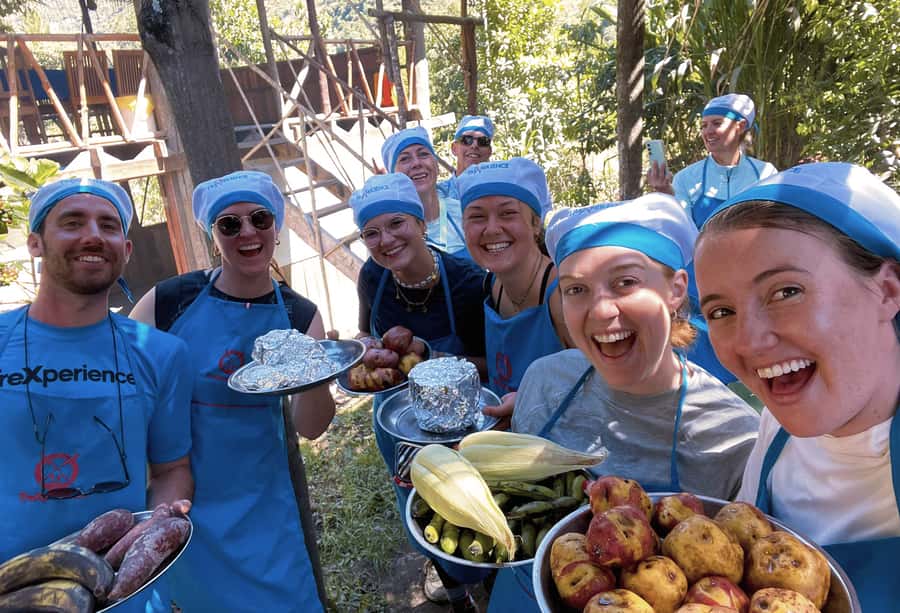
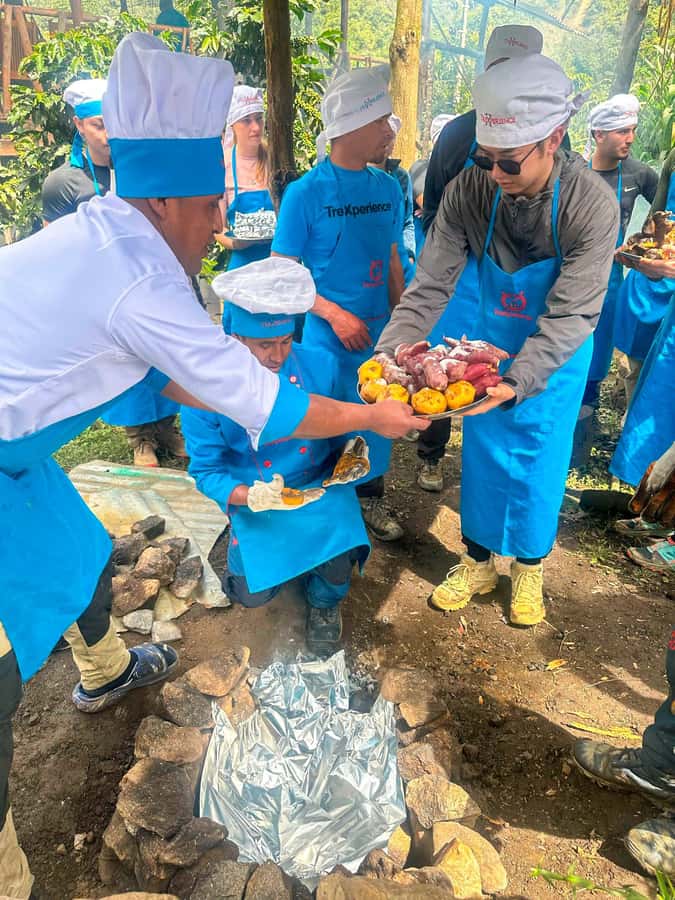
Lucmabamba is where the food and farming side of the trip comes forward. You take part in a Pachamanca barbecue, an Andean cooking method in which meat, vegetables, and fruit are cooked underground with heated stones.
This meal matters because it is both practical and cultural. You are not just handed another plate of trail food. You see a traditional cooking method and share a meal built around local ingredients. The cooking class gives the stop a hands-on quality.
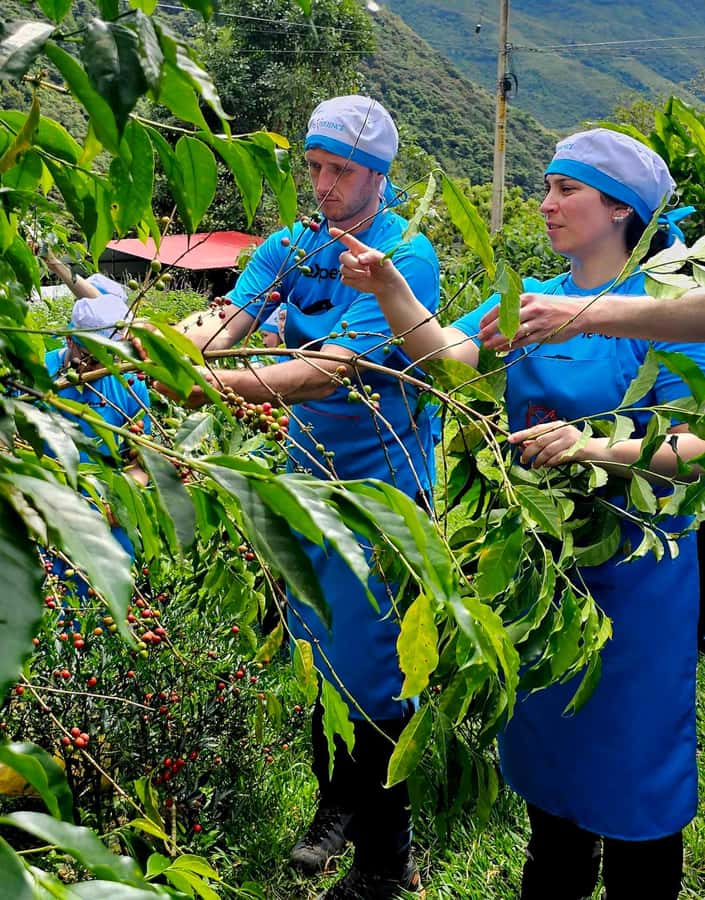
The coffee visit adds another useful local connection. You learn how coffee moves from bean to cup, then prepare your own espresso. This is a small activity, but it breaks the rhythm of hiking and gives you a better sense of the work behind a familiar drink.
The food throughout the trek receives especially strong praise. The chefs prepare three breakfasts, three lunches, and three dinners, with snacks and water each day. Several guides and cooks are singled out for making generous, varied meals that provided the energy needed for the long walking days.
After Lucmabamba, a drive takes you to Hidroelectrica. You then walk for about three hours to Aguas Calientes, the town below Machu Picchu.
This final walk is less about mountain achievement and more about anticipation. You follow the route toward the famous ruins, knowing that the next morning brings the main event. It is still a long day, though, so comfortable shoes and a reasonable pace matter.
In Aguas Calientes, you check into a 3-star hotel, eat dinner at a local restaurant, and get a proper bed before your early visit. This overnight stop is one of the tour’s clever comforts. After two nights outdoors or in simple huts, a hotel and breakfast feel well timed.
More Inca Trail Treks in Cusco
- Cusco: 4-Day Inca Trail to Machu Picchu with Accommodation
★ 4.8 · 432 reviews - Cusco: Machu Picchu 2-Day Inca Trail with Panoramic Train
★ 4.9 · 260 reviews - From Cusco: 2-Day Inca Trail to Machu Picchu
★ 4.2 · 244 reviews - Machu Picchu: Inca Trail 2-Day Overnight Guided Tour
★ 4.9 · 203 reviews
Day four: Machu Picchu and the panoramic train home
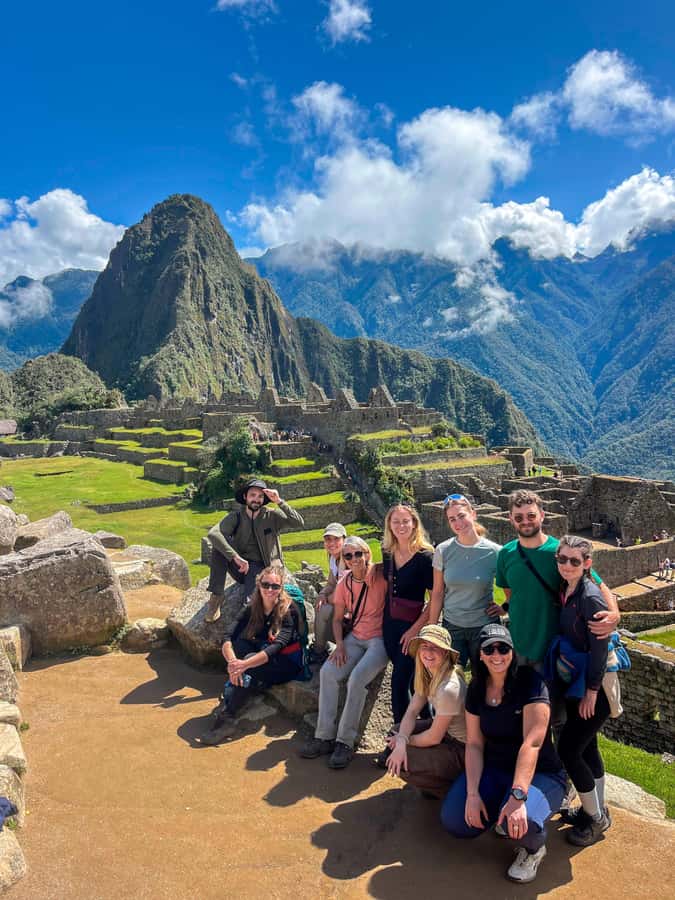
You rise early for one of the first buses to Machu Picchu. The aim is to see the morning light over the mountains before beginning the guided visit.
The standard visit includes roughly two to three hours inside the citadel. Circuit 2 is assigned by default, although Circuit 1 or Circuit 3 may be used if availability changes. If you want Huayna Picchu or Machu Picchu Mountain, book that option ahead of time.
Your guide leads you through the main areas and explains the site’s history and unanswered questions. A guide is especially helpful here because Machu Picchu can otherwise become a fast parade of terraces, walls, and photo stops. The meaning of the buildings and their setting is easier to grasp with context.
Do not expect a private, slow-moving visit. The time inside is structured, and the circuit rules limit how freely you can wander. Still, two to three hours is enough for a useful first look, especially after hiking to the site rather than arriving with no sense of the surrounding terrain.
Lunch in Aguas Calientes is not included, so keep money available. After lunch, you board either the Vistadome or 360° panoramic train for the return journey.
This is a pleasant finish. The wide windows give you a better view of the river valley and surrounding mountains than a standard ride might, and the train lets you rest after four days of walking. The tour team then transfers you back to your Cusco hotel.
Guides, cooks, and the value of a small group
The group limit of 16 people is a real advantage. A guide can communicate the day’s plan more clearly, watch the back of the group, and respond when hiking speeds differ.
The named staff receive unusually warm praise. Alex is described as an experienced guide who explained Inca culture and mountain stories while keeping the group informed. José is noted for answering questions and looking after everyone. Filio is praised for patience, kindness, cultural explanations, and careful attention to detail.
Roger and William offer another useful example of good group support. Roger handled Inca history and humor, while William stayed with slower hikers and helped keep them comfortable. That second role matters. On a route with steep climbs and long descents, you should not feel abandoned simply because you are not at the front.
The kitchen team also deserves credit. Chefs including Zenobio, Dionissios, Ismael, and Felix are praised for fresh, filling meals with local flavor and plenty of variety. A strong kitchen crew can make a major difference on a trek, especially when breakfast comes early and dinner follows a long day.
The group may not always have the exact same guide or cook names listed in advance. The practical point is to expect a support team that handles food, luggage, pacing, and camp details as part of the package.
What to pack for comfort and safety
You receive a duffle bag for up to 7 kilograms, or about 11 pounds, of personal belongings. Use it for the items you do not want to carry all day, but keep essentials in your daypack.
Bring:
- Passport and student card, if relevant
- Hiking shoes and comfortable spare shoes
- Warm layers, hiking pants, and a change of clothes
- Rain gear, sun hat, sunglasses, and sunscreen
- Insect repellent for the warmer forest sections
- Toiletries, tissues or hand sanitizer, and cash
- Flashlight and camera
- Weather-appropriate clothing
A sleeping bag, air mattress, and trekking poles are available to rent. Because the second night is basic and temperatures can change, a sleeping bag may be worth the added cost.
Tell the operator about dietary needs when booking. Passport details are required, and all children must travel with a responsible adult. The trip is not suitable for pregnant people, wheelchair users, or those with mobility, heart, or serious back problems.
The activity is non-refundable, so confirm your dates, fitness level, passport information, and Machu Picchu circuit details before paying. The booking notes also contain mixed wording about Machu Picchu ticket arrangements, so I would confirm exactly which entrance ticket is secured for your date and circuit.
Who should book this trek?
I would choose this route if you want a full mountain journey with strong scenery, local food, and a guided visit to Machu Picchu. It suits you best if you can handle early starts, altitude, a two-hour climb to 4,630 meters, and hiking days that can run for six hours or more.
It is also a good fit if you value support. The duffle service, cooked meals, guide team, safety equipment, and prearranged transport remove much of the planning burden.
I would think twice if you want a soft adventure. The Collpapampa huts may disappoint you, showers can cost extra, and the altitude is not a minor detail. You should also be comfortable with the fact that the itinerary moves quickly from one accommodation style to another.
FAQ
How difficult is the Salkantay Trek?
The trek includes long hiking days and a climb to the Salkantay Pass at 4,630 meters. Day two is the most demanding, with a two-hour ascent followed by a three-hour descent and another three hours through the cloud forest.
What accommodation is included?
You spend one night in a glamping tent at Salkantay Camp, one night in Andean huts at Collpapampa, and one night in a 3-star hotel in Aguas Calientes. Breakfast is included at the hotel.
Is food included during the trek?
Yes. The package includes three breakfasts, three lunches, three dinners, water, and daily snacks on the trail. It also includes a Pachamanca barbecue and a coffee preparation experience.
Is Machu Picchu included?
The tour information includes entrance arrangements for the Salkantay Trek and Machu Picchu, but it also says Machu Picchu tickets must be booked ahead. Confirm the exact ticket and circuit assigned before departure.
Can I visit Huayna Picchu or Machu Picchu Mountain?
Optional hikes to Huayna Picchu or Machu Picchu Mountain are available with advance booking. They are not included as standard, so you need to arrange them ahead of time.
What train returns to Cusco?
The return is by either the Vistadome or 360° panoramic train. After the train ride, the tour team transfers you to your hotel in Cusco.
Should you book the Salkantay Trek?
I would book it if you want Machu Picchu to feel like the end of a real journey, not simply a day trip. The best parts are the sharp change from high peaks to cloud forest, the Salkantay Pass, the local cooking and coffee stops, the capable support crew, and the comfortable train finish.
I would not book it for polished accommodation or an easy walking schedule. The second night is basic, the highest section is demanding, and the no-refund policy calls for careful planning.
At $552, the value is strongest for you if you want one organized package covering transport, meals, lodging, guides, safety gear, Machu Picchu, and the return train. For fit hikers who can accept one rough night, this is a rewarding and well-supported way to reach Machu Picchu.
More Ways to Reach Machu Picchu
- The First Class Machu Picchu Train by Inca Rail
★ 4.0 · 182 reviews - From Cusco: 1-day Machu Picchu Tour by Train
★ 4.6 · 138 reviews - Private Tour to Sacred Valley and Machu Picchu from Cusco
★ 5.0 · 133 reviews - Machupicchu 1 day tour
★ 5.0 · 128 reviews
More Machu Picchu Tours in Cusco
- From Cusco: Full-Day Group Tour of Machu Picchu
★ 4.7 · 1,767 reviews - Machu Picchu Day Trip from Cusco
★ 4.5 · 1,644 reviews - Machu Picchu: Full-Day Tour from Cusco with Optional Lunch
★ 4.6 · 927 reviews - From Cusco: 2-Day Trip to the Sacred Valley and Machu Picchu
★ 4.6 · 265 reviews
Just added around Cusco
- Cusco: Rainbow Mountain and viewpoint red valley ( optional)★ 4.8 · 3 reviews
- Montaña de Colores: tour en cuatrimotos día completo★ 3.3 · 3 reviews
- Tour Pallay Punchu Trek Full Day★ 4.2 · 3 reviews
- Excursion Cusco – Puno – Titicaca Observatory Train★ 5.0 · 3 reviews
- Cusco: Palcoyo Mountain Day Trip with Breakfast and Lunch★ 4.8 · 3 reviews
- Maras Moray★ 5.0 · 3 reviews
- Tour to Laguna Humantay with breakfast and lunch from Cusco★ 4.7 · 3 reviews
- From Cusco:Chinchero, Moray, Maras, Ollantaytambo with lunch★ 5.0 · 3 reviews
Machu Picchu Tours, compared.



Machu Picchu: Full-Day Tour from Cusco with Optional Lunch
Read our review →
4-Day Inca Trail to Machu Picchu with Accommodation
Read our review →
2-Day Trip to the Sacred Valley and Machu Picchu
Read our review →
Machu Picchu 2-Day Inca Trail with Panoramic Train
Read our review →
