
Reviewed · CITY TOURS
City Tour Panoramic Bus Departure from Larcomar
Lima gives you several cities in one afternoon. I like the easy Larcomar departure and the way this tour links Miraflores with the historic center, giving you a useful first look at Lima without arranging separate transport. I also like the guided walking time around Plaza de Armas, where the Cathedral, Government Palace, and colonial buildings make the city’s past feel immediate. The main drawback is traffic, especially on the return to Miraflores, and the bus is more a ride between sights than a fully narrated sightseeing vehicle.
The four-hour tour costs $35 per person, which is fair if you want transportation, a guide, WiFi, air conditioning, USB chargers, and several major sights in one booking. I would pay special attention to the guide and the bus microphone, since clear commentary makes a big difference. Guides Bryan and Yoanna received especially warm praise for their friendly, helpful approach, while one guest found a muffled microphone frustrating.
In This Review
- Key points to know before you book
- Starting above the cliffs at Larcomar
- What the bus ride is really like
- Pucllana: Lima before the Spanish arrival
- Plaza de Armas, the heart of colonial Lima
- Municipal Palace and Jirón de la Unión
- Lima Cathedral and the layers beneath it
- Government Palace and the Casa de Pizarro
- What the guide contributes
- Is $35 a fair price?
- Who should book this Lima tour?
- FAQ
- Where does the Lima city tour begin?
- Is hotel pickup included?
- How long does the tour last?
- What is included in the price?
- Are snacks included?
- Is the tour available in English?
- Can I cancel for a full refund?
Key points to know before you book
- Larcomar is the meeting point: Redeem your ticket at Turibus, Malecón de la Reserva 610, inside the Larcomar complex in Miraflores.
- The bus connects two very different Lima districts: You begin above the Pacific-facing cliffs of Miraflores and finish among the colonial buildings of central Lima.
- The real tour happens on foot: The bus mainly handles transportation, while the most detailed guiding takes place in the historic center.
- Pucllana adds pre-Inca history: The stop at this ceremonial site gives you a glimpse of Lima long before Spanish rule.
- The best sights are around Plaza de Armas: The Cathedral, Government Palace, Archbishop’s Palace, and Municipal Palace are grouped close together.
- Plan for traffic: The return to Miraflores can take longer than expected, so avoid scheduling a tight connection afterward.
Starting above the cliffs at Larcomar

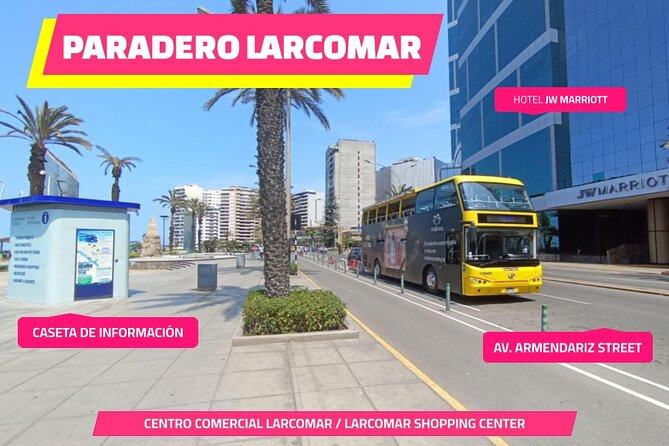
Your tour begins at Larcomar, a shopping and entertainment complex built into the top of Lima’s cliff in Miraflores. It occupies the former site of Alfredo Salazar Park, though the park was reshaped into an artificial green space above parking levels and cinemas.
Larcomar has an unusual floating quality because much of it extends above the void. Large bluish glass structures in the park are ventilation chimneys for the underground areas, but they also work as modern public art. This makes the departure point more than a simple parking area.
The location is practical. Larcomar sits near many Miraflores hotels and is easy to reach by public transportation. You do not receive hotel pickup, so allow time to reach the ticket redemption point at Turibus, Larcomar, Malecón de la Reserva 610.
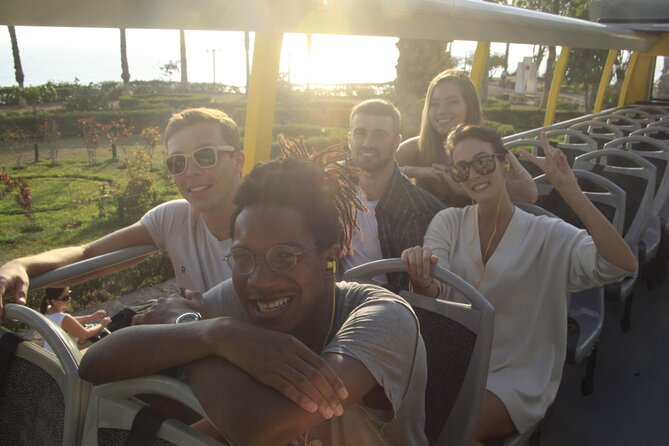
The vehicle has air conditioning, free WiFi, and USB chargers in every seat. Those details matter on a four-hour outing, especially if you are using your phone for maps, photos, or translation. Snacks are not included, so bring water and something small to eat if you need it.
More City Tours in Lima
- Lima’s Vibrant Heritage: Exploring the City’s Landmarks Half-day
★ 4.5 · 581 reviews - Lima: City Highlights Small Group Tour
★ 4.9 · 132 reviews - City Tour of Lima from the Airport
★ 4.5 · 84 reviews
What the bus ride is really like
The name panoramic bus tour can suggest a continuously narrated ride past every major sight. That is not quite how this experience works. The bus gets you between the main areas, but the center of Lima is covered largely as a walking tour.
I see that as a plus if you want to get out and look closely at the buildings. It is less ideal if you prefer to remain seated while a guide points out sights through the windows. One guest described the bus as mostly transportation, with the walking portion providing the main substance.
The quality of the commentary also depends on the audio system and guide. One person found the bus microphone muffled and had trouble understanding the explanation. That seems to be an isolated concern rather than the general pattern, since other guests praised the guides’ English, warmth, and clear explanations. Still, it is worth sitting where you can hear well.
The bus has service animal access, is near public transportation, and is suitable for most participants. The tour requires good weather, and poor conditions can lead to a different date or a full refund.
Pucllana: Lima before the Spanish arrival
The stop at the Pucllana Site Museum brings you to a pre-Inca ceremonial center in Miraflores. This is an important change of subject from the modern restaurants, hotels, and shopping areas around Larcomar.
Pucllana helps you see that Lima’s story did not begin with Francisco Pizarro. Long before the Spanish founded the colonial city, people used this area for ceremonial purposes. Even a short visit gives you a useful time marker: the city has an ancient past beneath and beside its modern streets.
The supplied tour details do not specify how long you remain at the museum or which areas are open during every departure. Treat this as an introductory stop rather than a full archaeological visit. If Pucllana is your main reason for coming, you may want to check the day’s exact schedule before booking.
For a first visit to Lima, though, the stop works well. It places the later colonial buildings in a much wider story. You are not just seeing Spanish architecture. You are seeing one layer of a city with roots that reach much further back.
Plaza de Armas, the heart of colonial Lima

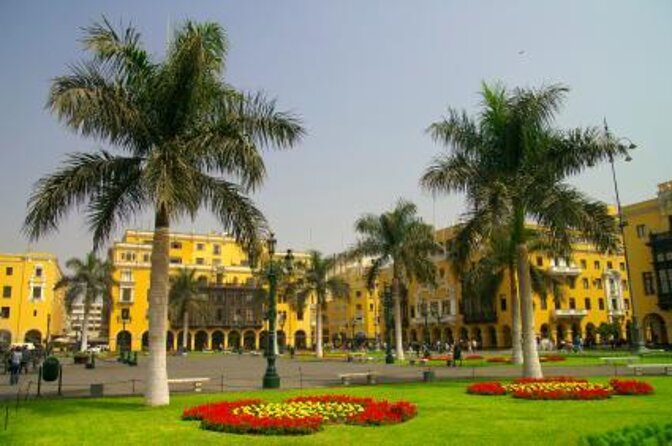
The tour then moves into Lima’s historic center and the Main Square, also called Plaza de Armas. This is the foundational public space of the capital and the point where several major buildings come together.
The square is framed by the Government Palace, Lima Cathedral, the Church of the Sagrario, the Archbishop’s Palace, the Municipal Palace, and the Club de la Unión. The arrangement shows the formal Spanish urban plan, with civic and religious power facing one another across the central plaza.
This is the part of the tour where a guide adds real value. Without context, you see ornate facades and wooden balconies. With a good explanation, you begin to understand how the square represented government, church authority, and civic life during the colonial period.
You will also notice the streets feeding the plaza: Jirón Junín, Jirón de la Unión, Jirón Huallaga, and Jirón Carabaya. The tour’s central walking section gives you a chance to move through this area rather than view it only from a bus window.
The square can be busy, and Lima traffic is a genuine issue around the wider route. One guest loved the colonial buildings and balconies but found the return trip to Miraflores slow. Keep that in mind if you have a dinner reservation or airport transfer soon afterward.
A few more Peru trips worth weighing up
- Lima: Ultimate Peruvian Food Tour
★ 4.9 · 700 reviews - Full Day Paracas Ica and Huacachina from Lima All Included
★ 4.5 · 623 reviews - From Lima: Day trip to Paracas, Ica and Oasis Huacachina
★ 4.6 · 409 reviews - Private transfers from Lima Airport or to Lima Airport
★ 4.0 · 359 reviews
Municipal Palace and Jirón de la Unión
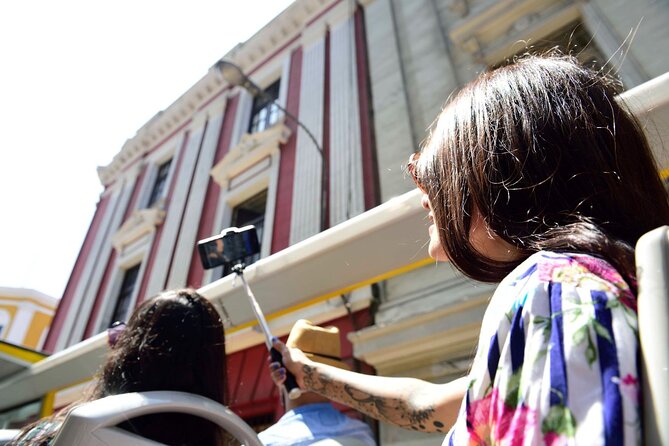
At Jirón de la Unión 300, you see the Municipal Palace of Lima, the main headquarters of the Metropolitan Municipality. It faces the Main Square on Portal de Escribanos Street.
This stop helps explain the practical role of the square. The Cathedral represents the religious center, while the Municipal Palace represents local civic government. Their position opposite one another is not accidental. It reflects the planned structure of the colonial city.
Jirón de la Unión also gives you a closer view of central Lima’s street life and architecture. The tour information specifically highlights colonial wooden balconies in nearby Calle de la Oca, which can be one of the most memorable details for anyone who enjoys old city design.
Do not expect a long independent shopping or restaurant break here. The schedule covers several important sites in roughly four hours, so the emphasis is on orientation and guided sightseeing. You will get more from this section if you listen closely and keep pace with the group.
Lima Cathedral and the layers beneath it
Lima Cathedral occupies a site with a complicated past. Before the Spanish church was built, the location was associated with the Inca shrine of Puma Inti and the palace of Sinchi Puma, a descendant of the Inca Sinchi Roca.
When Pizarro founded Lima, he set aside land for a church. The early history also records that Sinchi Puma formally renounced his property through a notarized document, an effort to prevent the church’s occupation of the site from being treated as unlawful seizure.
Construction began in 1535, when Pizarro laid the foundation stone and carried the first beam in public. The first cathedral was completed in 1538 and inaugurated on March 11, 1540, with the consecration of the Eucharist.
That sequence makes the Cathedral more than a handsome colonial facade. It is a physical marker of the Spanish takeover and the reshaping of an earlier sacred and political place. A guide can connect the building to Lima’s broader story in a way that a quick photograph cannot.
The tour includes entry to the Convent of Santo Domingo, although the supplied route describes the Cathedral and other central buildings rather than listing Santo Domingo as a separate numbered stop. Consider the convent a valuable included feature, but confirm the exact timing with the guide on the day.
Government Palace and the Casa de Pizarro
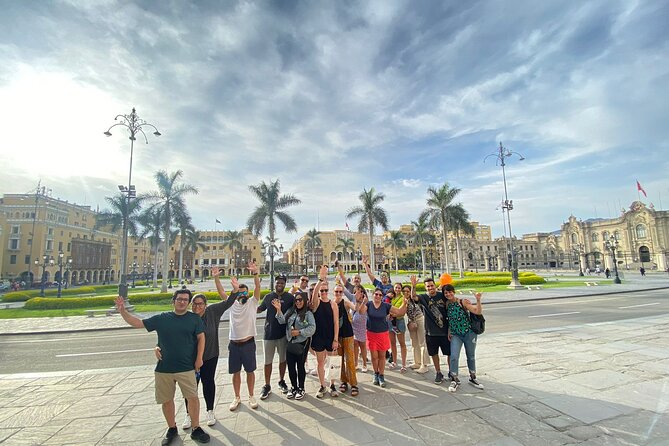
The Government Palace occupies the other major side of the Main Square. It is the seat of Peru’s executive power and the official residence of the president.
The building covers about 19,208 square meters, but its importance comes less from size than from continuity. The site has served a similar governmental role for nearly five centuries. It was occupied in 1535 by Francisco Pizarro and may previously have been associated with Taulichusco, an Inca representative in the Rímac Valley.
During the Viceroyalty, it was known as the Palace of the Viceroy and housed 40 viceroys. Later, José de San Martín and Simón Bolívar stayed there, along with most presidents of the republican era. The name Casa de Pizarro is still used, while official documents call it the Casa de Gobierno.
You will generally view the palace from the public square rather than tour its interior. That is still worthwhile because the guide can place the building within Peru’s political history. The sight works best as part of the cluster around the plaza, not as a stand-alone palace visit.
What the guide contributes
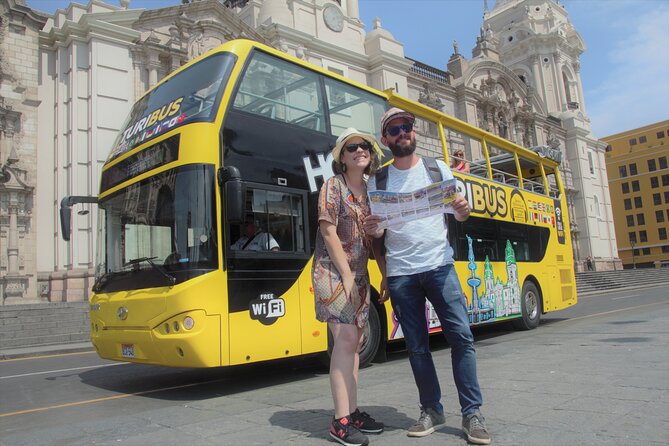
The strongest part of this experience is the human explanation. Bryan is praised for being friendly and highly informative, while Yoanna is described as excellent during the walking tour. Another guest specifically appreciated a guide who spoke good English and made the afternoon inspiring from start to finish.
The best guides do more than recite dates. They help you connect Pucllana, the Cathedral, the Government Palace, and the square into one story. They also make the walking portion feel relaxed rather than rushed.
There is one serious reminder to stay alert. One guest said the guide left someone behind without noticing. I would stay close to the group, especially when crossing streets or moving between buildings. If you need extra time for photos or have mobility concerns, tell the guide early.
The overall rating is 4.8 from 97 reviews, and 95 percent of participants recommend the experience. That points to a consistently strong outing, though the audio issue and one concern about group control show why expectations should remain realistic.
Is $35 a fair price?
At $35, this is good value if you want a structured introduction to Lima. The price includes the vehicle, air conditioning, WiFi, USB charging, taxes and fees, a guide in central Lima, and entry to Santo Domingo.
You are also paying for the connection between Miraflores and the historic center. That can be useful because the districts feel very different and are not best understood through a single short walk.
The value drops if you want a slow museum day, a small private group, or extensive time inside every monument. The four-hour format has to cover a lot, and traffic can reduce the time available for sightseeing. Since hotel pickup is not included, you also need to handle your own route to Larcomar.
I would choose this tour early in a Lima visit. It gives you a citywide framework, then you can return independently to the places that deserve more time.
Who should book this Lima tour?
I would recommend it to first-time visitors, families, solo visitors who want a guided introduction, and anyone staying in Miraflores. It is also useful if you have limited time and want both modern Miraflores and colonial central Lima in one outing.
The tour suits you if you enjoy a mix of bus transport and walking. It may disappoint you if you expect a fully narrated panoramic ride or dislike fixed group pacing.
Book it if you want a friendly guide, major sights, and historical context for a moderate price. Skip it if your priority is a long visit to Pucllana, extensive interior access, or a private itinerary. In either case, keep your post-tour plans flexible because Lima traffic can stretch the return.
Cancellation is free up to 24 hours before the start time for a full refund. Changes or cancellations within 24 hours are not accepted for a refund. If bad weather cancels the experience, you are offered another date or a full refund.
FAQ
Where does the Lima city tour begin?
The meeting point is Turibus at Larcomar, Malecón de la Reserva 610, Miraflores 15074, Peru.
Is hotel pickup included?
No. Pickup is not included, so you need to make your own way to Larcomar.
How long does the tour last?
The experience lasts approximately four hours.
What is included in the price?
The tour includes WiFi, USB chargers, an air-conditioned vehicle, all fees and taxes, guiding in central Lima, and entry to the Convent of Santo Domingo.
Are snacks included?
No. Snacks are not included.
Is the tour available in English?
The tour has included guides who spoke good English. Guide Bryan was specifically praised for his English and informative approach.
Can I cancel for a full refund?
Yes. You can cancel at least 24 hours before the start time for a full refund. Cancellations within 24 hours are not refunded.
Just added around Lima
- Enjoy Lima Walking Historic Center, Plaza San Martin and Plaza de Armas★ 5.0 · 3 reviews
- Full Day Lima: Local Market+ CityTour+ Barranco & Miraflores★ 5.0 · 3 reviews
- City Tour 1 day Lima★ 5.0 · 3 reviews
- Lima: Lunuhuaná Extreme All In + Cerro Azul + Rafting + ATV + Canopy★ 4.4 · 3 reviews
- Lima: Street Food Tasting Tour with Pisco Sour Class★ 5.0 · 3 reviews
- Lima: Villa El Salvador Shanty Town Tour★ 5.0 · 3 reviews
- Tour Panorámico en Miraflores en Scooter Eléctrico★ 4.6 · 3 reviews
- Private Tour Casa Aliaga,San Francisco Convent, Larco Museum★ 4.8 · 3 reviews
City Tours, compared.

Half-Day City Tour with Sacsayhuaman and Q’enco
Read our review →
City Tour Cusco Qoricancha Sacsayhuaman y Tambomachay
Read our review →
Lima’s Vibrant Heritage: Exploring the City’s Landmarks Half-day
Read our review →
Sightseeing Tour of the City on an Open-Top Bus
Read our review →
City Tour | Half-Day Tour to 4 Archaeological Sites
Read our review →
City Tour in Cusco & visit Museum South American Camelid Private.
Read our review →
Cusco City Sightseeing, San Pedro Market, Cathedral and Qorikancha Temple
Read our review →Browse the lists this tour appears in