
Reviewed · CITY TOURS
City Tour in Cusco
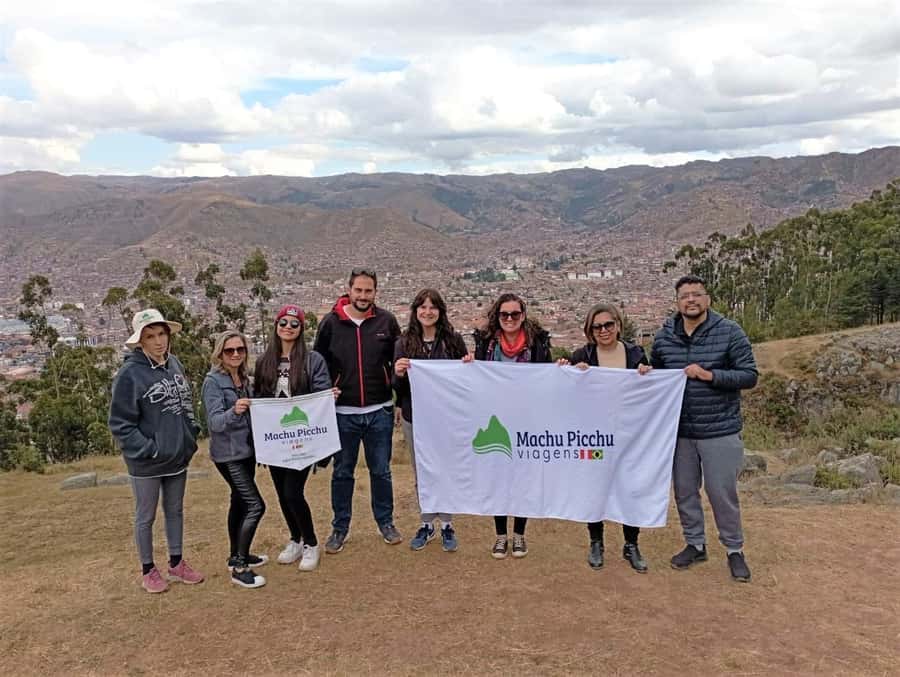
Stone walls tell Cusco’s story best. I like this $20 half-day tour because it links the city’s Inca and colonial landmarks in one compact outing, and I like that air-conditioned transport connects the historic center with four hilltop sites. The main concern is simple: admission tickets are not included, and one customer reported being promised Portuguese but receiving another language, along with confusing pickup instructions.
The four-hour route gives you a useful first look at Cusco, especially if you want the major sights without arranging separate taxis. I would confirm your language, hotel pickup point, and the total ticket cost before booking.
In This Review
- Key points to know before booking
- A quick introduction to Cusco’s Inca and colonial layers
- Qorikancha, where the Temple of the Sun meets a church
- The Cathedral of Cusco and the colonial city center
- Sacsayhuaman, the great stones above Cusco
- Qenqo and the darker side of Inca ceremony
- Puca Pucara, a high viewpoint over Cusco
- Tambomachay and the Inca mastery of water
- Four hours, one vehicle, and a fast pace
- Is $20 a fair price?
- Who should book this city tour?
- Practical advice before you go
- Should you book it?
- FAQ
- Where does the tour take place?
- How long does the City Tour in Cusco last?
- What is the price?
- Which sites are included in the route?
- Are entrance tickets included?
- Are meals and drinks included?
- Which languages are available?
- Is hotel transportation included?
- Can I cancel for a full refund?
- Is the tour wheelchair accessible?
Key points to know before booking
- Six major sights in four hours: Qorikancha, the Cathedral, Sacsayhuaman, Qenqo, Puca Pucara, and Tambomachay make this a fast overview of Cusco.
- Inca and colonial history meet: The Temple of the Sun and the Cathedral both reveal how later colonial buildings were placed over important Inca foundations.
- The price covers transport and guiding, not entry: At $20 per person, the tour is inexpensive, but your final cost will be higher once admission tickets are added.
- Language needs attention: English, Spanish, and Portuguese are offered, with one bus assigned to each language.
- The hilltop stops add a wider view: Puca Pucara gives you a look over Cusco from above, while Tambomachay shows the Inca skill with flowing water.
- Pickup details deserve care: Roundtrip transport serves most Cusco hotels, but confirm the exact meeting point so you are not rushing through town.
A quick introduction to Cusco’s Inca and colonial layers
Cusco is easiest to understand when you see both halves of its story. This tour begins with the city’s historic center, where Inca stonework and Spanish colonial buildings occupy the same streets. It then moves uphill to ceremonial sites and waterworks outside the center.
I like that order. You first get the political and religious heart of the city, then see how the Incas shaped the hills around it. In only four hours, the tour cannot give every site a leisurely visit, but it can help you decide where to return later.
The route is led in English, Spanish, or Portuguese. Each bus operates in one language, which matters because a guide’s explanation is a major part of the experience. If you choose Portuguese, confirm that detail more than once before departure. A customer booked that language but said the tour was not conducted in Portuguese, leaving her son unable to follow the explanation.
More City Tours in Cusco
- Cusco: Half-Day City Tour with Sacsayhuaman and Q’enco
★ 4.6 · 1,129 reviews - City Tour Cusco Qoricancha Sacsayhuaman y Tambomachay
★ 4.7 · 617 reviews - Cusco: Sightseeing Tour of the City on an Open-Top Bus
★ 4.0 · 481 reviews
Qorikancha, where the Temple of the Sun meets a church
Qorikancha is one of the most important stops because it shows the clash and overlap between Inca religion and Spanish Catholic rule. The site was the principal worship center of the Inca culture, known as the Temple of the Sun.
The striking point is not only what remains. It is the way the later Catholic church was built over the Inca foundations. Your guide can help you read the site as two different worlds occupying the same ground: the Inca sacred center below and the colonial church above.
I would pay close attention to the stonework here. Qorikancha is not just another church visit, and it is not just another archaeological site. It gives you the basic idea you will see throughout Cusco, where colonial buildings often depend on or cover earlier Inca structures.
Because the tour is limited to four hours, your time inside each place may feel brisk. If Qorikancha interests you most, ask the guide how much time is planned there and consider returning independently if you want a slower visit.
The Cathedral of Cusco and the colonial city center
The Cathedral brings the Spanish colonial side of Cusco into sharper view. It is presented as a major example of colonial baroque architecture, built on foundations connected to an earlier Inca palace.
That location tells you why a walk through Cusco’s center is more than a quick photo stop. The streets and buildings are layered. You can look at a colonial façade while standing in a city planned and shaped by the Incas.
I like having the Cathedral paired with Qorikancha. Seeing both on the same tour lets you compare the religious centers directly. Qorikancha explains the spiritual importance of the Inca world, while the Cathedral shows how colonial power expressed itself through architecture.
The tradeoff is time. A four-hour city tour that also visits four sites outside the center cannot offer a long, quiet examination of every interior. If you care about art, architecture, or religious details, listen closely to the guide and note what deserves a return visit.
Sacsayhuaman, the great stones above Cusco
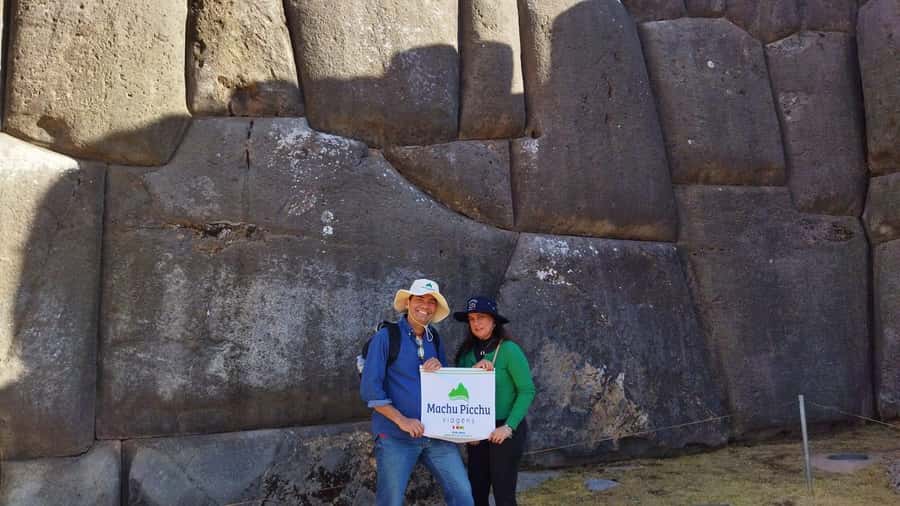
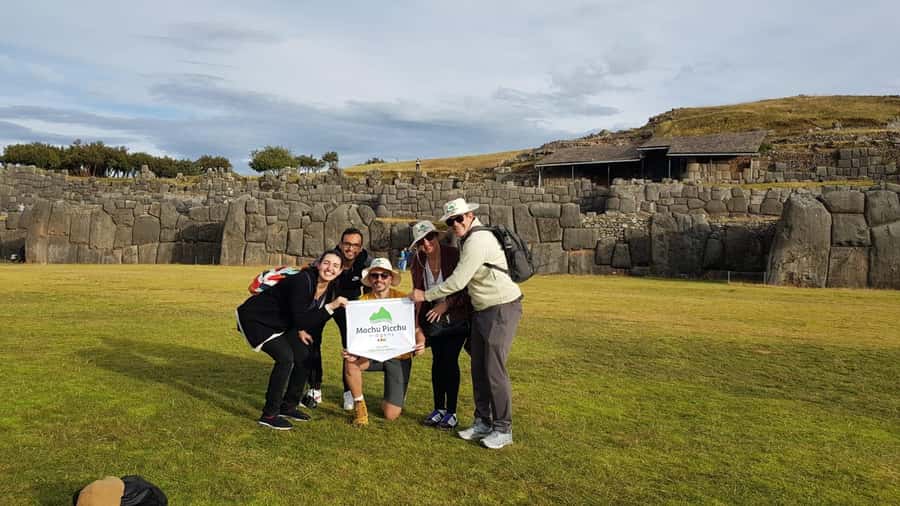
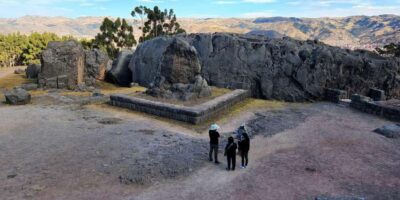
Sacsayhuaman is the biggest visual moment on the route. This ceremonial fortress is made of enormous stones fitted into a monumental structure that has survived for centuries.
You do not need a technical background in architecture to appreciate the site. The scale alone makes the stop worthwhile. I would look at the joins between the stones and then step back to take in the full construction. The site helps explain why Inca building remains one of Cusco’s defining attractions.
The word fortress can shape your expectations, but the tour also presents Sacsayhuaman as a ceremonial place. That broader view is useful. It keeps the stop from becoming only a military story and connects it to the ritual and political role of Cusco.
This is also one of the places where a guide adds real value. The stones are impressive on their own, but the background helps you understand how Sacsayhuaman relates to the city below. Since the visit is part of a fast circuit, keep your attention on the main walls and the guide’s explanation rather than trying to inspect every corner.
A few more Peru trips worth weighing up
- Cusco: Humantay Lake Tour with Breakfast and Buffet Lunch
★ 4.9 · 2,976 reviews - From Cusco: Sacred Valley & Maras Salt Mines Tour with Lunch
★ 4.8 · 2,227 reviews - From Cusco: Moray, Maras Salt Mines & Chinchero Weavers Tour
★ 4.8 · 1,925 reviews - From Cusco: Full-Day Group Tour of Machu Picchu
★ 4.7 · 1,767 reviews
Qenqo and the darker side of Inca ceremony
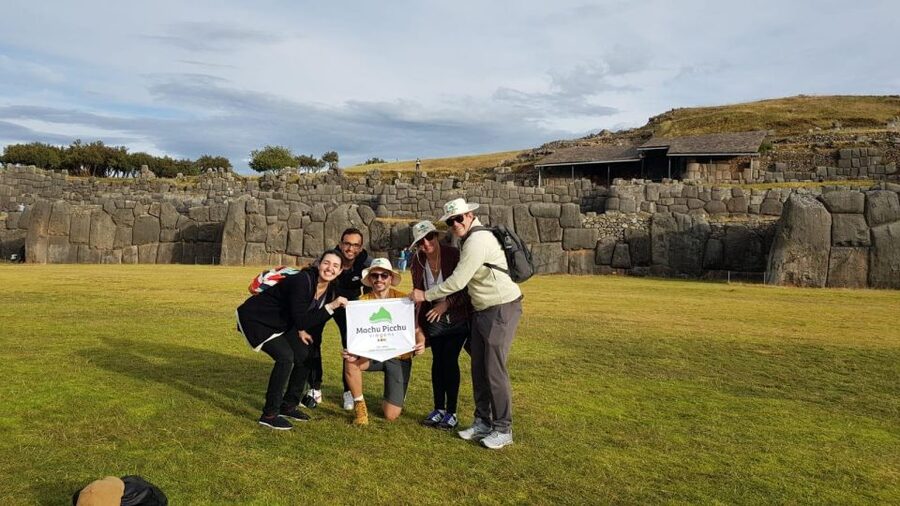
Qenqo has a different mood from Sacsayhuaman. It is described as a ceremonial center where important rituals and sacrifices were believed to have taken place. The setting gives this stop a more solemn character.
I like its inclusion because it prevents the tour from presenting Inca history as only grand stonework and engineering. Qenqo points toward ritual life, belief, and the less comfortable questions surrounding ceremonial practices.
The word gloomy fits the atmosphere, but do not expect a long archaeological lecture from a four-hour route. The value here is in seeing the carved ceremonial site and hearing how its purpose has been understood. Some details remain matters of interpretation, so a careful guide should distinguish known features from accepted theories.
If you prefer architecture to ritual history, Qenqo may feel less immediately impressive than Sacsayhuaman. If you want a broader picture of Inca culture, I consider it an important stop.
Puca Pucara, a high viewpoint over Cusco
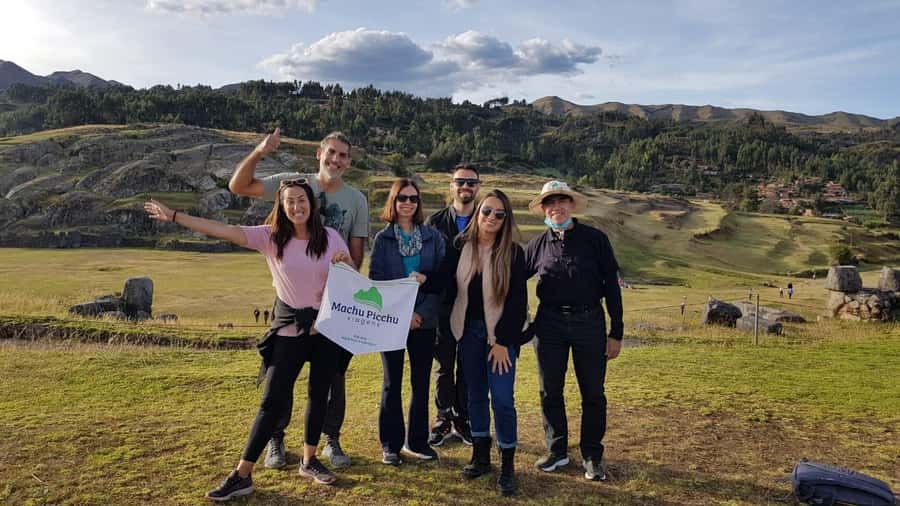
Puca Pucara takes the route higher into the mountains and gives you a chance to see Cusco from above. The stop adds a change of scale. Instead of studying one wall or room, you look back toward the city and understand its position among the surrounding hills.
The viewpoint is valuable because the historic center can feel like a maze when you first arrive. From above, the city’s setting becomes clearer. I would use this stop to connect the places you have already seen with the wider Cusco region.
The site itself is part of the tour’s broader circuit of Inca structures, but the supplied details do not give a full explanation of its original purpose. Your guide’s commentary will therefore matter. Ask for clarification if the visit moves quickly or if you want to know how Puca Pucara fit into the wider network of Inca sites.
Tambomachay and the Inca mastery of water
Tambomachay closes the archaeological portion of the route with one of the most practical achievements in Inca construction: moving and managing water. The site has irrigation channels and three water fountains that are still functioning.
That makes Tambomachay a welcome contrast to the massive walls at Sacsayhuaman. Here, the interest is in precision and continued use. Water still passing through the channels gives you something active to observe, not just stones left behind.
The fountains are described as the oldest functioning water fountains in the area. I would listen for the explanation of how the channels work and why water mattered so much to Inca ceremonial spaces.
Tambomachay can be especially rewarding if you enjoy engineering, but the stop may feel short because it comes near the end of a full circuit. Take a moment to notice the water itself before moving on. It is easy to focus on photographs and miss the quiet detail that makes the site special.
Four hours, one vehicle, and a fast pace
The listed duration is four hours. That is enough time to cover the main locations, but not enough for a slow, independent-style exploration of each one.
I see this as a first-day orientation tour rather than a complete study of Cusco. You get the city center, a major temple, a cathedral, three ceremonial or engineering sites, and a high viewpoint without planning the transport yourself.
The vehicle is air-conditioned, and roundtrip transportation is available from most Cusco hotels. That is useful because the route extends beyond the central streets and includes mountain sites. At the end, you can be returned to your accommodation or dropped at the Plaza de Armas.
The exact pickup arrangement deserves attention. One customer reported that the company gave unclear information about where to meet and that she had to chase down the correct details to avoid missing the tour. I would ask for the pickup location in writing and confirm it before the day of departure.
The guide may be Fernando, who was described as helpful and polite. That is a positive sign, but the language issue remains important. If your child or companion is joining to reinforce school lessons about the Incas, the correct language is not a minor preference. It is central to the value of the tour.
Is $20 a fair price?
At $20 per person, the tour offers good basic value if you want transportation, a professional certified guide, and a broad introduction to Cusco. You also receive a complimentary bottle of water, and the vehicle is air-conditioned.
The catch is that admission tickets are extra. Meals and drinks are also excluded, though the tour lasts only four hours, and gratuity is optional. Your actual budget should therefore include the entrance fees required for the sites you visit.
The low headline price works best for people who value convenience. You are paying to have the route organized and to move between the center and the hilltop sites in one vehicle. If you already have transport and prefer to spend a long time at one or two places, a self-planned visit could give you more control.
I would also compare the total cost, not just the advertised fare. Add entrance tickets and consider how much you value a guide in your preferred language. At that point, you can judge the tour fairly.
Who should book this city tour?
I would recommend it most strongly to first-time visitors who want a compact introduction to Cusco. It suits you if you want to see the headline sites, avoid arranging several rides, and hear a structured explanation in English, Spanish, or Portuguese.
It can also work well for families, provided the confirmed guide language matches the booking. A child studying the Incas may gain useful context from seeing Qorikancha, Sacsayhuaman, Qenqo, and Tambomachay in person. If the wrong language is used, that educational benefit drops sharply.
The tour is less suitable if you want long visits, quiet reflection, or detailed photography at every stop. Four hours is a useful overview, not a leisurely archaeological day.
I would also think carefully about the ticket cost. If you are watching every sol, ask exactly which admissions are required before you commit. The $20 price is appealing, but it is not the complete cost of the outing.
Practical advice before you go
Confirm these points before booking or the day before departure:
- Your guide language, especially if you select Portuguese.
- The exact pickup place and pickup time at your hotel.
- Which entrance tickets you need to purchase.
- Whether you want to finish at your hotel or at the Plaza de Armas.
- Whether your preferred start time is available.
The activity is listed as wheelchair accessible, which is useful information for visitors who need that service. Still, the tour includes historic archaeological sites and hilltop locations, so ask the provider what accessibility means at each individual stop if you need detailed assistance.
Free cancellation is available up to 24 hours before departure, and you can reserve now and pay later. Those terms make the booking less rigid, especially if your Cusco schedule is still changing.
Should you book it?
I would book this tour if you want a low-cost, guided overview of Cusco’s essential Inca and colonial sights. Qorikancha, the Cathedral, Sacsayhuaman, Qenqo, Puca Pucara, and Tambomachay give you a useful range, from religion and architecture to ceremony, views, and water engineering.
I would not book without confirming the language and pickup details. The written account from Izabela of Brazil points to a real practical weakness: a polite and helpful guide cannot make up for the wrong language or a confusing meeting point.
If the language is confirmed and you understand that tickets cost extra, this is a sensible way to get oriented in four hours. Use it as a foundation, then return on your own to the places that catch your interest.
FAQ
Where does the tour take place?
The tour takes place in the Cusco Region of Peru, including Cusco’s historic center and nearby archaeological sites.
How long does the City Tour in Cusco last?
The tour lasts four hours.
What is the price?
The listed price is $20 per person.
Which sites are included in the route?
The route includes Qorikancha, the Cathedral of Cusco, Sacsayhuaman, Qenqo, Puca Pucara, and Tambomachay.
Are entrance tickets included?
No. Admission tickets are not included in the tour price.
Are meals and drinks included?
No. Meals and drinks are not included. A complimentary bottle of water is provided.
Which languages are available?
The tour is offered in English, Spanish, and Portuguese. One bus operates in each language.
Is hotel transportation included?
Yes. Roundtrip transportation is provided to and from most Cusco hotels.
Can I cancel for a full refund?
Yes. You can cancel up to 24 hours in advance for a full refund.
Is the tour wheelchair accessible?
Yes. The activity is listed as wheelchair accessible.
Just added around Cusco
- Cusco: Rainbow Mountain and viewpoint red valley ( optional)★ 4.8 · 3 reviews
- Tour Pallay Punchu Trek Full Day★ 4.2 · 3 reviews
- Montaña de Colores: tour en cuatrimotos día completo★ 3.3 · 3 reviews
- Excursion Cusco – Puno – Titicaca Observatory Train★ 5.0 · 3 reviews
- Cusco: Palcoyo Mountain Day Trip with Breakfast and Lunch★ 4.8 · 3 reviews
- Maras Moray★ 5.0 · 3 reviews
- Tour to Laguna Humantay with breakfast and lunch from Cusco★ 4.7 · 3 reviews
- From Cusco:Chinchero, Moray, Maras, Ollantaytambo with lunch★ 5.0 · 3 reviews
City Tours, compared.

Half-Day City Tour with Sacsayhuaman and Q’enco
Read our review →
City Tour Cusco Qoricancha Sacsayhuaman y Tambomachay
Read our review →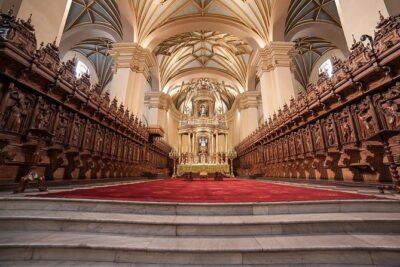
Lima’s Vibrant Heritage: Exploring the City’s Landmarks Half-day
Read our review →
Sightseeing Tour of the City on an Open-Top Bus
Read our review →
City Tour | Half-Day Tour to 4 Archaeological Sites
Read our review →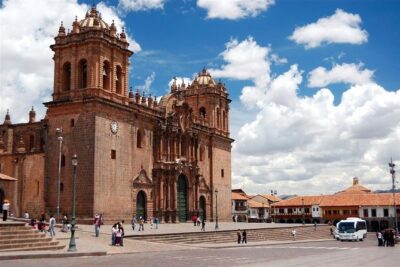
City Tour in Cusco & visit Museum South American Camelid Private.
Read our review →
Cusco City Sightseeing, San Pedro Market, Cathedral and Qorikancha Temple
Read our review →Browse the lists this tour appears in