
Reviewed · CITY TOURS
City Tour Cusco
Cusco reveals itself in layers. This half-day outing links the city’s main Inca and colonial sights, giving you a useful first look at Qorikancha, Saqsaywaman, Q’enqo, Puka Pukara, and Tambomachay. I especially like the strong mix of sacred, military, and ceremonial sites, and the fact that private transport keeps the route practical. I also like the small group limit of 12, which should make it easier to hear the guide and ask questions.
The main catch is the extra entrance cost. The advertised price is $32 per person, but the archaeological sites require a $25 partial tourist ticket, and Qorikancha costs another $7. That brings the basic outing to $64 before tips, so you should budget accordingly.
In This Review
- Key points to know before you book
- Why this is a useful first afternoon in Cusco
- Qorikancha: where Inca gold met Spanish stone
- Saqsaywaman: huge stones above Cusco
- Q’enqo: a ritual site cut into rock
- Puka Pukara: a watchpoint with a practical purpose
- Tambomachay: water, ceremony, and engineering
- What the $32 price really gets you
- Guides who shape the experience
- Timing, transport, and practical details
- Who should choose this Cusco tour?
- Should you book the City Tour Cusco?
- FAQ
- Where does the City Tour Cusco begin?
- Where does the tour end?
- How long does the tour last?
- Which sites are included in the route?
- Is transportation included?
- Is a guide included?
- Are admission tickets included in the price?
- How many people can join the tour?
Key points to know before you book
- Five major sights in one half-day: The route covers Qorikancha, Saqsaywaman, Q’enqo, Puka Pukara, and Tambomachay.
- The price excludes admission: Plan on $25 for the partial archaeological ticket and $7 for Qorikancha.
- Private transport is included: The vehicle links the sites, with listed drives of about 20 minutes to Saqsaywaman and 15 minutes to Puka Pukara.
- Guides receive the strongest praise: Jhonny, Victor, Jorge, and Saul are all specifically praised for clear explanations, warmth, energy, and care.
- The group is capped at 12 people: That is a sensible size for a site-based tour with several stops.
- You return to Plaza de Armas: Pickup and drop-off are at Cusco’s main square.
Why this is a useful first afternoon in Cusco
Cusco can feel like a history book with the pages shuffled. Spanish churches sit over Inca foundations, busy streets lead to quiet ruins, and a short drive can carry you from the city center to broad mountain views and ceremonial sites.
This tour gives you a basic map of that story. Qorikancha introduces the meeting of Inca and Spanish cultures. Saqsaywaman shows the scale and precision of Inca stonework. Q’enqo, Puka Pukara, and Tambomachay add ritual, military, and water-related pieces.
I would choose this outing early in a Cusco visit if you want orientation without committing to a full-day excursion. It is also a sensible choice if your schedule includes Machu Picchu or the Sacred Valley and you want to understand the Inca world before seeing those places.
The guide matters here. The strongest comments focus on Jhonny, Victor, Jorge, and Saul. Jhonny is praised for making explanations fun while keeping them clear. Victor is singled out for giving people time to take photographs and for explaining the past with energy. Saul is described as attentive and well informed on a first day in Cusco. Those qualities are especially useful at archaeological sites, where a pile of stones can otherwise remain just a pile of stones.
More City Tours in Cusco
- Cusco: Half-Day City Tour with Sacsayhuaman and Q’enco
★ 4.6 · 1,129 reviews - City Tour Cusco Qoricancha Sacsayhuaman y Tambomachay
★ 4.7 · 617 reviews - Cusco: Sightseeing Tour of the City on an Open-Top Bus
★ 4.0 · 481 reviews
Qorikancha: where Inca gold met Spanish stone
The tour begins at Qorikancha, also called the Temple of the Sun, after pickup at Plaza de Armas. The visit lasts about 45 minutes according to the description, although the stop is listed as one hour.
This is the most important early lesson in Cusco’s layered identity. Qorikancha was a major Inca religious center, then became part of the Spanish colonial religious order. You will see the meeting of Inca construction and colonial architecture in the same place, which makes this more than a standard ruin visit.
The guide’s explanation is the real value. Look for the way the building shows two different approaches to architecture: the Inca focus on carefully fitted stone and the later Spanish colonial additions. Ask your guide to point out the sections that belong to each period, since the contrast can be easy to miss if you only walk through taking photographs.
Admission is not included. The separate Qorikancha entrance is listed as $7. This is a small but important detail, since the extra charge is in addition to the $25 archaeological ticket used for the later sites.
Saqsaywaman: huge stones above Cusco
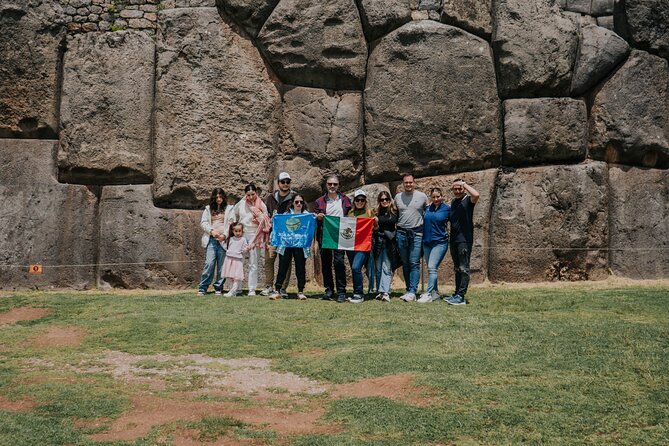
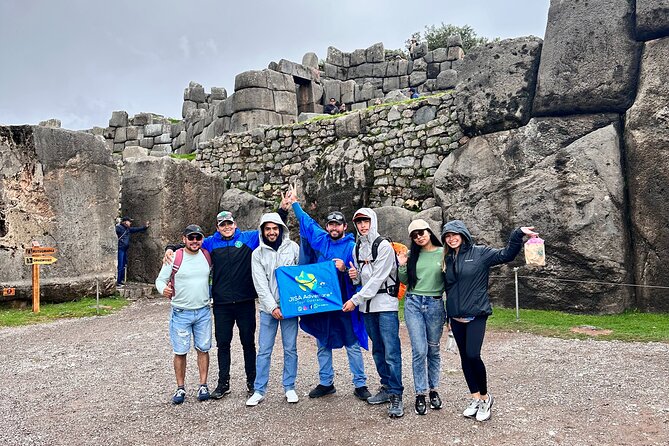
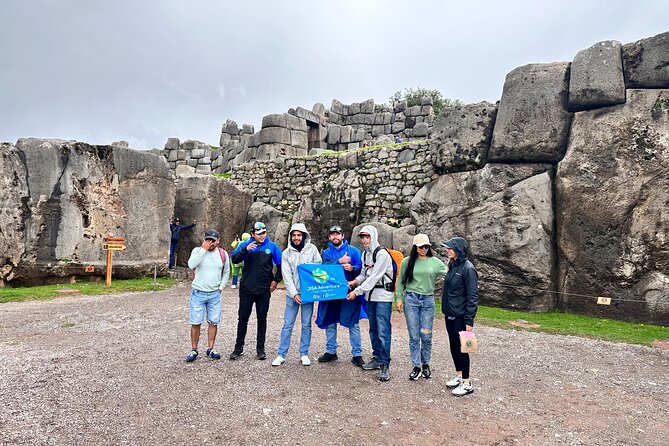
After about 20 minutes by vehicle, you reach Saqsaywaman. This is likely the visual high point of the outing. Its enormous carved stones and imposing walls give you a better sense of Inca building skill than a small urban remnant can.
The guide will explain construction methods and the site’s historical and ceremonial role. That context matters. Without it, you may focus only on the size of the stones. With a good explanation, you can pay attention to the precision of the joins, the shape of the walls, and the way the site relates to Cusco below.
Bring your camera, but do not let the photo stop become the whole visit. Victor is praised for allowing time to capture good pictures, a useful habit at Saqsaywaman, where the scale can be hard to fit into one frame.
The site is not simply a fortress in the modern sense. The description presents it as an important Inca fortress with ceremonial importance as well. I would listen carefully here because Saqsaywaman helps correct the common idea that every major Inca site had only one purpose.
The archaeological admission is not included. The stated $25 partial tourist ticket covers all the archaeological centers on this route, so it is the key extra cost to settle before you arrive.
Q’enqo: a ritual site cut into rock
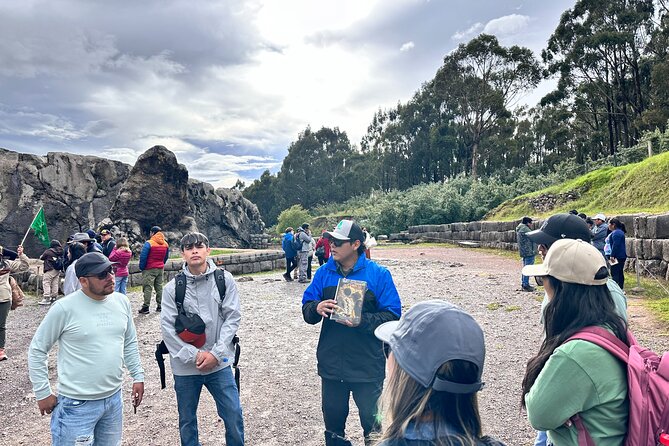
The next stop is Q’enqo, a ritual center on a rocky outcrop. The focus shifts from massive walls to carved stone, underground chambers, and altars.
This is the most atmospheric part of the route. The site’s appeal comes from its sense of mystery, but the guide should keep that mystery tied to what is actually known about Inca rituals and worldview. You will learn how the carved spaces were connected to ceremonial use rather than simply hearing a string of dramatic legends.
Q’enqo can feel more compact than Saqsaywaman, and that is part of its value. It gives you a closer look at how natural rock was adapted for ritual purposes. Pay attention to the transition between the open rock and the underground areas.
The itinerary assigns about an hour to the stop. Since the full outing is described as approximately five hours and includes several vehicle transfers, the exact time at each site may vary. I would treat the schedule as a useful outline, not a promise that every stop receives a full 60 minutes.
A few more Peru trips worth weighing up
- Cusco: Humantay Lake Tour with Breakfast and Buffet Lunch
★ 4.9 · 2,976 reviews - From Cusco: Sacred Valley & Maras Salt Mines Tour with Lunch
★ 4.8 · 2,227 reviews - From Cusco: Moray, Maras Salt Mines & Chinchero Weavers Tour
★ 4.8 · 1,925 reviews - From Cusco: Full-Day Group Tour of Machu Picchu
★ 4.7 · 1,767 reviews
Puka Pukara: a watchpoint with a practical purpose
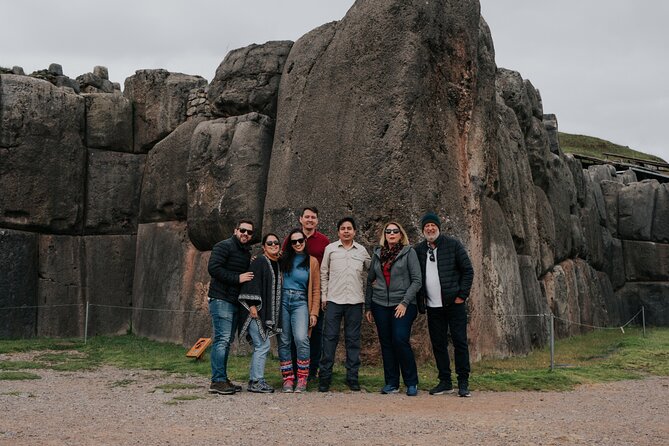
After about 15 minutes in the vehicle, the route reaches Puka Pukara, described as a military fortress. Its name is often translated as Red Fortress, and the site’s reddish construction gives it a distinct look among the stops.
Here the guide will focus on defense and strategy during the Inca Empire. That makes Puka Pukara a good counterpoint to Q’enqo. One site centers on ceremony, while this one helps you think about movement, protection, and control.
The stop is listed as one hour, though the full tour’s approximate five-hour length means the actual pace can depend on the group and transport. You should have time to walk around, hear the explanation, and take photographs, but I would not expect a slow archaeological study of every wall.
Puka Pukara also helps you see that the Inca road system depended on more than roads alone. A military or administrative site had a role in watching and managing movement through the area. The guide’s explanation is what turns this brief stop into something meaningful.
Tambomachay: water, ceremony, and engineering
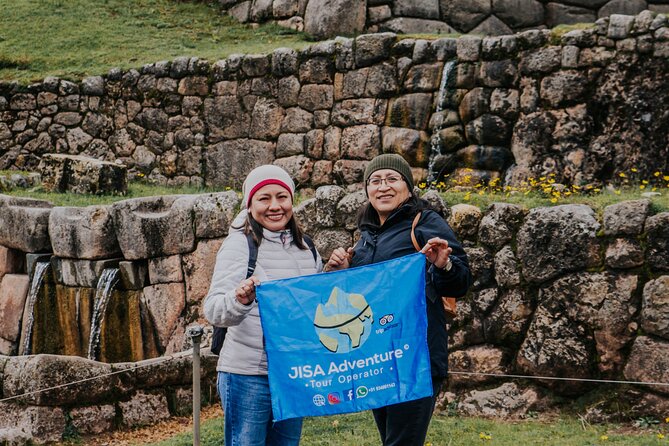
The final visit is Tambomachay, known as the Baño del Inca, or Bath of the Inca. The site is connected with ceremonies and water worship, and its stone fountains and canals show careful hydraulic design.
After the larger stones at Saqsaywaman and the darker ritual feel of Q’enqo, Tambomachay offers a calmer finish. Listen for the explanation of how water was directed through the carved channels. The attraction is not just the fountains themselves, but the precision needed to make the water flow through the stonework.
This stop is especially useful if you want to see a different side of Inca achievement. The tour is not only about walls and military strength. It also presents engineering, ceremony, and the importance of water.
The visit is listed as one hour, followed by transport back to Cusco. The activity ends at the original meeting point at Plaza de Armas, which is convenient if you want to continue exploring the center afterward.
What the $32 price really gets you
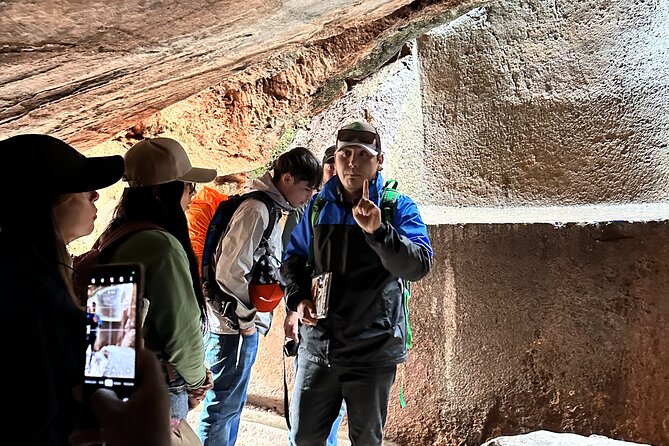
At $32 per person, the base price is attractive for a private vehicle, an official tourism guide, and a route covering five significant places. The small group maximum of 12 also gives this more personal potential than a large coach outing.
But the advertised price is not the complete cost. You need to add:
- $25 partial tourist ticket for all archaeological centers
- $7 entrance to Qorikancha
- Tips, if you choose to give them
That makes the basic total $64 per person before tips. I would compare the full figure with other half-day options, not just the headline price.
The value is strongest if you want the convenience of transport and a guide who connects the sites into one story. You could arrange parts of the route independently, but then you would need to manage transport and admission yourself. The tour’s advantage is not that it removes every expense. It saves planning time and gives you a structured introduction.
Guides who shape the experience
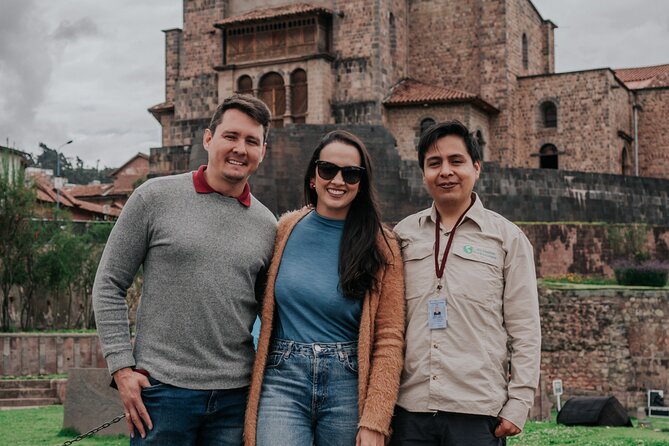
The guide is the most important variable on this outing. The comments tied to Jhonny describe a warm, energetic style that remains informative. That combination suits Cusco well, since the sites need explanation but do not benefit from a dry lecture.
Victor receives praise for strong site knowledge, making sure the group enjoys itself, and allowing time for photographs. If you want both learning and picture stops, that is worth noting.
Jorge is praised for being accommodating, and Saul is described as an excellent guide for a first day in Cusco. Guide assignments can change, so you should not assume a particular person will lead your departure. Still, the repeated emphasis on clear explanations, good humor, and personal attention is encouraging.
The wider service also handles larger Peru itineraries, including Cusco and Machu Picchu, but this review concerns the city tour itself. If you are arranging several outings, the company’s planning service may be useful, especially when a family schedule needs changes. For this half-day experience, though, the main question is whether you want a guide-led introduction or prefer to explore at your own pace.
Timing, transport, and practical details
Pickup starts at Plaza de Armas in Cusco, and the tour returns there. Private transport is included, with vehicle journeys connecting the central temple to the outer archaeological sites.
The published duration is approximately five hours. The individual stops are presented as roughly one hour each, while the Qorikancha visit is described as about 45 minutes. Since the route also includes driving, you should allow a half-day rather than trying to fit in another fixed appointment immediately afterward.
The activity is offered Monday through Sunday during the stated operating period, with hours shown as 12:00 AM to 6:00 PM. Because the start time in the itinerary is not clearly stated beyond the operating window, confirm your exact pickup time when booking.
An oxygen ball is included, along with private transport and an official tourism guide. The wording is unusual, so if you need to understand exactly what this item is, ask the operator before departure.
The tour is near public transportation, but that does not replace the included pickup arrangement. Most people can participate according to the provided information. The group is limited to 12, which is a practical ceiling for listening, walking, and moving between several sites.
The booking is non-refundable and cannot be changed for any reason. That makes it important to book only after your Cusco schedule is settled.
Who should choose this Cusco tour?
I would recommend it to you if:
- You have only half a day for Cusco’s main archaeological sights.
- You want transport instead of arranging taxis between sites.
- You prefer a guide who explains the cultural meaning behind the stones.
- You are beginning a longer Peru trip and want a clear introduction.
- You enjoy taking photographs but still want time for explanation.
- You are comfortable paying the admission fees separately.
It may not suit you if you want a slow, private examination of each site. Five stops in about five hours creates a brisk rhythm. You will see a lot, but you will not have unlimited time at any one place.
It is also less appealing if you dislike set schedules or already know these sites well. The value comes from the combination of transport, interpretation, and efficient routing.
Should you book the City Tour Cusco?
Book it if you want an efficient first look at Cusco’s Inca and colonial layers, and if you appreciate having a guide make sense of each stop. The strongest reasons are the well-chosen route, private transport, small group size, and repeated praise for guides such as Jhonny, Victor, Jorge, and Saul.
Before paying, calculate the real price at $64 per person plus any tip. Also confirm the pickup time and understand that the schedule is brisk. If that suits your plans, this is a practical introduction to Cusco that gives you the big stones, sacred spaces, military sites, and waterworks in one organized half-day.
FAQ
Where does the City Tour Cusco begin?
The tour begins at Plaza de Armas in Cusco, Peru.
Where does the tour end?
The activity ends back at the meeting point at Plaza de Armas.
How long does the tour last?
The tour lasts approximately five hours.
Which sites are included in the route?
The route visits Qorikancha, Saqsaywaman, Q’enqo, Puka Pukara, and Tambomachay.
Is transportation included?
Yes. Private transportation is included between the meeting point and the archaeological sites.
Is a guide included?
Yes. An official tourism guide is included.
Are admission tickets included in the price?
No. The $25 partial tourist ticket for the archaeological centers and the $7 Qorikancha entrance are separate costs.
How many people can join the tour?
The activity has a maximum of 12 travelers.
Just added around Cusco
- Cusco: Rainbow Mountain and viewpoint red valley ( optional)★ 4.8 · 3 reviews
- Montaña de Colores: tour en cuatrimotos día completo★ 3.3 · 3 reviews
- Tour Pallay Punchu Trek Full Day★ 4.2 · 3 reviews
- Excursion Cusco – Puno – Titicaca Observatory Train★ 5.0 · 3 reviews
- Cusco: Palcoyo Mountain Day Trip with Breakfast and Lunch★ 4.8 · 3 reviews
- Maras Moray★ 5.0 · 3 reviews
- Tour to Laguna Humantay with breakfast and lunch from Cusco★ 4.7 · 3 reviews
- From Cusco:Chinchero, Moray, Maras, Ollantaytambo with lunch★ 5.0 · 3 reviews
City Tours, compared.

Half-Day City Tour with Sacsayhuaman and Q’enco
Read our review →
City Tour Cusco Qoricancha Sacsayhuaman y Tambomachay
Read our review →
Lima’s Vibrant Heritage: Exploring the City’s Landmarks Half-day
Read our review →
Sightseeing Tour of the City on an Open-Top Bus
Read our review →
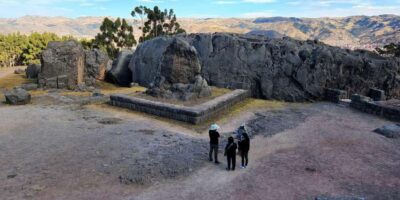
City Tour | Half-Day Tour to 4 Archaeological Sites
Read our review →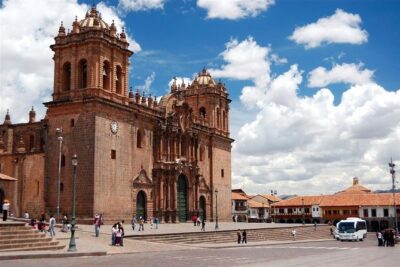
City Tour in Cusco & visit Museum South American Camelid Private.
Read our review →
Cusco City Sightseeing, San Pedro Market, Cathedral and Qorikancha Temple
Read our review →Browse the lists this tour appears in