
Reviewed · MACHU PICCHU TOURS
Salkantay Trek to Machu Picchu 5 Days with Sky Lodge Domes
The Andes save their best views for hikers. This five-day Salkantay route combines Humantay Lake, Salkantay Pass, and Machu Picchu with dome lodging, cooked meals, and a small group capped at eight people. I like the mix of hard mountain walking and comfortable nights, and I like that horses can help on the steepest sections if altitude or tired legs become a problem.
The main caution is simple: this is still a serious high-altitude trek, not a gentle walk with a few scenic stops. I also would confirm the accommodation for the second night before paying, since one account found that night more basic than expected despite the advertised dome setup.
The operation costs $680 per person. That is a fair price for five days when you consider the guide, private transport, cooks, mules, meals, Machu Picchu entry, three nights in Sky Lodge Domes, and one hotel night in Aguas Calientes. Guide Fernando earned especially strong praise for his explanations and steady help, while Nildo was noted for taking careful personal attention with the group.
In This Review
- Key points at a glance
- Cusco briefing and the early road to Mollepata
- Day one: Challacancha, Soraypampa, and Humantay Lake
- Day two: Salkantay Pass and the long descent
- Day three: Santa Teresa Valley and a slower pace
- Day four: Original Inca Trail, Llactapata, and Aguas Calientes
- Day five: Machu Picchu with a guide
- What the $680 price really covers
- Guides, food, and the small-group advantage
- Who should choose this trek?
- Should you book the Salkantay Sky Lodge trek?
- FAQ
- How long is the Salkantay Trek to Machu Picchu?
- How much does the trek cost?
- How large is the group?
- Which languages does the guide speak?
- Is Machu Picchu entry included?
- Are meals included?
- Is accommodation included?
- Can I rent trekking poles or a sleeping bag?
- Who should not take this trek?
Key points at a glance
- Humantay Lake comes early: The turquoise glacial lake is reached on the first day, when your legs are still fresh but the altitude is already a factor.
- Salkantay Pass is the physical test: Day two brings the trek’s highest and toughest section, with views toward snow-covered Andean peaks.
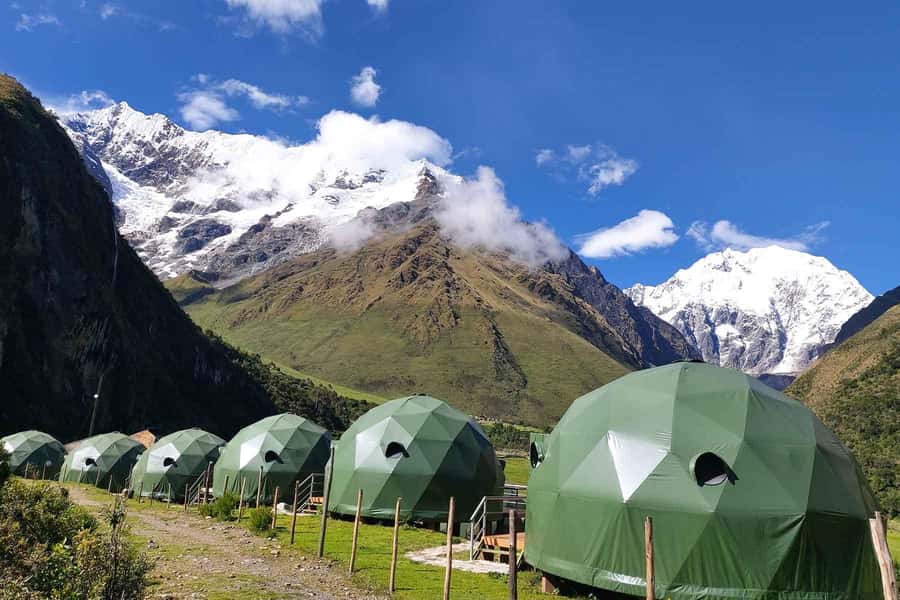
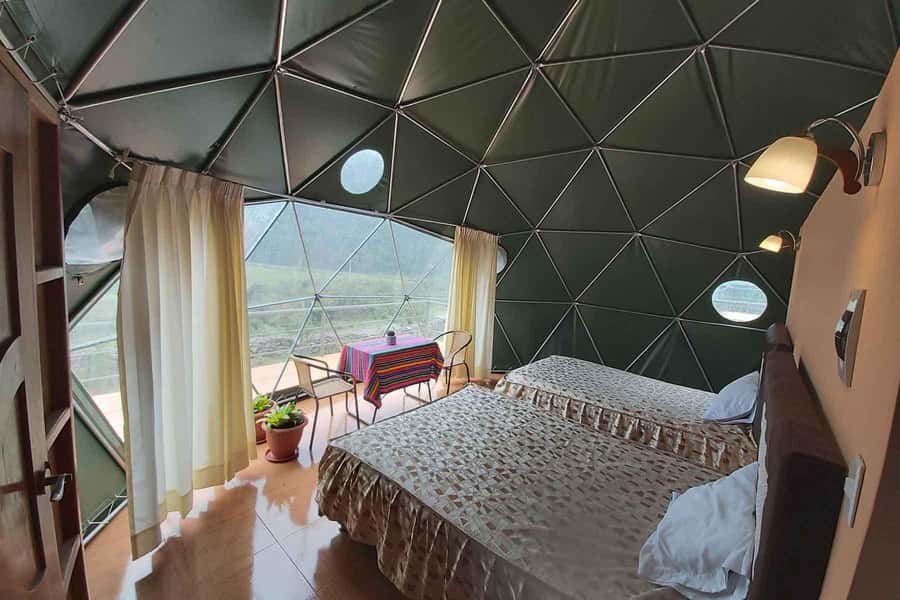
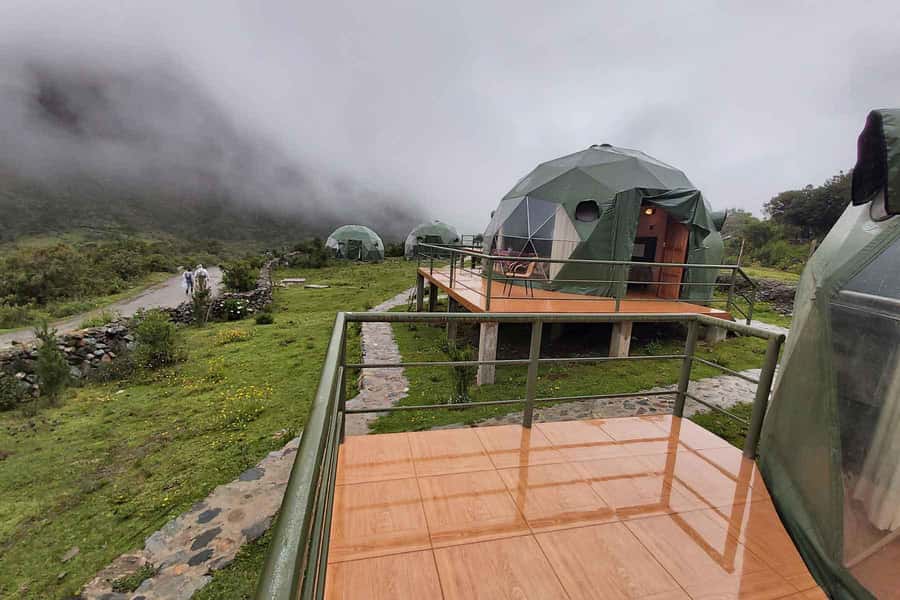
- Sky Lodge Domes change the camping equation: Private bathrooms and hot showers offer much more comfort than ordinary tent camping.
- Meals are a real strength: The cook prepares four breakfasts, four lunches, four dinners, and three snacks, with fresh and traditional food noted as a high point.
- The group stays small: A maximum of eight people gives the guide room to watch each hiker rather than simply lead a crowd.
- Day four adds Inca history: You walk part of the Original Inca Trail and visit Llactapata before reaching Aguas Calientes.
Cusco briefing and the early road to Mollepata
Your experience begins with a briefing at your Cusco hotel at 6:00 p.m. the evening before departure. Treat this as useful preparation, not a formality. It is your chance to meet the guide, clarify the walking plan, check what goes into the seven-kilogram duffel, and ask about renting a sleeping bag or trekking poles.
The first morning starts early with pickup in Cusco. Private tourist transport takes you to Mollepata for breakfast, then onward to Challacancha, the trailhead. Breakfast is not included, and neither is the final dinner, so keep some Peruvian soles ready for those meals.
This transfer gives you a sharp change of scenery before the walking begins. Cusco is already high, but the route soon takes you into more open mountain country. You will want warm clothing close at hand, along with rain gear, sunscreen, sunglasses, and a sun hat. Mountain weather can shift quickly, and a daypack is much easier to manage than repeatedly opening your main luggage.
More Hiking & Trekking in Cusco
- Inka Jungle trek to Machu Picchu 3 D/ 2 N
★ 4.8 · 4 reviews - Huchuy Qosqo Trek To Machu Picchu
★ 5.0 · 3 reviews - From Cusco: 7 Lakes Ausangate Trek with Breakfast and Lunch
★ 4.8 · 360 reviews
Day one: Challacancha, Soraypampa, and Humantay Lake
From Challacancha, the trek heads toward Soraypampa. The first day is not a warm-up stroll. You are gaining altitude and walking toward one of the trip’s signature sights, Humantay Lake.
The lake is turquoise, cold-looking, and set below snow-peaked mountains. It is the kind of place that makes the effort feel worthwhile, though the approach can be demanding at altitude. Take your time. Short steps and steady breathing are more useful here than trying to match the fastest person in the group.
After visiting Humantay Lake, you continue to Soraypampa and settle into a Sky Lodge Dome. These domes are a major reason to choose this version of the Salkantay Trek. You get a private bathroom and hot shower, plus a proper place to rest after a high-altitude day. The open setting also gives you the chance to spend the evening under the stars, weather permitting.
Meals are served at camp with portable tables and chairs. The food service includes a breakfast, lunch, dinner, and snack on the relevant trekking days. A dedicated cook means you are not relying on packaged food after several hours on the trail. Armando, named as the cook by one group, was praised for fresh, healthy, traditional meals, a welcome feature when appetite and energy are both under pressure.
Day two: Salkantay Pass and the long descent
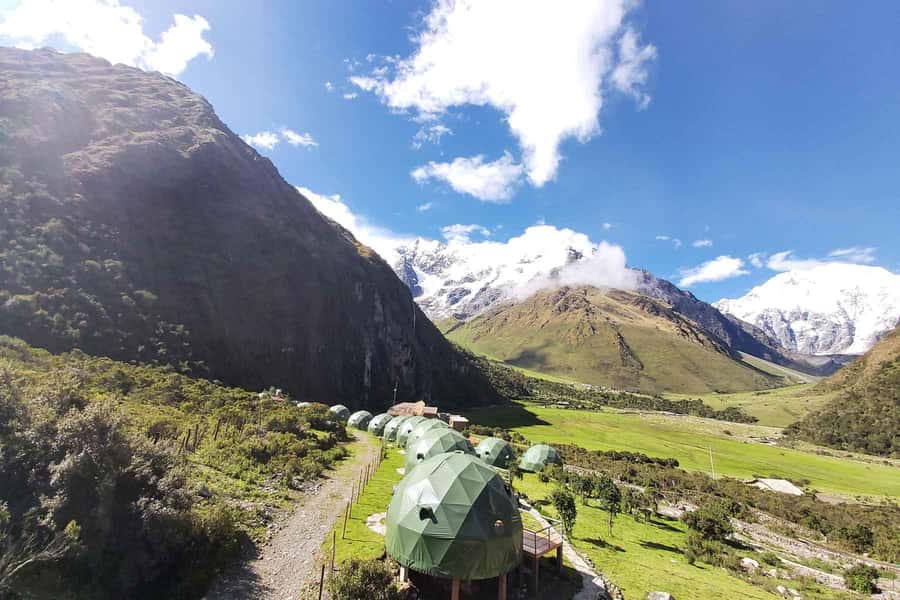
Day two is the trek’s main challenge. You start early and climb toward Salkantay Pass, one of the highest points on the route. The reward is broad Andean scenery and views toward snow-covered peaks, but the climb asks a lot from your lungs and legs.
This is where the small group and support team matter. Mules carry equipment, food, and your personal duffel, with the allowance set at seven kilograms per person. If the altitude catches up with you, a horse may be available for an additional charge. That option is worth considering in advance, especially if you have limited high-altitude hiking experience.
Do not think of the horse option as a sign that you have failed. The pass is a demanding section, and using support can help you continue safely rather than exhaust yourself early. Your guide can help you judge the situation, but you should still listen to your body and speak up quickly if you feel unwell.
After the pass, the route descends toward Chaullay for the night. The change from cold high mountain terrain to lower, warmer country is one of the trek’s best features. It also makes day two feel long: you climb high, cross the pass, then lose altitude over a substantial descent.
Accommodation on this night deserves a question before booking. The planned experience describes dome lodging, but one account specifically found the second night’s accommodation more basic and uncomfortable than expected. I would ask Quechuas Expeditions Peru S.A.C. to confirm exactly where you sleep on night two and whether a private bathroom and hot shower are guaranteed there.
Day three: Santa Teresa Valley and a slower pace
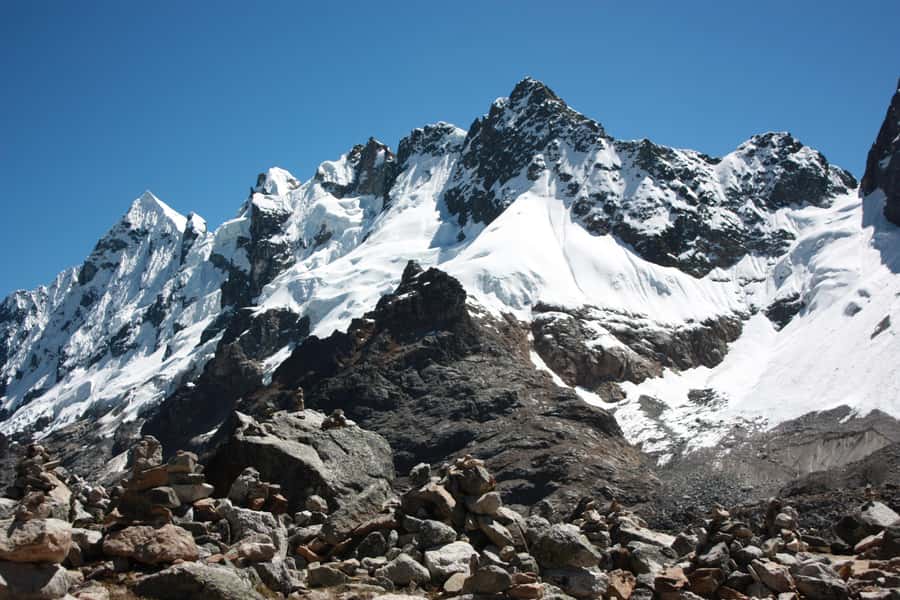
Day three is described as easier, which you will appreciate after Salkantay Pass. The route passes through the Santa Teresa Valley, bringing warmer conditions and a different type of scenery from the bare, high mountain sections.
This is a good day to enjoy the changing vegetation and give your knees a break. The trek is not only about collecting famous viewpoints. Its appeal comes from moving through several climate zones in a few days, from cold mountain passes to greener valleys on the way to Machu Picchu.
An optional visit to hot springs is available. Since this is not listed as included, plan for an extra cost if you want to use them. The springs can be a sensible choice after two demanding days, but you should confirm the price and timing with your guide so you know how they fit into the day.
You spend another night in a Sky Lodge Dome according to the planned schedule. That private shower is not a minor luxury here. After repeated early starts, wet-weather possibilities, and long descents, the ability to wash properly and sleep in a sheltered room can make the final two days much more enjoyable.
More Inca Trail Treks in Cusco
- 4 Days Inca Jungle Adventure to Machu Picchu
★ 4.5 · 7 reviews - Inca Trail 2 days to Machu Picchu
★ 5.0 · 5 reviews - “Glamping Sky Lodge Domes” 2-Day Humantay Lake & Salkantay
★ 5.0 · 3 reviews - Cusco: 4-Day Inca Trail to Machu Picchu with Accommodation
★ 4.8 · 432 reviews
Day four: Original Inca Trail, Llactapata, and Aguas Calientes
Day four brings the strongest historical link in the walking portion. You pass along part of the Original Inca Trail and visit Llactapata, an Inca site with views toward Machu Picchu.
Llactapata is valuable because it gives you a distant perspective before the main visit. Instead of arriving at Machu Picchu with no sense of its setting, you begin to see how the ruins sit among the surrounding mountains. The view also builds anticipation without replacing the main site itself.
From there, you continue toward Aguas Calientes. The plan allows you either to hike or to take a train for this part. That choice matters. After three days of walking, taking the train can preserve your energy for the Machu Picchu visit. If you still feel strong, hiking gives you one more active section before the hotel night.
Aguas Calientes provides a clear change from the domes. You spend the night in a hotel, which means a conventional room before the early visit to Machu Picchu. The package includes the hotel, but it does not include your final dinner, so budget separately for that evening.
The train arrangements end with travel to Ollantaytambo on the final day, followed by a transfer back to Cusco. The exact feel of the return depends on the train schedule, but the important point is that transport back to Cusco is part of the package.
Day five: Machu Picchu with a guide
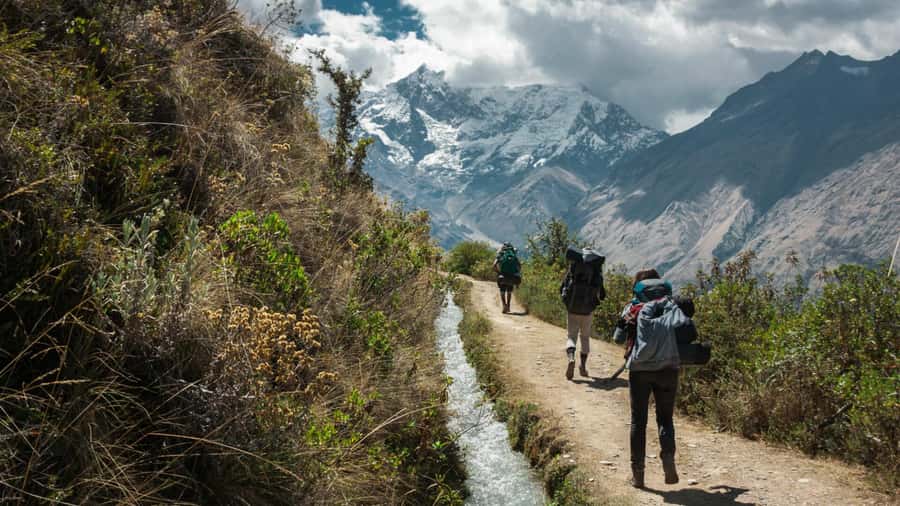
The final morning begins with a bus ride from Aguas Calientes to Machu Picchu. The entrance fee and guided tour are included, so you do not have to arrange the main entry separately as part of this package.
A guided visit adds value here because Machu Picchu can be visually overwhelming. A good guide helps connect the stonework, terraces, ceremonial areas, and mountain setting instead of leaving you to wander without context. Fernando was praised for giving information in a measured way, explaining culture, plants, and mountains without turning every stop into a lecture. His English was also described as very strong.
Additional hikes may be available at Machu Picchu, depending on the ticket and current availability. Do not assume these are included. If an extra mountain or route interests you, ask during the briefing, since entry choices and tickets can affect what you are allowed to do.
Once the guided visit ends, you return by train to Ollantaytambo and continue by transfer to Cusco. It is a full ending rather than a relaxed final afternoon. Keep your daypack light and organize your passport, water, rain gear, and sun protection the night before.
What the $680 price really covers
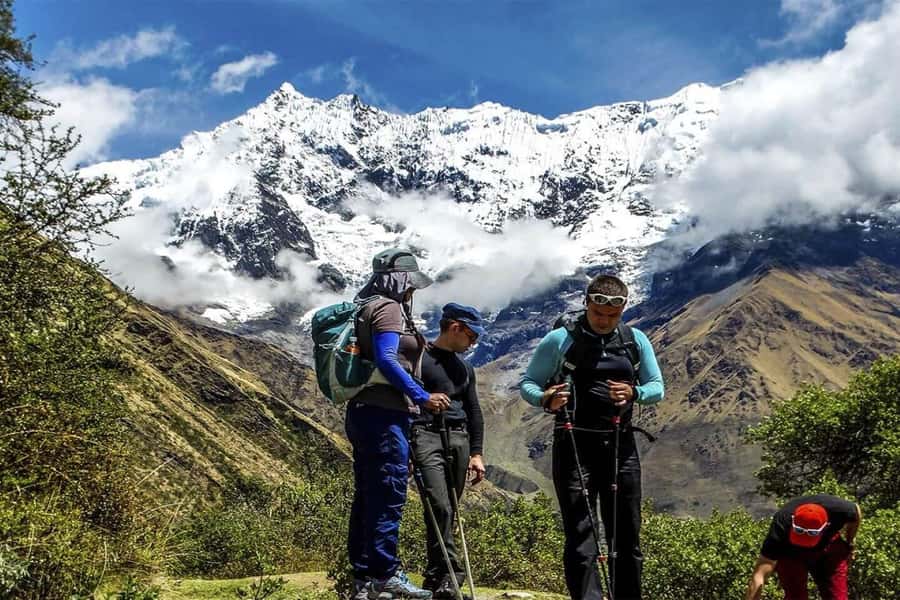
At $680 per person, this is not the cheapest way to reach Machu Picchu. It is also not a bare-bones hike. The price includes several expensive and useful parts:
- Private transport from Cusco through Mollepata to Challacancha
- An English and Spanish speaking professional guide
- Mules and horsemen for equipment, food, and up to seven kilograms of personal luggage
- A duffel bag for that luggage
- Machu Picchu entrance
- Four breakfasts, four lunches, four dinners, and three snacks during the camp portion
- A professional cook
- Three nights of Sky Lodge Dome accommodation as planned
- One hotel night in Aguas Calientes
- Camping dining equipment
- First aid kit and one oxygen tank
- Train and transfer arrangements described for the final section
The value is strongest if you want support and comfort without booking a private trip. A group limit of eight is small enough for individual attention, while the mules and cook remove much of the burden of carrying and preparing supplies.
Still, check the extras. Your first breakfast and last dinner are not included. Sleeping bags and trekking poles can be rented, but they cost extra. A horse, if needed for altitude or fatigue, is also a paid option. Add those costs before comparing this trip with a cheaper Salkantay package.
Guides, food, and the small-group advantage
The strongest human element is the guide service. Fernando was praised for helping with practical decisions, explaining the culture and natural setting, and staying with the group through the final ticket arrangements. Nildo was also singled out for his care and attention.
Those details matter on a trek. You need more than someone who points toward the next mountain. You need a guide who notices how people are coping, explains what you are seeing, and helps when plans or ticket questions become confusing.
Food is another high point. Armando’s cooking was described as varied, fresh, healthy, and traditional. That is a meaningful benefit after long walking days, especially when the package includes snacks as well as main meals.
The eight-person limit also helps the operation feel less mechanical. You can ask questions, set a sensible pace, and get clearer advice about the pass, the lake, the hot springs, or the optional horse support.
Who should choose this trek?
I would recommend this trip to you if you want the Salkantay route but do not want four nights in basic tents. The domes, hot showers, cooked meals, luggage support, and hotel night make the route more approachable for hikers who value comfort.
It also suits people who want a strong mix of scenery and history. You get Humantay Lake, high Andean peaks, the Santa Teresa Valley, part of the Original Inca Trail, Llactapata, and Machu Picchu itself.
I would be more cautious if you have back or heart problems, or if you are pregnant. The trip is specifically not suitable in those cases. You should also think carefully if you have little experience with altitude, since the pass is high and the first two days are physically demanding.
Bring your passport, warm layers, hiking shoes, hiking pants, rain gear, sunglasses, a sun hat, sunscreen, and a daypack. Trekking poles and a sleeping bag are not included, but both can be rented. Keep valuables and essentials in your daypack, since your larger duffel is carried separately.
Should you book the Salkantay Sky Lodge trek?
I would book it if you want a supported, small-group Salkantay Trek with better-than-basic camping and a clear focus on Machu Picchu. The combination of excellent food, strong guides, and comfortable domes gives the $680 price real value.
Before confirming, ask one direct question: what accommodation is guaranteed on the second night? Also price the rental gear, optional horse, hot springs, first breakfast, and final dinner.
Choose this trip for the scenery, personal guiding, and practical support. Skip it if you want a cheap trek, dislike early starts, or are not ready for the altitude and Salkantay Pass. For the right hiker, it offers a well-supported route with both mountain drama and a comfortable place to recover at night.
FAQ
How long is the Salkantay Trek to Machu Picchu?
The experience lasts five days.
How much does the trek cost?
The listed price is $680 per person.
How large is the group?
The group is limited to eight participants.
Which languages does the guide speak?
Guiding is available in English and Spanish.
Is Machu Picchu entry included?
Yes. The entrance fee to Machu Picchu and a guided tour are included.
Are meals included?
The package includes four breakfasts, four lunches, four dinners, and three snacks during the camping portion. The first breakfast and final dinner are not included.
Is accommodation included?
Yes. The planned package includes luxury Sky Lodge Domes with a private bathroom and hot shower, plus one hotel night in Aguas Calientes. Confirm the exact second-night accommodation before booking.
Can I rent trekking poles or a sleeping bag?
Yes. Both trekking poles and sleeping bags can be rented, but they are not included in the price.
Who should not take this trek?
The experience is not suitable for pregnant women or people with back problems or heart problems.
More Ways to Reach Machu Picchu
- From Cusco: One-Day Round Trip to Machu Picchu by Train
★ 4.7 · 10 reviews - Machu Picchu Entry Ticket and Bus from Aguas Calientes
★ 3.8 · 8 reviews - Machupicchu tour by tourist train in 2 days
★ 4.5 · 7 reviews - From Cusco: Train Ride and Guided Tour of Machu Picchu
★ 5.0 · 6 reviews
More Machu Picchu Tours in Cusco
- From Aguas Calientes: Machu Picchu guided tour with tickets
★ 4.9 · 72 reviews - From Cusco: Machu Picchu 2 days
★ 3.6 · 29 reviews - Cusco: Machu Picchu Day Trip with Train + Entrance ticket
★ 4.5 · 17 reviews - Rainbow Mountain tour and Machu Picchu tour by train
★ 4.8 · 13 reviews
Just added around Aguas Calientes
- Machu Picchu: Private Tour Guide Service for up to 15 people★ 4.5 · 3 reviews
- Huchuy Qosqo Trek To Machu Picchu★ 5.0 · 3 reviews
- From Cusco: Machu Picchu by Car 2D/1N★ 3.5 · 3 reviews
- “Glamping Sky Lodge Domes” 2-Day Humantay Lake & Salkantay★ 5.0 · 3 reviews
- Guide in Machu Picchu★ 5.0 · 3 reviews
- TOUR TO MACHU PICCHU FULL DAY BY TRAIN – The Best Adventure★ 3.2 · 4 reviews
- Inka Jungle trek to Machu Picchu 3 D/ 2 N★ 4.8 · 4 reviews
- Machu Picchu 2 Days / 1 Night (By Bus)★ 3.7 · 4 reviews
Machu Picchu Tours, compared.



Machu Picchu: Full-Day Tour from Cusco with Optional Lunch
Read our review →
4-Day Inca Trail to Machu Picchu with Accommodation
Read our review →
2-Day Trip to the Sacred Valley and Machu Picchu
Read our review →
Machu Picchu 2-Day Inca Trail with Panoramic Train
Read our review →

Machu Picchu: Inca Trail 2-Day Overnight Guided Tour
Read our review →Browse the lists this tour appears in