
Reviewed · MUSEUMS
Lima: Larco Museum Entry Ticket
Ancient Peru speaks in clay. I like the Larco Museum for its 45,000 pre-Columbian artifacts and its graceful 18th-century vice-royal mansion, but the two-hour visit works best if you arrive ready to focus. I also like the mix of objects: Moche pottery, fine textiles, gold and silver work, and a separate display of erotic art. The main consideration is simple: the collection is large, and the erotic gallery may not suit every family or visitor.
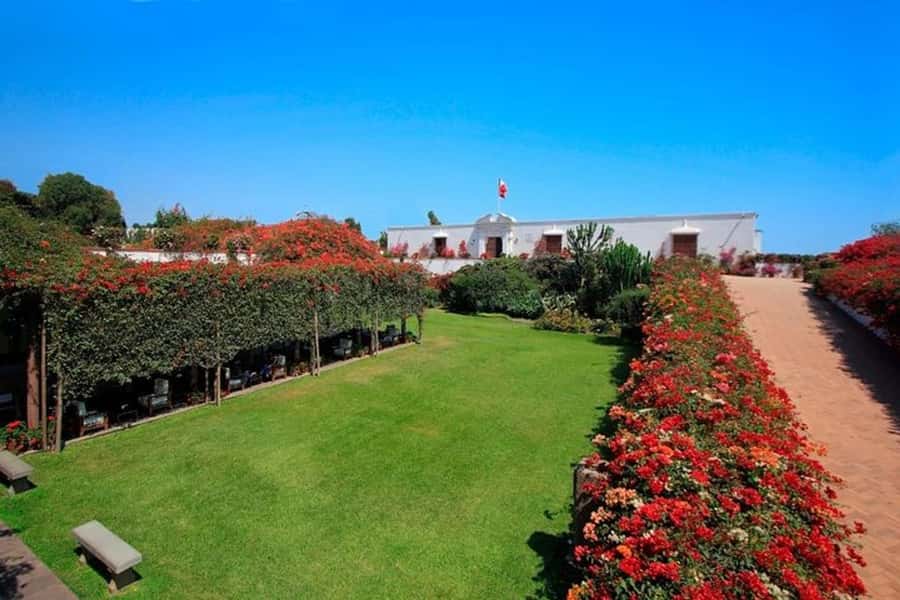
The setting adds real pleasure. After the galleries, you can slow down among the flower-filled gardens, and there is a small restaurant attached to the museum. At $25 per person, this is not Lima’s cheapest museum stop, but the price is fair if you want one well-organized place that covers many ancient Peruvian cultures without spending a full day indoors.
In This Review
- Key points to know before you go
- Why the Larco Museum earns a place in your Lima plans
- Entering the 18th-century vice-royal mansion
- A two-hour route through ancient Peruvian art
- The erotic art gallery and what it adds
- Gold, silver, textiles, and the meaning of craft
- The gardens and attached restaurant
- Is $25 a good value for two hours?
- Who will enjoy this museum most?
- Practical tips for a smoother visit
- Should you book the Larco Museum?
- FAQ
- How much does admission to the Larco Museum cost?
- How long does the museum visit last?
- What does the ticket include?
- Are food and drinks included?
- Where do I enter the museum?
- Is the GetYourGuide voucher valid for entry?
- Do I need to bring identification?
- Can I bring luggage or a large bag?
- Can I cancel the booking for a refund?
Key points to know before you go
- 45,000 ancient objects: You get a broad look at pre-Columbian Peru, from everyday pottery to ceremonial metalwork.
- Moche pottery with human detail: These vessels show daily life and ritual scenes with unusual care and imagination.
- A separate erotic art collection: The gallery offers a distinctive look at sexuality and symbolism in ancient Peru.
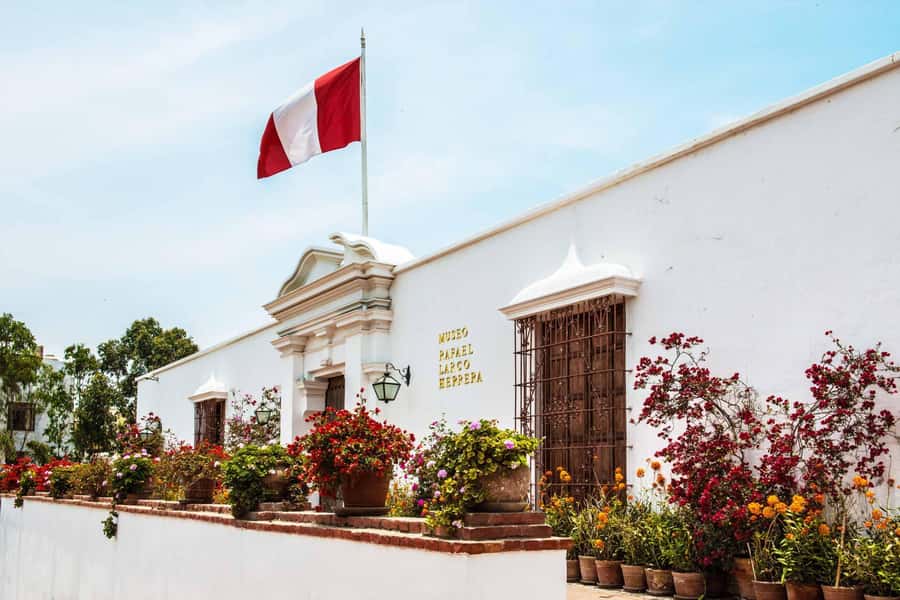
- An 18th-century mansion: The building is part of the pleasure, with restored rooms and a calm historic setting.
- Gardens and a restaurant: The visit has a natural pause after the galleries, useful during a busy Lima day.
- A two-hour plan: This is long enough for a meaningful visit, but short enough to fit beside other Lima sights.
Why the Larco Museum earns a place in your Lima plans
Lima has many museums, but the Larco Museum makes a strong case for itself by bringing objects, architecture, and setting together. You are not simply walking through rows of pottery. You are moving through a former vice-royal mansion while seeing how ancient Peruvian societies expressed power, belief, craft, work, and sexuality.
The collection covers a long stretch of pre-Columbian Peru. That matters because the country was home to many cultures, not one single civilization. The museum’s 45,000 pieces give you a broad frame for understanding that variety, even if a two-hour visit cannot explain every object in equal depth.
I would treat this as a museum for curious beginners as well as serious art lovers. The displays include explanations and background, so you can understand why an object matters instead of judging it only by its shape or decoration. You will get more from the visit if you read some labels, but you do not need prior knowledge to enjoy the galleries.
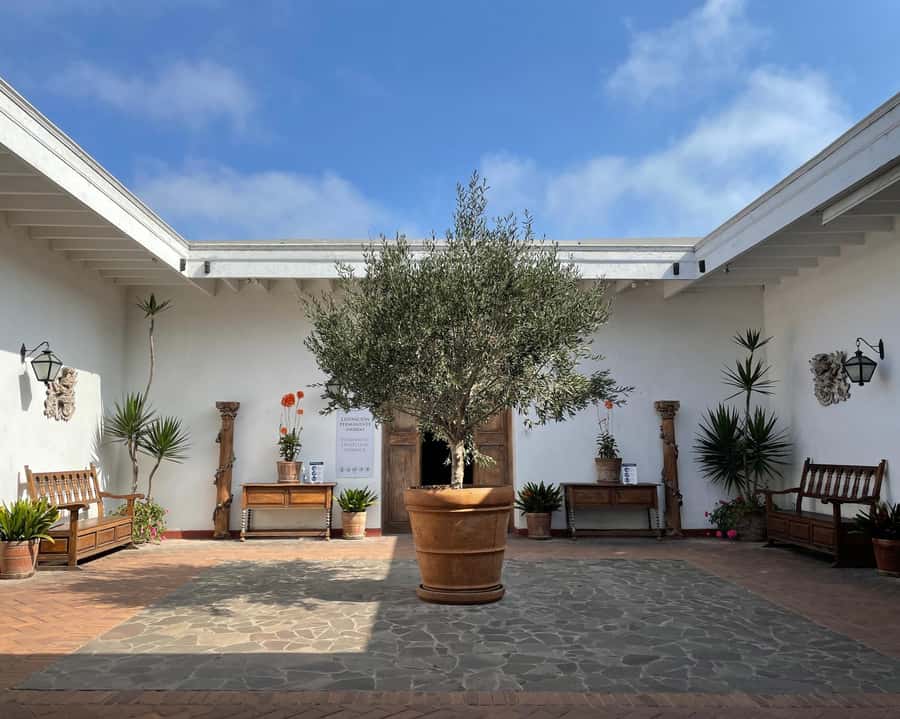
The museum also avoids the feeling of a purely modern exhibition hall. The restored mansion gives the visit a sense of place, while the gardens offer a quiet change of pace. That combination is especially useful in Lima, where a museum stop can otherwise become another enclosed activity.
More Museums in Lima
- Larco Museum, Pisco Old Tavern and Magic Water Circuit Evening Tour
★ 4.5 · 66 reviews - Pachacamac’s Inka Pyramids Tour including Museum Small-Group
★ 5.0 · 65 reviews - Lima in a Day: City Sightseeing Tour, Larco Museum and Magic Water Circuit
★ 4.5 · 63 reviews
Entering the 18th-century vice-royal mansion
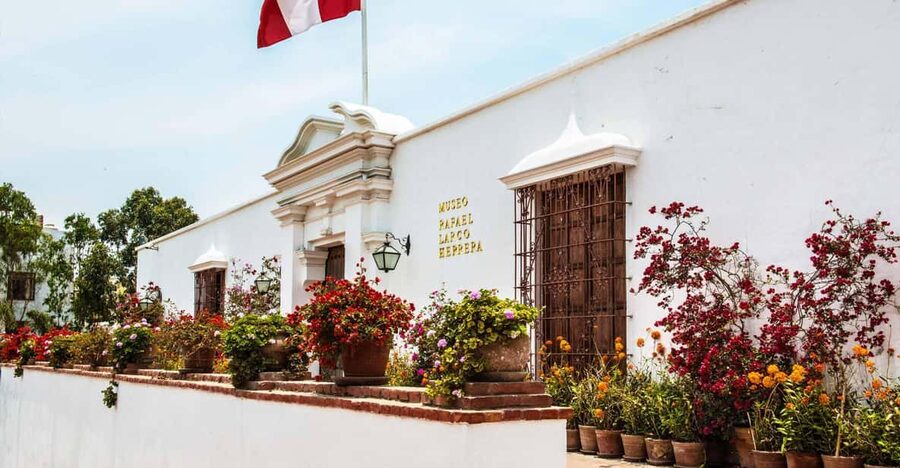
Your visit begins at the main gate of the Larco Museum. Show the entry ticket sent by email, not just the GetYourGuide booking confirmation. The confirmation proves that you booked, but it is not valid for access to the venue.
The ticket is designed to let you skip the ticket line, which saves time and removes one small nuisance from the start of your visit. You should still bring your passport or ID card, since identification is listed as required. Keep the ticket email easy to open before you reach the entrance.
The building itself deserves attention. This is an 18th-century vice-royal mansion restored for museum use, so the architecture creates a softer introduction than a standard gallery entrance. You can enjoy the rooms as part of the experience rather than treating them as a plain container for the objects.
Do not bring large bags or luggage. That rule matters if you are visiting between hotels, arriving from the airport, or carrying a full day pack. Plan to enter with only what you need for the museum visit.
The museum is in Lima Province at these coordinates: -12.0722329, -77.07063459999999. Since the admission ticket does not include transport, you need to arrange your own way to the main gate.
A two-hour route through ancient Peruvian art
The suggested duration is two hours, and I think that is a practical target. You can move through the main galleries without turning the visit into a rushed checklist, though anyone who reads every explanation or has a particular interest in textiles, metals, or Moche ceramics may want more time if allowed by the museum.
Start with the broad story of the collection. The museum presents objects from different pre-Columbian cultures, allowing you to compare styles and uses. A bowl, textile, ornament, or ceremonial object becomes more useful when you see it beside work from another tradition.
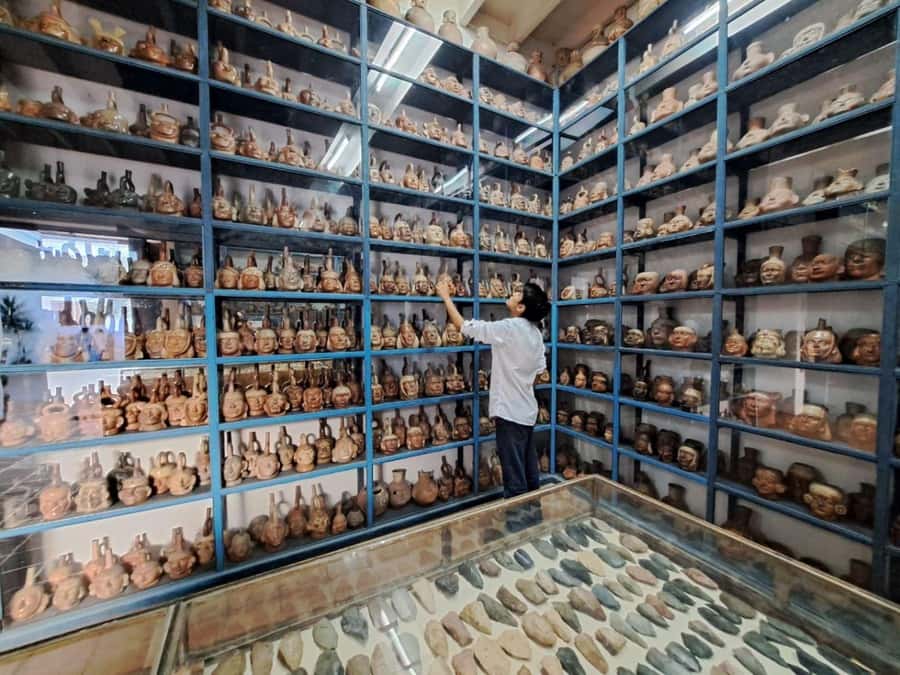
The displays are arranged to provide historical and cultural context. Use that information to connect the objects to daily life and ceremony. You might find that a simple vessel tells you as much about an ancient society as a costly gold ornament, especially when the decoration shows people, animals, rituals, or scenes from ordinary life.
The large number of objects can also be a drawback. Forty-five thousand pieces is an impressive total, but it means you should not attempt to give every object equal attention. Pick a few areas that interest you most, then allow yourself to move more quickly through displays that do not hold you.
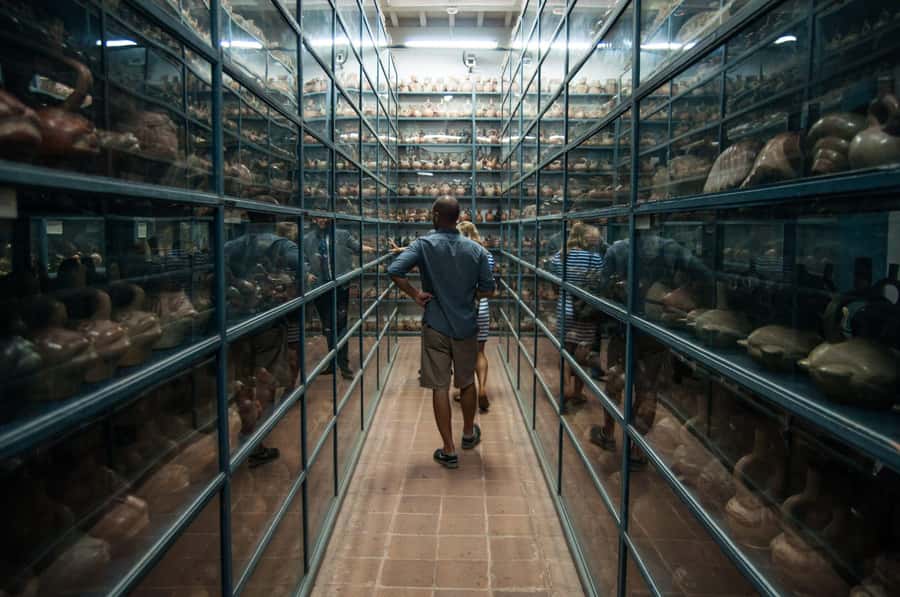
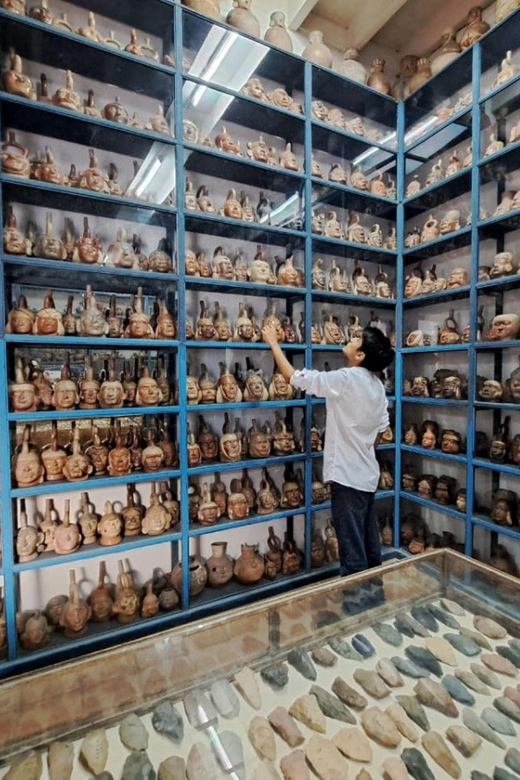
For many people, the main attraction will be the Moche pottery. These pieces are known for detailed, often provocative images of daily activities and ceremonial practices. Look closely at the forms as well as the painted or modeled scenes. The pottery is not only decorative. It can show how ancient artists observed bodies, work, relationships, animals, and ritual behavior.
You will also encounter gold and silver objects, including jewelry and ceremonial items. Their appeal is obvious, but their importance goes beyond shine. The pieces show advanced metalworking and the role that precious materials played in status, ceremony, and public display.
The textile collection offers a different kind of craftsmanship. Ancient Peruvian weaving traditions depended on patient work, careful patterning, and strong control of color. Textiles are often more fragile than ceramic or metal objects, so seeing them in a museum setting gives you a useful reminder that ancient art was made from many materials, not only the ones that survive most easily.
The erotic art gallery and what it adds
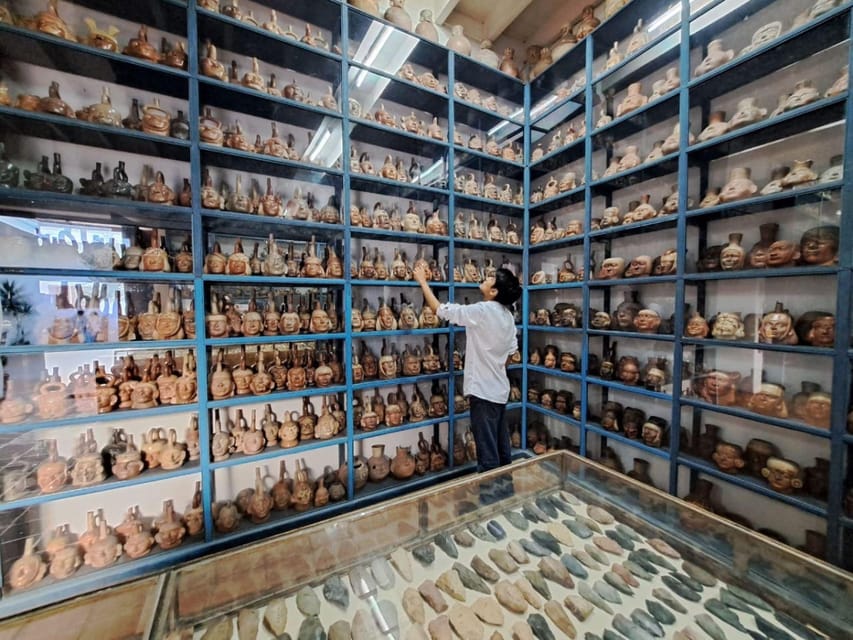
The museum’s erotic art collection is one of its most distinctive sections. It presents sexual imagery from pre-Columbian Peru as part of a broader cultural record, not simply as a novelty.
This gallery may feel unexpected, especially if you arrive expecting only temples, rulers, and weapons. The objects offer a glimpse into how sexuality could be represented, discussed, and connected to symbolic or ceremonial ideas in ancient societies.
I recommend treating this section with the same care you would give the gold or pottery galleries. The point is not just that the objects are provocative. Their value comes from what they reveal about beliefs, social life, and the subjects ancient artists considered important enough to represent.
This is also the part of the visit to consider carefully if you are traveling with children or anyone who may prefer to avoid explicit imagery. The supplied information does not set an age rule, so I would ask at the entrance if you need guidance about the gallery before planning your route.
More museums and collections:
- Lima´s Vibrant Heritage & Larco Museum of Cultures Half Day Tour
★ 5.0 · 48 reviews - From Lima: Pachacamac Inka Pyramids & The Larco Museum Tour
★ 4.8 · 43 reviews - Lima: Huaca Ruins and Larco Museum at Night with Dinner
★ 4.9 · 35 reviews - Lima city tour: Larco Museum and Huaca Pucllana
★ 4.8 · 33 reviews
Gold, silver, textiles, and the meaning of craft
The metalwork displays are likely to catch your eye first. Gold and silver jewelry can look instantly impressive, but the museum helps place these objects within the skills and values of ancient Peruvian cultures.
Ceremonial items show that metal objects could carry public or religious meaning. Jewelry can point to rank and identity. Together, the displays help you see precious metal as a tool of social communication, not merely a luxury material.
The textiles deserve unhurried attention. Their patterns and colors reflect technical skill, but they also preserve ideas about place, identity, and ceremony. I like that the museum includes textiles alongside pottery and metalwork, since this gives you a fuller picture of ancient artistic life.
The Moche pieces offer a more direct connection to people and behavior. Their detailed scenes can be lively, humorous, solemn, or confronting. They are among the best objects for slowing down and asking what an ancient artist wanted the viewer to notice.
The museum’s explanations add value here. You do not have to rely on guesswork, and you can read enough context to understand why an object belongs in the story of Peru’s past. Still, the amount of information can feel heavy if you try to absorb everything, so a selective approach is sensible.
The gardens and attached restaurant
Set aside time for the gardens. A four-out-of-five rating from a verified booking specifically praised the museum’s interior and exterior, including the flowers and colors, as well as the small restaurant attached to the site. That detail matches the practical appeal of the visit: you have a pleasant place to pause after concentrated gallery time.
The gardens are not just decoration. They give you room to reflect on what you have seen and make the museum feel less tiring. If you are visiting during a packed day in Lima, this outdoor break can keep the experience from becoming an information marathon.
You can also use the attached restaurant as a convenient stop, but food and drinks are not included in the $25 ticket. Budget separately if you plan to eat there. The provided information does not specify the menu, so I would think of it as a useful option rather than the main reason to book.
The setting may be especially attractive to anyone who enjoys architecture and gardens as much as objects. You receive a cultural visit with a calm visual rhythm: mansion, gallery, garden, and restaurant. That variety helps explain why the experience can feel worth the admission price even for people who are not museum specialists.
Is $25 a good value for two hours?
At $25 per person, the Larco Museum sits in the paid museum category, so value depends on how much of the collection you use. If you want one stop covering pottery, textiles, gold, silver, erotic art, architecture, and gardens, the price is reasonable.
The admission includes entry to the museum only. It does not include food, drinks, transport, or any separately arranged guide service. That makes the cost easy to understand, but you should add your own transport and refreshment budget.
The skip-the-line feature improves the practical value. You are paying not only to see the collection, but also to avoid spending part of your Lima schedule at a ticket counter. The two-hour length makes it easier to combine with other plans.
I would not call this the best choice for someone who wants a quick ten-minute photo stop. The museum rewards attention, and the quantity of material can take more than the minimum time. On the other hand, you do not need to commit to a full day, which is a strong point for a first visit to Lima.
The booking terms also reduce risk. You can reserve now and pay later, and cancellation is free up to 24 hours before the activity for a full refund. Check available start times before booking, since the two-hour duration does not itself guarantee a specific arrival hour.
Who will enjoy this museum most?
I would choose the Larco Museum for anyone interested in ancient art, archaeology, Peruvian culture, or carefully made objects. It is also a good fit if you prefer a self-guided museum visit with written context rather than a fixed group tour.
Art lovers should focus on the contrast between Moche pottery, textiles, and metalwork. History-minded visitors will appreciate the broad coverage of pre-Columbian cultures. People who tire of galleries may value the mansion and gardens as much as the displays.
Families need to make an individual judgment about the erotic art collection. Since that gallery is a central feature, check with staff at the entrance if you want to plan around it.
I would be less enthusiastic if your main goal is a guided, highly personal experience. The information provided describes admission, not a named guide or a guided walk. You are paying for access to the museum and its displays, so plan to set your own pace.
Practical tips for a smoother visit
Read the ticket email the day before your visit. The entry ticket is sent separately, and the GetYourGuide voucher is not enough to enter. Having the correct document ready at the main gate will save needless confusion.
Carry your passport or ID card. Leave luggage and large bags elsewhere, since they are not allowed. If you are moving between accommodations, arrange storage before you arrive.
Allow two hours for the museum, then add time for the gardens and restaurant if you want a slower visit. Food and drinks cost extra, so decide in advance if you want only the galleries or a longer stop.
The current rating is 4.8 from five bookings, with a detailed four-out-of-five assessment praising the beautiful interior, exterior, flowers, colors, and attached restaurant. That praise points to an important strength: the Larco Museum is not only about what sits behind glass. The building and outdoor setting carry much of the experience.
Should you book the Larco Museum?
Book it if you want a polished, self-guided introduction to ancient Peru in a setting that feels special. The mix of 45,000 objects, Moche pottery, precious metalwork, textiles, erotic art, a vice-royal mansion, and gardens gives you plenty for a two-hour visit.
Skip it if you want a short, highly social activity, a guide-led tour, or an admission ticket that includes meals and transport. For most curious visitors, though, $25 is a fair price for a museum that offers both serious cultural material and a pleasant place to slow down.
FAQ
How much does admission to the Larco Museum cost?
The entry ticket costs $25 per person.
How long does the museum visit last?
The stated duration is two hours. You can check available starting times when booking.
What does the ticket include?
The ticket includes entry to the Larco Museum.
Are food and drinks included?
No. Food and drinks are not included in the admission price.
Where do I enter the museum?
Enter through the museum’s main gate and show the entry ticket sent to you by email.
Is the GetYourGuide voucher valid for entry?
No. The GetYourGuide voucher confirms your booking, but the separate ticket sent by email is required to access the museum.
Do I need to bring identification?
Yes. You should bring your passport or ID card.
Can I bring luggage or a large bag?
No. Luggage and large bags are not allowed.
Can I cancel the booking for a refund?
Yes. You can cancel up to 24 hours in advance for a full refund. You can also reserve now and pay later.
Just added around Lima
- Enjoy Lima Walking Historic Center, Plaza San Martin and Plaza de Armas★ 5.0 · 3 reviews
- Full Day Lima: Local Market+ CityTour+ Barranco & Miraflores★ 5.0 · 3 reviews
- City Tour 1 day Lima★ 5.0 · 3 reviews
- Lima: Lunuhuaná Extreme All In + Cerro Azul + Rafting + ATV + Canopy★ 4.4 · 3 reviews
- Lima: Street Food Tasting Tour with Pisco Sour Class★ 5.0 · 3 reviews
- Lima: Villa El Salvador Shanty Town Tour★ 5.0 · 3 reviews
- Tour Panorámico en Miraflores en Scooter Eléctrico★ 4.6 · 3 reviews
- Private Tour Casa Aliaga,San Francisco Convent, Larco Museum★ 4.8 · 3 reviews
Museums, compared.
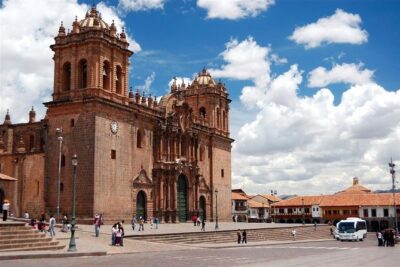
City Tour in Cusco & visit Museum South American Camelid Private.
Read our review →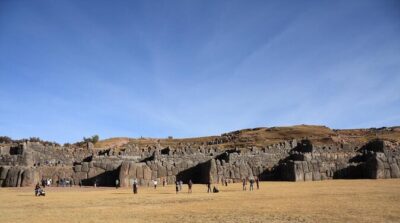
City Tour in Cusco & visit Museum South American Camelid
Read our review →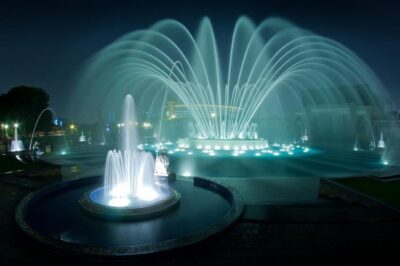
Larco Museum, Pisco Old Tavern and Magic Water Circuit Evening Tour
Read our review →
Pachacamac’s Inka Pyramids Tour including Museum Small-Group
Read our review →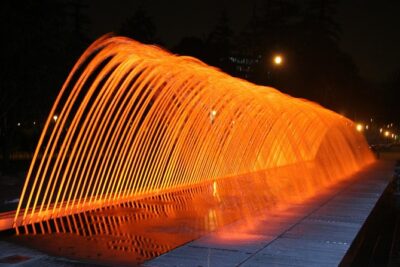
Lima in a Day: City Sightseeing Tour, Larco Museum and Magic Water Circuit
Read our review →
Lima´s Vibrant Heritage & Larco Museum of Cultures Half Day Tour
Read our review →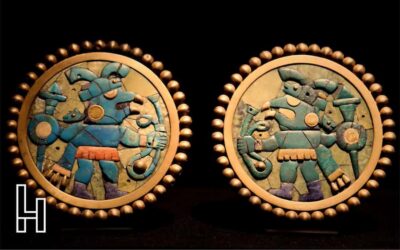
Pachacamac Inka Pyramids & The Larco Museum Tour
Read our review →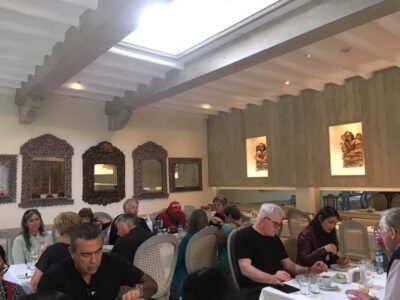
Huaca Ruins and Larco Museum at Night with Dinner
Read our review →Browse the lists this tour appears in