
Reviewed · PRIVATE DRIVERS
Cusco: Alpaca and Llama Farm Tour w/ Transfer & Weaving Demo
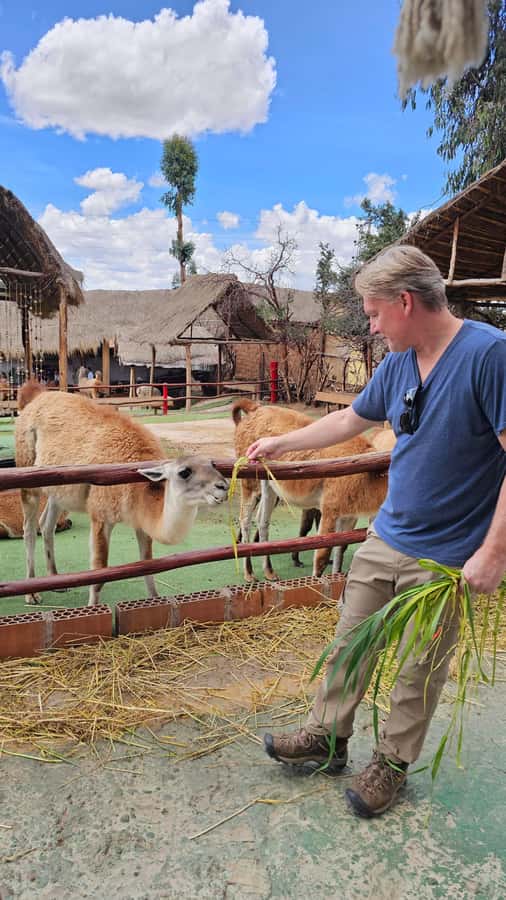
Cute animals, serious Andean culture. This short Cusco outing combines close-up time with alpacas and llamas, a traditional weaving demonstration, and a look at vicuñas and huanacos. I especially like the easy hotel transfer and the way guides such as Marileth, Olga, and Holger connect the animals to Inca history. I also like that you can feed and pet some of the animals, rather than simply viewing them from behind a fence.
The main drawback is that the visit can feel a little commercial near the end, when you enter the large textile shop. One person also found the tour shorter and more rushed than expected, so this is best viewed as a polished two-and-a-half-hour introduction, not a remote farm visit or a full-day countryside adventure.
In This Review
- Key points to know before you go
- A quick escape from central Cusco
- Meeting Peru’s four camelid species
- From Inca breeding to modern wool
- Watching the weaving demonstration
- The shop: useful, but keep your budget in mind
- Extra animals and conservation details
- How the 150 minutes usually feels
- Is $34 good value?
- Who should book this Cusco farm tour?
- Should you book it?
- FAQ
- How long does the Cusco alpaca and llama tour last?
- How far is the farm from Cusco?
- Is hotel transportation included?
- Which animals can you see?
- Can you feed or pet the animals?
- What is included in the weaving portion?
- Is the tour offered in English?
- Is the activity wheelchair accessible?
- Are food and drinks included?
- Are souvenirs included in the price?
Key points to know before you go
- Only about 20 minutes from central Cusco: You get a quick break from city streets without committing to a full day outside town.
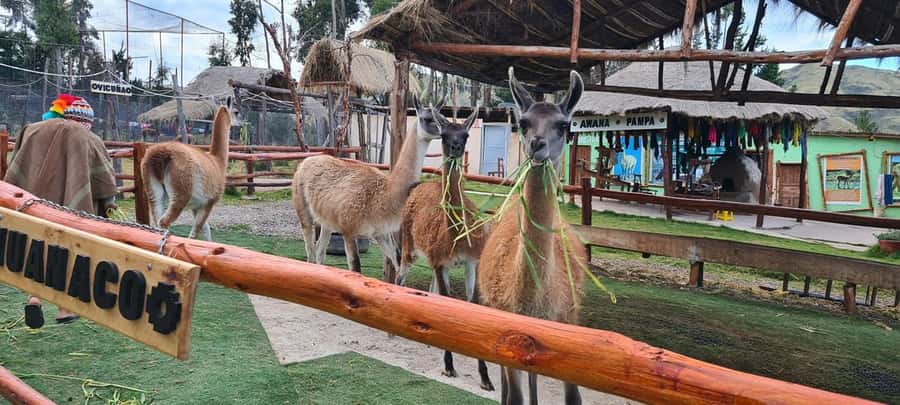
- Four South American camelid types in one visit: See alpacas, llamas, vicuñas, and huanacos, with two alpaca varieties explained during the tour.
- Hands-on animal time: You may feed and pet llamas and alpacas, making this more engaging than a simple photo stop.
- Traditional textiles are explained, not just displayed: Watch wool preparation, dyeing, spinning, and weaving techniques.
- A useful first activity in Cusco: The gentle pace works well while you are getting used to the city’s high altitude.
- The shop needs a clear head: Quality goods may be available, but prices can be much higher than in ordinary Cusco shops.
A quick escape from central Cusco
The farm, called Manos de la Comunidad, sits roughly 20 minutes from Cusco’s historic center. That short drive matters. You leave the traffic, stone lanes, and hotel routine behind without spending half a day in a van.
The ride also gives you a change of scenery as the vehicle climbs above the city. One person particularly enjoyed the views while driving upward, and the trip can help you see how quickly Cusco spreads into the surrounding hills.
Hotel pickup and drop-off are included, along with a guide and water. English and Spanish tours are available. The transfer keeps the experience simple, especially if you have only a free morning or afternoon and do not want to arrange a taxi yourself.
This is also a smart choice during your first days in Cusco. The activity involves standing and walking, but it does not demand the long climbs or sustained exertion of major archaeological sites. Several people chose it as a gentle way to get used to the altitude while still seeing something distinctly Peruvian.
More private drivers and transfers:
- Cusco: Abode of the Gods ATV Tour with Transfer
★ 4.5 · 118 reviews - Cusco Airport Pickup and Private Transfer
★ 5.0 · 82 reviews - Cusco Private Airport Transfer: Fast, Reliable Hotel Drop-Off
★ 5.0 · 80 reviews
Meeting Peru’s four camelid species
The animal visit begins with context. Your guide explains the ancient South American camelids, how people domesticated them, and which species the Incas developed for different purposes.
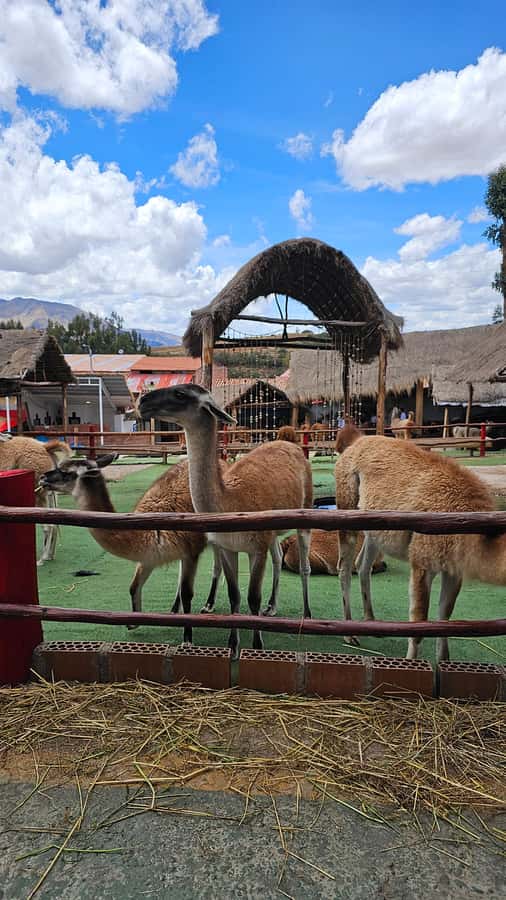
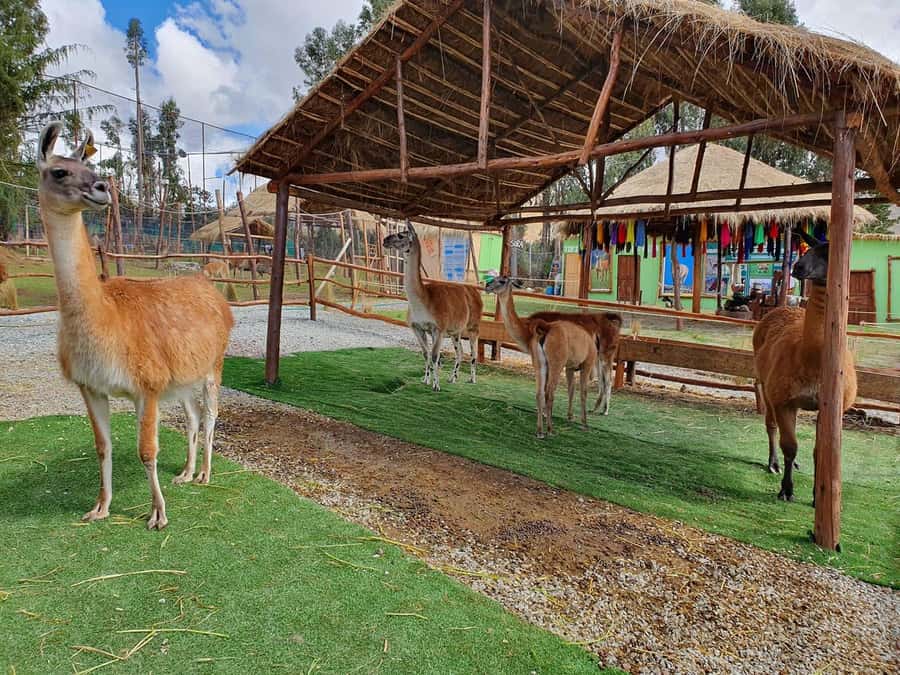
You will learn about the two varieties of alpaca and the types of llamas kept at the farm. One detailed visit described four llama types, each with its own appearance and personality. That variety makes the stop more interesting than the standard alpaca photo opportunity.
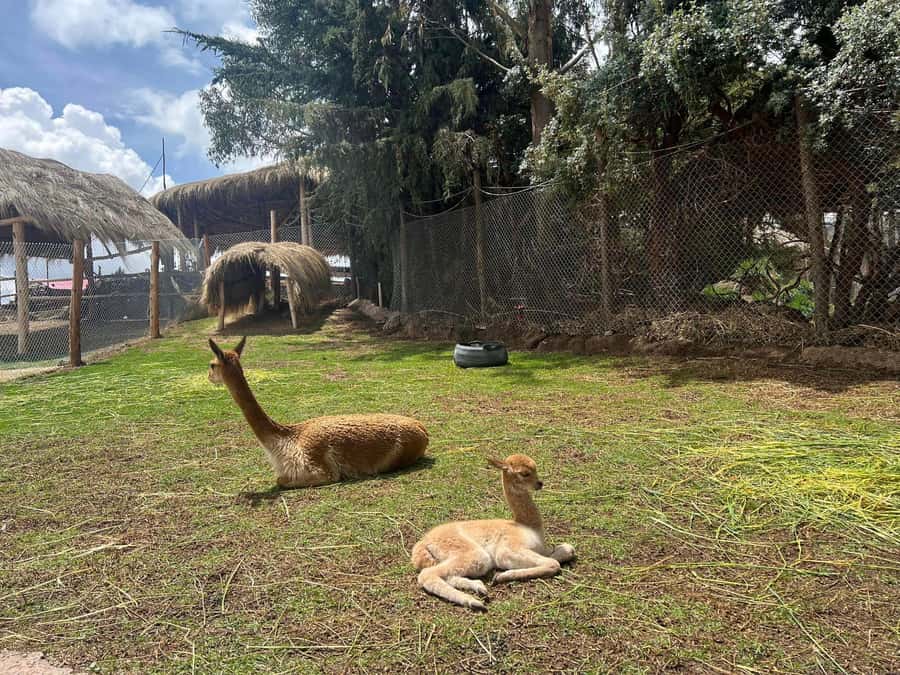
The guide then introduces the animals’ wild relatives: vicuñas and huanacos. Vicuñas are prized for their exceptionally fine fiber and are often called the gold of the Andes. Huanacos are another wild camelid, less familiar to many people who arrive expecting only llamas and alpacas.
The distinctions are useful. Llamas are larger and were traditionally used as pack animals. Alpacas are prized mainly for their fiber. Vicuña wool is especially valuable, while huanacos help you understand the wider family behind the domesticated animals.
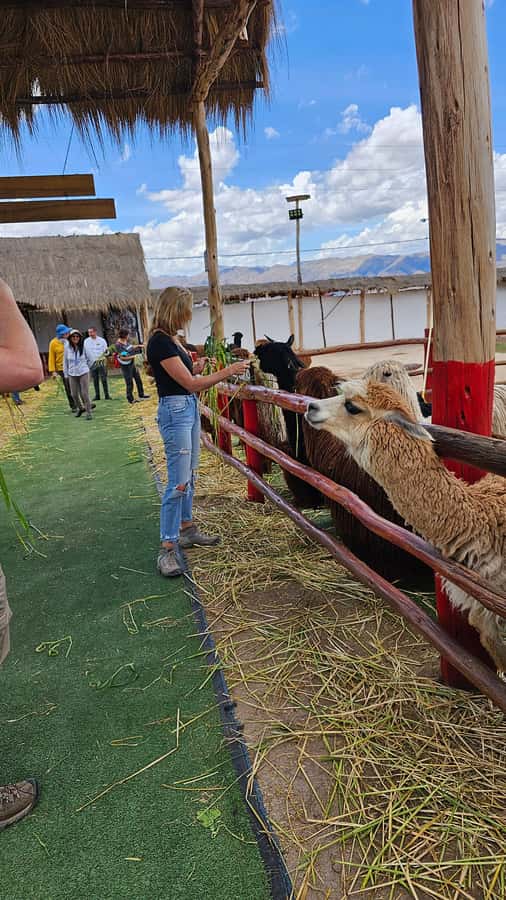
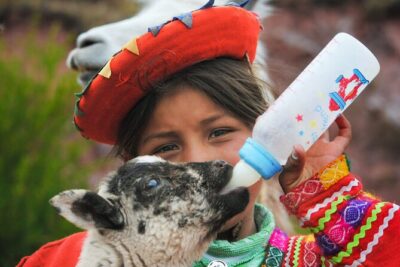
The most enjoyable part is getting close. Depending on the day and the guide’s instructions, you can feed llamas and alpacas by hand and pet them. You will have time for photographs, too, and guides often help with the camera. I like this balance: you learn first, then interact with the animals in a more respectful way.
Do not expect every animal to behave like a petting-zoo resident. Some may be eager for food, while others keep their distance. That is part of the charm. The animals have distinct temperaments, and the guides use those differences to explain their behavior.
From Inca breeding to modern wool
The camelid lesson is tied to the past. The Incas depended on these animals for transport, clothing, food, and social status. Fine textiles had great importance in Andean society, and the quality of the fiber mattered as much as the finished pattern.
Your guide explains how domestication changed certain species and why alpaca fiber became so important. This makes the animal section more than a series of cute photos. You begin to see the connection between the alpaca beside you, the sweater in a Cusco shop, and the textile traditions that survived through centuries of change.
The historical material varies somewhat by guide, but the strongest guides add useful local context without turning the visit into a lecture. Holger was praised for answering broader questions about Cusco, Inca culture, and Peru in just the right amount of detail. Marileth and Olga also received high marks for clear explanations and friendly help.
If you enjoy asking questions, this is a good place to do it. Ask about the difference between alpaca and llama fiber, how vicuña wool is handled, or how to recognize a genuine baby alpaca product. The demonstrations give you a practical basis for judging what you see later in the shops around Cusco.
Watching the weaving demonstration
After the animals, the focus shifts to Andean textile work. You watch local weavers demonstrate techniques used to turn wool into yarn and finished cloth.
The presentation includes parts of the process such as dyeing and weaving. You may see how natural colors are produced and how patterns are built by hand. The point is not simply to show a pretty scarf. It is to explain the time, skill, and material behind traditional Peruvian textiles.
One especially useful part is learning how to distinguish genuine baby alpaca fabric from imitations. The phrase baby alpaca refers to the quality and fineness of the fiber, not necessarily wool taken from a young animal. A demonstration like this can help you ask better questions when shopping later.
You may also see ancient textile examples and learn how older designs connect with living craft traditions. That link gives the presentation more weight. The weaving is not treated as a frozen museum display. It is shown as a working skill that still supports local livelihoods.
This section suits people who like taking home something meaningful. Even if you do not buy a thing, you leave with a better sense of why prices vary and why a handwoven piece costs more than a machine-made souvenir.
A few more Peru trips worth weighing up
- Private Ollantaytambo, Pisac Ruins Tour with Farm Visit, Gourmet Picnic Lunch
★ 5.0 · 52 reviews - From Cusco: Private Pisac Ruins and Alpaca Farm Day Trip
★ 5.0 · 9 reviews
The shop: useful, but keep your budget in mind
The visit ends at a sizable retail outlet. That is normal for this type of farm and textile experience, and the shop can be helpful if you want alpaca garments, yarn, or woven goods in one place.
Still, you should not assume every price is a bargain. One person compared yarn bought in a Cusco shop for 15 soles with similar yarn priced at 60 soles here. That is a major difference, even if some proceeds support the community or conservation work.
The sales approach appears to vary. One person felt watched in the shop, though there was no direct pressure to purchase. Another simply found the selection attractive and considered the stop educational. My advice is straightforward: browse, ask about fiber content, compare prices in Cusco, and buy only what you genuinely want.
The shop does not ruin the tour, but it changes the mood. The farm visit feels like a cultural and animal encounter; the final section feels more like retail. Knowing that in advance helps you enjoy the goods without feeling obliged to spend.
Extra animals and conservation details
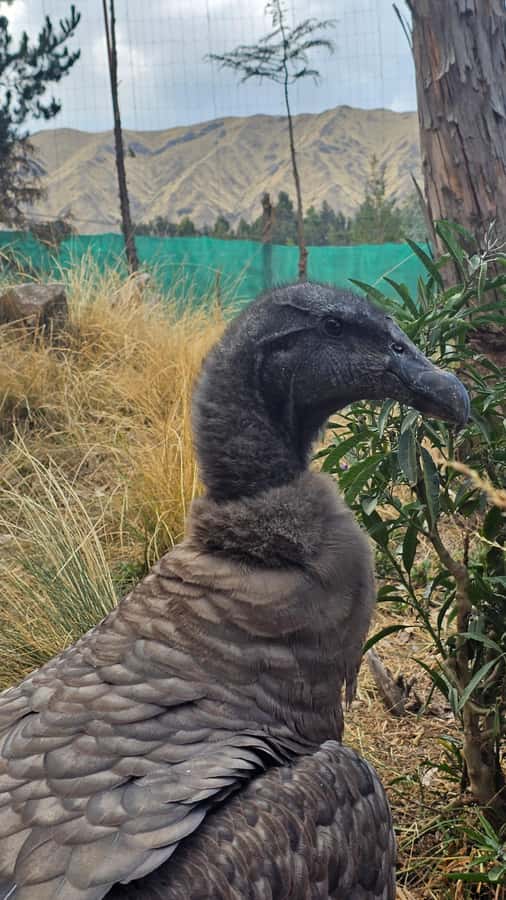
The main focus is the camelids, but the site may include additional animals and displays. Accounts of the visit mention rescued condors, deer, guinea pigs, and a small museum area.
The condors are a welcome surprise because they broaden the conservation message. You are not only looking at domesticated animals raised for fiber or transport. You may also see animals connected to rescue and protection efforts.
The exact mix may depend on what is present during your visit. Do not book this expecting a wildlife sanctuary with a long list of species. Think of the extra animals as useful additions to the camelid and weaving program.
The setting also gives you a chance to spend time outdoors, with views back toward Cusco from the higher road. Bring sun protection and comfortable shoes. The tour is accessible to wheelchair users, but you should still confirm how the specific route and animal areas work for your needs when booking.
How the 150 minutes usually feels
The advertised duration is 150 minutes, including the transfers. The guided portion at Manos de la Comunidad is listed as about 80 minutes, leaving the rest for pickup, driving, and return to your hotel.
That makes the tour easy to fit between other Cusco plans. You can usually pair it with a relaxed meal, a museum visit, or free time in the historic center rather than sacrificing a major sightseeing day.
The pacing is generally leisurely. People appreciated guides who did not rush the animal explanations or weaving demonstration. However, one person felt the actual outing was shorter than expected and that there was not enough time with every animal.
That difference may depend on traffic, group size, pickup timing, and how long you spend in the shop. If you want a slow animal encounter with lots of unplanned time, this may feel structured. If you want a tidy introduction that covers several subjects in one outing, the schedule works well.
The tour is guided in English or Spanish, and the guide makes a big difference. Marileth, also spelled Marlith in some accounts, was praised for being friendly, clear, and helpful. Holger was singled out for humor and strong explanations. Olga also received warm comments for her command of the subject. Names and staffing can change, but the guide is central to the experience.
Is $34 good value?
At $34 per person, the tour offers a fair package for a short Cusco activity. You receive hotel transportation both ways, a live guide, entry to the farm, the animal presentation, the weaving demonstration, and water.
The value is strongest if you would otherwise pay separately for taxis and a similar cultural visit. The included transfer removes some hassle, and the combination of animals, history, conservation, and textiles gives you more than a single photo stop.
The value is weaker if your main goal is a quiet rural farm with no commercial element. You are paying for a planned attraction with a retail finish, not for an independent visit to a working highland community.
For families, first-time visitors to Peru, and anyone who loves animals, $34 is easy to justify. It is also a good option for a free afternoon when you want something educational but not physically demanding.
Who should book this Cusco farm tour?
I would choose this experience for:
- Families who want a manageable activity with animals
- First-time visitors seeking an introduction to Andean culture
- People acclimating to Cusco’s altitude
- Anyone interested in alpaca wool and textile production
- Shoppers who want help identifying fiber quality
- Visitors with limited time who prefer hotel pickup and drop-off
I would think twice if you dislike organized shopping stops or want a long, wild setting far from town. The attraction is close to Cusco and professionally arranged, so it does not offer the solitude of a remote mountain village.
It also suits curious adults better than the price alone might suggest. The history of domestication, Inca use of camelids, and textile production adds substance. You are not simply feeding an alpaca and leaving with a photograph.
Should you book it?
Yes, if you want a short, friendly, well-organized introduction to Peru’s camelids and weaving traditions. The strongest reasons are the variety of animals, the chance to feed and pet some of them, the clear cultural explanations, and the easy transfer from Cusco.
Go in with realistic expectations. Allow roughly two and a half hours, expect a commercial shop at the end, and compare textile prices before buying. If you do that, this $34 outing offers good value and a pleasant first look at the animals and crafts that shape Andean life.
FAQ
How long does the Cusco alpaca and llama tour last?
The full activity lasts 150 minutes, including hotel pickup, transport to the farm, the visit, and the return transfer.
How far is the farm from Cusco?
The farm is located about 20 minutes from Cusco’s historic center by transfer.
Is hotel transportation included?
Yes. Pickup from your hotel and return drop-off in Cusco are included.
Which animals can you see?
You can see different varieties of alpacas and llamas, as well as vicuñas and huanacos. Some visits also include rescued condors, deer, and guinea pigs.
Can you feed or pet the animals?
Yes. The experience includes the chance to feed and pet llamas and alpacas, depending on the guide’s instructions and the animals’ behavior.
What is included in the weaving portion?
You watch a demonstration of traditional weaving techniques and learn about wool, dyeing, and textile production.
Is the tour offered in English?
Yes. Live guides are available in English and Spanish.
Is the activity wheelchair accessible?
Yes. The activity is listed as wheelchair accessible.
Are food and drinks included?
Water is included. The provided details do not list a meal or other food.
Are souvenirs included in the price?
No. Souvenirs and purchases from the textile shop cost extra.
Just added around Cusco
- Cusco: Rainbow Mountain and viewpoint red valley ( optional)★ 4.8 · 3 reviews
- Tour Pallay Punchu Trek Full Day★ 4.2 · 3 reviews
- Montaña de Colores: tour en cuatrimotos día completo★ 3.3 · 3 reviews
- Excursion Cusco – Puno – Titicaca Observatory Train★ 5.0 · 3 reviews
- Cusco: Palcoyo Mountain Day Trip with Breakfast and Lunch★ 4.8 · 3 reviews
- Maras Moray★ 5.0 · 3 reviews
- Tour to Laguna Humantay with breakfast and lunch from Cusco★ 4.7 · 3 reviews
- From Cusco:Chinchero, Moray, Maras, Ollantaytambo with lunch★ 5.0 · 3 reviews
Private Drivers, compared.
Palomino Islands Excursion & Swimming with Sea Lions with Hotel Transfers
Read our review →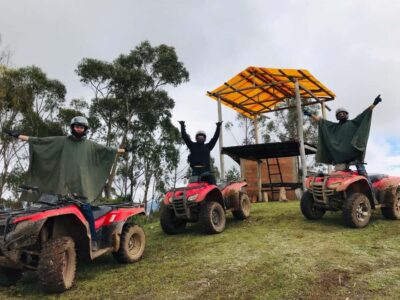

Cusco Private Airport Transfer: Fast, Reliable Hotel Drop-Off
Read our review →
QuickLlama: Door-to-door transfer from Miraflores to Lima Airport
Read our review →
CUSCO MAGICAL 4D Transfer, Hotel, City Tour, Sacred Valley and Machu picchu
Read our review →Browse the lists this tour appears in