
Reviewed · INCA RUINS & ARCHAEOLOGY
Chachapoyas: Karajía Sarcophagi & Quiocta Caves
Ancient burials meet an underground world. This full-day trip from Chachapoyas combines two very different sights: the striking Karajía sarcophagi high above the Utcubamba Valley and the cool, shadowy chambers of Quiocta Caves. I like the strong mix of archaeology and nature, and I like that cave entrance fees, transport, boots, and flashlights are included. The main drawback is the long day, with a 2-kilometer walk to Karajía and several hours on the road.
The tour also offers a useful look at the Chachapoyas people through their funerary customs, sacred rituals, and mountain settlements. The Spanish-speaking guide adds context that you would miss by arriving alone, though the vehicle may feel tight for tall passengers. One verified booking review praised the guide’s helpfulness but noted limited legroom once the vehicle filled.
In This Review
- Key points before you book
- Why this day trip is worth your time
- From Chachapoyas into the Utcubamba Valley
- Lamud: the practical stop before Quiocta
- Inside Quiocta Cave at 2,700 meters
- Lunch in Lamud and the road to Cruzpata
- The 2-kilometer walk to Karajía
- Meeting the Karajía sarcophagi
- What the two sites reveal together
- Timing, comfort, and what to pack
- Who should book this tour?
- Should you book Karajía and Quiocta?
- FAQ
- Where does the tour begin?
- What time does the tour start?
- When will the tour return to Chachapoyas?
- How far is the walk to the Karajía sarcophagi?
- Are horses or mules available for the walk?
- How large is Quiocta Cave?
- Are cave equipment and entrance fees included?
- Is lunch included in the tour price?
- What language is the tour conducted in?
Key points before you book
- Two major sights in one day: Visit Quiocta Caves in the morning, then Karajía’s famous burial figures in the afternoon.
- Karajía requires a 2-kilometer hike: Horses and mules are available if you prefer not to walk the full route.
- Quiocta sits at 2,700 meters: Rubber boots and flashlights are supplied for the cave’s muddy, dark interior.
- Expect an early start and late return: Pickup begins at 8:00 AM, with arrival back in Chachapoyas around 6:00 to 6:30 PM.
- Lunch is arranged in Lamud: You choose or reserve your lunch before visiting the cave, then eat on the return drive.
- The guide language is Spanish: One booking note indicates explanations were given in two languages, but Spanish is the listed tour language.
Why this day trip is worth your time
Chachapoyas is a useful base for seeing archaeological sites scattered through the northern Peruvian highlands. Karajía and Quiocta are close enough to combine, but different enough that the day never feels like a repeat of the same attraction.
At Quiocta, you get a natural setting shaped over millions of years. At Karajía, you see human-made funerary structures placed high on a mountain slope. Together, they show how the Chachapoyas related to both the ground beneath them and the mountains around them.
I especially like the balance. A day focused only on ruins can become tiring, while a cave visit alone may leave you wanting more cultural context. Here, the two stops give the day a clear rhythm: darkness and rock formations in the morning, open mountain views and ancient burial customs later.
The price is $59 per person. For that amount, the package includes hotel pickup and drop-off in Chachapoyas, transport, entrance fees, permanent assistance, and equipment for the cave. Lunch is not included, so bring money for that meal. Considering the full day, the distance covered, and the two entrance visits, the cost offers solid value if you want an organized outing rather than arranging separate transport.
More Inca sites and ruins to walk around:
- Cusco: Half-Day City Tour with Sacsayhuaman and Q’enco
★ 4.6 · 1,129 reviews - City Tour Cusco Qoricancha Sacsayhuaman y Tambomachay
★ 4.7 · 617 reviews - Lima: The Charm of Barranco & Pre Inca Pyramid in Miraflores
★ 4.9 · 322 reviews
From Chachapoyas into the Utcubamba Valley
Pickup begins at 8:00 AM from your hotel in Chachapoyas. The first part of the drive takes you down into the Utcubamba Valley, described as one of the key areas connected with the pre-Columbian Chachapoyas civilization.
This road section is not just dead time between attractions. The route helps explain why the region’s old settlements and burial sites are spread across steep mountain areas. You move from the city toward the valley, then back upward toward Lamud and the surrounding highlands.
The supplied schedule mentions bus or coach rides of about an hour at different points in the day. Exact road conditions and traffic can affect the timing, so I would keep the evening free rather than scheduling a fixed activity soon after the planned 6:00 to 6:30 PM return.
The vehicle is described as comfortable, but legroom may be limited once the seats fill. If you are tall, arrive ready to board promptly and, if possible, ask about seating before departure. This is a small point, but on a full-day road trip, knee room matters.
Lamud: the practical stop before Quiocta
The village of Lamud is your first useful pause. Here, the group arranges lunch before continuing to the cave. You do not eat immediately. Instead, lunch is planned in advance and saved for the return to Lamud after the cave visit.
That arrangement keeps the morning moving, but it also means you should bring a snack. The recommended packing list includes snacks and drinks, and I would take that advice seriously. Breakfast may feel far away by the time you reach the cave, especially with the early pickup.
Lamud also gives you a short break before the next drive. From here, the tour continues for roughly 30 minutes to Quiocta. The stop is practical rather than a major sightseeing visit, so do not expect a long guided visit through the village.
Inside Quiocta Cave at 2,700 meters
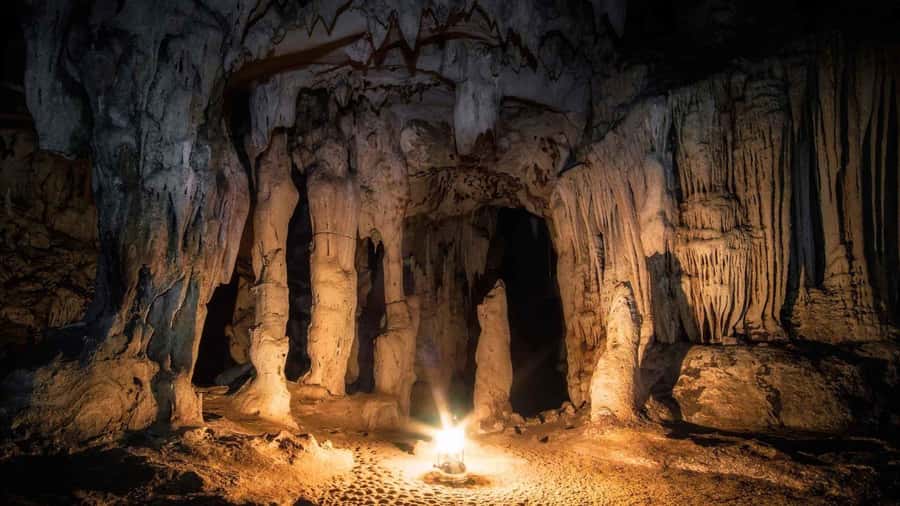
Quiocta Cave is the day’s most physical and atmospheric stop. The cave sits at about 2,700 meters above sea level and extends horizontally for around 550 meters. The route inside gives you time to look at stalactites, stalagmites, and other rock formations shaped over millions of years through speleogenesis.
The cave is dark and likely damp underfoot, which is why rubber boots and flashlights are provided. Wear clothing that can handle mud or moisture. Comfortable shoes are listed among the recommended items, but inside the cave, the supplied boots are the more important footwear choice.
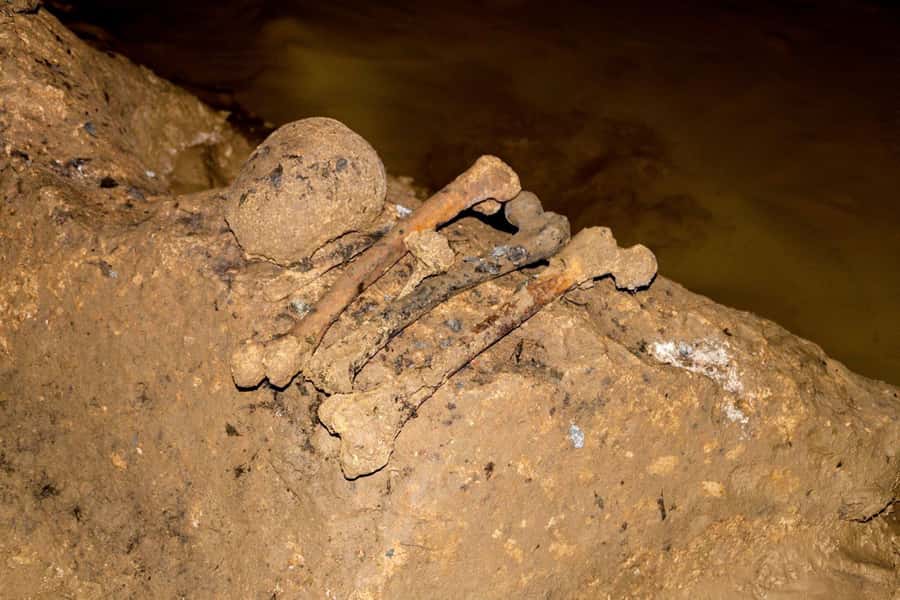
You should expect the cave visit to be about careful footing rather than a fast walk. Keep your flashlight ready and listen to the guide’s instructions. The formations are the main natural attraction, but the cave also has archaeological remains linked to Chachapoyas funerary and sacred rituals.
That combination makes Quiocta more meaningful than a simple rock-formation stop. You are looking at natural chambers that also mattered to people in the past. The exact details of the remains and rituals are best explained by the guide on site, since the tour description does not list specific artifacts or structures.
At this altitude, take the pace seriously. The tour does not state that the cave route is difficult, but the elevation, uneven ground, and wet conditions can make it tiring. If you need a slower pace, tell the guide early rather than waiting until you are uncomfortable.
A completely different sort of day out from Peru:
- Cusco: Humantay Lake Tour with Breakfast and Buffet Lunch
★ 4.9 · 2,976 reviews - From Cusco: Sacred Valley & Maras Salt Mines Tour with Lunch
★ 4.8 · 2,227 reviews - From Cusco: Moray, Maras Salt Mines & Chinchero Weavers Tour
★ 4.8 · 1,925 reviews - From Lima: Paracas and Huacachina Oasis Full Day Guided Tour
★ 4.7 · 1,780 reviews
Lunch in Lamud and the road to Cruzpata
After the cave, you return to Lamud for lunch. Since the meal is not included in the $59 price, budget separately for it. The tour does not specify a set menu, restaurant name, or dietary arrangements, so ask about available choices when lunch is reserved.
After eating, the group drives for about an hour toward the village of Cruzpata. This is another long road section, but it sets up the afternoon visit to Karajía. Bring water, sunscreen, and a hat. The packing advice also includes insect repellent and sunglasses, useful items for the outdoor part of the day.
The schedule can feel full at this point. You have already visited the cave, eaten lunch, and still need to walk to the sarcophagi. The benefit is that both major sights fit into one organized day. The tradeoff is that neither visit feels like a leisurely half-day outing.
The 2-kilometer walk to Karajía
From Cruzpata, you walk about 2 kilometers to reach the Karajía sarcophagi. The route brings you into the open mountain setting around the burial site, with scenic views along the way.
Horses and mules are available if you do not want to walk the entire distance. The supplied details do not explain the cost or exact arrangement, so ask the operator about availability and price before departure. Even with that option, you should bring sun protection and wear clothing suited to an outdoor mountain walk.
The walk is an important part of the visit. Karajía is not presented as a roadside monument where you simply step off the bus, take a picture, and leave. Reaching the site helps you understand its isolated setting and the care taken to place the figures high on the mountainside.
If you have knee problems, tire easily at altitude, or prefer a less active day, discuss the route with the operator before booking. The listed 2-kilometer distance is manageable for many people, but it comes after a morning in a cave and an hour-long drive.
Meeting the Karajía sarcophagi
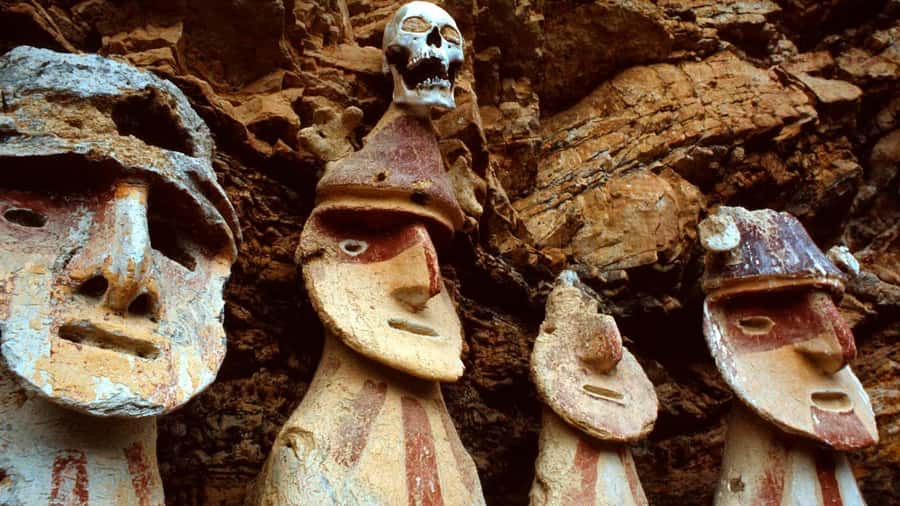
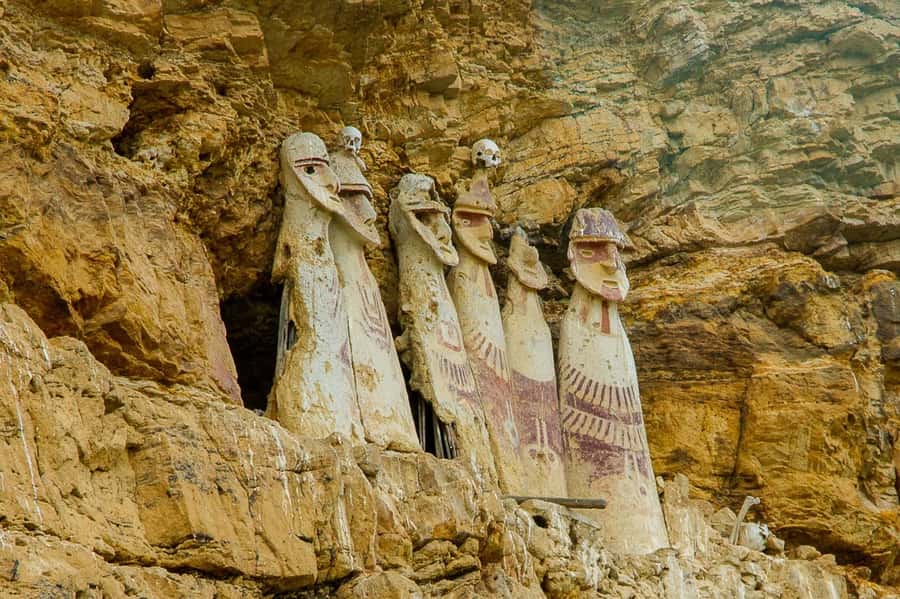
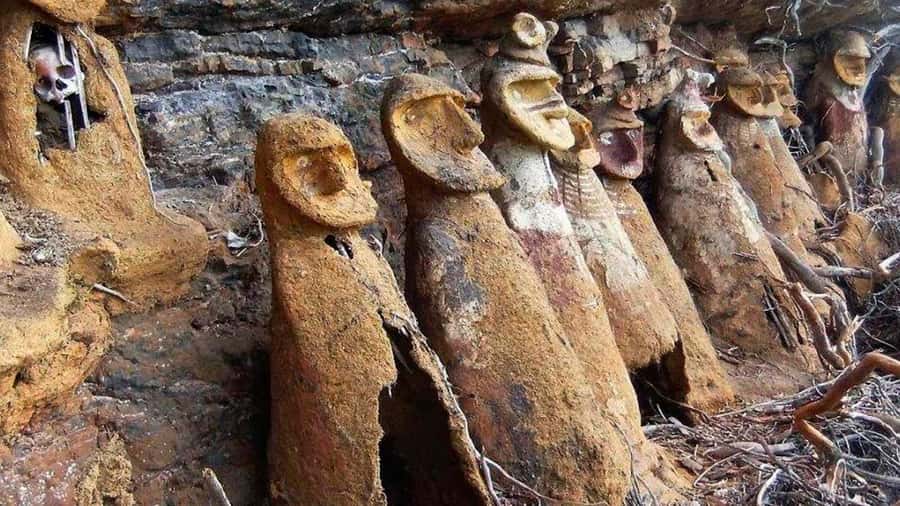
Karajía’s sarcophagi are the emotional center of the outing. These tall burial figures were created by the Chachapoyas and placed in a high, difficult-to-reach location. Their size and upright form make them immediately striking, but the larger value is the glimpse they offer into how the Chachapoyas treated the dead.
A professional guide leads the visit and explains religious beliefs, funerary customs, and cultural details uncovered through archaeological work. This is where the Spanish-language guiding matters. Without explanation, the figures could look like unusual stone statues. With context, you begin to see them as part of a carefully shaped system of belief.
The tour allows time to examine the different sarcophagi from several angles. That is useful because the site is more than one famous view. You can look at the figures together, then study their placement and appearance as a group.
The information provided does not give a precise visit length or name the guide, so expect the schedule to depend on walking pace and the group’s questions. The guide’s role received strong praise in the available booking feedback, especially for being helpful and clear. One German-language booking note also indicates that explanations were provided in two languages, but Spanish remains the officially listed language. If you need another language, confirm before paying.
What the two sites reveal together
The best reason to book this outing is the connection between the two stops. Quiocta shows evidence of sacred and funerary use inside a natural cave. Karajía shows a highly visible burial tradition placed outside on a mountain slope.
You are not simply checking off a cave and an archaeological monument. You are seeing two settings tied to death, ritual, and belief. That does not mean every question about the Chachapoyas has been answered. The tour description itself presents Karajía as a place surrounded by mystery, and the guide’s explanations help separate established archaeological findings from open questions.
I like that the day includes time for interpretation rather than only photo stops. The itinerary specifically allows a guided visit at Karajía and time to appreciate cave formations and archaeological remains at Quiocta. That makes the tour a better choice for someone who wants to understand what they are seeing.
Timing, comfort, and what to pack
The full schedule runs from 8:00 AM until approximately 6:00 or 6:30 PM. You should treat it as a full working day, not a casual morning excursion.
Pack:
- Comfortable outdoor clothing
- Snacks and drinks
- Sunscreen
- Sunglasses and a sun hat
- Insect repellent
- Shoes suitable for the walk to Karajía
- A change of socks or clothing if you dislike getting damp or muddy
Rubber boots and flashlights for Quiocta are included. Entrance fees and transportation are also covered, which means you do not need to organize separate tickets for the two main stops.
The tour is conducted in Spanish, and hotel pickup in Chachapoyas is included. The operator sends organizational details by WhatsApp and email the day before departure. Check those messages carefully for pickup instructions and any final notes.
Free cancellation is available up to 24 hours before departure for a full refund. You can also reserve now and pay later, which helps if your Chachapoyas schedule is still changing.
Who should book this tour?
I would choose this outing if you want a focused introduction to Chachapoyas archaeology without arranging a private vehicle, cave equipment, and site tickets yourself. It suits people who enjoy cultural sites, unusual burial customs, mountain roads, and moderate walking.
It is also a good choice for anyone who wants variety in one day. The cave provides shade, rock formations, and a physical sense of place. Karajía provides open views, archaeology, and a stronger connection to ancient ritual.
I would think twice if you dislike long drives, have little patience for a packed schedule, or need generous legroom. Tall passengers should take the seating concern seriously. The day also may not suit anyone uncomfortable with muddy cave conditions or a 2-kilometer walk after lunch.
Should you book Karajía and Quiocta?
Book it if you want the best value from a single day around Chachapoyas and are comfortable with an early start, long transport periods, and some walking. The combination of included transport, entry fees, cave gear, and a Spanish-speaking guide makes $59 a fair price.
Skip it if you want a slow, private outing or if either cave conditions or the Karajía walk would be a problem. For most active visitors interested in ancient customs and unusual natural sites, this is a worthwhile pairing, with the sarcophagi providing the strongest cultural moment and Quiocta adding welcome variety.
FAQ
Where does the tour begin?
Pickup is provided from your hotel in Chachapoyas.
What time does the tour start?
The day begins at 8:00 AM.
When will the tour return to Chachapoyas?
The planned return is around 6:00 to 6:30 PM.
How far is the walk to the Karajía sarcophagi?
The walk from Cruzpata to Karajía is about 2 kilometers.
Are horses or mules available for the walk?
Yes. Horses and mules are available if desired, but the provided information does not state their price or exact availability.
How large is Quiocta Cave?
The cave is about 550 meters deep horizontally and is located at approximately 2,700 meters above sea level.
Are cave equipment and entrance fees included?
Yes. Entrance fees, rubber boots, and flashlights for the cave are included.
Is lunch included in the tour price?
No. Lunch is arranged in Lamud and eaten after the cave visit, but it is not included in the $59 price.
What language is the tour conducted in?
The listed tour language is Spanish. A booking note indicates that explanations were given in two languages, so confirm language needs with the operator before booking.
Just added around Peru
- Cusco: Rainbow Mountain and viewpoint red valley ( optional)★ 4.8 · 3 reviews
- Montaña de Colores: tour en cuatrimotos día completo★ 3.3 · 3 reviews
- Tour Pallay Punchu Trek Full Day★ 4.2 · 3 reviews
- From Nazca: Cahuachi Pyramids Private Tour★ 4.3 · 3 reviews
- From Paracas | Excursion to Ica and Huacachina★ 3.1 · 3 reviews
- Monkey Island + Lake Sandoval 2D/1N★ 4.6 · 3 reviews
- Excursion Cusco – Puno – Titicaca Observatory Train★ 5.0 · 3 reviews
- From Lima: Paracas and Huacachina Guided Desert Oasis Trip★ 5.0 · 3 reviews
Inca Ruins & Archaeology, compared.

Half-Day City Tour with Sacsayhuaman and Q’enco
Read our review →
City Tour Cusco Qoricancha Sacsayhuaman y Tambomachay
Read our review →
The Charm of Barranco & Pre Inca Pyramid in Miraflores
Read our review →
Pachacamac Ruins & Barranco Half-Day Guided Tour
Read our review →
Pre Inca Temple of Pachacamac Half-Day Tour from Lima
Read our review →

Cusco City Sightseeing, San Pedro Market, Cathedral and Qorikancha Temple
Read our review →
3-Hour Horse Riding Tour to the Temple of the Moon
Read our review →Browse the lists this tour appears in